Agadir Morocco: The History of Agadir Oufella and the Complete Travel Guide to Morocco’s Amazigh Coastal Capital
Introduction
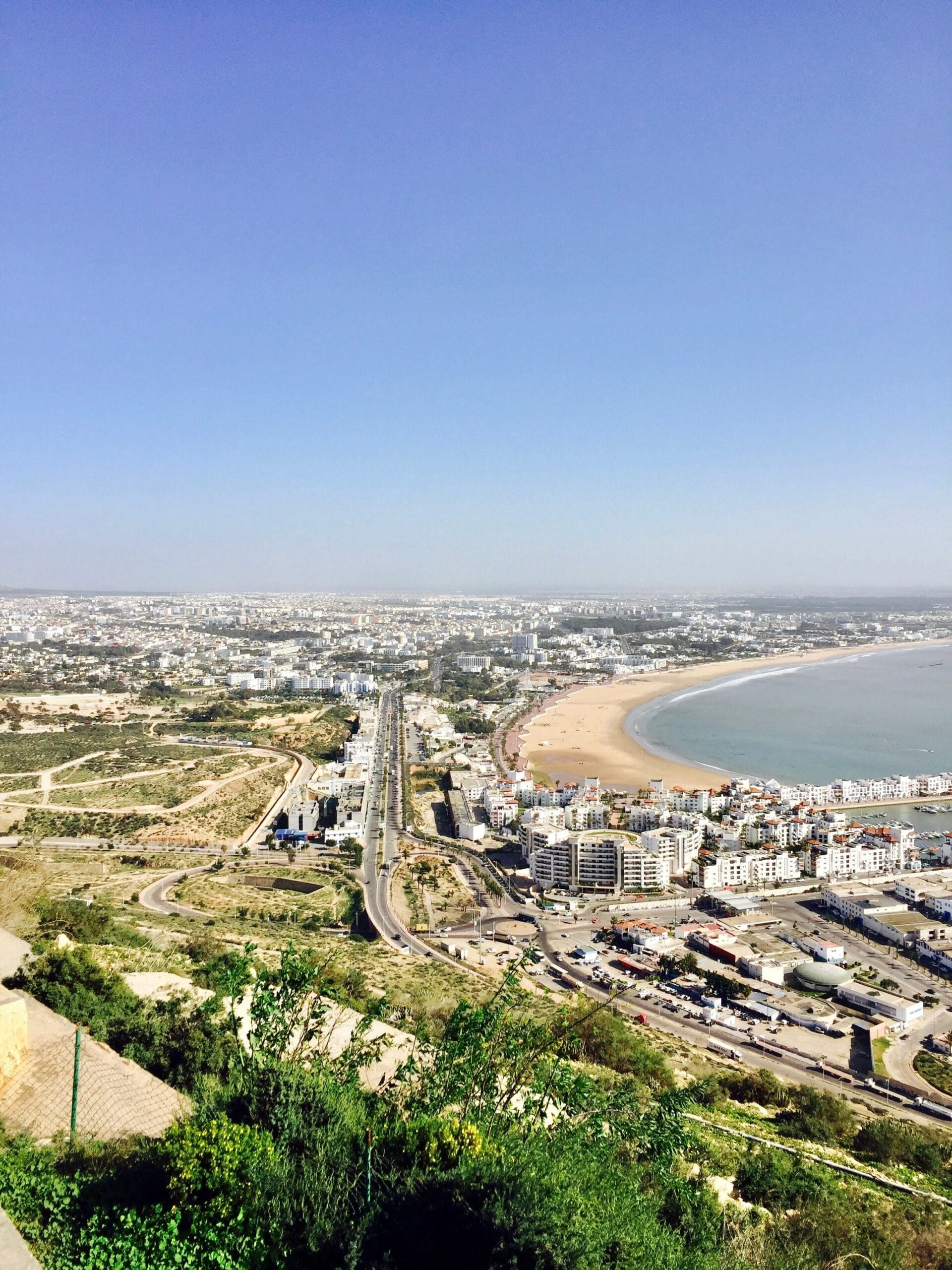
Standing where the Anti-Atlas Mountains descend toward the Atlantic Ocean, Agadir Morocco is often introduced as a modern seaside destination celebrated for its long sandy beaches, year-round sunshine, and relaxed atmosphere. Yet beneath this contemporary image lies a much older story—one shaped by Amazigh communities, maritime trade, fortified hilltop settlements, trans-Saharan commerce, and one of the most transformative natural disasters in modern Moroccan history.
To understand Agadir is to look beyond its wide boulevards and beachfront promenades. The city’s true identity begins high above the bay at Agadir Oufella, the historic kasbah whose surviving walls overlook the Atlantic as silent witnesses to centuries of political change, commercial prosperity, and cultural resilience. From this elevated fortress, generations of Amazigh tribes, Saadian rulers, merchants, and travelers watched caravans arrive from the Sahara while ships crossed the Atlantic carrying goods between Morocco and Europe.
Unlike Morocco’s imperial cities—Fez, Marrakech, Meknes, and Rabat—Agadir represents a different chapter of Moroccan civilization. It is the story of a coastal Amazigh city where mountain communities met maritime trade, where indigenous knowledge shaped architecture adapted to both climate and defense, and where the Atlantic connected southern Morocco to an increasingly global world.
The name Agadir itself reflects this indigenous heritage. In the Tachelhit language, agadir traditionally refers to a fortified communal granary, a secure place where Amazigh communities protected grain, valuables, documents, and collective wealth. Although the city’s kasbah differs in function from the communal granaries found throughout the High Atlas and Anti-Atlas, both share the same underlying idea: security through cooperation and the safeguarding of a community’s future.
Today, Agadir Morocco, stands as one of Morocco’s most visited destinations. Travelers arrive for surfing, beaches, fishing, and modern resorts, yet many leave with a deeper appreciation for its Amazigh identity after exploring the ruins of Agadir Oufella, discovering the vibrant Souk El Had, visiting the Museum of Amazigh Heritage, or venturing into the surrounding valleys of the Souss.
This guide approaches Agadir not simply as a tourist destination but as a cultural landscape where archaeology, anthropology, history, architecture, linguistics, and living Amazigh traditions intersect. By exploring both the city’s ancient foundations and its remarkable modern rebirth, you will discover why Agadir occupies such a distinctive place within Morocco’s cultural heritage.
Table of Contents
Where Is Agadir? Geography and Strategic Importance
Before exploring Agadir’s history, it is important to understand why this location became so significant.
Agadir lies on Morocco’s southern Atlantic coast, approximately 500 kilometers south of Casablanca, about 260 kilometers west of Marrakech, and about 90 kilometers away from Taroudant, an old traditional city. It occupies the fertile Souss Valley, framed by the Atlantic Ocean to the west, the High Atlas Mountains to the north, and the Anti-Atlas to the southeast.
This unique geographical position has influenced the city’s development for thousands of years.
The Souss Valley forms one of Morocco’s richest agricultural regions. Rivers descending from the High Atlas create fertile plains where olives, citrus fruits, almonds, argan trees, cereals, and vegetables have long flourished. Meanwhile, the nearby mountains supplied timber, medicinal plants, livestock, minerals, and seasonal grazing lands.
To the south stretched caravan routes leading toward the Sahara and West Africa. For centuries, camel caravans transported gold, salt, leather, ostrich feathers, textiles, and manuscripts across these routes, linking sub-Saharan kingdoms with Moroccan ports.
The Atlantic coastline opened another dimension.
Natural anchorages along the bay enabled merchants to exchange inland products for European manufactured goods, creating a commercial network that connected Amazigh communities with Portugal, Spain, England, France, and the wider Mediterranean world.
This meeting point of mountain, valley, desert, and ocean transformed Agadir into one of southern Morocco’s most strategically valuable locations.
The Meaning of “Agadir”: A Word Rooted in Amazigh Civilization
Among Morocco’s many historic cities, Agadir possesses one of the clearest linguistic links to Amazigh civilization.
The word Agadir comes from the Tachelhit language and generally means:
- fortified granary
- enclosed storage complex
- fortified communal warehouse
- protected collective treasury
Across the High Atlas and Anti-Atlas, hundreds of traditional igoudar (plural of agadir) still survive. These remarkable communal structures stored grain, olive oil, legal documents, jewelry, weapons, seeds, and family valuables behind thick stone walls protected by elaborate systems of communal governance.
Each family owned individual storage chambers, while village councils established detailed regulations concerning maintenance, access, security, and conflict resolution.
Anthropologists frequently describe these granaries as sophisticated institutions of social organization rather than simple warehouses.
They reflected values central to Amazigh society:
- collective responsibility
- mutual trust
- resource management
- environmental adaptation
- long-term resilience
Although Agadir Oufella functioned primarily as a fortified urban kasbah rather than a communal granary, the shared terminology reveals an important conceptual continuity: both represented protected spaces safeguarding the community.
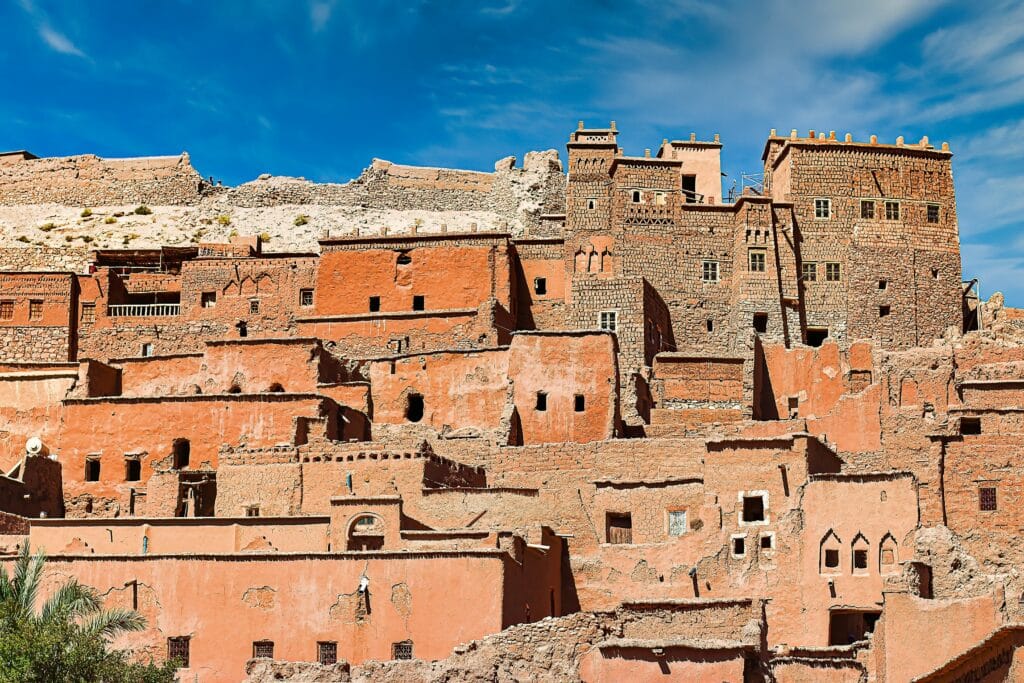
This linguistic heritage distinguishes Agadir from many Moroccan cities whose names derive primarily from Arabic dynastic foundations.
Here, the very name of the city preserves an indigenous Amazigh worldview that predates many later political transformations.
Before the Kasbah: The Earliest Human Presence Around Agadir
Long before the construction of Agadir Oufella, the Souss region was already home to human communities whose history stretches back thousands of years.
Archaeological discoveries throughout southern Morocco—including nearby caves, river terraces, and mountain sites—indicate repeated human occupation from prehistoric periods onward. Stone tools associated with the Aterian and later prehistoric cultures reveal that hunter-gatherers exploited the rich ecological diversity of the region long before written history.
As climates evolved, communities gradually adopted more settled patterns of life, combining agriculture, animal husbandry, seasonal mobility, and exchange with neighboring regions.
The surrounding mountains contain numerous examples of prehistoric rock engravings depicting cattle, wild animals, geometric motifs, and symbolic imagery. These engravings provide valuable evidence for understanding ritual practices, environmental change, and the symbolic worlds of early North African populations.
While no evidence suggests continuous urban settlement on the exact site of modern Agadir throughout antiquity, the wider Souss region clearly participated in long-term networks linking Atlantic Morocco with inland North Africa.
Phoenician and later Roman commercial contacts along Morocco’s Atlantic coast likely influenced regional exchange, although Agadir itself emerged much later as an organized urban center.
The city’s foundations therefore represent not the beginning of human history in the region but one chapter within a much longer story of indigenous occupation, adaptation, and interaction.
The Amazigh Tribes of the Souss
To understand Agadir, one must first understand the Amazigh societies that shaped the Souss.
Unlike centralized kingdoms governed from a single capital, much of southern Morocco historically consisted of interconnected tribal confederations whose authority balanced local autonomy with broader political alliances.
Among the most influential were the Haha, Ida Oultite, Ida Outanane, Aït Baha, Aït Baamrane, Aït Wawzguit, and numerous other Tachelhit-speaking groups.
These communities maintained complex systems of customary law (azerf), collective resource management, seasonal agriculture, irrigation, pastoralism, and trade.
Rather than existing in isolation, mountain villages exchanged products continuously with coastal settlements.
Argan oil, almonds, honey, wool, leather, silver jewelry, woven textiles, medicinal plants, and livestock flowed toward the coast, while imported goods moved inland through merchant networks extending across the Souss.
Agadir eventually became one of the principal urban gateways connecting these Amazigh hinterlands with Atlantic commerce.
Its prosperity therefore depended not only upon maritime trade but also upon the vitality of the surrounding indigenous communities whose economic and cultural contributions shaped the city’s identity.
The Emergence of Agadir Oufella: A Fortress Above the Atlantic
Long before modern Agadir spread across the coastal plain, the city’s political and military heart occupied a commanding rocky hill rising approximately 236 meters above the Atlantic Ocean. Known today as Agadir Oufella (also written Agadir Uflla or Agadir n Ufella), the site was chosen not for aesthetic reasons but for its exceptional strategic advantages.
In Tachelhit, “ufella” (ⵓⴼⴻⵍⵍⴰ) means “upper,” “above,” or “elevated.” The name therefore translates literally as “Upper Agadir,” distinguishing the fortified settlement on the hill from the lower settlements that gradually developed closer to the shoreline.
This distinction reflects a recurring pattern in Amazigh settlement geography. Across the High Atlas, Anti-Atlas, and Souss, communities frequently established fortified villages, granaries, and kasbahs on elevated terrain where natural topography enhanced defense, surveillance, and control of surrounding resources.
The hill overlooking Agadir Bay offered several decisive advantages:
- uninterrupted visibility across the Atlantic coast;
- panoramic observation of the Souss plain and caravan approaches;
- natural protection created by steep rocky slopes;
- easier defense against maritime raids;
- symbolic domination over surrounding territory.
For military historians, Agadir Oufella illustrates how indigenous North African defensive strategies relied as much upon landscape as upon architecture. Rather than imposing fortifications upon unsuitable terrain, builders selected locations where geology itself became part of the defensive system.
The hill thus functioned as both a fortress and a geographical statement of authority.
Before the Saadians: Agadir and the Atlantic Frontier
Although Agadir Oufella is closely associated with the Saadian dynasty, the surrounding region had already become strategically significant before the sixteenth century.
Throughout the late medieval period, the Atlantic coast of southern Morocco formed part of an increasingly interconnected commercial world. Merchant vessels from the Iberian Peninsula, Genoa, England, and other European regions sought access to sugar, leather, wax, hides, gold transported from West Africa, and agricultural products from the fertile Souss Valley.
At the same time, Amazigh tribes controlled much of the inland territory. Political authority often depended upon negotiation rather than direct administrative control, with local leaders managing caravan routes, agricultural production, seasonal grazing lands, and commercial taxation.
Historical sources indicate that coastal anchorages near present-day Agadir Morocco already facilitated maritime exchange before permanent European occupation.
This emerging commercial importance inevitably attracted outside powers.
By the fifteenth century, Portugal had begun establishing fortified enclaves along Morocco’s Atlantic coast as part of a broader strategy aimed at controlling maritime trade and expanding influence throughout the Atlantic and West Africa.
Agadir would soon become one of the principal objectives of this expansion.
Portuguese Expansion and the Foundation of Santa Cruz do Cabo de Gué
The arrival of the Portuguese transformed the history of Agadir.
In 1505, the Portuguese nobleman João Lopes de Sequeira established a fortified trading post known as Santa Cruz do Cabo de Gué near the coast below the future prominence of Agadir Oufella. Initially conceived as a commercial settlement rather than a large colonial city, Santa Cruz quickly evolved into one of Portugal’s most important Atlantic outposts in Morocco.
Its location offered direct access to both maritime routes and the agricultural wealth of the Souss.
European merchants exported:
- sugar produced in southern Morocco;
- leather and hides;
- beeswax;
- gum arabic;
- indigo;
- almonds;
- precious metals arriving through trans-Saharan commerce.
Imported textiles, weapons, metal goods, ceramics, and manufactured products flowed in the opposite direction.
Yet Portuguese authority remained geographically limited.
Beyond the walls of Santa Cruz, Amazigh tribal confederations retained significant influence over the countryside. Commercial cooperation often alternated with military confrontation, producing a frontier characterized by negotiation, alliances, tribute, and intermittent conflict rather than uninterrupted colonial domination.
This distinction is essential.
Contrary to simplified historical narratives, Portuguese control rarely extended far beyond fortified coastal enclaves. Inland Morocco continued to be governed primarily by indigenous political structures whose resilience would eventually determine the region’s future.
The Rise of the Saadian Dynasty
The sixteenth century witnessed one of the most important political transformations in Moroccan history.
Emerging from the Draa Valley and southern Morocco, the Saadian dynasty gained legitimacy through both religious authority and military leadership, presenting themselves as defenders of Morocco against expanding Iberian powers.
Their rise coincided with growing resistance among Amazigh tribes and regional leaders who opposed continued Portuguese occupation of strategic Atlantic ports.
The Souss became one of the principal theaters of this struggle.
Rather than relying solely upon royal armies, Saadian rulers forged alliances with influential tribal confederations whose intimate knowledge of local terrain proved decisive.
This collaboration illustrates a recurring characteristic of Moroccan political history: successful dynasties often depended upon negotiated relationships with Amazigh tribal networks rather than purely centralized authority.
The campaign to recover Santa Cruz became both a military objective and a symbolic assertion of Moroccan sovereignty.
The Reconquest of Agadir in 1541
One of the defining moments in Moroccan history occurred in March 1541, when Sultan Mohammed al-Sheikh successfully expelled the Portuguese from Santa Cruz do Cabo de Gué.
The victory represented far more than the capture of a fortified settlement.
It marked a turning point in the balance of power along Morocco’s Atlantic coast, demonstrating that Portuguese expansion could be reversed through coordinated military action supported by local populations.
Following the reconquest, the Saadians strengthened the hilltop fortress that became known as Agadir Oufella.
The kasbah served several interconnected purposes:
- military defense;
- regional administration;
- customs collection;
- surveillance of maritime traffic;
- protection of commercial routes linking the Souss with the Atlantic.
Its commanding position enabled authorities to monitor both inland caravan movements and approaching ships.
From this elevated vantage point, Agadir Morocco emerged as one of southern Morocco’s principal strategic centers.
Kasbah Architecture: Military Engineering Adapted to the Landscape
Unlike the ornate palaces of Marrakech or the elaborate madrasas of Fez, Agadir Oufella reflects an architectural philosophy shaped primarily by defense.
The builders exploited every natural advantage offered by the hill.
Rather than imposing rigid geometric plans upon the landscape, walls followed the contours of the rocky summit, maximizing defensive efficiency while minimizing unnecessary construction.
Typical architectural features included:
Massive Defensive Walls
Constructed using locally available stone reinforced with earth-based mortars, the walls were designed to resist artillery while adapting to irregular terrain.
Their thickness also moderated temperature, protecting interior buildings from both summer heat and winter winds.
Controlled Gateways
Access into the kasbah occurred through carefully defended gates designed to slow attackers while facilitating surveillance.
These entrances reflected sophisticated understanding of medieval defensive architecture, where movement could be controlled through narrow passages and multiple defensive positions.
Watchtowers
Elevated towers provided long-distance visibility across the Atlantic and surrounding countryside.
Signal communication between towers likely formed part of wider regional defensive networks extending through the Souss.
Internal Organization
Within the walls stood:
- residential quarters;
- administrative buildings;
- military barracks;
- storage facilities;
- cisterns;
- mosques;
- marketplaces.
Rather than functioning solely as a military installation, the kasbah operated as a self-contained urban community.
Water Management Inside the Fortress
Perhaps the greatest engineering challenge facing Agadir Oufella was water.
Unlike settlements located beside permanent rivers, the hilltop fortress required reliable systems capable of sustaining inhabitants during prolonged sieges.
Historical and archaeological evidence suggests that builders developed sophisticated methods including:
- underground cisterns;
- rainwater harvesting;
- protected reservoirs;
- carefully regulated water distribution.
Such hydraulic systems demonstrate that military architecture cannot be understood independently of environmental adaptation.
In many respects, the survival of a fortress depended less upon the strength of its walls than upon the efficiency of its water infrastructure.
This principle appears repeatedly throughout Amazigh architecture, where careful management of scarce natural resources formed an essential component of settlement planning.
Everyday Life Within Agadir Oufella
Although military history dominates many descriptions of Agadir Oufella, archaeology reveals that the kasbah functioned primarily as a living community.
Families occupied modest houses constructed around narrow streets adapted to the hill’s topography.
Merchants supplied food, textiles, tools, ceramics, and imported goods.
Religious life centered around neighborhood mosques where daily prayers reinforced communal cohesion.
Children learned practical skills through apprenticeship while women contributed substantially to domestic production, textile manufacture, food preparation, and family economies.
Market exchanges connected the fortress with Amazigh villages scattered across the Souss and Anti-Atlas.
Agricultural products entered the kasbah daily, while manufactured goods circulated outward toward neighboring communities.
Anthropologically, Agadir Oufella should therefore be understood not as an isolated military monument but as an urban society whose survival depended upon continuous interaction with the wider Amazigh landscape.
Archaeological Evidence and Material Culture
Although the devastating earthquake of 1960 destroyed much of the standing architecture, archaeological investigations continue to provide valuable insight into life within the kasbah.
Excavations and architectural surveys have documented:
- sections of defensive walls;
- residential foundations;
- ceramic assemblages;
- imported pottery fragments;
- storage installations;
- metalworking evidence;
- water infrastructure;
- construction techniques characteristic of southern Moroccan fortifications.
These remains illustrate the coexistence of local Amazigh building traditions with broader architectural influences circulating throughout the Islamic western Mediterranean.
Material culture recovered from the site also reflects Agadir’s participation in extensive commercial networks linking Atlantic Morocco with Europe, sub-Saharan Africa, and other regions of North Africa.
For archaeologists, Agadir Oufella represents not merely the ruins of a fortress but a laboratory for understanding the interaction of commerce, environment, politics, and everyday life in early modern Morocco.
The 1960 Agadir Morocco Earthquake: A Turning Point in Moroccan History
Few cities in modern North Africa have experienced an event that transformed their identity as profoundly as Agadir. While wars, dynastic changes, and economic shifts altered many Moroccan cities over the centuries, Agadir faced a catastrophe that reshaped its physical landscape, demographic composition, and collective memory almost overnight.
On the night of 29 February 1960, at approximately 11:40 p.m., a powerful earthquake struck the region. Although moderate in magnitude by global standards (approximately 5.7–5.9 Mw, depending on the seismic catalog), its shallow depth and proximity to the city produced devastating consequences.
Within seconds, much of the historic urban fabric collapsed.
Entire neighborhoods were reduced to rubble, public buildings crumbled, roads became impassable, and communication systems failed. The greatest destruction occurred in and around Agadir Oufella, where the historic kasbah—already centuries old—suffered catastrophic structural failure.
Modern estimates indicate that between 12,000 and 15,000 people lost their lives, representing roughly one-third of the city’s population at the time. Thousands more were injured, displaced, or left without homes.
Beyond the tragic human toll, the earthquake marked a defining moment in Morocco’s post-independence history. It prompted one of the country’s earliest large-scale reconstruction efforts, mobilizing engineers, architects, planners, archaeologists, military personnel, and international humanitarian organizations.
King Mohammed V famously declared:
“If destiny decided the destruction of Agadir, its reconstruction depends on our faith and determination.”
This statement became a national symbol of resilience and collective renewal.
Agadir Oufella After the Earthquake: From Fortress to Memorial Landscape
Among the structures most severely affected was Agadir Oufella.
Centuries of weathering had already weakened parts of the kasbah before the earthquake struck. The violent ground motion caused extensive collapses, leaving only fragments of defensive walls, gateways, and foundations standing.
Yet the decision taken after the disaster was historically significant.
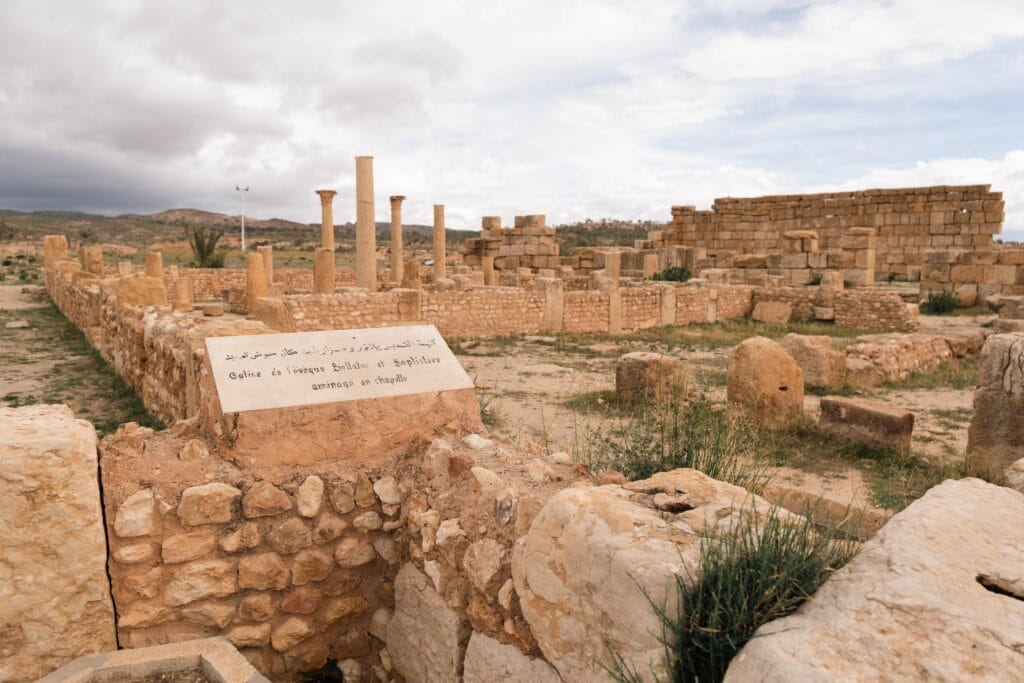
Rather than rebuilding the kasbah as a modern replica, Moroccan authorities largely preserved the site as a memorial and archaeological landscape. This approach acknowledged that the ruins themselves had become historical evidence—not only of the Saadian fortress but also of the earthquake that forever altered the city.
Today, visitors walking through Agadir Oufella encounter more than architectural remains. They experience a layered historical landscape where multiple moments coexist:
- the Amazigh origins of the region;
- the Portuguese frontier;
- the Saadian reconquest;
- centuries of Atlantic commerce;
- the tragedy of 1960;
- Morocco’s commitment to reconstruction and preservation.
From an archaeological perspective, the surviving ruins possess value precisely because they retain traces of these successive historical layers rather than presenting an idealized reconstruction.
Collective Memory and Cultural Resilience
Anthropologists distinguish between history and collective memory.
History attempts to reconstruct past events through documentary evidence, archaeology, and critical analysis.
Collective memory, by contrast, concerns how communities remember, interpret, and transmit those events across generations.
In Agadir, memories of the earthquake remain deeply embedded in family histories.
Many residents recall stories told by parents or grandparents who survived the disaster. These narratives describe not only destruction but also acts of solidarity, mutual aid, and extraordinary resilience.
Families searched tirelessly for missing relatives.
Neighbors rescued one another beneath collapsed buildings.
Communities shared food, shelter, clothing, and emotional support despite experiencing immense personal loss.
Such accounts reveal that disasters reshape social relationships as much as physical landscapes.
In this sense, Agadir’s modern identity is founded not only upon reconstruction but also upon remembrance.
Rebuilding a Modern Moroccan City
Following the earthquake, Moroccan authorities faced an unprecedented challenge.
Should the destroyed city be reconstructed exactly as before?
Or should an entirely new Agadir emerge?
Urban planners ultimately chose a different path.
The new city was built slightly south of the original urban center, using modern seismic engineering principles intended to reduce vulnerability to future earthquakes.
Wide avenues replaced many of the narrow streets characteristic of older Moroccan medinas.
Public buildings incorporated reinforced concrete designed to withstand seismic activity.
Residential districts, administrative institutions, hospitals, schools, hotels, and commercial centers were planned according to modern urban design principles.
This reconstruction transformed Agadir into one of Morocco’s most modern cities.
Unlike Fez or Marrakech, whose identities remain closely associated with medieval urbanism, Agadir represents Morocco’s twentieth-century architectural evolution.
Yet this modernization never erased the city’s Amazigh foundations.
Instead, modern Agadir continues to celebrate its indigenous heritage through museums, festivals, language, crafts, and public cultural institutions.
The Museum of Amazigh Heritage: Understanding the Soul of the Souss
No cultural visit to Agadir is complete without exploring the Museum of Amazigh Heritage (Musée Municipal du Patrimoine Amazigh).
Established to preserve and present the cultural traditions of southern Morocco, the museum provides an essential introduction to the civilizations that shaped the Souss long before modern tourism transformed the coastline.
Its collections include:
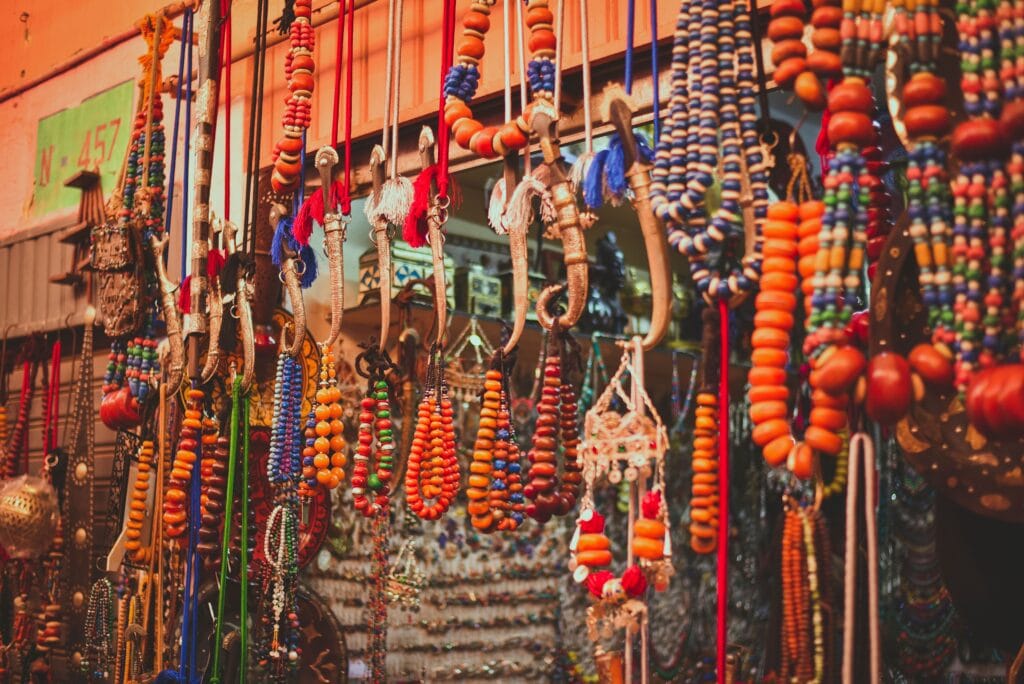
Amazigh Jewelry
Silver fibulae, necklaces, bracelets, earrings, talismans, and ceremonial ornaments illustrate the extraordinary craftsmanship of Amazigh artisans.
Rather than functioning merely as decoration, many objects expressed identity, protection, fertility, social status, and tribal affiliation.
Traditional Clothing
Visitors discover the remarkable diversity of textile traditions across southern Morocco.
Handwoven cloaks, embroidered garments, woolen shawls, leather accessories, and ceremonial attire reveal regional differences among Amazigh communities while illustrating continuity in techniques transmitted across generations.
Household Objects
Wooden utensils, pottery, weaving tools, agricultural implements, and domestic artifacts demonstrate how daily life reflected sophisticated adaptation to mountain and semi-arid environments.
These collections remind visitors that cultural heritage extends beyond monumental architecture to include ordinary objects shaping everyday existence.
Manuscripts and Historical Documents
Selected manuscripts illustrate the intellectual traditions of southern Morocco, including religious scholarship, customary law, and local historical memory.
Together, these materials highlight the diversity of Amazigh cultural expression beyond oral traditions alone.
Agadir as the Cultural Capital of the Souss
Although Marrakech often dominates international tourism campaigns, many scholars regard Agadir as the principal contemporary gateway to southern Morocco among Amazigh communities.
Nearly every journey into the Souss and Anti-Atlas begins here.
From Agadir, travelers can explore:
- Paradise Valley
- Taghazout
- Tifnit
- Tiznit
- Tafraoute
- Taroudant
- Imsouane
- Souss-Massa National Park
- Massa
- Aourir
- Imouzzer Ida Outanane
- Anti-Atlas mountain villages
- traditional igoudar (communal granaries)
Consequently, Agadir functions less as an isolated destination than as the cultural crossroads connecting Atlantic Morocco with Amazigh mountain societies.
Best Places to Visit in Agadir
For visitors seeking a deeper understanding of Agadir, the following sites offer experiences that combine history, nature, and culture.
Agadir Oufella
The restored viewpoint overlooking the Atlantic remains the city’s most important historical landmark.
From its summit, visitors appreciate why successive civilizations considered this hill strategically indispensable.
The panoramic view encompasses the Atlantic Ocean, the modern city, the port, the Souss Valley, and surrounding mountains.
Agadir Marina
Modern yet harmonious with the coastline, the marina reflects the city’s post-reconstruction transformation.
Restaurants, cafés, sailing facilities, and waterfront promenades create a lively atmosphere while offering spectacular sunset views.
Souk El Had
Containing thousands of shops, Souk El Had is among Morocco’s largest urban markets.
Unlike souvenir-oriented tourist bazaars, it continues serving local residents, preserving an authentic commercial environment.
Visitors encounter spices, argan oil, ceramics, textiles, Amazigh jewelry, carpets, leather goods, traditional clothing, fresh produce, and handcrafted objects representing nearly every region of southern Morocco.
Agadir Beach
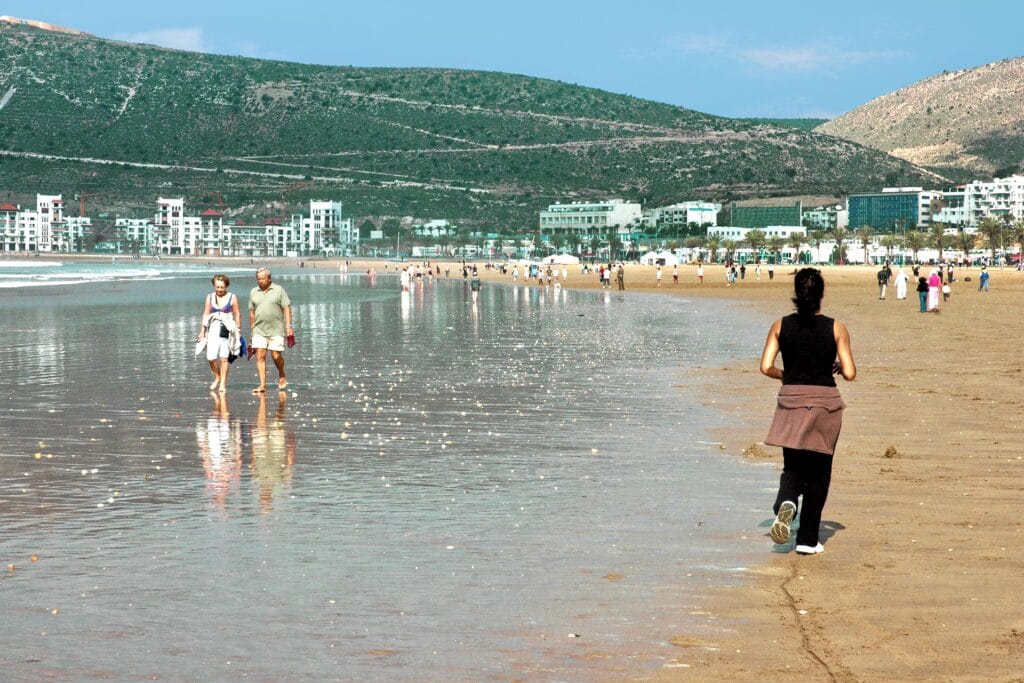
Stretching for nearly ten kilometers, Agadir Beach combines natural beauty with excellent infrastructure.
Its broad sandy shoreline, Atlantic breezes, and year-round mild climate have made it one of Morocco’s premier seaside destinations.
Unlike many Mediterranean beaches, the Atlantic coast offers dramatic ocean landscapes shaped by powerful tides and changing light.
Taghazout
Approximately twenty kilometers north of Agadir lies Taghazout, an Amazigh fishing village that has become internationally renowned for surfing.
Despite increasing tourism, elements of its traditional identity remain visible through local architecture, fishing culture, and community life.
For travelers interested in both coastal recreation and Amazigh heritage, Taghazout provides an ideal complement to Agadir.
Paradise Valley
Hidden within the foothills of the High Atlas, Paradise Valley offers a striking contrast to the Atlantic coastline.
Palm groves, natural pools, rocky gorges, and mountain streams create one of southern Morocco’s most celebrated landscapes.
Anthropologically, the valley also illustrates traditional irrigation systems, seasonal agriculture, and Amazigh adaptation to mountainous environments.
Souss-Massa National Park
South of Agadir lies one of Morocco’s most important protected ecosystems.
The park preserves wetlands, coastal dunes, estuaries, and habitats supporting numerous migratory birds, including the endangered Northern Bald Ibis.
Its conservation demonstrates how environmental heritage complements cultural heritage within the broader Souss region.
The Language of Agadir: Tachelhit as a Living Cultural Heritage
To truly understand Agadir, it is essential to appreciate the language that has shaped the region for centuries. While Modern Standard Arabic, Moroccan Darija, French, English, and Spanish are commonly heard in the city today, the historical language of the Souss is Tachelhit (Tashelhit or Shilha), one of the three principal varieties of Tamazight spoken in Morocco.
Tachelhit is not simply a means of communication. It carries the oral history, poetry, music, agricultural knowledge, customary law, and collective memory of Amazigh communities throughout the Souss, the Anti-Atlas, the western High Atlas, and neighboring coastal regions.
For generations, historical knowledge was transmitted through oral poetry (amarg) in Ahwach, storytelling, proverbs, songs, and public recitations rather than written chronicles alone. These traditions preserved genealogies, migration histories, tribal alliances, ethical principles, and ecological knowledge adapted to the mountain and semi-arid environments of southern Morocco.
Following the recognition of Tamazight as an official language of Morocco in the 2011 Constitution, increasing efforts have been made to promote its teaching, media presence, and public visibility. Today, visitors to Agadir will encounter bilingual public signs written in Arabic and Tifinagh, the modern Amazigh script officially adopted by the Royal Institute of Amazigh Culture (IRCAM).
For travelers, learning even a few Tachelhit expressions—such as greetings or words of thanks—often creates meaningful interactions with local residents and demonstrates respect for the region’s indigenous heritage.
Amazigh Hospitality: A Cultural Value Beyond Tourism
Hospitality in the Souss has deep anthropological roots that extend well beyond modern tourism.
In Amazigh communities, welcoming guests traditionally represented both a moral obligation and an expression of collective honor. Travelers crossing mountains, valleys, and semi-arid landscapes often depended upon the generosity of local families for food, shelter, and guidance. These customs developed in environments where cooperation increased the likelihood of survival.
Although urban life has changed many aspects of daily society, these values remain visible throughout Agadir.
Visitors are frequently welcomed with mint tea, homemade bread, argan oil, local honey, and conversation before any business takes place. This sequence reflects a social philosophy in which relationships take precedence over transactions.
Anthropologists have long noted that hospitality within Amazigh societies functions as a mechanism for building trust, strengthening alliances, and reinforcing communal identity. Even today, these practices continue to shape interactions between residents and visitors, giving Agadir a distinctive atmosphere compared with many international resort destinations.
The Cuisine of Agadir: Atlantic and Amazigh Traditions
Agadir’s cuisine reflects the meeting point of ocean, mountains, and fertile agricultural plains. Unlike the heavily urban culinary traditions associated with Morocco’s imperial cities, the gastronomy of the Souss emphasizes fresh ingredients, regional products, and Amazigh culinary techniques.

Among the city’s most characteristic dishes are:
Fresh Atlantic Seafood
The fishing port of Agadir is one of Morocco’s most important. Sardines, sea bream, sole, squid, octopus, and shrimp are prepared using simple methods that highlight freshness rather than elaborate seasoning.
Amlou
Perhaps the Souss’ most iconic specialty, amlou combines roasted almonds, argan oil, and honey into a rich spread traditionally served with warm bread. It represents one of the finest examples of Amazigh culinary heritage and reflects the economic importance of the argan tree.
Tagine
Although tagine is found throughout Morocco, southern variations often incorporate local herbs, preserved lemons, olives, seasonal vegetables, and free-range meat from surrounding rural communities.
Couscous
Prepared especially on Fridays and during family gatherings, couscous remains an important symbol of hospitality and communal life. Regional recipes frequently feature vegetables cultivated in the fertile Souss Valley.
Argan Oil
Recognized internationally for both culinary and cosmetic uses, argan oil remains deeply connected to Amazigh women’s cooperatives, traditional ecological knowledge, and sustainable resource management. Visiting these cooperatives offers travelers valuable insight into local economies and gendered craft traditions.
Agadir and the Argan Landscape
The region surrounding Agadir contains the world’s largest natural forests of the argan tree (Argania spinosa), a species found almost exclusively in southwestern Morocco. In 1998, UNESCO designated the Arganeraie Biosphere Reserve, recognizing both its ecological importance and the close relationship between local communities and this unique landscape.
For Amazigh families, the argan tree has long been far more than an economic resource. It provides edible oil, livestock fodder, fuelwood, shade, and contributes to soil conservation in semi-arid environments. Traditional harvesting and oil extraction methods, often carried out by women, embody generations of ecological knowledge.
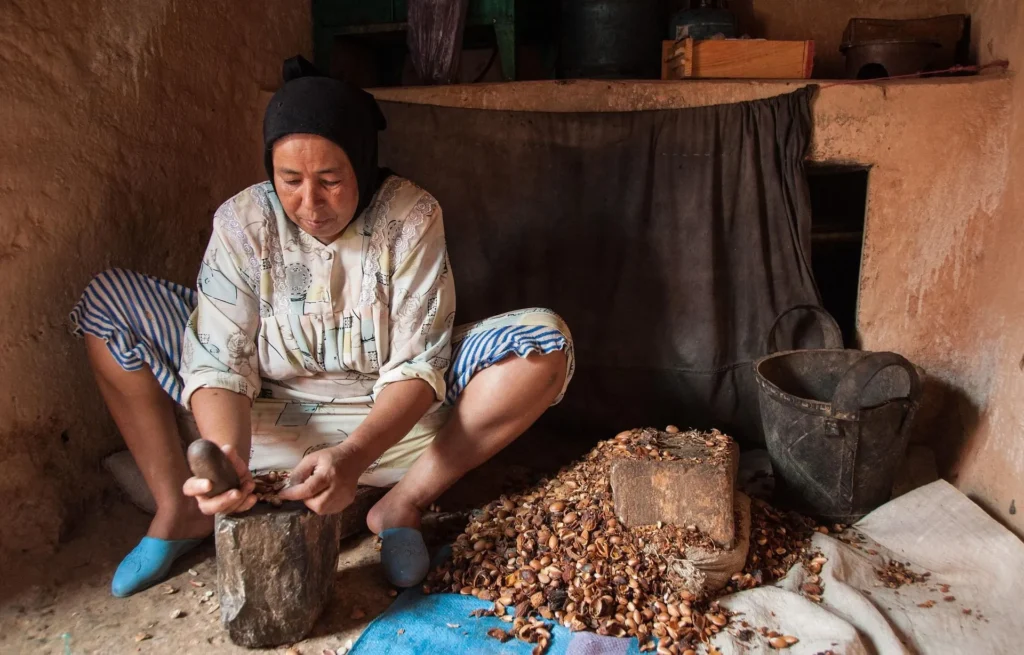
Travelers interested in sustainable tourism can visit women’s cooperatives where the production of culinary and cosmetic argan oil is demonstrated, offering a deeper appreciation of the cultural significance of this remarkable tree.
Comparison Table: Agadir, Fez, Marrakech, and Taroudant
| Feature | Agadir | Fez | Marrakech | Taroudant |
|---|---|---|---|---|
| Primary identity | Modern Atlantic city with Amazigh roots | Intellectual and spiritual capital | Imperial and commercial city | Historic capital of the Souss |
| Historic landmark | Agadir Oufella | Al-Qarawiyyin and the Medina | Koutoubia, Bahia Palace, Jemaa el-Fnaa | Saadian walls and kasbah |
| Urban character | Modern reconstruction after 1960 | Medieval medina | Imperial city with living souks | Authentic regional heritage city |
| Main attraction | Beaches, Amazigh heritage, coastal landscapes | Scholarship, architecture, crafts | Palaces, gardens, culture | Amazigh culture, markets, history |
| Best for | Coastal travel and Amazigh exploration | Cultural and historical immersion | Imperial heritage and urban experiences | Slow cultural tourism |
Comparison Table: Agadir and Other Atlantic Cities
| City | Country | Distinctive Character | Main Heritage |
|---|---|---|---|
| Agadir | Morocco | Modern coastal city rebuilt after 1960 | Agadir Oufella, Amazigh culture |
| Essaouira | Morocco | Historic fortified Atlantic port | UNESCO-listed medina, Gnawa heritage |
| El Jadida | Morocco | Portuguese colonial city | Portuguese Cistern and fortifications |
| Safi | Morocco | Historic fishing and ceramics center | Pottery traditions and maritime history |
| Dakhla | Morocco | Atlantic desert peninsula | Coastal ecology and water sports |
Frequently Asked Questions About Agadir Morocco
Where is Agadir Morocco?
Agadir is located on Morocco’s southern Atlantic coast in the Souss-Massa region, approximately 260 kilometers west of Marrakech.
What is Agadir famous for?
Agadir is renowned for its long Atlantic beach, modern urban design, Agadir Oufella, Amazigh heritage, seafood, surfing, and year-round mild climate.
What does the word “Agadir” mean?
In the Tachelhit language, agadir refers to a fortified communal granary or protected storage complex, reflecting Amazigh traditions of collective resource management.
What happened to Agadir in 1960?
On 29 February 1960, a devastating earthquake destroyed much of the city, including the historic kasbah. Modern Agadir was subsequently rebuilt using earthquake-resistant planning principles.
Is Agadir Oufella worth visiting?
Yes. Agadir Oufella offers panoramic views over the city and Atlantic coast while providing insight into the region’s Amazigh, Portuguese, and Saadian history.
How many days should you spend in Agadir?
Three to five days allow visitors to explore Agadir itself while taking day trips to Paradise Valley, Taghazout, Tiznit, or the Anti-Atlas.
What are the best places to visit in Agadir?
Highlights include Agadir Oufella, Souk El Had, the Museum of Amazigh Heritage, Agadir Beach, Taghazout, Paradise Valley, Souss-Massa National Park, and the Marina.
Is Agadir a good destination for families?
Yes. The city combines beaches, parks, cultural attractions, family-friendly accommodations, and easy access to nature.
Which language is spoken in Agadir?
Moroccan Arabic and French are widely spoken, while Tachelhit remains the traditional language of the region. English is increasingly common in tourism.
What is the best time to visit Agadir?
Spring (March–May) and autumn (September–November) offer particularly pleasant temperatures, although Agadir’s mild climate makes it a year-round destination.
Conclusion: Agadir, Where the Atlantic Meets Amazigh Memory
Agadir is a city of remarkable contrasts. It is at once ancient and modern, coastal and mountainous, resilient and forward-looking. Beneath its contemporary skyline lies a landscape shaped by Amazigh communities, Atlantic commerce, Saadian ambition, and the enduring memory of Agadir Oufella.
Unlike Morocco’s imperial capitals, Agadir tells a story centered on adaptation. From its origins as a strategic coastal settlement to its reconstruction after the earthquake of 1960, the city has repeatedly transformed while maintaining strong ties to the cultural traditions of the Souss.
For historians, Agadir offers insight into maritime trade, frontier politics, and regional state formation. For archaeologists, its kasbah preserves evidence of successive historical periods despite the destruction wrought by natural disaster. For anthropologists, the city demonstrates how language, hospitality, craftsmanship, and collective memory continue to shape identity in a rapidly changing world.
Visitors who look beyond the beach will discover a richer narrative—one found in the stones of Agadir Oufella, the aromas of Souk El Had, the artistry of Amazigh jewelry, the voices of Tachelhit speakers, and the landscapes of the argan forests and surrounding mountains.
To explore Agadir is therefore to encounter not only one of Morocco’s most welcoming cities but also a living expression of Amazigh resilience, where history is preserved not only in monuments but in the enduring traditions of its people.
References (APA Style)
- Abun-Nasr, J. M. (1987). A History of the Maghrib in the Islamic Period. Cambridge University Press.
- Brett, M., & Fentress, E. (1996). The Berbers. Blackwell.
- Camps, G. (1980). Berbères: Aux marges de l’histoire. Éditions des Hespérides.
- Ennaji, M. (2005). Multilingualism, Cultural Identity, and Education in Morocco. Springer.
- Hoffman, K. (2008). We Share Walls: Language, Land, and Gender in Berber Morocco. Wiley-Blackwell.
- Lightfoot, D. R., & Miller, J. A. (1996). Sijilmassa and trans-Saharan trade.
- Pennell, C. R. (2013). Morocco: From Empire to Independence. Oneworld.
- UNESCO. Arganeraie Biosphere Reserve.
- UNESCO. Memory and conservation resources relating to Moroccan heritage.
- IRCAM (Royal Institute of Amazigh Culture) publications on Tachelhit language and Amazigh heritage.