
Rif Mountains: History, Amazigh Culture, and Living Heritage of Northern Morocco
Introduction: Where the Mountains Meet the Mediterranean
Northern Morocco possesses a landscape unlike any other part of the country. Here, mountains do not simply rise from an inland plateau or form a distant horizon. They descend dramatically toward the Mediterranean, their valleys cut by streams and seasonal rivers, their slopes covered in forests, cultivated terraces, olive groves, and scattered villages.
This is the world of the Rif Mountains.
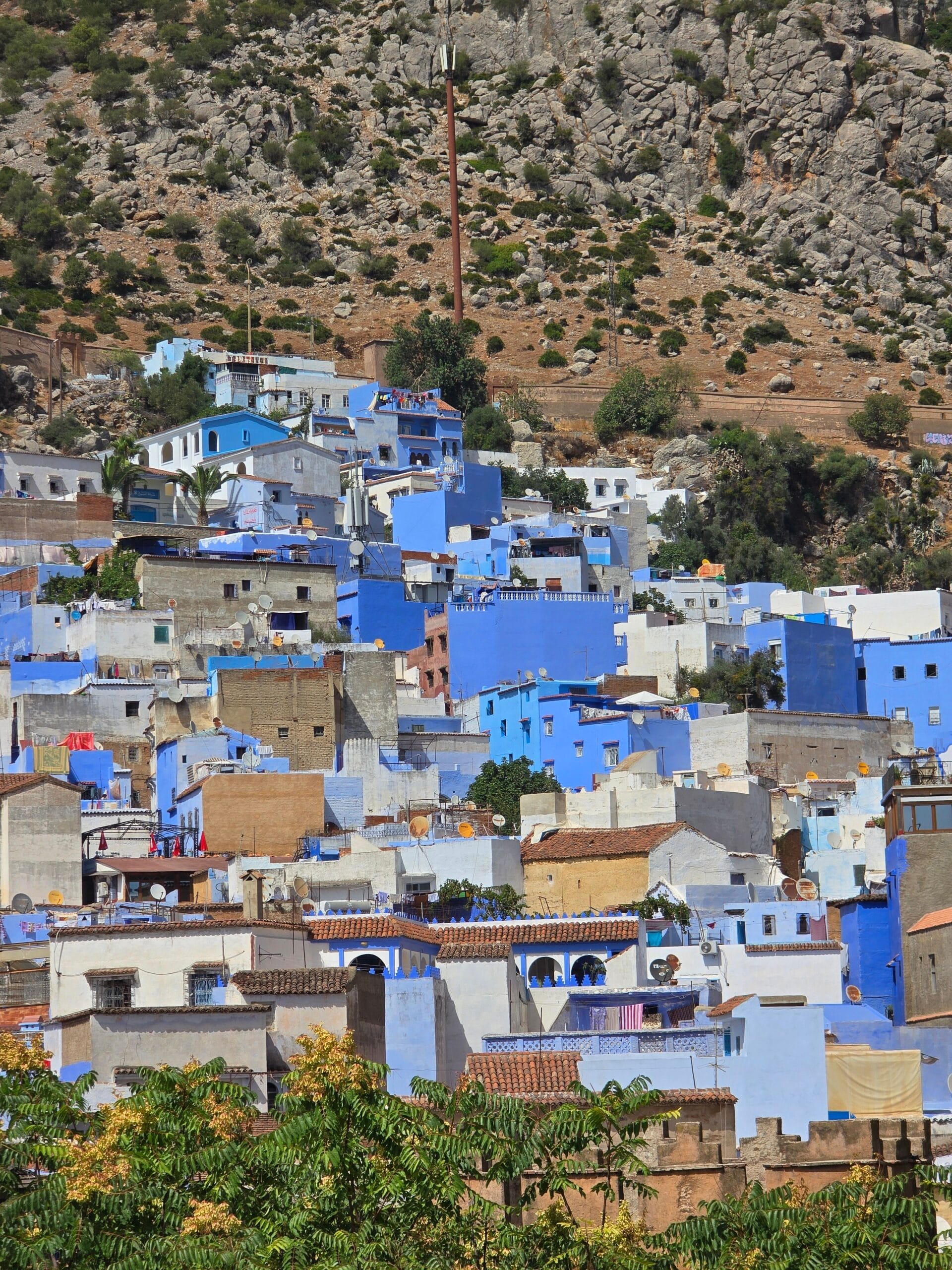
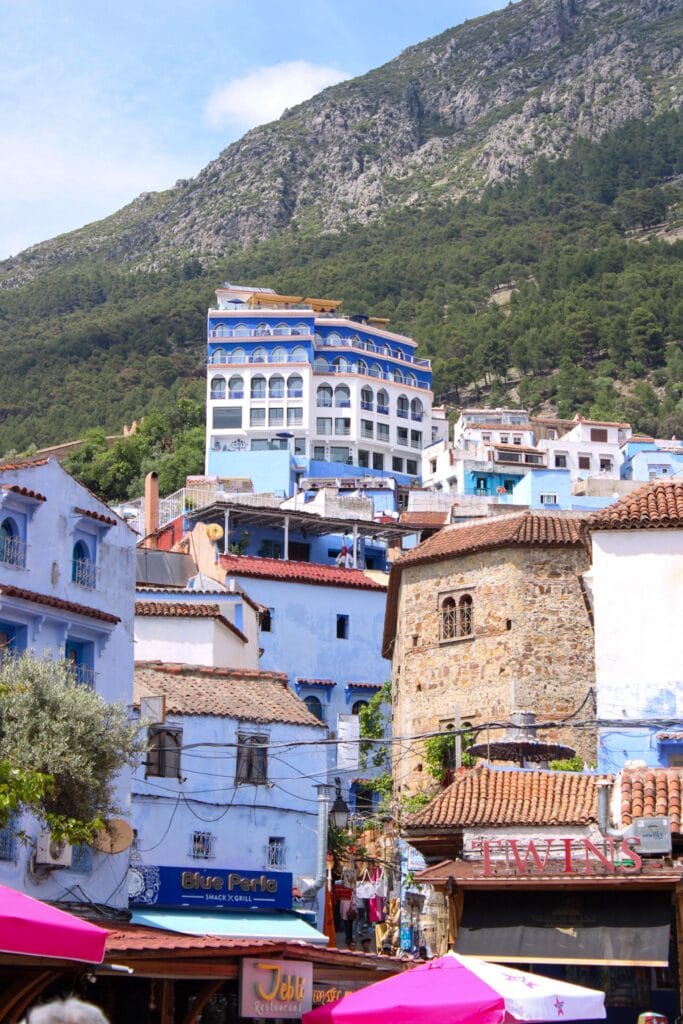
The Rif is often introduced to travelers through its most recognizable images: the blue-painted streets of Chefchaouen, the Mediterranean coastline around Al Hoceima, mountain villages surrounded by green hills, and winding roads disappearing into rugged terrain. Yet these images reveal only one layer of a much deeper landscape.
The Rif is simultaneously a geographical system, a historical frontier, a cultural region, and a mosaic of communities whose identities have been shaped by mountains, Mediterranean connections, agriculture, language, religion, trade, migration, and political history.
Its cultural geography is particularly complex. The Rif is not culturally uniform. Amazigh-speaking Rifian communities, Senhaja communities, Arabophone Jbala populations, Ghomara communities, and other groups have inhabited neighboring landscapes and interacted for centuries. A major study of Rifian vernacular architecture therefore describes the region as a meeting ground involving Jbala, Rifian Amazigh, Senhaja, and peripheral populations, rather than as a culturally homogeneous mountain zone.
This diversity is essential to understanding the region.
The Rif should not be reduced to the idea of an isolated “Berber mountain.” Nor should its history be presented solely through colonial conflict or tourism. Its story is much older and more complicated. The mountain has been a place of agriculture and pastoralism, religious life, local political organization, trade, migration, resistance, and cultural exchange.
Its geography has also shaped its societies in unusually powerful ways. The rugged relief fragmented settlements into numerous valleys and small territorial communities. Historical geographical studies have emphasized that this fragmentation into small “countries” or localized territories is one of the fundamental characteristics of the Rif.
To understand the Rif mountains, therefore, you have to read the landscape almost as you would read an historical document.
A valley tells you where people could cultivate. A mountain pass tells you where communities could communicate. A forest tells you something about ecological adaptation. A village house reveals decisions about privacy, security, climate, family organization, and available building materials. A language reveals historical relationships that political borders cannot always explain.
And beneath all of these layers lies an enduring question:
How did people transform one of Morocco’s most rugged mountain environments into a lived cultural landscape?
Table of Contents
What Are the Rif Mountains?
The geographical identity of the Rif mountains
The first distinction is important.
Although the Rif is frequently discussed alongside the Atlas Mountains because both form major Moroccan mountain landscapes, the Rif is not simply a northern branch of the Atlas.
Geologically and structurally, the Rif belongs to the mountain systems associated with the Gibraltar Arc and the western Mediterranean, with geological relationships extending toward southern Spain. Its formation reflects complex tectonic processes connected to the convergence of the African and Eurasian plates.
This geological history produced a landscape characterized by strongly dissected relief, steep slopes, folded structures, sedimentary formations, limestone and dolomitic massifs, schists, marls, and other geological materials.
The result is a mountain environment that looks very different from the broad high-altitude massifs of the High Atlas.
The Rif is generally lower than the High Atlas, but altitude alone does not determine how mountainous a landscape feels.
A mountain of 2,000 meters rising sharply above deeply incised valleys can produce an extraordinarily rugged environment.
The central Rif’s Jbel Tidirhine reaches approximately 2,450 meters, making it the highest major summit associated with the Rif. Yale’s eHRAF geographical summary places Adrar n-Tidighin at approximately 2,458 meters.
The significance of the Rif therefore lies not simply in maximum elevation but in the combination of:
- steep relief,
- Mediterranean climate,
- deeply dissected valleys,
- forest ecosystems,
- limestone formations,
- coastal landscapes,
- agricultural terraces,
- and dense human settlement.
Where are the Rif Mountains?
The Rif occupies northern Morocco, extending broadly along the Mediterranean side of the country.
Its northern edge is defined dramatically by the Mediterranean Sea.
To the south, the Rif transitions into the pre-Rif and neighboring upland regions, while the eastern and western portions gradually develop different ecological and cultural characteristics.
The Rif cannot be understood as a perfectly defined administrative region because its geographical, cultural, linguistic, and political boundaries do not always coincide.
This is one reason why different sources may give somewhat different definitions of its extent.
The western Rif includes areas around Chefchaouen, Tétouan and parts of the Jbala country, while the central and eastern Rif include landscapes associated with communities around Al Hoceima, Targuist, Ketama, Nador, Driouch and surrounding territories.
The Moroccan National Tourist Office describes Morocco’s major mountain landscapes separately, including the High Atlas, Middle Atlas, Anti-Atlas and other systems, while the Rif occupies the mountainous north.
For the purposes of this article, the most useful definition is geographical rather than administrative:
The Rif is the mountainous Mediterranean region of northern Morocco whose physical geography, ecological diversity, and human history have produced one of the country’s most distinctive cultural landscapes.
The Borders of the Rif Mountains
The Mediterranean to the north
The Mediterranean is perhaps the most important geographical feature for understanding the Rif.
Unlike the High Atlas, which is primarily perceived through its relationship with inland valleys, plateaus and the Saharan margin, the Rif exists in direct dialogue with the sea.
The mountains approach the Mediterranean along much of northern Morocco, producing spectacular coastal relief.
This relationship created opportunities and constraints simultaneously.
The sea provided:
- access to maritime networks,
- fishing resources,
- coastal settlements,
- communication routes,
- and connections with the wider Mediterranean world.
But the mountains also created barriers.
Travel between coastal and inland communities frequently required movement through narrow valleys and mountain passes.
Consequently, the Rif developed a geographical pattern in which communities could be simultaneously connected to wider networks and strongly attached to their own local territories.
The southern transition
The southern boundary is much less visually obvious.
Instead of one continuous wall marking where the Rif suddenly ends, there is a gradual transition through the Pre-Rif and surrounding uplands.
This transition is historically important because the Rif was never completely isolated from the agricultural plains and inland political centers of Morocco.
Goods, religious institutions, political authorities, travelers, and languages moved across these transition zones.
Thus, the mountains should not be imagined as a sealed cultural fortress.
They were more accurately a selectively permeable landscape.
People moved through them, but geography influenced the routes, speed, and character of that movement.
A Mountain of Extraordinary Geographical Diversity
Why the Rif landscape changes so quickly
One of the most remarkable characteristics of the Rif mountains is the rapid geographical change that can occur over relatively short distances.
A traveler can move from Mediterranean coastline to forested mountain slopes and then into cultivated valleys and high mountain environments within a relatively small geographical area.
Historical geomorphological research emphasizes the extraordinary complexity of Rifian relief. Gérard Maurer’s work on the central Moroccan Rif describes a highly contrasted mountain environment in which humid western forests contrast with more semi-arid and steppe-like eastern landscapes.
This east-west variation is crucial.
The western Rif generally receives greater Mediterranean influence and contains relatively humid landscapes.
The eastern Rif is considerably drier.
This ecological contrast has influenced:
- agriculture,
- vegetation,
- settlement,
- pastoralism,
- architecture,
- and economic activity.
Forests and mountain ecology
The Rif contains important forest ecosystems.
Depending on elevation, aspect, rainfall and local conditions, the landscape may include oak forests, pine species, shrublands, cultivated olive landscapes, and other Mediterranean vegetation.
The forests have historically been more than scenery.
They have provided:
- fuel,
- timber,
- grazing resources,
- wild foods,
- medicinal plants,
- construction materials,
- and ecological protection for soils and watersheds.
This relationship between mountain communities and ecological resources is central to understanding Moroccan mountain history.
Research on long-term human impact in Moroccan mountain environments has used palaeoecological evidence from the Rif and Middle Atlas—including pollen and geochemical records—to reconstruct changes in forest, soil and resource exploitation over millennia.
This is important because it moves the discussion beyond the simplistic idea of “ancient people living naturally in untouched mountains.”
Mountain landscapes are historical landscapes.
People have been modifying them for generations.
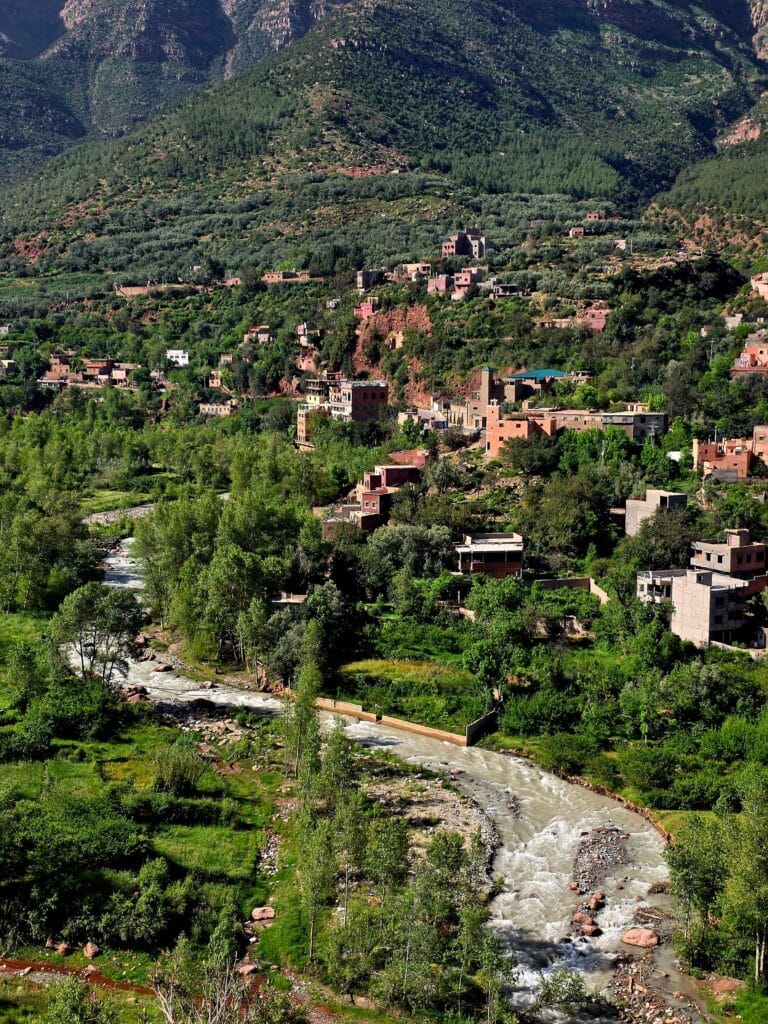
The Rivers and Valleys of the Rif mountains
Water as the organizer of settlement
In mountainous environments, water frequently determines where permanent settlement becomes possible.
The Rif’s valleys therefore have enormous historical importance.
Streams and rivers descend through steep terrain, creating narrow agricultural corridors.
Where valley floors or terraces permit cultivation, communities can develop more permanent agricultural systems.
Where slopes are too steep, cultivation becomes more difficult and other activities become more important.
This creates a close relationship between:
mountain → water → soil → agriculture → settlement → community.
The geography of the Rif therefore cannot be separated from its human geography.
Mediterranean climate and agriculture
The Rif’s Mediterranean climate supports agricultural systems that differ substantially from Morocco’s more arid southern mountain regions.
Olive cultivation has been particularly important.
Other crops vary according to altitude, rainfall, soil and local traditions.
Agricultural landscapes may combine:
- olives,
- cereals,
- fruit trees,
- vegetables,
- livestock,
- and household gardens.
In some areas, agricultural production has historically been closely integrated with household economies rather than organized exclusively around large-scale commercial production.
This matters anthropologically because the farm, household, village, and surrounding landscape have often functioned as one interconnected economic unit.
The Peoples of the Rif mountains: A Cultural Mosaic
Why “Rifian” does not mean one single culture
The phrase “Rifian culture” is useful, but it can also be misleading if it implies cultural uniformity.
The Rif is a mosaic.
Among its communities are Amazigh-speaking groups, Arabophone Jbala communities, Senhaja populations, Ghomara communities and other groups whose identities have evolved through centuries of interaction.
The linguistic and cultural boundaries are therefore much more complex than a simple division between “Arab” and Amazigh “ Berber.”
The scholarly literature on Rifian vernacular architecture explicitly identifies the region as a meeting place of at least three major cultural formations: Jbala, Rifian Amazigh, and Senhaja, alongside other peripheral populations.
That complexity should be preserved in any serious article about the region.
The Amazigh Heritage of the Rif mountains
The Rif mountains as an Amazigh cultural region
A substantial portion of the Rif mountains is historically associated with Amazigh-speaking communities.
The most widely recognized Amazigh language of the region is Tarifit, although linguistic diversity exists and the distribution of languages does not correspond perfectly to modern administrative boundaries.
Tarifit is part of the wider Amazigh linguistic family of North Africa.
Its presence in the Rif represents far more than a communication system.
Language carries:
- place names,
- agricultural terminology,
- family relationships,
- oral poetry,
- proverbs,
- songs,
- historical memory,
- and concepts of landscape.
For this reason, linguistic preservation is inseparable from cultural preservation.
Tarifit and cultural identity
Tarifit has historically functioned as a major marker of local identity in many eastern and central Rif communities.
However, language use has never existed in isolation.
Arabic varieties, particularly Moroccan Arabic, have long interacted with Amazigh languages in the region.
Modern migration, schooling, mass media, urbanization and international migration have introduced additional linguistic influences.
Consequently, the contemporary linguistic landscape of the Rif is dynamic.
A serious cultural study should therefore avoid presenting Tarifit as a frozen language belonging exclusively to the past.
It is a living language whose speakers continuously negotiate identity in changing social environments.
Rif Oral Tradition: History Without Archives
Memory in the spoken word
Written documents are only one way societies preserve historical knowledge.
In mountain communities, oral traditions can preserve memories of:
- ancestors,
- migration,
- tribal relationships,
- land,
- conflicts,
- saints,
- agricultural knowledge,
- marriage,
- moral values,
- and community events.
This is especially significant in societies where local history was not always recorded in formal written archives.
Oral poetry and storytelling therefore deserve to be treated as historical sources—but with methodological caution.
An oral tradition is not necessarily a literal transcript of the past.
It is a form of cultural memory.
Its value lies not only in whether every detail is factually verifiable but also in what it reveals about how communities understand their own history.
The Social Organization of Rif mountains Communities
Mountain geography and local political organization
The fragmentation of the Rif landscape contributed historically to strong local territorial organization.
Small valleys and difficult terrain could reinforce the importance of:
- lineage,
- village,
- tribe,
- local assemblies,
- religious figures,
- customary norms,
- and negotiated alliances.
Ethnoarchaeological research on northeastern Rif communities has examined historical and ethnographic evidence suggesting segmentary forms of political organization among indigenous mountain populations, while also emphasizing the later importance of religious lineages and Islamic institutions as mediators.
This is an important reminder that Rif society cannot be understood through a simplistic opposition between “tribal tradition” and “Islamic society.”
These systems interacted.
Community and customary law
Across Amazigh Morocco, local communities historically developed mechanisms for regulating access to resources and managing social relationships.
The terminology and institutions varied considerably between regions.
In some communities, collective decision-making could involve village assemblies and customary practices concerning:
- water,
- grazing,
- forests,
- agricultural land,
- disputes,
- and communal responsibilities.
It would be misleading to assume that exactly the same institutional structure existed throughout the Rif.
Instead, the broader pattern demonstrates an important principle:
mountain societies often develop institutions adapted to managing scarce or unevenly distributed resources.
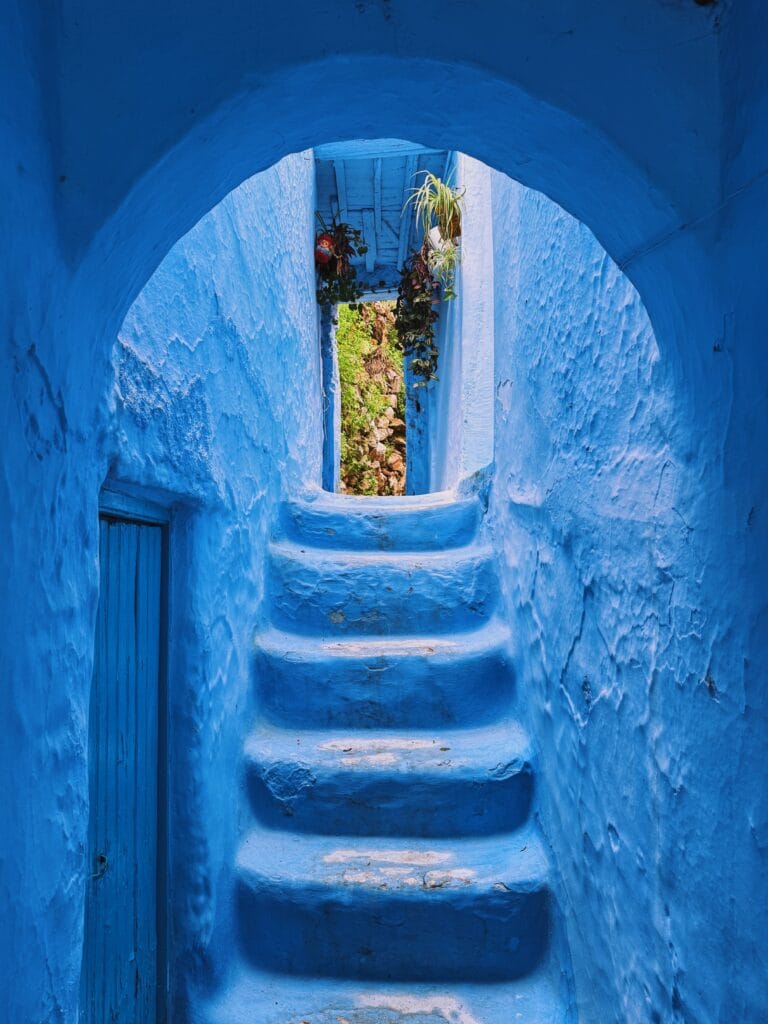
Rif Architecture: The Quiet Heritage of the Mountain
Beyond monumental architecture
When people think about Moroccan architecture, they often imagine:
- riads,
- imperial gates,
- kasbahs,
- mosques,
- palaces,
- and monumental medinas.
The Rif mountains offers a different architectural heritage.
Much of its cultural architecture is vernacular rather than monumental.
The rural house is frequently modest, functional, and adapted to local environmental conditions.
A scholarly inventory of Rifian vernacular architecture describes rural houses as relatively introverted, sober and evolutionary structures whose forms vary according to local environments and cultural traditions.
This is precisely why such architecture deserves greater attention.
Heritage should not be measured only by ornament.
Sometimes heritage is hidden in the ordinary.
The Rifian rural house
The traditional rural house could be constructed using locally available materials and adapted to:
- slope,
- rainfall,
- temperature,
- family structure,
- privacy,
- agricultural activity,
- and available resources.
Western Rif mountains houses associated with the Jbala region show particularly interesting variations in modules, courtyards, roof forms, materials and colors.
This demonstrates how architecture can function as an environmental adaptation rather than simply an aesthetic choice.
Women and the Cultural Economy of the Rif mountains
Women have played a central role in maintaining household and community knowledge.
Their contribution can include:
- food processing,
- agricultural work,
- textile production,
- embroidery,
- household crafts,
- child education,
- oral transmission,
- medicinal knowledge,
- and ceremonial traditions.
These activities are sometimes described as “domestic” and therefore overlooked by conventional economic histories.
Anthropology challenges this distinction.
An activity carried out inside a household may contribute directly to the reproduction of the community’s economy and identity.
The preservation of textile traditions, food practices, clothing styles and domestic knowledge is therefore part of the cultural history of the Rif.
Rif mountains Textiles, Clothing, and Visual Identity
Traditional clothing can communicate identity through:
- color,
- material,
- embroidery,
- jewelry,
- weaving,
- and regional style.
However, clothing should not be treated as a rigid ethnic uniform.
Styles change.
People borrow.
Trade introduces new materials.
Urban fashion transforms rural clothing.
Migration creates hybrid forms.
Consequently, the most interesting question is not simply:
“What does traditional Rif clothing look like?”
It is:
“How have Rif communities used clothing to express identity while adapting to changing social conditions?”
That question transforms a tourist description into cultural analysis.
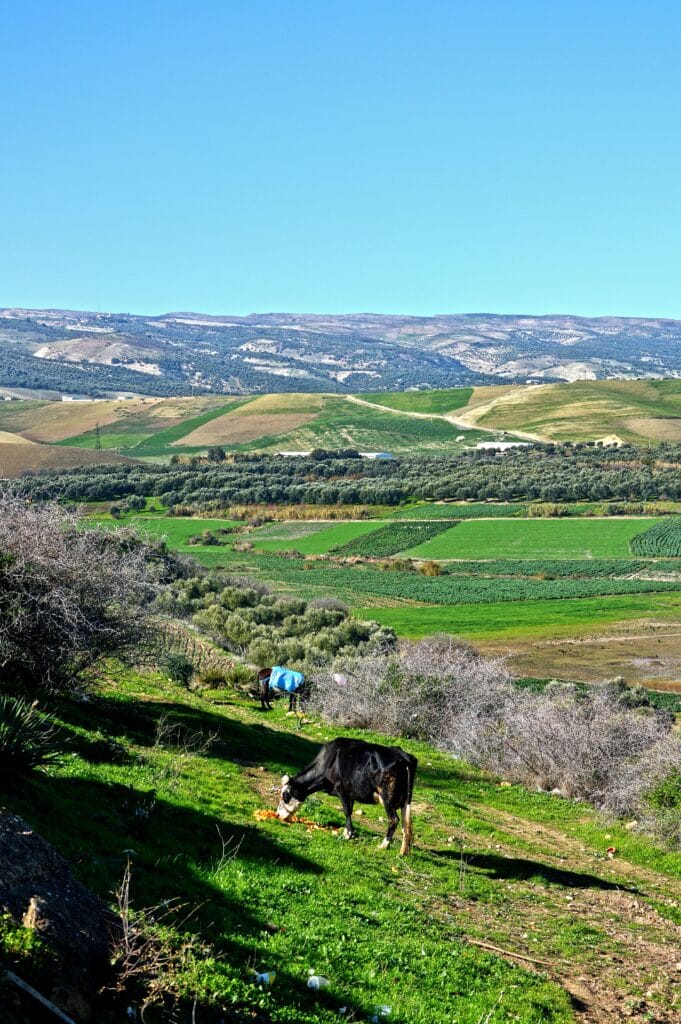
Rif mountains Agriculture: Life on Difficult Terrain
Making a living from the mountains
Agriculture in the Rif mountains has always required adaptation.
Steep slopes, fragmented valleys and varying rainfall make agricultural production highly dependent on local environmental knowledge.
Farmers have historically combined different strategies rather than relying on one crop or one economic activity.
These can include:
- cereals,
- olives,
- fruit trees,
- livestock,
- household gardens,
- gathering,
- and seasonal work.
Such diversity reduces dependence on a single resource.
It also reflects a broader principle found across mountain societies:
The more unpredictable the environment, the more valuable diversified livelihoods become.
The Olive Tree and the Mediterranean Rif
The olive tree deserves special attention.
It is not merely an agricultural crop.
Across Mediterranean Morocco, the olive tree can represent continuity between:
- land,
- family,
- food,
- economy,
- inheritance,
- and landscape.
Olive cultivation is particularly suited to Mediterranean environments and can persist across generations.
An old olive grove therefore becomes a living historical landscape.
The tree standing today may be part of an agricultural system whose cultural memory extends across several generations.
The Rif mountains Forest and Human Environmental Knowledge
Living with the forest
Mountain communities historically developed detailed knowledge of local ecosystems.
They knew:
- which plants could be eaten,
- which could be used medicinally,
- which wood was suitable for construction,
- which areas were appropriate for grazing,
- when certain resources became available,
- and how seasonal changes affected livestock and agriculture.
This knowledge constitutes what contemporary scholarship increasingly calls traditional ecological knowledge.
It is not necessarily static or perfect.
It changes through experience.
But it represents accumulated observations transmitted through generations.
The Rif mountains and Mediterranean Trade
The Rif’s location gives it a fascinating historical position.
It is simultaneously:
- African,
- Mediterranean,
- mountainous,
- rural,
- and connected to European maritime networks.
The Mediterranean was never merely a physical boundary.
It was a corridor.
Through it came:
- goods,
- ideas,
- technologies,
- religious influences,
- political pressures,
- and people.
The Rif’s proximity to Iberia therefore contributed to its historical importance.
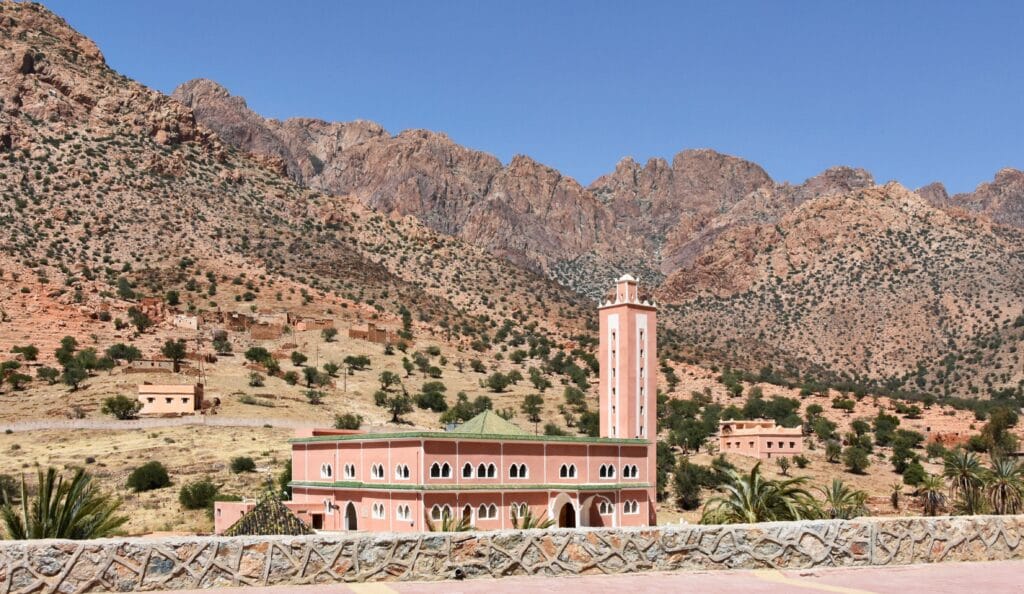
Islam and the Spiritual Landscape of the Rif mountains
Islam became deeply embedded in the social and cultural life of northern Morocco.
But Islam in the Rif developed through local institutions and historical experiences.
Religious scholars, saints, zawiyas, mosques and sacred places could play important roles in community life.
In some contexts, religious figures could function as mediators during conflicts or between competing social groups.
Historical and ethnographic research into northeastern Rif political organization has specifically examined the role of “saintly” lineages associated with Sufi traditions as mediators in disputes.
This reveals another important feature of Moroccan mountain society:
religion was not only a matter of individual belief; it could also be embedded within social institutions.
Chefchaouen and the Rif Mountains Landscape
More than the “Blue Pearl”
Chefchaouen has become one of Morocco’s most recognizable destinations.
Its blue-painted streets have made it internationally famous.
But the city should not be separated from the mountain environment surrounding it.
Chefchaouen developed within a Rifian landscape where:
- water,
- valleys,
- forests,
- agricultural terraces,
- mountain passes,
- and regional trade
shaped settlement and movement.
UNESCO has recently highlighted the exceptional geological and cultural heritage around the Chefchaouen aspiring UNESCO Global Geopark, noting 42 sites of geological significance and the area’s combination of geological, ecological and cultural heritage.
This is an important development for the region because it recognizes that heritage is not simply a historic building.
It can be an entire landscape.
Al Hoceima and the Mediterranean Face of the Rif
Al Hoceima offers another perspective.
Here the mountains meet the Mediterranean dramatically.
The region combines:
- coastal cliffs,
- beaches,
- mountain valleys,
- agricultural communities,
- and Amazigh cultural heritage.
The coastline is therefore not separate from the mountains.
It is part of the same geographical system.
This makes the Rif particularly valuable for studying how mountain and maritime environments interact.
The Rif War and the Politics of Mountain Resistance
A critical chapter in modern history
No serious article about the Rif can ignore the Rif War of the 1920s.
The conflict became one of the most significant episodes of anti-colonial resistance in North African history.
The Rif’s geography played an important role.
Mountainous terrain could complicate military movement and strengthen local territorial organization.
The resistance became strongly associated with Mohamed Ibn Abd el-Krim al-Khattabi, commonly known as Abd el-Krim.
Research by historian Jonathan Wyrtzen examines how Abd el-Krim, associated with the Ait Waryaghar, helped construct an anti-colonial political field during the early 1920s after the defeat of Spanish forces at Anoual in 1921.
The movement eventually produced what is commonly known as the Republic of the Rif.
Why the Rif War matters beyond military history
The Rif War should not be presented simply as a sequence of battles.
It raises deeper questions about:
- sovereignty,
- colonialism,
- tribal organization,
- political legitimacy,
- religion,
- territorial authority,
- and the relationship between mountain communities and central states.
It also demonstrates how geography can influence political history.
The mountain was not merely the location of resistance.
Its social and geographical structure helped shape the possibilities of resistance.
Colonialism and the Transformation of the Rif
European colonial intervention profoundly altered the region.
The Spanish Protectorate established new political and military structures in northern Morocco.
Colonial authorities sought to control territory, communication routes, taxation, political leadership and military organization.
These interventions disrupted existing systems and introduced new institutions.
At the same time, colonial mapping and administration produced new ways of categorizing communities and territories.
This is an important anthropological point.
Colonialism did not simply occupy an existing map.
It helped produce new administrative understandings of the landscape.
The Rif After Independence
Morocco’s independence did not erase the historical challenges facing the Rif.
The region experienced economic difficulties, migration, political tensions and changing relationships between local communities and the central state.
Migration became particularly important.
Many Rif families developed connections with:
- Europe,
- Moroccan cities,
- Tangier,
- Tetouan,
- Casablanca,
- Rabat,
- and other destinations.
This created transnational communities.
The Rif today therefore exists not only in northern Morocco.
It also exists in the memories, investments, languages, family networks and cultural practices of Rifian communities abroad.
Migration and the Modern Rifian Identity
Migration has transformed Rifian society in complex ways.
Remittances can support:
- housing,
- education,
- agriculture,
- local businesses,
- and infrastructure.
At the same time, migration can accelerate social change.
People returning from Europe may bring:
- new architectural styles,
- new consumption patterns,
- new political ideas,
- multilingualism,
- and different expectations about education and employment.
The result is neither simple cultural loss nor simple cultural preservation.
It is cultural transformation.
The Rif and Amazigh Cultural Revival
The modern Amazigh cultural movement has renewed attention to:
- Tarifit,
- Tifinagh,
- Amazigh history,
- oral literature,
- traditional clothing,
- music,
- place names,
- and regional heritage.
This revival is particularly significant in the Rif because language and identity remain strongly connected.
The use of Amazigh cultural symbols in contemporary art and media demonstrates that heritage is not necessarily something people simply inherit.
It can also be actively reconstructed and reinterpreted.
Music and Cultural Memory in the Rif
Music represents one of the most powerful forms of cultural memory.
Rifian musical traditions have historically included forms of singing, poetry and communal performance.
Modern artists have transformed these traditions through:
- recordings,
- digital platforms,
- migration,
- fusion with international genres,
- and contemporary political expression.
This demonstrates a broader principle:
A cultural tradition remains alive not because it never changes, but because people continue to find reasons to use it.
Traditional Rif Hospitality
Hospitality is an important feature of Moroccan social life, but it should not be presented as a simplistic stereotype.
In rural Rif communities, hospitality historically existed within social relationships based on:
- family,
- neighborhood,
- kinship,
- reciprocal obligation,
- and community reputation.
Offering food or shelter could therefore represent more than politeness.
It could reinforce social bonds.
For visitors, this means that genuine cultural engagement requires respect for local customs rather than treating hospitality as a tourist performance.
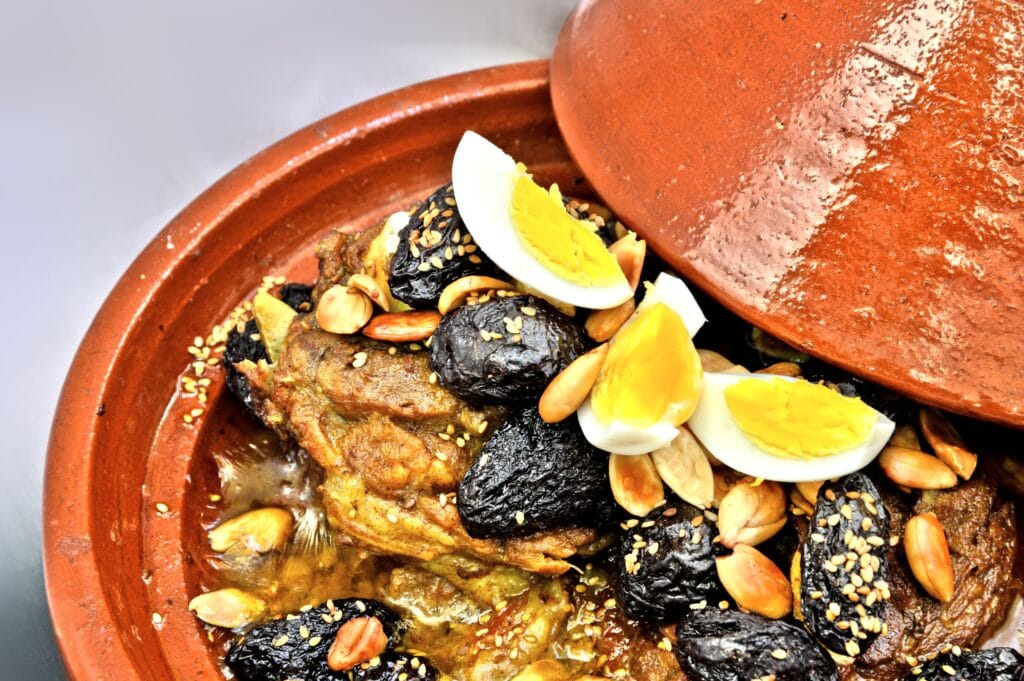
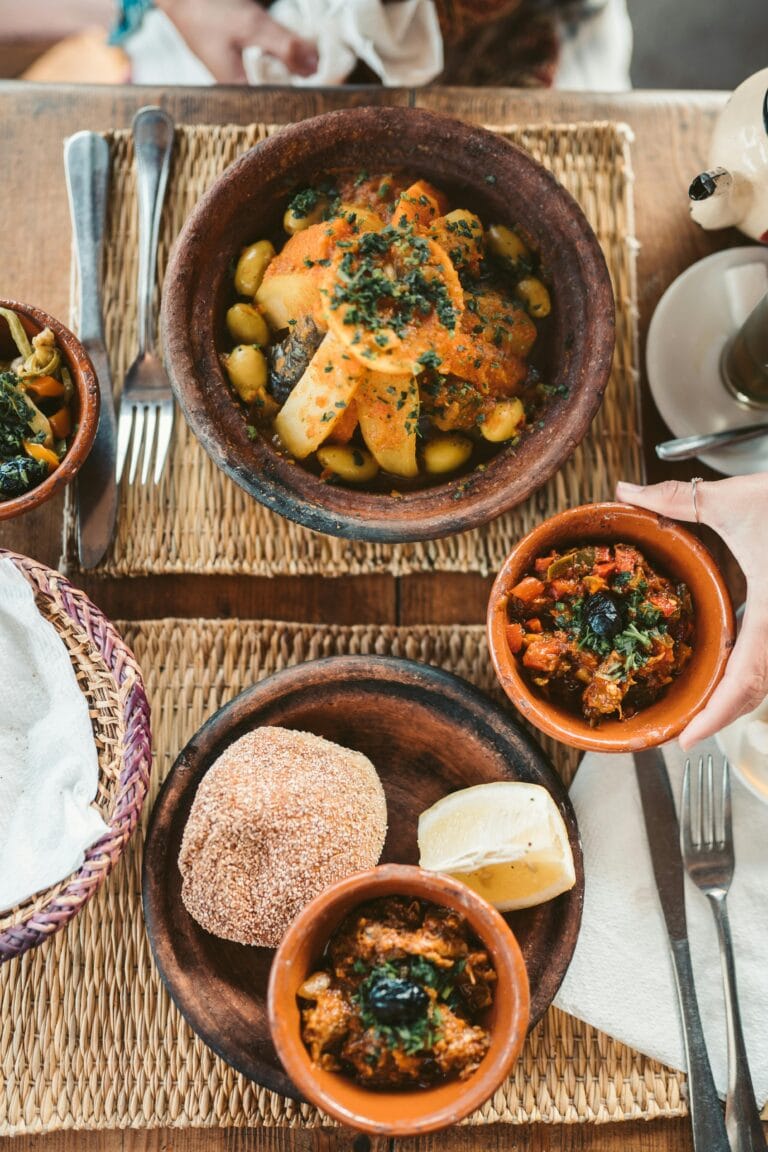
Rif Cuisine and Mountain Ecology
Food reflects geography.
Traditional Rif cuisine has developed around available agricultural and pastoral resources.
Local diets may incorporate:
- cereals,
- olives and olive oil,
- vegetables,
- legumes,
- dairy products,
- herbs,
- fruits,
- and meat according to household circumstances and occasions.
The relationship between cuisine and landscape is particularly important.
A traditional dish can encode the history of agriculture.
An olive-based food tells you something about the Mediterranean environment.
A cereal-based dish reflects the importance of grain cultivation.
Herbs and wild plants reveal knowledge of the surrounding ecosystem.
Traditional Rif Architecture vs Modern Construction
Modern construction is transforming many Rif villages.
Concrete houses have increasingly replaced older forms.
This transformation reflects genuine improvements in:
- comfort,
- sanitation,
- structural engineering,
- electricity,
- plumbing,
- and household space.
Heritage preservation should therefore never mean forcing people to live in outdated buildings.
The challenge is different:
How can traditional architectural knowledge be documented and respected while allowing communities to live safely and comfortably in the present?
This is exactly why research on Rifian vernacular architecture emphasizes both preservation and adaptation to contemporary needs.
The Rif Landscape as Living Heritage
A mountain heritage site is not simply:
“a beautiful mountain.”
It is a combination of:
geology + ecology + agriculture + architecture + language + memory + social institutions + spirituality + economy.
This broader definition is particularly useful for the Rif.
The landscape itself becomes an archive.
An olive grove may preserve agricultural memory.
A village house may preserve construction knowledge.
A mountain path may preserve historical movement.
A place name may preserve linguistic history.
A shrine may preserve religious memory.
A song may preserve collective experience.
Rif Mountain Tourism
Why travelers are increasingly interested in the Rif
The Rif offers a different travel experience from Morocco’s major imperial cities and desert destinations.
Visitors can encounter:
- mountain hiking,
- Mediterranean scenery,
- rural villages,
- forests,
- waterfalls,
- traditional food,
- local crafts,
- archaeological landscapes,
- Chefchaouen,
- Al Hoceima,
- and Amazigh cultural experiences.
UNESCO’s work around the Chefchaouen aspiring geopark illustrates the growing recognition of the region’s combined geological and cultural value.
Responsible tourism
Tourism can bring important economic opportunities.
But poorly managed tourism can also produce:
- pressure on water,
- construction,
- waste,
- commercialization of traditions,
- landscape degradation,
- and loss of architectural character.
The most valuable form of mountain tourism is therefore not simply tourism that brings more visitors.
It is tourism that creates greater value per visitor while protecting the cultural and ecological resources that attract those visitors in the first place.
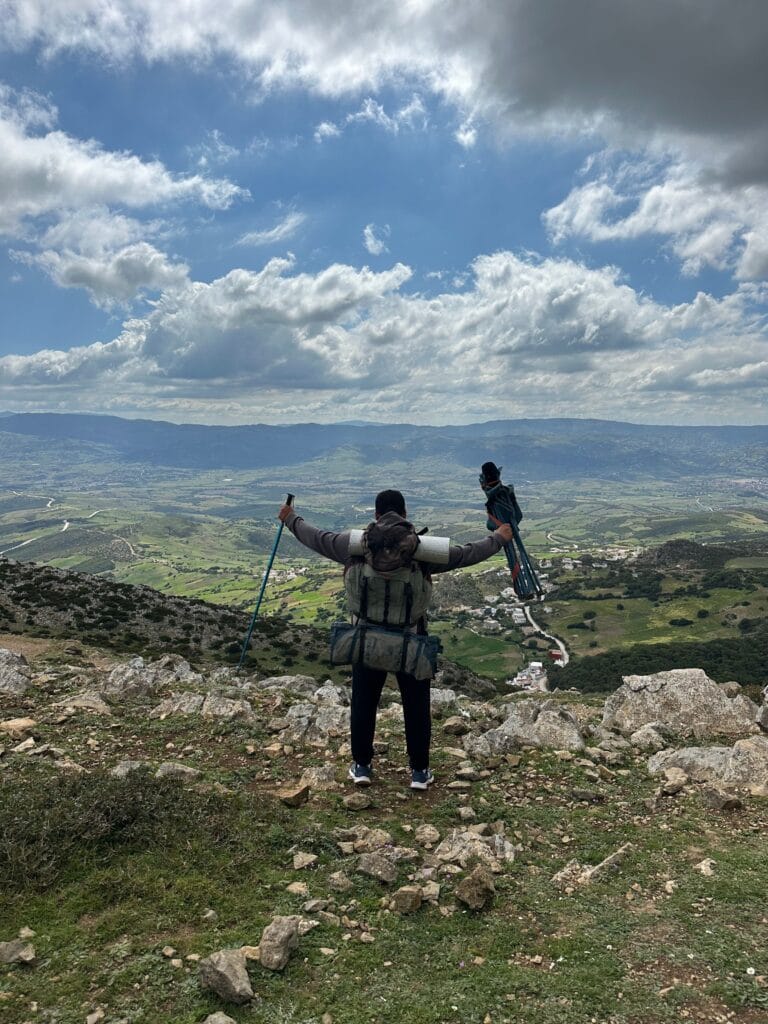
Hiking in the Rif Mountains
The Rif is particularly attractive to hikers because its landscapes are varied.
Unlike some high-altitude mountain destinations, Rif hiking can involve a combination of:
- forest trails,
- agricultural paths,
- limestone terrain,
- mountain ridges,
- valleys,
- rural settlements,
- and Mediterranean viewpoints.
The experience changes dramatically according to season.
Spring can bring lush vegetation and flowers.
Summer can be warm at lower elevations but more comfortable in some higher areas.
Autumn provides different colors and atmospheric conditions.
Winter can bring cold, rain and, at higher elevations, snow.
A responsible hiking itinerary should therefore account for weather, trail conditions, local guidance, water availability and environmental sensitivity.
Rif Mountains and the Problem of Simplification
The Rif is often represented through a handful of images:
Chefchaouen.
Blue walls.
Mountains.
Amazigh culture.
Cannabis.
Mediterranean beaches.
This is an extremely incomplete picture.
The Rif deserves a more serious cultural reading.
It is a region of:
- farmers,
- shepherds,
- fishermen,
- artisans,
- students,
- migrants,
- entrepreneurs,
- artists,
- religious communities,
- and multilingual households.
Its history includes both cooperation and conflict, isolation and connectivity, local autonomy and state integration, continuity and transformation.
Reducing the Rif to one stereotype obscures its real complexity.
Cannabis and the Rif: A Topic Requiring Historical Context
The Rif’s association with cannabis cultivation is frequently emphasized in international media.
However, this subject requires considerable caution.
The region’s cannabis economy has a complicated history involving:
- agricultural practices,
- colonial and postcolonial policies,
- international demand,
- rural poverty,
- state regulation,
- and changing legal frameworks.
It should not be used as a defining cultural characteristic of the Rif or its people.
The Rif is a civilization and landscape far larger than any single agricultural commodity.
Archaeology and the Deep History of Northern Morocco
The Rif’s human history extends far beyond the medieval and modern periods.
Northern Morocco has participated in wider Mediterranean human networks for thousands of years.
Archaeological research in the broader region can help reconstruct:
- prehistoric settlement,
- changing subsistence,
- animal domestication,
- agriculture,
- trade,
- and interaction between North African and Mediterranean populations.
The archaeological record is particularly valuable because written sources become increasingly limited as we move further back in time.
The Rif in the Context of Amazigh North Africa
The Rif should be studied as part of the broader Amazigh world while maintaining its regional specificity.
Amazigh communities historically extended across:
- Morocco,
- Algeria,
- Tunisia,
- Libya,
- and parts of the Sahara.
But Amazigh identity has never produced one uniform culture.
Tarifit is not the same as Tamazight of the Middle Atlas.
Tachelhit is not Tarifit.
Regional architecture differs.
Musical traditions differ.
Clothing differs.
Social institutions differ.
Agricultural systems differ.
This diversity is not evidence of cultural weakness.
It is one of the defining characteristics of Amazigh civilization.
The Rif Compared With the High Atlas
| Feature | Rif Mountains | High Atlas |
|---|---|---|
| Geographic position | Northern Morocco | Central Morocco |
| Geological system | Mediterranean/Gibraltar Arc-related mountain system | Atlas mountain system |
| Highest elevations | Around 2,450 m in the Rif | Over 4,000 m |
| Major environmental influence | Mediterranean | Continental, Atlantic and Saharan influences |
| Major cultural groups | Amazigh, Jbala, Senhaja and others | Strong Amazigh presence with regional diversity |
| Language | Tarifit and other regional varieties | Tachelhit, Central Atlas Tamazight and others |
| Coastal relationship | Strong Mediterranean connection | Mostly inland |
| Landscape | Forested, rugged, deeply dissected | High peaks, valleys, plateaus and alpine environments |
| Major cultural destination | Chefchaouen | High Atlas villages and mountain valleys |
| Historical identity | Strong history of local autonomy and anti-colonial resistance | Strong tribal, agricultural and pastoral traditions |
The comparison demonstrates why the Rif deserves its own cluster article rather than being treated merely as another section of an Atlas Mountains article.
Rif Mountains vs Middle Atlas
The Middle Atlas and Rif are sometimes grouped together because both contain forests and substantial Amazigh populations.
Yet their physical environments are different.
The Middle Atlas is characterized by broad plateaus, volcanic landscapes, cedar forests and major water systems.
The Rif is much more closely associated with Mediterranean coastal geography, steep relief and deeply dissected valleys.
The cultural landscapes also differ.
The Rif’s linguistic and social diversity includes Tarifit-speaking communities, Jbala populations and Senhaja traditions.
This reinforces the value of maintaining separate cluster pages for each mountain system.
The Rif and the Future of Cultural Preservation
The future of Rif heritage will depend on whether preservation can move beyond museums.
Living heritage requires living communities.
That means supporting:
- local languages,
- traditional knowledge,
- rural architecture,
- crafts,
- sustainable agriculture,
- responsible tourism,
- historical research,
- and community-led conservation.
A building cannot preserve a culture if the knowledge surrounding that building disappears.
A traditional garment cannot preserve identity if its techniques are forgotten.
A language cannot remain alive simply because it is documented in a book.
Heritage survives through use.
Digital Technology and Rifian Heritage
Digital platforms are creating new opportunities.
Young Rifian creators can now share:
- Tarifit language,
- music,
- poetry,
- history,
- photography,
- traditional recipes,
- oral histories,
- and local landscapes
with audiences far beyond northern Morocco.
This can strengthen cultural visibility.
But digitization also creates challenges.
Short social-media formats can flatten complex histories into slogans.
Therefore, digital heritage projects should prioritize:
documentation over sensationalism, context over stereotypes, and community voices over external representations.
Climate Change and the Rif
The Rif’s future is also connected to environmental change.
Changing rainfall patterns, drought, wildfire risk, soil degradation and water stress can affect:
- forests,
- agriculture,
- livestock,
- biodiversity,
- and rural livelihoods.
Climate change therefore creates a cultural problem as well as an environmental one.
When an agricultural system disappears, associated knowledge can disappear with it.
When people abandon villages, architectural traditions may decline.
When forests change, traditional ecological knowledge may become less relevant.
Environmental conservation and cultural preservation must therefore be considered together.
Why the Rif Mountains Matter to Morocco
The Rif is important because it represents one of the country’s most distinctive intersections of:
- mountain geography,
- Mediterranean ecology,
- Amazigh heritage,
- Arabophone cultures,
- Islamic history,
- rural society,
- migration,
- resistance,
- and contemporary cultural transformation.
Its importance cannot be measured only by tourism statistics.
The Rif contributes to Morocco’s historical identity precisely because it demonstrates how different communities have negotiated geography and history over long periods.
FAQ: Rif Mountains
What are the Rif Mountains?
The Rif Mountains are a mountainous region in northern Morocco associated with the Mediterranean side of the country. They are geographically distinct from the Atlas mountain system and are characterized by rugged relief, forests, valleys and coastal landscapes.
Where are the Rif Mountains located?
The Rif Mountains occupy northern Morocco, extending along much of the Mediterranean side of the country. Important areas associated with the Rif include Chefchaouen, Al Hoceima and parts of the eastern and central northern mountain region.
Are the Rif Mountains part of the Atlas Mountains?
No. Although they are often discussed alongside Morocco’s Atlas ranges, the Rif is a distinct mountain system associated geologically with the Gibraltar Arc and western Mediterranean region.
What is the highest mountain in the Rif?
The highest major summit associated with the Rif is Jbel Tidirhine, reaching approximately 2,450 meters above sea level.
Are the Rif Mountains Amazigh?
Parts of the Rif are historically and contemporarily Amazigh-speaking, particularly communities associated with Tarifit. However, the Rif is culturally diverse and also includes Arabophone Jbala and other communities.
What language is spoken in the Rif?
Tarifit is an important Amazigh language of the Rif, particularly in eastern and central areas. Moroccan Arabic and other linguistic varieties are also spoken across the region.
What is the most famous city in the Rif Mountains?
Chefchaouen is internationally the most famous tourist city associated with the Rif. Its historic blue-painted medina and surrounding mountain landscape have made it one of Morocco’s best-known destinations.
What is the Rif famous for?
The Rif is famous for its Mediterranean mountains, Chefchaouen, Al Hoceima, Amazigh heritage, forests, rural landscapes, traditional communities, historical resistance, and distinctive cultural and linguistic diversity.
Can you hike in the Rif Mountains?
Yes. The Rif contains numerous mountain trails through forests, valleys, rural landscapes and highland areas. Hiking conditions vary considerably by season and location.
Why was the Rif War important?
The Rif War of the 1920s was a major anti-colonial conflict involving Rifian forces under Abd el-Krim and European colonial powers. It became an important episode in the history of Moroccan resistance to colonial rule.
Comparison Table: The Four Mountain Cluster Articles
This table is particularly useful for your Atlas Mountains pillar → cluster architecture.
| Morocco Mountains | Geographic identity | Main cultural focus | Main ecological focus |
|---|---|---|---|
| High Atlas | Central Morocco | Amazigh mountain societies, pastoralism, agriculture | High peaks, valleys, glaciers/snow, alpine ecosystems |
| Middle Atlas | Central-northern Morocco | Central Atlas Amazigh culture, carpets, pastoral traditions | Cedar forests, lakes, plateaus, water resources |
| Anti-Atlas | Southern Morocco | Souss-Amazigh heritage, granaries, oasis and mountain traditions | Arid landscapes, argan zones, volcanic and Precambrian geology |
| Rif Mountains | Northern Morocco | Tarifit, Rifian Amazigh heritage, Jbala/Senhaja diversity, resistance history | Mediterranean forests, steep valleys, coastal ecosystems |
This makes your content architecture much stronger because each article answers a different search intent while remaining semantically connected to the Atlas Mountains pillar.
Conclusion: The Rif Is a Mountain of Memory
The Rif Mountains are difficult to understand from a single viewpoint.
Geography explains its steep valleys and Mediterranean climate.
Geology explains its dramatic relief.
Anthropology explains the relationship between communities and territory.
Linguistics reveals the persistence and transformation of Tarifit and other languages.
Architecture preserves knowledge of how people adapted their homes to the mountain.
Agriculture reveals generations of environmental knowledge.
Oral traditions preserve memories that may never have entered official archives.
And history reminds us that these mountains have repeatedly been a place where questions of identity, authority and sovereignty became especially powerful.
Yet perhaps the most important lesson of the Rif is that mountains are not empty spaces between cities.
They are inhabited historical landscapes.
A village is not merely a collection of houses.
A forest is not merely scenery.
A mountain path is not merely a hiking trail.
A language is not merely a means of communication.
Each can carry memory.
This is why the Rif deserves to be studied on its own terms.
It is not simply the northern edge of Morocco, nor simply a destination for travelers searching for Chefchaouen’s blue streets. It is a complex cultural landscape where Mediterranean geography and North African history have interacted for centuries.
And its future will depend on whether Morocco can preserve not only spectacular landscapes but also the human knowledge embedded within them.
The true heritage of the Rif is therefore not frozen in the past.
It is still being spoken, cultivated, built, sung, remembered and reinvented.
The mountains remain—but their deepest legacy lives in the people who continue to give them meaning.
References
- Azul U. Ramírez Rodríguez, F. T., & Blancas Vázquez, J. (2019). “Dcar acemerar” (pueblo blanco), noreste marroquí (Rif). Organización sociopolítica en arqueología: Una revisión histórica y etnoarqueológica e interpretación a partir de la percepción remota. Claroscuro. Revista del Centro de Estudios sobre Diversidad Cultural.
- Cheddadi, R., Nourelbait, M., Bouaissa, O., Tabel, J., Rhoujjati, A., López-Sáez, J. A., Alba-Sánchez, F., Khater, C., Ballouche, A., Dezileau, L., & Lamb, H. (2015). A history of human impact on Moroccan mountain landscapes. Quaternary Science Reviews.
- El Gharbaoui, A. (1986). L’homme et la montagne dans la dorsale calcaire du Rif (Maroc septentrional). Revue de l’Occident musulman et de la Méditerranée, 41–42, 197–208. https://doi.org/10.3406/remmm.1986.2118
- Hlial, S., & Vignet-Zunz, J. J. (2017). L’architecture vernaculaire rifaine: Un inventaire et des propositions. Hespéris Tamuda, 52(3), 277–300.
- Maurer, G. (1968). Les montagnes du Rif central marocain: Étude géomorphologique [Doctoral dissertation]. Université de Paris.
- Wyrtzen, J. (2015). Creating an anti-colonial political field in the Rif Mountains. In Making Morocco: Colonial intervention and the politics of identity. Cornell University Press.

One Comment