
The Agadir: How Amazigh Granaries Protected Food, Memory, and Community
Introduction: The Stone Citadels of Memory in Amazigh Morocco
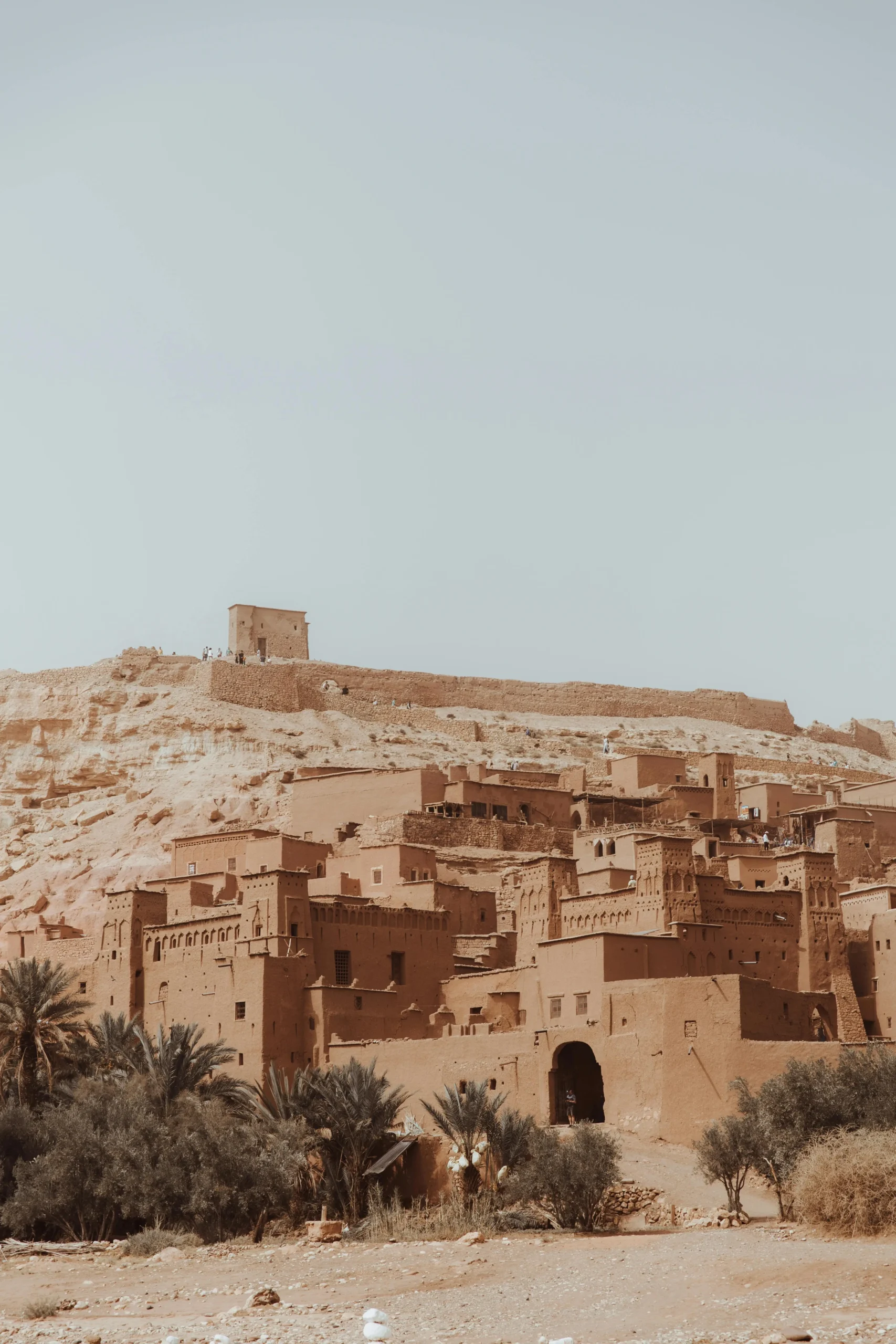
Across the rugged Anti-Atlas Mountains, the dry valleys of Souss, and the windswept plateaus of southern Morocco, ancient stone structures rise from hilltops like silent guardians of another age. To many travelers, they appear as forgotten fortresses clinging to the earth. Yet for Amazigh communities, these remarkable constructions were never merely buildings. They were living institutions—repositories of grain, law, spirituality, identity, and collective survival.
Known as Agadir (plural: Igoudar), these fortified communal granaries occupy a unique place in the cultural history of North Africa. Long before modern banks, warehouses, or administrative centers appeared in rural Morocco, Amazigh societies developed sophisticated systems for storing agricultural wealth, protecting families during times of drought, and organizing social life through communal cooperation. The Agadir embodied far more than food preservation; it represented an entire worldview rooted in solidarity, ecological adaptation, and ancestral continuity.
In contemporary Morocco, where rapid urbanization and globalization increasingly reshape traditional landscapes, the Agadir stands as a profound symbol of resilience. Its thick stone walls preserve stories of migration, tribal alliances, spiritual practices, and economic ingenuity developed over centuries in one of North Africa’s most environmentally challenging regions. Today, historians, anthropologists, architects, and heritage activists recognize these granaries not only as architectural marvels but also as archives of indigenous knowledge.
To understand The Agadir is therefore to understand a deeper dimension of Amazigh civilization itself. These structures reveal how communities transformed geography into culture, scarcity into cooperation, and architecture into collective memory. They also challenge modern assumptions about rural societies by demonstrating the complexity of Amazigh governance, economic systems, and environmental adaptation long before colonial intervention.
This article explores the historical origins, architectural sophistication, anthropological significance, linguistic dimensions, and enduring legacy of Amazigh granaries in Morocco. Through archaeology, oral traditions, ethnography, and cultural analysis, we will uncover how The Agadir protected not only food reserves but also the social and spiritual foundations of Amazigh life.
Table of Contents
Understanding The Agadir in Amazigh Culture
What Is The Agadir?
The word Agadir derives from the Amazigh language and generally refers to a fortified communal granary. In many regions of southern Morocco, particularly among Tashelhit-speaking Amazigh communities, the term designates a secure storage complex where families preserved grain oil, jewelry, legal documents, seeds, weapons, and other valuables.
Unlike ordinary barns or warehouses, the Agadir functioned collectively. Each family possessed designated storage chambers within the structure, while the community maintained shared rules governing access, security, and management. These granaries were often built on elevated terrain to maximize defense and visibility.
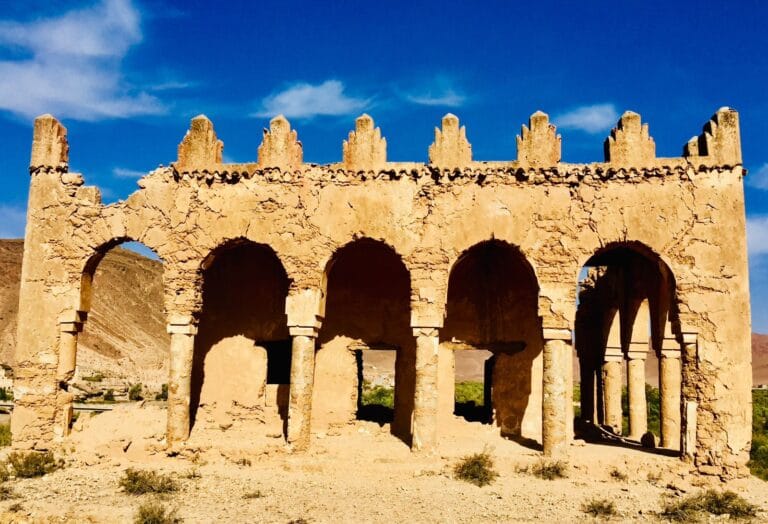
Architecturally, most Agadirs consisted of:
- Thick rammed-earth or stone walls
- Narrow defensive entrances
- Watchtowers
- Multi-level storage cells
- Internal courtyards
- Wooden doors marked with tribal symbols
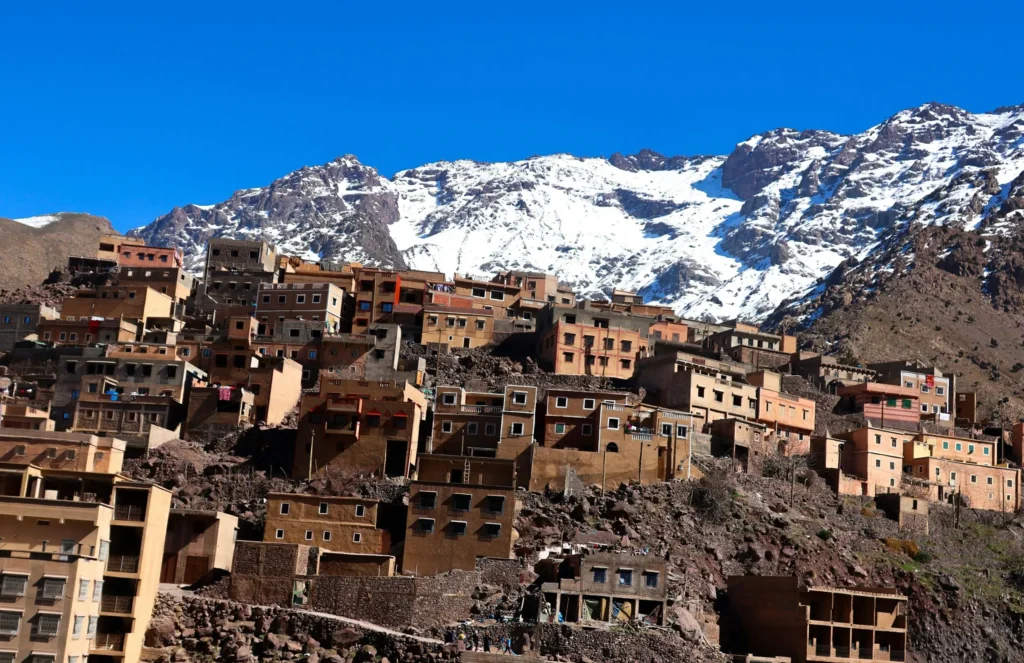
The structures varied according to region, climate, and tribal traditions, yet their fundamental purpose remained remarkably consistent: protecting communal wealth in uncertain environmental and political conditions.
The Difference Between Agadir and Modern Storage Systems
Modern storage facilities prioritize economic efficiency and private ownership. The Agadir, however, reflected a fundamentally communal philosophy. Its existence depended on trust, customary law, collective governance, and ritualized social cooperation.
Where contemporary warehouses function impersonally, Amazigh granaries operated as extensions of tribal identity. Every storage room represented a family lineage, every corridor carried memories of collective labor, and every defensive wall symbolized mutual dependence.
The Agadir was therefore both practical infrastructure and social institution.
Historical Origins of Amazigh Granaries
Ancient Roots in North African Indigenous Civilization
The precise origins of The Agadir remain difficult to determine, partly because many structures evolved over centuries through reconstruction and expansion. Nevertheless, archaeological and anthropological evidence suggests that communal fortified granaries emerged from long-standing indigenous traditions of environmental adaptation in North Africa.
The mountainous and semi-arid landscapes of Morocco historically exposed Amazigh populations to:
- Seasonal droughts
- Tribal warfare
- Caravan raids
- Agricultural instability
- Climatic unpredictability
These conditions encouraged the development of collective survival mechanisms. Grain storage became central not only for economic stability but also for social continuity.
Some researchers trace the conceptual origins of communal granaries to pre-Islamic Amazigh societies that relied heavily on transhumance, oasis agriculture, and mountain farming. Historical references from medieval Arab geographers also describe fortified storage sites in southern Morocco, indicating that such institutions already existed centuries ago.
The Medieval Expansion of Igoudar
Between the 12th and 18th centuries, many regions of southern Morocco experienced the expansion of tribal confederations and trans-Saharan trade networks. During this period, Igoudar multiplied across the Anti-Atlas and Souss regions.
The rise of caravan commerce increased the strategic importance of secure storage facilities. Some granaries preserved not only agricultural goods but also:
- Trade merchandise
- Salt
- Silver coins
- Manuscripts
- Weapons
- Tribal archives
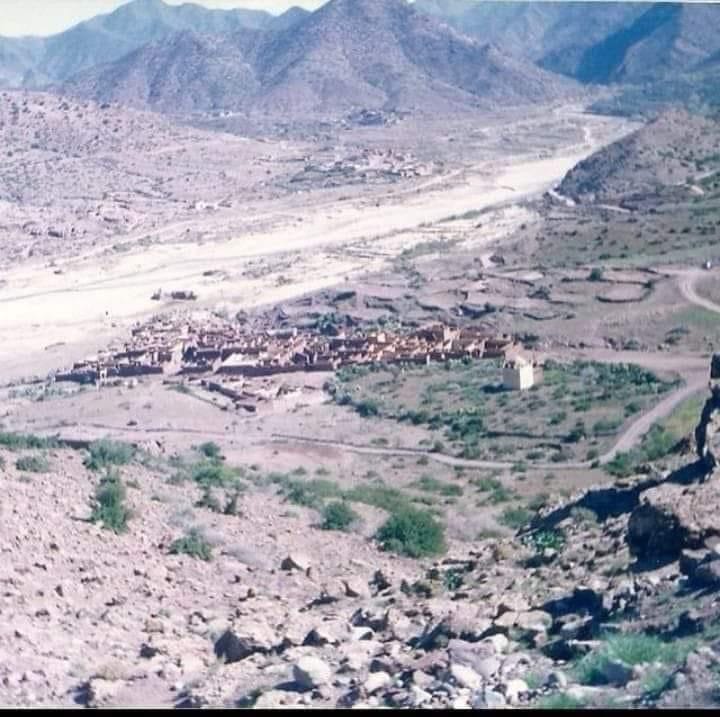
In this context, the Agadir evolved into an economic fortress connected to regional trade systems stretching across the Sahara.
Colonial Encounters and Changing Rural Landscapes
French colonial authorities in Morocco viewed Amazigh granaries with fascination and suspicion. Colonial ethnographers documented many Igoudar while simultaneously interpreting them through orientalist frameworks that often underestimated Amazigh political sophistication.
Colonial restructuring of rural economies gradually weakened the communal functions of granaries. New administrative systems, changing agricultural patterns, and migration toward urban centers reduced their practical importance.
Nevertheless, many Agadirs survived physically even after their original social functions diminished.
Architectural Genius of The Agadir
Amazigh Environmental Intelligence
One of the most remarkable aspects of Amazigh Igoudar granaries lies in their ecological adaptation. These structures were carefully designed to respond to Morocco’s harsh climates.
Builders understood:
- Air circulation
- Temperature regulation
- Water resistance
- Defensive positioning
- Seismic stability
Stone and rammed-earth walls maintained relatively stable internal temperatures, protecting stored grain from humidity and heat. Elevated locations reduced flood risk while improving surveillance.
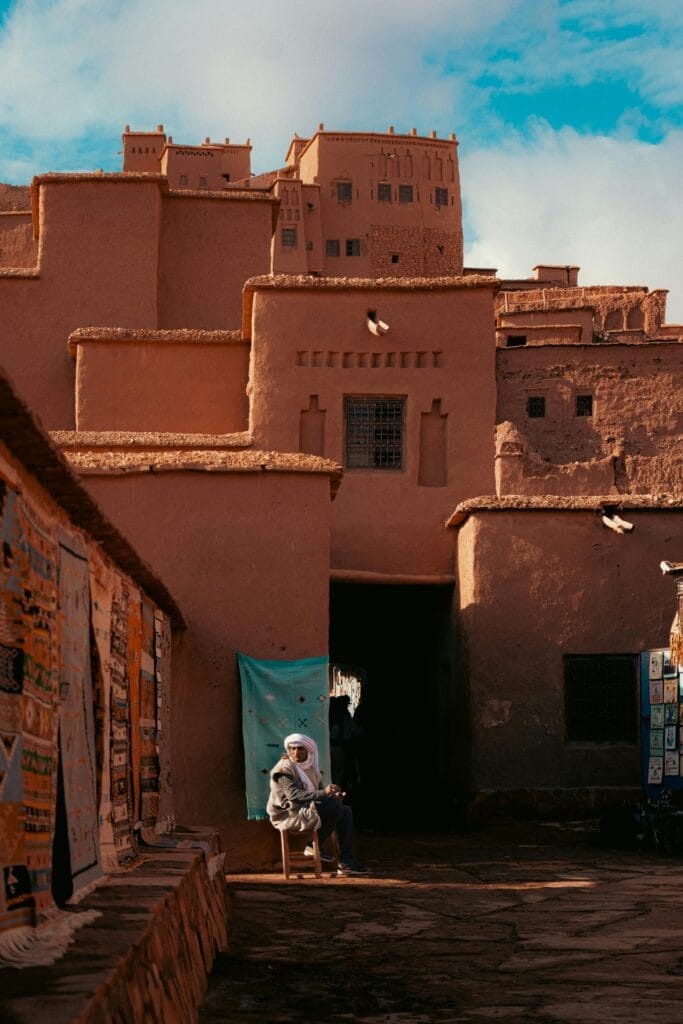
The Berber architecture therefore represented accumulated environmental knowledge transmitted through generations.
Spatial Organization and Community Order
The internal organization of the Agadir reflected social hierarchy and communal governance.
Family Storage Cells
Each household possessed individual chambers identified through symbols, carvings, or oral agreements. These cells stored:
- Barley
- Wheat
- Almonds
- Argan oil
- Dried fruits
- Textiles
- Precious objects
Communal Areas
Many granaries also included:
- Prayer spaces
- Assembly rooms
- Guard stations
- Animal shelters
- Water reservoirs
The integration of these functions transformed the Agadir into a microcosm of Amazigh communal life.
Defensive Features
Because granaries protected vital resources, defense was essential.
Architectural defenses often included:
- Narrow entrances
- Elevated doors
- Reinforced gates
- Watchtowers
- Thick defensive walls
- Strategic hilltop positioning
In periods of conflict, some communities even used Agadirs as temporary refuges.
Anthropological Dimensions of The Agadir
Collective Ownership and Tribal Governance
Anthropologists studying southern Morocco frequently emphasize the Agadir’s role in communal governance.
The granary operated according to customary Amazigh law known as azerf. Rules regulated:
- Storage rights
- Security responsibilities
- Conflict resolution
- Maintenance obligations
- Seasonal access
These regulations reveal highly organized systems of self-governance independent of centralized state structures.
The Agadir as Social Memory
Beyond economics, the granary preserved collective memory.
Each chamber contained traces of family history:
- Harvest cycles
- Marriage alliances
- Inheritance patterns
- Migration histories
- Ritual practices
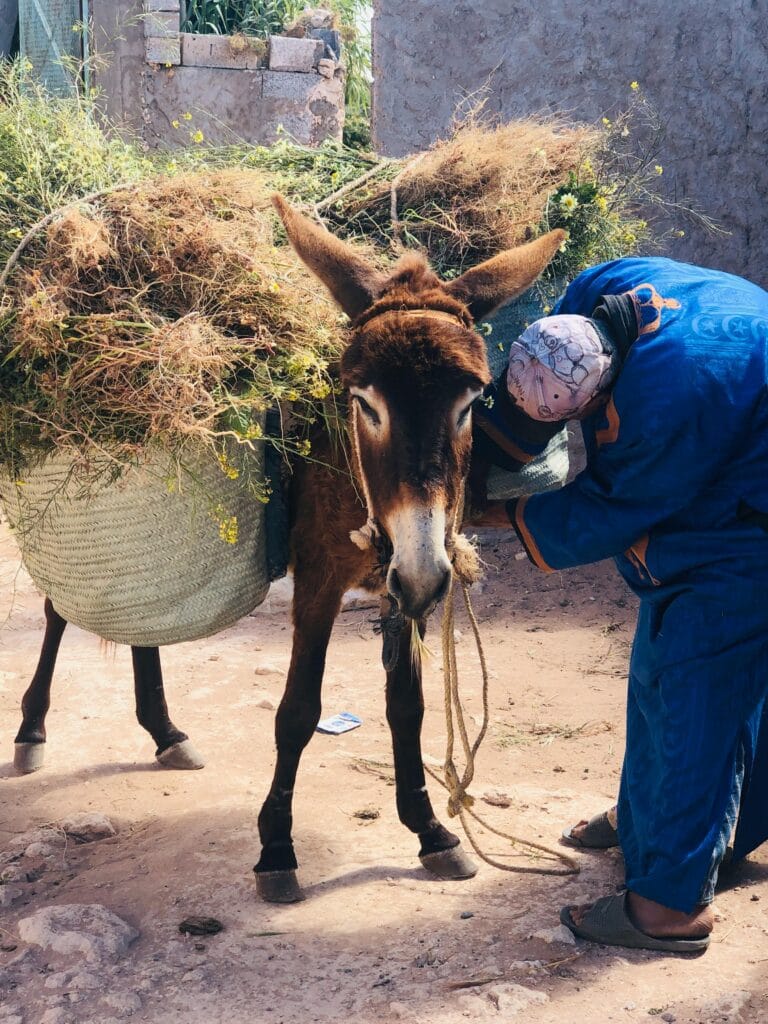
In oral traditions, elders often recalled famines, wars, and droughts through stories connected to the granary.
Thus, the Agadir became an archive of survival.
Rituals and Sacred Dimensions
Many Amazigh communities attributed spiritual significance to granaries.
Protective rituals sometimes involved:
- Quranic inscriptions
- Blessings
- Sacrificial ceremonies
- Protective amulets
- Invocation of saints
The boundary between material protection and spiritual safeguarding was fluid. Protecting grain also meant protecting divine blessing and communal continuity.
Archaeological and Historical Evidence
Archaeological Research on Amazigh Granaries
Archaeological investigations in southern Morocco have revealed the historical complexity of Igoudar. Researchers documented sophisticated masonry techniques, layered construction phases, and adaptive rebuilding processes.
Sites such as:
- Amtoudi
- Aït Kine
- Ida Ougnidif
- Tizourgane
demonstrate regional architectural diversity while preserving core structural principles.
Rock Art and Early Storage Practices
Some scholars connect communal storage traditions to broader patterns of sedentary adaptation in North African prehistory. Rock art from the Sahara and Atlas regions indicates long-standing agricultural and pastoral practices among indigenous populations.
Although direct continuity remains debated, these visual records suggest deep historical relationships between food security and social organization.
Historical Manuscripts and Oral Archives
Medieval chronicles occasionally reference fortified granaries in the Maghreb. Oral histories remain especially important because many Amazigh societies historically transmitted knowledge through spoken traditions rather than centralized written archives.
Anthropologists working in Souss communities recorded detailed memories regarding:
- Construction methods
- Tribal disputes
- Sacred customs
- Seasonal ceremonies
These oral archives complement archaeological evidence.
Linguistic Perspectives on The Agadir
Etymology of the Word “Agadir”
The term Agadir originates from Amazigh linguistic roots associated with walls, enclosures, or fortified spaces. Interestingly, the word traveled beyond Morocco through historical trade and migration.
Some scholars note parallels between:
- Amazigh Agadir
- Phoenician and Punic terminology
- Broader Afro-Mediterranean linguistic exchanges
Today, the city of Agadir itself preserves this ancient linguistic heritage.
Regional Variations in Terminology
Different Amazigh-speaking regions use related terms:
- Agadir in Souss
- Ighrem in parts of the Atlas
- Tighremt for fortified structures
These variations reflect linguistic diversity within Tamazight while preserving shared architectural concepts.
Tifinagh and Symbolic Markings
Some granary doors contained symbols linked to Amazigh identity and protective traditions. Although not always formal Tifinagh inscriptions, geometric signs often conveyed:
- Ownership
- Tribal affiliation
- Spiritual protection
- Agricultural symbolism
Such markings illustrate the intersection of literacy, symbolism, and architecture in Amazigh culture.
Symbolism and Cultural Meaning
Architecture as Collective Identity
The Agadir represented more than practical survival; it symbolized communal solidarity.
Its architecture communicated:
- Mutual dependence
- Shared labor
- Environmental resilience
- Intergenerational continuity
In many villages, the granary physically overlooked surrounding homes, reinforcing its symbolic centrality.
Gender and Social Roles
Women played essential roles in storage management, food preparation, and agricultural preservation. Anthropological studies indicate that female knowledge systems were central to:
- Seed preservation
- Oil storage
- Food conservation
- Ritual protection
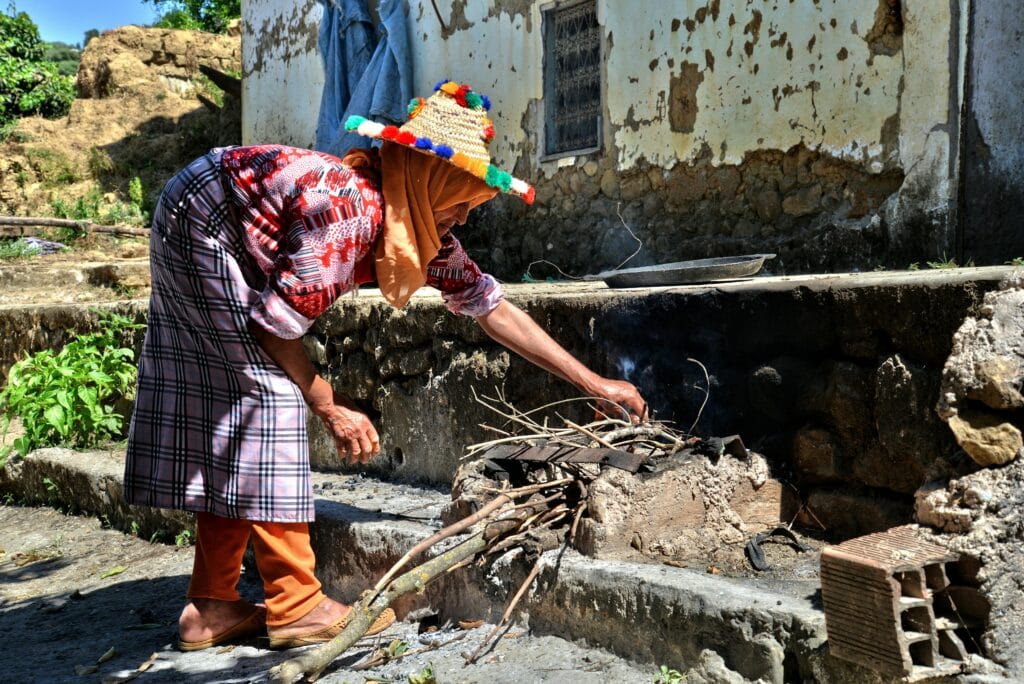
Although men often managed external defense and tribal negotiations, women sustained the granary’s internal life.
Memory, Drought, and Survival
For communities repeatedly confronted with drought, famine, and insecurity, the Agadir became a material expression of hope.
Its walls embodied:
- Preparedness
- Collective foresight
- Ancestral wisdom
- Resistance against uncertainty
Even abandoned granaries continue to evoke emotional attachment among descendants.
Regional Variations Across Morocco
Souss Region
The Souss region contains some of Morocco’s most famous Igoudar. Here, granaries often display elaborate defensive designs and strong connections to caravan trade networks.
Structures in this region frequently combined:
- Stone masonry
- Decorative woodwork
- Complex internal layouts
Anti-Atlas Mountains
Mountain granaries prioritized defense and environmental adaptation. Builders used local stone and elevated positioning to maximize security.
Communities developed intricate governance systems surrounding these sites.
High Atlas Variations
In the High Atlas, fortified collective structures sometimes merged with kasbah traditions. Climatic conditions and transhumant lifestyles influenced architectural forms.
Saharan and Pre-Saharan Regions
In oasis regions, storage practices adapted to desert conditions. Palm materials, mudbrick construction, and caravan protection shaped local variations.

The Agadir in Modern Morocco
Heritage Preservation and Tourism
Today, Amazigh granaries increasingly attract historians, architects, photographers, and cultural tourists.
Sites such as:
- Agadir of Amtoudi
- Tizourgane
- Imchguiguiln
have become important heritage destinations.
However, tourism creates tensions between preservation and commercialization.
Revival of Amazigh Identity
Since the late 20th century, Amazigh cultural revival movements in Morocco have renewed interest in indigenous heritage.
The Agadir now functions symbolically within:
- Amazigh activism
- Cultural festivals
- Heritage preservation initiatives
- Educational programs
Its image frequently appears in discussions about indigenous identity and historical continuity.
Threats to Preservation
Many granaries face serious risks:
- Abandonment
- Urban migration
- Climate erosion
- Lack of restoration funding
- Earthquake damage
Without sustained preservation efforts, significant architectural and cultural knowledge may disappear.
Traditional and Modern Perspectives on The Agadir
| Aspect | Traditional Agadir | Modern Storage Systems |
|---|---|---|
| Ownership | Collective tribal ownership | Individual or corporate ownership |
| Purpose | Food security + social cohesion | Economic efficiency |
| Governance | Customary Amazigh law | State regulations |
| Construction Materials | Stone, earth, wood | Concrete, steel |
| Symbolism | Cultural identity and memory | Functional infrastructure |
| Social Role | Community gathering and cooperation | Minimal social interaction |
| Security | Tribal defense systems | Technological surveillance |
| Environmental Adaptation | Local ecological knowledge | Industrial engineering |
Regional Variations of Amazigh Granaries
| Region | Architectural Style | Main Materials | Key Features |
| Souss | Multi-level fortified granaries | Stone and wood | Caravan trade influence |
| Anti-Atlas | Hilltop defensive structures | Dry stone masonry | Strong defensive emphasis |
| High Atlas | Mixed kasbah-granary forms | Rammed earth | Adapted to mountain climate |
| Sahara | Oasis-integrated storage | Mudbrick and palm materials | Desert adaptation |
FAQ ; About Igoudar: Amazigh Granaries Protected Food, Memory, and Community
What is The Agadir in Amazigh culture?
The Agadir is a fortified communal granary traditionally used by Amazigh communities in Morocco to store grain, valuables, and important goods collectively.
Why were Amazigh granaries built on mountains?
Many Amazigh granaries were constructed on elevated terrain to improve defense, visibility, and protection against raids and floods.
What was stored inside The Agadir?
The Agadir stored grain, argan oil, dried fruits, jewelry, legal documents, seeds, textiles, and sometimes weapons.
Are Amazigh granaries still used today?
Some granaries remain partially functional, but many now serve mainly as historical heritage sites and symbols of Amazigh identity.
What is the difference between an Agadir and a kasbah?
An Agadir primarily functioned as a communal storage fortress, while a kasbah usually served as a residential and defensive structure for elites or rulers.
Which Moroccan regions are famous for Amazigh granaries?
The Souss, Anti-Atlas, High Atlas, and pre-Saharan regions contain some of Morocco’s most significant Amazigh granaries.
Did women have a role in Amazigh granaries?
Yes. Women played crucial roles in food preservation, storage management, agricultural knowledge, and ritual practices connected to the granary.
Conclusion: The Agadir as a Monument to Collective Survival
The Agadir remains one of the most extraordinary expressions of Amazigh civilization in Morocco. Built from stone, earth, memory, and necessity, these communal granaries reveal a society deeply attuned to environmental realities while profoundly committed to collective responsibility. Their architecture demonstrates not only technical ingenuity but also philosophical sophistication—a belief that survival depends on cooperation, foresight, and mutual trust.
In an era increasingly shaped by individualism and rapid modernization, the Agadir offers an alternative vision of social organization rooted in solidarity and shared stewardship. Its walls preserve more than grain reserves; they preserve ancestral knowledge systems forged across centuries of adaptation to drought, migration, trade, and uncertainty.
Today, as many Igoudar face neglect and erosion, preserving them becomes more than an architectural task. It is an act of cultural continuity. Each restored granary safeguards fragments of Amazigh memory that might otherwise vanish from Morocco’s historical landscape.
To walk through the corridors of an ancient Agadir is therefore to encounter more than a relic of the past. It is to step into a living archive of indigenous resilience—one that continues to speak powerfully about identity, belonging, and humanity’s enduring relationship with community and land.
References (APA Style)
- Brett, M., & Fentress, E. (1996). The Berbers. Blackwell Publishers.
- Camps, G. (1980). Berbères: Aux marges de l’histoire. Éditions des Hespérides.
- Ennaji, M. (2005). Multilingualism, Cultural Identity, and Education in Morocco. Springer.
- Hoffman, K. (2008). We Share Walls: Language, Land, and Gender in Berber Morocco. Wiley-Blackwell.
- Laoust, E. (1932). Les Berbères du Maroc. Librairie Orientaliste Paul Geuthner.
- Montagne, R. (1930). Les Berbères et le Makhzen dans le sud du Maroc. Alcan.
- Peyron, M. (1995). High Atlas of Morocco. Garnet Publishing.
- Aouchar, A. (2015). Vernacular architecture and collective granaries in southern Morocco. Journal of North African Studies, 20(4), 455–478.
- Terrasse, H. (1938). Histoire du Maroc. Atlantides.
- Julien, C. A. (1970). History of North Africa. Praeger Publishers.
- Norris, H. T. (1982). The Berbers in Arabic Literature. Longman.
- Lightfoot, D., & Miller, J. (1996). Sijilmasa and trans-Saharan trade. African Archaeological Review, 13(2), 78–95.
- Gellner, E. (1969). Saints of the Atlas. University of Chicago Press.
- UNESCO. (2021). Traditional earthen architecture and cultural landscapes in North Africa. UNESCO Publishing.
External Sources
- UNESCO World Heritage Centre
- IRCAM (Royal Institute of Amazigh Culture)
- JSTOR Academic Database
- Encyclopaedia of Islam
- Persée Academic Archives
- Cairn.info Research Publications
- Moroccan Ministry of Culture
- Google Scholar Academic Papers




One Comment