What’s The Role of Women in Amazigh Society? Guardians of Culture and Change.
introduction
Before discussing the lifestyle of Women in Amazigh Society, it is important to avoid treating them as a single, uniform group. The expression “Amazigh women” refers to women living in very different geographical, economic, linguistic, and social environments across Morocco.
A woman living in a High Atlas farming village may have a very different daily routine from a woman from the Souss, the Anti-Atlas, the Middle Atlas, the Rif, or the oasis regions of southeastern Morocco. Even within the same village, women’s experiences could differ according to age, marital status, household resources, occupation, education, and generation.
When you think of Amazigh culture, what comes to mind first? Is it the striking geometric patterns woven into carpets, the rhythmic beat of drums echoing across the High Atlas mountains, or perhaps the stories whispered in oral poetry by grandmothers around the fire? At the heart of each of these traditions, you find Amazigh women.
Women in Amazigh society are not only mothers, daughters, and wives; they are the guardians of culture, weaving heritage into everyday life. From the ancestral art of weaving and the powerful rhythms of collective dances like Ahwach to their evolving role in education and modern activism, Amazigh women embody resilience, creativity, and identity.
This article will take you deep into their world, exploring how women preserve heritage while adapting to change. As you read, you’ll discover that the role of women in Amazigh culture is not confined to the past but remains a vibrant, living force shaping Morocco’s present and future.
Table of Contents
The Historical Role of Women in Amazigh Society
Women in Amazigh society have always stood at the intersection of heritage and survival. While patriarchal structures often dominate Morocco’s broader cultural narrative, anthropological research shows that Amazigh communities historically afforded women a more central role in decision-making, family life, and cultural preservation.
- Oral memory keepers: You find women at the heart of oral traditions, preserving history, genealogies, and moral lessons through stories and proverbs.
- Agricultural life: In rural villages, Amazigh women have long managed farming, herding, and food production alongside men, ensuring community survival in difficult terrains.
- Spiritual authority: Women often led household rituals, fertility blessings, and healing practices with medicinal herbs.
This role was not simply domestic—it was societal and symbolic. To understand Amazigh identity, you must recognize that women have been its pillars for centuries.
Everyday Life in an Amazigh Household
The history of Amazigh women becomes easier to understand when we move away from major cultural symbols and look at ordinary daily life.
For many rural households, the home was not simply a place where people lived. It was also a place of production, education, food processing, childcare, craftwork, social interaction, and cultural transmission.
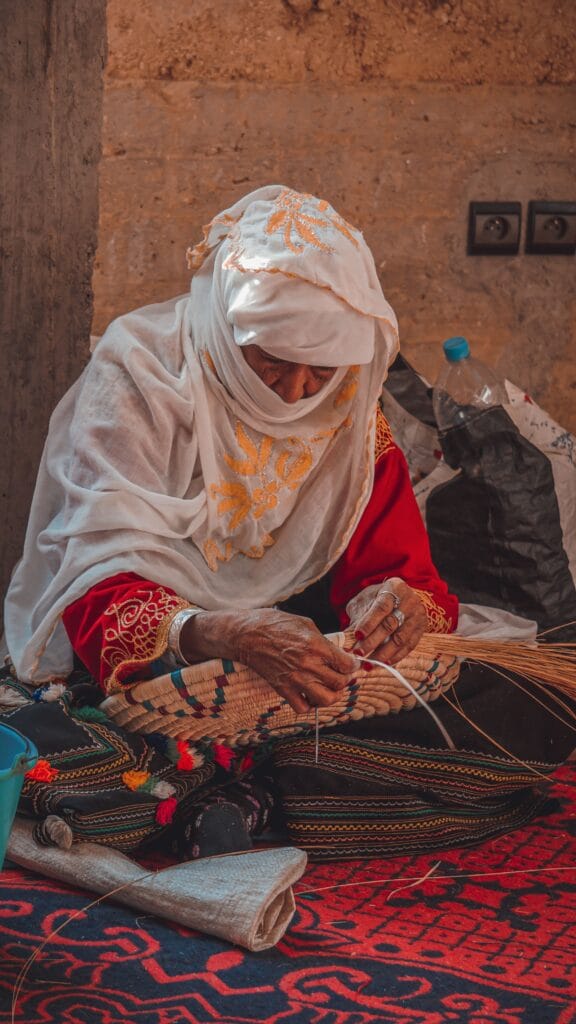
A woman’s day could involve several kinds of work at once. Depending on the season and the local economy, she might prepare food, care for children, feed animals, process agricultural products, collect plants, assist with farming, prepare dairy products, spin wool, weave textiles, or help organize household resources.
These activities were not necessarily separated into distinct occupations. The same person could move between domestic, agricultural, economic, and cultural responsibilities throughout the day.
Seasonality was particularly important.
Harvest periods could require intense agricultural labor. Winter could provide more time for indoor craft production and household activities. Wedding periods could bring additional textile preparation, food production, decoration, singing, and social responsibilities. Periods of drought or economic difficulty could alter the balance between household production, livestock care, migration, and wage labor.
This makes everyday life essential to understanding Amazigh women’s history. Much of the knowledge that sustained a household was not recorded in formal documents. It was learned through observation, participation, repetition, and instruction from older generations.
A daughter helping her mother prepare food could be learning agricultural knowledge. A girl observing textile production could be learning techniques, symbolism, and regional aesthetics. A child accompanying relatives to care for animals could be learning about seasonal pasture and livestock.
In this sense, the household was also a school of practical knowledge.
Amazigh Women and Agriculture
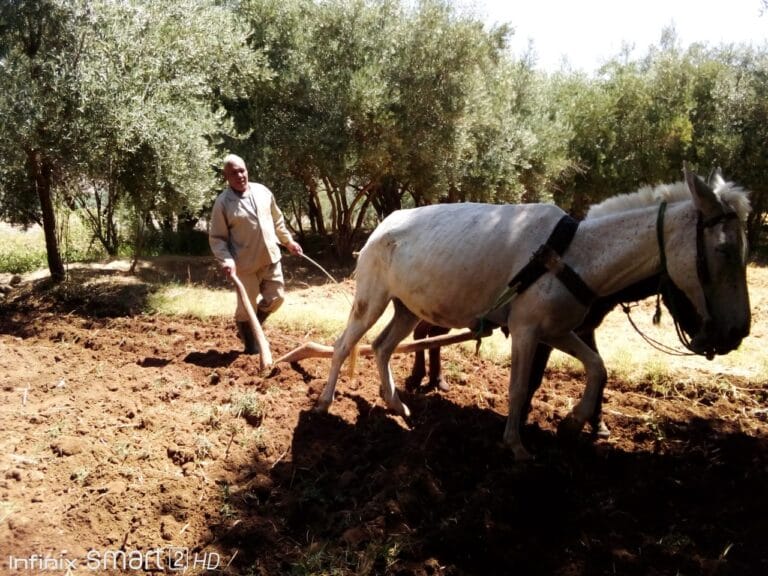
Agriculture was not simply a male activity from which women were separate. In many rural Amazigh communities, women contributed to the agricultural economy in ways that could vary according to region, household, crop, and season.
Their work could include planting, harvesting, processing grains, caring for livestock, preparing agricultural products, collecting useful plants, maintaining household food supplies, and other activities associated with the rural economy.
The importance of this work becomes clearer when agriculture is viewed as a complete system.
Grain harvested from a field might later be cleaned, stored, ground, prepared, and transformed into food within the household. Milk from livestock could become butter or other dairy products. Fruits could be dried or preserved. Plants gathered from the surrounding environment could become food, medicine, animal fodder, or household materials.
Women’s knowledge was therefore often located at the intersection between production and transformation.
They did not simply receive agricultural products. They participated in turning raw resources into food, household goods, medicines, textiles, and other forms of value.
This distinction is important because historical discussions of rural economies sometimes focus on visible agricultural labor while overlooking the less visible work that takes place after harvesting.
Understanding Amazigh women’s contribution requires looking at the entire chain:
land → cultivation → harvest → processing → storage → preparation → consumption or exchange.
Women could be involved in several stages of this chain.
Women, Livestock and the Rural Economy
Livestock were an important component of many Amazigh rural economies, particularly in mountain and pastoral environments.
Sheep, goats, cattle, and other animals could provide food, milk, wool, leather, manure, and economic security. Women’s responsibilities in relation to livestock varied considerably, but could include feeding animals, milking, processing dairy products, caring for young animals, preparing wool, and participating in seasonal movements or agricultural activities.
Livestock also connected different forms of women’s work.
Wool could become thread and then a textile. Milk could become butter or other preserved products. Animal products could contribute to household consumption or exchange.
This created an economic cycle in which domestic work, agriculture, livestock care, and craft production were closely connected.
The rural household should therefore not be imagined as a collection of isolated tasks. It functioned as an interconnected economic system in which women’s labor could contribute substantially to household resilience.
Amazigh Women and the Environment
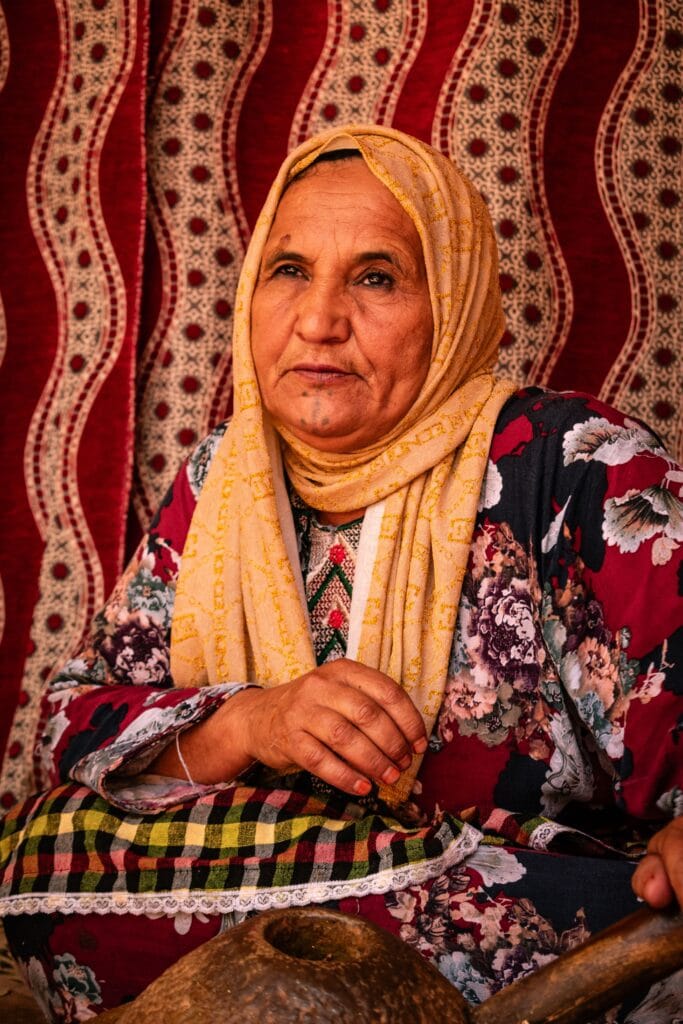
The relationship between Amazigh women and the natural environment deserves greater attention than it often receives.
Women living in rural communities could develop detailed knowledge of the resources surrounding their households: plants, trees, food species, medicinal plants, fodder, agricultural crops, water sources, and seasonal changes.
Such knowledge was often acquired gradually.
A mother or grandmother could teach younger women how to identify a useful plant, when a particular fruit should be collected, how food should be preserved, or which materials were suitable for household use.
This knowledge was practical rather than purely theoretical.
Knowing which plants could be eaten, which could be used medicinally, which could feed animals, and which should be left untouched could affect household well-being.
Recent research in the Moroccan High Atlas has increasingly drawn attention to women’s ecological knowledge and their role in shaping and maintaining agro-sylvo-pastoral landscapes. Such research challenges the tendency to document environmental knowledge only through male community representatives.
Amazigh women’s environmental knowledge should therefore be considered part of Morocco’s wider intangible cultural heritage.
It is knowledge of a landscape accumulated through generations.
Women and Water: An Overlooked Dimension of Rural Life
Water has always been one of the most important resources in Morocco’s mountain and dryland environments.
Its importance was especially visible in communities dependent on springs, irrigation channels, wells, rivers, and seasonal water sources.
Women’s relationship with water was not limited to collecting it.
Water entered almost every part of household life:
- cooking;
- washing;
- food processing;
- livestock care;
- gardening;
- agriculture;
- and hygiene.
Where water was scarce, its availability could influence the organization of the entire household.
Changes in water access therefore affected women directly.
Modern infrastructure can reduce some forms of labor while simultaneously transforming older systems of community cooperation and environmental knowledge.
This makes water an important subject for understanding how Amazigh women’s lifestyles have changed over time.
From Household Work to Economic Value
A major question in the history of Amazigh women is how to understand work that was not always formally paid.
Weaving, food processing, livestock care, agricultural assistance, childcare, plant gathering, and household management could require substantial time and skill.
Yet much of this work traditionally remained within the household economy.
This does not mean that it had no economic value.
A household that produced its own textiles reduced the need to purchase them. A family that processed its own food preserved agricultural resources. A woman who cared for livestock contributed to the production of milk, wool, and other goods.
The economic contribution was therefore sometimes indirect.
Modern cooperatives and commercial markets have changed this relationship by turning some traditional skills into paid economic activities.
A textile once produced primarily for household use can now be sold to tourists or international customers. Argan products once processed primarily within family economies can enter national and international markets.
This transformation has created opportunities, but it has also introduced new questions about who controls production, who receives the income, and how traditional knowledge is valued.
Amazigh Women, Work and the Meaning of Empowerment
The word “empowerment” is frequently used when discussing Amazigh women, particularly in relation to education, cooperatives, and income generation.
However, empowerment should not simply be equated with earning money.
Economic independence can be important, but women’s agency can also involve decision-making, education, mobility, access to information, control over resources, participation in community life, and the ability to determine aspects of one’s own future.
The opposite is also important to recognize.
Participation in an income-generating project does not automatically eliminate inequality.
A woman may earn an income while still carrying most domestic responsibilities. A cooperative may create employment while women remain dependent on intermediaries or fluctuating markets. Traditional skills may generate commercial value while the women who possess those skills receive only a small share of the final price.
A serious discussion of Amazigh women therefore needs to ask not simply:
“Are women empowered?”
but:
“How has women’s ability to make decisions, control resources, access opportunities, and shape their own lives changed?”
This is a much more useful way of understanding social change.
Amazigh Women and the Argan Economy
The argan tree occupies a particularly important place in the social and economic history of southwestern Morocco.
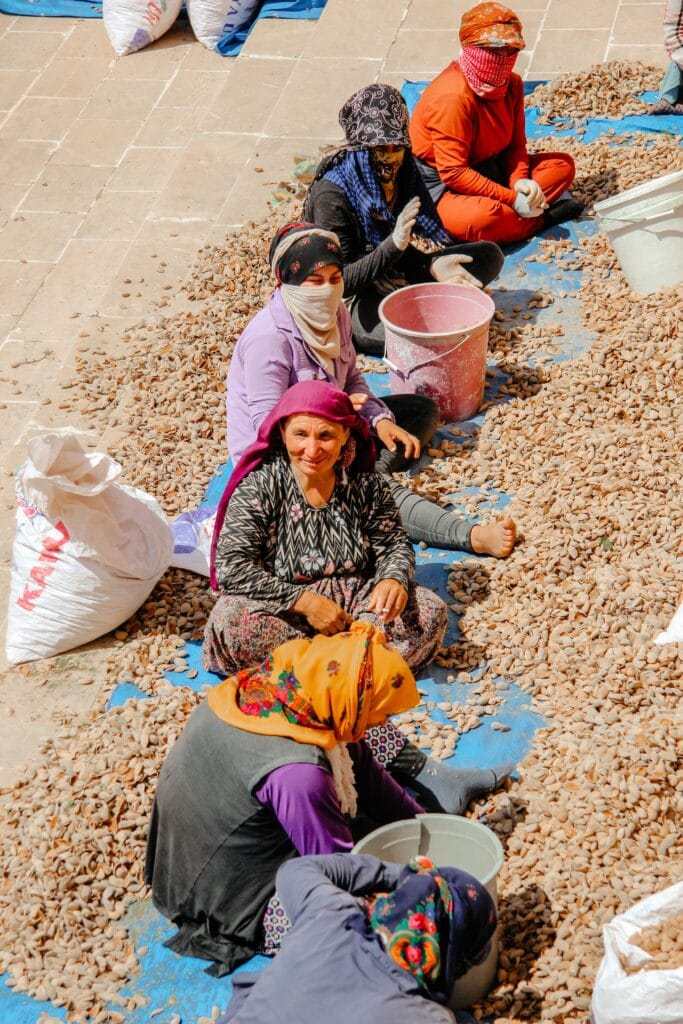
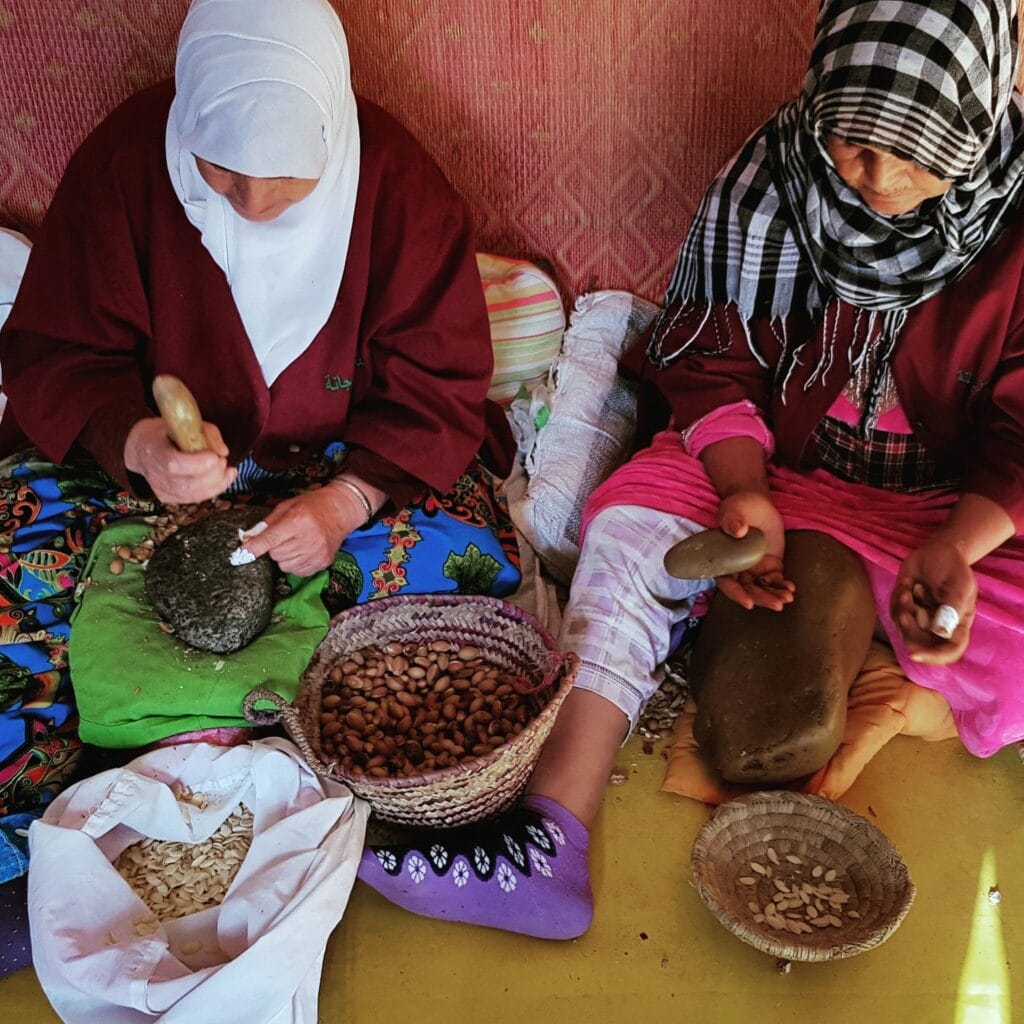
For many communities, argan landscapes have provided food, animal fodder, fuel, oil, and other resources. Women have traditionally played important roles in processing argan products.
The development of women’s argan cooperatives transformed some of these activities from household production into organized economic enterprises.
For many women, cooperatives have provided opportunities for income generation, social interaction, literacy, training, and participation in formal markets.
However, the story is more complicated than a simple transition from poverty to empowerment.
Research on argan cooperatives has shown that economic benefits can be uneven. Market intermediaries, production costs, fluctuating prices, access to equipment, and unequal control over commercial value can influence how much income reaches producers.
The commercialization of argan products can also create tension between traditional knowledge and modern market demands.
The argan economy therefore offers an important case study of how Amazigh women’s traditional knowledge enters the modern economy.
It raises a larger question:
When traditional women’s work becomes commercially valuable, who controls that value?
From Household Skill to Women’s Cooperative
The development of women’s cooperatives represents one of the clearest examples of social transformation.
A skill that was once taught within a household can become the basis of a collective enterprise.
Women may organize around:
- argan processing;
- weaving;
- embroidery;
- pottery;
- food production;
- couscous;
- cosmetics;
- agricultural products;
- or other local crafts.
Cooperatives can create new relationships among women.
They may provide opportunities to leave the home for organized work, meet other women, acquire administrative skills, interact with customers, use digital tools, and participate in markets.
At the same time, cooperatives do not exist outside wider economic structures.
Access to transportation, tourism, online markets, financing, education, branding, certification, and stable demand can determine whether a cooperative succeeds.
The cooperative should therefore be understood not simply as a symbol of women’s empowerment but as a new social and economic institution connecting traditional knowledge with modern markets.
The Amazigh Woman as a Linguistic Knowledge Holder
Language is one of the most important ways through which culture survives.
Within many Amazigh families, women have historically played an important role in transmitting language to children through ordinary interaction.
This transmission does not occur only through formal teaching.
It happens through:
- lullabies;
- jokes;
- stories;
- instructions;
- family conversations;
- proverbs;
- songs;
- food preparation;
- childcare;
- and everyday work.
A child does not necessarily learn a language by sitting down for a lesson. Much of the vocabulary of family life is acquired through repeated participation in everyday activities.
Women can therefore become important linguistic knowledge holders.
However, language transmission is changing.
Migration, schooling, urbanization, multilingualism, mass media, and digital communication can alter which languages children use with parents and grandparents.
In some families, Tamazight remains the principal household language. In others, children become increasingly bilingual or shift toward Moroccan Arabic, French, or other languages.
The future of Amazigh language therefore depends not only on official recognition or education but also on what happens in ordinary homes.
Women, Weddings and Social Negotiation
Amazigh weddings are often described through clothing, music, dancing, food, jewelry, and celebration.
But from an anthropological perspective, a wedding is also a social institution.
It brings together families and creates or reinforces relationships between households.
Women can occupy important spaces within these ceremonies as organizers, performers, textile producers, advisors, relatives, and transmitters of ceremonial knowledge.
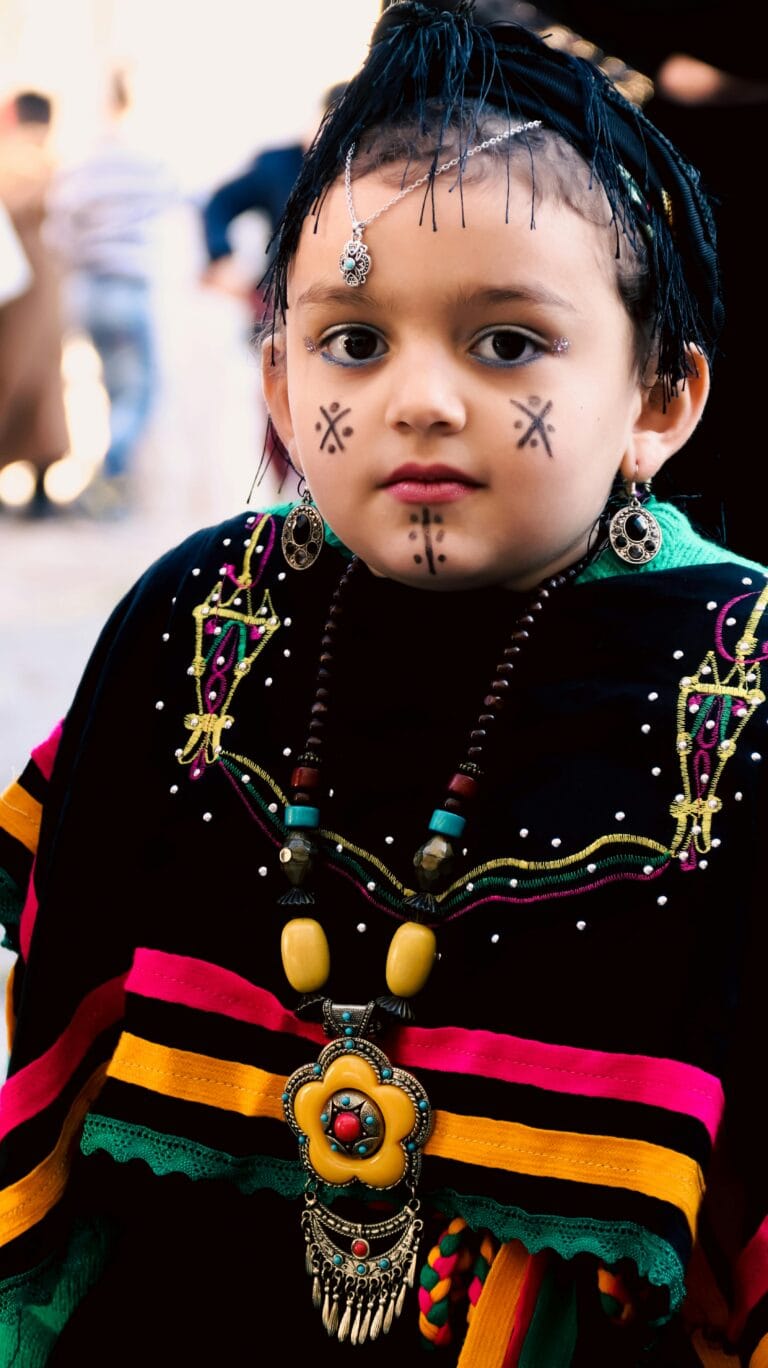
Wedding clothing and jewelry can communicate identity and regional belonging.
Songs can celebrate marriage but may also express humor, emotion, advice, desire, separation, or social commentary.
Younger women learn ceremonial practices by participating alongside older generations.
This makes the wedding an important setting for intergenerational cultural transmission.
At the same time, weddings are changing.
Urbanization, education, migration, social media, new fashion, commercial photography, and changing ideas about marriage have transformed ceremonies in many communities.
The modern Amazigh wedding can therefore combine inherited practices with new forms of expression.
The Female Body as a Cultural Language
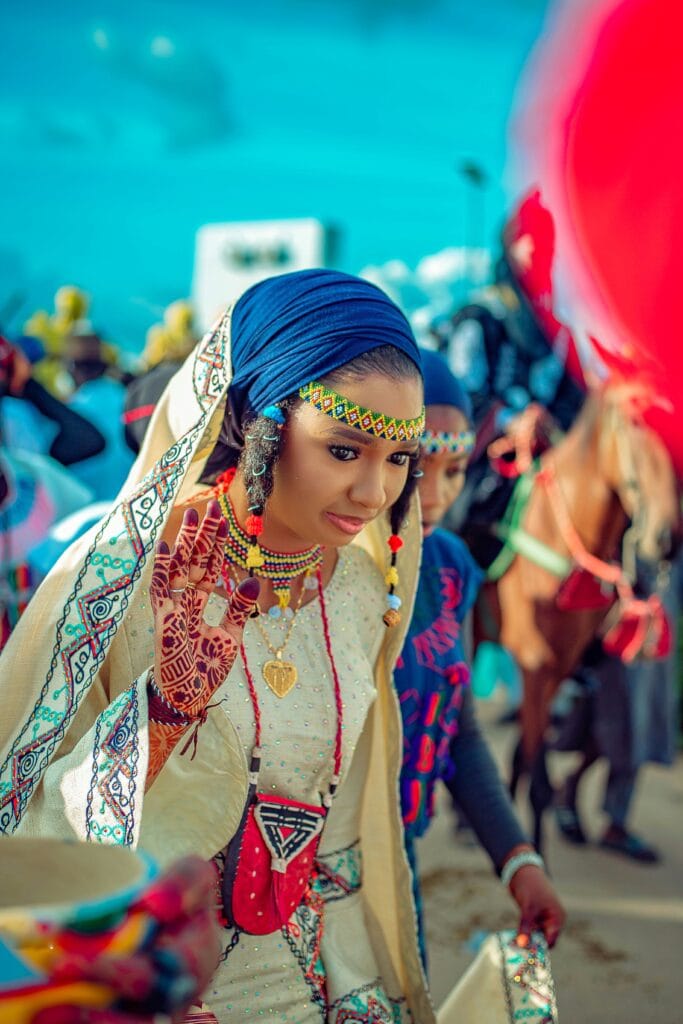
Clothing, jewelry, henna, hairstyle, embroidery, and other forms of bodily presentation can communicate social information.
A woman’s appearance may indicate regional identity, marital status, ceremonial participation, family heritage, aesthetic preference, or economic circumstances.
However, Amazigh symbolism should not be reduced to a universal dictionary in which every geometric form has one fixed meaning.
Meanings can differ between regions, objects, generations, and contexts.
A motif appearing on a carpet does not necessarily have exactly the same meaning when used on jewelry or clothing.
Likewise, a symbol interpreted by one researcher as representing fertility or protection may have another meaning for the community that produced it.
This is why Amazigh women’s clothing and adornment are best studied through local context and lived experience, rather than through universal symbolic formulas.
The body can become a cultural language, but that language is spoken differently in different Amazigh communities.
Women and Informal Forms of Authority
Formal political institutions in traditional communities were often dominated by men, particularly in public assemblies and relations involving tribal politics.
Yet formal political authority was not the only form of influence.
Women could exercise forms of informal authority through:
- family relationships;
- marriage networks;
- household decisions;
- economic production;
- cultural knowledge;
- reputation;
- religious practices;
- artistic expression;
- and relationships between generations.
Influence inside a household or kinship network should not automatically be described as political power. Nevertheless, it demonstrates that authority can exist outside formal institutions.
This distinction is important when studying Amazigh women.
A woman did not necessarily need to occupy a public political office to influence the decisions, relationships, resources, or cultural practices of her community.
Gender, Power and Social Restrictions
A balanced history of Amazigh women must also recognize limitations.
Traditional Amazigh communities were not automatically egalitarian simply because women played important economic and cultural roles.
Patriarchal expectations could shape marriage, inheritance, sexuality, mobility, household responsibilities, and access to formal authority.
The degree of restriction varied considerably by region, historical period, family, social position, and economic circumstances.
This creates an important paradox.
A woman could be essential to the economic survival and cultural identity of a household while having limited formal authority.
She could possess highly valued knowledge while lacking equal access to education or property.
She could be publicly celebrated through textiles, music, and ceremonial culture while facing strong expectations concerning family and gender behavior.
Therefore, cultural visibility should not automatically be interpreted as social equality.
The history of Amazigh women becomes more accurate when agency and constraint are studied together.
Amazigh Women and Education
Education has been one of the most significant forces transforming Amazigh women’s lives during the modern period.
Formal schooling can provide access to literacy, professional opportunities, higher education, and new forms of mobility.
For rural girls, however, access to education has historically been affected by distance from schools, household responsibilities, transportation, economic circumstances, and wider social expectations.
When young women move from villages to towns for secondary school or university, education can transform not only their own lives but also their relationships with family and community.
Educated women may become teachers, researchers, healthcare professionals, entrepreneurs, administrators, artists, journalists, activists, or cultural workers.
Education can also change language practices.
A young Amazigh woman may move between Tamazight at home, Moroccan Arabic in wider social settings, French or English in education and professional contexts, and increasingly digital forms of communication.
Education therefore affects both social mobility and cultural identity.
Migration and the Changing Amazigh Woman
Migration has transformed Amazigh women’s lifestyles as much as it has transformed rural communities generally.
Women may migrate for:
- education;
- marriage;
- employment;
- family reunification;
- entrepreneurship;
- or better access to services.
Migration from rural areas to Moroccan cities can change household structures.
A woman who once lived within an extended family may move into a smaller urban household. Agricultural responsibilities may decrease while wage employment, education, and urban consumption become more important.
International migration creates another layer.
Amazigh women living in Europe or elsewhere may maintain relationships with their villages through visits, remittances, weddings, family networks, music, language, and digital communication.
Migration therefore does not necessarily mean abandoning Amazigh identity.
In some cases, distance can even encourage renewed interest in language, clothing, music, and family heritage.
Amazigh Women in the Digital Age
The contemporary Amazigh woman increasingly participates in cultural life through digital media.
Social networks have created new spaces for:
- Tamazight content;
- traditional clothing;
- crafts;
- music;
- cultural education;
- entrepreneurship;
- photography;
- storytelling;
- and political or cultural discussion.
A young woman in a Moroccan city can now publish content about her regional heritage and reach audiences far beyond her own community.
This changes the traditional direction of cultural transmission.
Historically, knowledge often moved from grandmother to mother to daughter.
Today, knowledge can also move:
village → smartphone → diaspora → global audience.
Digital platforms can help document traditions that might otherwise receive little attention.
But digital culture also creates challenges.
Simplified representations can turn complex traditions into aesthetic images. Commercial accounts may remove cultural practices from their original context. Algorithms may favor visually attractive elements while ignoring less visible forms of knowledge.
The digital Amazigh woman is therefore not simply preserving tradition.
She is also selecting, interpreting, presenting, and sometimes reinventing it.
From Cultural Guardians to Cultural Producers
The expression “guardian of culture” is useful because Amazigh women have played important roles in transmitting language, food traditions, textiles, songs, knowledge, and family customs.
But the expression is incomplete.
Women are not merely protecting something that already exists.
They are also creating new culture.
A contemporary Amazigh woman may combine:
- traditional clothing with modern fashion;
- Tamazight with Arabic, French, or English;
- traditional crafts with online commerce;
- village knowledge with university education;
- family traditions with new ideas about gender;
- and inherited music with contemporary artistic forms.
This is cultural production, not simply preservation.
Culture survives partly because people reinterpret it.
Amazigh women therefore occupy an important position between memory and innovation.
Their cultural contribution should be understood not only through what they inherit but also through what they create.
Amazigh Women and Environmental Change
Environmental change is increasingly affecting rural Amazigh communities.
Drought, water scarcity, changing agricultural conditions, migration, and changing economic opportunities can alter traditional lifestyles.
For women, environmental change can have several consequences.
Reduced agricultural production can affect household food security. Water scarcity can increase pressure on household resources. Changes in livestock systems can reduce access to traditional products such as milk and wool. Migration can remove younger family members from agricultural work.
At the same time, women possess knowledge that can help communities respond to changing conditions.
Knowledge of plants, food preservation, agriculture, livestock, and seasonal patterns can contribute to household adaptation.
Recent research in the High Atlas is beginning to recognize women as important holders of environmental knowledge rather than treating ecological knowledge as exclusively male.
This is a significant shift in research.
It means that understanding the future of mountain landscapes requires listening to women’s knowledge as well as men’s knowledge.
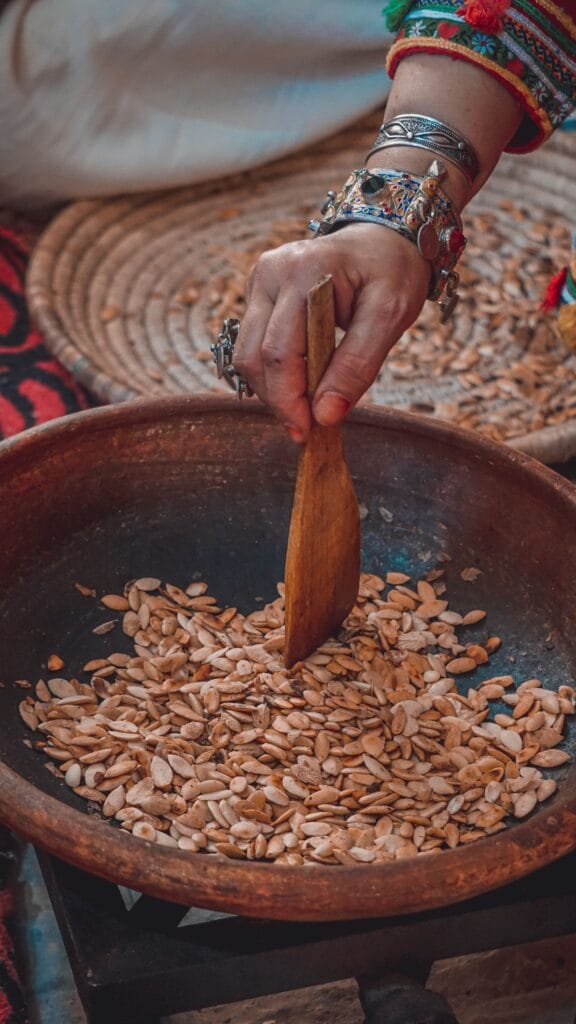
A Day in the Life of an Amazigh Woman
There was never one universal Amazigh woman’s daily routine, but an illustrative day in a High Atlas farming community can help us understand how closely different forms of work were connected.
The day might begin before sunrise.
The household prepares breakfast while animals are fed and the day’s responsibilities are organized. Children prepare for school or assist with household tasks. Depending on the season, agricultural work may begin early.
During the day, a woman might divide her time between household responsibilities, agricultural activities, livestock, food processing, gathering, craftwork, or caring for children.
On some days, she may go to the local market. On others, she may remain close to the household.
During harvest periods, agricultural work may dominate the day. During quieter periods, textile production, food preservation, domestic work, or social activities may become more prominent.
At the end of the day, family members gather again.
Food is prepared and shared.
Older relatives may tell stories or discuss family matters.
Children hear Tamazight through ordinary conversation.
Songs, proverbs, religious expressions, and memories can pass naturally between generations.
This imagined routine is not a universal portrait of Amazigh women. Rather, it illustrates an important principle:
Amazigh women’s cultural contribution was often embedded inside ordinary work.
The preservation of culture did not always happen through formal ceremonies. It could happen while preparing food, raising children, processing wool, caring for animals, or speaking to family members.
Regional Diversity in Amazigh Women’s Lives
| Region | Important aspects of women’s lives | Environmental and economic context |
|---|---|---|
| High Atlas | Agriculture, livestock, food processing, crafts, environmental knowledge | Mountain terraces, forests, springs and seasonal pastures |
| Souss | Agriculture, argan production, commerce and cooperatives | Argan landscapes, irrigation and agricultural plains |
| Anti-Atlas | Agriculture, livestock, crafts and household production | Dry mountains and water-limited environments |
| Middle Atlas | Pastoralism, agriculture, textiles and family economy | Forests, plateaus and mountain pastures |
| Southeast Morocco | Oasis agriculture, textiles, livestock and trade | Oases, drylands and seasonal water resources |
| Rif | Agriculture, household production, crafts and local commerce | Mediterranean mountain environment |
This comparison should not be interpreted as a fixed description of every woman in each region. Communities themselves contain substantial variation.
Its purpose is to demonstrate why “Amazigh women” cannot be treated as a single social category.
What Is Changing—and What Is Surviving?
The modern Amazigh woman lives at the intersection of several worlds.
Traditional household knowledge continues to exist, but it now interacts with formal education, wage employment, migration, tourism, social media, modern markets, and changing family structures.
Some practices have weakened.
Others have adapted.
Some have become commercial products.
Others have moved from the household into cultural festivals, museums, cooperatives, schools, archives, and digital platforms.
This means cultural change should not automatically be interpreted as cultural disappearance.
A traditional textile may acquire a new market.
A wedding song may be recorded digitally.
A language once transmitted only orally may now be taught in schools.
A craft once produced for household use may become an entrepreneurial activity.
A woman who leaves her village may continue to participate in its cultural life through family visits, remittances, social media, or community associations.
Amazigh women’s history is therefore not a simple movement from tradition to modernity.
It is a process of adaptation, negotiation and reinvention.
Amazigh Women as Agents of Continuity and Change
The story of Amazigh women cannot be reduced to either tradition or modernity.
For generations, women have contributed to the survival of language, foodways, textiles, oral knowledge, agricultural practices, family traditions, and artistic expression.
But they have also adapted these traditions to new circumstances.
The Amazigh woman of today may be a farmer, artisan, teacher, university student, entrepreneur, researcher, artist, activist, migrant, mother, daughter, or business owner—and sometimes several of these at the same time.
Her identity cannot be understood through one role.
This is why the expression “guardians of culture”, while meaningful, should be expanded.
Amazigh women have not merely guarded a heritage inherited from previous generations.
They have continuously interpreted, practiced, modified, transmitted, and recreated it.
Their history is therefore a history of both continuity and change.
To understand Amazigh culture itself, we must understand the women whose everyday lives have helped carry its language, knowledge, skills, memories, and meanings from one generation to the next.
Women and Weaving Traditions in Amazigh Culture
The Symbolism of Amazigh Carpets and Textiles
If you have ever stood before an Amazigh carpet, you know it is more than just decoration—it is a language of symbols. Each motif, woven by women, represents stories of life, fertility, spirituality, and resilience.
- Geometric symbols: Diamonds for fertility, zigzags for rivers and life, triangles for protection.
- Color meanings: Red for strength, green for nature, black for hardship, and white for purity.
- Regional diversity: Middle Atlas carpets (Zaiane, Zemmour) differ from those of the High Atlas (Aït Ouaouzguite, Taznakht), reflecting local identities.
When you walk into a family home in Iwziwn or the Souss region, the carpets beneath your feet are cultural archives—woven memories passed through generations of women.
Weaving as Economy and Female Empowerment
Beyond symbolism, weaving became an economic pillar for Amazigh women. Cooperatives emerged, especially in the Souss-Massa and Anti-Atlas regions, where women produce textiles sold in markets and exported abroad.
- Economic independence: Weaving provides women with income, making them less dependent on patriarchal structures.
- Education funding: Many cooperatives use profits to educate girls in rural areas.
- Global recognition: Today, Amazigh carpets are showcased in international exhibitions, giving women artisans global visibility.
By weaving, you are not just producing fabric—you are weaving identity and independence.
Amazigh Women in Oral Traditions and Music
Women in Ahwach and Ahidous
If you attend an Ahwach performance in the High Atlas, you will see women standing shoulder to shoulder with men, chanting and dancing in unison. Their role is not secondary but essential: they lead songs, guide rhythms, and carry the emotional intensity of collective dances.
- Ahwach: Known in Souss and High Atlas, women’s chants set the pace and spiritual tone.
- Ahidous: In Middle Atlas, women singers often perform izlan (poetic verses), celebrating love, bravery, or social values.
Through music, women give voice to community identity and shared memory.
Oral Poetry and Storytelling
You can’t separate Amazigh identity from oral literature, and women are its foremost guardians.
- Lullabies: Mothers sing lullabies to infants, embedding values in the next generation.
- Amarg poetry: Women compose and recite poetic verses reflecting joy, grief, resistance, or nature.
- Proverbs: Daily speech is filled with proverbs—miniature philosophies carried by women’s voices.
By listening to an Amazigh woman tell a story, you are entering a world where memory becomes survival.
Amazigh Women in Food Culture and Healing
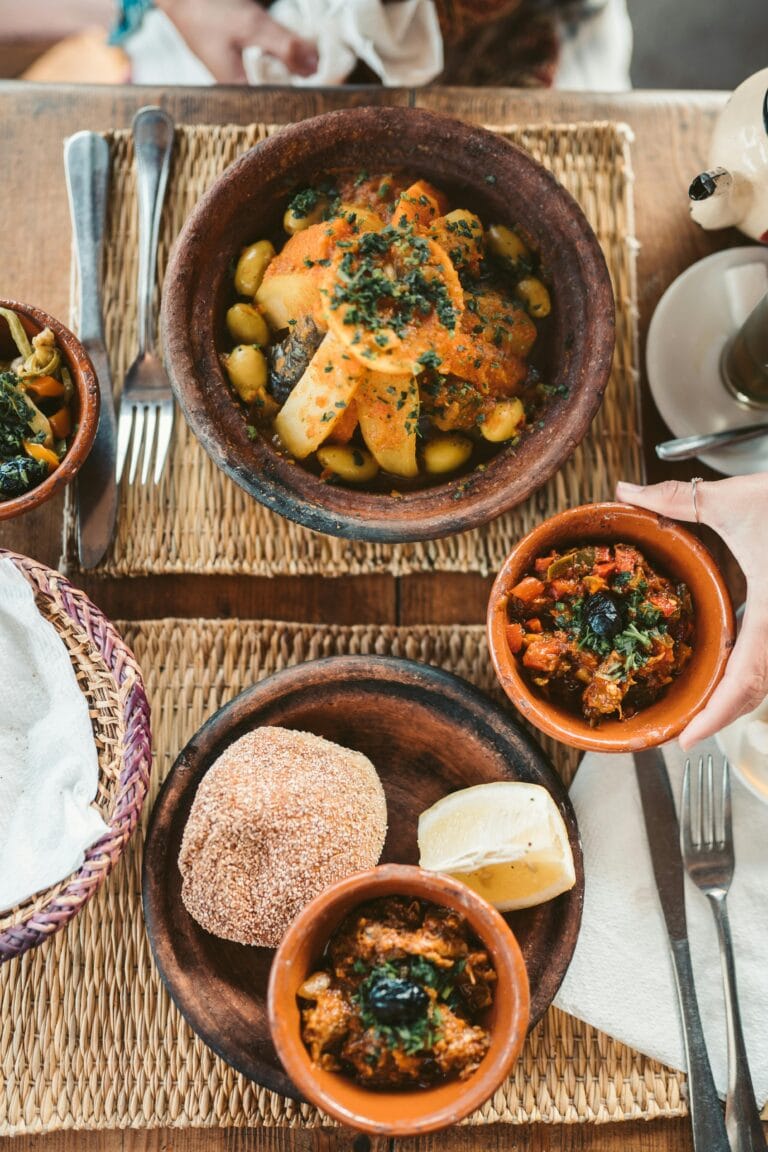
In Amazigh culture, food is never just nourishment—it is identity. Women preserve ancestral recipes, agricultural knowledge, and healing practices.
Here’s a table of traditional Amazigh recipes preserved by women:
| Dish / Recipe | Key Ingredients | Cultural Significance |
|---|---|---|
| Amlou | Argan oil, almonds, honey | A symbol of hospitality and resilience, often shared with guests |
| Tafarnout | Barley or wheat, baked in clay oven | Daily bread tied to village life and hospitality |
| Herbal Infusions | Thyme, rosemary, sage, verbena | Used as traditional medicine and daily refreshment |
Women also serve as healers, practicing herbal medicine and midwifery. In remote areas, you may still find women who know dozens of plants used to cure illness, ease childbirth, or protect against the evil eye.
Amazigh Women and Education: Tradition Meets Modernity
Challenges in Access to Education
For decades, women in rural Amazigh regions struggled with limited access to education:
- Distance to schools in mountainous areas.
- Lack of instruction in Tamazight, forcing girls to study in Arabic or French.
- Cultural expectations prioritizing domestic roles.
Women as Pioneers of Cultural Preservation
Despite obstacles, Amazigh women have become leaders in education and cultural activism:
- Writers and poets publishing in Tamazight.
- Activists promoting women’s literacy.
- Female scholars documenting Amazigh history.
Case Studies of Change
- Fatema Mernissi: Moroccan feminist scholar with Amazigh roots, advocating for women’s voices in history.
- Hadda Ouakki: Famous Amazigh singer whose songs championed identity.
- Contemporary activists: Women in NGOs advancing girls’ education in Souss and the Atlas.
Women as Guardians of Amazigh Identity in the Modern World
Today, Amazigh women balance tradition with modern aspirations. You find them in:
- Cultural tourism: Showcasing weaving, cooking, and music to visitors.
- Political activism: Advocating for Tamazight recognition as an official language.
- Global platforms: Representing Amazigh identity in art, film, and exhibitions.
By supporting Amazigh women, you are not only preserving the past but building a more inclusive future.
FAQs about Women in Amazigh Society
What is the role of women in Amazigh society?
Women have historically played important roles in family life, agriculture, food production, textile making, childcare, oral traditions, language transmission, and the preservation of cultural knowledge. Their responsibilities and degree of authority, however, have varied considerably between Amazigh communities and regions. Research increasingly emphasizes that Amazigh women should be understood not only as cultural transmitters but also as active economic, social, and environmental actors.
What is the daily life of an Amazigh woman like?
There is no single Amazigh women’s lifestyle. Daily life differs according to region, household, age, economic circumstances, education, and whether a woman lives in a rural community, town, or city. In rural areas, daily activities may combine domestic responsibilities with agriculture, livestock care, food preparation, water management, textile production, and other forms of household or market work. Modern education, employment, migration, technology, and changing family structures have also transformed everyday life.
Are Amazigh women considered the guardians of Amazigh culture?
Women have often been described as important guardians of Amazigh culture because they transmit language, songs, stories, food traditions, textile knowledge, dress practices, and other forms of cultural knowledge across generations. However, “guardians” alone is too narrow a description. Amazigh women are also cultural producers: they reinterpret traditions, create new forms of artistic expression, participate in cooperatives, engage with education and digital media, and actively reshape Amazigh identity.
What do Amazigh women in morocco contribute to agriculture?
In many rural Amazigh communities, women participate in different stages of agricultural production and food security. Depending on the region and household, their work can include planting, harvesting, processing crops, preserving food, caring for poultry and livestock, collecting plants, and managing household food resources. Research on Moroccan Amazigh communities also documents women’s knowledge of seeds, medicinal plants, food species, and traditional preservation techniques.
What role do Amazigh women play in food and traditional cuisine?
Food is an important area of women’s cultural knowledge. Women have historically been involved not only in cooking but also in selecting, processing, storing, preserving, and preparing locally available foods. Knowledge of cereals, wild edible plants, seeds, herbs, dairy products, preservation methods, and seasonal foods can therefore represent both practical knowledge and cultural heritage.
Research has connected these practices with food security, biodiversity, and the transmission of cultural knowledge.
What role do Amazigh women play in weaving?
Weaving is one of the most extensively documented areas of Amazigh women’s artistic and cultural production. Women have produced carpets, blankets, clothing, and other textiles while transmitting techniques, motifs, colors, and meanings through generations. Anthropologist Cynthia Becker’s research on Aït Khabbash women in southeastern Morocco demonstrates how textiles can function simultaneously as artistic production, social practice, and expressions of group identity.
Why are Amazigh women’s clothing and jewelry culturally important?
Clothing and jewelry can communicate aspects of identity, region, social position, marital status, aesthetics, and community belonging. Their meanings are not identical across all Amazigh communities, however. Designs, materials, colors, ornaments, and styles vary between regions and groups, so individual symbols should not automatically be assigned one universal meaning.
Research on Amazigh art has particularly examined textiles, jewelry, dress, body decoration, and the ways women participate in constructing and displaying Amazigh identity.
What role do Amazigh women play in weddings?
Women can have major responsibilities in wedding preparation, clothing, decoration, singing, dancing, hospitality, advice, and the transmission of ceremonial knowledge. Weddings can also provide an important space for women to express cultural identity through dress, jewelry, songs, poetry, and performance.
The exact traditions vary significantly between Amazigh communities. Cynthia Becker’s research among the Aït Khabbash, for example, documents women’s important participation in wedding ceremonies and their use of artistic and performative traditions to express group identity.
How do Amazigh women help preserve the Tamazight language?
Women can play an important role in intergenerational language transmission, particularly through everyday communication with children. Lullabies, stories, songs, proverbs, instructions, jokes, family conversations, and oral traditions can all transmit vocabulary and cultural knowledge.
Linguist Fatima Sadiqi specifically examined Moroccan women’s role in preserving Amazigh language and culture, highlighting the relationship between women’s everyday social roles, language, and cultural continuity.
Do Amazigh women have an important role in oral tradition?
Yes. Oral poetry, songs, folktales, proverbs, wedding chants, lullabies, and everyday storytelling have provided important channels for cultural transmission in many Amazigh communities. Women’s participation varies by region and tradition, but research has documented their contribution to maintaining oral knowledge and transmitting it between generations.
Studies of communities such as Imilchil have specifically examined women’s role in transmitting poetry, proverbs, and folktales.
Do Amazigh women work in argan oil cooperatives?
Yes. Women’s cooperatives have become particularly important in parts of southwestern Morocco where argan trees are traditionally integrated into local livelihoods. Cooperatives can provide opportunities for income generation, literacy, social participation, skills development, and access to markets.
However, the economic effects are not identical for every woman. Recent research describes the benefits of argan entrepreneurship as mixed, with some women gaining opportunities while others may experience low earnings or unequal distribution of market value.
Are Amazigh women empowered in Moroccan society?
There is no simple answer because empowerment depends on what is being measured and where. Some Amazigh women have expanded their economic, educational, cultural, and civic participation, while others continue to face constraints related to rural isolation, gender expectations, access to education, resources, mobility, or employment.
Academic research increasingly focuses on women’s agency—their capacity to make decisions, use knowledge, create opportunities, and influence their families and communities—rather than describing Amazigh women only through vulnerability or disadvantage.
Do Amazigh women have environmental knowledge?
Yes. Recent research in the High Atlas has provided particularly strong evidence of women’s environmental knowledge. A 2026 study involving 80 Amazigh women in the Aït Bouguemez Valley documented numerous stewardship practices involving plants, grazing, soil, water, medicinal resources, and culturally significant landscapes.
The study identified women’s environmental knowledge as an important but previously overlooked component of the way High Atlas cultural landscapes are maintained.
How has modern life changed the lives of Amazigh women?
Education, migration, urbanization, wage employment, improved infrastructure, mass media, social media, changing markets, and new forms of mobility have altered many aspects of Amazigh women’s lives. Some traditional activities have declined, while others have been adapted or commercialized.
This means cultural change should not automatically be understood as cultural disappearance. Some traditions survive by changing their form, context, or economic function.
How does education affect Amazigh women?
Education can expand access to literacy, employment, public institutions, professional opportunities, and broader social networks. At the same time, access to education has historically been more difficult for some rural communities because of distance, infrastructure, household responsibilities, and socioeconomic conditions.
Research on Amazigh women in Morocco has therefore connected education with broader questions of agency, mobility, and social transformation.
Are Amazigh women all the same across Morocco?
No. Amazigh women belong to diverse communities with different languages, environments, histories, economies, and cultural practices. The experiences of a woman in the High Atlas may differ substantially from those of a woman in the Souss, Anti-Atlas, Middle Atlas, Rif, or southeastern oasis regions.
For this reason, it is more accurate to speak of Amazigh women’s experiences rather than assuming there is one universal Amazigh female identity.
Why are Amazigh women important to the survival of Amazigh culture?
Amazigh women and culture are important because cultural continuity often happens through ordinary daily practices: speaking with children, preparing food, making textiles, teaching songs, participating in ceremonies, caring for land and animals, and transmitting practical knowledge.
But their importance goes beyond preservation. Amazigh women also adapt cultural practices to new economic, educational, technological, and social conditions. They are therefore not simply keepers of an unchanged past; they are active participants in the continuing transformation of Amazigh culture.
Conclusion – Weaving the Past into the Future
Women in Amazigh society are more than participants in tradition—they are its guardians. By weaving, singing, storytelling, and teaching, they pass on the essence of Amazigh identity. At the same time, they embrace education, activism, and leadership, proving that culture and progress can coexist.
As you reflect on their role, remember this: every Amazigh carpet, song, or proverb you encounter carries the touch of women who kept culture alive, even in the hardest times. Supporting their work means weaving a future where Amazigh identity continues to inspire resilience, creativity, and freedom.
👉 If you value this heritage, share these stories, support women’s cooperatives, and engage with Amazigh culture not as a relic, but as a living, breathing force shaping tomorrow.