Amazigh Agriculture: How Farming Sustains Life and Heritage
Introduction: Where Earth Meets Identity
Across Morocco’s mountains, valleys, plains, and oases, agriculture has shaped much more than the food people eat. It has influenced settlement, family life, seasonal traditions, local economies, and the relationship between communities and their environment.
Agriculture in Amazigh Tribes is when you walk through the terraced valleys of the High Atlas at dawn, the smell of freshly turned earth mingles with the sound of rushing water from ancient irrigation channels. You can almost hear the whispers of generations past — Amazigh farmers who shaped these rugged mountains into gardens of life.
In Amazigh culture, agriculture is not merely survival — it is a sacred craft, a way of being that intertwines with spirituality, community, and the rhythm of nature itself. Each seed sown tells a story, each harvest celebrates endurance.
Amazigh agriculture developed in landscapes where water could be scarce, soils could be difficult to cultivate, and steep mountain slopes required careful management. Farmers responded with terraces, irrigation channels, crop diversity, and systems of collective cooperation adapted to local conditions.
From barley and wheat to olives, almonds, dates, and argan, agricultural products have also become part of Morocco’s culinary and cultural heritage. Farming connects naturally with other traditions, including weaving, pottery, food preparation, pastoralism, and seasonal celebrations.
You, as a reader, are not just learning about farming — you are stepping into a civilization that measures time by the soil’s generosity, not the clock’s ticking. This is the story of Amazigh agriculture, where land and people breathe as one.
Table of Contents
The Roots of Amazigh Agriculture — A Civilization Cultivated by the Earth
The Roots of Amazigh Agriculture
Agriculture in Amazigh tribes cannot be understood as a single system. Morocco’s Amazigh regions include mountains, plateaus, valleys, plains, and oasis environments, and farming practices have developed differently in each setting.
Over generations, communities learned to work with their local climate and terrain. Mountain farmers developed terraces and irrigation systems, while oasis communities combined agriculture with careful water management and date-palm cultivation. In other regions, rain-fed cereals, olive trees, almonds, argan, and livestock became central to household economies.
This diversity is one of the most important characteristics of Amazigh agriculture: there is no single agricultural model, but a collection of regional adaptations shaped by environment and community knowledge.
The Historical Foundations of Amazigh Farming
Long before cities rose along the Atlantic and Mediterranean coasts, Amazigh tribes had already mastered the art of cultivating the unforgiving landscapes of North Africa. Archaeological evidence from sites like Volubilis and Taforalt reveals early agricultural practices dating back thousands of years — proving that Amazigh farmers were among the first in North Africa to domesticate cereals and livestock.
Their agricultural system evolved through adaptation. In mountain villages and desert oases, the Amazigh learned how to balance subsistence farming with environmental constraints.
- In the High Atlas, they built terraced fields supported by dry-stone walls.
- In the Anti-Atlas, they relied on flood-fed farming and date palm groves.
- In the Souss plains, they developed irrigation networks (known as targa).
The result? A resilient and self-sustaining agricultural tradition that survived colonization, modernization, and climate shifts.
Land as Ancestral Memory
For the Amazigh, land (amur n tmurt) is not property — it is identity. It is both inheritance and obligation. You will often hear elders say, “The land is our mother, and the seed is her heart.”
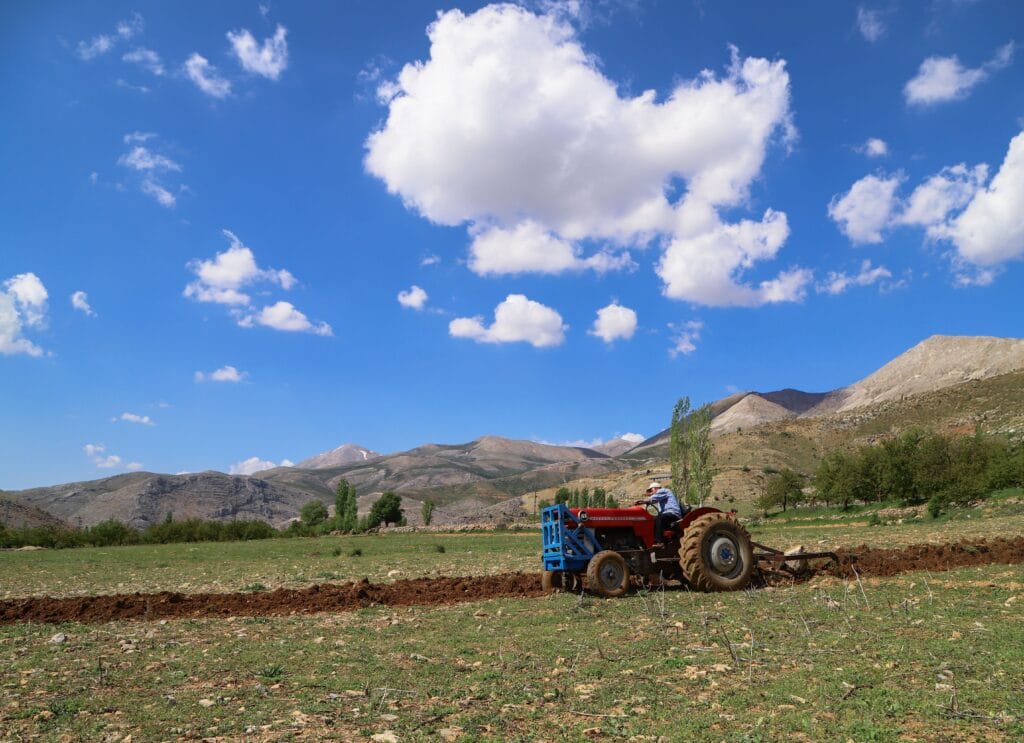
Amazigh farming is deeply communal. Land is cultivated through collective labor systems (tiwizi), where families help one another during planting and harvest seasons. This system not only strengthens social bonds but also ensures equitable resource sharing.
🌾 Did You Know?
The term Tiwizi refers to a traditional Amazigh practice of mutual aid — a community-based labor exchange used in agriculture, construction, and even weddings.
Land, Family, and Community
For many Amazigh communities, agricultural land has historically been closely connected to family, ancestry, livelihood, and community responsibility. Farming was rarely an isolated activity carried out by one person.
Seasonal tasks such as planting, harvesting, maintaining terraces, repairing irrigation channels, or processing crops could require cooperation between relatives and neighbors. One expression of this cooperative tradition is tiwizi, a system of mutual assistance found in different forms across Amazigh communities.
Tiwizi demonstrates an important principle of rural life: agricultural productivity depends not only on soil and water, but also on relationships between people.
The Geography of Growth — How Environment Shapes Amazigh Agriculture
Mountains, Plains, and Oases — The Three Agricultural Worlds
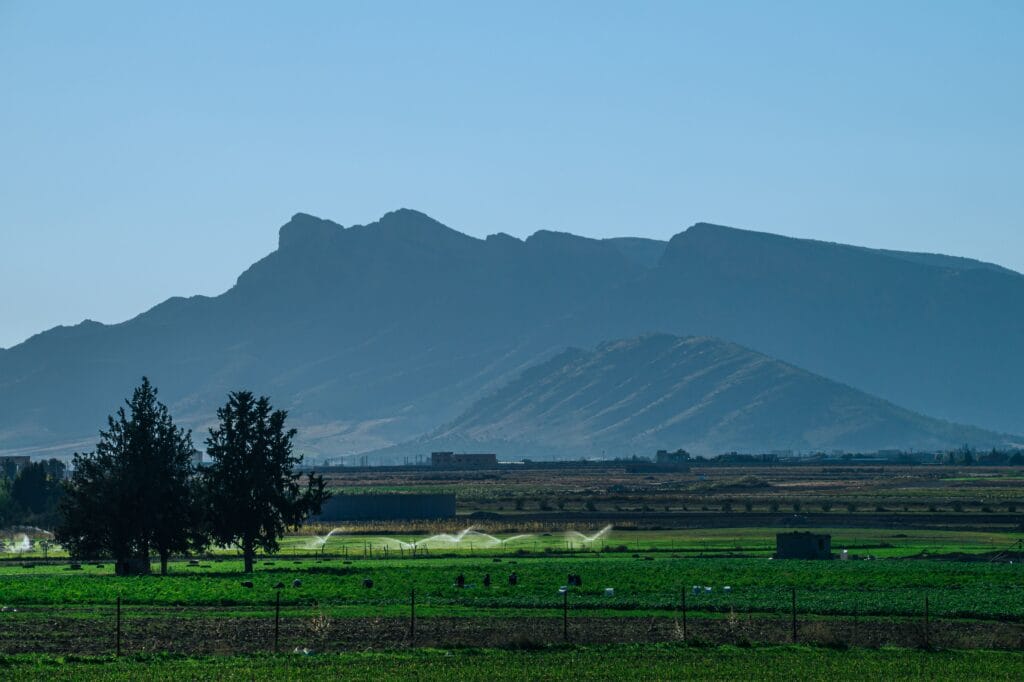
Morocco’s Amazigh regions are ecologically diverse, stretching from the Rif Mountains in the north to the oases of the Sahara. Each region has its own rhythm of agriculture.
Mountain Agriculture
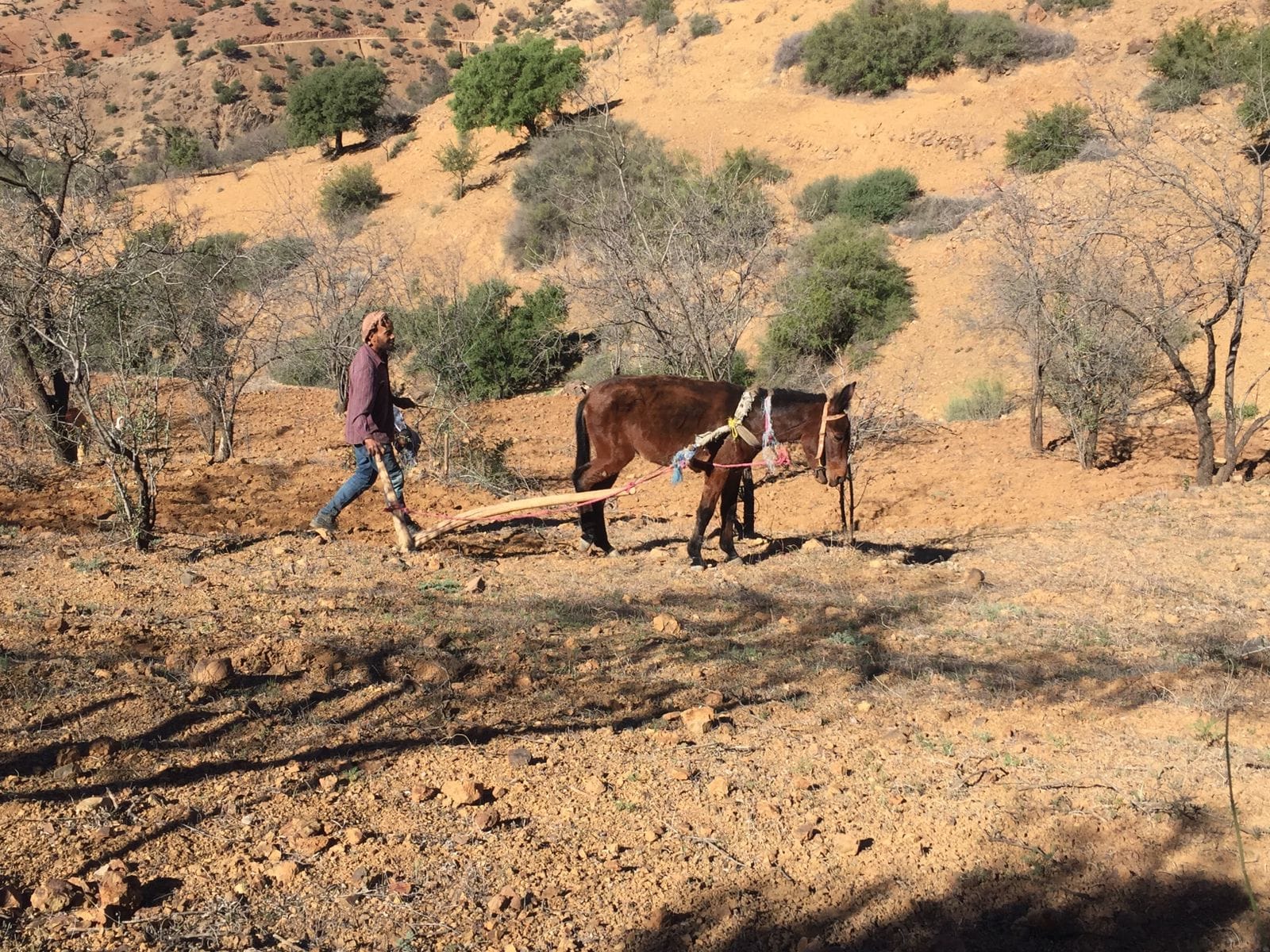
In the Atlas Mountains, farmers have adapted agriculture to steep slopes, limited arable land, and changing temperatures. Terraced fields allow cultivable soil to be retained on hillsides while helping manage water runoff.
Barley, wheat, almonds, walnuts, vegetables, and fruit trees are among the crops associated with different mountain environments, although the exact agricultural mix varies considerably from one valley to another.
Oasis Agriculture
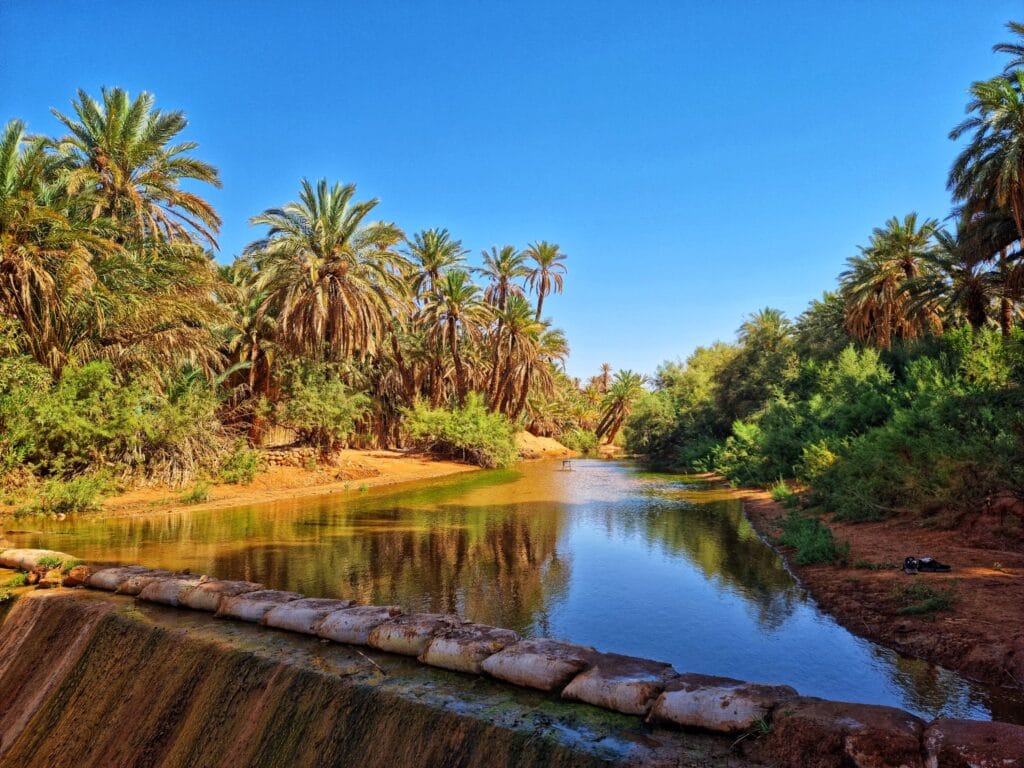
In southern Morocco, oasis agriculture depends heavily on water management. Date palms form an important upper layer of many oasis systems, creating shade that can support fruit trees, vegetables, cereals, and other crops beneath them.
This layered approach makes productive use of limited water and land while creating a distinctive oasis ecosystem.
Souss and Argan Landscapes
The Souss region combines agricultural plains with mountain and semi-arid environments. Olive trees, cereals, vegetables, citrus, and argan are associated with different parts of the region.
Argan cultivation is particularly important culturally and economically, with traditional knowledge surrounding the tree extending from agriculture to food preparation and oil production.
| Region | Main Crops | Agricultural System | Notable Features |
|---|---|---|---|
| Rif Mountains | Olives, figs, barley | Terrace farming | Rain-fed agriculture |
| Middle Atlas | Apples, walnuts, wheat | Irrigation (springs & streams) | Forest ecology |
| High Atlas | Barley, almonds, corn | Terraces & irrigation (targa) | Harsh climate adaptation |
| Anti-Atlas | Dates, argan, barley | Oasis farming | Dryland resilience |
| Souss Plains | Citrus, vegetables, grains | Modern irrigation | Transition zone between mountains & coast |
The ingenuity of Amazigh farmers lies in their ability to turn arid, rocky terrains into productive soils. Using minimal tools but maximal wisdom, they maintain ecological balance through crop rotation, composting, and natural pest control — long before “organic farming” became a global movement.
The Water Heritage — Targa and Khettara Systems
Water has always been one of the most important resources in Moroccan agriculture. In mountain and oasis environments, communities developed ways of collecting, directing, sharing, and conserving water according to local conditions.
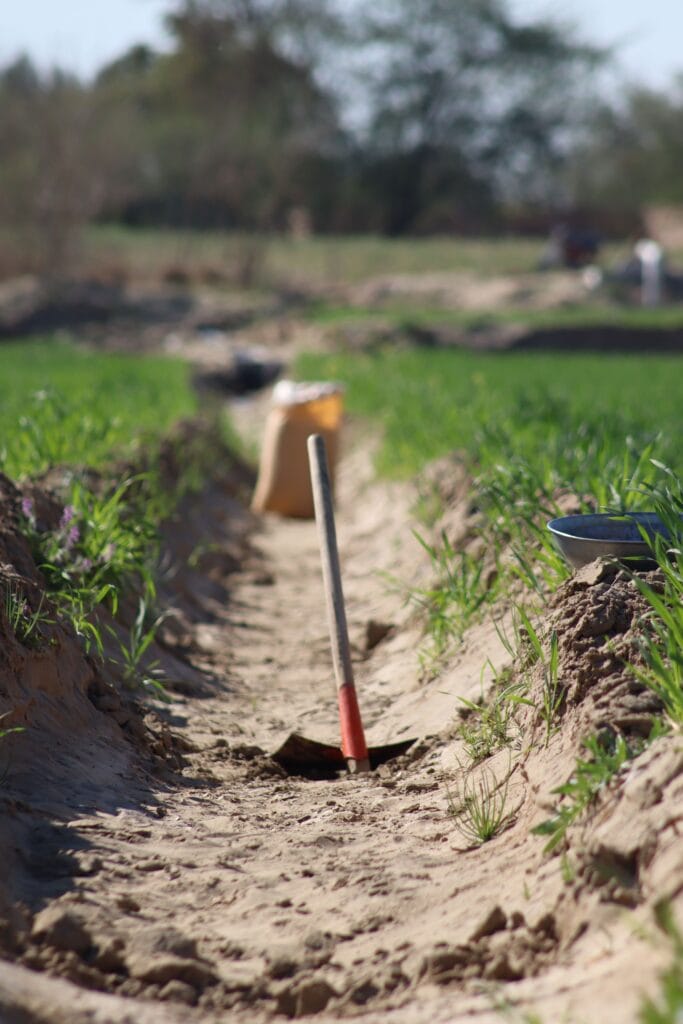
Traditional channels known in some Amazigh regions as targa can carry water from springs or streams toward agricultural fields. Underground systems such as khettara use gravity to bring groundwater toward areas where it can be used for agriculture.
These systems were not simply engineering solutions. Their management could involve community rules concerning maintenance, access, timing, and distribution. In this sense, water management became both an agricultural practice and a form of social organization.
Water is sacred in Amazigh culture. The proverb “Aman” — “Water is life” — guides every agricultural decision.
Two ancestral irrigation systems stand out:
- Targa (تاركا): A surface channel guiding mountain spring water to fields, managed communally.
- Khettara (خَطّارة): An underground channel that captures groundwater through gravity — found mainly in the Anti-Atlas and Sahara fringes.
These systems not only sustain crops but reinforce collective governance, as each family’s water share is determined by time and tradition.
The Cycle of Life — Seasons, Rituals, and Festivals
Sowing and Harvest as Sacred Acts
Agriculture in Amazigh Tribes and life is interwoven with rituals and spiritual symbolism. Every agricultural act — from sowing to harvesting — is accompanied by songs, prayers, and community gatherings.
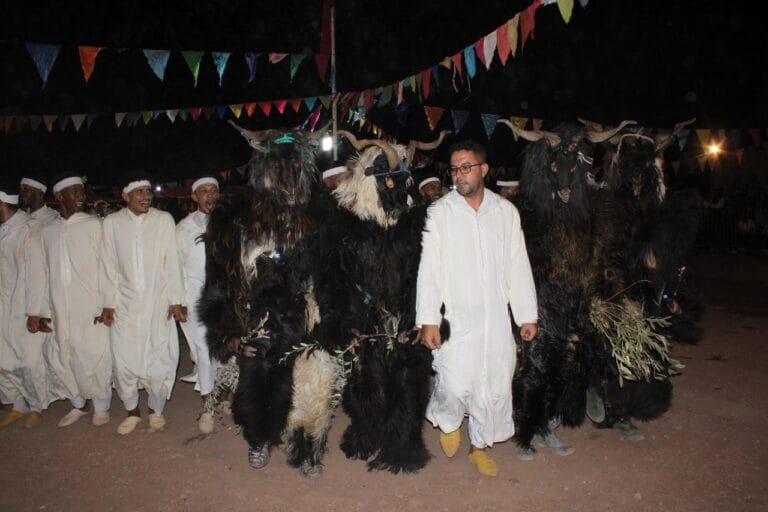
During sowing, women sing “Izlan n tissit” (songs of blessing) to call for rain and fertility. At harvest time, entire villages gather for Ahwach dances — celebrating abundance through music, rhythm, and poetry.
🎵 Example of a traditional chant:
“Aman ur illi, amur ur ifri,
May the water come, may the land open.”
Agricultural Festivals and the Amazigh Calendar
Amazigh farmers follow a solar agricultural calendar, distinct from the Islamic lunar one. The year begins on Yennayer (Amazigh New Year, January 12–14), marking the symbolic start of planting.
| Event | Period | Significance |
|---|---|---|
| Yennayer | January | Start of the agricultural year |
| Imɣar n Tmazirt | Spring | Blessing of fields and livestock |
| Tafaska n waman | Summer | Water offering festival |
| Tafaska n tuffɣa | Autumn | Harvest celebration |
| Moussem of Saints | Varies | Thanksgiving & spiritual renewal |
These festivals link the material and the metaphysical — reaffirming the Amazigh belief that to cultivate the earth is to honor the divine.
Crops, Crafts, and Culinary Heritage
Traditional Crops — The Core of Amazigh Cuisine
The crops cultivated by Amazigh communities have helped shape Morocco’s food traditions.
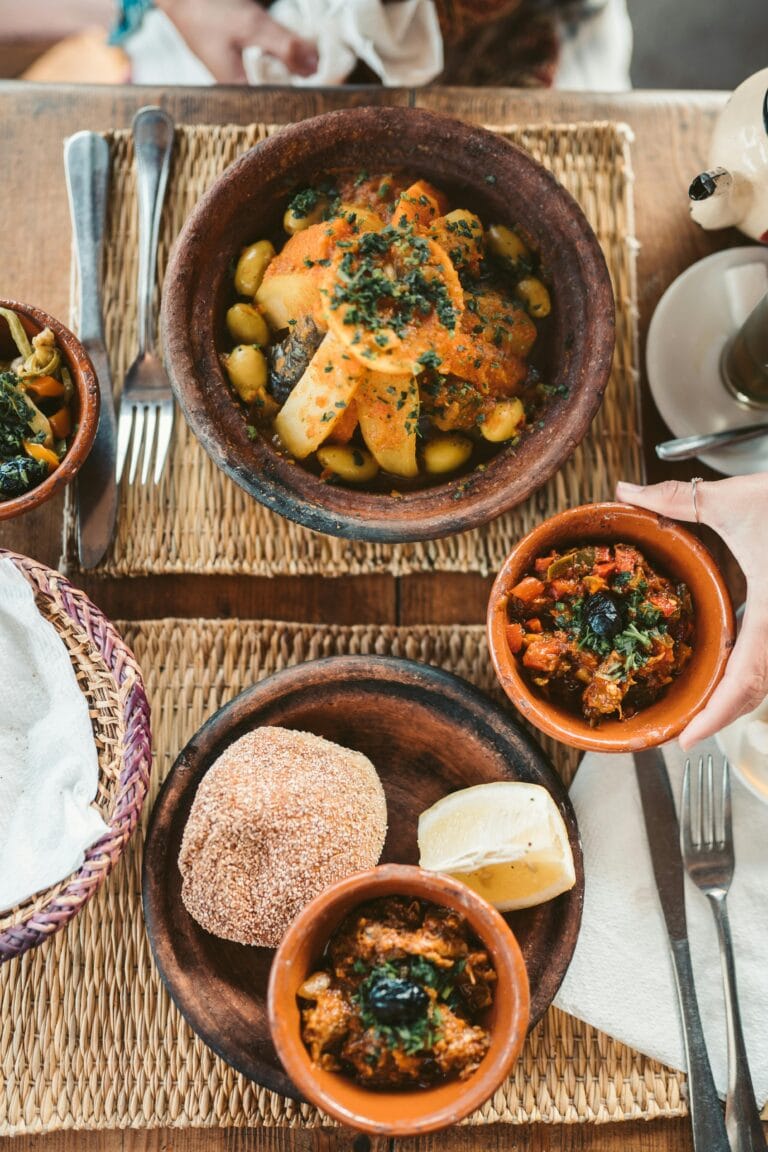
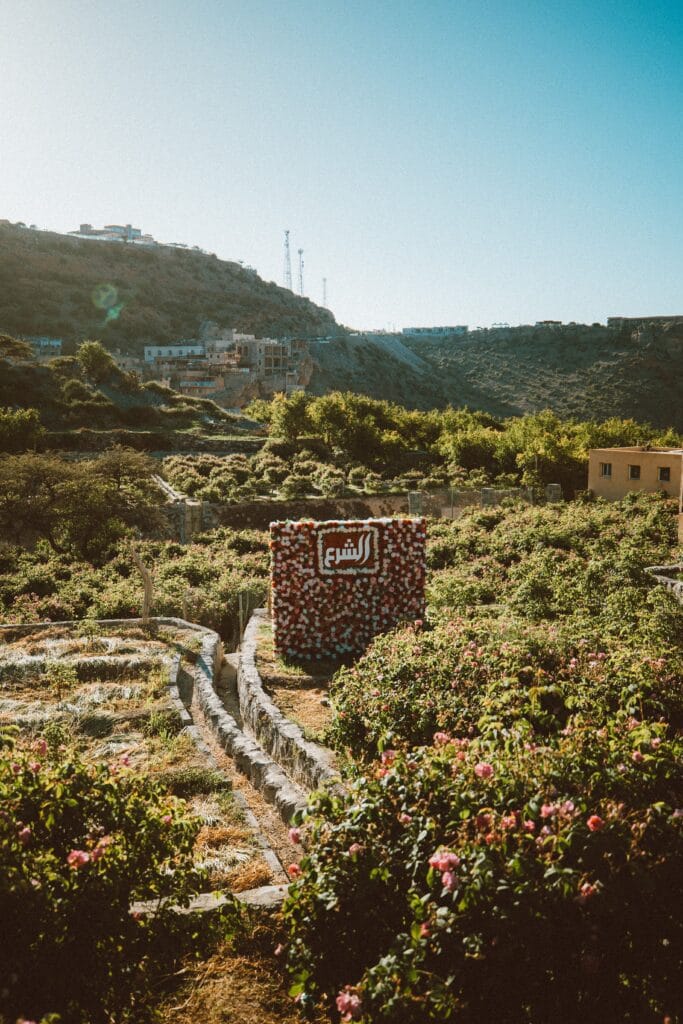
Barley and wheat have long been important cereals, providing ingredients for bread, couscous, and other staple foods. Olives and olive oil are central to many rural economies, while almonds, dates, figs, and other fruits reflect the diversity of Moroccan agricultural landscapes.
In southwestern Morocco, the argan tree has particular economic and cultural importance. Its fruit supports the production of argan oil, while the tree itself contributes to the ecological character of the region.
Agriculture therefore connects directly to the kitchen: what grows in the landscape often becomes part of the foods, flavors, and traditions that define local identity.
The crops grown by Amazigh farmers are not only nutritional staples but cultural symbols.
Main Crops in Amazigh Agriculture:
- Barley: The foundation of traditional bread (aghrom).
- Wheat: Used for couscous (seksu).
- Corn: For porridge (tagula).
- Olives: Source of oil and wealth.
- Dates & Argan: Sacred fruits of endurance.
- Herbs: Thyme, rosemary, saffron, and mint — both medicinal and ritual.
Table: Examples of Traditional Uses
| Crop | Culinary Use | Cultural Role |
|---|---|---|
| Barley | Bread & couscous | Symbol of humility |
| Argan | Oil & cosmetics | Economic empowerment |
| Dates | Sweets & rituals | Used in blessings |
| Saffron | Spice & medicine | Precious trade product |
From Earth to Art — Crafting Life through Agriculture
Agriculture has historically supported more than food production. It has also provided many of the materials used in traditional crafts.
Wool from sheep can become carpets and textiles. Palm leaves can be transformed into baskets and mats, while agricultural products such as olives and argan can support household industries and local trade.
This relationship between agriculture and craftsmanship shows how rural economies traditionally operated as interconnected systems rather than as separate industries.
Farming in Amazigh culture goes beyond food production — it fuels craftsmanship and artistry.
- Palm leaves become woven mats and baskets.
- Wool from sheep turns into carpets dyed with natural plant colors.
- Clay soil transforms into pottery.
This integration of agriculture and art reflects a worldview where nothing from the earth is wasted, and everything carries meaning.
Livestock and Pastoralism — The Moving Fields
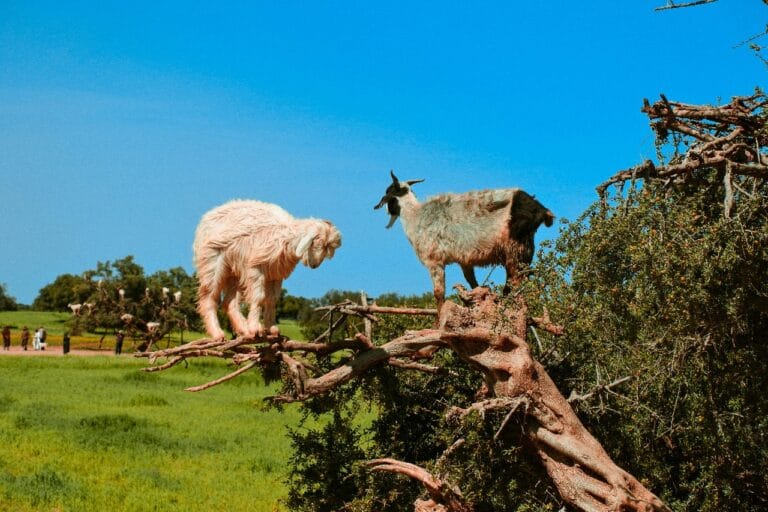
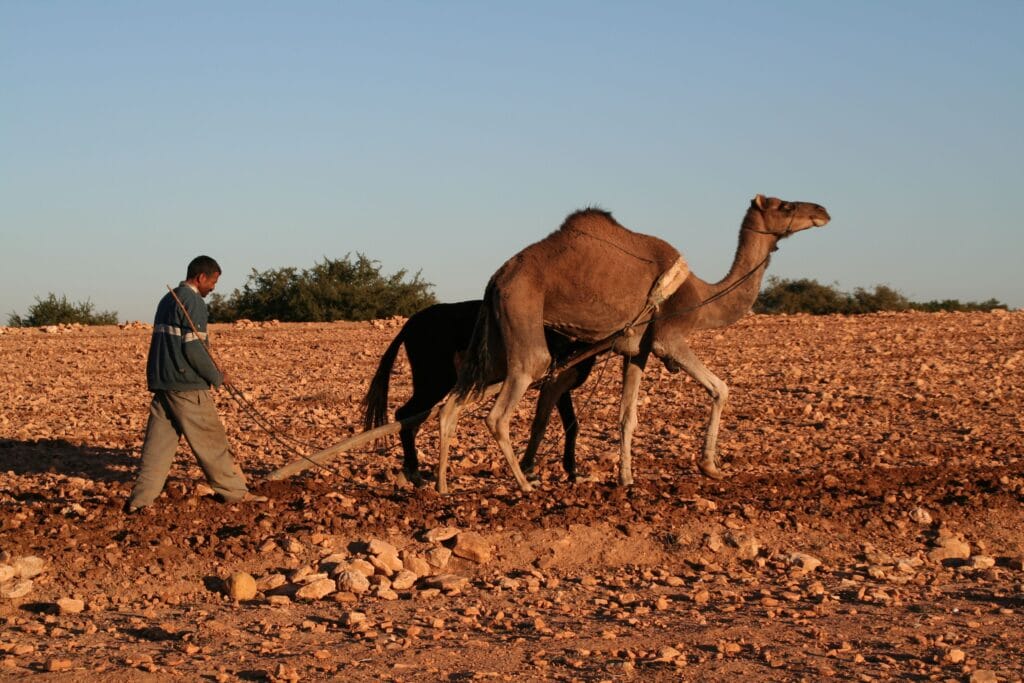
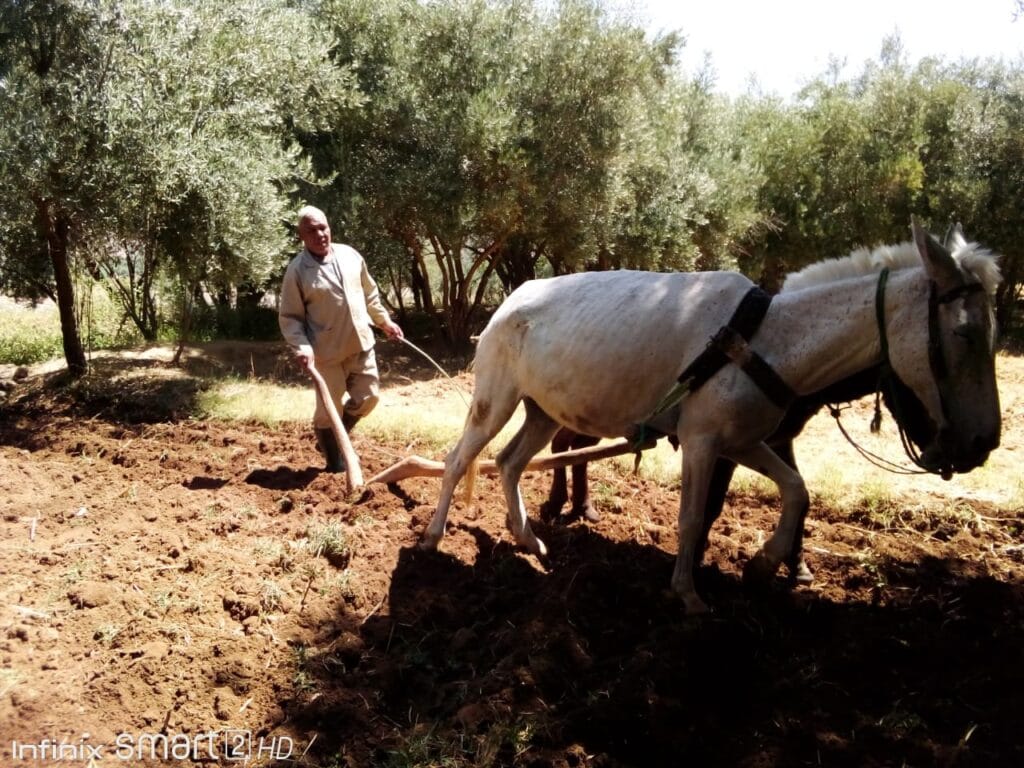
Amazigh rural life has traditionally combined cultivation with livestock keeping in many regions. Sheep, goats, cattle, and, in some environments, camels have provided meat, milk, wool, hides, and other resources.
In mountain areas, seasonal movement between grazing areas is an important form of pastoral adaptation. Transhumance allows herders to follow available pasture and water according to seasonal conditions.
Pastoralism and agriculture can therefore complement one another: animals provide food and materials while also contributing manure that can be used to enrich agricultural soils.
Amazigh tribes are both farmers and herders. In many regions, especially the High and Anti-Atlas, transhumance (seasonal migration of livestock) remains vital.
Shepherds move between summer pastures (azib) and winter valleys (ighrem) following the rhythm of nature. This sustainable mobility prevents overgrazing and maintains ecological balance.
🐐 Goats, sheep, and camels are not just assets — they are wealth, food, and companions in the Amazigh cosmology.
Traditional Agricultural Knowledge – Learning From the Landscape
One of the most valuable aspects of Amazigh agriculture is the knowledge accumulated through generations of observation.
Farmers have had to understand rainfall patterns, soil conditions, plant cycles, water availability, animal behavior, and seasonal changes. Much of this knowledge was transmitted through practice and oral tradition rather than formal agricultural institutions.
Today, this knowledge is increasingly discussed in relation to traditional ecological knowledge. It does not mean that every traditional technique is automatically sustainable, but it demonstrates how communities developed practical responses to difficult environments long before modern agricultural technologies became widespread.
The Agricultural Year – Following the Seasons
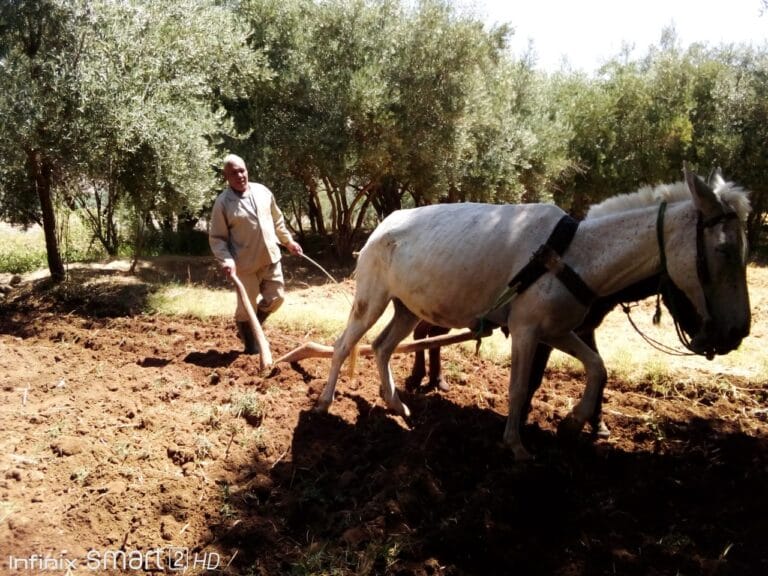
Traditional farming follows the rhythm of the seasons. Preparing fields, sowing, tending crops, harvesting, storing grain, and caring for livestock all require careful attention to timing.
Seasonal work has also provided opportunities for social gatherings, communal labor, songs, celebrations, and shared meals. In this way, the agricultural calendar becomes part of the cultural calendar.
The Amazigh agricultural year therefore connects environment, food, work, and community life.
Challenges and Modern Transitions
Climate Change and Water Scarcity
Amazigh agricultural communities face many of the same pressures affecting rural Morocco more broadly. Water scarcity, prolonged drought, changing rainfall patterns, soil degradation, economic pressures, and rural-to-urban migration can all affect traditional farming systems.
At the same time, traditional knowledge does not necessarily disappear when communities modernize. Farmers can combine inherited practices with irrigation technology, improved crop varieties, agricultural cooperatives, new markets, and modern environmental approaches.
The real challenge is finding ways to preserve valuable knowledge while allowing rural communities to adapt and prosper.
Today, the greatest threat to Amazigh agriculture is climate change. Droughts, deforestation, and irregular rainfall are eroding centuries-old traditions.
Yet, Amazigh farmers are adapting — through eco-agriculture, argan cooperatives, and community-led water management.
Modernization and Cultural Continuity
While modernization brings opportunities (like better tools and markets), it also risks eroding traditional ecological knowledge (TEK). Younger generations are increasingly drawn to urban life, leaving ancestral lands behind.
The challenge is to create a balance — preserving identity while embracing innovation.
Where Travelers Can Experience Amazigh Agriculture
Travelers interested in Amazigh heritage can encounter agricultural traditions across Morocco’s mountain and oasis regions. The experience may be as simple as seeing terraced fields while hiking through an Atlas valley, visiting an oasis, observing traditional irrigation channels, tasting locally produced foods, or buying products directly from rural cooperatives.
Responsible travel matters. Visitors should respect agricultural land, avoid damaging crops or irrigation infrastructure, ask before photographing people or private property, and support local producers when purchasing traditional products.
Agriculture is not simply scenery for visitors—it remains part of people’s livelihoods.
Did You Know? 8 Facts About Amazigh Agriculture
- Amazigh farming traditions vary considerably between Morocco’s mountains, plains, and oases.
- Tiwizi refers to traditions of mutual assistance found in Amazigh communities.
- Terracing allows farmers to cultivate slopes that would otherwise be difficult to farm.
- Traditional irrigation systems can involve detailed community rules for sharing water.
- Barley has an important place in many traditional Moroccan food systems.
- Oasis agriculture often combines date palms with lower layers of fruit trees and crops.
- Livestock has traditionally provided food, wool, manure, and other resources to rural households.
- Climate change and water scarcity are among the major challenges facing agriculture in Morocco today.
FAQ about Agriculture in Amazigh Tribes
What makes Amazigh agriculture unique?
Amazigh agriculture blends ecological wisdom, spirituality, and community. It’s a holistic system sustained by collective traditions and environmental respect.
What is Amazigh agriculture?
Amazigh agriculture refers to the diverse farming and livestock practices developed by Amazigh communities across Morocco and other parts of North Africa. These practices vary according to local landscapes, climates, water resources, and traditions.
What crops are traditionally grown by Amazigh communities?
Common crops in southwestern Morocco include barley, wheat, olives, almonds, figs, dates, vegetables, and argan. The exact crops depend on the region and its environmental conditions.
How do Amazigh farmers manage water?
Traditional systems include surface irrigation channels and, in some regions, underground water galleries such as khettara. Water distribution may also be governed by community rules and customary practices.
What are traditional Amazigh irrigation systems?
The targa (surface channel) and khettara (underground gallery) — both ancient systems still used today.
What is tiwizi?
Tiwizi is a tradition of mutual assistance found in Amazigh communities. It can involve collective labor for agricultural work and other important community tasks.
Why is terrace farming important in the Atlas Mountains?
Terracing creates usable agricultural surfaces on steep slopes, helps retain soil, and allows farmers to manage water more effectively.
How do Amazigh farmers celebrate harvest?
Through Ahwach dances, communal feasts, and seasonal festivals that unite spirituality with daily life.
Is Amazigh agriculture still practiced today?
Yes. Traditional agricultural practices continue alongside modern farming methods, although their importance varies between regions and communities.
What role does livestock play in Amazigh agriculture?
Livestock can provide meat, milk, wool, manure, and income. In mountain regions, pastoralism may also involve seasonal movement between different grazing areas.
Why is Amazigh agriculture important to Moroccan heritage?
It preserves knowledge about farming, food, water management, landscapes, seasonal traditions, and community cooperation. It is therefore an important part of Morocco’s living cultural heritage.
Can travelers experience Amazigh agricultural traditions?
Yes. Visitors can encounter farming landscapes, mountain terraces, oasis agriculture, local food traditions, rural cooperatives, and traditional water systems in several regions of Morocco.
Conclusion: Cultivating Tomorrow
As you look across the Amazigh landscapes — from the terraced fields of Taliouine to the argan groves of Ait Baha — you realize that agriculture is not simply an activity. It is a language of continuity, a conversation between ancestors and descendants, earth and sky.
Amazigh agriculture is more than farming. It is a living relationship between people, land, water, food, and community. From the terraces of the Atlas Mountains to the argan landscapes of the Souss and the productive oases of southern Morocco, generations of farmers have adapted their practices to remarkably diverse environments.
Although climate change and modernization are transforming rural life, many traditions continue to evolve rather than simply disappear. Understanding Amazigh agriculture means understanding an important part of Morocco’s cultural heritage—and the knowledge that continues to connect communities with the land.
To understand Agriculture in Amazigh tribes is to understand how a people turned survival into art, and the soil into scripture.
🌍 References
- UNESCO: Intangible Cultural Heritage in Morocco
- IRCAM (Institut Royal de la Culture Amazighe) – Publications on Amazigh agriculture
- FAO: Traditional Knowledge Systems and Agriculture in North Africa
- Mohamed Chafik – Le monde amazigh
- Paul Pascon – La Maison d’Illigh et l’histoire sociale du Tazerwalt
- Moroccan Ministry of Agriculture – Agroecology and Terraces in the Atlas Mountains
🪶 Call to Action
If you’ve felt the heartbeat of the earth through these words, share this story. Every visit to an Amazigh village, every taste of barley bread, every sip of argan oil is an act of preservation.
You, too, can help sustain this heritage — by learning, supporting local cooperatives, and celebrating the living culture of the Amazigh farmer.
🌾 Because to cultivate the earth is to cultivate the soul.