Taroudant: The Historic Gateway to Morocco’s Amazigh Heartland
Introduction: Where the Walls Remember More Than Kings
Long before Morocco’s Atlantic ports connected continents and before Marrakech became synonymous with imperial splendor, another city quietly flourished between fertile plains and rugged mountains. Protected by imposing earthen walls and nourished by the waters descending from the High Atlas, Taroudant emerged as one of southern Morocco’s most enduring centers of commerce, agriculture, and Amazigh civilization.
Unlike cities celebrated primarily for monumental palaces or royal ceremonies, Taroudant captivates through authenticity. Its streets still echo with the rhythms of traditional life, where artisans shape leather and silver by hand, merchants negotiate beneath centuries-old arcades, and farmers from neighboring villages arrive with olives, citrus fruits, saffron, almonds, and argan products cultivated using knowledge refined over countless generations.
What distinguishes Taroudant is not simply its architecture or markets but its geographical role as a meeting place between ecological worlds. To the north, the High Atlas Mountains rise dramatically, sheltering Amazigh communities whose terraces and seasonal pastures have long sustained the region. To the south, the Anti-Atlas unfolds in a landscape of granite outcrops, argan forests, and historic caravan paths leading toward the Sahara. Between these mountain systems stretches the fertile Souss Valley, where water, agriculture, and trade converged to create one of Morocco’s oldest continuously inhabited cultural landscapes.
For centuries, Taroudant served as more than a fortified city. It functioned as the administrative heart of the Souss, a marketplace connecting mountain tribes with Atlantic ports, and a crossroads where merchants, scholars, craftsmen, pilgrims, and travelers exchanged goods, ideas, and traditions. Rather than replacing Amazigh culture, urban life in Taroudant grew from it, reflecting a dynamic relationship between rural communities and regional commerce.
Today, many visitors describe Taroudant as “the little Marrakech.” While the comparison acknowledges its impressive walls and lively souks, it overlooks the city’s distinct historical trajectory. Taroudant possesses an identity rooted not in imitation but in its own remarkable past—a past shaped by indigenous resilience, strategic geography, agricultural innovation, and centuries of cultural continuity.
Exploring Taroudant therefore means discovering a Morocco that often remains hidden from conventional itineraries. Beyond its gates lies a landscape where ancient irrigation systems still nourish orchards, where Amazigh villages continue to preserve oral traditions and communal practices, and where mountain roads lead toward places such as Aoulouz, Iwziwn, the Tifnout Valley, Lake Ifni, and Toubkal National Park. Together, these places form an interconnected cultural region whose history cannot be understood through cities alone but through the enduring relationship between people, landscape, and memory.
Table of Contents
Taroudant in Historical Perspective: The Making of the Souss Capital
Understanding Taroudant requires shifting attention away from Morocco’s imperial capitals and toward the broader history of the Souss, a region whose prosperity has long depended on agriculture, mountain resources, and transregional exchange. While dynasties rose and fell elsewhere, the Souss developed as a resilient cultural landscape where Amazigh communities maintained strong local institutions alongside broader political transformations.
The city’s strategic location at the crossroads of river valleys and mountain corridors allowed it to become the principal urban center of the region. Caravans traveling between the Sahara, the Atlas Mountains, and the Atlantic coast found in Taroudant a secure place to exchange goods, replenish supplies, and establish commercial partnerships.
Unlike coastal cities whose fortunes depended largely on maritime trade, Taroudant prospered through its ability to connect diverse ecological zones. Products from high-altitude pastoral communities, fertile agricultural plains, argan-growing areas, and Saharan trading networks converged within its markets, creating an economy remarkably diversified for its time.
Historical geographers frequently describe Taroudant as the natural capital of the Souss because it concentrated political authority, commercial activity, and agricultural wealth while remaining closely integrated with surrounding Amazigh tribal territories.
Before the City: Human Occupation in the Souss Valley
Although the visible city developed during the medieval period, archaeological evidence demonstrates that human occupation of the Souss Valley extends far deeper into prehistory.
Stone tools, burial sites, and scattered archaeological remains found across the wider region indicate repeated human settlement from the Paleolithic through the Neolithic periods. The fertile plains, seasonal rivers, and nearby mountain ecosystems provided favorable conditions for hunting, early agriculture, and pastoralism long before urban centers emerged.
The surrounding High Atlas and Anti-Atlas preserve numerous rock engravings depicting cattle, wild animals, geometric motifs, and scenes associated with prehistoric lifeways. While these engravings are not located within Taroudant itself, they form part of the broader cultural landscape that eventually supported the rise of permanent settlements in the Souss.
Environmental archaeology further suggests that early inhabitants developed sophisticated strategies for managing seasonal water availability. Communities combined rain-fed cultivation with localized irrigation, gradually transforming the valley into one of southern Morocco’s most productive agricultural regions.
This deep chronology reminds us that Taroudant did not appear in an empty landscape. It emerged within a territory shaped by thousands of years of human adaptation, environmental knowledge, and cultural continuity.
The Name “Taroudant”: Linguistic Perspectives and Local Traditions
The etymology of Taroudant remains the subject of scholarly debate, reflecting the complex linguistic history of southern Morocco.
Several researchers argue that the name derives from older Amazigh linguistic roots, although no single interpretation has achieved universal acceptance. Like many place names across the Souss, Taroudant appears to preserve elements of pre-Arabic toponymy that survived through continuous local use.
Oral traditions recorded in the region offer multiple explanations. Some connect the name to legendary figures remembered in local folklore, while others associate it with geographic features or early settlements whose precise origins have faded from historical memory.
From a linguistic perspective, the persistence of the name across successive political periods illustrates the remarkable durability of Amazigh place names. Even as administrative languages changed—from Amazigh dialects to Arabic and later French—the indigenous toponym remained largely intact, preserving an important element of regional identity.
Today, the city’s name is recognized in Arabic, French, and Tamazight, where the continued use of the Tifinagh script reflects broader efforts to strengthen Amazigh linguistic heritage throughout Morocco.
Between Mountains and Plains: Geography as Historical Destiny
Few Moroccan cities owe so much of their historical development to geography.
Taroudant occupies a privileged position within the Souss Valley, where the waters descending from the High Atlas irrigate fertile agricultural land before flowing westward toward the Atlantic Ocean. This location allowed the city to mediate exchanges between dramatically different environments.
To the north, mountain passes provided access to pastoral communities, mineral resources, forests, and highland agriculture. To the south, routes crossed the Anti-Atlas toward oases and Saharan trade networks. Westward connections linked the Souss with coastal settlements, while eastern corridors opened routes toward the central Atlas and inland Morocco.
Rather than functioning as an isolated city, Taroudant developed as the principal node within a larger regional system.
Its prosperity depended upon continuous interaction with villages, tribal territories, seasonal markets, and mountain communities. Agricultural products entered the city from surrounding plains, while manufactured goods, tools, textiles, and commercial services flowed outward into rural areas.
Modern regional planning continues to reflect these historical relationships. Roads leading through Aoulouz, Taliouine, Iwziwn, and the valleys approaching Lake Ifni still follow corridors that have connected people across the Souss and High Atlas for centuries.
The Souss as a Mosaic of Amazigh Confederations
One of the defining characteristics of the Taroudant region has always been its remarkable social diversity.
Rather than being dominated by a single political authority, the Souss historically consisted of numerous Amazigh tribal confederations, each maintaining distinctive customary laws, agricultural systems, and local institutions while participating in broader networks of exchange.
Communities developed cooperative approaches to irrigation management, seasonal grazing, conflict resolution, and collective labor. Village assemblies often regulated access to water, cultivated land, and mountain pastures through customary legal traditions that balanced individual rights with communal responsibilities.
Anthropologists have long emphasized that these institutions represented sophisticated systems of local governance rather than informal customs. Their resilience contributed significantly to the long-term stability of the region despite changing dynasties and external political pressures.
Taroudant functioned as the principal urban counterpart to these rural societies, providing commercial opportunities while remaining deeply connected to the surrounding Amazigh landscape.
From Regional Stronghold to Saadian Capital: Taroudant’s Political Rise
Although Taroudant had already developed into an important urban center by the late medieval period, its greatest transformation occurred during the sixteenth century, when southern Morocco became the cradle of one of the country’s most influential dynasties: the Saadians.
Unlike many Moroccan capitals established by conquering dynasties arriving from distant regions, the Saadian state emerged from southern Morocco itself. The Souss provided the dynasty with fertile agricultural resources, strategic trade routes, and loyal tribal alliances that enabled it to consolidate power before extending its authority across much of the Maghreb.
Before Marrakech became the principal Saadian capital, Taroudant served as one of the dynasty’s earliest administrative and military centers. Its fortified position, abundant agricultural hinterland, and proximity to caravan routes made it an ideal base from which the Saadians organized political alliances and resisted Portuguese expansion along Morocco’s Atlantic coast.
This period marked a decisive chapter in the city’s history. Taroudant evolved from an important regional market into a center of administration, military logistics, diplomacy, and taxation, reinforcing its reputation as the political heart of the Souss.
Historians of Morocco frequently emphasize that understanding the rise of the Saadian dynasty requires looking beyond Marrakech to the wider Souss region, where Taroudant played a foundational role in shaping the kingdom’s future.
The Ramparts of Taroudant: Architecture Built for Survival
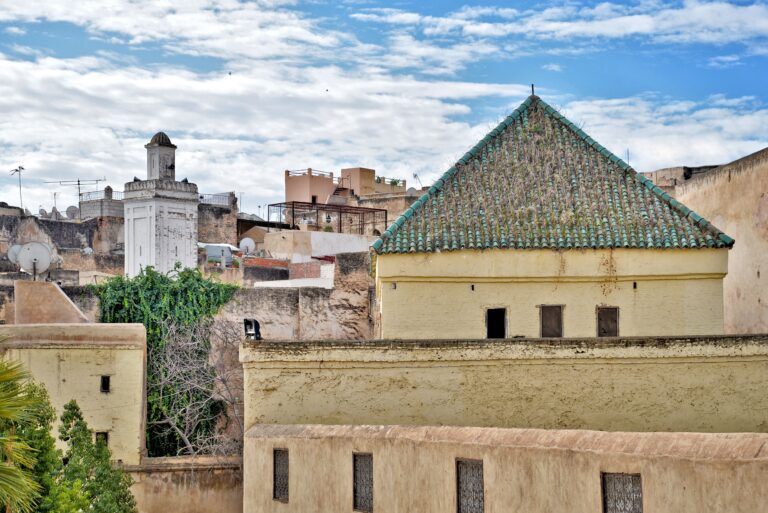
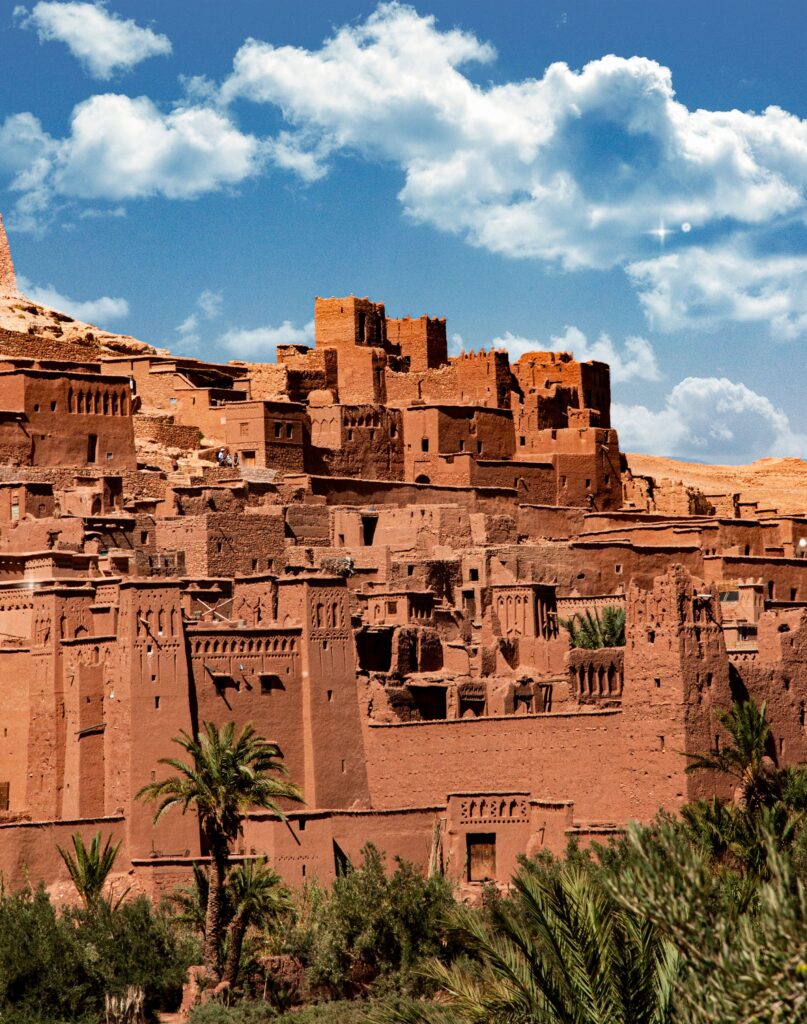
One of Taroudant’s defining features is its remarkable system of defensive walls, among the most complete and best-preserved earthen fortifications in Morocco.
Stretching for approximately 7.5 kilometers (4.7 miles) and reinforced by numerous towers and monumental gates, these ramparts continue to encircle the historic medina much as they did centuries ago. Built primarily from rammed earth (pisé) mixed with clay, gravel, and organic fibers, they demonstrate a construction technique that has long characterized Amazigh architecture throughout southern Morocco.
Unlike stone fortifications common in Europe, earthen walls offered several advantages in the Moroccan environment. Local materials were readily available, repairs could be carried out efficiently, and the thick walls provided excellent thermal insulation while absorbing the impact of projectiles more effectively than brittle masonry.
The walls were not merely military structures. They defined the social and economic boundaries of the city, protected commercial districts, regulated access through monumental gates, and symbolized the collective security of the urban community.
Walking alongside these fortifications today offers a rare opportunity to appreciate a medieval defensive system that has survived with remarkable integrity despite centuries of political change.
The Gates of Taroudant: Thresholds Between Worlds
The monumental gates of Taroudant reveal how urban planning reflected both practical needs and symbolic meanings.
Each principal gate controlled movement between the medina and the surrounding countryside while connecting the city to different trade routes and neighboring regions. Rather than serving only defensive purposes, the gates functioned as points of exchange where agricultural products, caravans, livestock, and travelers entered the city under administrative supervision.
Among the most significant gates are:
Bab al-Khamis
Traditionally associated with the Thursday market, this gate connected Taroudant with agricultural communities supplying cereals, vegetables, livestock, and other essential goods.
Bab Zorgan
Facing northern routes toward the High Atlas, Bab Zorgan historically welcomed merchants, shepherds, and travelers descending from mountain villages.
Bab Targhount
This gate linked the city with western agricultural districts and regional trade corridors extending toward the Atlantic.
Bab Oulad Bounouna
Serving routes toward eastern tribal territories, this entrance reflects Taroudant’s longstanding relationship with surrounding Amazigh confederations.
Collectively, these gates illustrate that Taroudant was never isolated behind its walls. Instead, it remained deeply interconnected with the landscapes and communities that sustained its prosperity.
Taroudant and the Caravan Economy of Southern Morocco
For centuries, Taroudant occupied a strategic position within a network of commercial routes linking the Atlantic coast, the High Atlas, the Anti-Atlas, the Draa Valley, and the Sahara.
Long before modern highways crossed southern Morocco, caravans transported goods across immense distances using knowledge accumulated over generations. These journeys depended upon reliable stopping places where merchants could obtain food, water, shelter, security, and commercial services.
Taroudant fulfilled all these functions.
Caravans arriving from the south often carried:
- dates from oasis settlements,
- salt from Saharan mines,
- leather goods,
- wool,
- medicinal plants,
- indigo,
- ostrich feathers,
- and occasionally gold that had passed through trans-Saharan trading systems.
From the fertile Souss, merchants exported:
- cereals,
- almonds,
- olive oil,
- citrus fruits,
- saffron,
- textiles,
- leather,
- and handcrafted metalwork.
The city’s markets therefore reflected ecological diversity rather than dependence upon a single commodity. Mountain agriculture, oasis production, pastoral economies, and long-distance commerce all converged within Taroudant’s commercial network.
Economic historians increasingly recognize the Souss not merely as a peripheral region but as one of Morocco’s most dynamic zones of exchange during the medieval and early modern periods.
Water as Civilization: Irrigation and the Agricultural Wealth of Taroudant
No factor influenced Taroudant’s prosperity more profoundly than water.
Situated within the fertile Souss Valley, the city benefited from seasonal rivers descending from the High Atlas, particularly the Oued Souss and its tributaries. Yet rainfall alone could never sustain intensive agriculture in this semi-arid environment. Success depended upon careful management of every available water source.
For centuries, local communities constructed sophisticated irrigation systems that distributed water through canals, diversion channels, earthen embankments, and communal reservoirs. Access to irrigation was often regulated through customary agreements that allocated water according to carefully measured schedules, ensuring that farming families shared this essential resource fairly.
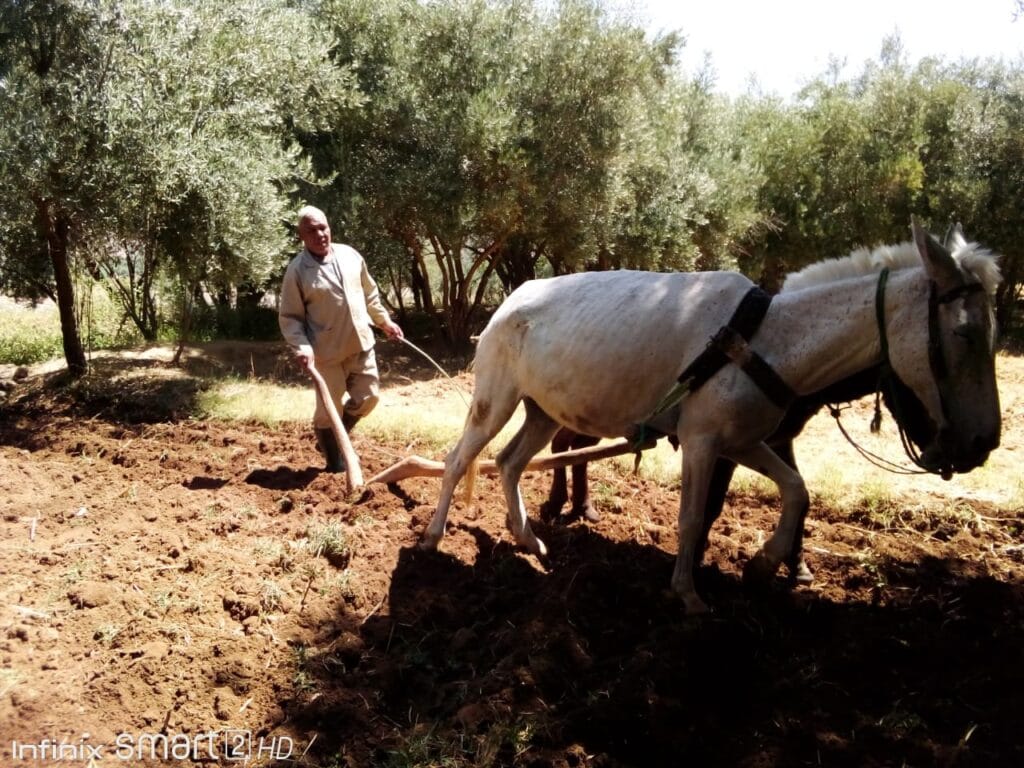
These practices reveal a sophisticated understanding of hydrology and collective governance. Water was regarded not simply as a natural resource but as a communal trust requiring cooperation across villages and agricultural districts.
The result was one of Morocco’s most productive farming regions.
The Agricultural Landscape of the Souss
The fertile lands surrounding Taroudant continue to support remarkable agricultural diversity.
Among the region’s principal products are:
Citrus Orchards
Taroudant has become internationally recognized for producing high-quality oranges, mandarins, lemons, and other citrus fruits that benefit from abundant sunshine and carefully managed irrigation.
Olive Groves
Ancient olive cultivation remains fundamental to the rural economy, supplying oil for local consumption and regional markets.
Argan Forests
Although more closely associated with the western Souss and Anti-Atlas, the wider Taroudant Province includes extensive argan ecosystems. These unique forests support biodiversity while providing Amazigh communities with valuable oil, cosmetics, medicinal products, and livestock forage.
Saffron
To the northeast, around Taliouine, farmers cultivate some of the world’s finest saffron. This precious spice has become both an economic resource and a symbol of the region’s agricultural identity.
Almonds and Walnuts
Mountain villages bordering the High Atlas produce almonds and walnuts using traditional terrace agriculture that has changed little over centuries.
Together, these agricultural systems demonstrate how ecological diversity shaped both the economy and the cuisine of southern Morocco.
The Souks of Taroudant: Markets Rooted in Community
The souks of Taroudant differ noticeably from those of larger tourist centers.
Rather than primarily serving visitors, they continue to function as essential marketplaces for local residents from surrounding villages. Farmers, shepherds, artisans, traders, and families gather to exchange products that remain central to everyday life in the Souss.
The city’s commercial districts are traditionally organized according to specialized crafts and professions.
Visitors encounter workshops producing:
- handwoven Amazigh carpets,
- leather slippers,
- copper utensils,
- silver jewelry,
- cedar wood furniture,
- pottery,
- woven baskets,
- traditional clothing,
- herbal medicines,
- and agricultural tools.
This organization reflects medieval systems of professional specialization that encouraged cooperation among artisans while maintaining quality standards through apprenticeship and inherited expertise.
Unlike many modern shopping districts, Taroudant’s souks continue to preserve relationships between production, commerce, and community that have evolved organically across generations.
Archaeological Heritage and Historical Monuments
Although Taroudant has not undergone archaeological excavation on the scale of cities such as Volubilis or Chellah, its urban fabric itself constitutes an invaluable historical document.
The surviving medina preserves:
- sections of medieval street layouts,
- historic mosques,
- traditional hammams,
- caravanserais,
- fortified gates,
- residential neighborhoods,
- and public squares whose organization reflects centuries of continuous occupation.
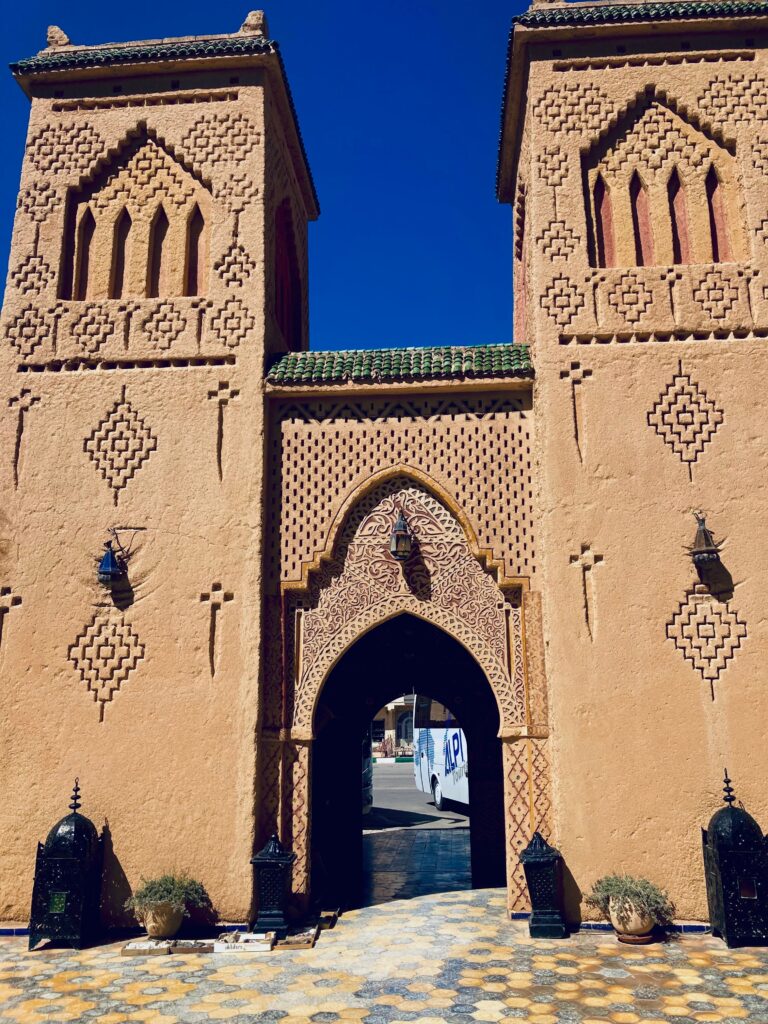
Nearby archaeological surveys have also documented prehistoric occupation sites, ancient irrigation remains, and rural settlements that help reconstruct the broader history of human activity within the Souss Valley.
Researchers increasingly emphasize that the region should be understood as a cultural landscape rather than a collection of isolated monuments. Villages, agricultural terraces, irrigation systems, shrines, seasonal markets, and caravan routes together preserve evidence of long-term interaction between people and environment.
Why Taroudant Is the “Grandmother of Marrakech”
Travel guides often describe Taroudant as the “Little Marrakech” because both cities possess impressive walls, bustling souks, and rich historical character.
Yet many Moroccan historians and local residents prefer a different expression: the “Grandmother of Marrakech.”
This description reflects historical perspective rather than physical size.
Long before Marrakech achieved global recognition as an imperial capital, Taroudant had already developed as one of southern Morocco’s principal urban centers. The city nurtured political institutions, agricultural systems, commercial traditions, and architectural practices that influenced later developments across the Souss and beyond.
Calling Taroudant the “Grandmother of Marrakech” acknowledges its foundational role in the history of southern Morocco while affirming that its identity is neither secondary nor derivative.
It is a city whose significance deserves recognition on its own terms.
Taroudant as a Living Cultural Landscape
To understand Taroudant, one must look beyond its walls. The city has never existed in isolation. Its identity has always been shaped by the villages, valleys, mountains, and agricultural plains that surround it.
Unlike many historic cities whose relationship with the countryside gradually weakened through modernization, Taroudant continues to function as the cultural and commercial heart of a vast Amazigh region extending across the Souss Valley, the High Atlas, and the Anti-Atlas. Every market day reflects this enduring relationship as farmers, shepherds, artisans, and traders travel from nearby villages to sell produce, exchange goods, and maintain social ties that have connected urban and rural communities for centuries.
Anthropologists frequently describe this relationship as an example of urban-rural interdependence, where neither the city nor the surrounding villages can be understood independently. Taroudant provides commercial opportunities, education, healthcare, and administrative services, while the countryside sustains the city through agriculture, craftsmanship, pastoralism, and the preservation of Amazigh cultural traditions.
Rather than replacing village life, the city complements it, forming part of a regional cultural system whose foundations remain remarkably resilient.
Traditional Moroccan and Amazigh Architecture in Taroudant
The architecture of Taroudant reflects a dialogue between climate, available materials, and indigenous building knowledge refined over centuries.
Unlike the monumental palaces of Morocco’s imperial capitals, much of Taroudant’s architecture developed in response to practical needs. Builders relied primarily on rammed earth, adobe bricks, stone, palm trunks, cedar wood, and lime plaster, materials that were locally available and well adapted to the region’s semi-arid environment.
The thick earthen walls of houses and public buildings moderate indoor temperatures by retaining coolness during the day and releasing warmth during cooler nights. This passive climatic adaptation remains an outstanding example of sustainable architecture long before modern environmental design became a global concern.
Residential neighborhoods traditionally consist of inward-facing homes organized around small courtyards that provide shade, privacy, and natural ventilation. Narrow streets reduce direct exposure to sunlight while encouraging social interaction among neighbors. These urban forms illustrate how architecture functioned not merely as construction but as an expression of communal life and environmental intelligence.
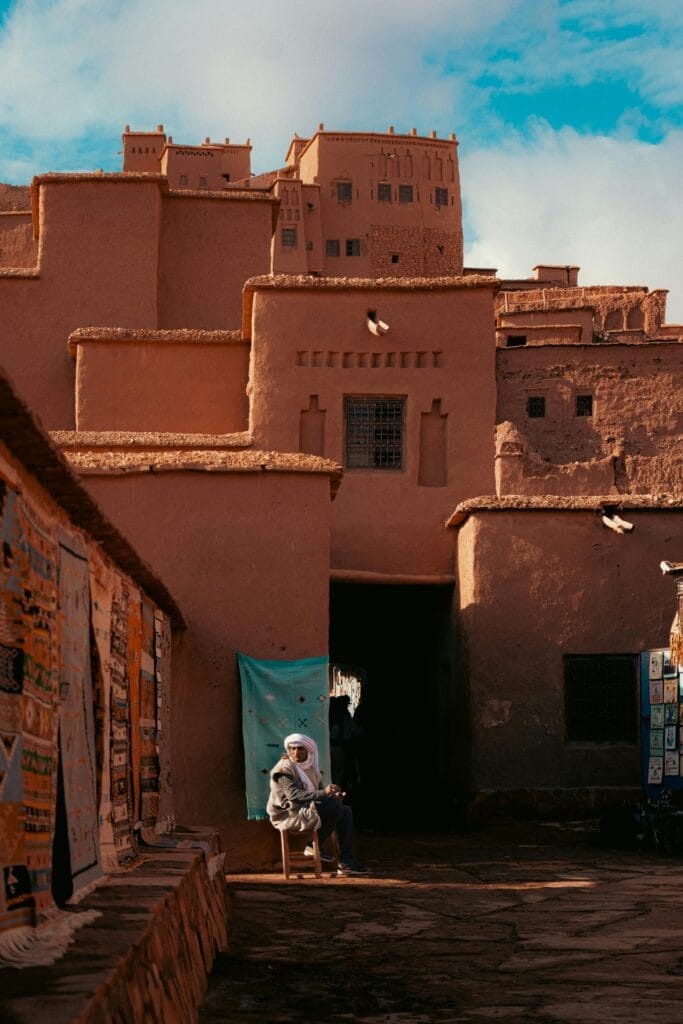
Many of these techniques continue to influence contemporary restoration projects throughout southern Morocco.
The Kasbahs of the Souss: Fortified Landscapes of Collective Memory
Scattered throughout the countryside surrounding Taroudant are numerous kasbahs and igherm (fortified communal settlements), each reflecting different aspects of Amazigh social organization.
Unlike royal palaces, these fortified structures often served multiple functions. They protected families during periods of conflict, safeguarded agricultural products, stored grain, and symbolized the collective identity of local communities.
Constructed primarily from earth and stone, many kasbahs blend almost seamlessly into the surrounding landscape. Their towers, defensive walls, and interior courtyards reveal sophisticated architectural responses to both environmental and political challenges.
Although some have deteriorated over time, many continue to stand as powerful reminders of the region’s architectural heritage and deserve greater attention within Morocco’s broader conservation efforts.
The Medina of Taroudant: A City That Still Belongs to Its People
One of Taroudant’s greatest strengths lies in the authenticity of its historic medina.
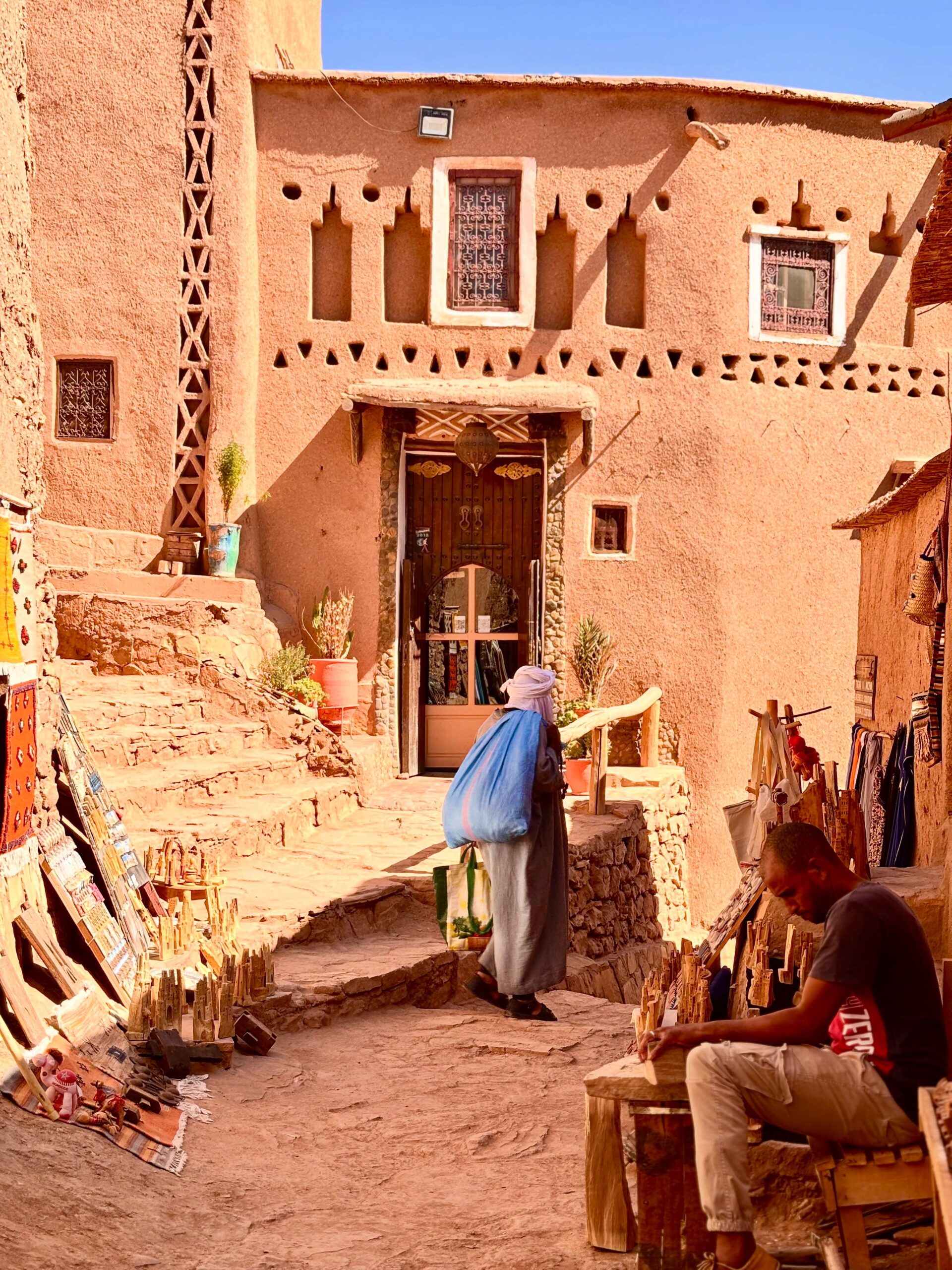
Unlike heavily commercialized tourist districts elsewhere, the medina remains first and foremost a place of everyday life. Residents continue to purchase household goods, visit neighborhood bakeries, attend local mosques, and participate in markets that serve the surrounding region rather than international tourism alone.
Walking through its streets, visitors encounter a rhythm of life that has changed gradually rather than abruptly. The scent of freshly baked bread, the sound of artisans shaping metal, and the conversations exchanged in Tashelhit and Darija create an atmosphere rooted in continuity rather than spectacle.
This authenticity has become increasingly valuable in an era when many historic urban centers face pressure from rapid commercialization.
Best Places to Visit in Taroudant
Although Taroudant itself offers a rich historical experience, the surrounding region greatly expands the possibilities for cultural exploration and outdoor adventure.
Tiout Oasis: Agriculture at the Edge of the Mountains
Located approximately thirty kilometers southeast of Taroudant, Tiout Oasis represents one of the Souss region’s most remarkable cultural landscapes.
Fed by natural springs emerging from the foothills of the Anti-Atlas, the oasis supports extensive palm groves, terraced gardens, and traditional irrigation channels that have sustained local communities for centuries.
Visitors can explore ancient kasbahs overlooking the oasis, observe traditional farming practices, and experience a landscape where water management remains central to daily life.
Tiout demonstrates how Amazigh communities transformed semi-arid environments into productive agricultural systems through careful ecological knowledge.
Aoulouz: Gateway to the High Atlas
East of Taroudant lies Aoulouz, an important town situated along the route connecting the Souss Valley with the High Atlas Mountains.
Historically, Aoulouz functioned as a crossroads where agricultural communities, mountain villages, and caravan routes converged. Today it remains an ideal starting point for travelers wishing to explore the interior of the High Atlas from the southern side.
The surrounding landscapes feature olive groves, river valleys, traditional villages, and mountain scenery that contrasts dramatically with the fertile plains surrounding Taroudant.
Beyond its strategic location, Aoulouz provides insight into the close historical relationship between the Souss and the mountain communities that have long supplied the region with agricultural products, livestock, timber, and seasonal labor.
Iwziwn: A Hidden Amazigh Village Between the High Atlas and the Anti-Atlas
Continuing beyond Aoulouz, the road gradually enters one of southern Morocco’s least explored cultural landscapes.
Among the villages preserving this remarkable heritage is Iwziwn, situated within the historic territory of the Aït Wawzguit tribal confederation. Positioned between the High Atlas and the Anti-Atlas, Iwziwn occupies a landscape where mountain agriculture, seasonal transhumance, and communal traditions continue to shape everyday life.
Unlike destinations developed primarily for tourism, Iwziwn offers an opportunity to encounter an authentic Amazigh environment where architecture, language, agriculture, and oral history remain closely connected to the surrounding landscape.
Traditional earthen houses blend naturally into the mountainsides, while terraced fields, walnut trees, almond orchards, and communal irrigation channels illustrate centuries of adaptation to challenging environmental conditions.
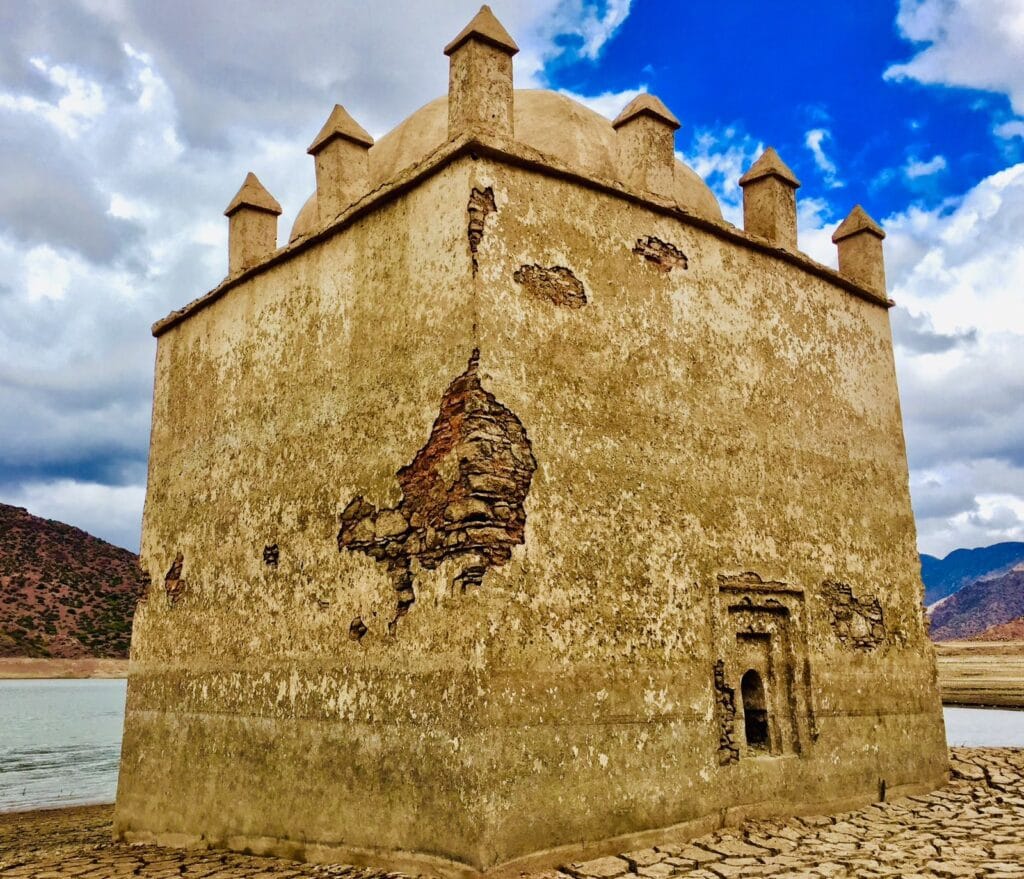
For researchers interested in cultural continuity, villages such as Iwziwn provide invaluable insight into forms of social organization that have persisted despite rapid modernization elsewhere.
Tifnout Valley: One of Morocco’s Great Mountain Landscapes
Beyond Iwziwn, the road enters the spectacular Tifnout Valley, one of the most dramatic highland regions of southern Morocco.
Characterized by steep cliffs, deep river valleys, alpine meadows, and scattered Amazigh villages, Tifnout has long served as a seasonal pastoral landscape where families move livestock between lower valleys and high mountain grazing areas.
The valley preserves remarkable examples of terrace agriculture, dry-stone construction, and communal water management that continue to support rural livelihoods.
Its relative isolation has also contributed to the preservation of local traditions, dialects, and ecological knowledge rarely encountered in more accessible tourist destinations.
Lake Ifni: Morocco’s Highest Mountain Lake
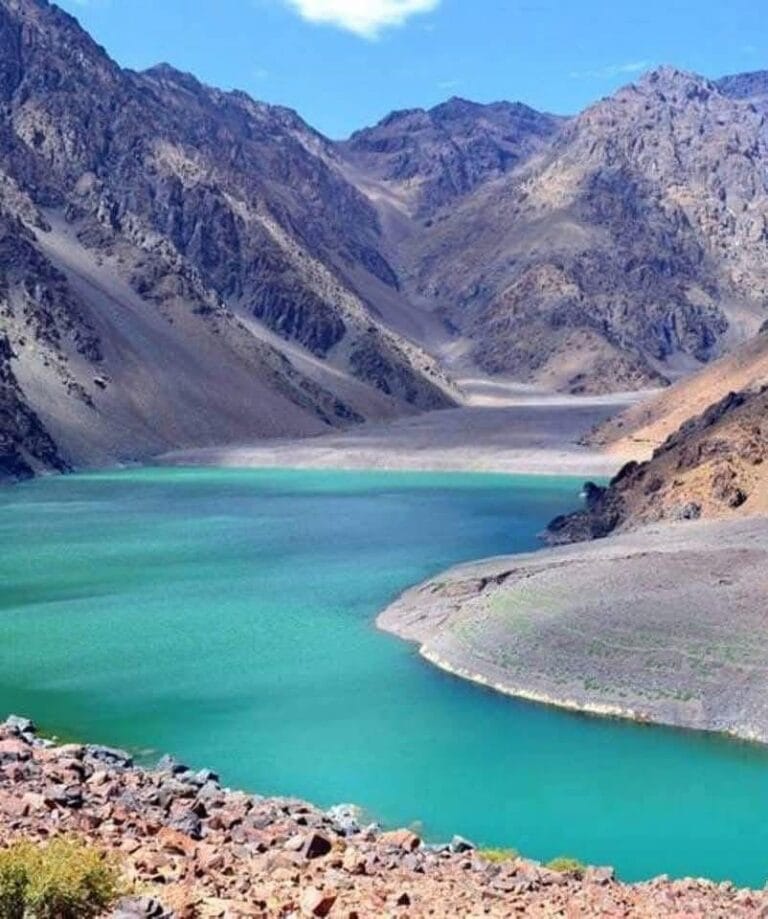
High above the valleys of Tifnout lies Lake Ifni, one of Morocco’s most spectacular natural landmarks.
Situated at an altitude of approximately 2,295 meters (7,530 feet) within Toubkal National Park, the lake is surrounded by rugged peaks that remain snow-covered during much of the year.
Reaching Lake Ifni requires determination, but the journey rewards visitors with breathtaking mountain scenery and opportunities to observe alpine ecosystems unique to the High Atlas.
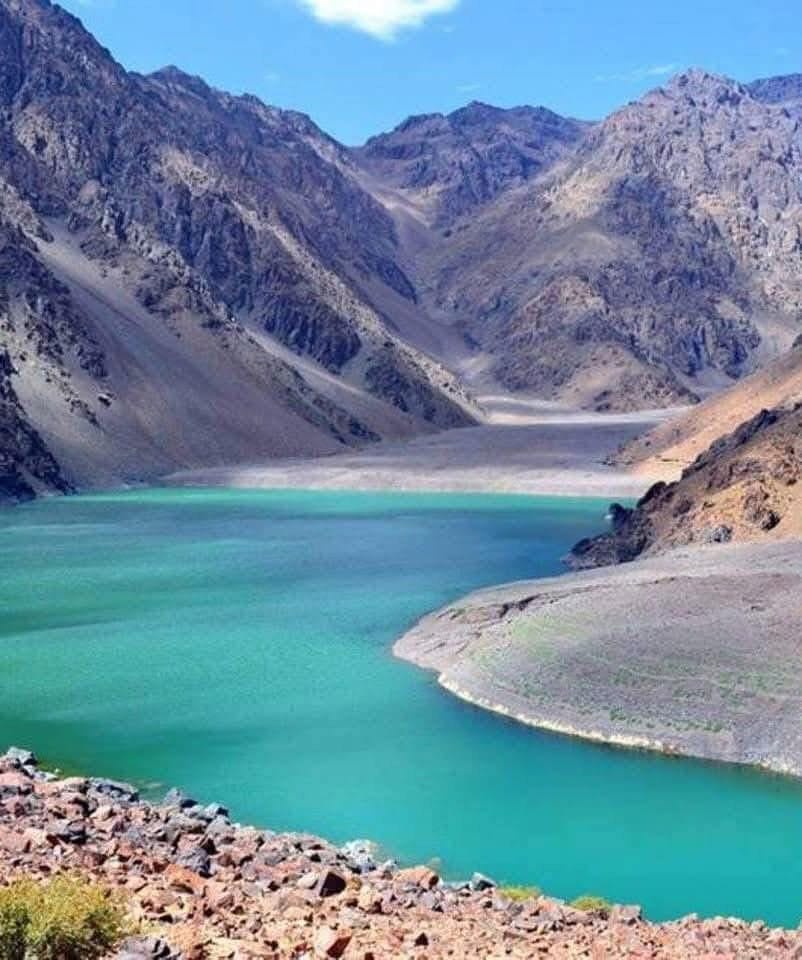
For hikers, photographers, and environmental researchers, the lake represents one of Morocco’s most remarkable mountain destinations.
Toubkal National Park from the Southern Approach
Most international visitors access Mount Toubkal through Imlil on the northern side of the High Atlas.
However, the southern approach through Taroudant, Aoulouz, and Tifnout offers a very different experience.
This route passes through quieter Amazigh villages, traditional agricultural landscapes, and less-visited mountain valleys before reaching the national park.
Although more demanding, it provides exceptional opportunities for cultural immersion alongside trekking, allowing visitors to appreciate the relationship between mountain communities and their surrounding environment.
For experienced hikers seeking a less crowded alternative, the southern route represents one of Morocco’s most rewarding mountain journeys.
Amazigh Hospitality in the Souss
Hospitality has long occupied a central place within the moral and social values of Amazigh communities across the Souss.
Receiving guests is traditionally understood as an expression of dignity, generosity, and mutual respect rather than simply a matter of etiquette. Visitors are commonly welcomed with mint tea, freshly baked bread, locally produced olive oil, seasonal fruit, or amlou, the celebrated blend of argan oil, almonds, and honey that originated in this region.
In many villages, hospitality extends beyond the household. Neighbors often participate collectively in welcoming guests during weddings, harvest celebrations, and religious festivals, reinforcing bonds of solidarity that remain fundamental to community life.
For travelers, these encounters frequently become the most memorable aspect of visiting the Taroudant region, revealing a culture in which generosity continues to carry profound social meaning.
Cuisine of Taroudant: The Flavors of the Souss
The cuisine of Taroudant reflects the remarkable agricultural diversity of the Souss Valley.
Traditional dishes emphasize locally grown ingredients, seasonal produce, and recipes transmitted through generations.
Among the region’s culinary specialties are:
- Tagine prepared with preserved lemons, olives, or seasonal vegetables.
- Amlou, combining roasted almonds, argan oil, and honey.
- Takoula, a traditional Amazigh porridge enjoyed in rural communities.
- Fresh bread baked in communal ovens.
- Olive oil produced from centuries-old groves.
- Locally cultivated citrus fruits.
- Saffron-infused dishes influenced by nearby Taliouine.
- Mint tea served as a symbol of hospitality rather than merely a beverage.
These culinary traditions embody the close relationship between agriculture, landscape, and cultural identity that characterizes the Souss region.
Taroudant in the Twenty-First Century: Heritage, Identity, and Sustainable Development
Taroudant stands at an important crossroads. Like many historic cities throughout North Africa, it faces the challenge of preserving centuries-old cultural traditions while responding to economic development, population growth, climate change, and the expansion of tourism.
Unlike destinations where rapid urbanization has significantly altered historic neighborhoods, Taroudant has retained much of its architectural coherence and social character. This continuity offers an important opportunity to develop tourism that supports local communities rather than replacing them.
Increasingly, Moroccan planners, conservation specialists, and local associations recognize that the city’s greatest strength lies in its authenticity. Visitors are drawn not only by the monumental ramparts or traditional markets but also by the living cultural landscape that extends into the surrounding valleys and mountains.
Sustainable tourism therefore depends on protecting both tangible heritage—such as walls, gates, kasbahs, and historic houses—and intangible heritage, including Amazigh language, oral traditions, music, craftsmanship, agricultural knowledge, and communal customs.
Supporting local cooperatives, encouraging traditional craftsmanship, restoring earthen architecture using indigenous techniques, and promoting responsible mountain tourism all contribute to safeguarding this remarkable cultural landscape for future generations.
Taroudant and the Amazigh Cultural Revival
The recognition of Tamazight as an official language of Morocco has contributed to renewed interest in Amazigh cultural heritage across the Souss.
Schools, universities, cultural associations, and local museums increasingly promote the documentation of oral history, traditional music, poetry, architecture, and indigenous ecological knowledge. Festivals celebrating Amazigh identity provide opportunities for younger generations to reconnect with practices that might otherwise disappear.
In Taroudant and the surrounding countryside, this revival is visible through the growing presence of Tifinagh signage, renewed appreciation for traditional crafts, and increased academic research on the history of the Souss.
Rather than treating Amazigh culture as a relic of the past, many initiatives emphasize its continuing relevance in contemporary Morocco, demonstrating how historical knowledge can contribute to cultural diversity, environmental sustainability, and regional development.
Why Taroudant Deserves Greater International Recognition
Despite its historical importance, Taroudant remains less internationally known than cities such as Marrakech, Fes, or Chefchaouen.
Paradoxically, this relative anonymity has helped preserve many of the qualities that make the city exceptional.
Visitors encounter a medina where commercial life continues to serve local residents, markets that remain deeply connected to regional agriculture, and surrounding landscapes where Amazigh communities still maintain long-established relationships with the land.
From an academic perspective, Taroudant offers valuable opportunities for interdisciplinary research in archaeology, anthropology, historical geography, architecture, linguistics, and environmental history. Its role within the wider cultural landscape of the Souss makes it an outstanding case study for understanding how cities and rural communities have evolved together over many centuries.
As interest grows in sustainable cultural tourism and indigenous heritage, Taroudant is well positioned to become one of Morocco’s leading destinations for travelers seeking depth, authenticity, and meaningful cultural engagement.
Comparison Table: Taroudant and Other Historic Moroccan Cities
| Feature | Taroudant | Marrakech | Fes | Chefchaouen |
|---|---|---|---|---|
| Historical identity | Historic capital of the Souss and gateway to the High Atlas | Imperial capital founded by the Almoravids | Intellectual and religious center | Mountain town with Andalusian influences |
| Main character | Authentic Amazigh urban culture | Imperial heritage and international tourism | Medieval scholarship and crafts | Scenic mountain architecture |
| Surrounding landscape | Souss Valley, High Atlas, Anti-Atlas | Haouz Plain | Middle Atlas foothills | Rif Mountains |
| Traditional economy | Agriculture, caravan trade, craftsmanship | Commerce, administration, tourism | Crafts, education, commerce | Agriculture and tourism |
| Architectural highlights | Earthen walls, kasbahs, medina | Palaces, gardens, mosques | Madrasas, tanneries, medina | White-and-blue houses |
| Tourism experience | Authentic, quieter, community-based | Vibrant and cosmopolitan | Cultural and historical | Relaxed and picturesque |
Comparison Table: Northern and Southern Routes to Toubkal National Park
| Feature | Southern Route (Taroudant – Aoulouz – Tifnout) | Northern Route (Imlil) |
|---|---|---|
| Visitor numbers | Lower | Higher |
| Cultural immersion | Extensive interaction with Amazigh villages | More tourism infrastructure |
| Landscape | Souss Valley, High Atlas, alpine valleys | High Atlas valleys |
| Difficulty | More demanding | Standard ascent route |
| Best suited for | Experienced hikers and cultural travelers | First-time visitors and guided climbs |
Frequently Asked Questions About Taroudant
What is Taroudant famous for?
Taroudant is renowned for its impressive earthen ramparts, historic medina, traditional souks, Amazigh cultural heritage, and its role as the historic capital of the Souss Valley. It is also considered a gateway to the High Atlas and Anti-Atlas Mountains.
Is Taroudant worth visiting?
Yes. Taroudant offers a more authentic and less crowded experience than many of Morocco’s larger tourist destinations. Visitors can explore historic architecture, traditional markets, Amazigh culture, and nearby mountain landscapes while enjoying a slower pace of travel.
Why is Taroudant called the “Grandmother of Marrakech”?
Many historians and local residents use this expression because Taroudant developed into an important urban center long before Marrakech became Morocco’s best-known imperial city. The phrase highlights Taroudant’s historical significance rather than suggesting it resembles Marrakech.
What are the best places to visit in Taroudant?
Among the most popular attractions are the historic ramparts, Bab al-Khamis, Bab Zorgan, the traditional medina, artisan souks, Tiout Oasis, and nearby kasbahs. The surrounding region also provides access to Aoulouz, Iwziwn, Tifnout Valley, Lake Ifni, and Toubkal National Park.
What language do people speak in Taroudant?
Most residents speak Tashelhit (Tachelhit), one of the principal Amazigh languages of Morocco, alongside Moroccan Arabic (Darija). French is also widely understood, particularly in education, administration, and tourism.
What is the relationship between Taroudant and Amazigh culture?
Taroudant has long served as one of the principal urban centers of the Amazigh-speaking Souss region. Its architecture, markets, crafts, language, cuisine, and surrounding villages all reflect centuries of Amazigh cultural continuity.
When is the best time to visit Taroudant?
Spring (March to May) and autumn (September to November) generally offer the most comfortable temperatures for exploring the city and surrounding mountains. These seasons are also ideal for hiking and visiting agricultural landscapes.
Can you reach the High Atlas from Taroudant?
Yes. Taroudant provides access to the High Atlas through routes passing Aoulouz, Iwziwn, and the Tifnout Valley. These roads lead toward Lake Ifni and the southern approaches to Toubkal National Park.
What traditional foods should visitors try in Taroudant?
Visitors should sample amlou, tagine prepared with local produce, freshly baked Amazigh bread, olive oil, saffron-based dishes, seasonal citrus fruits, and mint tea served according to local hospitality traditions.
Why is Taroudant important to Moroccan history?
Taroudant played a central role in the political and economic development of southern Morocco. It served as a regional capital, commercial crossroads, agricultural center, and one of the early power bases of the Saadian dynasty.
Conclusion: A City That Connects Mountains, Memory, and Morocco
Taroudant is far more than a beautifully preserved historic city. It is a place where landscapes and communities have shaped one another across millennia, where earthen walls still define a living medina, and where Amazigh traditions continue to influence everyday life in meaningful ways.
Its importance lies not only in monuments or historical events but in the enduring relationships between people, water, agriculture, craftsmanship, language, and the surrounding mountains. The city demonstrates that cultural heritage is not confined to museums; it survives in markets, irrigation channels, village assemblies, family workshops, and the seasonal rhythms of rural life.
For travelers, Taroudant offers an opportunity to experience Morocco beyond its most familiar destinations. For researchers, it provides a rich field for exploring indigenous history, environmental adaptation, and cultural continuity. For local communities, it remains a source of identity rooted in the Souss and sustained by generations of Amazigh knowledge.
Following the roads from Taroudant toward Aoulouz, Iwziwn, the Tifnout Valley, Lake Ifni, and the High Atlas reveals that the city is not the end of a journey but the beginning of one. Each valley, village, and mountain pass deepens the understanding that Morocco’s heritage is woven together through landscapes as much as through monuments.
To appreciate Taroudant fully is to recognize that its greatest treasure is not only what has been preserved from the past, but what continues to be lived in the present: a vibrant Amazigh cultural landscape where history remains inseparable from everyday life.
References (APA Style)
Bazzana, A. (1992). Maisons d’al-Andalus. Casa de Velázquez.
Brett, M., & Fentress, E. (1996). The Berbers. Blackwell Publishers.
Camps, G. (1980). Berbères: Aux marges de l’histoire. Éditions des Hespérides.
Camps, G. (1995). Les Berbères: Mémoire et identité. Errance.
Ennaji, M. (2005). Multilingualism, Cultural Identity, and Education in Morocco. Springer.
Hoffman, K. (2008). We Share Walls: Language, Land, and Gender in Berber Morocco. Wiley-Blackwell.
Lightfoot, D., & Miller, J. (1996). Sijilmasa and the Saharan Trade. Journal of African History.
Miller, S. G. (2013). A History of Modern Morocco. Cambridge University Press.
Pennell, C. R. (2013). Morocco: From Empire to Independence. Oneworld.
Terrasse, H. (1950). Histoire du Maroc. Atlantides.
Terrasse, H. (1968). La civilisation hispano-mauresque. Arts et Métiers Graphiques.
UNESCO. (Various reports). Convention for the Safeguarding of the Intangible Cultural Heritage.
Alaoui, A. (various publications on Moroccan architecture and heritage).
Bourbouze, A. (studies on pastoral systems in the High Atlas).
Naciri, A. (historical chronicles of Morocco).
Le Tourneau, R. (1949). Fès avant le Protectorat. Casablanca.
Julien, C.-A. (1970). History of North Africa. Routledge.
Laroui, A. (1977). The History of the Maghrib. Princeton University Press.