Amazigh Tattoo Meanings: Ancient Amazigh Symbols and Their Hidden Stories
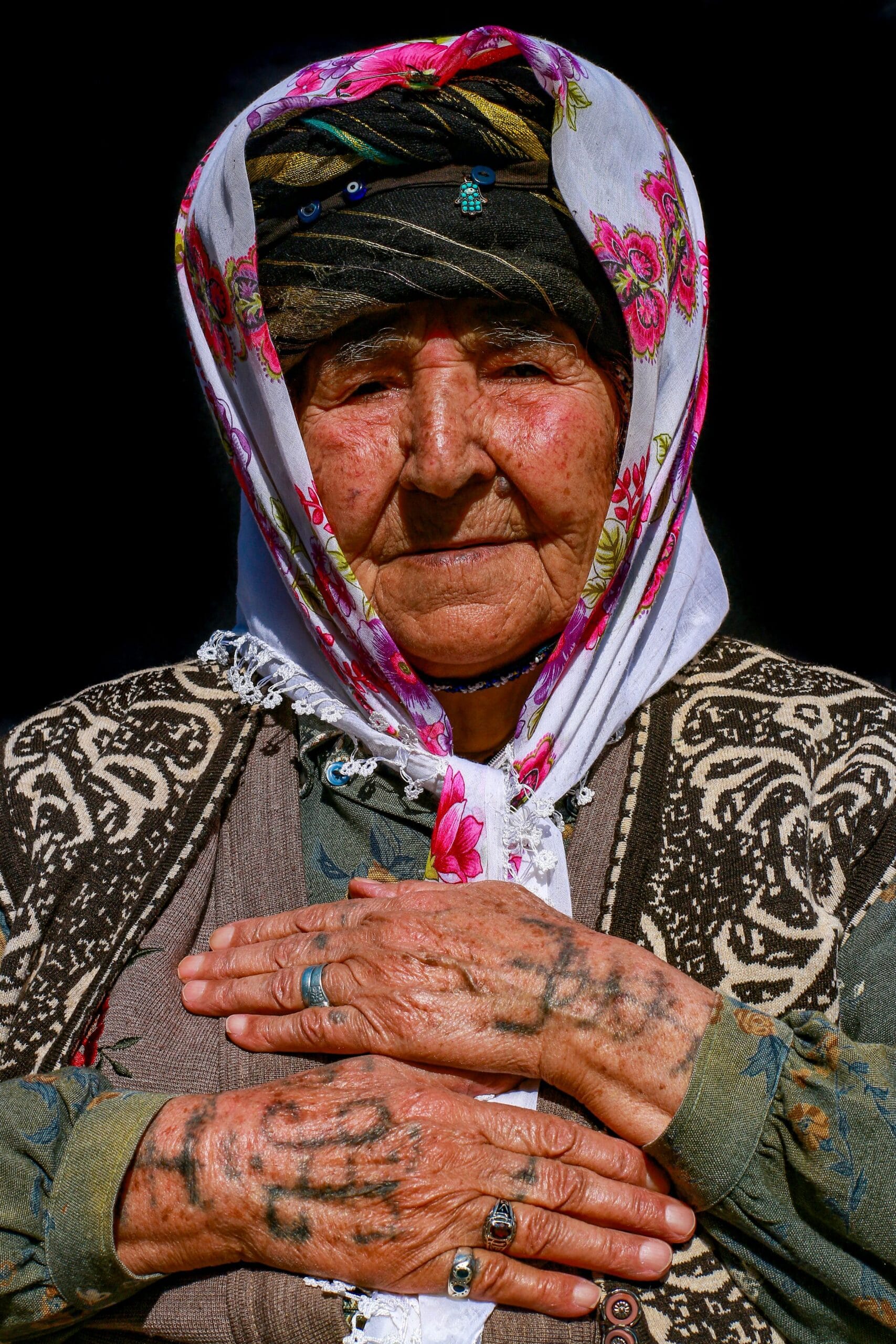
Introduction: The Living Language Written on Skin
Long before written alphabets became the primary means of recording history, many Indigenous cultures relied on symbols, oral traditions, and visual expressions to preserve their knowledge. Among the Amazigh people of North Africa, one of the most enduring forms of this cultural expression was tattooing.
Far more than decorative body art, traditional Amazigh tattoos served as a sophisticated visual language that communicated identity, ancestry, spiritual beliefs, social status, and the intimate relationship between people and the natural world. Every line, dot, triangle, or geometric motif carried a story, transforming the human body into a living archive of collective memory.
For centuries, Amazigh women across Morocco, Algeria, Tunisia, Libya, and other regions of North Africa wore tattoos that reflected both personal experiences and shared cultural values. These permanent markings were often associated with major milestones in life, including adolescence, marriage, motherhood, healing, and protection.
Some tattoos expressed tribal identity or family heritage, while others invoked blessings, fertility, prosperity, or divine protection against misfortune. Rather than existing as isolated artistic creations, they formed part of a broader symbolic system that also appeared in Amazigh carpets, pottery, silver jewelry, architecture, leatherwork, weaving, and rock engravings, revealing remarkable continuity across different forms of material culture.
The significance of Moroccan Berber tattoos extends far beyond aesthetics. Anthropologists increasingly recognize them as an important source of historical and ethnographic knowledge, offering valuable insights into Indigenous belief systems, gender roles, community organization, and symbolic communication. Because many Amazigh societies relied heavily on oral traditions, tattoo motifs often preserved meanings that were never formally written but were carefully transmitted from one generation to another through ritual practice and lived experience. In this sense, every tattoo functioned not merely as decoration but as a cultural document inscribed upon the body.
The relationship between tattooing and Amazigh identity also reflects a profound connection with the surrounding landscape. Many symbols draw inspiration from mountains, rivers, stars, agricultural cycles, domestic animals, and celestial bodies, illustrating how everyday life and the natural environment shaped Indigenous worldviews. Geometric designs represented harmony and balance, while solar and lunar motifs acknowledged the rhythms governing farming, seasonal migration, and community celebrations. The body itself became a symbolic landscape where nature, spirituality, and social identity converged.
Although the practice of traditional tattooing declined throughout the twentieth century because of religious, social, and political transformations, its cultural significance has never disappeared. Today, Amazigh symbols continue to appear in textiles, jewelry, ceramics, architecture, contemporary art, graphic design, and digital media. Younger generations are increasingly rediscovering these ancestral motifs, not necessarily by reproducing permanent tattoos, but by embracing them as expressions of Indigenous heritage and cultural resilience. Museums, academic institutions, and heritage organizations have likewise renewed interest in documenting this remarkable tradition before the memories of the last tattooed generations are lost.
Understanding Amazigh tattoo meanings therefore requires more than simply identifying individual symbols. It involves exploring an entire cultural universe shaped by thousands of years of history, environmental adaptation, artistic creativity, and social memory. Each tattoo reflects the experiences of real people who transformed their bodies into enduring expressions of identity, belonging, and hope. Their stories continue to resonate today, reminding us that the skin can preserve history just as powerfully as stone monuments, manuscripts, or archaeological artifacts.
This comprehensive guide explores the origins, symbolism, regional diversity, cultural functions, and lasting legacy of Amazigh tattoos. Drawing on anthropology, archaeology, history, and Indigenous knowledge, it examines how these extraordinary symbols came to be among the most distinctive artistic traditions in Amazigh culture and why they remain relevant in the modern world.
Table of Contents
What Is a Amazigh Tattoo?
An Amazigh tattoo is a traditional permanent body marking historically practiced by the Amazigh people—the Indigenous inhabitants of North Africa—as a form of cultural expression, spiritual protection, and social identity. Unlike many contemporary tattoos, which are often chosen primarily for personal aesthetics or individual storytelling, traditional Amazigh tattoos formed part of a shared cultural language whose meanings were widely understood within the community. Every symbol was carefully selected according to age, family traditions, regional customs, or significant life events, making tattooing both a personal experience and a collective cultural practice.
The Amazigh word for tattoo (Tigzzay) varies across regions and dialects, reflecting the remarkable diversity of Amazigh communities throughout Morocco and North Africa. Despite these linguistic differences, the symbolic principles remained strikingly consistent. Simple geometric shapes—including triangles, diamonds, crosses, zigzags, dots, and parallel lines—were arranged into meaningful compositions that represented fertility, protection, strength, prosperity, ancestral continuity, or harmony with nature. These motifs were never arbitrary decorations; they were visual statements that communicated identity without the need for written language.
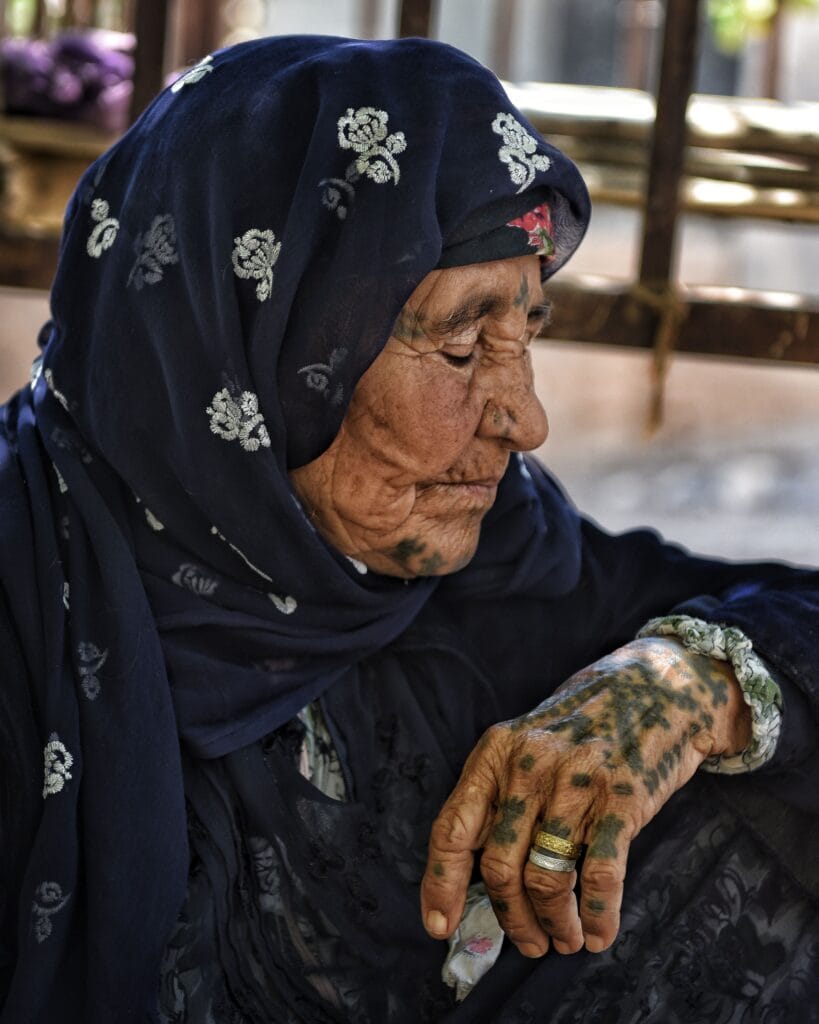
One of the most distinctive aspects of Amazigh tattooing is its close relationship with other Amazigh art forms. The same geometric vocabulary found on the skin appears in handwoven carpets, painted pottery, carved wooden doors, silver jewelry, leatherwork, and even the architecture of traditional villages. This recurring symbolism reveals a coherent artistic tradition in which every object, building, and body participated in expressing Amazigh identity. Rather than existing as separate artistic disciplines, tattooing, weaving, architecture, and craftsmanship formed interconnected expressions of a shared cultural worldview.
Historically, tattooing was especially important for Amazigh women, who acted as the primary custodians of this artistic and symbolic tradition. Amazigh Tattoos often accompanied major transitions such as puberty, marriage, pregnancy, or motherhood, serving both social and spiritual purposes. A young woman’s facial or hand tattoos could communicate her tribal affiliation, marital status, or readiness to assume new responsibilities within the community. Certain motifs were also believed to bring blessings, protect against illness or the evil eye, promote fertility, or ensure good fortune for the family.
Although traditional Berber tattooing has become increasingly rare since the twentieth century, its cultural legacy remains deeply embedded in Amazigh heritage. Today, these ancient symbols continue to inspire artists, designers, historians, anthropologists, and members of the Amazigh diaspora seeking to reconnect with their ancestral traditions. Rather than viewing Berber tattoos simply as historical curiosities, many researchers now recognize them as invaluable records of Indigenous knowledge, preserving centuries of history, belief, and cultural memory in a form that is both deeply personal and profoundly collective.
Historical Origins of Amazigh Tattoos in North Africa
The origins of Amazigh tattoos extend so far into the past that they predate many of the civilizations traditionally associated with North African history. Long before the emergence of kingdoms, organized religions, or written historical records, the ancestors of today’s Amazigh communities developed symbolic systems that allowed them to communicate identity, beliefs, social roles, and spiritual values through visual signs. Tattooing became one of the most enduring expressions of this symbolic language, transforming the human body into a permanent record of cultural memory. Although the exact date when tattooing first appeared among Amazigh populations remains uncertain, archaeological discoveries, rock art, historical texts, and ethnographic research collectively suggest that the practice evolved over several millennia, making it one of the oldest surviving artistic traditions in North Africa.
Unlike many ancient cultures that left abundant written records, early Amazigh societies relied heavily on oral transmission and visual symbolism. Knowledge passed from elders to younger generations through stories, rituals, ceremonies, Ahidous, songs, Ahwach, craftsmanship, and body art. Amazigh Tattoos therefore served functions that extended far beyond decoration. They represented family heritage, tribal affiliation, fertility, protection, healing, and social status while also preserving cultural knowledge in societies where writing played only a limited role. Every generation inherited not only the physical symbols but also the stories and beliefs attached to them, allowing Amazigh tattoo traditions to survive remarkable political and cultural transformations.
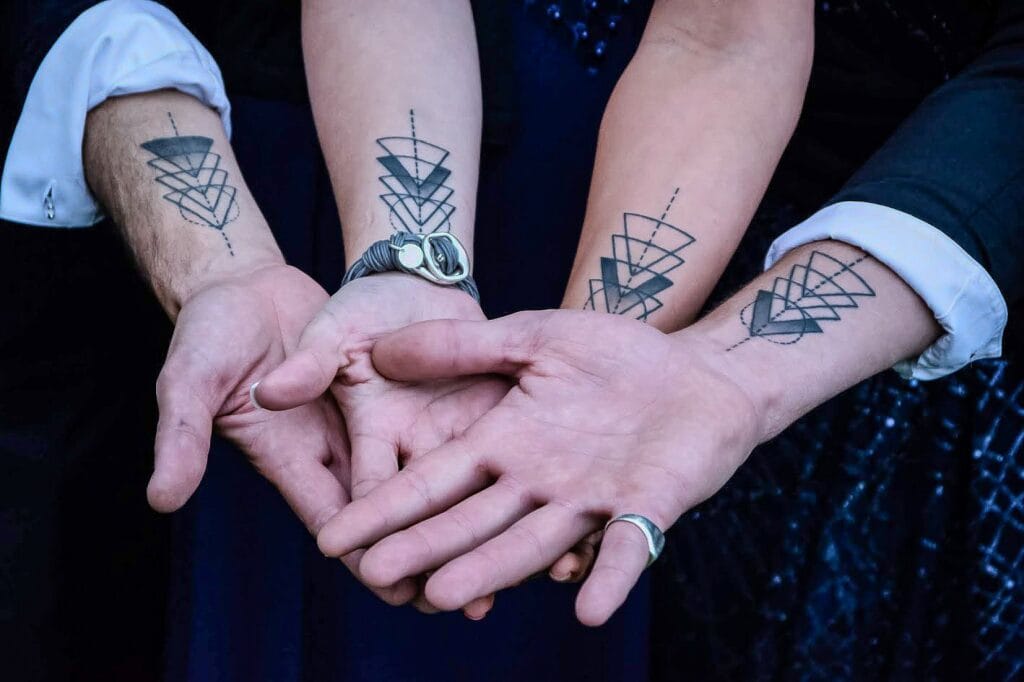
Modern anthropologists increasingly view Amazigh tattoos as an essential component of Amazigh intangible cultural heritage. Rather than interpreting them as isolated artistic practices, scholars understand tattooing as part of a broader Indigenous system of communication that also includes weaving, pottery decoration, silver jewelry, architecture, rock engravings, and textile production. The repeated appearance of similar geometric motifs across these different artistic traditions demonstrates the remarkable continuity of Amazigh symbolic thought throughout history.
Understanding the historical origins of Amazigh tattoos therefore requires examining archaeology, anthropology, ancient history, and cultural geography together. Each discipline contributes valuable evidence that helps reconstruct the long journey of tattoo symbolism from prehistoric communities to modern Amazigh cultural identity.
Prehistoric and Protohistoric Foundations
The earliest foundations of Amazigh tattoo traditions are closely connected to prehistoric communities that inhabited North Africa thousands of years before the rise of the Egyptian, Phoenician, Greek, and Roman civilizations. During the Neolithic period, roughly between 7000 and 3000 BCE, human societies throughout the Maghreb gradually shifted from hunting and gathering toward agriculture and pastoralism. As communities became more settled, symbolic expression expanded considerably, appearing in rock engravings, painted shelters, decorated pottery, carved tools, personal ornaments, and ceremonial objects.
One of the richest sources of evidence comes from the vast collections of prehistoric rock art scattered across the Sahara and the Atlas Mountains. These engravings depict humans, animals, hunting scenes, cattle herding, ritual dances, and geometric signs whose meanings continue to fascinate archaeologists. While the rock paintings themselves do not directly prove tattooing, several human figures display markings on the face, arms, chest, and legs that many researchers believe may represent body painting, scarification, or early forms of tattooing. These markings suggest that body modification already played an important symbolic role within prehistoric communities.
The Sahara, now known primarily as a vast desert, was once a landscape of lakes, rivers, grasslands, and abundant wildlife. During this so-called “Green Sahara” period, populations moved freely across regions that today belong to Morocco, Algeria, Tunisia, Libya, Mali, Niger, and Chad. These migrations encouraged cultural exchanges that likely contributed to the spread of symbolic traditions, including body decoration. The remarkable similarities between geometric motifs found throughout North Africa indicate that symbolic communication developed across interconnected communities rather than within isolated settlements.
Archaeological discoveries also reveal the growing importance of personal ornamentation during prehistoric times. Shell necklaces, stone beads, carved pendants, and decorative pigments found in burial sites demonstrate that appearance already carried social and symbolic significance. Tattooing would have naturally complemented these practices by creating permanent visual markers that accompanied individuals throughout their lives rather than relying solely on removable ornaments.
Many geometric designs that later appeared in Amazigh tattoos—triangles, zigzags, crosses, diamonds, dots, and parallel lines—also appear in prehistoric ceramics and engraved stones. Although scholars remain cautious about assigning identical meanings across thousands of years, these recurring motifs strongly suggest remarkable continuity in North African visual culture. Instead of inventing entirely new symbolic systems, successive generations often adapted and reinterpreted existing designs according to changing cultural and religious contexts.
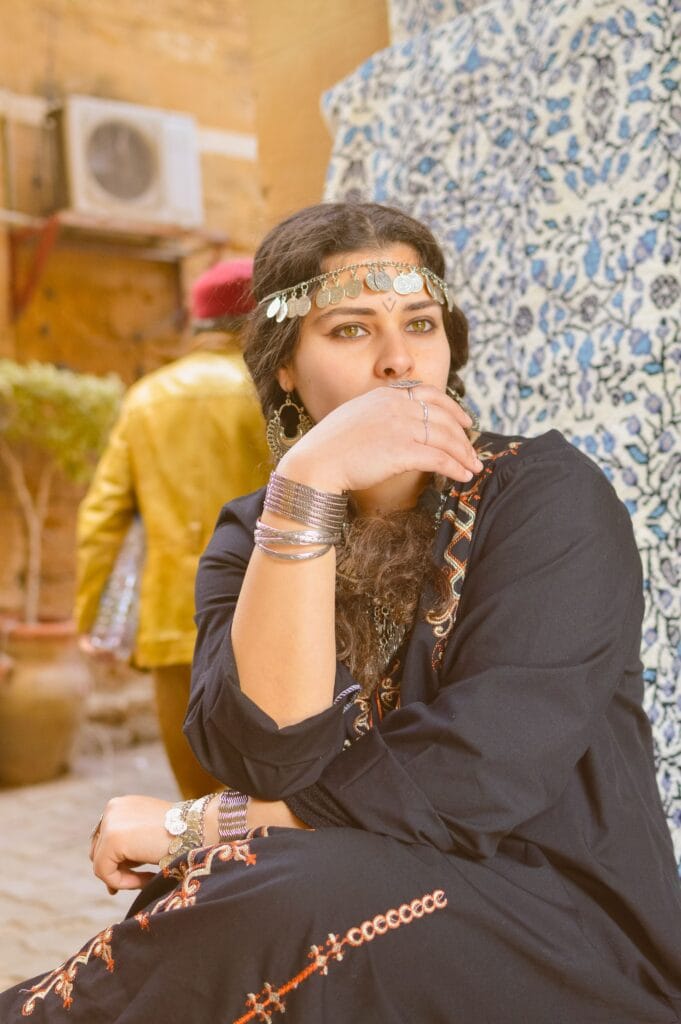
Protohistoric North Africa therefore represents an important transitional period during which symbolic traditions became increasingly sophisticated. Communities not only decorated objects but also invested the human body itself with cultural significance, laying the foundations for the tattoo traditions that would later characterize Amazigh society.
Continuity Through Antiquity
As North Africa entered the historical period, Amazigh societies interacted with numerous civilizations, including the Phoenicians, Carthaginians, Romans, Byzantines, and later Arab-Islamic states. Despite these profound political changes, many Indigenous customs demonstrated remarkable resilience, and tattooing remained one of the most persistent cultural practices among Amazigh communities.
Ancient Greek and Roman writers occasionally described the Indigenous peoples of North Africa, often referring to them collectively as Libyans, Numidians, Mauri, or other regional names. Although these historical accounts rarely focused specifically on tattooing, they frequently emphasized the distinctive appearance, clothing, hairstyles, ornaments, and cultural customs of North African populations. Such descriptions suggest that bodily adornment played an important role in expressing identity and social belonging.
The Numidian kingdoms, which flourished between the third and first centuries BCE, represented one of the earliest large-scale Amazigh political entities. Despite increasing contact with Mediterranean civilizations, Indigenous traditions continued to shape everyday life, particularly in rural and mountain communities. Archaeologists have observed striking continuities between decorative patterns found on ancient pottery, funerary monuments, jewelry, and the tattoo motifs documented among Amazigh women during the nineteenth and twentieth centuries. These parallels indicate that many symbolic traditions survived successive waves of political transformation.
Roman rule introduced new urban centers, roads, administrative systems, and artistic influences throughout much of North Africa. Yet Roman authority remained strongest in coastal cities, while many mountainous and desert regions preserved considerable cultural autonomy. It is within these more isolated landscapes that numerous Amazigh customs—including traditional tattooing—continued with relatively limited outside interference.
The endurance of Amazigh tattoo symbolism reflects an important characteristic of: adaptation without complete assimilation. New religions, languages, political structures, and artistic influences certainly shaped local societies over time, but they rarely erased Indigenous cultural foundations entirely. Instead, Amazigh communities selectively incorporated external influences while preserving many ancestral traditions through oral memory and everyday practice.
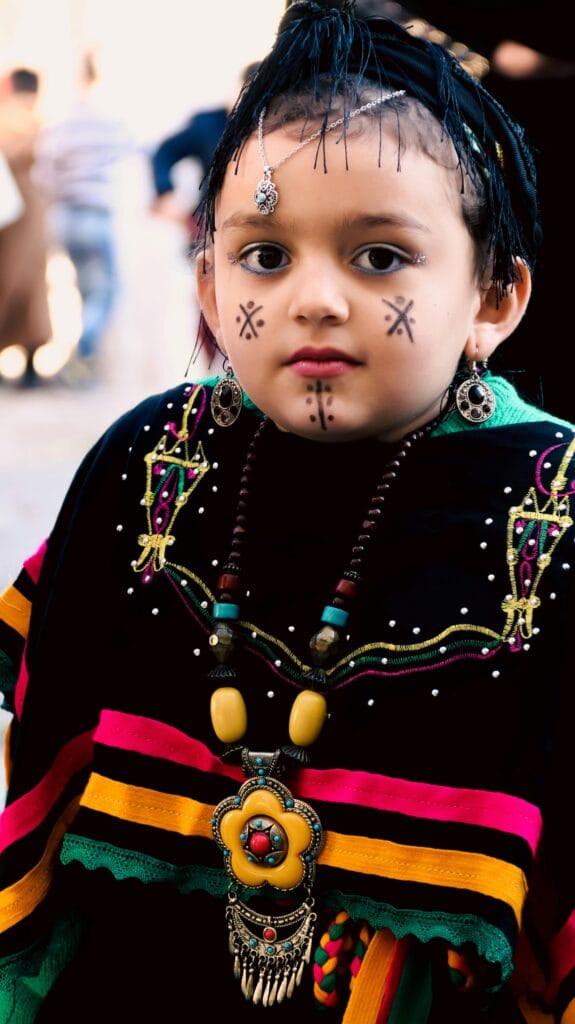
By the late medieval period, tattooing had become deeply embedded within many Amazigh communities across Morocco, Algeria, Tunisia, and Libya. Although individual motifs evolved and regional styles diversified, the underlying functions of identity, protection, healing, fertility, and belonging remained remarkably stable across centuries.
From Prehistory to Modern Morocco: A Historical Timeline
Understanding the development of Amazigh tattoos becomes easier when viewed as a continuous historical journey rather than as a single cultural practice frozen in time.
Prehistoric Period (before 3000 BCE)
Early North African communities created rock engravings, body ornamentation, geometric decorations, and symbolic visual traditions that likely formed the earliest foundations of Amazigh tattoo symbolism.
Neolithic Communities (7000–3000 BCE)
Agriculture, pastoralism, permanent settlements, and expanding ritual practices encouraged increasingly sophisticated forms of symbolic communication, including permanent body marking.
Numidian and Mauritanian Kingdoms (3rd century BCE–1st century CE)
Independent Amazigh kingdoms preserved Indigenous customs while maintaining extensive contact with Mediterranean civilizations.
Roman and Byzantine Periods (1st–7th centuries CE)
Urbanization increased in coastal regions, but mountain and desert communities continued preserving many traditional cultural practices, including tattoo symbolism.
Early Islamic Period (7th–12th centuries)
Islam gradually spread throughout North Africa. Although religious teachings influenced attitudes toward tattooing, many Amazigh communities continued practicing traditional body marking for centuries, particularly in rural areas.
Medieval Amazigh Dynasties (11th–16th centuries)
The Almoravids, Almohads, and Marinids expanded Amazigh political influence across North Africa and parts of the Iberian Peninsula. Tattoo Symbols and traditions continued within many local communities despite broader political transformations.
Early Modern Morocco (16th–19th centuries)
Regional diversity became increasingly pronounced. Tattoo designs varied according to tribal traditions, geography, family customs, and local beliefs while maintaining common symbolic foundations.
Colonial Era (1912–1956)
French and Spanish colonial administrations introduced new medical systems, educational institutions, and changing social values. Ethnographers documented traditional tattooing extensively during this period, preserving valuable records before the practice began to decline.
Independent Morocco (1956–1990s)
Urbanization, modernization, expanded education, and evolving religious attitudes contributed to the gradual disappearance of traditional facial tattooing across most Amazigh communities.
Twenty-First Century
Although permanent traditional tattooing has become uncommon, Berber symbols continue to experience renewed interest through academic research, museum exhibitions, contemporary art, jewelry, fashion, digital illustration, textile design, and cultural heritage initiatives. Rather than disappearing completely, the symbolic language has adapted to new forms of artistic expression while continuing to represent Indigenous identity for many Amazigh people.
Tattooing as an Anthropological Phenomenon
Anthropologists do not study Amazigh tattoos simply as examples of body decoration; they examine them as cultural texts capable of revealing how societies understand identity, gender, spirituality, beauty, kinship, and memory. From this perspective, every tattoo represents a visual statement shaped by the social values of the community that created it. Reading these symbols therefore requires understanding the broader cultural environment in which they were produced rather than interpreting them solely through modern aesthetic standards.
Throughout human history, many Indigenous societies have used the body as a medium for communication. Hairstyles, clothing, jewelry, scarification, painting, and tattoos all serve to express belonging, maturity, occupation, or spiritual affiliation. Among Amazigh communities, tattooing occupied a particularly important place because it combined artistic expression with ritual meaning. The permanence of tattoos reinforced their symbolic power, marking important life transitions and embedding cultural identity directly onto the body itself.
Anthropological studies further demonstrate that Amazigh tattoos cannot be understood independently from other aspects of Amazigh culture. The same symbolic vocabulary appears repeatedly in architecture, weaving, pottery, jewelry, leatherwork, and agricultural rituals, suggesting that these artistic traditions formed parts of a unified worldview rather than isolated crafts. A triangle carved into a wooden door, woven into a carpet, engraved on a silver pendant, or tattooed onto the forehead could carry related symbolic associations despite appearing in different contexts.
This integrated symbolic system also highlights the central role of women in preserving Amazigh cultural knowledge. In many communities, women acted not only as recipients of tattoos but also as weavers, potters, storytellers, healers, and transmitters of oral tradition. Through these interconnected roles, they safeguarded artistic techniques and symbolic meanings that might otherwise have disappeared during periods of political, religious, or social transformation.
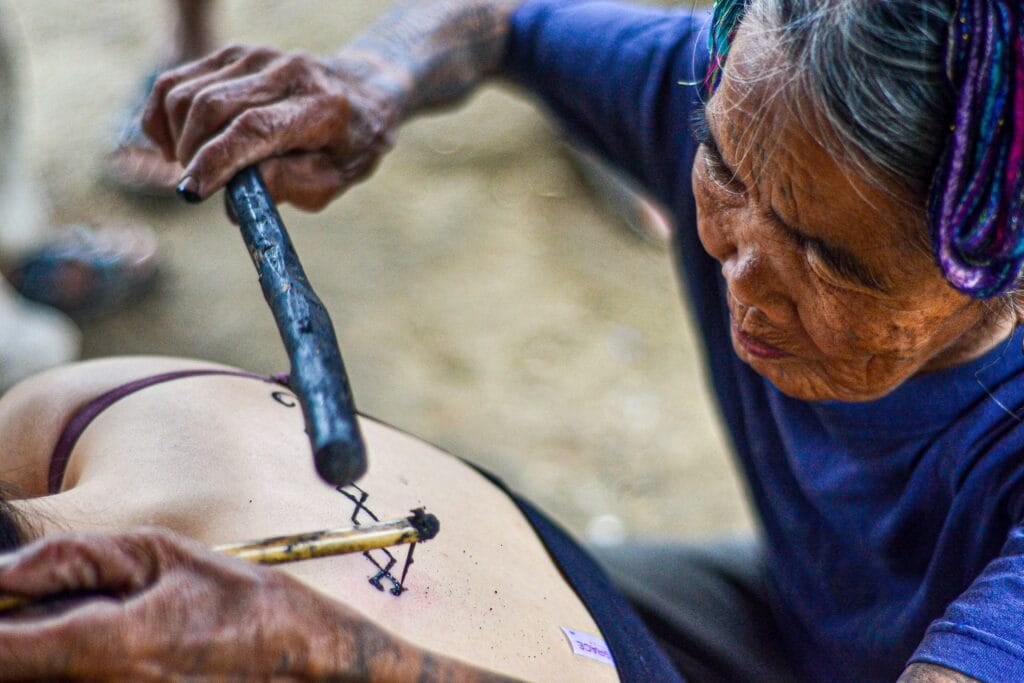
For modern researchers, Amazigh tattoos therefore represent far more than an artistic curiosity. They constitute valuable historical evidence that helps reconstruct aspects of Amazigh society often absent from written documents. Every surviving tattoo recorded by ethnographers, photographed by researchers, or remembered through oral testimony contributes another fragment to the remarkable story of one of North Africa’s oldest Indigenous cultural traditions.
The Body as Cultural Territory
Throughout human history, the body has served as far more than a biological form; it has been a canvas upon which societies express identity, belief, beauty, memory, and belonging. Among the Amazigh people of North Africa, this idea reached one of its most sophisticated expressions through the tradition of tattooing. The skin became a cultural landscape where personal experiences, collective values, spiritual aspirations, and ancestral knowledge were permanently inscribed. Every mark carried significance, transforming the body into a living document that communicated messages long before written language became widespread.
Anthropologists often describe the human body as a “social text” because it reflects the customs, values, and expectations of the community in which a person lives. In Amazigh society, tattoos functioned as visible indicators of life experiences and social identity. A woman’s facial markings could reveal her tribal affiliation, while symbols on her hands or wrists might commemorate marriage, motherhood, or important stages of adulthood. Rather than existing as purely individual choices, these Amazigh tattoos connected each person to a broader network of family relationships, community traditions, and ancestral heritage.
Unlike modern tattoo culture, where designs are often selected according to personal taste or artistic preference, traditional Amazigh tattoos were embedded within a shared symbolic system understood by the surrounding community. A simple triangle or line could immediately communicate meanings associated with fertility, protection, strength, prosperity, or spiritual blessing. These symbols were not interpreted in isolation but formed part of a visual language transmitted across generations through observation, oral instruction, and ritual practice. In this sense, every tattoo represented both a personal story and a chapter within the larger history of Amazigh culture.
The body also became a meeting place between the visible and the invisible. Many tattoo symbolism motifs were believed to influence unseen forces that shaped everyday life, including health, fertility, agricultural abundance, protection from misfortune, and spiritual balance. Applying an Amazigh tattoo was therefore not merely an artistic act but a ritual that expressed hope, invoked blessings, and reinforced the individual’s connection to the community and the natural world. The permanence of these markings symbolized enduring relationships with ancestors, family, and place.
This understanding of the body helps explain why Amazigh tattoos continue to fascinate historians and anthropologists today. They preserve evidence of Indigenous philosophies that viewed the human body not as something separate from society and nature, but as an active participant in both. Every tattoo embodied a dialogue between the individual and the collective, between memory and identity, and between everyday life and the sacred dimensions of existence.
Why Amazigh Women Wore Tattoos
Although Amazigh men occasionally bore tattoos in certain regions and historical periods, the tradition became most strongly associated with women. Across Morocco, Algeria, Tunisia, and Libya, generations of Amazigh women carried symbolic tattoos that reflected their roles within family life, community organization, spirituality, and cultural continuity. These tattoos should never be understood as simple ornaments or decorative embellishments. Instead, they represented a complex visual language through which women expressed identity, social belonging, and personal history while safeguarding traditions passed down through countless generations.
One of the primary reasons women received tattoos was to mark important transitions throughout life. Adolescence, marriage, pregnancy, childbirth, and motherhood were often accompanied by ceremonies that celebrated new responsibilities and social status. Tattoos became lasting reminders of these milestones, reflecting not only individual experiences but also the expectations and values shared by the community. In many villages, the appearance of new tattoos signaled that a young woman had entered adulthood and was prepared to participate fully in family and social life.
Beauty also played an important role in the tradition, although Amazigh concepts of beauty differed significantly from many contemporary ideals. Facial tattoos were widely regarded as enhancing natural appearance while emphasizing dignity, maturity, and cultural identity. Rather than concealing imperfections, tattoos highlighted features that connected women to their ancestors and to the artistic traditions of their communities. The aesthetic value of these Berber symbols lay not only in their visual harmony but also in the meanings they conveyed.
Protection constituted another central motivation. Many Amazigh communities believed that certain symbols could guard against harmful influences such as illness, envy, infertility, or the evil eye. Tattoos placed on the forehead, chin, hands, or wrists were often understood as protective signs capable of attracting blessings while discouraging negative spiritual forces. Although these beliefs varied between regions, the underlying principle remained remarkably consistent: the body itself could become a place of spiritual defense through carefully chosen symbolic markings.
Tattooing also reflected the social importance of women as guardians of cultural memory. In Amazigh communities, women traditionally played leading roles in weaving, pottery, food preparation, oral storytelling, child-rearing, and ritual practice. They preserved songs, proverbs, ceremonies, and artistic techniques that shaped community identity across generations. Tattoos formed another part of this wider cultural responsibility, ensuring that ancestral symbols remained visible even as political powers, languages, and historical circumstances changed around them.
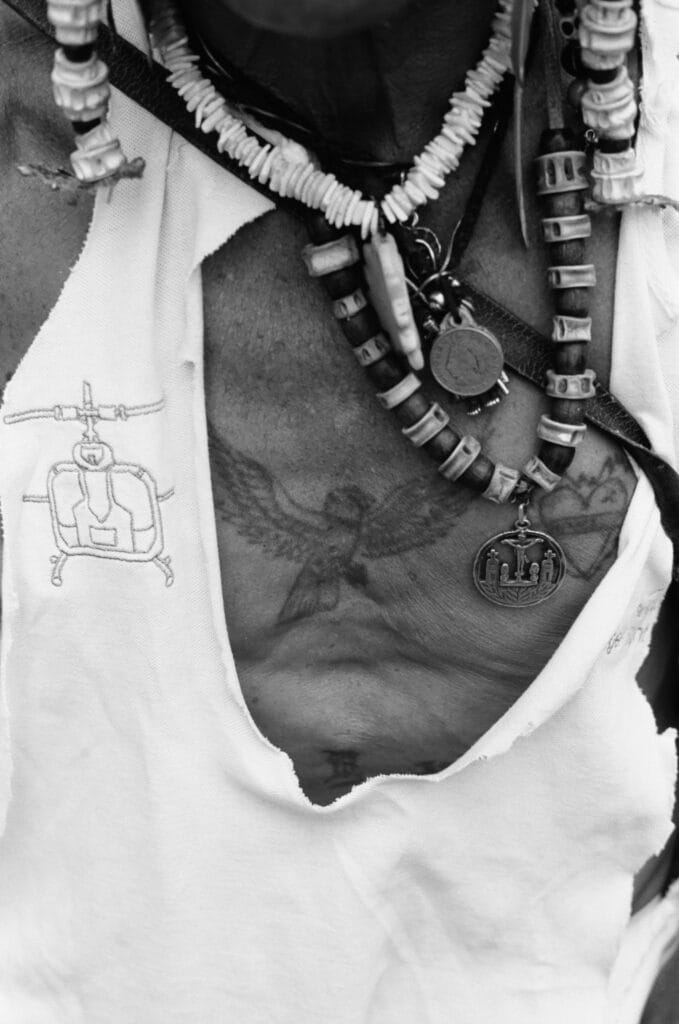
For many women, tattoos represented a lifelong connection to their homeland. A symbol inherited from a mother or grandmother carried emotional significance that extended beyond its visual appearance. It linked the individual to family history, tribal traditions, and the landscapes where generations of ancestors had lived. Even after marriage or migration, these permanent markings continued to express belonging to a cultural community rooted in the mountains, valleys, deserts, and villages of North Africa.
Today, photographs of elderly Amazigh women bearing traditional tattoos have become powerful reminders of a disappearing cultural practice. Their faces preserve one of the last living archives of a symbolic tradition that survived for centuries before gradually declining during the twentieth century. For researchers, artists, and younger Amazigh generations, these women represent not only the final practitioners of an ancient custom but also enduring custodians of Indigenous history.
Amazigh Tattoos as Identity and Social Memory
Every society develops ways of preserving its collective memory. Some rely primarily on written documents, monumental architecture, or religious manuscripts, while others depend more heavily on oral traditions, ritual performances, music, craftsmanship, and visual symbolism. Among the Amazigh people, tattooing became one of the most enduring methods of safeguarding cultural memory across generations. The human body itself functioned as an archive where identity, ancestry, beliefs, and historical continuity were permanently recorded.
Unlike written records that may disappear through war, environmental change, or political upheaval, tattoos remained with the individual throughout life. They accompanied daily activities, ceremonies, agricultural work, seasonal migrations, and family celebrations, constantly reinforcing the wearer’s relationship with the community. Children learned to recognize these symbols from an early age, associating particular motifs with relatives, elders, local traditions, and shared stories. In this way, tattoos contributed to a living educational system in which knowledge was transmitted visually as well as orally.
Identity within Amazigh society has traditionally operated on multiple levels. Individuals belonged simultaneously to families, clans, villages, tribal confederations, linguistic communities, and broader Amazigh civilization. Tattoos reflected these overlapping identities by combining universally recognized symbols with motifs specific to particular regions or local traditions. A design worn by a woman in the High Atlas might resemble one found in the Anti-Atlas while still incorporating distinctive regional characteristics that communicated local heritage.
Memory also extended beyond human relationships to include the surrounding landscape. Many Amazigh tattoo motifs evoke mountains, rivers, stars, agricultural cycles, plants, animals, and celestial phenomena that structured everyday life. These Berber symbols reminded individuals of the environments upon which their communities depended for survival and prosperity. In this sense, tattoos preserved ecological knowledge alongside cultural memory, reinforcing the intimate relationship between Amazigh society and the diverse landscapes of North Africa.
Anthropologists frequently emphasize that Indigenous cultures preserve history through multiple forms of expression rather than relying exclusively on writing. Moroccan Berber tattoos illustrate this principle remarkably well. They contain layers of information concerning kinship, spirituality, aesthetics, medicine, ritual practice, and environmental adaptation that continue to enrich our understanding of Amazigh civilization. Every surviving tattoo therefore represents not only an artistic creation but also a historical source worthy of careful documentation and respectful interpretation.
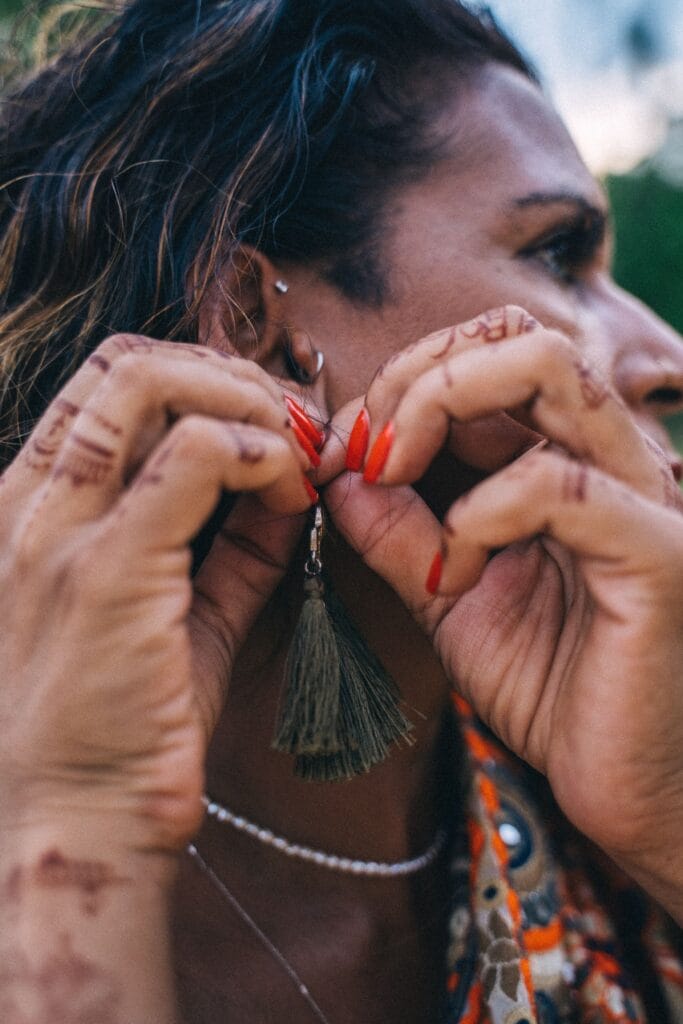
As contemporary Amazigh communities increasingly seek to preserve their cultural heritage, tattoo symbolism has acquired renewed significance. Even when permanent tattooing is no longer practiced, the symbols continue to appear in textiles, jewelry, paintings, architecture, educational materials, and digital media. Their meanings remain alive because they continue to express collective identity and historical continuity in forms that resonate with new generations.
The Symbolic Language of Amazigh Tattoos
The symbolic vocabulary of Moroccan Amazigh tattoos is one of the richest visual languages in North African cultural history. At first glance, many of the motifs appear remarkably simple—triangles, dots, lines, diamonds, zigzags, and crosses—but their apparent simplicity conceals centuries of accumulated meaning. Like words within a spoken language, these symbols derived their significance not only from their shapes but also from their placement, combination, regional context, and ceremonial use. Understanding Berber tattoos therefore requires learning to read a symbolic system that communicated ideas without relying on alphabetic writing.
Geometric forms dominate Amazigh tattoo traditions because geometry possesses extraordinary flexibility. A triangle may represent fertility in one context, protection in another, and feminine strength in a third. Parallel lines can symbolize continuity, family bonds, agricultural abundance, or the journey of life depending on the surrounding motifs. Rather than assigning rigid meanings to every design, Amazigh symbolism often embraced multiple complementary interpretations that reflected the interconnected nature of human experience.
The repetition of these motifs across different artistic media further demonstrates their cultural importance. The same triangles found on an elderly woman’s chin might also appear on a woven carpet, an embroidered garment, a silver pendant, a painted ceramic bowl, or the carved entrance of a traditional Amazigh home. This remarkable consistency suggests that Amazigh artists did not create isolated decorative patterns but participated in a shared symbolic tradition that united architecture, craftsmanship, body art, and ritual life into a coherent visual culture.
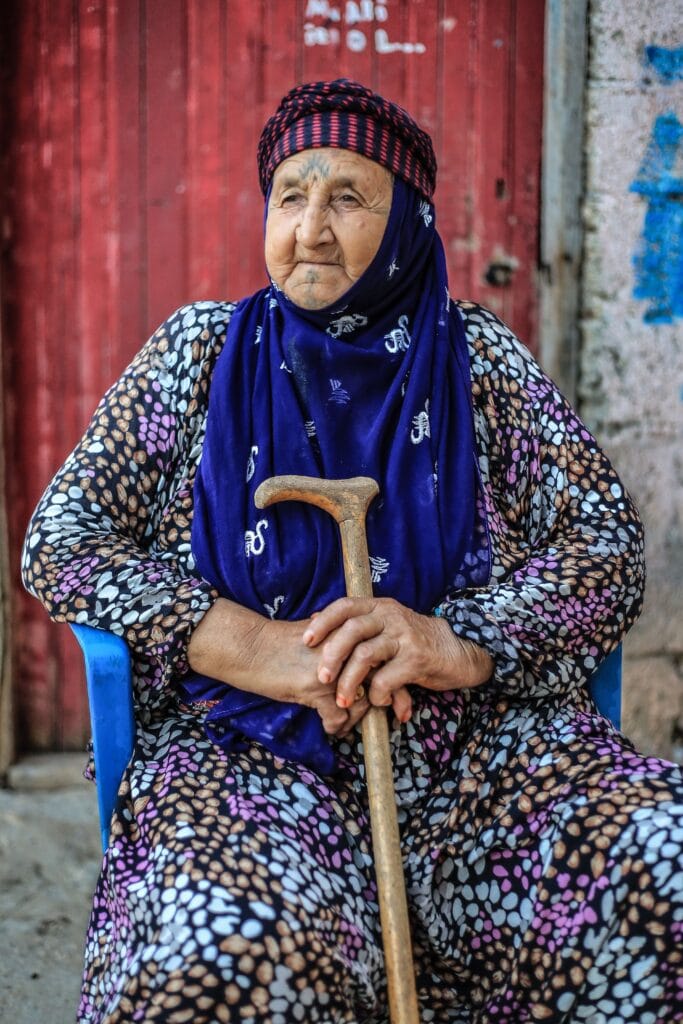
Another defining feature of Amazigh tattoo symbolism is its relationship with nature. Mountains, rivers, stars, the sun, the moon, plants, animals, and seasonal cycles all inspired the visual vocabulary of Amazigh communities. Rather than separating human society from the natural environment, these symbols expressed the profound belief that people, landscapes, and spiritual forces formed parts of a single interconnected world. Tattoos therefore celebrated both cultural identity and ecological belonging.
Most Common Amazigh Tattoo Symbols and Their Meanings
| Symbol | Traditional Meaning | Cultural Significance | Common Placement |
|---|---|---|---|
| ▲ Triangle | Fertility, womanhood, motherhood | Represents feminine strength, creation, and family continuity | Forehead, chin, hands |
| ◇ Diamond | Protection, balance, continuity | Symbolizes harmony, stability, and the cycle of life | Chin, wrists, arms |
| ⵣ Yaz | Freedom, Amazigh identity, resilience | Modern emblem of Amazigh culture and dignity | Contemporary tattoos, jewelry |
| ✚ Cross | Balance, protection, four directions | Harmony between the physical and spiritual worlds | Forehead, hands |
| ≋ Zigzag | Water, rivers, life | Represents movement, renewal, and adaptation | Arms, wrists |
| • Dots | Fertility, blessings, prosperity | Often reinforce the meaning of surrounding symbols | Chin, cheeks, hands |
| ☀ Sun | Life, vitality, abundance | Represents warmth, harvests, and divine light | Forehead, shoulders |
| ☾ Moon | Femininity, renewal, time | Associated with fertility and the rhythm of life | Face, wrists |
| 👁 Eye | Protection against the evil eye | Guards against envy and negative spiritual forces | Forehead, hands |
| Fish | Prosperity, abundance | Symbolizes nourishment and good fortune | Hands, forearms |
| Snake | Wisdom, transformation | Renewal, resilience, and healing | Arms, shoulders |
| Scorpion | Courage, vigilance | Protection against danger and adversity | Forearms, legs |
| Hand | Blessing, generosity | Hospitality, family, and protection | Hands, wrists |
| ★ Star | Guidance, hope | Direction and aspiration | Face, shoulders |
| Wheat | Harvest, prosperity | Agricultural abundance and continuity | Arms |
| Mountain | Strength, homeland | Endurance and Amazigh identity | Forearms |
| Palm Tree | Life, resilience | Survival and prosperity in arid landscapes | Arms |
| Bird | Freedom, migration | Communication and hope | Shoulders |
| Circle | Unity, eternity | Cosmic harmony and completeness | Various |
| Parallel Lines | Family continuity | Kinship and cooperation | Wrists |
| Chevron (V Shape) | Protection and movement | Journey through life and resilience | Arms, legs |
The 21 Most Important Amazigh Tattoo Symbols and Their Meanings
One of the most remarkable aspects of traditional Amazigh tattoos is the extraordinary richness of their symbolic vocabulary. Although the designs often appear simple, every line, angle, and geometric figure carries layers of historical, spiritual, and cultural significance. Unlike modern tattoo art, where individual creativity usually takes precedence, Amazigh tattoos formed part of a shared visual language understood within the community. Berber symbols were rarely chosen at random. Instead, they reflected the wearer’s stage of life, family traditions, regional identity, personal aspirations, or spiritual beliefs.
It is important to recognize that Amazigh symbolism was never completely standardized across North Africa. The same motif could hold slightly different meanings from one village to another or even between neighboring tribal groups. Nevertheless, centuries of ethnographic research have identified a core group of recurring symbols whose interpretations remain remarkably consistent throughout Morocco, Algeria, Tunisia, and other Amazigh regions. Together, these motifs reveal a worldview centered on harmony with nature, respect for ancestors, community solidarity, fertility, protection, resilience, and the cyclical rhythms of life.
The following symbols represent some of the most widespread and culturally significant motifs documented in traditional Amazigh tattoo traditions.
The Triangle – A Symbol of Womanhood and Fertility
Among all Amazigh tattoo motifs, the triangle is perhaps the most recognizable and widely documented. Its simple geometric form appears repeatedly in facial tattoos, woven carpets, painted pottery, silver jewelry, architectural decoration, and embroidered textiles, making it one of the foundational symbols of Amazigh visual culture.
In many communities, the triangle represented femininity, fertility, motherhood, and the creative power of life itself. Because its shape could evoke the female body, it became closely associated with birth, protection of children, and the continuity of future generations. Young women frequently received triangular tattoos during important transitions such as adolescence or marriage, symbolizing their entrance into adulthood and their growing responsibilities within family and community life.
The triangle also reflected ideas of stability and balance. Resting firmly upon its base, it suggested strength, resilience, and harmony—qualities highly valued within Amazigh society. In agricultural communities, these meanings extended beyond individual women to include fertile land, successful harvests, and the prosperity of the entire village. Thus, a seemingly simple geometric figure could simultaneously express personal identity, family continuity, and communal well-being.
Its widespread appearance across numerous Amazigh art forms demonstrates that the triangle was never merely decorative. It formed part of a sophisticated symbolic system that linked the body with everyday objects, architecture, and the surrounding landscape, reinforcing shared cultural values throughout daily life.
The Diamond – Protection, Continuity, and the Cycle of Life
The diamond is another recurring motif that occupies an important place within Amazigh artistic traditions. Created by joining two opposing triangles, it naturally combines ideas of balance, duality, and completeness. Anthropologists frequently interpret the diamond as representing the continuity of life, the union of complementary forces, and the enduring strength of family relationships.
Within traditional tattooing, diamond motifs were often believed to protect the wearer from harmful influences while encouraging prosperity and stability. Their symmetrical form reflected the Amazigh appreciation for order and equilibrium, reminding individuals that harmony arises through the careful balance of opposing elements such as earth and sky, male and female, work and celebration, or past and future.
The diamond also appears extensively in Amazigh weaving, particularly in handwoven carpets from the High Atlas and Anti-Atlas. Its repeated presence across multiple artistic traditions suggests that it functioned as one of the core visual concepts through which Amazigh communities understood both the natural world and human society.
The Amazigh Letter ⵣ (Yaz) – Freedom, Humanity, and Amazigh Identity
Today, no Amazigh symbol is more widely recognized than the Tifinagh letter ⵣ, commonly known as Yaz. It has become an international emblem of Amazigh identity, appearing on flags, cultural institutions, educational materials, books, artworks, jewelry, and public monuments throughout North Africa and the global Amazigh diaspora.
Although the modern political significance of ⵣ developed primarily during the twentieth century alongside Amazigh cultural movements, scholars have long noted striking visual similarities between this character and older geometric motifs documented in traditional Amazigh tattoos, rock engravings, and decorative arts. Whether every historical tattoo represented the exact Tifinagh letter remains uncertain, but the resemblance illustrates the remarkable continuity of Amazigh symbolic traditions.
In contemporary Amazigh culture, the letter ⵣ (Z) is widely interpreted as representing freedom, dignity, resilience, and the enduring spirit of the Amazigh people. It also symbolizes humanity standing upright, emphasizing courage, independence, and the determination to preserve cultural identity despite centuries of political and social change. Because of these powerful associations, many modern Amazigh-inspired tattoos incorporate ⵣ as a bridge between ancestral heritage and contemporary cultural expression.
The Cross – Balance and Spiritual Protection
Although the cross is often associated with later religious traditions, cross-shaped motifs appeared in North African symbolic art long before the spread of Christianity or Islam. Within Amazigh tattoo traditions, the cross generally functioned as a geometric symbol rather than a specifically religious one.
Its intersecting lines represented balance between opposing forces: earth and sky, physical life and spiritual existence, human beings and nature, or the four cardinal directions. Some communities also viewed the cross as a protective sign capable of guarding the wearer against misfortune and restoring harmony during periods of uncertainty.
Cross motifs frequently appeared alongside triangles, diamonds, and dots, creating complex symbolic compositions whose meanings emerged through their combination rather than through individual symbols alone. Their repeated presence in tattoos, carpets, pottery, and architectural decoration demonstrates the importance of geometric balance within Amazigh visual thought.
Zigzag Lines – Water, Movement, and the Journey of Life
Few natural resources have shaped Amazigh civilization more profoundly than water. Across the mountains, valleys, and semi-arid landscapes of Morocco and North Africa, springs, rivers, and seasonal rainfall determined patterns of settlement, agriculture, and survival. It is therefore unsurprising that zigzag lines became one of the most widespread symbols in Amazigh art.
Within Amazigh tattoo traditions, zigzag motifs generally represented flowing water, life-giving rivers, seasonal renewal, and the continuous movement of existence. Just as rivers change direction while continuing their journey, human life also follows winding paths marked by both challenges and opportunities. The zigzag therefore expresses resilience, adaptability, and perseverance rather than straightforward progress.
The same motif appears extensively in Amazigh carpets, painted pottery, and architectural decoration, reinforcing its close association with nature and environmental knowledge. For farming communities dependent upon rainfall and irrigation, water symbolized not only survival but also hope, abundance, and divine blessing.
Parallel Lines – Family Bonds and Continuity
Parallel lines may appear visually simple, yet they carried profound symbolic meaning within Amazigh culture. Running side by side without intersecting, they often represented family unity, cooperation, and the enduring relationships that connect successive generations. Their orderly arrangement reflected the importance of solidarity within Amazigh villages, where communal labor and mutual assistance formed essential elements of everyday life.
Some researchers also associate parallel lines with agricultural fields, pathways, or the continuity of ancestral lineage. In this interpretation, the motif symbolizes the uninterrupted transmission of knowledge, traditions, and cultural identity from grandparents to parents and children. The repetition of parallel lines across tattoo designs reinforces the Amazigh understanding that personal identity is inseparable from family history and collective memory.
Dots – Blessings, Fertility, and Spiritual Energy
Dots rank among the oldest geometric symbols found in human art, appearing in prehistoric cave paintings, rock engravings, ceramics, and body decoration across numerous civilizations. Within Amazigh tattoo traditions, individual dots or carefully arranged groups of dots often represented fertility, abundance, spiritual energy, and divine blessing.
Small dotted patterns frequently accompanied larger geometric figures, strengthening their protective or symbolic qualities rather than functioning independently. On the face, chin, or hands, dots could emphasize important life transitions or invoke prosperity for the wearer and her family. Their simplicity made them highly adaptable, allowing them to complement almost every other Amazigh tattoo motif.
Anthropologists have suggested that dots may also symbolize seeds, stars, raindrops, or the countless generations that together form the continuity of Amazigh civilization. Their modest appearance conceals an extraordinary richness of possible meanings rooted in everyday observation of the natural world.
The Sun – Life, Vitality, and Divine Light
The sun occupies a central place in Amazigh cosmology because it governs agricultural seasons, daily rhythms, and the survival of both people and livestock. Long before scientific explanations of astronomy, Amazigh communities recognized the essential role of sunlight in sustaining crops, guiding seasonal activities, and maintaining ecological balance.
Sun-inspired Amazigh tattoo motifs symbolized life, warmth, abundance, renewal, and spiritual illumination. Circular designs surrounded by radiating lines often represented the life-giving energy that nourishes the earth and enables communities to flourish. Wearing solar symbols expressed gratitude for nature’s generosity while invoking continued prosperity and protection.
Beyond agriculture, the sun also represented endurance and resilience. Its daily return after every night reinforced beliefs in continuity, hope, and the cyclical renewal of life. These associations explain why solar imagery appears so consistently throughout Amazigh artistic traditions, from tattooing and weaving to architecture and jewelry.
The Moon – Femininity, Renewal, and the Rhythm of Life
The moon has occupied a central place in Amazigh cosmology for thousands of years. Long before mechanical calendars and modern astronomy, Amazigh communities observed the changing phases of the moon to organize agricultural activities, seasonal migrations, religious celebrations, and daily life. Its constant cycle of growth, fullness, decline, and renewal made it one of the most powerful symbols of continuity and transformation.
Within traditional Amazigh tattoos, lunar motifs often represented femininity, fertility, motherhood, intuition, and the cyclical nature of life. Just as the moon passes through recurring phases without ever disappearing permanently, human existence was understood as a continuous process of birth, growth, maturity, aging, and renewal. Many women therefore associated lunar symbols with pregnancy, childbirth, and the nurturing role they played within family and community life.
The moon also symbolized guidance during darkness. In mountain villages and desert regions, moonlight helped travelers navigate difficult landscapes long before artificial lighting became available. This practical experience gave the moon an additional spiritual dimension as a source of hope, direction, and quiet protection during uncertain times.
Across Amazigh artistic traditions, lunar imagery appears not only in tattoos but also in jewelry, woven textiles, pottery, and ceremonial objects, illustrating the enduring importance of celestial symbols within Indigenous North African culture.
The Eye – Protection Against the Evil Eye
Among the most enduring beliefs found throughout the Mediterranean and North Africa is the concept of the evil eye—the idea that excessive envy or malicious intentions can bring misfortune, illness, or hardship. Amazigh communities developed numerous protective traditions to guard against these unseen dangers, and tattooing became one of the most visible expressions of this protective symbolism.
Eye-shaped motifs, or designs believed to symbolize watchfulness and vigilance, were often tattooed on the forehead, chin, hands, or wrists. Rather than representing a literal eye, these geometric interpretations served as symbolic guardians believed to repel negative influences while attracting blessings and good fortune.
Anthropologists emphasize that such beliefs should be understood within their historical context. Before the development of modern medicine and scientific explanations for disease or natural disasters, communities frequently interpreted unexpected suffering through spiritual frameworks. Protective tattoos therefore provided psychological reassurance while reinforcing collective beliefs about the relationship between visible and invisible worlds.
The symbolic importance of the eye remains remarkably strong today. Similar protective motifs continue to appear in Amazigh jewelry, household decorations, embroidered textiles, and contemporary artworks, demonstrating the lasting influence of ancestral beliefs within modern cultural expression.
The Fish – Prosperity, Abundance, and Good Fortune
Although fish are not among the most frequently documented Amazigh tattoo motifs, they appear in several regional artistic traditions where water, rivers, or coastal environments played important roles in everyday life. Within these contexts, fish symbolized abundance, nourishment, fertility, and the generous gifts provided by nature.
Water has always been essential to Amazigh civilization. Whether in mountain springs, fertile valleys, or Atlantic and Mediterranean coastlines, access to reliable water sources determined agricultural success and community survival. Fish naturally became associated with this life-giving environment, representing prosperity and the hope that families would continue to thrive.
Some researchers also suggest that fish carried protective meanings because of their ability to move freely through water, a substance frequently associated with purification and renewal. Their graceful movement symbolized adaptability and resilience, qualities admired in communities that regularly faced changing environmental conditions.
Although less common than geometric symbols such as triangles or diamonds, fish motifs illustrate the diversity of Amazigh symbolic traditions and their close relationship with the surrounding natural world.
The Snake – Transformation, Wisdom, and Renewal
Few animals inspire stronger emotional reactions than the snake. Across many ancient civilizations, serpents have represented danger, healing, wisdom, renewal, and spiritual transformation. Amazigh symbolism reflects this complexity, assigning multiple meanings to snake-inspired motifs depending on regional beliefs and cultural context.
One of the snake’s most remarkable characteristics is its ability to shed its skin. This natural process made it a powerful symbol of renewal, personal transformation, and the continuous cycle of life. Communities observed how the snake emerged from its old skin seemingly reborn, inspiring associations with resilience, healing, and the capacity to overcome adversity.
In some Amazigh traditions, serpents were also believed to possess protective qualities. Rather than symbolizing evil, they represented vigilance, hidden knowledge, and respect for the powerful forces of nature. Certain tattoo motifs may therefore have served as protective emblems intended to strengthen the wearer’s spiritual resilience.
As with many Indigenous symbols, interpretations varied considerably between regions. Some communities viewed snakes with caution, while others emphasized their regenerative qualities. This diversity reflects the richness of Amazigh cultural traditions rather than any single universal meaning.
The Scorpion – Courage and Spiritual Defense
The scorpion occupies a unique position within North African symbolism because it embodies both danger and protection. Living throughout deserts, mountains, and semi-arid landscapes, scorpions have long been familiar to Amazigh communities, who learned to respect their powerful sting while recognizing their place within the natural environment.
In tattoo traditions, scorpion-inspired motifs frequently symbolized courage, vigilance, resilience, and the ability to confront danger. Rather than attracting harm, these symbols were often believed to protect the wearer by invoking the strength necessary to overcome adversity. Similar symbolic logic appears in many Indigenous cultures, where representations of powerful animals are used to express desired personal qualities rather than literal threats.
The scorpion also served as a reminder that survival requires awareness and wisdom. Just as experienced travelers learned to recognize potential dangers in the landscape, individuals were encouraged to remain attentive to challenges within everyday life. In this sense, the scorpion symbolized preparedness rather than fear.
The Hand – Blessing, Protection, and Human Connection
The hand has long represented one of humanity’s most universal symbols. It builds homes, cultivates fields, prepares food, creates works of art, and welcomes guests. Within Amazigh culture, the hand naturally became associated with work, generosity, family life, and spiritual protection.
Hand-inspired Amazigh tattoo motifs often symbolized blessings, hospitality, and the positive relationships that sustain community life. Because the hands participate in nearly every aspect of daily existence—from weaving carpets and shaping pottery to harvesting crops and caring for children—they also represented the dignity of labor and the value of shared responsibility.
Some protective hand motifs were closely associated with broader North African traditions intended to repel misfortune or the evil eye. Their continued popularity in jewelry and decorative arts demonstrates how deeply rooted these protective beliefs remain within regional culture.
The Star – Guidance, Hope, and Aspiration
For countless generations, stars served as essential guides for Amazigh travelers crossing mountains, deserts, and open landscapes. Before modern navigation, knowledge of the night sky helped shepherds, merchants, and caravan leaders find their way across vast distances. Unsurprisingly, stars acquired profound symbolic importance within Amazigh thought.
Star motifs generally represented guidance, hope, wisdom, and aspiration. Their constant presence in the night sky reminded communities that even periods of darkness contain sources of direction and reassurance. Wearing star symbols expressed confidence that life’s journey, however uncertain, remained connected to a larger cosmic order.
The star also symbolized continuity across generations. Just as ancestors had relied upon the same constellations for navigation, each new generation inherited knowledge that linked them to those who came before.
Wheat – Fertility, Harvest, and Prosperity
Agriculture has shaped Amazigh civilization for thousands of years, making wheat one of the most meaningful symbols of abundance and survival. Successful harvests ensured food security, strengthened families, and allowed communities to flourish despite challenging environmental conditions.
Tattoo motifs inspired by wheat or grain represented fertility, prosperity, and gratitude for the earth’s generosity. They celebrated the intimate relationship between human labor and natural cycles while expressing hope for future abundance. Women involved in planting, harvesting, and food preparation often regarded agricultural symbols as expressions of family well-being and collective resilience.
These meanings extended beyond material prosperity to include the continuity of cultural traditions themselves. Just as seeds produce future harvests, each generation was expected to cultivate and transmit ancestral knowledge to those who followed.
Mountains – Strength, Stability, and Homeland
For many Amazigh communities, mountains are far more than geographical features. They are ancestral homelands, sources of water, places of refuge, and enduring symbols of identity. The Atlas Mountains, Anti-Atlas, Rif, and other ranges have shaped Amazigh history, language, architecture, and cultural traditions for millennia.
Mountain-inspired tattoo motifs therefore represented permanence, resilience, and belonging. Their strong outlines reflected the stability of communities rooted in landscapes that had sheltered countless generations. Unlike temporary political boundaries, mountains remained constant witnesses to history, reinforcing the Amazigh understanding of continuity between people and place.
These symbols also conveyed endurance. Mountain life demanded cooperation, patience, and adaptability—qualities highly respected within Amazigh society. Wearing mountain motifs expressed pride in this heritage while honoring the landscapes that nurtured Indigenous civilization.
The Palm Tree – Life, Hospitality, and Renewal
In southern Morocco and the Sahara, the palm tree has long symbolized life in environments where water and shade determine survival. Oases supported agriculture, facilitated trade, and offered resting places for travelers crossing arid landscapes. Consequently, the palm became a powerful emblem of generosity, resilience, and hope.
Palm-inspired motifs represented growth, hospitality, prosperity, and the ability to flourish despite harsh conditions. Their deep roots and graceful branches illustrated the Amazigh ideal of remaining firmly connected to ancestral traditions while continuing to grow and adapt to changing circumstances.
Birds – Freedom, Communication, and the Human Spirit
Birds frequently appear in Amazigh folklore, poetry, and decorative arts as symbols of freedom, migration, and communication between distant places. Their ability to travel across mountains and deserts inspired associations with hope, aspiration, and spiritual elevation.
Within Amazigh tattoo traditions, bird motifs often expressed the desire for freedom, new beginnings, and the enduring connection between human beings and the natural world. They also reflected the Amazigh appreciation for seasonal migration, movement, and the cyclical rhythms that shape both nature and society.
Rather than representing escape from one’s homeland, birds symbolized the possibility of carrying cultural identity across great distances—a meaning that continues to resonate strongly among Amazigh communities living throughout the global diaspora.
Why These Symbols Continue to Matter
Although traditional Amazigh tattooing has become increasingly rare, the symbolic language it preserved remains remarkably alive. The same triangles, diamonds, zigzags, stars, and protective motifs continue to appear in Amazigh carpets, pottery, silver jewelry, architecture, leatherwork, embroidery, and contemporary graphic design. These recurring designs demonstrate that Amazigh tattoo symbols were never isolated artistic creations but integral parts of a broader Indigenous visual tradition that continues to evolve while remaining deeply connected to its ancestral roots.
Today, scholars, artists, museum curators, and members of Amazigh communities increasingly recognize these symbols as invaluable expressions of cultural heritage. They remind us that every line once carried a story, every geometric form reflected generations of accumulated knowledge, and every tattoo represented far more than decoration—it embodied identity, memory, resilience, and the enduring spirit of the Amazigh people.
Placement of Amazigh Tattoos and Their Meanings
The location of a traditional Amazigh tattoo was rarely accidental. Within Amazigh culture, every part of the body possessed symbolic significance, and tattoo placement often reinforced the meaning of the design itself. A symbol tattooed on the forehead could communicate a different message from the same motif placed on the chin, hand, wrist, or ankle. Understanding Amazigh tattoo traditions therefore requires considering not only the symbols themselves but also the relationship between those symbols and the body.
Anthropologists have long observed that body placement reflects how societies understand identity, spirituality, beauty, and social interaction. In Amazigh communities, visible areas of the body often served as spaces where personal identity and collective memory became publicly expressed. The face, in particular, occupied a privileged position because it represented the individual in everyday social life. Facial tattoos were therefore among the most meaningful forms of symbolic communication, immediately identifying the wearer while simultaneously expressing family heritage, community values, and spiritual beliefs.

Tattoos placed on the hands emphasized the importance of work, generosity, craftsmanship, and family life. Since the hands participated in every aspect of daily existence—from weaving carpets and preparing food to caring for children and cultivating fields—they naturally became symbols of productivity and blessing. Decorative motifs on the wrists or forearms often accompanied these ideas, reinforcing protection, continuity, and strength.
Other areas of the body reflected more intimate or personal meanings. Amazigh tattoos near the chest or shoulders could symbolize courage and spiritual protection, while markings on the legs or ankles occasionally expressed mobility, endurance, or life’s journey. Although specific traditions varied considerably across regions, the underlying principle remained remarkably consistent: the human body functioned as an integrated symbolic landscape where every placement contributed to the overall meaning of the tattoo.
Forehead Tattoos
Among the most recognizable features of traditional Amazigh tattooing are the symbols placed on the forehead. Positioned at the center of the face, these tattoos immediately attracted attention and often represented protection, wisdom, dignity, and spiritual awareness. Because the forehead occupies such a prominent location, many communities considered it an ideal place for symbols intended to guard against negative influences or attract divine blessings.
Forehead tattoos frequently accompanied important life transitions, including adolescence and marriage. They also reflected maturity and social responsibility, communicating that the wearer had become a respected member of the community. In some regions, geometric motifs placed between the eyebrows emphasized harmony between thought, intuition, and spiritual balance.
Chin Tattoos
Perhaps no feature is more strongly associated with elderly Amazigh women than the vertical or geometric tattoos traditionally worn on the chin. These distinctive markings have become iconic representations of Amazigh cultural identity and continue to appear in historical photographs and ethnographic documentation.
Chin tattoos often symbolized femininity, adulthood, fertility, and family continuity. They were closely associated with important stages in a woman’s life and could also represent beauty according to local cultural standards. Their highly visible placement reinforced social identity while simultaneously expressing the wearer’s connection to her ancestors and community traditions.
Although the practice has largely disappeared, chin tattoos remain among the most powerful visual reminders of Amazigh heritage, preserving memories of a tradition that shaped generations of Indigenous women throughout North Africa.
Hand and Finger Tattoos
The hands occupy a unique position within Amazigh symbolic thought because they connect individuals directly with work, creativity, hospitality, and family life. Women used their hands to weave textiles, prepare food, harvest crops, shape pottery, raise children, and create many of the artistic traditions that continue to define Amazigh culture today.
Amazigh tattoos placed on the hands or fingers therefore emphasized productivity, generosity, protection, and blessing. Some motifs were believed to safeguard the wearer during everyday activities, while others celebrated craftsmanship and the dignity of manual labor. Because hands are constantly visible during social interaction, these tattoos also reinforced cultural identity within the wider community.
Wrist and Forearm Tattoos
The wrists and forearms frequently displayed geometric bands composed of lines, dots, zigzags, or diamond motifs. These tattoos often represented continuity, resilience, and protection while visually connecting the hands with the rest of the body.
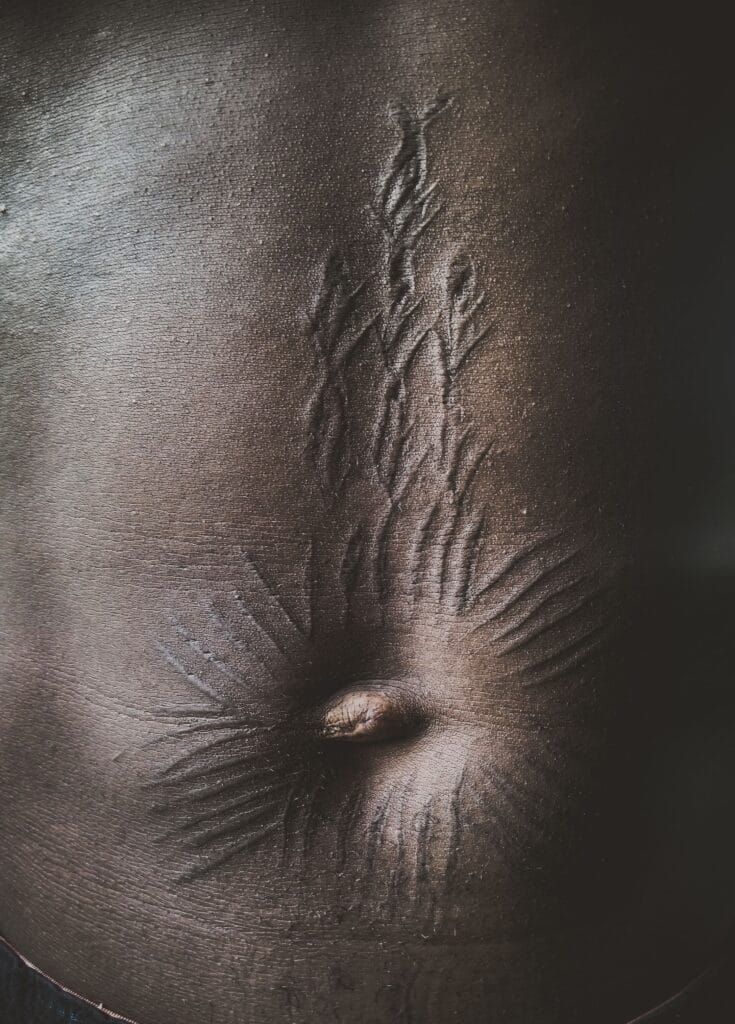
Many researchers believe that wrist tattoos also carried symbolic associations with strength and endurance. Since the arms perform countless daily tasks, decorating them with protective symbols reflected the hope that individuals would continue fulfilling their responsibilities successfully throughout life.
Leg and Ankle Tattoos
Although less visible than facial tattoos, markings on the legs and ankles occasionally symbolized movement, travel, endurance, and life’s continuous journey. Amazigh communities have long maintained close relationships with seasonal migration, pastoralism, trade, and mountain travel. Tattoo motifs placed on the lower body may therefore have expressed both physical mobility and spiritual progress through different stages of life.
Traditional Amazigh Tattooing Techniques
The creation of a traditional Amazigh tattoo required knowledge, patience, and considerable practical experience. Unlike modern tattoo studios equipped with electric machines and standardized inks, Amazigh tattoo artists relied entirely on locally available materials and techniques refined through generations of observation and experimentation. The process reflected the broader Amazigh philosophy of working harmoniously with nature, using resources found within the surrounding environment rather than imported technologies.
Historical accounts describe several methods of Amazigh tattoo application, although practices varied between regions. Most techniques involved puncturing the skin repeatedly with fine needles, sharpened metal tools, or natural thorns before rubbing dark pigments into the small wounds. The pigment gradually settled beneath the skin as healing occurred, producing permanent blue-black or greenish markings that remained visible throughout life.
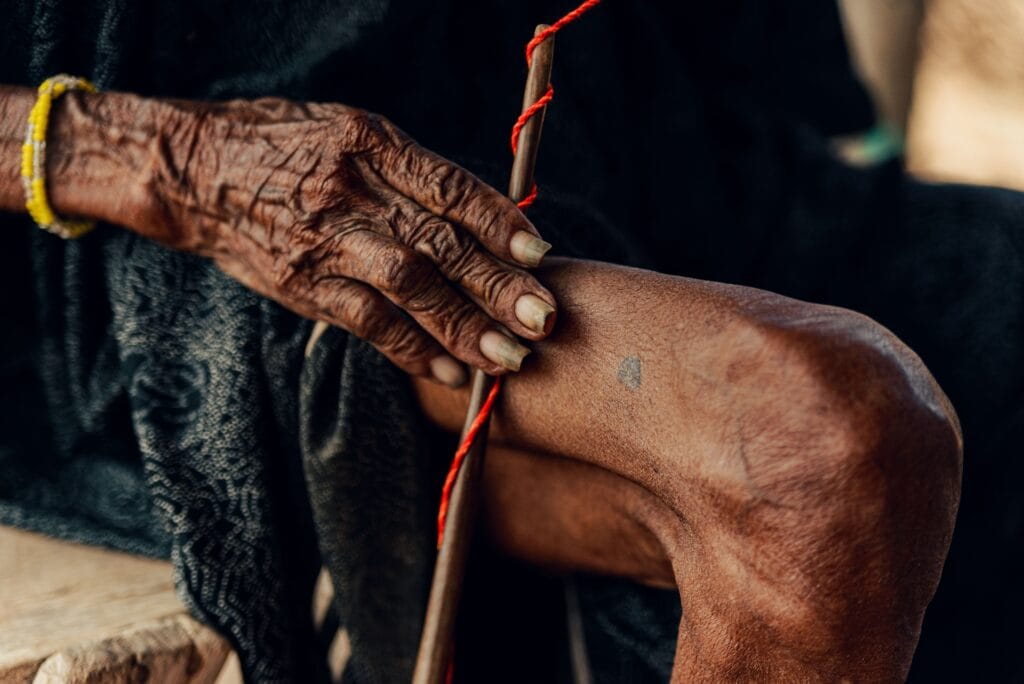
The materials themselves were carefully selected. Carbon-rich soot collected from cooking fires, finely ground charcoal, natural plant pigments, and occasionally indigo-based mixtures were commonly used to create durable colors. Some communities combined these ingredients with olive oil, animal fats, herbal extracts, or other locally available substances to improve consistency and healing. Because recipes were transmitted orally, each region developed its own preferred mixtures while preserving similar overall techniques.
Amazigh Tattooing was not merely a technical procedure but often a social event involving family members, experienced women, and community participation. Songs, prayers, advice, and shared memories sometimes accompanied the process, transforming tattooing into an important cultural ceremony rather than an isolated artistic activity. Young women receiving their first tattoos frequently experienced the event as a meaningful rite of passage linking them with previous generations.
Healing required patience. Fresh Amazigh tattoos were carefully cleaned and protected while the skin gradually recovered. Herbal remedies known within traditional Amazigh medicine sometimes helped reduce discomfort or encourage healing. Although these methods reflected local knowledge accumulated over centuries, they differed significantly from modern medical practices and should be understood within their historical context.
The remarkable durability of many surviving Amazigh tattoos demonstrates the effectiveness of these traditional techniques. Photographs taken during the twentieth century show elderly women whose tattoos remained clearly visible decades after their original application, testifying to both the skill of the tattoo artists and the resilience of Indigenous craftsmanship.
The Role of Amazigh Tattoo Artists in Amazigh Society
Behind every traditional Amazigh tattoo stood an experienced woman whose knowledge extended far beyond artistic ability. These tattoo practitioners occupied respected positions within many Amazigh communities because they possessed specialized expertise transmitted through family traditions and long years of practical experience. They understood not only how to create permanent designs but also which symbols were appropriate for different ages, family histories, ceremonies, and local customs.
Unlike contemporary tattoo artists who often emphasize personal creativity, traditional Amazigh practitioners served primarily as custodians of cultural knowledge. Their responsibility involved preserving symbolic traditions while ensuring that every tattoo remained faithful to the values and beliefs of the community. They acted as interpreters of an inherited visual language rather than inventors of entirely new designs.
Many tattoo artists were also respected for their broader knowledge of women’s traditions. They frequently participated in ceremonies surrounding birth, marriage, healing, and seasonal celebrations, making them important cultural figures within village life. Their experience with herbal remedies, ritual practices, and oral traditions further strengthened their social authority.
Because Amazigh society relied heavily on oral transmission, these women became living archives of Indigenous knowledge. Through their work, they preserved symbolic meanings that might otherwise have disappeared during periods of political change, migration, or cultural transformation. Every tattoo they created represented not only artistic skill but also the successful transmission of ancestral memory from one generation to the next.
As traditional tattooing gradually declined during the twentieth century, many of these practitioners disappeared without leaving written records of their knowledge. Consequently, photographs, oral testimonies, ethnographic research, and museum collections have become invaluable sources for reconstructing this remarkable cultural heritage.
Regional Diversity of Amazigh Tattoos Across Morocco
Although Amazigh communities share common cultural roots, tattoo traditions developed distinctive regional characteristics shaped by geography, local history, dialects, tribal customs, and environmental conditions. There was never a single universal style of Berber tattooing. Instead, each region contributed its own variations while preserving the broader symbolic vocabulary that united Amazigh civilization across North Africa.
This diversity reflects one of the greatest strengths of Amazigh culture: its ability to maintain a shared identity while adapting creatively to different landscapes and historical circumstances. Whether living in the High Atlas Mountains, the fertile Sous Valley, the Anti-Atlas, or the Sahara, Amazigh communities interpreted common symbols through the lens of their own experiences and traditions.
High Atlas
In the High Atlas Mountains, Amazigh tattoo designs tended to emphasize bold geometric forms, including triangles, vertical lines, diamonds, and protective facial markings. Isolated mountain communities preserved many ancestral traditions for longer periods, allowing distinctive regional styles to flourish. Tattoos frequently reflected themes of resilience, family continuity, agricultural life, and spiritual protection in environments where cooperation was essential for survival.
Middle Atlas
Among Amazigh communities of the Middle Atlas, tattoos often displayed elegant linear compositions with carefully balanced geometric patterns. Symbols associated with fertility, family life, and protection remained especially important, while facial tattoos frequently played a central role in expressing identity and adulthood.
Sous Valley
The Sous region developed one of the richest artistic traditions in Morocco, reflected not only in tattooing but also in weaving, silver jewelry, pottery, and architecture. Tattoo motifs from this area often demonstrate remarkable harmony with the geometric designs found in local carpets and textiles, illustrating the close relationship between different forms of Amazigh artistic expression.
Anti-Atlas
Communities of the Anti-Atlas preserved numerous tattoo traditions characterized by finely balanced geometric arrangements and protective symbolism. The region’s historic role as a crossroads for trade and seasonal migration encouraged cultural exchange while maintaining strong local identities rooted in Amazigh language and heritage.
Sahara and Southern Oases
In southern Morocco and the Saharan oases, tattoo traditions reflected life in arid environments shaped by caravan routes, oasis agriculture, and long-distance travel. Symbols emphasizing protection, hospitality, endurance, and the life-giving importance of water became especially meaningful within these landscapes, where environmental knowledge played a crucial role in everyday survival.
Regional Diversity Beyond Morocco
Although Morocco preserves some of the best-documented examples of traditional Amazigh tattooing, the practice extended across much of North Africa. Amazigh communities living in present-day Algeria, Tunisia, Libya, Egypt’s Siwa Oasis, and the Sahara developed their own distinctive tattoo traditions while maintaining many of the same symbolic principles. This remarkable geographical continuity demonstrates that Berber tattoos were not isolated regional customs but part of a broader Indigenous cultural heritage that connected Amazigh peoples across thousands of kilometers.
Differences naturally emerged as communities adapted to diverse landscapes, languages, and historical experiences. Mountain villages, fertile valleys, desert oases, and coastal settlements each developed characteristic artistic styles reflecting their unique environments. Yet the recurring appearance of triangles, diamonds, crosses, zigzags, dots, and protective motifs throughout North Africa reveals an enduring symbolic vocabulary shared across Amazigh civilization.
Studying these regional variations helps researchers reconstruct historical connections between Amazigh populations while illustrating how Indigenous cultures can preserve common identities despite geographical separation and political change.
Algeria
Algeria possesses one of the richest surviving records of Amazigh tattoo traditions, particularly among Kabyle, Chaoui, and Mozabite communities. Early ethnographers documented numerous facial tattoos characterized by elegant geometric arrangements placed on the forehead, chin, cheeks, and hands.
Kabyle women were especially renowned for intricate facial tattoos that symbolized beauty, protection, adulthood, and family identity. Many motifs closely resemble decorative patterns woven into Kabyle textiles or engraved onto pottery, highlighting the interconnected nature of Amazigh artistic traditions.
In the Aurès Mountains, Chaoui communities developed their own variations while preserving many of the symbolic themes found elsewhere in North Africa. These included fertility, protection against misfortune, spiritual balance, and respect for ancestral traditions.
Tunisia
Traditional tattooing remained widespread among Amazigh and rural communities in southern Tunisia well into the twentieth century. Historical photographs frequently depict women with small geometric tattoos decorating the forehead, chin, cheeks, and hands.
Tunisian designs often emphasized simplicity and balance rather than highly elaborate compositions. Dots, lines, diamonds, and crosses formed harmonious arrangements expressing protection, prosperity, and family continuity.
Today, these tattoos have become important subjects of cultural preservation efforts, with museums and researchers documenting one of Tunisia’s oldest Indigenous artistic traditions before living memories disappear.
Libya
Among Amazigh communities in western Libya, particularly in the Nafusa Mountains, tattoo traditions reflected many of the same symbolic principles observed in Morocco and Algeria. Facial markings commonly represented maturity, identity, fertility, and spiritual protection.
Despite significant political and social changes throughout Libyan history, Amazigh communities preserved numerous cultural traditions, including language, architecture, weaving, and symbolic art. Tattoo motifs formed part of this wider cultural landscape, illustrating the resilience of Indigenous heritage across centuries.
Siwa Oasis (Egypt)
The Siwa Oasis, located in Egypt’s Western Desert, is home to one of the easternmost Amazigh-speaking communities. Although Siwan tattoo traditions developed within a unique cultural environment influenced by both North African and Egyptian history, researchers have documented symbolic similarities with other Amazigh regions.
Geometric motifs associated with protection, femininity, fertility, and spiritual well-being demonstrate the remarkable continuity of Amazigh visual culture across vast geographical distances.
Tuareg Communities of the Sahara
The Tuareg, who inhabit large areas of the central Sahara, share Amazigh linguistic roots while maintaining distinctive cultural traditions shaped by nomadic life. Although permanent tattooing was generally less widespread than in some northern Amazigh communities, body decoration, symbolic markings, jewelry, leatherwork, and protective amulets played similarly important roles in expressing identity and spiritual beliefs.
Tuareg artistic traditions illustrate how Amazigh symbolic culture adapted creatively to desert environments while preserving many of the underlying concepts shared throughout North Africa.
Spiritual, Protective, and Medicinal Functions of Berber Tattoos
To understand traditional Amazigh tattoos solely as decorative body art would overlook their deepest cultural significance. For centuries, Amazigh communities regarded tattooing as an integrated practice that combined spirituality, healing, social identity, and symbolic protection. Every motif reflected beliefs about the relationship between the human body, the natural world, ancestors, and unseen spiritual forces.
In traditional Amazigh worldviews, physical and spiritual well-being were closely connected. Illness, misfortune, infertility, or repeated hardship could sometimes be interpreted as signs that balance had been disturbed. Tattoo symbols therefore functioned as visual prayers intended to restore harmony rather than magical guarantees of protection. They embodied hope, resilience, and the community’s desire to safeguard both individuals and families against life’s uncertainties.
Protective symbols frequently appeared on highly visible parts of the body, particularly the forehead, chin, wrists, and hands. Their constant visibility reinforced feelings of security while reminding wearers of their connection to ancestral traditions. The act of tattooing itself often became a communal event accompanied by advice, encouragement, songs, or blessings, strengthening its emotional and spiritual significance.
Many motifs also expressed gratitude rather than fear. Solar symbols celebrated life-giving warmth; water-inspired zigzags honored the importance of rainfall and rivers; agricultural patterns reflected appreciation for fertile land and successful harvests. Tattoos therefore represented a positive relationship with the surrounding environment as much as they expressed protection against adversity.
Modern scholars emphasize that these beliefs should be interpreted within their historical and cultural context rather than through contemporary assumptions. They reveal how Amazigh communities understood health, identity, and the interconnectedness of nature and society long before modern scientific medicine transformed explanations of disease and healing.
Berber Tattoos and Traditional Medicine
Traditional Amazigh medicine developed over centuries through careful observation of plants, animals, climate, and the human body. Herbal knowledge, dietary practices, massage, ritual healing, and spiritual beliefs formed an integrated system that addressed both physical and emotional well-being. Within this broader medical tradition, tattooing occasionally acquired therapeutic as well as symbolic significance.
Ethnographic studies have documented instances in which small tattoos were applied near painful joints, temples, or other parts of the body believed to benefit from symbolic or therapeutic intervention. In some communities, tattoos were thought to relieve headaches, joint discomfort, muscular pain, or other chronic ailments. Although the precise mechanisms behind these practices remain uncertain, they demonstrate how Amazigh healing traditions combined physical treatment with cultural beliefs about balance, protection, and recovery.
Certain tattoo procedures were accompanied by herbal preparations intended to reduce discomfort or promote healing. Local plants known for their soothing or antiseptic properties were sometimes incorporated into pigment mixtures or applied during the healing process. These practices reflected generations of accumulated environmental knowledge rather than standardized medical formulas.
From a modern scientific perspective, there is no reliable evidence that tattooing itself cures disease or provides medical treatment. Nevertheless, these historical practices remain valuable for understanding Indigenous knowledge systems and should be appreciated as part of Amazigh cultural heritage rather than evaluated solely according to contemporary biomedical standards.
The study of traditional medicine reminds us that health has always involved more than biological processes alone. Emotional reassurance, community support, ritual participation, and cultural meaning all contributed to the ways Amazigh societies approached healing and well-being.
Amazigh Tattoos Compared with Other Indigenous Tattoo Traditions
Tattooing has emerged independently in many parts of the world, including Polynesia, Japan, the Arctic, the Americas, Southeast Asia, and Africa. Despite enormous geographical distances, many Indigenous cultures developed surprisingly similar ideas regarding the relationship between tattoos, identity, spirituality, and social belonging. Comparing Amazigh traditions with these cultures highlights both shared human experiences and the distinctive characteristics of Berber tattoo symbolism.
Unlike the elaborate figurative tattoos found in Polynesian societies, Amazigh tattoos rely primarily on geometric abstraction. Triangles, diamonds, dots, zigzags, and straight lines dominate the visual vocabulary rather than highly detailed representations of animals or mythological figures. This geometric emphasis also characterizes Amazigh architecture, weaving, pottery, and jewelry, demonstrating remarkable artistic consistency across different media.
Japanese irezumi, by contrast, evolved within an entirely different historical and artistic tradition emphasizing narrative compositions, mythological creatures, seasonal imagery, and flowing visual movement. Amazigh tattoos generally remained smaller, more symbolic, and closely integrated into everyday village life.
Among several Indigenous peoples of the Arctic, tattooing similarly marked important life transitions, social identity, and spiritual beliefs, especially for women. These parallels remind us that body art frequently served comparable cultural functions across societies that had no historical contact with one another.
The Māori tā moko tradition of New Zealand likewise transformed the human face into a record of ancestry, social identity, and community belonging. Although Amazigh tattoos differ greatly in style and symbolism, both traditions illustrate how facial tattooing can communicate complex cultural information beyond simple decoration.
These comparisons demonstrate that Amazigh tattooing belongs to a broader global history of Indigenous body art while preserving artistic characteristics uniquely shaped by North African landscapes, languages, and cultural traditions.
Why Traditional Berber Tattoos Declined
The gradual disappearance of traditional Berber tattooing during the twentieth century resulted from a complex combination of religious, social, political, and cultural transformations rather than from a single cause. Understanding this decline requires recognizing how rapidly North African societies changed during the modern era.
One important factor was the growing influence of religious interpretations discouraging permanent tattooing. Although Islam had existed in North Africa for many centuries alongside Amazigh tattoo traditions, changing religious attitudes during the nineteenth and twentieth centuries contributed to the gradual abandonment of the practice in many communities. Families increasingly chose alternative expressions of cultural identity that aligned more closely with evolving religious expectations.
Urbanization also played a significant role. As increasing numbers of Amazigh families migrated from rural villages to expanding cities, traditional community structures weakened. Young generations encountered new educational systems, occupations, fashions, and social expectations that differed considerably from village life. Customs once transmitted naturally within close-knit communities became increasingly difficult to preserve.
Colonial rule introduced additional changes. European administrations documented Amazigh tattoo traditions through ethnographic photography and academic research while simultaneously promoting modernization, centralized education, and Western medical practices. Ironically, many of the historical photographs that preserve knowledge of traditional tattoos were created during the very period in which the practice was beginning to decline.
Modern healthcare likewise reduced reliance on certain traditional healing practices associated with tattooing. Improved medical services, changing hygiene standards, and increased awareness of infection risks encouraged many communities to abandon permanent tattooing while continuing to preserve its symbolic meanings through other forms of artistic expression.
Changing ideals of beauty also influenced younger generations. Fashion, photography, cinema, and global media introduced new aesthetic standards that gradually replaced older concepts of facial ornamentation. Tattoos that had once represented beauty, maturity, and dignity increasingly came to be viewed as belonging to previous generations.
Despite this decline, the symbolic language itself did not disappear. Instead, it found new life through Amazigh carpets, jewelry, architecture, ceramics, contemporary painting, graphic design, academic research, museum exhibitions, and cultural heritage initiatives. In this sense, Berber tattoos evolved rather than vanished, continuing to express Amazigh identity in forms adapted to the modern world.
The Modern Revival of Amazigh Tattoo Art
Although traditional Amazigh tattooing declined throughout the twentieth century, the symbolic language it embodied has never truly disappeared. Instead, it has undergone a remarkable cultural revival as Amazigh communities, scholars, artists, designers, and heritage organizations work to preserve and celebrate one of North Africa’s oldest artistic traditions. Today, Berber tattoo symbols are no longer viewed merely as remnants of the past; they have become powerful expressions of Indigenous identity, historical continuity, and cultural resilience.
Across Morocco and the wider Amazigh world, younger generations are increasingly rediscovering ancestral symbols through historical research, museum exhibitions, academic publications, cultural festivals, and digital media. This renewed interest reflects a broader movement to document Amazigh languages, oral traditions, architecture, music, crafts, and archaeology before valuable knowledge disappears. Tattoo motifs occupy an important place within this cultural renaissance because they offer a direct visual connection to centuries of Indigenous history.

Unlike previous generations, many contemporary Amazigh people choose not to recreate permanent facial tattoos. Instead, they reinterpret traditional motifs through temporary body art, graphic illustration, fashion, fine art, jewelry, interior design, and digital media. This approach allows individuals to honor their heritage while adapting ancestral symbols to modern cultural and religious contexts.
Museums throughout Morocco, Algeria, Tunisia, and Europe have also contributed significantly to preserving knowledge of Amazigh tattoo traditions. Historical photographs, ethnographic collections, textiles, jewelry, pottery, and oral testimonies provide valuable documentation that helps researchers reconstruct meanings that might otherwise have been forgotten. Universities increasingly recognize Berber tattoos as important sources for understanding Indigenous history, anthropology, gender studies, and visual culture.
The modern revival therefore represents more than nostalgia. It reflects an ongoing effort to protect Amazigh intangible cultural heritage while ensuring that future generations understand the rich symbolic traditions inherited from their ancestors.
Amazigh Tattoo Symbols in Contemporary Art, Fashion, and Design
Although permanent traditional tattooing has become rare, Amazigh symbols continue to flourish across numerous forms of contemporary artistic expression. Their geometric elegance, cultural depth, and historical significance have inspired designers, architects, jewelers, illustrators, textile artists, and craftspeople throughout North Africa and beyond.
Perhaps nowhere is this continuity more visible than in Amazigh weaving. Handwoven carpets from the High Atlas, Middle Atlas, Anti-Atlas, and Sous regions continue to feature many of the same triangles, diamonds, zigzags, crosses, and protective motifs once found on the skin. These textiles preserve symbolic traditions while adapting them to new artistic contexts.
Silver jewelry provides another striking example. Amazigh necklaces, fibulae, bracelets, earrings, rings, and pendants frequently display geometric patterns that closely resemble historical tattoo motifs. Rather than existing as separate artistic traditions, tattooing and jewelry have always shared a common symbolic vocabulary rooted in Indigenous concepts of protection, identity, fertility, and beauty.
Contemporary architecture likewise demonstrates the enduring influence of Amazigh symbolism. Decorative carvings on wooden doors, painted ceilings, adobe walls, and traditional granaries often repeat geometric motifs documented in historical tattoos. Modern architects inspired by Amazigh heritage increasingly incorporate these designs into public buildings, cultural centers, and eco-tourism projects, demonstrating how ancestral visual languages continue to inspire contemporary design.
Graphic designers have embraced Amazigh motifs for logos, educational materials, cultural campaigns, book covers, and digital media. The Tifinagh alphabet, particularly the letter ⵣ (Yaz), has become an internationally recognized emblem of Amazigh identity and frequently appears alongside traditional geometric symbols in modern visual communication.
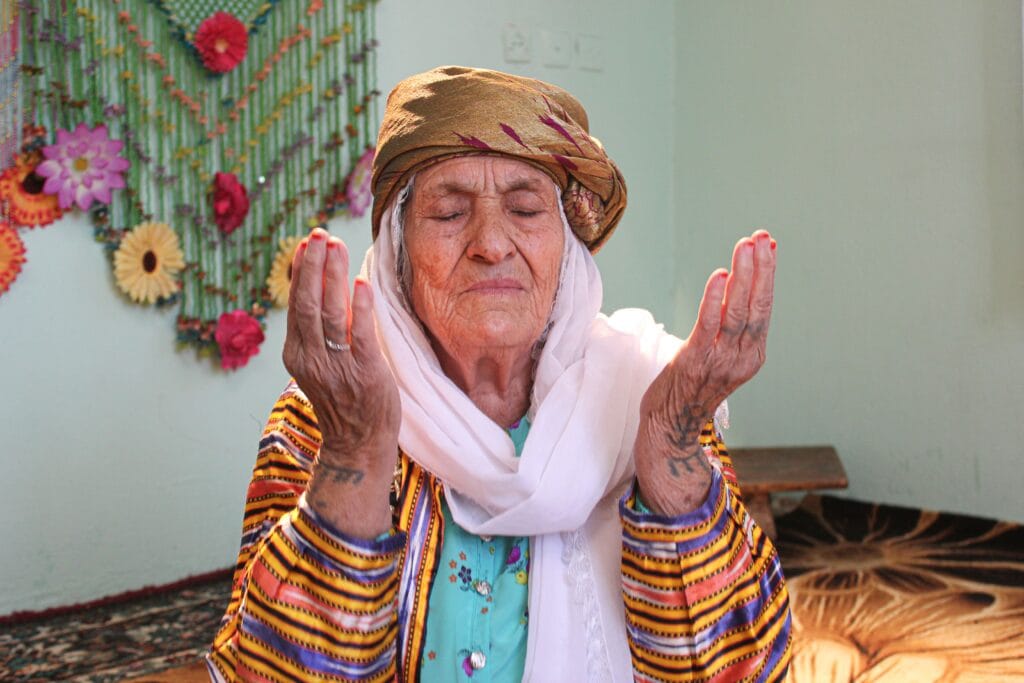
Fashion designers have also drawn inspiration from Amazigh heritage by incorporating traditional motifs into embroidered garments, scarves, handbags, footwear, and accessories. When approached respectfully and with proper acknowledgment of their cultural origins, these adaptations help introduce Amazigh artistic traditions to wider international audiences.
Together, these developments demonstrate that Berber tattoo symbolism has not disappeared. Instead, it has evolved into a living artistic language that continues to inspire creativity while preserving the memory of one of North Africa’s oldest cultural traditions.
Cultural Appreciation and Ethical Considerations
As Amazigh symbols gain increasing international visibility, important questions arise concerning cultural appreciation, cultural preservation, and cultural appropriation. Understanding these distinctions is essential for anyone interested in Berber tattoo traditions.
Cultural appreciation begins with curiosity, respect, and a genuine desire to learn. Individuals who study the history of Amazigh culture, acknowledge the Indigenous origins of these symbols, and recognize their deeper meanings contribute positively to preserving cultural heritage. Appreciation encourages dialogue, education, and mutual understanding while respecting the communities from which these traditions emerged.
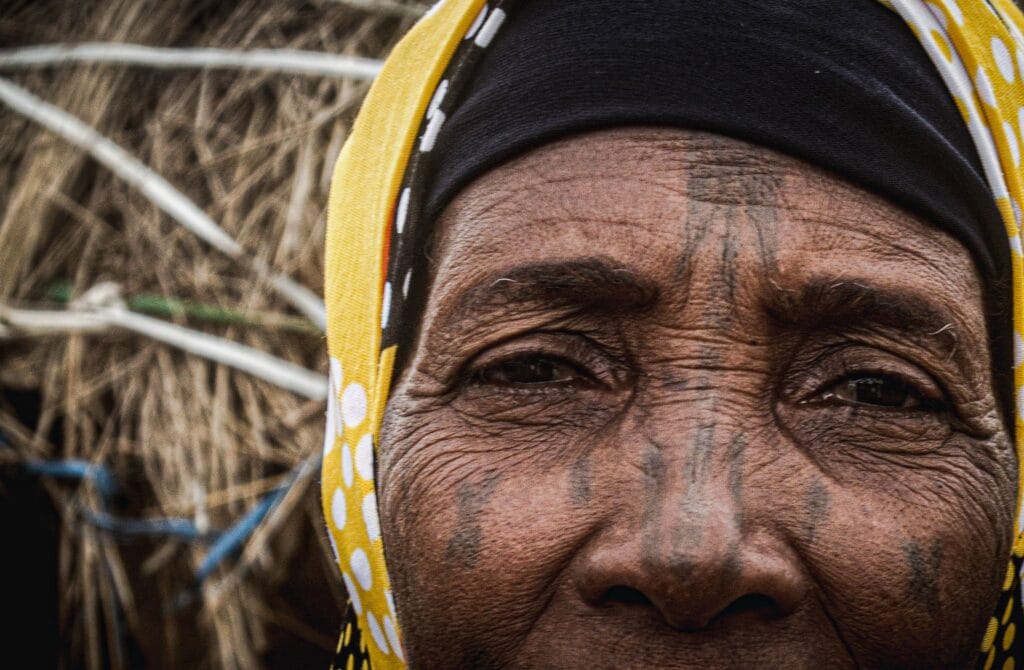
Cultural appropriation, by contrast, occurs when cultural symbols are adopted without understanding, acknowledgment, or respect for their historical significance. Removing Amazigh motifs from their cultural context or presenting them as purely decorative designs can unintentionally diminish centuries of Indigenous knowledge and lived experience. Although artistic inspiration naturally crosses cultural boundaries, responsible engagement requires recognizing the communities that created and preserved these remarkable traditions.
For researchers, artists, and visitors interested in Amazigh culture, the most meaningful approach involves learning about the history behind each symbol rather than treating it simply as an attractive visual pattern. Every triangle, diamond, zigzag, or cross carries stories shaped by generations of women, families, villages, and communities whose knowledge deserves recognition.
Supporting Amazigh artisans, museums, cultural associations, and educational initiatives also contributes to preserving this heritage. Purchasing authentic handmade crafts, visiting cultural exhibitions, reading academic research, and learning about Amazigh history all help ensure that these traditions remain living parts of North Africa’s cultural landscape rather than fading into obscurity.
Ultimately, Berber tattoos remind us that cultural heritage is not only something inherited from the past but also something actively protected, interpreted, and shared with future generations.
Why Berber Tattoos Still Matter Today
At first glance, traditional Berber tattoos may appear to belong to a distant historical era. Their decline during the twentieth century, combined with changing social customs and modern lifestyles, could easily suggest that they survive only as museum artifacts or historical photographs. Yet such an interpretation overlooks their continuing relevance within contemporary discussions about Indigenous heritage, cultural identity, artistic expression, and historical memory.
For Amazigh communities, these tattoos remain tangible reminders of ancestral resilience. They testify to the creativity of generations who developed sophisticated symbolic systems without relying primarily on written language. Every motif reflects careful observation of nature, deep spiritual beliefs, and a profound understanding of the relationships connecting individuals, families, communities, and landscapes.
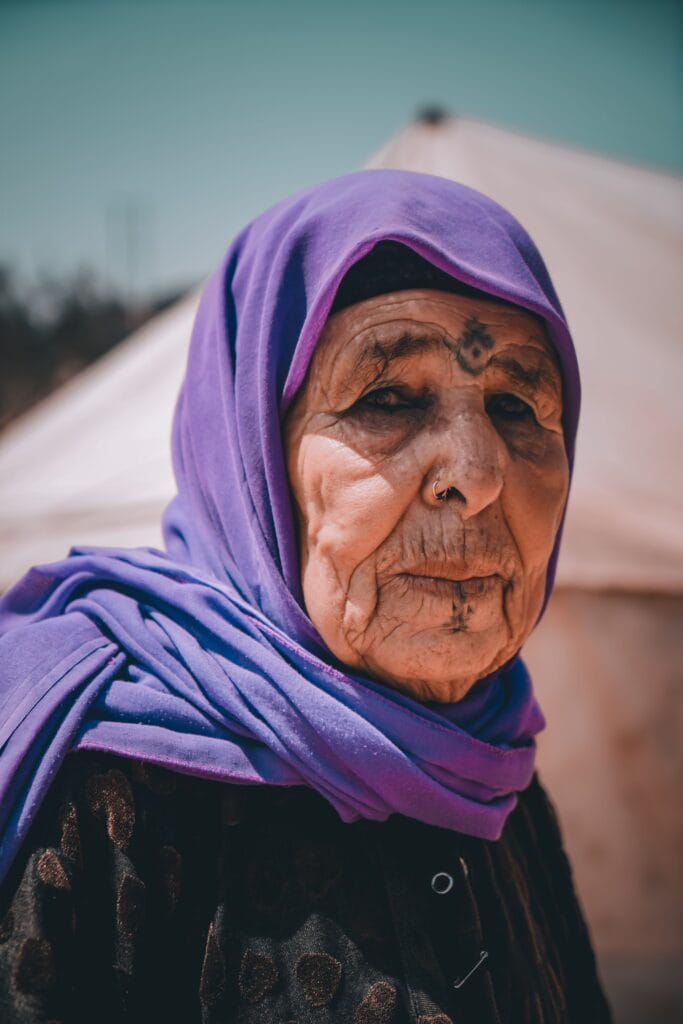
For historians and anthropologists, Amazigh tattoos provide invaluable evidence that complements archaeology, architecture, oral tradition, and material culture. They reveal aspects of everyday life that written historical sources often overlook, particularly the experiences of women whose voices are frequently underrepresented in historical documents.
For artists and designers, Amazigh symbols continue to demonstrate the enduring power of geometric simplicity. Their balanced compositions illustrate how a small number of carefully arranged forms can communicate remarkably complex ideas concerning protection, fertility, continuity, resilience, harmony, and belonging.
Finally, for readers around the world, Amazigh tattoos offer an opportunity to appreciate one of humanity’s oldest Indigenous artistic traditions while recognizing the remarkable diversity of cultural expression across North Africa. They remind us that history is preserved not only in monuments and manuscripts but also in living traditions, handcrafted objects, and the memories carried by ordinary people.
Although the practice of traditional facial tattooing has largely disappeared, the stories it tells remain deeply alive. They continue to inspire scholarship, artistic creativity, cultural pride, and renewed appreciation for the extraordinary heritage of the Amazigh people.
The Evolution of Amazigh Tattoo Traditions
Before 7000 BCE
Prehistoric body decoration begins in North Africa.
↓
7000–3000 BCE
Neolithic communities develop symbolic body art.
↓
3000–1000 BCE
Geometric symbols appear in rock art and pottery.
↓
Numidian Kingdoms
Tattoo traditions spread among Amazigh tribes.
↓
Roman Period
Mountain communities preserve Indigenous tattoo customs.
↓
Islamic Period
Tattoo traditions continue, especially in rural Amazigh regions.
↓
1800–1900s
European ethnographers document traditional Amazigh tattoos.
↓
1900–1970
Rapid decline due to modernization, urbanization, and changing religious practices.
↓
1990–Today
Growing revival through museums, academic research, Amazigh cultural movements, art, fashion, and heritage preservation.
Did You Know?
1. Amazigh tattoos were traditionally created almost exclusively by women.
Women preserved not only tattoo techniques but also the symbolic meanings behind every design.
2. Most Amazigh tattoo symbols also appear in carpets.
The same triangles, diamonds, and zigzags found on the skin are woven into Amazigh rugs and textiles.
3. Tattoos were once considered a language.
Before literacy became widespread, symbols communicated identity, family, protection, and social status.
4. Every village had its own artistic style.
No two Amazigh communities tattooed in exactly the same way.
5. Facial tattoos often marked important life stages.
Marriage, adulthood, and motherhood were common occasions for receiving tattoos.
6. Tattoo traditions are older than written history in North Africa.
Archaeological evidence suggests body symbolism dates back thousands of years.
7. Tattoos were connected to architecture.
Many geometric motifs carved into kasbahs and granaries also appeared on people’s skin.
8. Amazigh jewelry preserves many tattoo symbols.
Silver fibulae, necklaces, bracelets, and earrings continue to display ancient geometric motifs.
9. The Amazigh letter ⵣ became a modern symbol of freedom.
Today it appears on flags, logos, books, and contemporary artwork throughout the Amazigh world.
10. Traditional facial tattoos have largely disappeared.
Today, most Amazigh cultural symbols survive through weaving, jewelry, pottery, architecture, and contemporary art rather than permanent body tattoos.
Frequently Asked Questions (FAQs) About Amazigh Tattoos
1. What is a Amazigh tattoo?
A Berber (Amazigh) tattoo is a traditional permanent body marking historically practiced by the Amazigh (Berber) people of North Africa. These tattoos were more than decoration; they expressed identity, tribal affiliation, spirituality, protection, fertility, and cultural memory through geometric symbols passed down across generations.
2. What do Berber tattoos symbolize?
Amazigh tattoos symbolize many aspects of Amazigh life, including fertility, family, protection, prosperity, courage, wisdom, harmony with nature, and ancestral identity. The meaning depends on the symbol, its placement, and the regional traditions of the community.
3. Why did Amazigh women wear tattoos?
In many Amazigh communities, women wore tattoos to celebrate important life stages such as adulthood, marriage, and motherhood. Tattoos also represented beauty, protection, spiritual beliefs, and family heritage while preserving cultural traditions.
4. Are Amazigh tattoos still practiced today?
Traditional facial tattooing has largely disappeared across North Africa. However, Amazigh symbols continue to thrive in jewelry, carpets, architecture, fashion, graphic design, and contemporary art as expressions of cultural identity.
5. What is the most famous Amazigh tattoo symbol?
The triangle is one of the oldest and most widespread Amazigh tattoo symbols, representing femininity, fertility, and motherhood. Today, the Tifinagh letter ⵣ (Yaz) has become the best-known symbol of Amazigh identity and cultural resilience.
6. What does the Amazigh symbol ⵣ mean?
The Tifinagh letter ⵣ, known as Yaz, symbolizes freedom, dignity, resilience, and Amazigh identity. It has become an international emblem representing the Amazigh people and their cultural heritage.
7. Were Amazigh tattoos only decorative?
No. Traditional Amazigh tattoos served practical, spiritual, and social functions. They communicated identity, protected against misfortune according to local beliefs, marked important life events, and preserved cultural knowledge.
8. How were traditional Amazightattoos made?
Tattoo artists traditionally used fine needles, natural thorns, or sharpened metal tools together with pigments made from soot, charcoal, or plant-based materials. The process was often accompanied by community rituals and oral traditions.
9. Did Amazigh (Berber) men wear tattoos?
Although women were the primary bearers of traditional Amazigh tattoos, some men also wore symbolic tattoos in certain regions and historical periods. Female tattooing, however, was significantly more widespread.
10. Are Berber tattoos connected to Amazigh carpets?
Yes. Many geometric motifs found in traditional Amazigh tattoos also appear in Amazigh carpets, pottery, silver jewelry, architecture, leatherwork, and textiles, demonstrating a shared symbolic language across Amazigh artistic traditions.
11. What is the meaning of the triangle in Amazigh tattoos?
The triangle commonly symbolizes femininity, fertility, motherhood, protection, and the continuity of life. It is one of the oldest and most recognizable Amazigh symbols.
12. Why did Amazigh tattoo traditions decline?
The decline resulted from several factors, including changing religious interpretations, urbanization, modernization, colonial influences, expanding education, and shifting concepts of beauty during the twentieth century.
13. Which regions of Morocco were known for Amazigh tattoos?
Traditional Amazigh tattooing was especially documented in the High Atlas, Middle Atlas, Sous Valley, Anti-Atlas, the Sahara, and other rural Amazigh communities throughout Morocco.
14. Are Amazigh tattoos unique to Morocco?
No. Amazigh tattoo traditions also existed throughout Algeria, Tunisia, Libya, Egypt’s Siwa Oasis, and parts of the Sahara, although each region developed distinctive local styles.
15. Did Amazigh tattoos have spiritual meanings?
Yes. Many tattoos symbolized protection, blessings, healing, fertility, and harmony with nature. These meanings reflected traditional Amazigh beliefs about the relationship between people, ancestors, and the natural world.
16. Can Amazigh tattoo symbols be found in other art forms?
Absolutely. The same geometric symbols appear in Amazigh architecture, woven carpets, pottery, silver jewelry, textiles, wooden doors, granaries, and prehistoric rock art.
17. What can historians learn from Amazigh tattoos?
Amazigh tattoos provide valuable insights into Amazigh society, including women’s history, social organization, spirituality, Indigenous knowledge, artistic traditions, and cultural identity, especially where written historical records are limited.
18. What is the difference between Berber and Amazigh tattoos?
There is no difference in the tradition itself. “Berber” is the historical term widely used in English, while “Amazigh” is the preferred self-designation of the Indigenous peoples of North Africa. Today, many scholars and cultural organizations favor the term Amazigh tattoos.
19. Why are Berber tattoos important today?
They preserve one of North Africa’s oldest Indigenous symbolic traditions and continue to inspire scholarship, cultural preservation, contemporary art, and Amazigh identity around the world.
20. Where can I learn more about Amazigh culture?
Academic books, museum collections, archaeological research, ethnographic studies, and reputable cultural heritage websites provide valuable resources for understanding Amazigh history, language, architecture, jewelry, tattoo traditions, and material culture.
Conclusion: More Than Tattoos—A Living Archive of Amazigh Civilization
Amazigh tattoos are far more than decorative markings preserved in old photographs or museum collections. They represent one of the oldest surviving visual languages of North Africa, carrying centuries of Indigenous knowledge, artistic creativity, spiritual belief, and collective memory. Through simple yet powerful geometric symbols, Amazigh communities developed an enduring system of communication that expressed identity, family heritage, protection, fertility, beauty, and the profound relationship between people and the landscapes they inhabited.
The remarkable continuity of these Berber symbols across tattoos, carpets, jewelry, pottery, architecture, textiles, and rock art demonstrates that Amazigh visual culture has always formed an interconnected whole. Each artistic tradition reinforces the others, revealing a sophisticated worldview in which everyday objects, human bodies, homes, and sacred spaces all participated in preserving cultural identity.
Although permanent tattooing gradually declined during the twentieth century, its symbolic legacy continues to thrive. Researchers, museums, artists, and Amazigh communities themselves are ensuring that these ancient motifs remain part of contemporary cultural life. Rather than disappearing, they have evolved into new forms of artistic expression while continuing to honor the generations who first transformed the human body into a living archive of history.
Studying Amazigh tattoo meanings ultimately reveals much more than the significance of individual symbols. It opens a window into the resilience of Amazigh civilization itself—a civilization that has preserved its identity through Amazigh language, craftsmanship, oral tradition, architecture, music, and visual art despite thousands of years of political, religious, and social change.
Every line, every triangle, every diamond, and every carefully placed dot tells a story. Together, they form one of the world’s most remarkable expressions of Indigenous heritage, reminding us that culture is not only remembered through written records but also through the symbols people choose to carry across generations.
References
- Becker, C. (2010). The Amazigh cultural heritage of North Africa. Routledge.
- Brett, M., & Fentress, E. (1996). The Berbers. Blackwell Publishers.
- Camps, G. (1980). Berbères: Aux marges de l’histoire. Éditions des Hespérides.
- Chaker, S. (2006). Berber (Amazigh). In K. Brown (Ed.), Encyclopedia of Language and Linguistics (2nd ed.). Elsevier.
- Drouin, J. (2004). Symboles berbères et traditions nord-africaines. L’Harmattan.
- Eickelman, D. F. (1976). Moroccan Islam: Tradition and Society in a Pilgrimage Center. University of Texas Press.
- El Fasi, M. (Ed.). (1992). General History of Africa III: Africa from the Seventh to the Eleventh Century. UNESCO.
- Hoffman, K. E. (2008). We Share Walls: Language, Land, and Gender in Berber Morocco. Wiley-Blackwell.
- Laoust, E. (1932). Mots et choses berbères. Librairie Ernest Leroux.
- Mernissi, F. (1997). The Forgotten Queens of Islam. University of Minnesota Press.
- Mercer, J. (1976). The Archaeology of North Africa. Praeger.
- Prussin, L. (1986). African Nomadic Architecture: Space, Place and Gender. Smithsonian Institution Press.
- Rachik, H. (2003). Symbolic Dimensions of Moroccan Society. Publications de la Faculté des Lettres.
- UNESCO. (2003). Convention for the Safeguarding of the Intangible Cultural Heritage. UNESCO.
- Westermarck, E. (1926). Ritual and Belief in Morocco (Vols. 1–2). Macmillan.