Threads of Spirit: The Symbolism and Spirituality of Moroccan Amazigh Weaving
Introduction – The Loom of Life in the Atlas Mountains
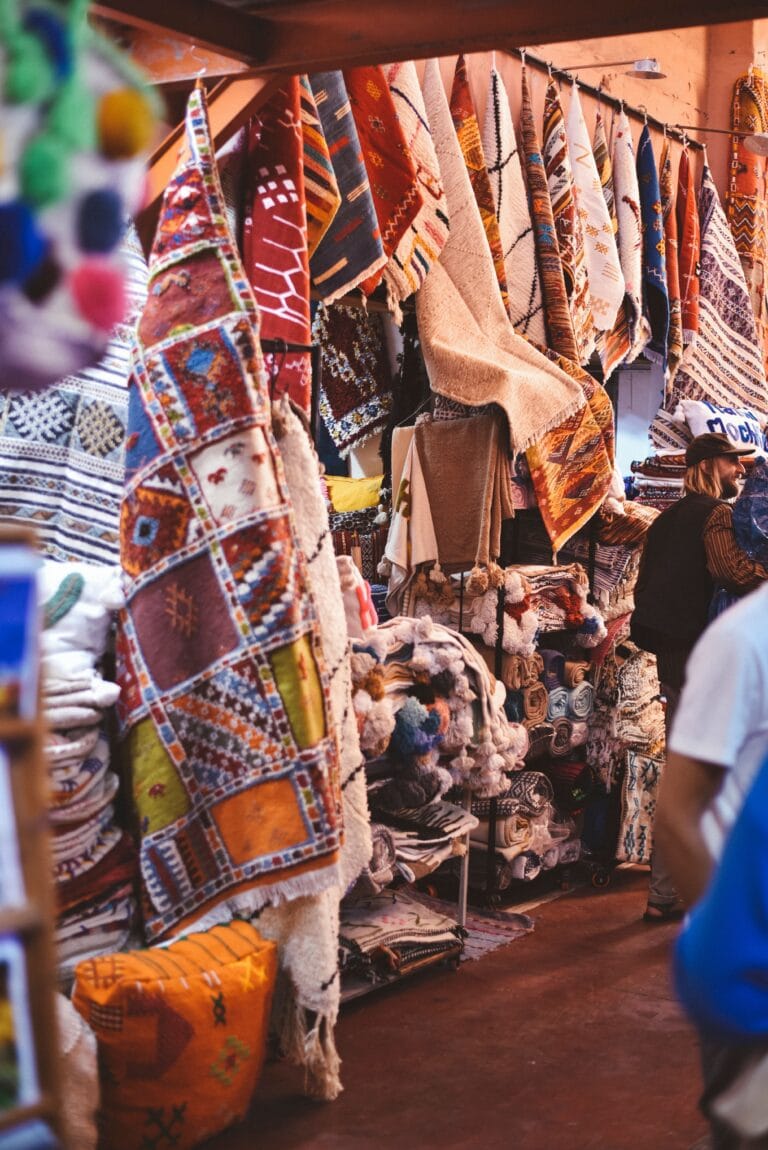
In the high plateaus and fertile valleys of Morocco, where the rhythm of life still follows the heartbeat of the land, Moroccan Amazigh Weaving is far more than a craft. It is a sacred language of colors, symbols, and patience — a tapestry that tells stories of faith, identity, and endurance.
When you touch Amazigh carpets or Berber kilims, you’re not merely feeling wool; you’re holding generations of wisdom, emotion, and spirituality. The threads whisper tales of love, fertility, protection, and ancestral memory — all expressed through patterns born in the mind of the weaver and blessed by her hands.
This art of weaving, passed from mother to daughter, is not taught in classrooms but in the rhythm of daily life. It reflects the Amazigh belief that creation itself is sacred, that the act of weaving mirrors the act of life — one thread at a time, one prayer in every knot.
Let us travel into the heart of Moroccan Amazigh weaving, where every loom becomes a shrine and every pattern a message from the soul.
Table of Contents
The Heritage of Moroccan Amazigh Weaving — A Living Cultural Testament
Weaving as the Soul of Amazigh Identity
For the Amazigh people, weaving is not merely a domestic craft but a spiritual and communal expression. It represents both continuity and creativity — a reflection of how identity is built, preserved, and adapted across generations.
Weaving traditions date back to prehistoric North Africa. Ancient cave paintings in the Atlas Mountains and archaeological textiles from early Amazigh settlements reveal that weaving has long been tied to survival, trade, and spirituality.
The craft evolved with the rhythms of Amazigh life — from nomadic tribes who wove kilims for tents and saddles to sedentary villagers who created heavy pile carpets for warmth and ceremony. Each tribe developed its unique motifs, techniques, and color schemes, turning weaving into a cultural signature and a form of visual storytelling.
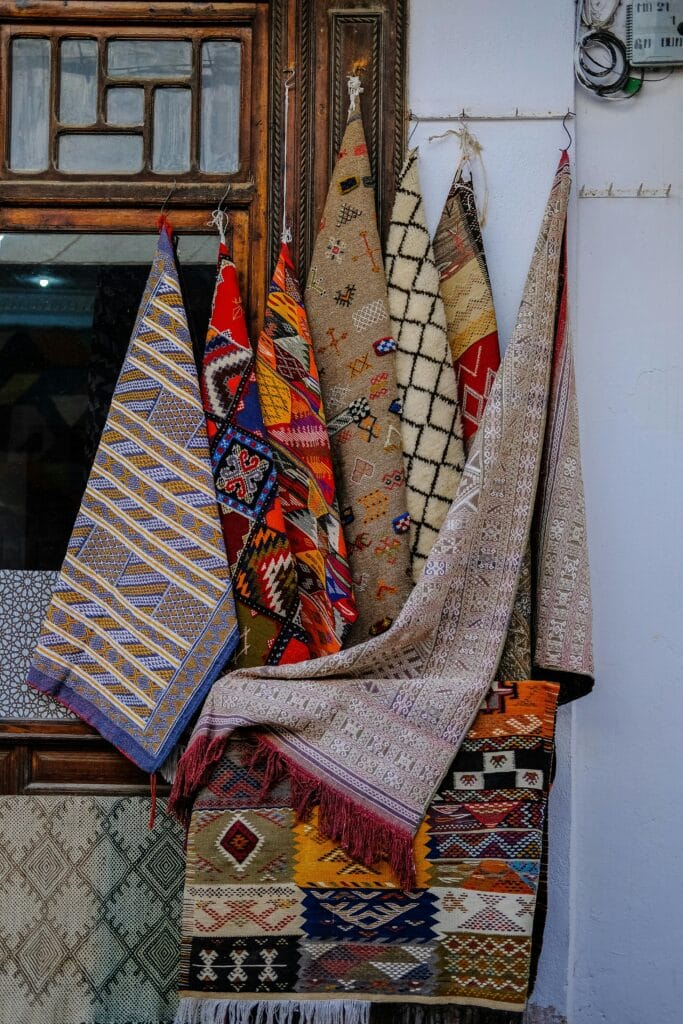
Regional Weaving Centers of Morocco
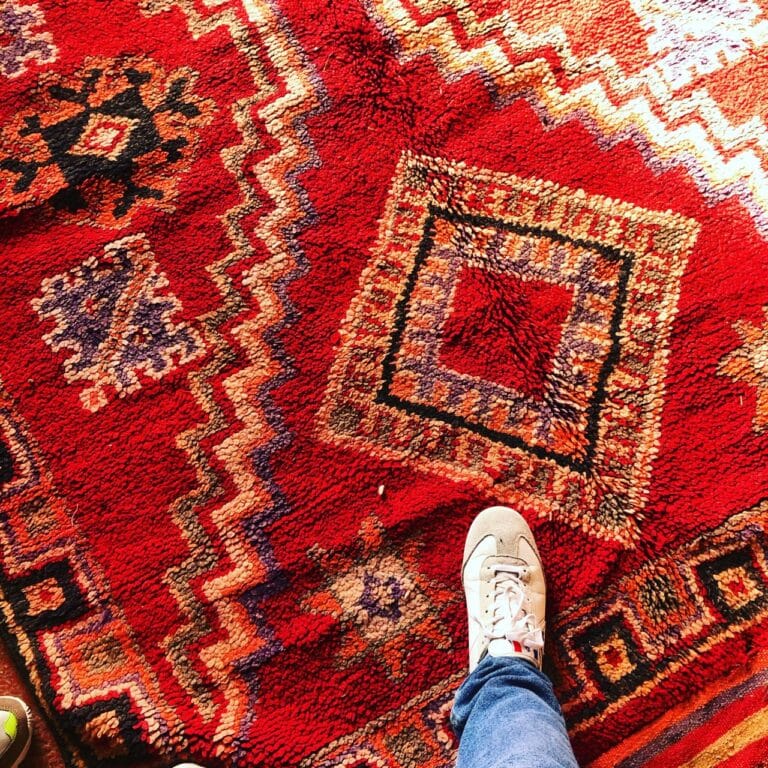
- Taznakht (High Atlas): Renowned for bright reds, deep blues, and bold diamond motifs.
- Aït Ouaouzguite (Ouarzazate region): Known for fine wool and intricate geometric designs.
- Beni Ouarain (Middle Atlas): Famous for soft, cream-colored pile rugs with minimalist black symbols.
- Zemmour (Rabat region): Characterized by vivid reds and complex lozenges.
- Talsint and the Eastern tribes: Celebrate more linear patterns and vibrant tones.
Each carpet, whether a humble kilim or an elaborate masterpiece, carries the identity of its maker — the woman, her tribe, her beliefs, and her hopes.
The Spiritual Dimension — Weaving as Prayer and Protection
The Loom as a Sacred Space
In Amazigh tradition, the loom is not simply a tool — it is a sacred space, a boundary between the visible and the invisible worlds. Before beginning a new carpet, women often whisper prayers or blessings, invoking divine protection against the “evil eye” and ensuring the success of the weaving.
The act of stretching the warp (the vertical threads) symbolizes setting the foundation of life — the structure upon which all things depend. The weft (the horizontal threads) represents experience and time, interlaced through endurance and creativity.
The rhythmic movement of hands and feet as the weaver beats each line into place becomes a meditative ritual — a repetition that mirrors both prayer and breath.
Protective and Spiritual Motifs in Amazigh Carpets
Each Amazigh symbol carries meaning — a coded form of prayer. Some common motifs include:
- The diamond (⟐) — symbolizes the female form and protection of fertility.
- The comb (|||) — purifies the path of life and wards off evil.
- The hand (khamsa) — shields the weaver from harm.
- The zigzag — represents water and life’s journey.
- Crosses and lozenges — balance between the physical and spiritual realms.
Thus, the carpet becomes not just decoration but a living talisman — a woven amulet for the home, believed to carry blessings, fertility, and divine protection.
The Journey of Creation — Stages of Weaving a Moroccan Amazigh Carpet
Step 1 — The Wool and Its Sacred Preparation
Wool is at the heart of Amazigh weaving — soft, durable, and sacred. The process begins with shearing sheep in spring or early summer. This act, done communally, is accompanied by gratitude rituals for the animals and the land.
The wool is then washed, combed, and spun by hand using a spindle called izdi. The weaver may add herbs or natural oils to soften the fibers and infuse them with scent and protection. The softness and sheen of the wool will later define the quality of the Moroccan carpet.
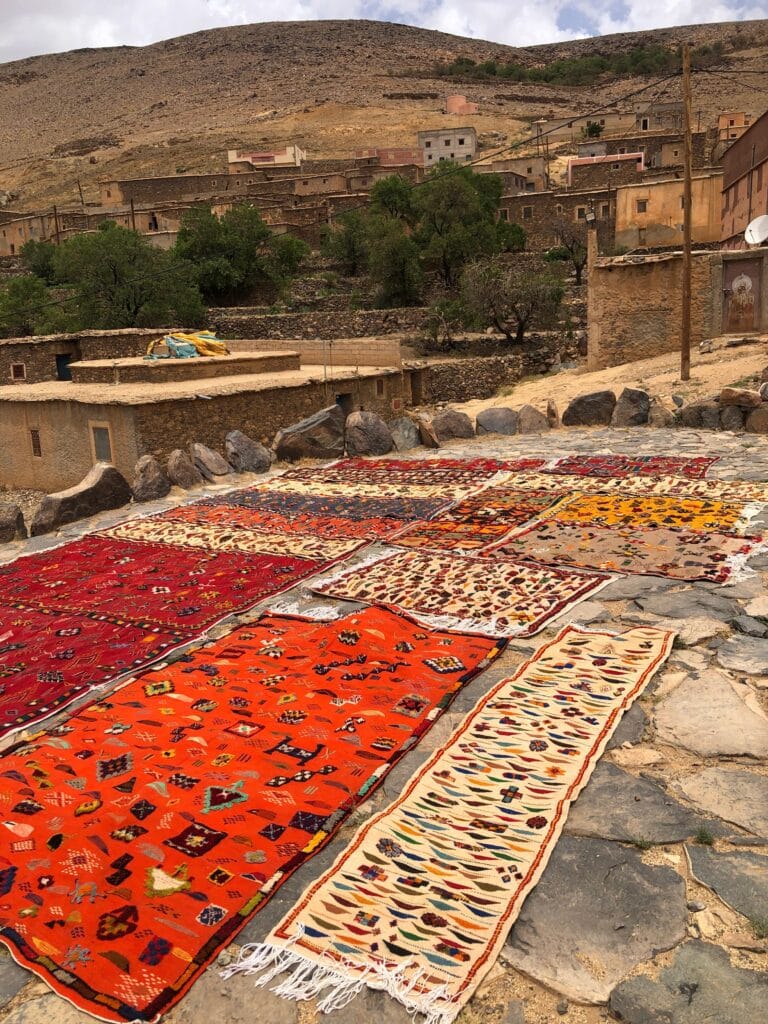
Step 2 — Natural Dyeing and Color Symbolism
Before modern dyes, Amazigh women used natural pigments sourced from their surroundings:
- Henna and pomegranate for shades of red and orange.
- Indigo for deep blues of night and water.
- Saffron and turmeric for golden hues.
- Walnut shells and oak bark for browns and blacks.
Each color bears symbolic meaning:
- Red: vitality, life, and strength.
- Blue: divine protection and peace.
- Yellow: light and prosperity.
- Black: endurance and mystery.
- White: purity and spiritual awakening.
Colors are chosen not randomly but ritually, guided by purpose — a birth, a wedding, or a seasonal change.
Step 3 — The Loom Setup (The Sacred Geometry)
The loom (azta) is erected in the corner of the home, facing a direction considered auspicious, often east toward sunrise. The warp threads are tied with care, symbolizing the framework of existence. Errors in this phase are rare, for they are believed to invite disharmony.
The weaver sits before the loom for weeks or months, depending on the carpet’s size, transforming raw wool into sacred design.
Step 4 — Weaving Patterns and Knotting
Each tribe uses specific knotting techniques — flat weave (hanbel), pile weave (zrbya), or mixed textures. The rhythm of knotting becomes a meditative act, repeated thousands of times, embodying patience and devotion.
Women often hum songs or recite prayers as they weave — melodies of love, sorrow, or gratitude. The pattern unfolds without sketch or template; it exists only in the weaver’s memory and intuition.
Step 5 — Finishing and Blessing
When the final thread is tied, the weaver gives thanks. Some sprinkle milk or rosewater over the carpet, symbolizing purity and fertility. The finished piece is then dried under the sun, believed to absorb the blessings of the sky.
Every carpet carries its maker’s spiritual fingerprint — a woven soul that outlives generations.
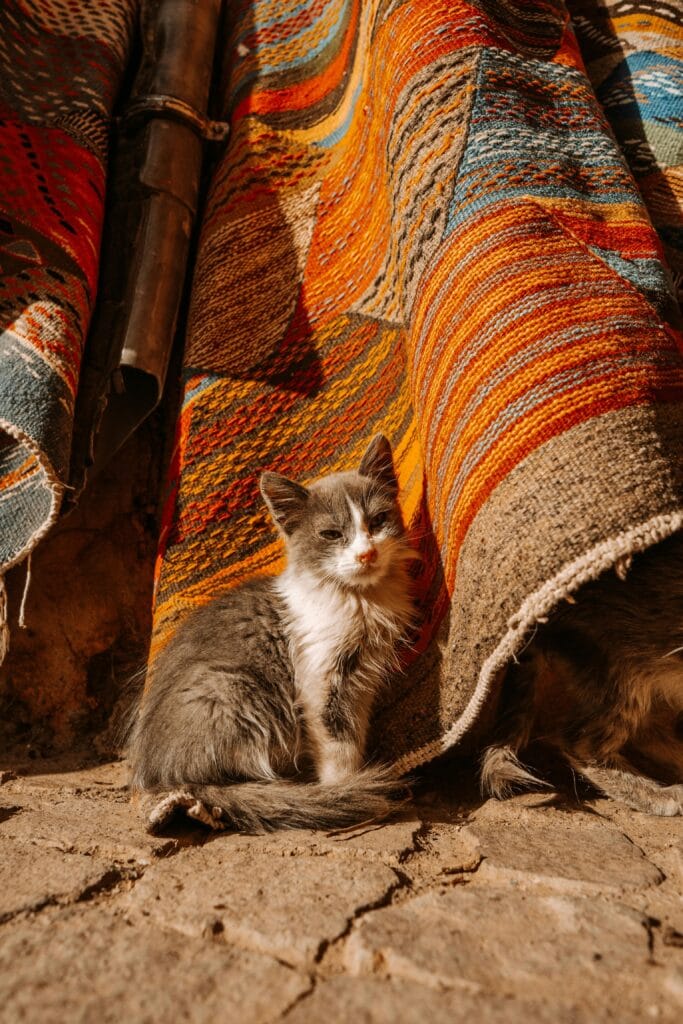
Usages and Symbolism of Moroccan Amazigh Rugs
The Rug as a Cultural Mirror
In Amazigh households, the rug serves many purposes — from practical to ceremonial.
- Floor covering: Insulation and comfort in mountain homes.
- Prayer mat: A spiritual space for reflection and devotion.
- Dowry item: Symbol of the bride’s skill and purity.
- Birth and blessing mat: Used during important life events.
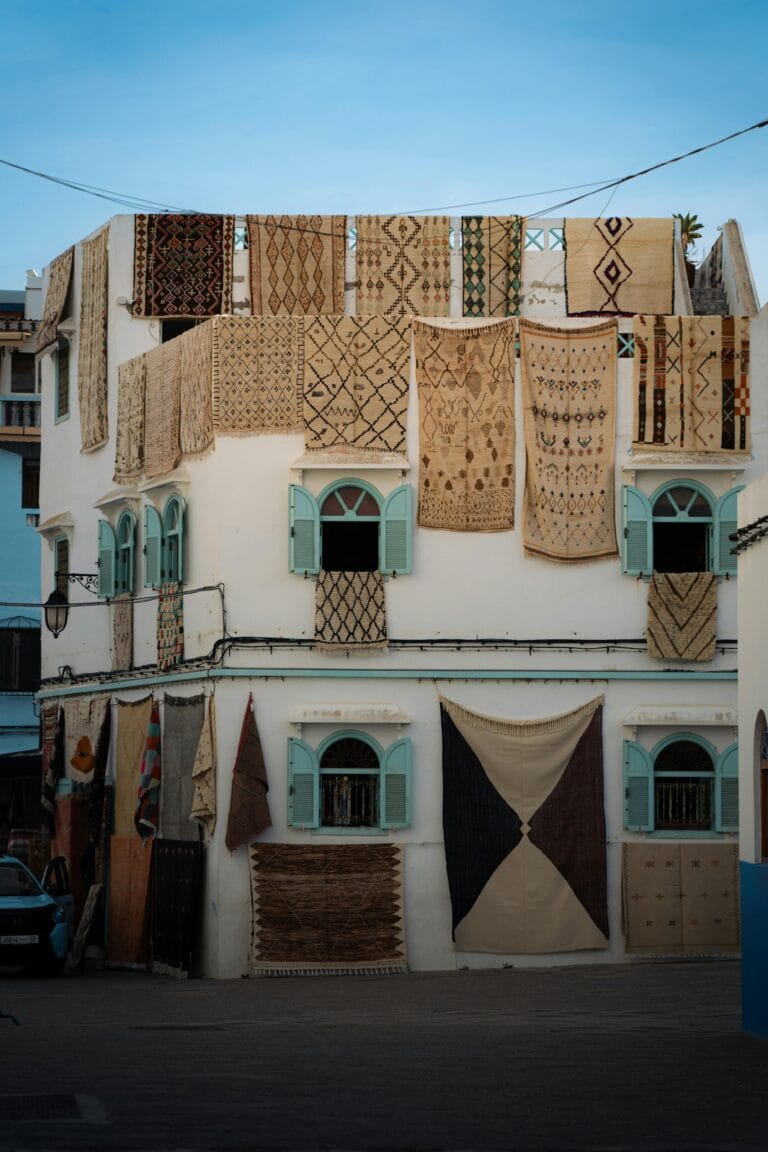
- Wall or tent decoration: Protects and beautifies the home.
A rug’s placement and design often reflect social or ritual significance. For instance, a brightly patterned rug might welcome guests in the salon, while a simpler kilim serves in personal prayer spaces.
The Rug as a Living Object
Unlike mass-produced carpets, an Amazigh rug is not static. It ages gracefully, softening in texture, deepening in tone, and carrying the imprints of the lives it touches. Many families pass rugs down as heirlooms, viewing them as spiritual relics rather than material possessions.
Durability and Craftsmanship — The Secret to a Good Carpet
What Defines Quality in Amazigh Weaving
A good Amazigh carpet is dense, balanced, and harmonious — a result of both skill and spiritual focus. Factors that determine quality include:
- Wool quality: Fine, long fibers with natural elasticity.
- Knot density: More knots per square centimeter yield stronger carpets.
- Even tension: Ensures straight lines and durability.
- Natural dyes: Prevent fading and maintain authenticity.
- Spiritual intention: The energy of the weaver is said to influence the carpet’s longevity.
Maintaining the Spirit of the Carpet
- Avoid washing with harsh chemicals; use gentle soap and sunlight.
- Rotate rugs periodically to balance wear.
- Air them under moonlight or morning sun — believed to restore spiritual harmony.
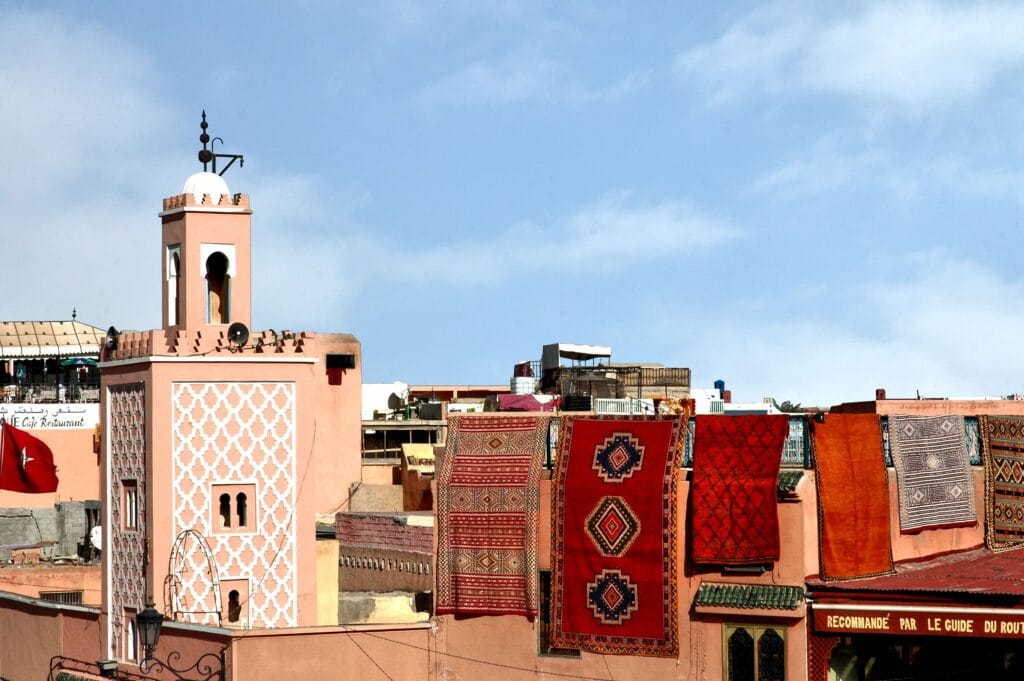
In Amazigh philosophy, a rug’s durability is not just physical but spiritual endurance — the power to continue telling stories long after the weaver is gone.
The Modern Revival — Weaving Identity in Contemporary Morocco
Women Cooperatives and Cultural Empowerment
In many regions of Morocco, women’s cooperatives have revived traditional weaving as both economic empowerment and cultural preservation. Villages like Taznakht, Aït Haddidou, and Anou have become global symbols of ethical craftsmanship, blending ancient methods with fair trade principles.
These cooperatives provide income, education, and dignity, ensuring that weaving remains a living art rather than a fading memory.
Amazigh Weaving in Global Design
Designers around the world now look to Amazigh carpets for their raw beauty, minimalism, and symbolism. From Paris to Tokyo, these textiles grace modern interiors, carrying the soul of the Atlas into global spaces.
Yet, despite globalization, the essence remains unchanged — every Moroccan Amazigh carpet is a silent poem of the earth.
Conclusion – Weaving the Threads of Memory and Spirit
The Moroccan Amazigh Weaving tradition is more than craft — it is a philosophy of existence. Every knot, every symbol, every rhythm of the loom connects the visible world to the unseen, the material to the divine.
To weave is to remember. To weave is to pray. And in every Amazigh home, the loom continues to hum its ancient melody — a reminder that even in silence, creation speaks.
Each carpet that leaves the loom carries not just beauty but the weaver’s breath, her love, her story, woven into the eternal fabric of Morocco’s living soul.
FAQs About Moroccan Amazigh Weaving
Q1: What makes Moroccan Amazigh weaving unique?
Its fusion of spirituality, symbolism, and sustainability — each rug is both art and amulet.
Q2: How long does it take to weave a carpet?
Depending on size and complexity, from one month to six months or more.
Q3: What is the difference between a kilim and a pile carpet?
A kilim is a flat weave, lighter and more flexible, while a pile carpet has raised knots for texture and warmth.
Q4: How are Amazigh weaving patterns chosen?
They are drawn from tribal memory, personal emotion, and protective symbolism — never random.
Q5: Where can visitors see or buy authentic Amazigh carpets?
In traditional weaving villages like Taznakht, Azilal, Aït Bouguemez, and Anou cooperatives, which maintain authenticity and fair trade.
Call to Action:
When you next see a Moroccan Amazigh carpet, look beyond its patterns. See the heart that wove it, the spirit that blessed it, and the land that gave it life. Each thread is a story — and the story is still being woven.