Ouarzazate: The History of Hollywood of Africa, And Amazigh Heritage
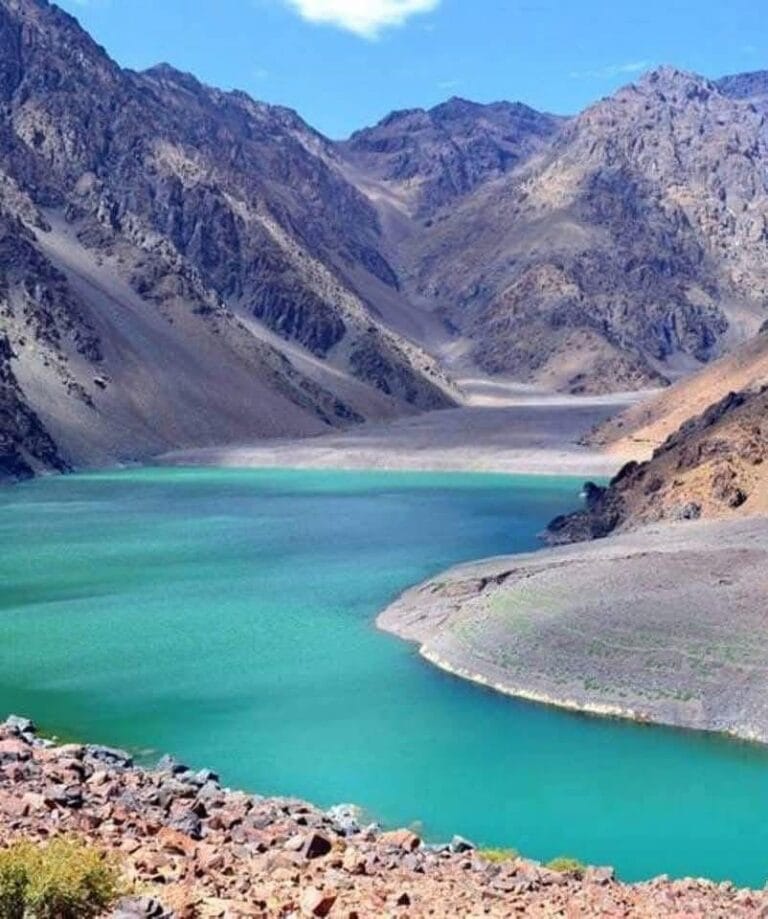
Introduction: Where Stone, Desert, and Memory Meet
Few places in Morocco embody the dialogue between landscape and civilization as completely as Ouarzazate. Rising where the southern slopes of the High Atlas descend toward the vast pre-Saharan plains, the city has long served as a threshold between two worlds. To the north lie snow-fed mountain valleys, terraced agriculture, and Amazigh villages nestled among rugged peaks. To the south stretch rocky plateaus, palm-filled oases, and caravan routes that once connected Morocco with the Sahara and West Africa. Ouarzazate emerged at this meeting point not by accident, but because geography itself made it indispensable.
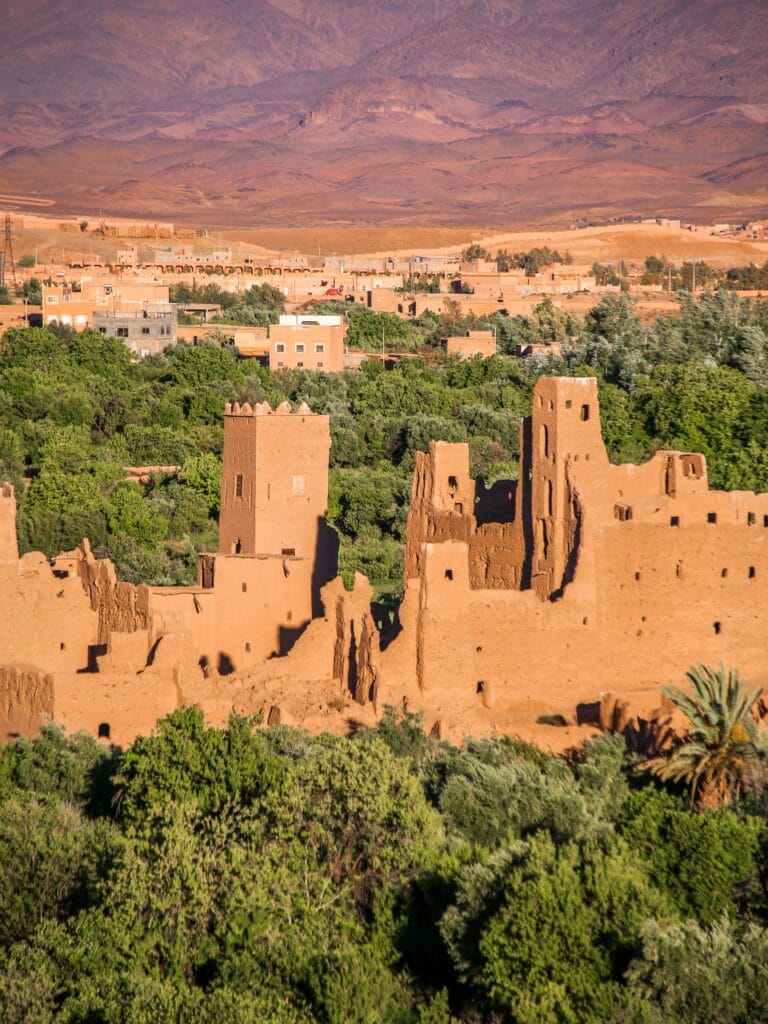
Today, many visitors know Ouarzazate as the “Gateway to the Sahara” or the “Hollywood of Morocco,” drawn by its famous film studios and dramatic desert scenery. Yet these modern identities tell only part of the story. Long before cameras arrived, Amazigh communities transformed this frontier landscape into a network of fortified settlements, irrigated oases, caravan stations, and agricultural communities whose influence extended across southern Morocco. Massive earthen kasbahs guarded trade routes, while ksour—fortified villages built from rammed earth—protected families, granaries, and water resources. Every tower, alley, and courtyard reflected centuries of adaptation to an environment where survival depended upon cooperation as much as architecture.
Unlike Morocco’s imperial capitals, whose histories are closely associated with royal dynasties and monumental mosques, Ouarzazate developed through the interaction of tribal societies, trans-Saharan commerce, and environmental ingenuity. Its cultural landscape was shaped by Amazigh confederations, oasis agriculture, Jewish merchant communities, Saharan caravans, Islamic scholarship, and, in later centuries, the strategic ambitions of successive Moroccan states. This diversity produced a region where architecture became a language of defense, hospitality, identity, and collective memory.
From an anthropological perspective, Ouarzazate offers a remarkable case study in how communities organize life in marginal environments. Archaeologists read its kasbahs as historical archives built from earth rather than stone. Linguists trace the persistence of Tachelhit and neighboring Amazigh varieties across valleys separated by mountain ridges and deserts. Historians examine the city as a crossroads where North Africa, the Sahara, and the Mediterranean converged through trade, diplomacy, and migration. Together, these perspectives reveal that Ouarzazate is not merely a destination—it is a cultural landscape whose history cannot be understood through monuments alone.
To explore Ouarzazate is therefore to encounter an enduring Amazigh world in which architecture, language, ecology, and memory remain deeply intertwined. The fortified walls of Aït Ben Haddou, the towers of Kasbah Taourirt, the palm groves of Skoura, and the hidden oasis of Fint are not isolated attractions; they are chapters in a continuous story of resilience that has shaped southern Morocco for more than a millennium.
Table of Contents
Where Is Ouarzazate?
Ouarzazate is located in southeastern Morocco, on a broad plateau at an elevation of approximately 1,160 meters (3,800 feet) above sea level. The city lies south of the High Atlas Mountains, where the dramatic Tizi n’Tichka Pass descends toward the valleys of the Ounila and Drâa rivers. It occupies a strategic position between the fertile mountain regions and the arid landscapes that lead toward the Sahara.
This location has defined the city’s history. Rather than emerging beside a major river or along the Atlantic coast, Ouarzazate developed at the intersection of mountain routes, oasis agriculture, and caravan networks. Travelers moving between Marrakech, the Drâa Valley, Tafilalt, and the western Sahara naturally converged in this region, making it a center of exchange long before the establishment of the modern city.
Today, Ouarzazate serves as a gateway to several of Morocco’s most celebrated cultural and natural landscapes, including Aït Ben Haddou, Skoura, the Valley of Roses, the Dadès and Todgha Gorges, Zagora, and the Erg Chebbi dunes farther east. This strategic position continues the historical role the region has played for centuries: a place of transition where mountain societies, oasis communities, and desert travelers meet.
The Meaning of the Name “Ouarzazate”
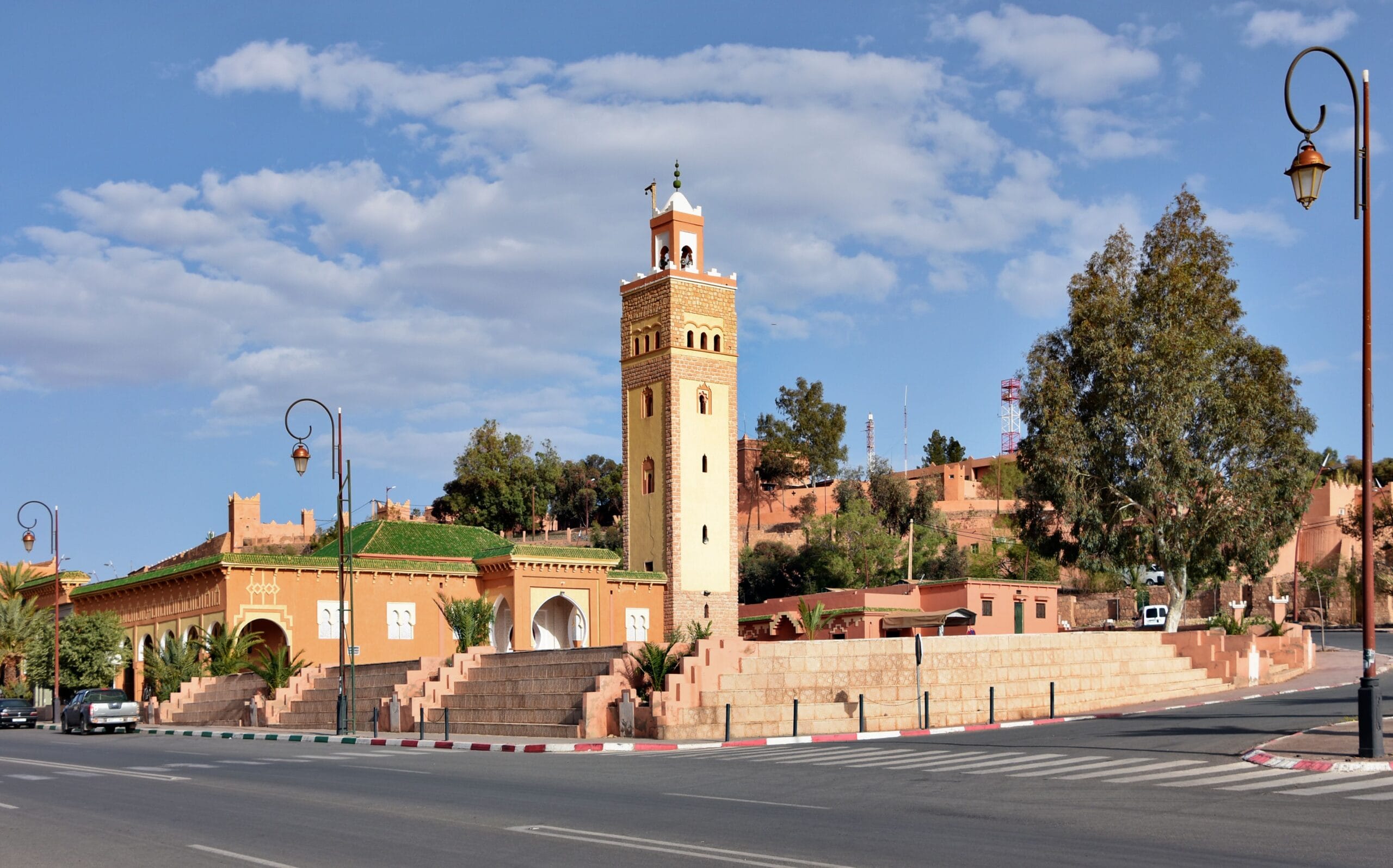
The name Ouarzazate has long attracted the attention of historians and linguists because of its clear Amazigh origins. Although spellings vary—Ouarzazate, Warzazat, or Warzazate—the name derives from Tachelhit, one of the principal Amazigh languages spoken across southern Morocco.
Several interpretations have been proposed. One widely accepted explanation connects the name to expressions conveying the idea of “the place without noise” or “the place of calm,” reflecting the stillness of the surrounding plateau. Another interpretation associates it with a fortified or protected settlement linked to local Amazigh communities. As with many ancient toponyms, the precise etymology remains debated because oral transmission often preserved names long before they appeared in written sources.
Whatever its original meaning, the name reflects an important characteristic of Amazigh place-naming traditions. Toponyms frequently describe landscapes, water sources, vegetation, defensive features, or ecological conditions rather than commemorating rulers or political events. In this sense, the name Ouarzazate belongs to a broader linguistic heritage in which geography and language evolved together, preserving knowledge about the environment through everyday speech.
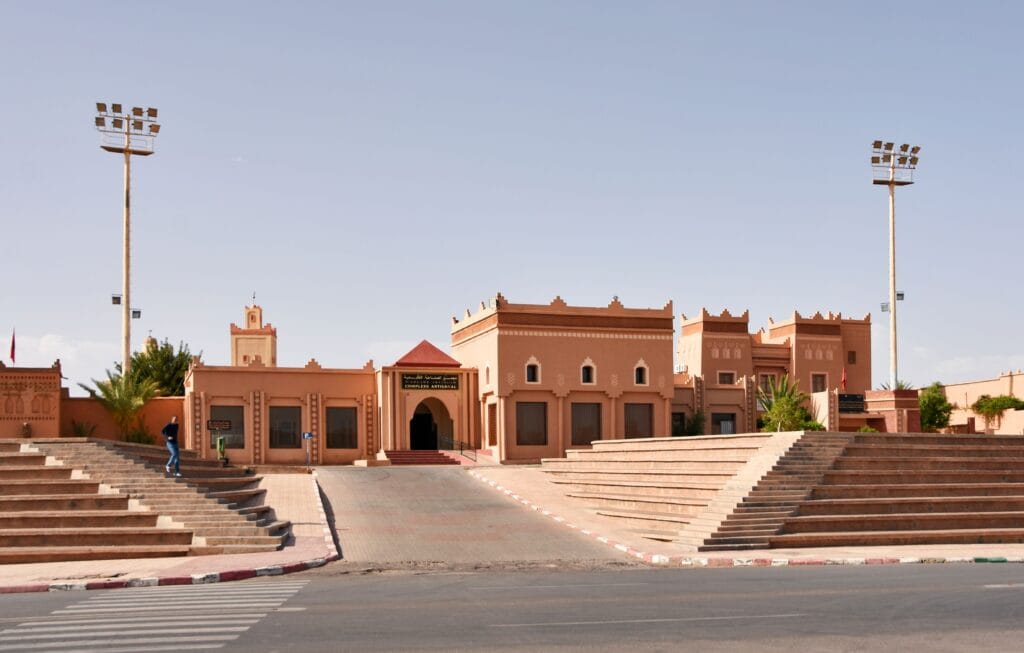
The continued use of this Amazigh name illustrates the remarkable resilience of indigenous linguistic traditions despite centuries of political change. Even as Arabic became the principal language of administration and religion, local Amazigh place names endured, anchoring communities to landscapes whose significance extended far beyond written history.
Before the Kasbahs: The Earliest Human Presence
Although Ouarzazate is most closely associated with medieval kasbahs and caravan routes, the human story of the region begins much earlier. Archaeological surveys conducted across the southern slopes of the High Atlas and neighboring pre-Saharan plateaus have revealed evidence of human occupation extending back to prehistoric times.
Stone tools attributed to Middle and Later Stone Age communities have been documented in nearby valleys, indicating that hunter-gatherer groups exploited these landscapes long before agriculture emerged. Seasonal rivers, natural springs, and elevated plateaus provided access to water, game, and raw materials suitable for tool production.
As climatic conditions shifted during the Holocene, populations adapted by combining hunting with increasingly sophisticated forms of pastoralism. Cattle, sheep, and goats gradually became central to local economies, while seasonal mobility allowed communities to exploit both mountain pastures and lower desert margins.
One of the most valuable sources for reconstructing this early history is the region’s remarkable corpus of rock art. Engravings depicting wild animals, cattle, hunters, geometric motifs, and symbolic figures testify to societies whose relationship with the landscape was both practical and spiritual. Although many of these sites lie beyond the immediate vicinity of modern Ouarzazate, they demonstrate that southern Morocco formed part of a wider cultural zone extending across the Sahara during periods when the desert was considerably greener than it is today.
For archaeologists, these engravings are more than artistic expressions; they are historical documents recording changing environments, economic practices, and symbolic systems over thousands of years. They also remind us that the history of Ouarzazate cannot be reduced to the era of kasbahs alone. The fortified architecture that later came to define the region emerged within landscapes already inhabited, interpreted, and transformed by countless earlier generations.
Geography as Destiny: Why Ouarzazate Became a Crossroads
The rise of Ouarzazate cannot be explained solely through political history. Geography played an equally decisive role. The city occupies a natural corridor linking the High Atlas with the valleys leading toward the Sahara, making it one of southern Morocco’s most important transitional zones.
For Amazigh communities, this location offered several advantages. Mountain runoff supported oasis agriculture despite the surrounding aridity. Elevated terrain provided defensible positions for fortified settlements. Caravan routes crossing the Atlas naturally converged here before continuing toward the Drâa Valley and beyond. These conditions encouraged the development of communities capable of combining farming, herding, craftsmanship, and long-distance trade.
Anthropologists often describe such frontier regions as “contact zones”—places where different peoples, languages, and economic systems interact over extended periods. Ouarzazate exemplifies this concept. Rather than existing at the margins of history, it functioned as a bridge connecting diverse cultural worlds. Amazigh tribes exchanged goods with Saharan merchants, Jewish trading families, Arab scholars, and later European travelers. Ideas, technologies, artistic styles, and religious traditions moved along the same routes as salt, gold, textiles, and dates.
This role as a crossroads explains the remarkable diversity visible in the region’s architecture, material culture, and oral traditions. The kasbahs of Ouarzazate were never isolated fortresses; they formed part of a broader network linking mountain villages, oasis settlements, caravan stations, and markets across southern Morocco.
The Rise of the Amazigh Kasbah: Architecture Born from Landscape and Community
To understand Ouarzazate, one must first understand the kasbah. Although the word has become synonymous with Morocco’s picturesque earthen fortresses, a kasbah is far more than an architectural style. It is a social institution, an economic center, a defensive system, and a material expression of Amazigh concepts of family, territory, and collective responsibility. Every kasbah in the Ouarzazate region reflects centuries of adaptation to environmental challenges, tribal organization, and regional politics.
Unlike monumental palaces built to display royal authority, Amazigh kasbahs evolved as practical responses to everyday life. Their massive walls, corner towers, and enclosed courtyards protected inhabitants against seasonal floods, tribal conflicts, and raids on caravan routes. At the same time, they sheltered grain reserves, livestock, workshops, family archives, and spaces for communal gatherings. In this sense, the kasbah was not merely a residence but a complete socio-economic ecosystem.
The concentration of kasbahs around Ouarzazate is no coincidence. The region lies at the convergence of several fertile valleys where agriculture depended upon sophisticated irrigation systems and careful management of scarce natural resources. Control of these valleys meant control of water, cultivated land, and commercial routes. Consequently, influential Amazigh lineages invested in constructing fortified residences that could protect both their households and the wider communities under their leadership.
Archaeologists often describe southern Moroccan kasbahs as “living architecture” because they evolved continuously over generations. Rather than being designed by a single architect, most expanded gradually as families grew, alliances changed, and economic prosperity fluctuated. New rooms, towers, courtyards, and defensive walls were added over decades or even centuries, creating organic architectural forms that reflected the rhythms of communal life.
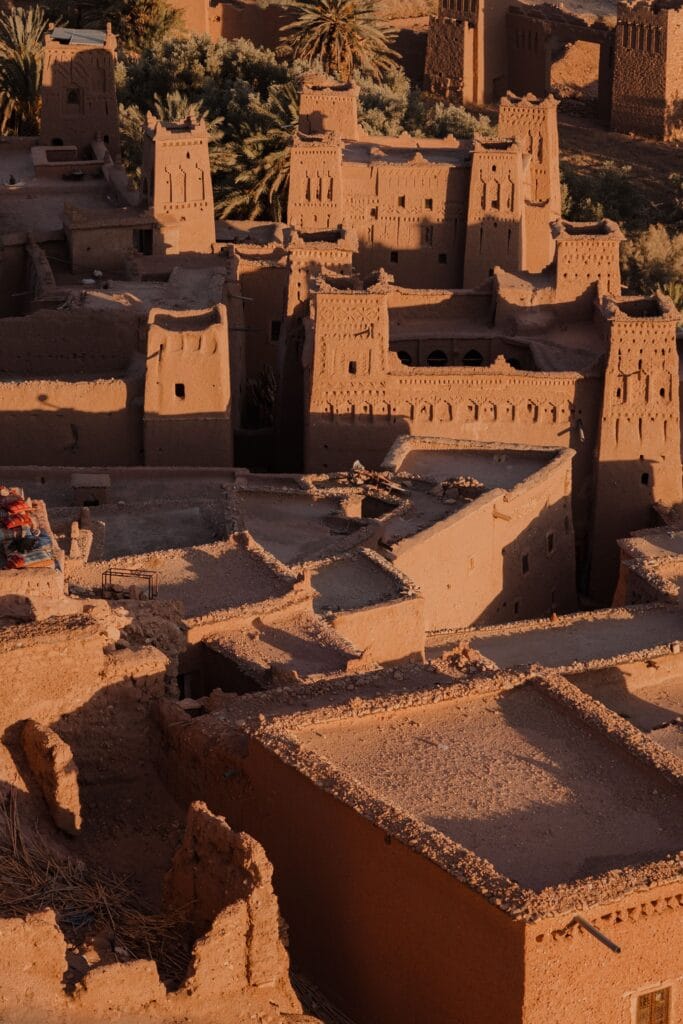
This process distinguishes Amazigh architecture from many monumental traditions elsewhere in the Mediterranean. Instead of pursuing geometric perfection or imperial grandeur, builders prioritized adaptability. Every wall, passageway, staircase, and rooftop terrace responded to practical needs shaped by climate, security, and social organization.
The Difference Between a Kasbah and a Ksar
One of the most common misunderstandings among visitors concerns the distinction between a kasbah and a ksar (plural: ksour). Although the two terms are frequently used interchangeably in tourism literature, they describe different forms of settlement with distinct social functions.
A kasbah generally refers to a fortified residence or citadel associated with a powerful family, tribal leader, governor, or local authority. It often served as both a home and an administrative center, combining residential quarters with storage areas, reception rooms, stables, defensive towers, and observation points.
A ksar, by contrast, is an entire fortified village enclosed within defensive walls. Inside its gates lived numerous families sharing communal infrastructure such as granaries, mosques, wells, ovens, workshops, and narrow streets carefully designed to provide shade during the intense summer heat.
The relationship between these two architectural forms reveals much about Amazigh society. While the kasbah symbolized leadership and responsibility, the ksar represented collective cooperation. Together they formed complementary institutions through which communities organized political authority, economic production, and social solidarity.
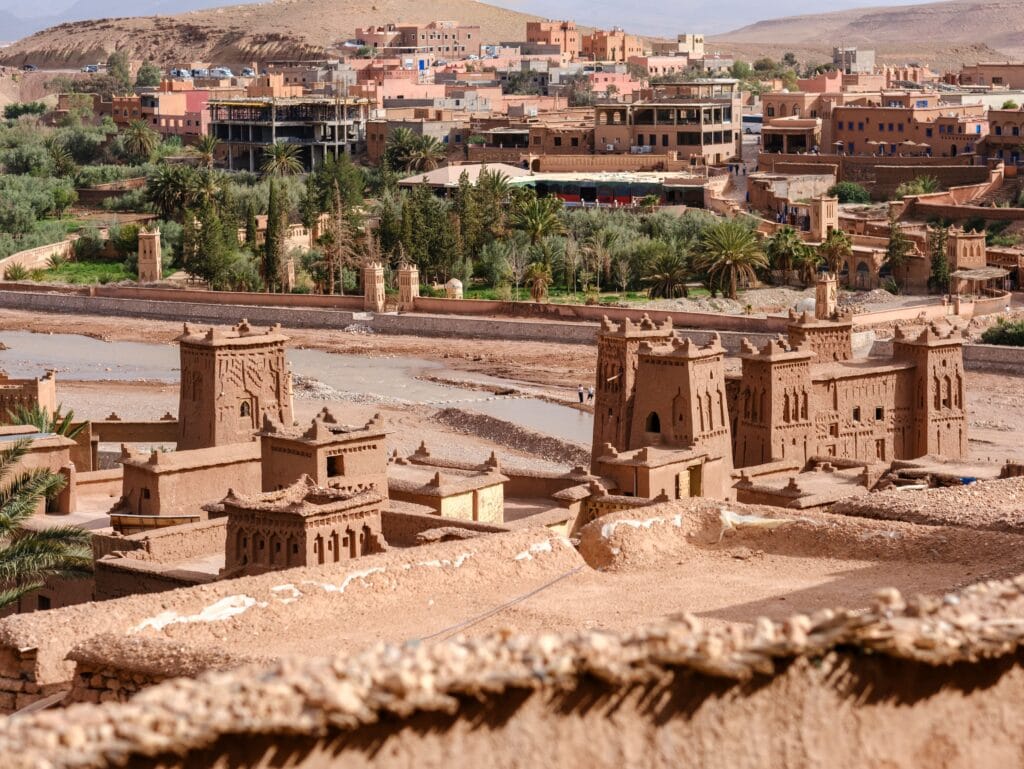
Aït Ben Haddou illustrates this relationship particularly well. Although widely described as a kasbah, it is more accurately understood as a fortified ksar containing multiple family compounds, towers, communal spaces, and defensive structures integrated into a single architectural complex.
Earth as Architecture: The Science Behind Traditional Construction
To modern observers unfamiliar with earthen architecture, buildings made from soil may appear fragile. Yet the kasbahs of southern Morocco have endured for centuries, demonstrating an extraordinary understanding of engineering, environmental adaptation, and locally available materials.
Traditional builders relied primarily on rammed earth (pisé), adobe bricks, stone foundations, timber beams, reeds, and palm trunks. Each material performed a specific structural function while remaining readily available within the surrounding landscape.
The construction process began by selecting clay-rich soil mixed with gravel, sand, and straw. This mixture was compressed between wooden formwork to create thick monolithic walls capable of supporting multiple stories. Adobe bricks were often used for upper levels, while stone reinforced foundations vulnerable to erosion.
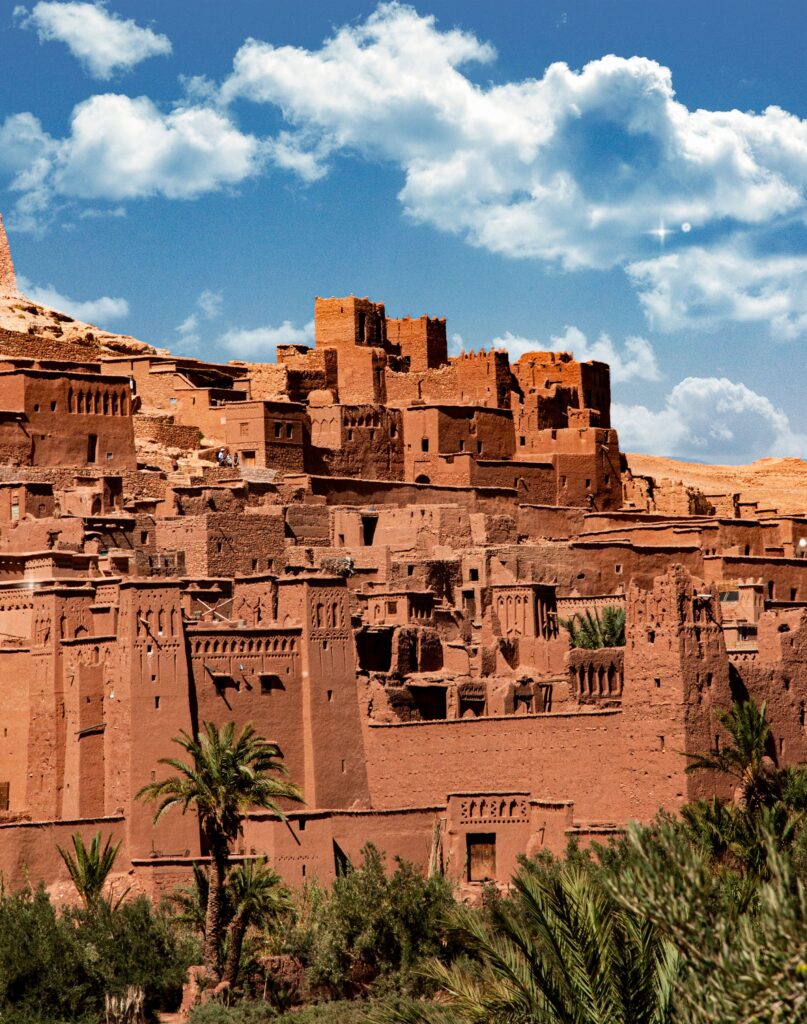
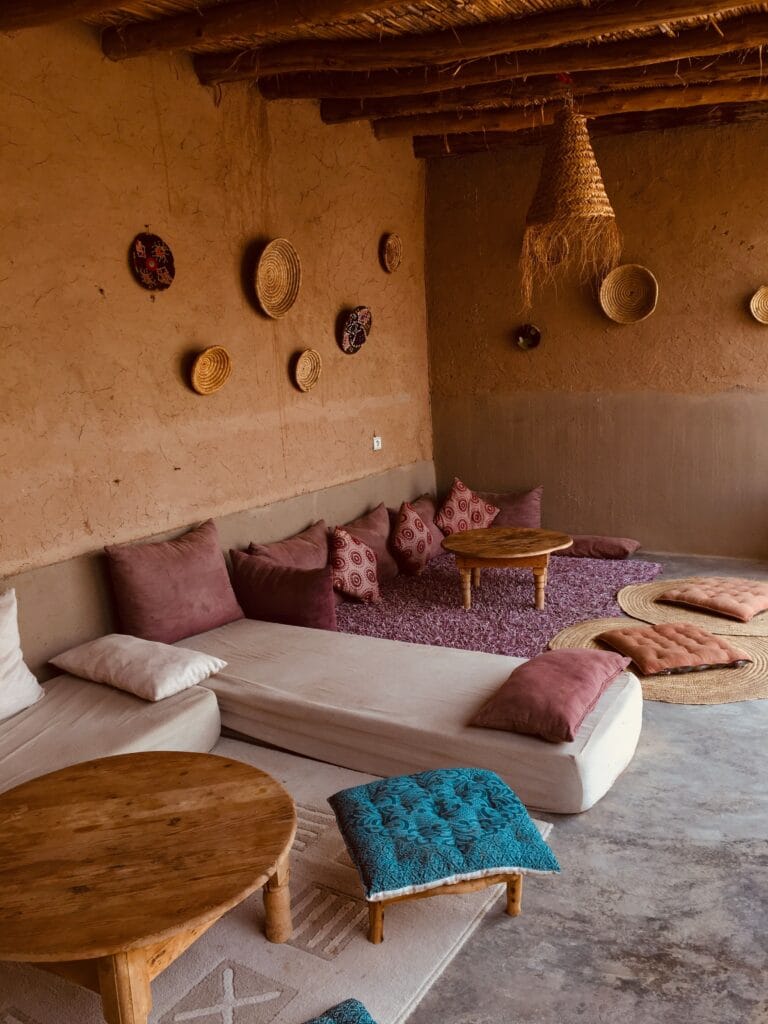
These materials offered remarkable environmental advantages. Thick earthen walls absorbed heat slowly during the day and released it gradually throughout the night, creating naturally regulated indoor temperatures despite dramatic fluctuations between daytime and nighttime conditions. This passive thermal performance remains one of the greatest strengths of traditional Amazigh architecture and has attracted renewed attention from contemporary architects seeking sustainable building techniques.
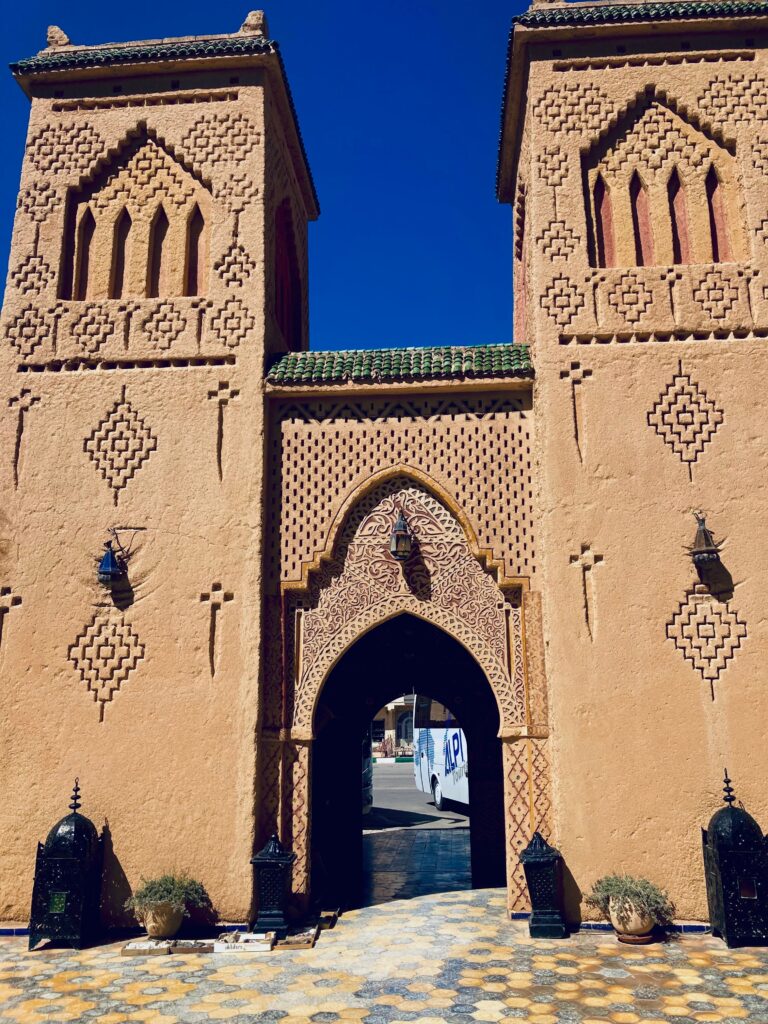
The decorative elements of kasbahs also served practical purposes. Projecting towers improved defensive visibility while simultaneously strengthening structural corners. Wooden beams distributed weight across thick earthen walls. Small windows minimized solar exposure while allowing controlled ventilation. Roof terraces functioned as drying areas for agricultural products, observation points, and communal workspaces.
Far from representing primitive construction, these techniques demonstrate an advanced understanding of structural mechanics refined through centuries of experimentation.
Water: The Invisible Foundation of Ouarzazate’s Civilization
Visitors often focus on the monumental appearance of kasbahs while overlooking the resource that made them possible: water.
Southern Morocco receives relatively limited rainfall, making reliable water management essential for survival. Every settlement around Ouarzazate depended upon carefully maintained irrigation systems that distributed seasonal river flow across cultivated fields, orchards, and palm groves.
Traditional irrigation channels, locally adapted over centuries, ensured that every household received access to water according to established communal agreements. These arrangements required sophisticated systems of governance in which tribal councils regulated maintenance, allocation, and conflict resolution.
Anthropologists frequently emphasize that cooperation surrounding water created stronger social cohesion than political authority alone. Shared dependence upon irrigation encouraged collective labor, reinforced customary law, and strengthened local identity.
The location of most kasbahs reflects this relationship between architecture and hydrology. They were typically built on elevated ground overlooking fertile valleys where irrigation sustained wheat, barley, dates, olives, almonds, figs, and vegetable gardens. Elevated positions protected settlements from flooding while preserving visual control over agricultural land.
Without these carefully managed water systems, neither caravan trade nor permanent settlement could have flourished in the region.
Ouarzazate and the Great Trans-Saharan Caravan Networks
For more than a millennium, Ouarzazate occupied one of the principal crossroads linking Morocco with the Sahara and West Africa. Long before paved highways crossed the Atlas Mountains, camel caravans transported commodities across immense distances, connecting Mediterranean ports with sub-Saharan kingdoms.
Salt mined in the Sahara moved northward alongside gold, ivory, leather, ostrich feathers, medicinal plants, and enslaved people. Southbound caravans carried textiles, metal tools, ceramics, books, sugar, spices, horses, and manufactured goods.
The valleys surrounding modern Ouarzazate became essential stopping points where caravans replenished water supplies, exchanged animals, repaired equipment, negotiated commercial agreements, and rested before continuing their journeys.
This commercial activity stimulated remarkable economic diversification. Farmers supplied grain and fruit. Shepherds provided wool and livestock. Blacksmiths manufactured tools. Potters produced storage vessels. Leatherworkers repaired saddles and harnesses. Merchants established commercial partnerships extending from Marrakech to Timbuktu.
Historical records indicate that these networks also facilitated the circulation of ideas. Islamic scholarship, legal traditions, artistic styles, scientific knowledge, and linguistic influences traveled alongside commercial goods. Ouarzazate therefore developed not merely as a marketplace but as an intellectual crossroads linking distant regions of Africa.
Amazigh Tribal Confederations and Regional Governance
Unlike Morocco’s imperial capitals, political authority around Ouarzazate traditionally rested less upon centralized administration than upon tribal organization.
Several Amazigh confederations—including the Aït Ouaouzguite (Aït Wawzguit), Glaoua, Mgouna, and neighboring groups—developed systems of governance based upon customary law (azref), communal consultation, and negotiated alliances.
Leadership was generally distributed among respected families whose authority depended upon reputation, mediation skills, economic influence, and the capacity to organize collective defense rather than absolute hereditary power alone.
Village assemblies played important roles in resolving disputes concerning land boundaries, irrigation schedules, seasonal grazing rights, and commercial agreements. These institutions reflected broader Amazigh traditions emphasizing consensus, reciprocity, and communal responsibility.
Although dynastic states such as the Almoravids, Almohads, Marinids, Saadians, and Alaouites periodically asserted political authority over southern Morocco, everyday governance frequently remained rooted in local institutions that preserved considerable autonomy.
This balance between local self-government and broader state structures contributed significantly to the resilience of Amazigh communities throughout periods of political change.
Language Across the Valleys: The Persistence of Tachelhit
Language offers another window into the historical continuity of Ouarzazate.
The dominant Amazigh language of much of the region is Tachelhit (Tashelhit), one of the largest Amazigh languages spoken in Morocco. While Arabic gradually became the principal language of religion, administration, and urban commerce, Tachelhit remained the everyday language of households, agriculture, pastoral life, oral poetry, and traditional law.
Because mountain valleys often remained relatively isolated from one another, local varieties developed distinctive vocabulary, pronunciation, and expressions while preserving mutual intelligibility.
Oral literature occupies a particularly important place in this linguistic heritage. Epic poetry, proverbs, riddles, songs, genealogies, and historical narratives transmitted knowledge across generations long before literacy became widespread. Professional poet-musicians, known in many regions as rrays, transformed historical events into memorable performances that preserved collective memory.
Today, these oral traditions remain essential sources for historians seeking to reconstruct local perspectives often absent from official chronicles.
Women and the Cultural Foundations of Oasis Society
No history of Ouarzazate is complete without recognizing the central role of women in maintaining the economic and cultural life of Amazigh communities.
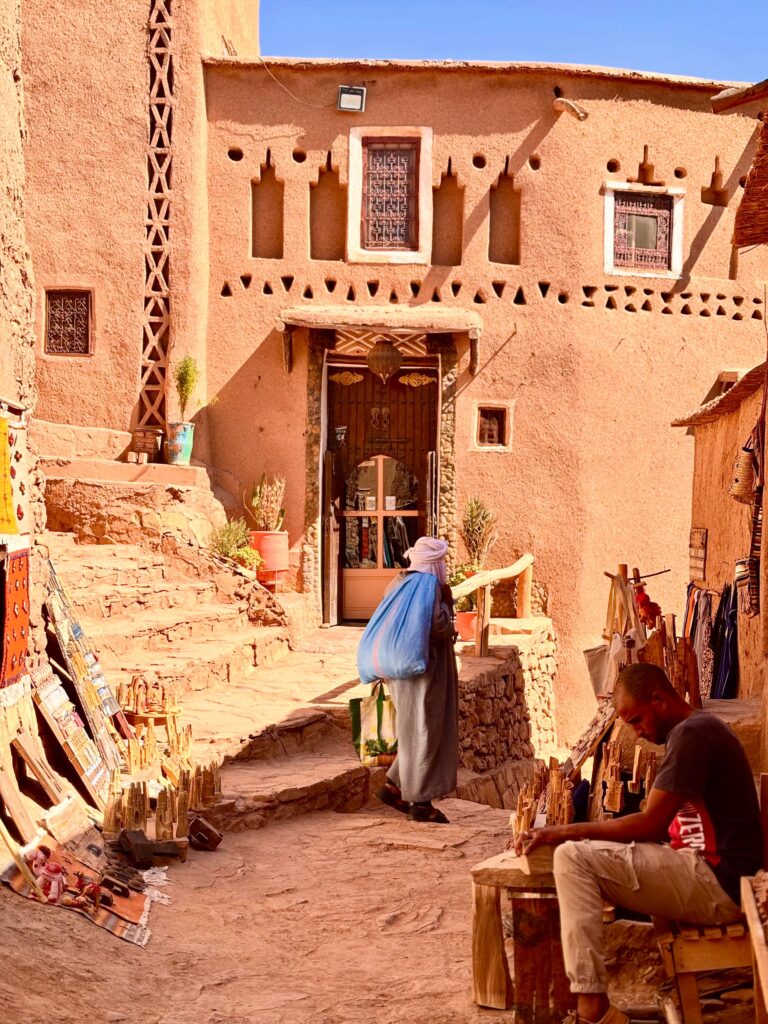
While caravan trade often brought men across long distances, women ensured the continuity of daily life within villages. They cultivated gardens, processed grain, managed household economies, raised children, produced textiles, prepared food reserves, collected medicinal plants, and transmitted oral traditions.
Weaving represented one of their most influential cultural contributions. Carpets, blankets, cloaks, and decorative textiles encoded regional identities through geometric motifs passed from one generation to another. These patterns frequently carried symbolic associations relating to fertility, protection, prosperity, seasonal cycles, and communal belonging.
Women also played indispensable roles in preserving linguistic continuity. Children typically acquired Tachelhit through maternal transmission, making women primary custodians of Amazigh language and cultural memory.
Anthropological research increasingly emphasizes that the remarkable continuity of southern Morocco’s cultural heritage owes as much to these everyday practices as to monumental architecture itself. Kasbahs may dominate the landscape, but it was the daily labor performed within their walls that allowed communities to endure across centuries.
Ouarzazate Beyond Heritage: Cinema, Amazigh Identity, and the Modern World
While the valleys, kasbahs, and oases surrounding Ouarzazate preserve centuries of Amazigh history, the city has also become one of Morocco’s most internationally recognized cultural centers through an unexpected industry—cinema. Nicknamed the “Hollywood of Africa,” Ouarzazate has welcomed filmmakers from around the world, transforming ancient landscapes into the settings of globally acclaimed productions.
Yet this cinematic reputation tells only part of the story. The next section explores how Ouarzazate balances international film production with the preservation of Amazigh language, architecture, oral traditions, music, and local identity, demonstrating that modernization and cultural heritage need not exist in opposition but can reinforce one another when managed thoughtfully.
Ouarzazate, the Hollywood of Africa and the Global Stage of Amazigh Heritage
Few cities in Africa have transformed local landscapes into global cultural icons as successfully as Ouarzazate. While its kasbahs, oases, and caravan history preserve centuries of Amazigh civilization, the city has also become one of the world’s most recognizable film destinations. Over the past six decades, Ouarzazate has hosted hundreds of international productions, earning the nickname “Hollywood of Africa.”
Unlike many film locations built entirely on artificial sets, Ouarzazate offers authentic landscapes shaped by history itself. Earthen kasbahs, desert plateaus, mountain valleys, palm groves, fortified villages, and vast open spaces provide filmmakers with extraordinary natural scenery requiring minimal modification.
Yet Ouarzazate’s cinematic reputation extends beyond entertainment. The international film industry has influenced tourism, education, local employment, heritage conservation, and the global visibility of Amazigh culture. At the same time, it raises important questions about authenticity, representation, and the relationship between cultural heritage and commercial development.
Understanding Ouarzazate today therefore requires examining how cinema became one of the city’s newest cultural layers without replacing its much older Amazigh identity.
Why Ouarzazate Became Morocco’s Film Capital
Several geographical and environmental factors explain why filmmakers increasingly selected Ouarzazate from the 1960s onward.
Extraordinary Natural Diversity
Within a relatively short distance, directors can access:
- High Atlas Mountains.
- Rocky deserts.
- Sand dunes.
- Palm oases.
- Ancient kasbahs.
- Fortified villages.
- Dry river valleys.
- Open plateaus.
- Agricultural landscapes.
Few regions worldwide offer such varied scenery within a single production zone.
Favorable Climate
Ouarzazate experiences abundant sunshine throughout most of the year, allowing extended filming schedules with relatively predictable weather conditions.
Stable atmospheric conditions reduce production delays while the quality of natural light has long attracted cinematographers.
Architectural Authenticity
Unlike purpose-built film sets, Ouarzazate contains genuine historical monuments dating back centuries.
Kasbahs such as Aït Ben Haddou and Taourirt provide historically convincing settings for productions depicting ancient civilizations, medieval kingdoms, biblical narratives, and desert societies.
Accessibility
Modern roads, nearby airports, accommodation infrastructure, and specialized technical services have made Ouarzazate increasingly practical for international productions while preserving its historical landscapes.
Atlas Studios: One of the World’s Largest Film Studios
Perhaps the best-known symbol of Ouarzazate’s cinematic identity is Atlas Studios, established during the early 1980s.
Often described as one of the world’s largest film studios by land area, Atlas Studios combines permanent sound stages with expansive outdoor sets constructed to represent civilizations from numerous historical periods.
Rather than relying exclusively upon computer-generated imagery, many productions continue utilizing large-scale physical environments including:
- Ancient Egyptian temples.
- Roman cities.
- Medieval fortresses.
- Biblical villages.
- Desert kingdoms.
- Palaces.
- Military encampments.
These sets coexist with authentic surrounding landscapes, creating seamless transitions between historical architecture and cinematic design.
The studio has become an important training ground for Moroccan technicians, artisans, builders, costume specialists, and production crews whose expertise now contributes to international filmmaking.
International Films That Shaped Ouarzazate’s Reputation
During recent decades, Ouarzazate has appeared in numerous internationally acclaimed productions.
Among the most influential are:
- Lawrence of Arabia
- The Man Who Would Be King
- The Jewel of the Nile
- The Last Temptation of Christ
- The Mummy
- Gladiator
- Kingdom of Heaven
- Babel
- Prince of Persia
- The Hills Have Eyes
- Aladdin
- The Living Daylights
Television series have also contributed significantly to the city’s international visibility.
Major productions include:
- Game of Thrones
- Prison Break
- The Bible
- Marco Polo
For millions of viewers worldwide, Ouarzazate’s landscapes became visual representations of ancient Rome, biblical Jerusalem, Persia, Egypt, fictional kingdoms, and countless imagined civilizations.
Ironically, audiences often recognized these settings without realizing they were witnessing authentic Amazigh landscapes in southern Morocco.
Cinema and the Local Economy
The film industry has become one of Ouarzazate’s most important economic sectors.
International productions generate employment across numerous professions:
- Construction workers.
- Carpenters.
- Costume makers.
- Drivers.
- Hotel staff.
- Translators.
- Electricians.
- Camera assistants.
- Security personnel.
- Animal handlers.
- Local guides.
- Catering services.
Many residents also work as extras in historical epics and adventure films, contributing authentic regional knowledge to productions.
The economic impact extends beyond filming itself.
Restaurants, transportation companies, artisans, guesthouses, tour operators, and traditional markets all benefit from increased visitor numbers associated with cinema tourism.
Researchers studying cultural economics frequently identify Ouarzazate as one of Morocco’s most successful examples of heritage-based creative industries.
Cinema Tourism: From Screen to Reality
Many travelers now visit Ouarzazate specifically because they recognize its landscapes from films or television.
This phenomenon, known as film-induced tourism, has become increasingly significant.
Visitors often seek:
- Atlas Studios.
- Aït Ben Haddou.
- Kasbah Taourirt.
- Desert filming locations.
- Historic caravan routes.
- Oasis landscapes.
Guided tours frequently explain both the historical significance of these sites and their cinematic roles.
Interestingly, film tourism often introduces visitors to Amazigh heritage they had not originally intended to explore.
Someone arriving because of Gladiator or Game of Thrones may leave with a deeper appreciation for earthen architecture, traditional irrigation systems, Amazigh history, and local craftsmanship.
Cinema therefore functions as an unexpected gateway to cultural education.
Amazigh Crafts Behind the Camera
Although international audiences primarily notice actors and dramatic scenery, countless local artisans contribute to filmmaking behind the scenes.
Traditional craftsmen construct:
- Wooden doors.
- Earthen walls.
- Decorative plasterwork.
- Furniture.
- Metalwork.
- Leather goods.
- Textiles.
- Carpets.
- Pottery.
- Architectural ornaments.
Many of these skills originate directly from Amazigh building traditions preserved across generations.
Production designers frequently collaborate with local artisans because authentic craftsmanship cannot easily be replicated through industrial manufacturing.
Thus, cinema has inadvertently helped preserve traditional knowledge by creating new economic demand for inherited artisanal techniques.
Representation of Amazigh Culture in International Cinema
Despite Ouarzazate’s importance as a filming location, Amazigh culture itself has often remained underrepresented in international productions.
Historically, many films used Moroccan landscapes merely as generic representations of “the Orient,” ancient civilizations, or fictional kingdoms without acknowledging the indigenous communities who created these environments.
Scholars of postcolonial cinema increasingly examine this phenomenon.
They argue that landscapes possess histories that deserve recognition rather than functioning solely as visual backdrops.
Recent Moroccan filmmakers have begun addressing this imbalance by producing works centered upon Amazigh language, identity, oral traditions, and contemporary social realities.
Such productions demonstrate growing interest in allowing Amazigh communities to tell their own stories rather than serving only as scenery for narratives developed elsewhere.
Balancing Tourism and Heritage Conservation
The international popularity of Ouarzazate has undoubtedly generated important economic opportunities.
However, increased visitor numbers also create conservation challenges.
Heavy tourism can accelerate erosion within fragile earthen monuments.
Modern infrastructure sometimes threatens historical landscapes.
Commercialization risks reducing living traditions to performances designed primarily for visitors.
Heritage specialists therefore emphasize responsible management strategies including:
- Controlled visitor access.
- Traditional restoration techniques.
- Community participation.
- Environmental monitoring.
- Sustainable tourism planning.
- Educational interpretation.
Such approaches seek to ensure that economic development strengthens rather than undermines cultural preservation.
Amazigh Identity in Modern Ouarzazate
Beyond cinema, Ouarzazate remains fundamentally an Amazigh city.
Tashelhit continues to be widely spoken alongside Arabic and increasingly French and English within tourism sectors.
Traditional music accompanies weddings, festivals, and communal celebrations.
Local cuisine preserves recipes developed through centuries of mountain and oasis agriculture.
Craftsmen continue producing carpets, pottery, silver jewelry, leatherwork, and wood carving inspired by regional traditions.
Women’s cooperatives strengthen both cultural preservation and economic participation.
Schools, cultural associations, and research initiatives increasingly promote Amazigh language and heritage following Morocco’s recognition of Tamazight as an official language.
Consequently, modernization has not erased indigenous identity.
Instead, Ouarzazate illustrates how historical continuity and contemporary development can coexist within a rapidly changing society.
Ouarzazate as a Model for Sustainable Cultural Tourism
The city’s future increasingly depends upon integrating heritage conservation with responsible economic growth.
Successful sustainable tourism should encourage visitors not only to photograph famous monuments but also to understand the living communities that created them.
Authentic cultural experiences may include:
- Visiting Amazigh villages.
- Learning traditional cooking.
- Participating in craft workshops.
- Exploring oasis agriculture.
- Discovering local music.
- Hiking historic caravan trails.
- Supporting community-based tourism initiatives.
Such experiences generate broader economic benefits while strengthening appreciation for intangible cultural heritage.
International organizations increasingly advocate precisely this form of heritage tourism, emphasizing community participation rather than monument-centered visitation alone.
Why Ouarzazate’s Global Fame Matters
Ouarzazate occupies a unique position within Morocco and North Africa.
It is simultaneously:
- A gateway to the Sahara.
- A center of Amazigh civilization.
- A crossroads of caravan history.
- A masterpiece of earthen architecture.
- A living agricultural landscape.
- And one of the world’s most celebrated filming locations.
Its international reputation offers an extraordinary opportunity.
Every visitor attracted by cinema can also discover centuries of indigenous knowledge, architectural innovation, ecological adaptation, and cultural resilience.
When approached thoughtfully, film tourism becomes more than entertainment—it becomes a bridge connecting global audiences with one of humanity’s richest cultural landscapes.
Comparison Table: Ouarzazate vs. Morocco’s Most Famous Cultural Destinations
| Feature | Ouarzazate | Marrakech | Fez | Merzouga |
|---|---|---|---|---|
| Primary Identity | Amazigh heritage, kasbahs, film capital | Imperial city, markets, palaces | Spiritual and scholarly capital | Sahara gateway |
| UNESCO Heritage | Aït Ben Haddou (nearby) | Medina of Marrakech | Medina of Fez | None |
| Main Architecture | Kasbahs, ksour, earthen villages | Riads, palaces, mosques | Medieval madrasas and medina | Desert settlements |
| Cultural Experience | Amazigh villages and oasis life | Urban heritage and crafts | Religious scholarship | Nomadic culture |
| Landscape | Mountains, valleys, oases, desert | Plains and gardens | Hills and medieval city | Sand dunes |
| Best For | Heritage, archaeology, photography, film tourism | Shopping, architecture, history | Islamic history, craftsmanship | Desert adventures |
| Ideal Stay | 3–5 days | 3–4 days | 3–4 days | 2–3 days |
| Tourism Style | Relaxed, cultural, scenic | Vibrant and bustling | Historic and immersive | Adventure-focused |
| Signature Landmark | Aït Ben Haddou & Kasbah Taourirt | Jemaa el-Fnaa & Koutoubia | Al Quaraouiyine & Chouara Tannery | Erg Chebbi Dunes |
Living Amazigh Culture in Ouarzazate: Hospitality, Daily Life, Cuisine, Music, and Enduring Traditions
While Ouarzazate is internationally recognized for its kasbahs, cinematic landscapes, and desert adventures, its greatest cultural treasure is not built from adobe walls or preserved behind museum glass. It lives in the everyday practices of Amazigh families whose customs continue to shape the rhythm of life across villages, oases, valleys, and mountain communities.
To truly understand Ouarzazate, one must look beyond monuments and discover the human dimension of the region. Hospitality, agriculture, craftsmanship, oral poetry, communal celebrations, and family traditions have connected generations of Amazigh communities for centuries. These living traditions transform historical sites from static archaeological remains into parts of a vibrant cultural landscape that continues to evolve while remaining deeply rooted in ancestral values.
For many travelers, these encounters become the most memorable aspect of visiting southern Morocco.
Amazigh Hospitality: Welcoming the Guest as an Honored Responsibility
Hospitality occupies a central place within Amazigh ethical traditions.
Across the villages surrounding Ouarzazate, welcoming guests has historically been regarded not simply as good manners but as a moral obligation deeply connected to communal identity. In regions where caravan routes crossed deserts and mountain passes, offering food, shelter, and protection to travelers was often essential for survival.
This tradition continues today.
Visitors are frequently welcomed with:
- Fresh mint tea.
- Homemade bread baked in traditional ovens.
- Olive oil produced locally.
- Honey from mountain apiaries.
- Dates.
- Almonds.
- Seasonal fruits.
Rather than being viewed as commercial gestures, these offerings symbolize respect, friendship, and trust.
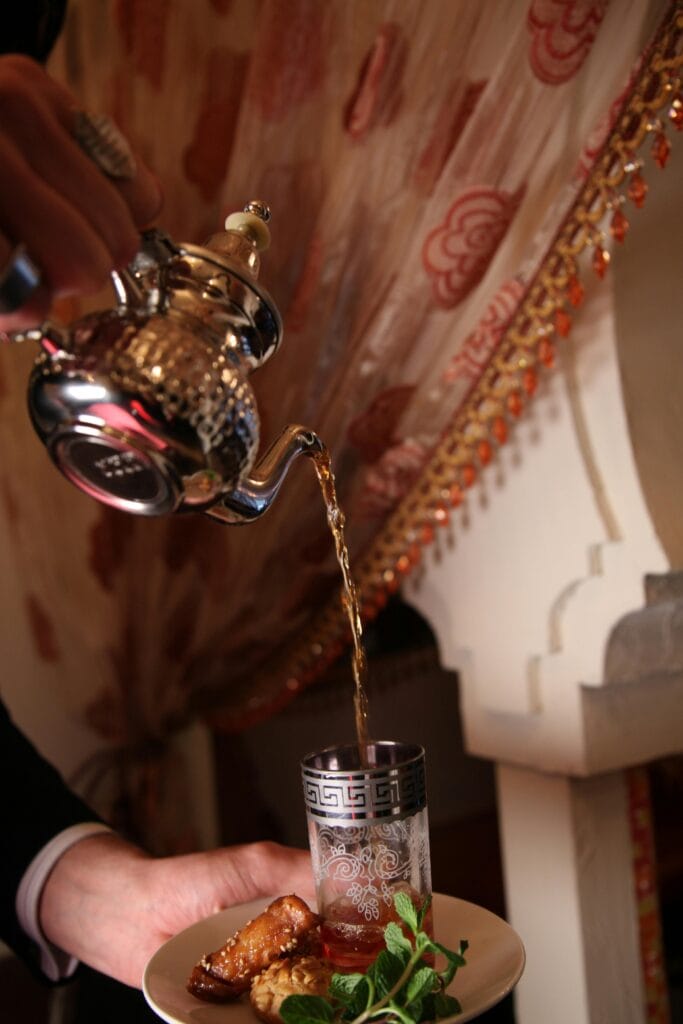
In many Amazigh households, conversations begin over tea before any practical matters are discussed. Sharing food establishes social relationships that often become more important than formal transactions.
Anthropologists have long observed that hospitality functions as a cultural institution reinforcing reciprocity, mutual respect, and collective responsibility throughout Amazigh society.
The Ritual of Moroccan Mint Tea
No cultural symbol better represents hospitality than Moroccan mint tea.
Although tea itself became widespread in Morocco during the nineteenth century, Amazigh communities incorporated it into existing traditions of communal gathering and storytelling.
Preparing tea is both practical and ceremonial.
Fresh green tea is infused with abundant mint and sugar before being poured repeatedly from a height into small glasses.
The elevated pouring serves multiple purposes:
- Cooling the tea.
- Mixing flavors evenly.
- Producing a light foam considered desirable.
- Demonstrating the host’s skill.
Tea accompanies nearly every important social occasion.
Family visits.
Business discussions.
Wedding preparations.
Harvest celebrations.
Even ordinary afternoons become opportunities for extended conversation around the tea tray.
Visitors quickly discover that accepting tea often means accepting an invitation to share stories, local history, and personal experiences.
Traditional Amazigh Cuisine of Ouarzazate
The cuisine of Ouarzazate reflects centuries of adaptation to oasis agriculture, mountain environments, and caravan trade.
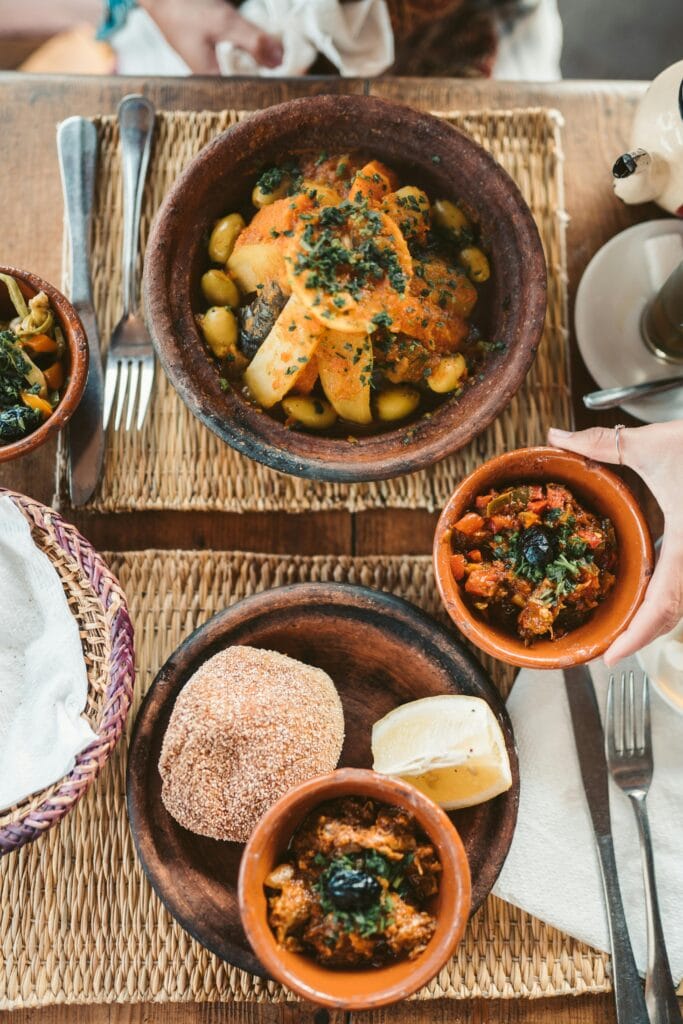
Rather than relying upon elaborate recipes, traditional cooking emphasizes fresh local ingredients carefully prepared using inherited techniques.
Staple foods include:
Tagine
Slow-cooked clay-pot dishes combining meat or vegetables with preserved lemons, olives, almonds, dried fruits, saffron, cumin, ginger, turmeric, and local herbs.
Couscous
Prepared especially on Fridays and during celebrations, couscous remains one of the region’s most important communal meals.
Amlou
A rich paste made from roasted almonds, argan oil, and honey, particularly associated with Amazigh communities of southern Morocco.
Khobz
Traditional round bread baked in communal ovens and eaten with nearly every meal.
Dates
Especially important within oasis agriculture, dates provide both nutrition and symbolic hospitality.
Almonds and Walnuts
Mountain orchards surrounding Ouarzazate produce nuts widely incorporated into desserts, pastries, and ceremonial meals.
Saffron
Although more strongly associated with nearby Taliouine, saffron frequently appears in regional cuisine, adding both fragrance and cultural prestige.
These foods illustrate how local agriculture, seasonal rhythms, and ecological knowledge continue to shape everyday life.
Oasis Agriculture as a Way of Life
For centuries, agriculture formed the foundation of Amazigh society throughout the valleys surrounding Ouarzazate.
Palm groves provided shade beneath which multiple agricultural layers developed simultaneously.
Typical oasis cultivation included:
- Date palms.
- Olive trees.
- Almonds.
- Figs.
- Pomegranates.
- Barley.
- Wheat.
- Vegetables.
- Medicinal herbs.
- Fodder crops.
This vertically organized agricultural system maximized limited water resources while creating remarkably productive ecosystems.
Rather than separating farming from environmental conservation, Amazigh agricultural knowledge integrated biodiversity into everyday practice.
Contemporary environmental scientists increasingly recognize oasis agriculture as an important model of sustainable land management within arid regions.
Music: The Soundtrack of Amazigh Identity
Music occupies a central position in the cultural life of Ouarzazate.
Traditional performances accompany weddings, harvest festivals, religious celebrations, and communal gatherings.
Among the most significant musical traditions is Ahwach, a collective performance combining poetry, rhythm, singing, and dance.
Men and women frequently perform in facing rows while drums establish powerful rhythmic patterns.
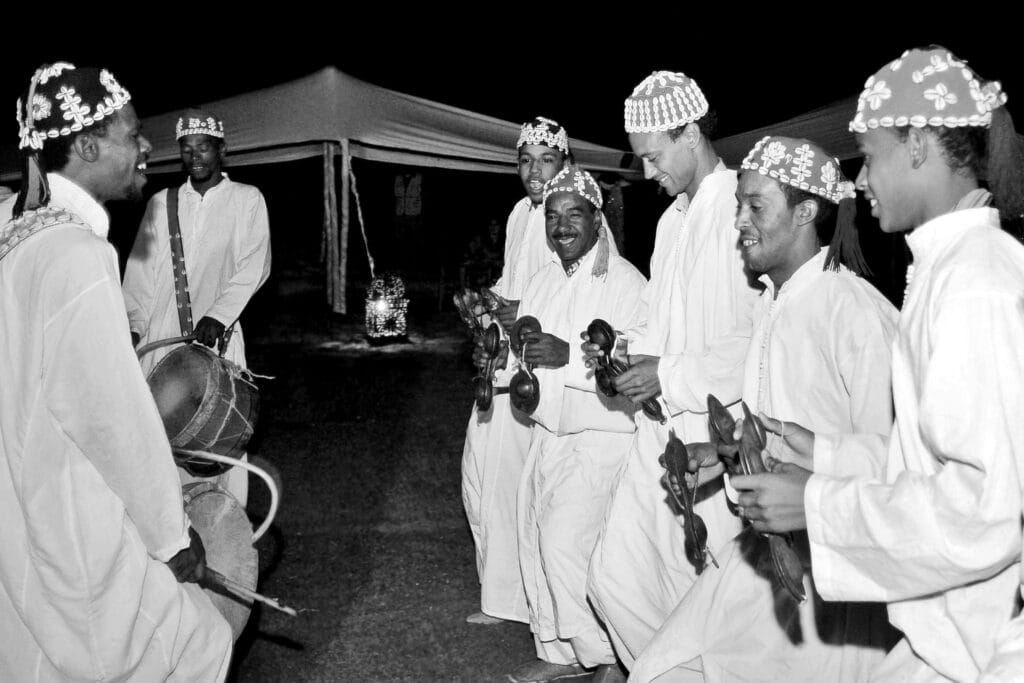
Improvised poetic exchanges celebrate:
- Love.
- Nature.
- Community.
- Agriculture.
- Heroism.
- Spiritual devotion.
Unlike staged performances created primarily for tourists, Ahwach remains deeply embedded within community celebrations across southern Morocco.
UNESCO and numerous ethnomusicologists regard such traditions as important examples of living intangible cultural heritage.
Oral Poetry and Storytelling
Long before written histories became widespread, Amazigh communities preserved knowledge through oral literature.
Even today, elders continue recounting stories concerning:
- Tribal origins.
- Caravan journeys.
- Legendary heroes.
- Saints.
- Agricultural wisdom.
- Moral instruction.
- Historical conflicts.
- Family genealogies.
Poetry often accompanies music, transforming historical memory into artistic performance.
These oral traditions perform several important functions simultaneously:
They entertain.
They educate younger generations.
They preserve linguistic diversity.
They reinforce communal identity.
They transmit ethical values.
Anthropologists frequently describe oral literature as one of the most resilient forms of Amazigh cultural continuity.
Traditional Clothing and Jewelry
Daily clothing throughout Ouarzazate reflects both practical environmental adaptation and cultural identity.
Historically, garments protected against intense sunlight, cold mountain nights, and desert winds while simultaneously expressing regional affiliation.
Traditional attire includes:
- Long woven cloaks.
- Woolen garments.
- Embroidered textiles.
- Turbans.
- Leather footwear.
- Handwoven shawls.
Jewelry occupies an equally significant role.
Silver necklaces.
Fibula brooches.
Bracelets.
Rings.
Coral beads.
Amber ornaments.
These pieces often carry symbolic meanings relating to protection, fertility, family identity, and social status.
Many motifs resemble geometric designs found within Amazigh carpets, pottery, tattoos, and architectural decoration, illustrating remarkable continuity across artistic traditions.
Women’s Knowledge and Cultural Continuity
Women have historically played indispensable roles in preserving Amazigh cultural heritage.
Beyond responsibilities within households, women contribute significantly to:
- Weaving.
- Carpet production.
- Pottery.
- Agricultural labor.
- Food preservation.
- Herbal medicine.
- Oral storytelling.
- Child education.
- Traditional music.
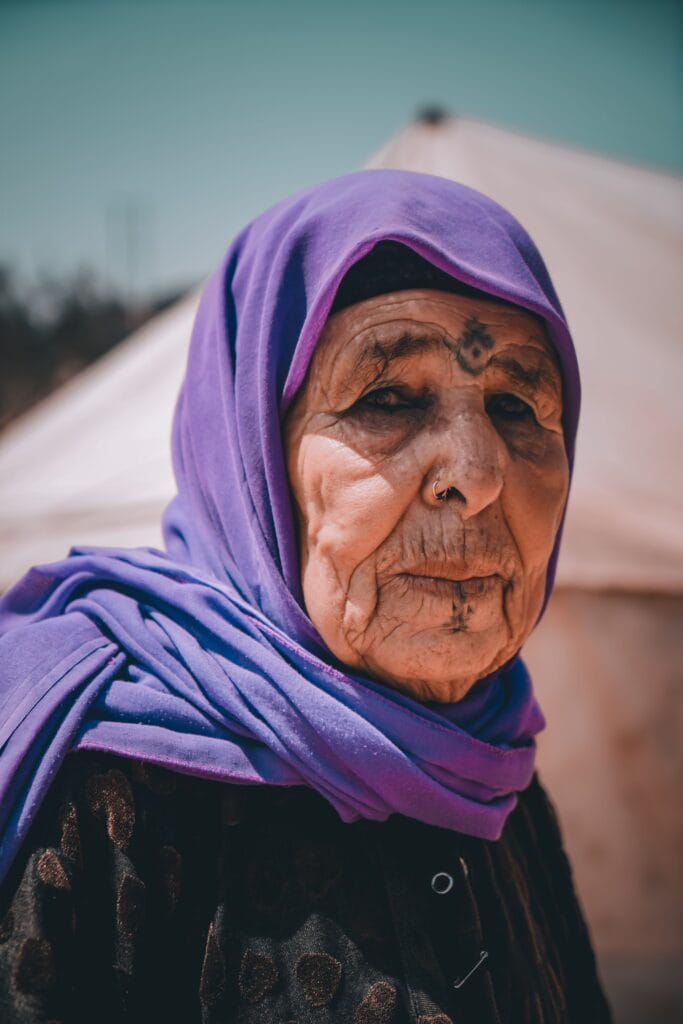
Contemporary women’s cooperatives have expanded these contributions by creating opportunities for economic independence while safeguarding traditional craftsmanship.
Researchers increasingly emphasize that understanding Amazigh heritage requires recognizing women’s central role in transmitting cultural knowledge across generations.
Religious Life and Local Spiritual Traditions
Islam provides the principal religious framework throughout Ouarzazate.
Nevertheless, local religious practice often incorporates longstanding regional customs reflecting centuries of interaction between Islamic scholarship and Amazigh cultural traditions.
Throughout the region, visitors encounter:
- Historic mosques.
- Religious schools.
- Mausoleums dedicated to respected scholars and saints.
- Seasonal pilgrimages.
- Community festivals.
Such sites frequently function not only as places of worship but also as centers of education, mediation, charity, and communal identity.
Scholars describe this interaction as cultural continuity rather than cultural replacement, illustrating how Amazigh communities integrated Islamic traditions within existing social structures.
Weekly Markets (Souks): Living Economic Heritage
Weekly souks remain among the most dynamic expressions of Amazigh social life.
These markets serve far more than commercial purposes.
Families gather.
News is exchanged.
Marriage arrangements may be discussed.
Crafts are displayed.
Agricultural products change hands.
Musicians perform.
Travelers encounter regional diversity within a single location.
Typical products include:
- Carpets.
- Pottery.
- Leather goods.
- Silver jewelry.
- Spices.
- Dates.
- Almonds.
- Wool.
- Traditional clothing.
For visitors, the souk provides one of the most authentic opportunities to observe everyday Amazigh society beyond formal tourist attractions.
Amazigh Values That Continue to Shape Ouarzazate
Despite modernization, many traditional values remain highly visible throughout the region.
Among the most enduring are:
- Respect for elders.
- Collective responsibility.
- Cooperation during agricultural work.
- Hospitality toward strangers.
- Strong family networks.
- Environmental stewardship.
- Pride in craftsmanship.
- Preservation of oral memory.
- Attachment to ancestral lands.
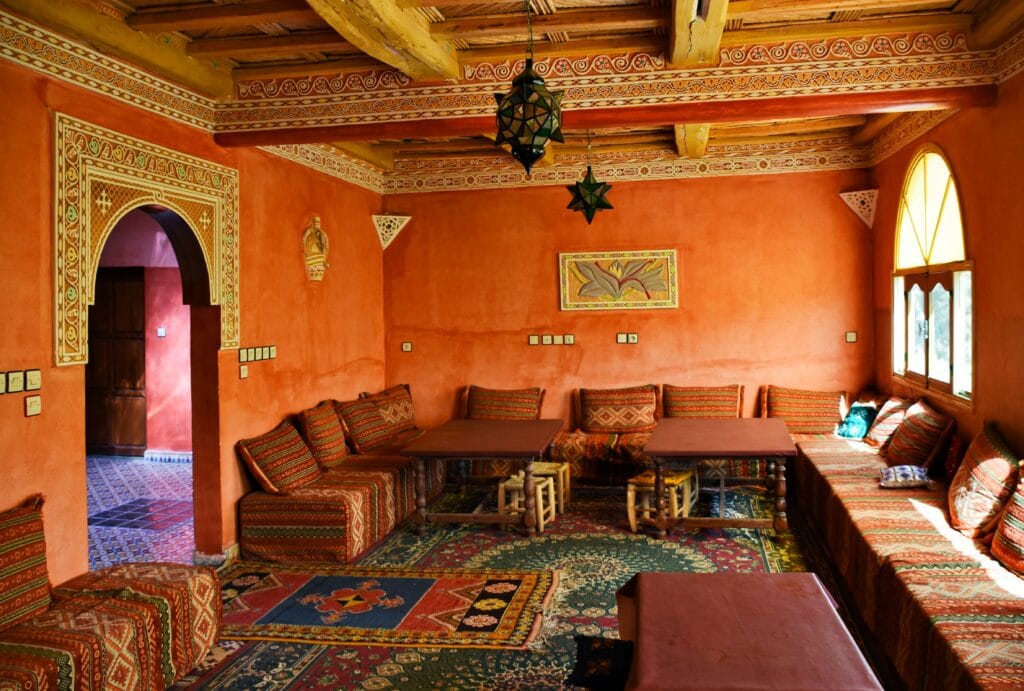
These values explain why Ouarzazate continues to feel remarkably authentic despite increasing international tourism.
The city has not become merely an open-air museum; it remains a living cultural landscape where ancient traditions continue adapting to contemporary realities.
Why Living Culture Matters as Much as Historic Monuments
Visitors often arrive expecting to admire famous kasbahs or spectacular desert scenery. They frequently leave remembering conversations over mint tea, shared meals in Amazigh homes, music echoing through village squares, artisans patiently shaping wood and clay, and farmers tending centuries-old irrigation channels.
These experiences reveal an essential truth: monuments preserve the physical record of civilization, but people preserve its soul.
The continued vitality of Amazigh traditions throughout Ouarzazate demonstrates that cultural heritage is not simply inherited from the past—it is recreated every day through language, hospitality, craftsmanship, agriculture, music, and community life.
Complete Travel Guide to Ouarzazate: Everything You Need to Know Before You Go
After exploring the history, architecture, archaeology, Amazigh heritage, and living traditions of Ouarzazate, the final step is turning knowledge into experience. Whether you are a cultural traveler, photographer, historian, filmmaker, archaeologist, hiker, or simply someone searching for Morocco beyond the usual tourist routes, Ouarzazate offers one of the country’s richest travel experiences.
Unlike destinations where attractions are concentrated within a single city, Ouarzazate serves as the gateway to an entire cultural landscape extending from the High Atlas Mountains to the Sahara Desert. Planning your journey carefully allows you to discover not only famous kasbahs but also hidden valleys, Amazigh villages, ancient caravan routes, film locations, and remarkable geological formations.
Ouarzazate Location?
Ouarzazate lies in southeastern Morocco at an elevation of approximately 1,160 meters (3,806 feet) above sea level.
It occupies a strategic location where several major historical routes converge:
- The High Atlas Mountains to the north.
- The Draa Valley to the south.
- The Dadès and M’Goun valleys to the east.
- Marrakech across the Tizi n’Tichka Pass.
- The Sahara Desert beyond Zagora and Merzouga.
For centuries, merchants, pilgrims, scholars, nomadic tribes, and imperial armies passed through this crossroads, making Ouarzazate one of southern Morocco’s most important gateway cities.
Today it continues to function as the starting point for exploring many of Morocco’s most spectacular landscapes.
How to Reach Ouarzazate
By Air
Ouarzazate Airport offers domestic and seasonal international connections.
Flights commonly operate from:
- Casablanca
- Marrakech
- Tangier (seasonal)
- Several European cities during tourism seasons
Flying is the fastest option for visitors with limited travel time.
By Road from Marrakech
The drive from Marrakech to Ouarzazate is considered one of Morocco’s most scenic road journeys.
Distance:
Approximately 200 kilometers (124 miles)
Travel time:
Around 4–5 hours, depending on weather and stops.
Highlights include:
- Tizi n’Tichka Pass
- High Atlas villages
- Traditional Amazigh architecture
- Mountain viewpoints
- Local markets
- Panoramic valleys
Many travelers intentionally spend an entire day enjoying this route rather than treating it merely as transportation.
By Bus
Several comfortable bus companies connect Ouarzazate with:
- Marrakech
- Agadir
- Casablanca
- Errachidia
- Zagora
Modern coaches generally provide an economical and reliable option for independent travelers.
By Rental Car
Renting a vehicle offers the greatest flexibility.
Many remarkable attractions—including kasbahs, palm groves, valleys, and mountain villages—are best explored independently.
Road conditions are generally good, though mountain roads require careful driving.
Best Time to Visit Ouarzazate
Spring (March–May)
Spring is widely considered the ideal season.
Advantages include:
- Comfortable temperatures
- Blooming landscapes
- Valley of Roses festival
- Excellent hiking conditions
- Clear mountain views
Autumn (September–November)
Autumn provides another outstanding travel season.
Visitors enjoy:
- Pleasant daytime temperatures
- Harvest festivals
- Fewer crowds
- Comfortable desert excursions
Winter (December–February)
Winter offers:
- Mild daytime weather
- Snow-covered Atlas Mountains
- Excellent photography
- Quiet historic sites
Nighttime temperatures, however, can become surprisingly cold.
Summer (June–August)
Summer is characterized by intense daytime heat.
Temperatures frequently exceed 40°C (104°F).
Travel remains possible but outdoor exploration should focus on early mornings and evenings.
How Many Days Should You Stay?
One Day
Suitable for travelers passing between Marrakech and the Sahara.
Recommended:
- Kasbah Taourirt
- Atlas Studios
- Aït Ben Haddou
Two Days
Allows additional exploration of:
- Fint Oasis
- Local museums
- Traditional markets
- Sunset viewpoints
Three Days
Ideal for most visitors.
Possible itinerary:
Day 1:
Historic Ouarzazate
Day 2:
Aït Ben Haddou and surrounding villages
Day 3:
Draa Valley or Valley of Roses
Five Days or More
Highly recommended for travelers interested in Amazigh heritage.
Additional destinations include:
- Dadès Gorge
- Todgha Gorge
- Skoura Oasis
- Valley of Roses
- Draa Valley
- Nomadic communities
- Mountain hiking routes
Top Attractions Near Ouarzazate
Aït Ben Haddou
UNESCO World Heritage Site.
Historic ksar.
Ancient caravan settlement.
Film location.
Architectural masterpiece.
Kasbah Taourirt
Former residence of the Glaoui family.
Intricate earthen architecture.
Historic reception halls.
Decorated ceilings.
Atlas Studios
Film sets.
Movie history.
Production tours.
Fint Oasis
Hidden oasis approximately 15 km from Ouarzazate.
Palm groves.
Traditional villages.
Quiet atmosphere.
Excellent walking opportunities.
Skoura Oasis
Historic kasbahs.
Palm plantations.
Traditional irrigation systems.
Photography.
Valley of Roses
Best visited during spring flowering season.
Rose cooperatives.
Traditional distillation.
Annual Rose Festival.
Draa Valley
One of Morocco’s longest river valleys.
Palm groves.
Ancient ksour.
Historic caravan routes.
Best Experiences Beyond Sightseeing
Rather than simply photographing monuments, consider experiences such as:
- Joining an Amazigh cooking class.
- Visiting women’s cooperatives.
- Learning carpet weaving techniques.
- Exploring irrigation canals with local guides.
- Attending Ahwach performances.
- Hiking between mountain villages.
- Visiting traditional markets.
- Watching sunset over Aït Ben Haddou.
- Drinking tea with local families.
- Exploring palm groves on foot.
These experiences often become the most memorable part of a journey.
Responsible Tourism Tips
Respecting local culture helps preserve Ouarzazate’s unique heritage.
Visitors should:
- Dress modestly in rural communities.
- Ask permission before photographing people.
- Support locally owned businesses.
- Purchase authentic handmade crafts.
- Avoid damaging earthen architecture.
- Minimize plastic waste.
- Respect religious customs.
- Hire certified local guides when possible.
Responsible tourism strengthens local communities while helping preserve cultural heritage.
Ouarzazate Safety Tips
Ouarzazate is generally considered one of Morocco’s safest tourist destinations.
Nevertheless, travelers should:
- Carry sufficient drinking water.
- Protect against intense sunlight.
- Wear comfortable walking shoes.
- Carry cash for rural areas.
- Check weather before mountain travel.
- Inform accommodation if undertaking remote hikes.
- Follow local advice regarding desert excursions.
Photography Tips
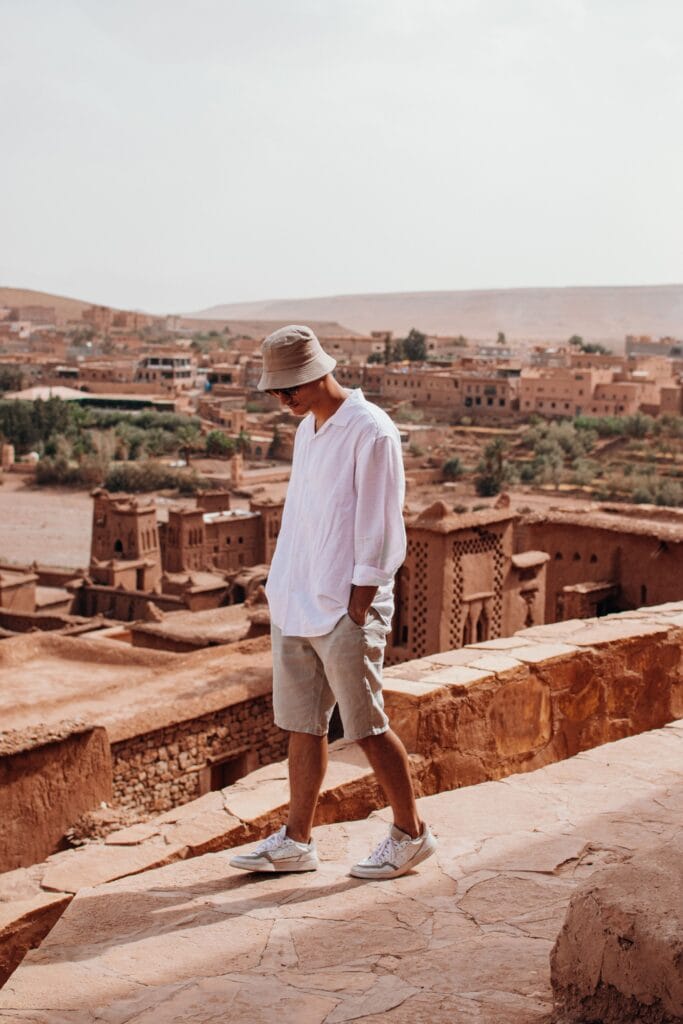
Ouarzazate offers extraordinary photographic opportunities.
Best lighting:
- Sunrise
- Late afternoon
- Golden hour before sunset
Recommended subjects:
- Earthen kasbahs
- Palm groves
- Mountain landscapes
- Traditional architecture
- Irrigation systems
- Village streets
- Desert panoramas
- Night skies
Respect local privacy when photographing people.
Did You Know? — 20 Fascinating Facts About Ouarzazate
- Ouarzazate was historically one of the main crossroads of the trans-Saharan caravan trade.
- Aït Ben Haddou has appeared in dozens of internationally famous films and television series.
- The region receives more than 300 days of sunshine each year, making it ideal for filmmaking.
- Many kasbahs were constructed without cement, relying instead on rammed earth, adobe, straw, and wood.
- Atlas Studios is among the world’s largest film studios by land area.
- The surrounding valleys preserve irrigation systems that have functioned for centuries.
- Tashelhit remains the dominant indigenous language across much of the region.
- Traditional Amazigh architecture naturally regulates indoor temperatures without modern air conditioning.
- The nearby Valley of Roses becomes one of Morocco’s most fragrant landscapes every spring.
- Skoura Oasis contains one of Morocco’s largest concentrations of historic kasbahs.
- The nearby Draa Valley is home to one of North Africa’s longest palm groves.
- Many local artisans still use woodworking, weaving, pottery, and metalworking techniques inherited over generations.
- The Tizi n’Tichka Pass connecting Marrakech and Ouarzazate is one of Morocco’s highest paved mountain roads.
- Traditional Ahwach performances combine poetry, music, dance, and communal participation.
- Ancient caravan routes helped spread not only trade goods but also knowledge, architecture, languages, and artistic influences across North Africa.
- Many villages continue to celebrate agricultural festivals linked to harvest cycles and seasonal traditions.
- Ouarzazate’s landscapes have represented ancient Egypt, Persia, Rome, biblical kingdoms, and fictional worlds on screen.
- Local women’s cooperatives play an essential role in preserving Amazigh crafts while supporting rural livelihoods.
- Earthen architecture in the region is increasingly studied as a model for sustainable construction in arid climates.
- Ouarzazate is one of the few places where visitors can experience UNESCO heritage, Amazigh living culture, oasis agriculture, cinematic history, and the gateway to the Sahara within a single journey.
Frequently Asked Questions About Ouarzazate, Amazigh Heritage, and Visiting Southern Morocco
1. Where is Ouarzazate located in Morocco?
Ouarzazate is located in southeastern Morocco on a plateau at the southern foothills of the High Atlas Mountains, approximately 200 kilometers (124 miles) from Marrakech. Historically, it served as a strategic crossroads linking the imperial cities of northern Morocco with the Sahara Desert and the trans-Saharan caravan routes. Today, it remains one of the country’s principal gateways to southern Morocco, the Draa Valley, the Valley of Roses, and the great desert landscapes.
2. Why is Ouarzazate called the “Hollywood of Africa”?
Ouarzazate earned the nickname “Hollywood of Africa” because of its exceptional concentration of international film productions. Its diverse landscapes, ancient kasbahs, reliable sunshine, and world-class production facilities have attracted filmmakers for decades. Major productions such as Gladiator, Kingdom of Heaven, The Mummy, Prince of Persia, Game of Thrones, and many others were filmed here, making the city one of the world’s leading outdoor film locations.
3. What is Ouarzazate most famous for?
Ouarzazate is internationally renowned for its historic kasbahs, Amazigh earthen architecture, Atlas Studios, nearby Aït Ben Haddou UNESCO World Heritage Site, spectacular desert landscapes, oasis valleys, caravan history, and rich Amazigh cultural heritage. It is also considered one of Morocco’s most important destinations for cultural tourism and cinematic history.
4. Is Ouarzazate an Amazigh city?
Yes. Ouarzazate is historically and culturally an Amazigh (Berber) city. Most surrounding communities belong to Amazigh-speaking populations, particularly speakers of Tashelhit (Tachelhit). Traditional architecture, music, oral traditions, agricultural systems, local crafts, and social customs all reflect centuries of Amazigh cultural continuity.
5. What does the name “Ouarzazate” mean?
The name Ouarzazate is generally understood to derive from Amazigh linguistic roots. One common interpretation translates it as “without noise” or “the place without confusion,” while other scholars relate it to concepts associated with gateways or protected settlements. Like many ancient Amazigh place names, its precise etymology continues to be discussed by linguists, reflecting the deep historical layers of southern Morocco.
6. What is Aït Ben Haddou, and why is it important?
Aït Ben Haddou is one of Morocco’s finest examples of a fortified Amazigh ksar (fortified village). Located about 30 kilometers from Ouarzazate, it was once an important stop along the trans-Saharan caravan routes connecting the Sahara with Marrakech. Recognized as a UNESCO World Heritage Site in 1987, it preserves outstanding examples of earthen architecture and has become one of Morocco’s most iconic historical landmarks.
7. What is the difference between a kasbah and a ksar?
Although the terms are often confused, they refer to different types of architecture:
Kasbah: A fortified residence or citadel, often belonging to a local ruler, tribal leader, or influential family.
Ksar: A fortified village containing multiple family homes, communal granaries, mosques, storage buildings, and narrow defensive streets enclosed within protective walls.
Both forms represent remarkable achievements of Amazigh architecture adapted to southern Morocco’s climate.
8. When is the best time to visit Ouarzazate?
The best seasons are spring (March to May) and autumn (September to November), when temperatures remain pleasant for exploring kasbahs, hiking, photography, and visiting nearby valleys. Spring also coincides with the famous Rose Festival in the Valley of Roses, while autumn offers comfortable conditions for desert excursions and cultural exploration.
9. How many days should I spend in Ouarzazate?
A minimum of three days allows visitors to experience the city’s major historical attractions, Atlas Studios, Aït Ben Haddou, and nearby oases. Travelers interested in Amazigh culture, archaeology, mountain villages, hiking, photography, or the Valley of Roses should consider staying five days or longer to fully appreciate the region’s remarkable diversity.
10. Is Ouarzazate safe for international travelers?
Yes. Ouarzazate is generally regarded as one of Morocco’s safest tourist destinations. Visitors should follow standard travel precautions, stay hydrated during hot weather, respect local customs, and use licensed guides for remote mountain or desert excursions. The region is well accustomed to welcoming international visitors.
11. What languages are spoken in Ouarzazate?
The principal local language is Tashelhit (Tachelhit), one of the major varieties of Tamazight. Moroccan Arabic (Darija) is widely spoken, Modern Standard Arabic is used in education and administration, and French remains common in tourism and business. English is increasingly spoken in hotels, restaurants, and by younger tourism professionals.
12. Why is Amazigh architecture so well adapted to the environment?
Traditional Amazigh architecture evolved through centuries of environmental adaptation. Thick rammed-earth walls regulate indoor temperatures, small windows reduce heat gain, interior courtyards improve ventilation, and locally available materials minimize environmental impact. These sustainable construction techniques remain relevant today as architects seek climate-responsive building solutions.
13. What traditional foods should visitors try in Ouarzazate?
Travelers should experience regional specialties including:
Traditional Amazigh tagine
Friday couscous
Amlou (almonds, argan oil, and honey)
Fresh dates
Homemade bread baked in communal ovens
Local olive oil
Mint tea
Almond pastries
Saffron-flavored dishes from nearby Taliouine
Seasonal fruits grown in oasis agriculture
14. What role did Ouarzazate play in caravan trade?
For centuries, Ouarzazate served as one of southern Morocco’s principal caravan crossroads. Merchants transporting gold, salt, textiles, spices, leather goods, ivory, manuscripts, and other valuable commodities passed through the region while traveling between the Sahara, West Africa, Marrakech, and the Mediterranean. The prosperity generated by this trade contributed to the construction of kasbahs, ksour, irrigation systems, and thriving agricultural communities.
15. Why is Ouarzazate important for understanding Amazigh heritage?
Ouarzazate represents one of Morocco’s richest concentrations of Amazigh cultural heritage. Its architecture, language, oral traditions, agricultural systems, music, crafts, oasis landscapes, and historic caravan routes illustrate how indigenous communities successfully adapted to diverse environmental conditions over many centuries. Visiting Ouarzazate offers a unique opportunity to experience both the tangible and intangible dimensions of Amazigh civilization within a living cultural landscape.
Why Ouarzazate Deserves More Than a Brief Stop
Many itineraries present Ouarzazate merely as a gateway between Marrakech and the Sahara. Such an approach overlooks one of Morocco’s richest cultural regions.
Here, every kasbah tells the story of caravan trade and Amazigh engineering. Every oasis demonstrates centuries of environmental adaptation. Every village preserves oral traditions, craftsmanship, and hospitality that continue to shape everyday life. The surrounding landscapes are not only visually spectacular but also historically significant, connecting prehistoric rock art, trans-Saharan commerce, medieval architecture, and modern filmmaking within a single region.
For travelers willing to slow down, Ouarzazate reveals itself not as a stopover but as a destination where Morocco’s indigenous heritage, architectural genius, ecological wisdom, and cultural resilience converge. It is a place where the past remains visible in the present and where each journey through its valleys, kasbahs, and mountain villages deepens an appreciation of the enduring legacy of Amazigh civilization.
References (APA 7th Edition)
The following references emphasize authoritative works in Amazigh studies, Moroccan history, archaeology, anthropology, architecture, linguistics, heritage conservation, and cultural geography. They are appropriate for supporting an academic-quality article on Ouarzazate, Aït Ben Haddou, Amazigh architecture, and southern Morocco.
Books and Academic Monographs
- Aouchar, A. (2005). Colonial Architecture in Morocco. Editions Malika.
- Basset, A. (1952). La langue berbère. Oxford University Press.
- Benaboud, M. (2011). Islamic Architecture in Morocco. Ministry of Culture of Morocco.
- Brett, M., & Fentress, E. (1996). The Berbers. Blackwell Publishers.
- Camps, G. (1980). Berbères: Aux marges de l’histoire. Éditions des Hespérides.
- Camps, G. (1995). Les Berbères: Mémoire et identité. Errance.
- Chafik, M. (1999). Aperçu sur trente-trois siècles d’histoire des Amazighs. IRCAM.
- Chafik, M. (2000). Le Manifeste Amazigh. Casablanca.
- Deverdun, G. (1959). Marrakech: Des origines à 1912. Rabat.
- Eickelman, D. F. (1976). Moroccan Islam: Tradition and Society in a Pilgrimage Center. University of Texas Press.
- Ennaji, M. (2005). Multilingualism, Cultural Identity, and Education in Morocco. Springer.
- Gellner, E. (1969). Saints of the Atlas. University of Chicago Press.
- Hoffman, K. E. (2008). We Share Walls: Language, Land, and Gender in Berber Morocco. Wiley-Blackwell.
- Ilahiane, H. (2006). Historical Dictionary of the Berbers (Imazighen). Scarecrow Press.
- Joffé, G. (Ed.). (1988). North Africa: Nation, State, and Region. Routledge.
- Julien, C.-A. (1970). History of North Africa. Routledge.
- Laroui, A. (1977). The History of the Maghrib. Princeton University Press.
- Lightfoot, D. R., & Miller, J. A. (1996). Sijilmassa: The Rise and Fall of a Walled Oasis in Medieval Morocco. University of Arizona.
- Mezzine, M. (1997). Le Sud marocain: Histoire et civilisation. Publications de la Faculté des Lettres.
- Montagne, R. (1930). Les Berbères et le Makhzen dans le Sud du Maroc. Félix Alcan.
- Norris, H. T. (1982). The Berbers in Arabic Literature. Longman.
- Pennell, C. R. (2000). Morocco Since 1830: A History. New York University Press.
- Rivet, D. (2012). A History of Morocco. Cambridge University Press.
- Terrasse, H. (1938). Histoire du Maroc. Atlantides.
- Terrasse, H. (1968). Kasbahs et architectures du Sud marocain. Arts et Métiers Graphiques.
- Waterbury, J. (1970). Commander of the Faithful. Columbia University Press.
Amazigh Culture, Anthropology, and Linguistics
- Aikhenvald, A. Y., & Dixon, R. M. W. (Eds.). (2007). Studies in Language Contact. Oxford University Press.
- Boukous, A. (2012). Revitalizing the Amazigh Language: Stakes, Challenges and Strategies. IRCAM.
- El Mountassir, A. (2018). The Politics of Amazigh Identity in Morocco. Routledge.
- Maddy-Weitzman, B. (2011). The Berber Identity Movement and the Challenge to North African States. University of Texas Press.
- Sadiqi, F. (2003). Women, Gender and Language in Morocco. Brill.
- Sadiqi, F. (Ed.). (2014). Moroccan Feminist Discourses. Palgrave Macmillan.
- Souag, L. (2016). Berber Languages and Linguistics. Cambridge University Press.
Architecture, Heritage, and Conservation
- Centre for Documentation of Earthen Architecture. (2010). Earthen Architecture of Southern Morocco. CRATerre.
- ICCROM. (2015). Conservation of Earthen Architectural Heritage. ICCROM.
- Ministry of Culture of Morocco. (2018). Architectural Heritage of Southern Morocco. Rabat.
- UNESCO. (1987). Aït Ben Haddou: World Heritage Nomination File. UNESCO World Heritage Centre.
- UNESCO World Heritage Centre. (2024). Aït Ben Haddou. Paris: UNESCO.
- ICOMOS. (2003). Principles for the Conservation of Earthen Architectural Heritage. ICOMOS.
- IRCAM. (Various publications). Research Papers on Amazigh History, Language and Culture. Royal Institute of Amazigh Culture.