
Morocco: A Complete Guide to History, Culture, Geography, Traditions, Economy, and Heritage
Introduction
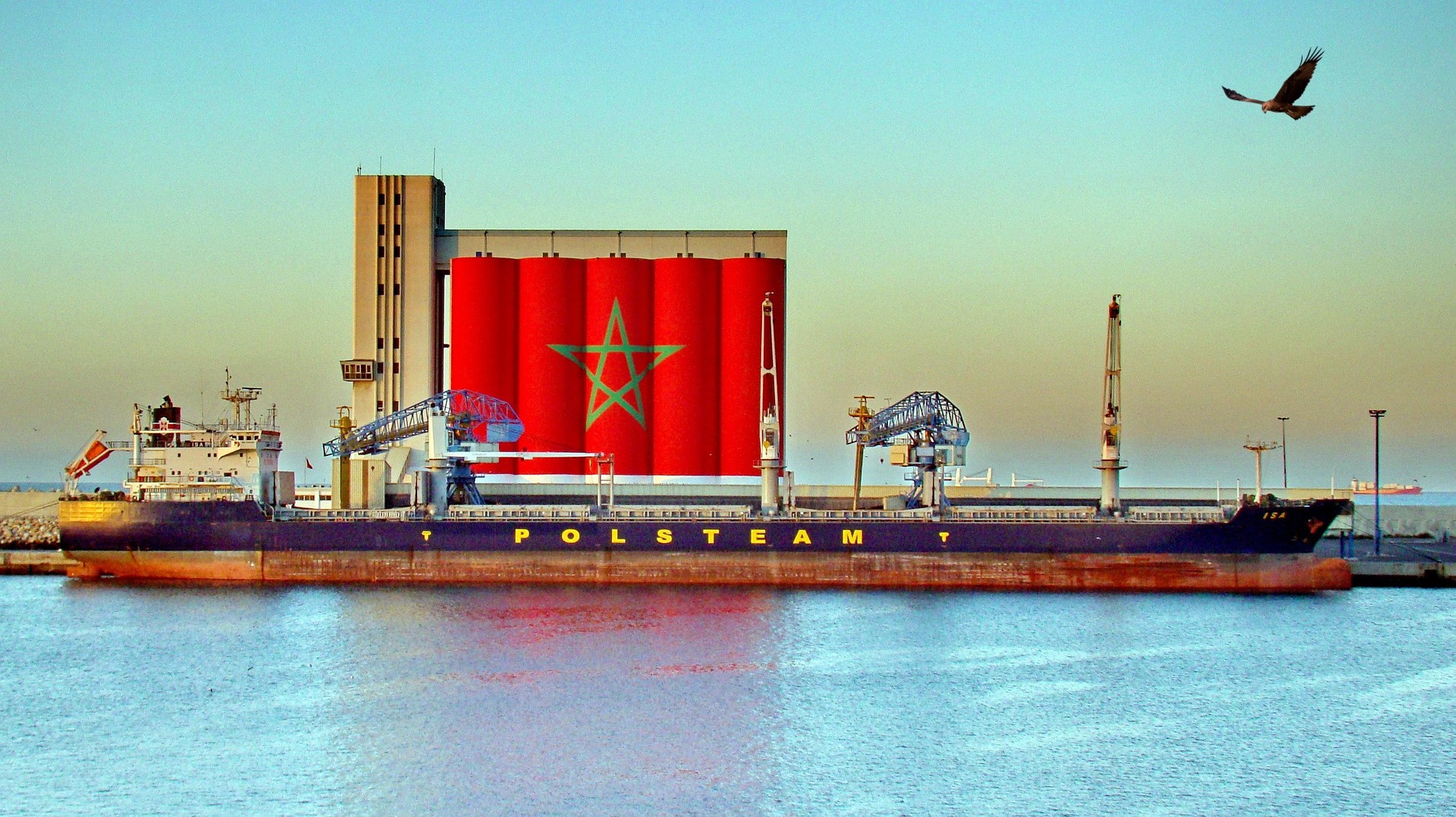
Morocco stands as one of the most fascinating and historically rich countries in North Africa. In this land, ancient civilizations, indigenous traditions, imperial dynasties, and modern development converge to create a unique national identity. Situated at the crossroads of Africa, Europe, and the Middle East, Morocco has long served as a meeting point for cultures, trade routes, religions, and ideas. Its strategic location between the Atlantic Ocean and the Mediterranean Sea has shaped its history for thousands of years, making it a gateway between continents and a center of cultural exchange.
The Kingdom of Morocco is renowned for its remarkable diversity. From the snow-capped peaks of the Atlas Mountains to the vast expanses of the Sahara Desert, from bustling imperial cities to remote Amazigh villages, the country’s landscapes are as varied as its cultural heritage. Morocco’s identity has been shaped by generations of Amazigh peoples, Arab influences, African connections, Mediterranean exchanges, and European interactions. This complex historical tapestry has produced a society that is both deeply rooted in tradition and increasingly engaged with the modern world.
Today, Morocco is recognized for its vibrant culture, historic architecture, rich culinary traditions, colorful markets, and warm hospitality. Millions of visitors travel to the country each year to explore its ancient medinas, experience its diverse landscapes, and discover a heritage that spans millennia. Yet Morocco is more than a tourist destination. It is a nation whose history reflects the broader story of North Africa, a region that has played a vital role in human civilization since prehistoric times. Understanding Morocco requires exploring not only its modern achievements but also the deep historical foundations that continue to influence its society. The country’s story begins long before the emergence of modern states, reaching back to the earliest human communities that inhabited North Africa and the indigenous Amazigh peoples who established enduring cultural traditions across the region.
Table of Contents
The History of Morocco
Prehistoric Morocco: The Earliest Human Presence
The history of Morocco extends far beyond recorded history. Archaeological discoveries have revealed that human populations inhabited the region for hundreds of thousands of years. Evidence from caves and prehistoric sites throughout Morocco suggests that early hominin groups occupied the area during various stages of human evolution. Stone tools, fossil remains, and ancient settlements demonstrate that Morocco has been part of the human story since prehistoric times.
One of the most significant archaeological discoveries in recent decades was made at Jebel Irhoud in western Morocco. Fossil remains found at this site have provided important insights into the origins of Homo sapiens. The discoveries suggest that some of the earliest known representatives of our species lived in North Africa approximately 300,000 years ago, highlighting Morocco’s importance in the broader narrative of human evolution.
Over thousands of years, prehistoric communities adapted to changing climates and environments. During periods when the Sahara was greener and more hospitable, populations moved across regions that are now arid deserts. These ancient inhabitants developed hunting, gathering, and eventually agricultural practices that laid the foundations for later civilizations.
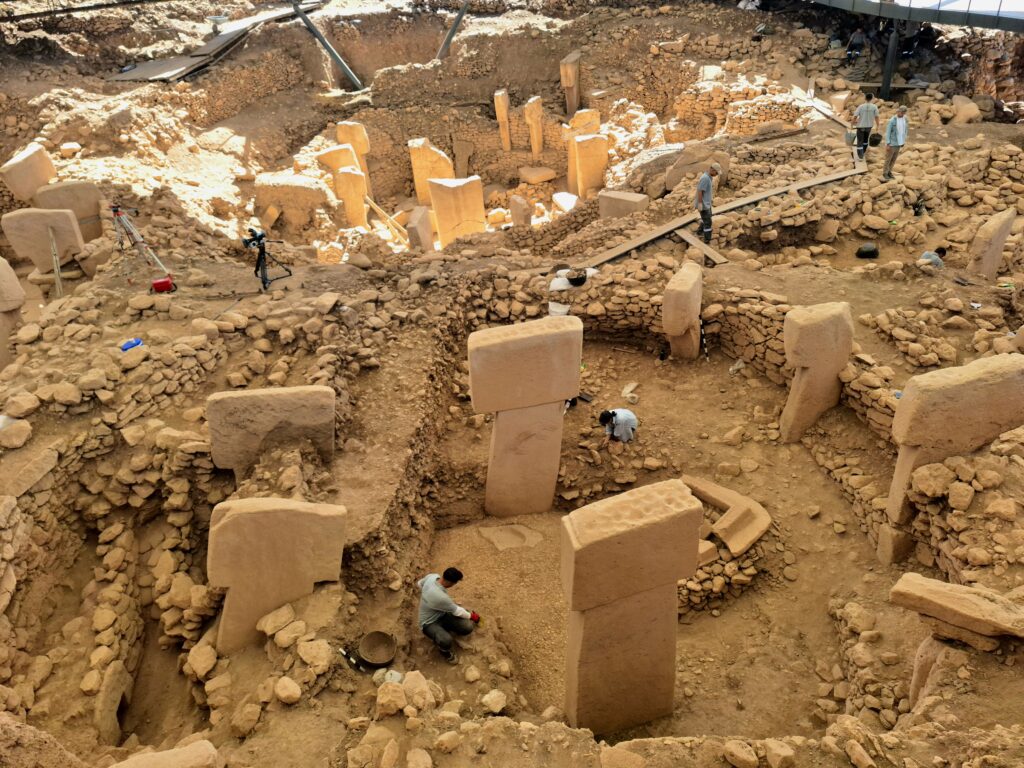
The archaeological record reveals a gradual transition from nomadic lifestyles to more permanent settlements. Rock art, burial sites, and artifacts discovered throughout Morocco provide valuable evidence of the beliefs, social structures, and daily lives of these early communities. These prehistoric cultures contributed to the long process of human development that ultimately shaped the societies of North Africa.
The Amazigh Foundations of Morocco
The indigenous inhabitants of Morocco are the Amazigh people, often referred to internationally as Berbers. Their presence in North Africa predates the arrival of later civilizations by thousands of years. The Amazigh have played a central role in shaping Morocco’s cultural, linguistic, and historical identity, making them one of the most important components of the country’s heritage.
Historically, Amazigh communities developed diverse societies adapted to different environments, including mountain regions, coastal areas, fertile plains, and desert territories. While these communities maintained distinct local traditions, they shared cultural characteristics, linguistic connections, and social structures that linked them across North Africa.
The Amazigh languages belong to the Afroasiatic language family and have been spoken throughout the region for millennia. These languages evolved into several regional varieties, including Tashelhit, Tamazight, and Tarifit, which are still spoken in Morocco today. The traditional Amazigh writing system, Tifinagh, represents one of the oldest indigenous scripts in Africa and remains an important symbol of Amazigh cultural identity.
Amazigh societies developed sophisticated systems of governance, agriculture, trade, and craftsmanship. They established networks that connected communities across mountains, deserts, and coastal regions, facilitating economic exchange and cultural interaction. Their knowledge of local environments enabled them to thrive in diverse landscapes and maintain resilient communities despite changing political circumstances.
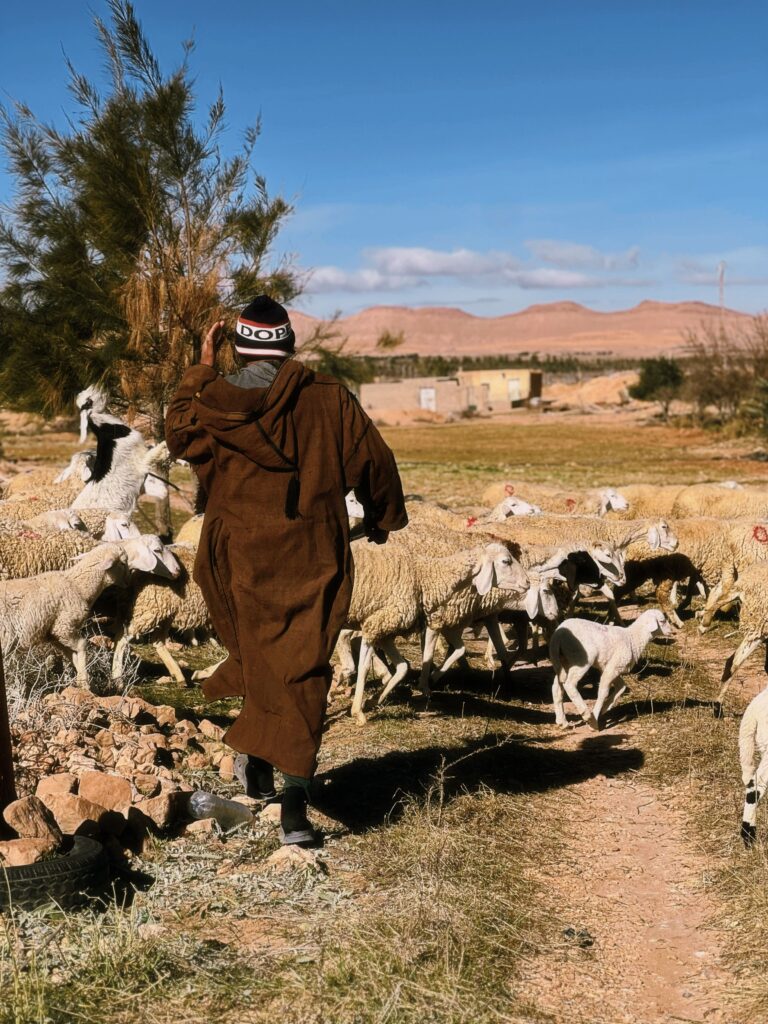
The influence of Amazigh culture extends far beyond language. Traditional architecture, music, oral literature, agricultural practices, jewelry, clothing, and social customs continue to shape Moroccan society. Even as new cultural influences arrived over the centuries, Amazigh traditions remained a foundational element of Morocco’s identity.
Phoenicians and Carthaginians in Ancient Morocco
Beginning around the first millennium BCE, maritime traders from the eastern Mediterranean established commercial connections along the North African coast. The Phoenicians, renowned for their seafaring skills and extensive trade networks, founded trading posts that facilitated exchanges between Mediterranean civilizations and local populations.
These coastal settlements became important centers of commerce. Goods such as metals, agricultural products, textiles, and crafted items moved through these networks, connecting Morocco to broader Mediterranean economic systems. The interactions between Phoenician traders and Amazigh communities contributed to cultural exchanges that enriched both societies.
Following the rise of Carthage, a major Phoenician colony located in present-day Tunisia, commercial and political influence expanded across parts of North Africa. Carthaginian networks strengthened economic ties between coastal Morocco and other Mediterranean regions. Although direct political control remained limited in many areas, trade and cultural contact increased significantly.
The Phoenician and Carthaginian presence introduced new technologies, commercial practices, and artistic influences while also creating opportunities for local communities to participate in international trade. These interactions helped integrate Morocco into wider economic systems that connected Africa, Europe, and the Near East.
Roman Influence in Morocco
Following the decline of Carthage, the Roman Empire gradually extended its influence into parts of North Africa. The region known as Mauretania Tingitana, which included portions of northern Morocco, became part of the Roman world.
Roman rule brought significant changes to urban development, infrastructure, and administration. Cities such as Volubilis emerged as important centers of economic and political activity. Roman engineers constructed roads, public buildings, aqueducts, and agricultural systems that enhanced productivity and facilitated communication.
Volubilis remains one of the best-preserved archaeological sites in Morocco and provides valuable insights into life during the Roman period. The city’s mosaics, temples, administrative structures, and residential buildings illustrate the sophistication of Roman urban planning and architecture.
Despite Roman influence, indigenous Amazigh populations maintained many aspects of their cultural identity. The relationship between Roman authorities and local communities varied across regions, with some areas experiencing stronger integration than others. Cultural exchange occurred in both directions, resulting in a dynamic and diverse society.
The decline of Roman power in North Africa eventually led to political transformations that created new opportunities for local kingdoms and emerging powers. However, the Roman legacy continued to influence architecture, agriculture, and urban development long after the empire’s withdrawal.
The Arrival of Islam and the Transformation of Morocco
The arrival of Islam in North Africa during the seventh century marked one of the most significant turning points in Moroccan history. Muslim expansion brought new religious, political, and cultural influences that transformed the region while interacting with existing Amazigh traditions.
The spread of Islam occurred gradually through a combination of political developments, trade networks, religious scholarship, and social interactions. Amazigh communities played an active role in the process, contributing to the development of Islamic civilization throughout North Africa and beyond.
Islam introduced new frameworks for governance, law, education, and cultural expression. Mosques became centers of religious practice and learning, while scholars contributed to the transmission of knowledge across the Islamic world. Arabic gained importance as a language of religion, scholarship, and administration, although Amazigh languages continued to be widely spoken.
The adoption of Islam did not erase local traditions. Instead, Moroccan society developed distinctive forms of Islamic culture that reflected the country’s indigenous heritage, regional circumstances, and historical experiences. This synthesis contributed to the emergence of a uniquely Moroccan identity that combined Islamic values with Amazigh cultural foundations.
The centuries that followed witnessed the rise of powerful dynasties that would transform Morocco into one of the most influential states in the Islamic world.
Morocco and Its Ruling Dynasties
The Idrisid Dynasty: The Birth of the Moroccan State
The establishment of the Idrisid Dynasty in the late eighth century is often regarded as a foundational moment in the formation of the Moroccan state. Founded by Idris I, the dynasty created a political entity that united diverse communities under a common framework while promoting Islamic institutions and scholarship.
The city of Fez emerged as a major center during this period. Over time, it developed into one of the most important intellectual and cultural capitals of the Islamic world. Scholars, artisans, merchants, and religious leaders contributed to the city’s growth, transforming it into a hub of learning and commerce.
The Idrisid era strengthened the integration of Islamic traditions into Moroccan society while fostering cooperation between different populations. The dynasty’s legacy continued to influence political and cultural developments long after its decline, helping establish patterns of governance and identity that shaped future generations.
The Great Moroccan Dynasties and the Formation of a Kingdom
The centuries following the establishment of the Idrisid state witnessed the rise of powerful dynasties that transformed Morocco into one of the most influential political, cultural, and economic centers of the medieval world. These dynasties expanded Moroccan influence far beyond its present borders, shaped the architectural and intellectual heritage of North Africa, and established traditions of governance that continue to influence the kingdom today. Their achievements helped define Morocco as a major actor in African, Mediterranean, and Islamic history.
The Almoravid Empire: From the Sahara to Spain
The rise of the Almoravid Empire during the eleventh century marked a turning point in Moroccan history. Emerging from Amazigh communities of the Sahara, the Almoravids built a powerful state that stretched across vast territories in North Africa and the Iberian Peninsula.
Originally a religious reform movement, the Almoravids sought to strengthen Islamic practice while unifying scattered tribes and communities. Their discipline, military organization, and strategic leadership enabled them to establish one of the largest empires in Western Islamic history.
One of the most significant achievements of the Almoravids was the founding of the city of Marrakech in 1070. What began as a military and administrative center soon evolved into one of the most important cities in Morocco. Marrakech became a hub of trade, scholarship, architecture, and political power. Even today, the city remains one of Morocco’s most iconic destinations and a symbol of its historical grandeur.
The Almoravid Empire controlled major trans-Saharan trade routes that connected North Africa with regions south of the Sahara. Gold, salt, textiles, and other valuable goods flowed through these networks, contributing to economic prosperity and cultural exchange. Through these connections, Morocco became an essential bridge between sub-Saharan Africa, the Mediterranean world, and Europe.
The Almoravids also played a crucial role in the history of Islamic Spain. As Christian kingdoms expanded southward in the Iberian Peninsula, Muslim rulers sought assistance from North Africa. The Almoravids crossed the Strait of Gibraltar and achieved significant military victories that temporarily halted Christian advances. Their intervention strengthened ties between Morocco and Al-Andalus, creating a shared cultural sphere that would leave a lasting legacy on both sides of the Mediterranean.
Architecturally, the Almoravids introduced styles that influenced later Moroccan design. Their contributions to urban planning, mosque construction, and decorative arts established traditions that would be refined by subsequent dynasties.
The Almohad Empire: A Golden Age of Power and Culture
During the twelfth century, the Almoravid Empire was replaced by the Almohads, another Amazigh dynasty that would create an even larger and more powerful state. Originating in the Atlas Mountains, the Almohads emerged as a reform movement before transforming into a formidable empire spanning Morocco, Algeria, Tunisia, Libya, and much of Islamic Spain.
The Almohad period is often regarded as one of the greatest eras in Moroccan history. Under their rule, Morocco became the center of a vast political and cultural realm that influenced developments across North Africa and Europe.
The Almohads invested heavily in architecture, education, philosophy, and urban development. Some of Morocco’s most celebrated historical monuments date from this era. The Koutoubia Mosque in Marrakech stands as one of the finest examples of Almohad architecture and remains an enduring symbol of the city. The Hassan Tower in Rabat and the Giralda in Seville also reflect the artistic achievements of the dynasty.
Beyond architecture, the Almohad period witnessed remarkable intellectual activity. Scholars, philosophers, physicians, and mathematicians flourished under royal patronage. The empire became a center of learning that attracted thinkers from across the Islamic world.
Trade and commerce continued to expand during this period. Cities grew in size and importance, while agricultural innovations improved productivity. Morocco’s strategic position allowed it to benefit from exchanges linking Africa, Europe, and the Middle East.
Despite its achievements, the Almohad Empire eventually faced internal divisions and external pressures. By the thirteenth century, its power had begun to decline, paving the way for new dynasties to emerge.
The Marinid Dynasty and the Flourishing of Scholarship
The Marinids rose to power in the thirteenth century and established a dynasty that emphasized education, scholarship, and urban development. Although their empire was smaller than that of the Almoravids and Almohads, the Marinids made significant contributions to Morocco’s intellectual and architectural heritage.
The city of Fez reached new heights during the Marinid period. As the political and cultural capital of Morocco, it became one of the most important centers of learning in the Islamic world. Students and scholars traveled from distant regions to study in its institutions and participate in its vibrant intellectual life.
The Marinids are particularly remembered for constructing numerous madrasas, or educational institutions. These schools served as centers for religious studies, law, science, literature, and philosophy. Many of these buildings survive today and are celebrated for their intricate craftsmanship and architectural beauty.
Marinid architecture is characterized by elaborate geometric patterns, carved woodwork, decorative tile mosaics, and elegant courtyards. These artistic traditions helped define the visual identity of Moroccan architecture and continue to inspire contemporary design.
Economically, Morocco maintained its role as a crossroads of trade. Merchants exchanged goods from Africa, Europe, and the Mediterranean, contributing to the prosperity of urban centers and supporting a diverse commercial economy.
Although political challenges eventually weakened the Marinids, their cultural achievements left a lasting imprint on Moroccan society.
The Saadian Dynasty: Prosperity and International Influence
The sixteenth century witnessed the rise of the Saadian Dynasty, a period often associated with military success, economic prosperity, and diplomatic engagement with foreign powers. The Saadians emerged during a time of increasing European expansion and regional competition, successfully defending Moroccan independence while strengthening the kingdom’s position.
One of the most important moments of the Saadian era was the Battle of the Three Kings in 1578. This confrontation resulted in a decisive Moroccan victory and helped preserve the country’s sovereignty at a time when European powers were expanding their influence across the globe.
The reign of Sultan Ahmad al-Mansur is often considered the high point of the Saadian period. Under his leadership, Morocco experienced economic growth, diplomatic prestige, and architectural achievement. Trade networks expanded, connecting Morocco to Europe, sub-Saharan Africa, and the broader Islamic world.
The Saadian Tombs in Marrakech remain among the most impressive monuments from this period. Their elaborate decoration and artistic refinement reflect the wealth and sophistication of the dynasty.
The Saadians also strengthened Morocco’s role in trans-Saharan commerce. Gold, ivory, textiles, and other commodities flowed through trade routes that linked West Africa with North African and Mediterranean markets. These exchanges enriched Moroccan cities and enhanced the kingdom’s international significance.
The Alaouite Dynasty: Continuity and Stability
The Alaouite Dynasty came to power in the seventeenth century and continues to rule Morocco today. This makes it one of the world’s oldest reigning dynasties and an important symbol of continuity in Moroccan history.
The Alaouites faced numerous challenges during their early years, including regional conflicts, tribal rivalries, and foreign intervention. Through diplomacy, military organization, and administrative reforms, they gradually consolidated authority and strengthened the Moroccan state.
Several Alaouite rulers played important roles in modernizing the kingdom. They developed administrative institutions, improved infrastructure, and expanded diplomatic relations with foreign powers. Throughout changing historical circumstances, the dynasty provided a degree of political continuity that helped preserve Morocco’s independence and identity.
The city of Meknes flourished under Sultan Moulay Ismail, who transformed it into an imperial capital. Monumental gates, palaces, and public works from his reign remain important landmarks and testify to the era’s ambitions .
As European influence increased during the nineteenth century, Morocco faced growing pressure from foreign powers seeking economic and political advantages. The Alaouite rulers navigated these challenges while attempting to maintain sovereignty in an increasingly competitive international environment.
Morocco and European Colonial Expansion
The nineteenth and early twentieth centuries brought profound changes to North Africa. European powers expanded their colonial empires, seeking control over strategic territories and economic resources. Morocco’s location at the entrance to the Mediterranean made it a particularly attractive target.
Competition among European states intensified as they sought influence within the kingdom. Diplomatic negotiations, economic agreements, and military pressures gradually eroded Moroccan autonomy.
In 1912, Morocco became a protectorate under French administration, while Spain controlled certain northern and southern territories. Although the Moroccan monarchy remained in place, significant political authority shifted to colonial administrations.
The colonial period introduced new infrastructure, transportation systems, and administrative practices. Railways, roads, ports, and urban development projects transformed parts of the country. However, colonial rule also generated social tensions, economic inequalities, and political resistance.
Moroccans from diverse backgrounds opposed foreign domination and worked to preserve their cultural identity and political rights. Nationalist movements gained momentum throughout the twentieth century, calling for independence and self-determination.
The Struggle for Independence
Morocco’s path to independence was shaped by decades of political activism, popular mobilization, and diplomatic efforts. Nationalist leaders, intellectuals, workers, students, and community organizations played important roles in challenging colonial rule.
A central figure in the independence movement was Sultan Mohammed V, whose support for nationalist aspirations strengthened public opposition to foreign control. His position as both a political and symbolic leader helped unite diverse segments of Moroccan society.
The exile of Mohammed V by colonial authorities in 1953 intensified resistance and generated widespread support for independence. Demonstrations, political campaigns, and international pressure increased in the following years.
In 1956, Morocco successfully regained its independence. The return of Mohammed V marked the beginning of a new chapter in the country’s history and represented a major achievement for the Moroccan people.
Independence allowed Morocco to pursue its own political, economic, and social development while preserving institutions that reflected its historical traditions and national identity.
Modern Morocco: Tradition and Transformation
Since independence, Morocco has undergone significant transformation while maintaining strong connections to its historical heritage. Successive governments have pursued modernization in areas such as infrastructure, education, healthcare, industry, and technology.
The country has invested heavily in transportation networks, renewable energy projects, urban development, and economic diversification. Modern highways, ports, high-speed rail systems, and industrial zones have strengthened Morocco’s position as a regional economic hub.
At the same time, Morocco has worked to preserve its cultural heritage. Historic medinas, traditional crafts, indigenous languages, and architectural landmarks continue to play important roles in national life. Efforts to recognize and promote Amazigh culture have contributed to a broader appreciation of Morocco’s diverse identity.
Today, Morocco is often viewed as a bridge between Africa, Europe, and the Arab world. Its strategic location, political stability, and cultural richness make it an influential actor in regional and international affairs.
The modern kingdom reflects centuries of historical development. The legacies of Amazigh communities, Islamic dynasties, trans-Saharan trade networks, intellectual traditions, and independence movements continue to shape Moroccan society. Understanding this history provides valuable insight into the country’s present achievements and future aspirations.
The Amazigh Heritage of Morocco
While Morocco’s history includes many civilizations, empires, and cultural influences, no element is more deeply rooted in the country’s identity than its Amazigh heritage. The Amazigh people represent the indigenous inhabitants of Morocco and North Africa, and their traditions, languages, and cultural practices have shaped Moroccan civilization for thousands of years.
The story of Morocco cannot be fully understood without understanding the Amazigh contribution to its history, society, architecture, language, music, and collective identity. Throughout centuries of political change, Amazigh communities preserved traditions that continue to enrich Moroccan culture today.
The Amazigh Heritage of Morocco
The Amazigh heritage of Morocco represents one of the oldest continuous cultural traditions in North Africa. Long before the arrival of Phoenicians, Romans, Arabs, or Europeans, Amazigh communities inhabited the mountains, plains, deserts, and coastal regions of what is now Morocco. Their history stretches back thousands of years and forms the foundation upon which much of Moroccan civilization was built.
The term “Amazigh” (plural: Imazighen) is generally understood to mean “free people” or “noble people.” Throughout history, Amazigh communities developed diverse societies adapted to different geographical environments. Some lived in the Atlas Mountains, where they practiced agriculture and animal husbandry. Others inhabited the Rif Mountains, the Atlantic coast, fertile valleys, or the Sahara Desert, creating distinct cultural traditions while maintaining a shared sense of identity.
For centuries, Amazigh communities preserved their customs through oral traditions. Stories, poetry, songs, and proverbs passed knowledge from one generation to the next. These traditions helped maintain cultural continuity despite changing political circumstances and external influences.
Today, Amazigh heritage remains visible throughout Morocco. Traditional clothing, jewelry, architecture, music, festivals, agricultural practices, and social customs continue to reflect indigenous cultural traditions. Many Moroccan families, regardless of linguistic background, maintain customs that have deep Amazigh roots.
The recognition of Amazigh identity has become increasingly important in contemporary Morocco. Efforts to preserve Amazigh languages, promote cultural heritage, and strengthen educational initiatives reflect a growing appreciation of the country’s indigenous foundations. As a result, Amazigh culture is now widely recognized as a central component of Moroccan national identity.
Amazigh Languages in Morocco
Language is one of the most important expressions of Amazigh heritage. Morocco is home to several major Amazigh language varieties, each associated with different regions of the country.
Tashelhit (Tachelhit)
Tashelhit is the most widely spoken Amazigh language in Morocco. It is primarily spoken in southern Morocco, particularly in the Souss region, the Anti-Atlas Mountains, and surrounding areas. Millions of Moroccans use Tashelhit as their first language, making it one of the most important indigenous languages in North Africa.
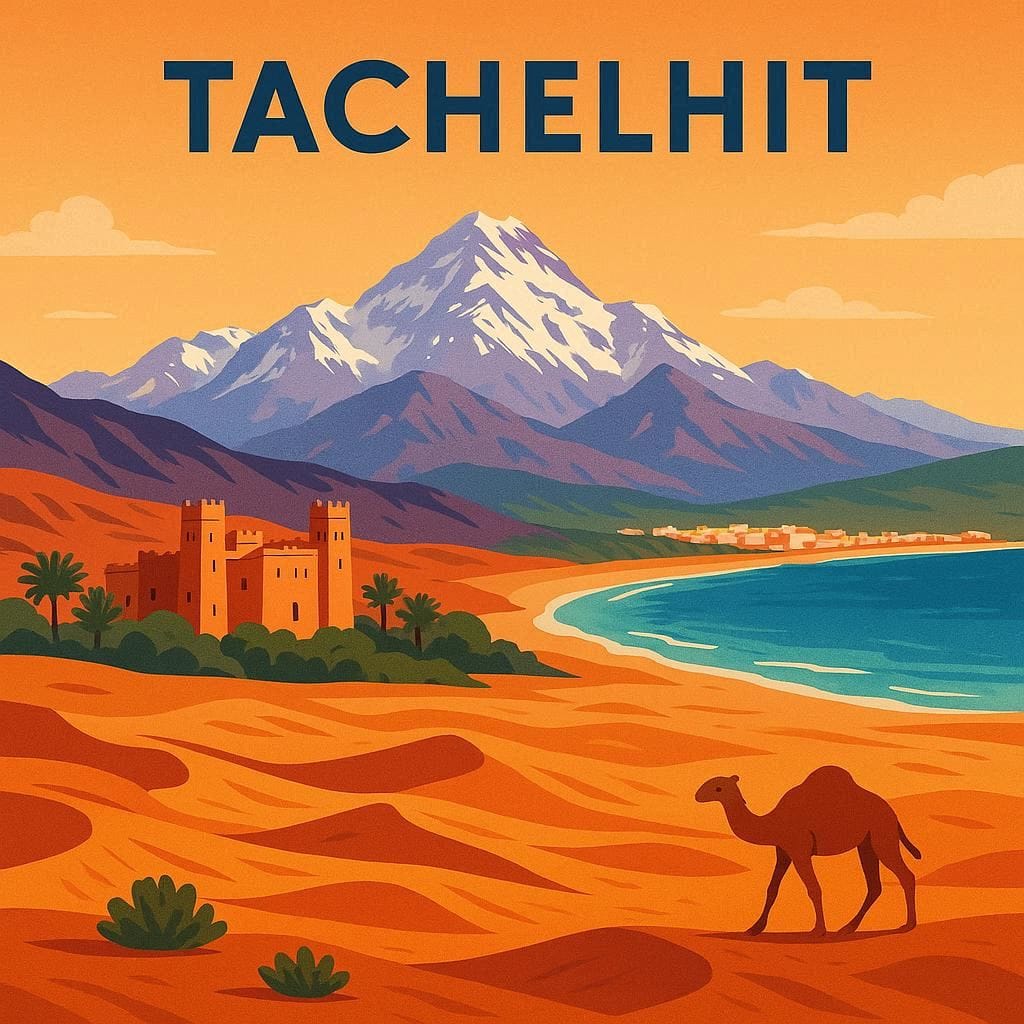
Tashelhit possesses a rich oral literature that includes poetry, storytelling, songs, and historical narratives. These traditions have played a crucial role in preserving cultural knowledge and community identity.
Central Atlas Tamazight
Central Atlas Tamazight is spoken throughout the Middle Atlas region and neighboring areas. Communities speaking this language have historically maintained strong connections to mountain environments, developing agricultural systems and social structures adapted to highland landscapes.
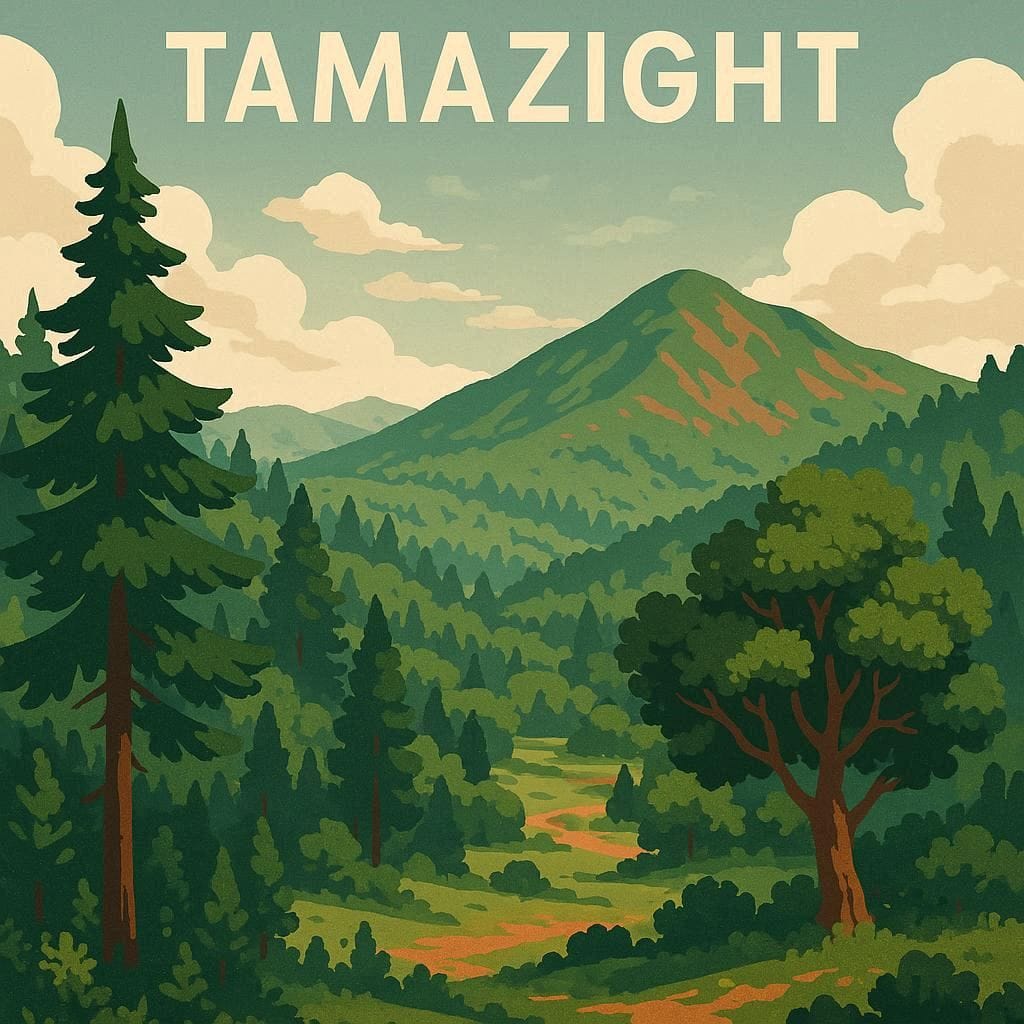
The language contains a wealth of oral traditions that document historical events, cultural values, and local knowledge.
Tarifit
Tarifit is spoken primarily in the Rif Mountains of northern Morocco. The region’s unique geography contributed to the development of distinct cultural traditions and linguistic characteristics.
Rif communities have played important roles in Moroccan history, particularly in preserving local autonomy and maintaining cultural practices rooted in Amazigh heritage.
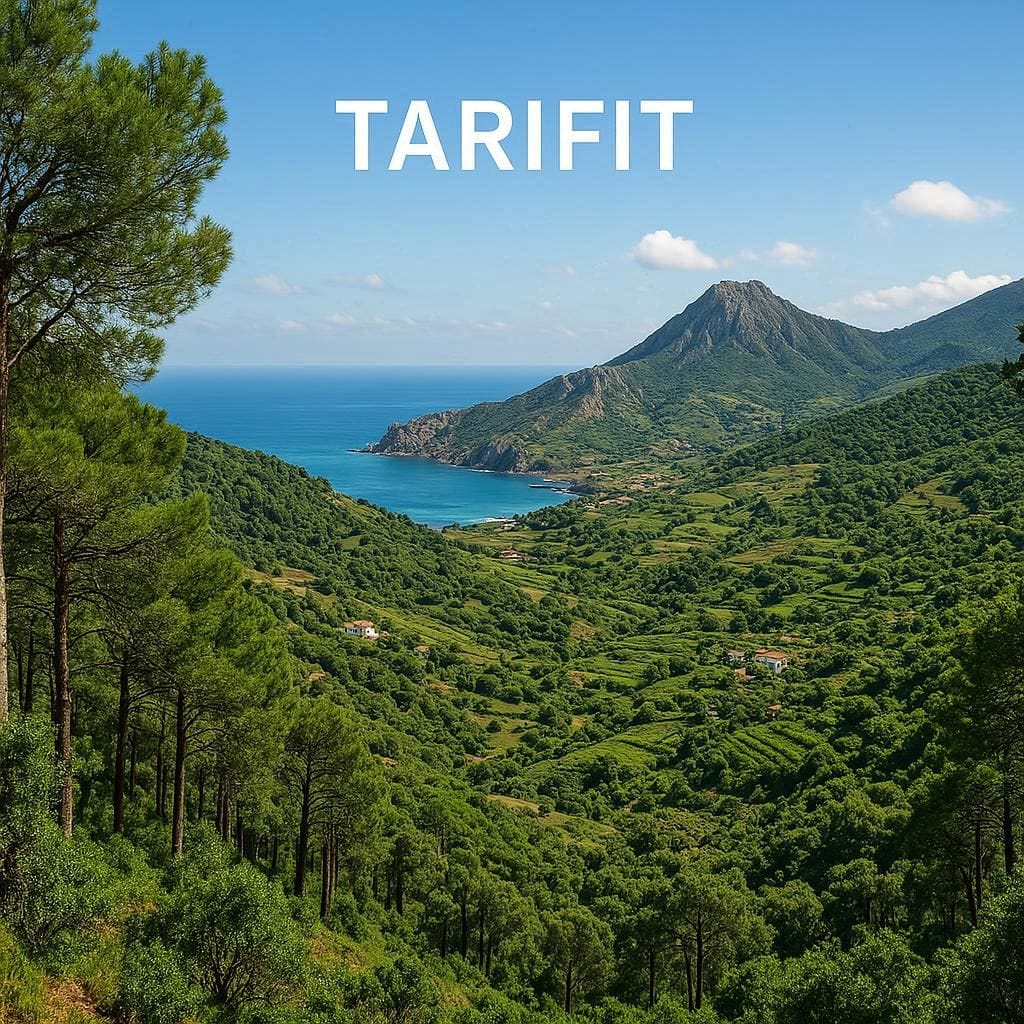
Together, these language varieties demonstrate the diversity and vitality of Amazigh culture in Morocco.
Tifinagh: The Amazigh Alphabet
One of the most distinctive symbols of Amazigh identity is the Tifinagh alphabet. This writing system has ancient origins and represents one of Africa’s oldest indigenous scripts.
Historically, variations of Tifinagh were used by Amazigh communities across North Africa. Although oral traditions remained dominant for centuries, the script survived as a cultural symbol and means of communication.
In modern Morocco, Tifinagh has gained renewed prominence. It is used in education, public signage, cultural institutions, and media. The inclusion of Tifinagh in official contexts reflects broader efforts to recognize and preserve Amazigh heritage.
Visitors to Morocco often notice road signs displaying Arabic, Latin script, and Tifinagh side by side. This visual representation symbolizes the country’s linguistic and cultural diversity.
The revitalization of Tifinagh has contributed to increased interest in Amazigh language education and cultural preservation, ensuring that future generations remain connected to an important aspect of their heritage.
Amazigh Traditions and Cultural Practices
Amazigh culture encompasses a wide range of traditions that continue to influence Moroccan society.
Family and community relationships occupy a central place in Amazigh social life. Cooperation, mutual support, and respect for elders are highly valued principles. Traditional village structures often emphasize collective responsibility and social cohesion.
Music plays an essential role in celebrations, ceremonies, and cultural expression. Instruments such as drums, flutes, and stringed instruments accompany songs that tell stories of love, history, nature, and community life. Traditional dances performed during weddings and festivals bring people together while preserving cultural memory.
Amazigh jewelry is another important cultural expression. Silver ornaments decorated with geometric motifs have historically served both aesthetic and symbolic functions. Designs often carry meanings related to protection, fertility, identity, and social status.
Traditional textiles and carpets also reflect Amazigh artistic traditions. Patterns woven into rugs frequently incorporate symbols passed down through generations, creating visual narratives that connect contemporary artisans with ancestral heritage.
These cultural practices continue to evolve while maintaining connections to historical traditions, demonstrating the resilience and adaptability of Amazigh culture.
Geography of Morocco
Morocco is one of the most geographically diverse countries in Africa. Its varied landscapes include mountains, deserts, plains, forests, rivers, and extensive coastlines. This diversity has played a crucial role in shaping the country’s history, economy, culture, and settlement patterns.
Located in the northwestern corner of Africa, Morocco occupies a strategic position between Europe and Africa. The Strait of Gibraltar separates Morocco from Spain by only a short distance, making the country an important crossroads between continents.
Morocco covers approximately 710,000 square kilometers, encompassing a wide range of environmental zones. This geographical diversity contributes to the country’s rich biodiversity and creates opportunities for agriculture, tourism, and economic development.
The country’s physical landscape has also influenced cultural diversity. Different regions developed distinct traditions, dialects, architectural styles, and economic activities based on local environmental conditions.
Morocco’s Strategic Location
Morocco’s position at the intersection of the Atlantic Ocean and the Mediterranean Sea has made it strategically important throughout history.
To the north, Morocco faces the Mediterranean, connecting it to Southern Europe and the broader Mediterranean world. To the west, the Atlantic coastline stretches for thousands of kilometers, providing access to international maritime trade routes.
The country shares land borders with Algeria to the east and territories of the Sahara to the south. Historically, these connections facilitated trade, migration, and cultural exchange across North Africa.
This strategic location contributed to Morocco’s development as a center of commerce linking Europe, Africa, and the Middle East. Throughout history, merchants, travelers, scholars, and explorers passed through Moroccan cities, bringing new ideas and opportunities.
Today, Morocco continues to benefit from its geographical position as an important gateway between continents.
The Atlas Mountains
The Atlas Mountains are among Morocco’s most iconic geographical features. Stretching across much of the country, they form a vast mountain system that influences climate, agriculture, biodiversity, and settlement patterns.
The Atlas range is typically divided into three major sections:
High Atlas
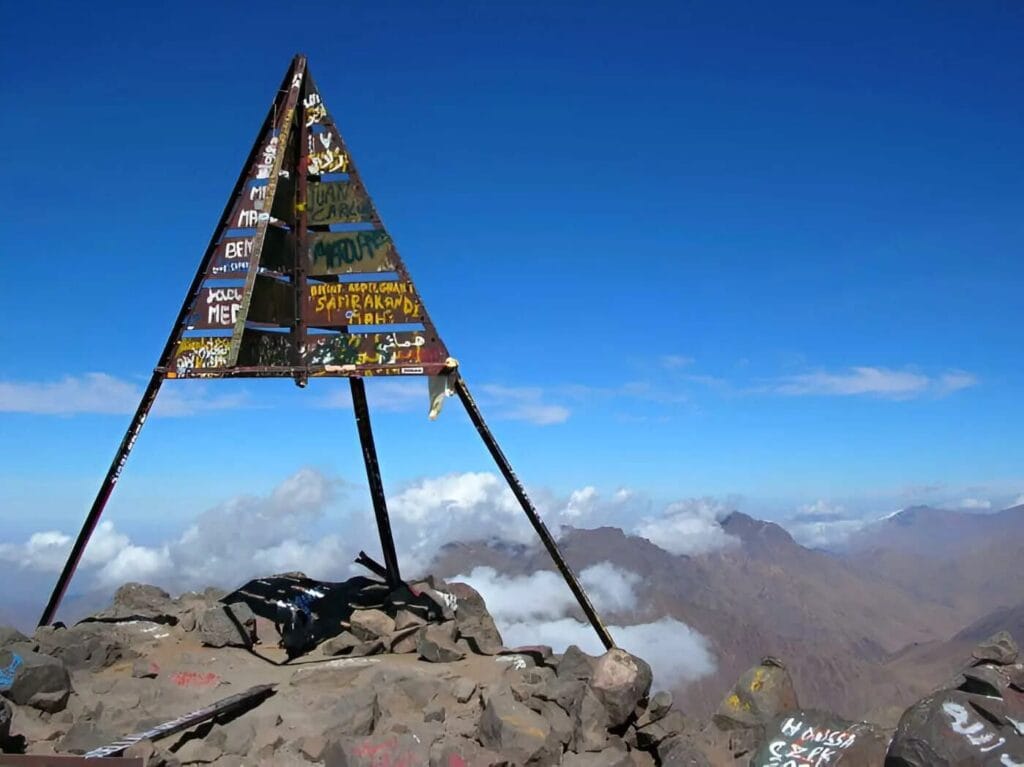
The High Atlas contains Morocco’s highest peaks, including Mount Toubkal, which rises to more than 4,000 meters above sea level. Snow-covered during winter months, these mountains provide water resources essential for agriculture and urban populations.
The High Atlas region is home to numerous Amazigh communities that have preserved traditional lifestyles adapted to mountainous environments.
Middle Atlas
The Middle Atlas is characterized by forests, valleys, lakes, and fertile agricultural areas. Cedar forests support diverse wildlife and contribute to ecological stability.
This region plays an important role in agriculture and serves as a source of water for many parts of Morocco.
Anti-Atlas
Located in southern Morocco, the Anti-Atlas Mountains feature rugged landscapes and unique geological formations. The region contains historic villages, ancient trade routes, and rich cultural traditions.
Together, these mountain systems contribute significantly to Morocco’s environmental diversity and natural beauty.
The Rif Mountains
The Rif Mountains dominate northern Morocco near the Mediterranean coast. Their dramatic landscapes include steep slopes, forested valleys, and picturesque villages.
Historically, the Rif region developed distinct cultural traditions due to its relative isolation and mountainous terrain. Communities in the area maintained strong local identities and played important roles in Morocco’s political history.
Today, the Rif Mountains attract visitors interested in hiking, nature, and cultural tourism. The region’s scenic beauty and traditional villages make it one of Morocco’s most captivating destinations.
The Sahara Desert
The Sahara Desert occupies a significant place in Morocco’s geography and cultural imagination. Although only part of the vast Sahara lies within Morocco, desert landscapes have profoundly influenced the country’s history and identity.
The Moroccan Sahara includes sand dunes, rocky plateaus, oases, and vast open spaces. Some of the most famous dunes are located near Merzouga, where towering sand formations create spectacular desert scenery.
Historically, trans-Saharan trade routes connected Morocco with West Africa. Merchants transported gold, salt, textiles, and other goods across challenging desert environments, contributing to economic prosperity and cultural exchange.
Desert communities developed specialized knowledge that enabled them to survive in harsh conditions. Their traditions continue to influence Moroccan culture today.
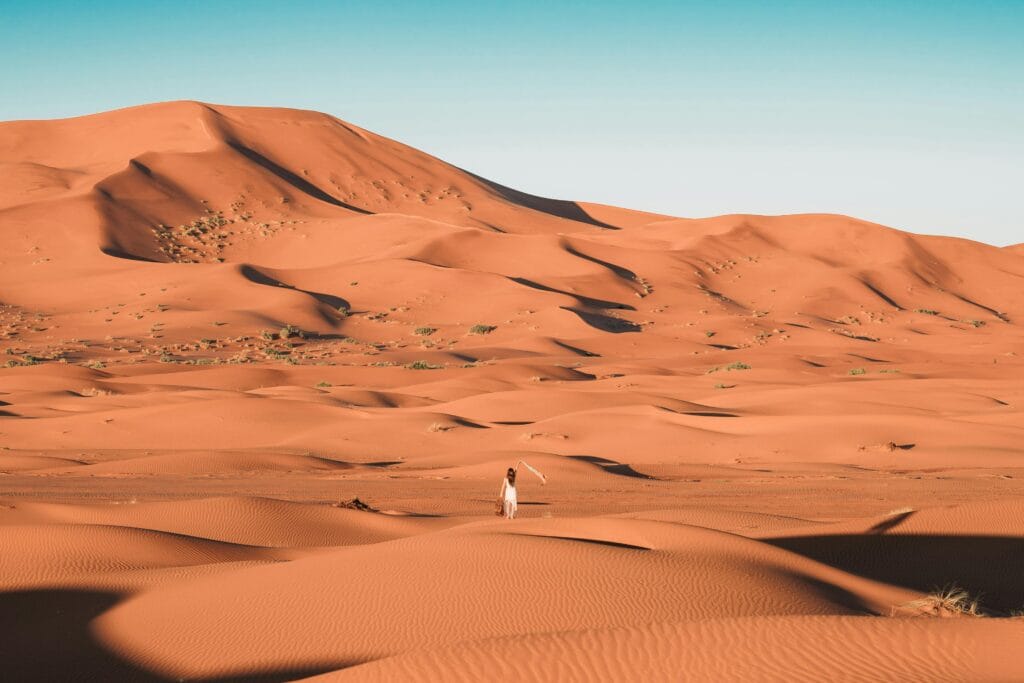
The Sahara remains one of Morocco’s most iconic tourist attractions, drawing visitors from around the world.
Morocco’s Coastlines
Morocco possesses one of the longest coastlines in Africa, extending along both the Atlantic Ocean and the Mediterranean Sea.
The Atlantic coast features sandy beaches, fishing ports, and major cities. Ocean currents influence climate conditions and support important fishing industries.
The Mediterranean coast offers picturesque bays, rocky cliffs, and historic coastal settlements. These areas have long served as points of contact between Morocco and Europe.
Coastal regions contribute significantly to tourism, trade, transportation, and economic development. Ports such as Tangier and Casablanca play crucial roles in international commerce.
Rivers and Water Resources
Water has always been essential to life in Morocco. Several major rivers support agriculture, industry, and urban populations.
Important river systems include the Sebou, Oum Er-Rbia, Moulouya, and Tensift rivers. These waterways provide irrigation for fertile agricultural regions and contribute to economic productivity.
Morocco has invested heavily in dam construction and water management infrastructure to address challenges related to climate variability and population growth.
Effective water management remains a critical priority for the country’s sustainable development.
Major Cities of Morocco
Morocco’s cities reflect centuries of historical development, cultural exchange, and economic growth. Each city possesses its own character and contributes uniquely to national life.
The country’s urban centers combine ancient traditions with modern infrastructure, creating dynamic environments where history and contemporary development coexist.
Morocco’s cities represent the country’s remarkable diversity, reflecting centuries of history, trade, cultural exchange, and architectural achievement. From ancient imperial capitals to modern economic centers, each city contributes to the rich mosaic of Moroccan identity. Together, these urban centers illustrate how Morocco has evolved while preserving its historical heritage and cultural traditions.
The country’s major cities serve as centers of government, commerce, education, tourism, and cultural life. Their medinas, monuments, markets, mosques, and public spaces tell the story of a nation shaped by Amazigh, Arab, African, Mediterranean, and European influences. Exploring Morocco’s cities provides valuable insight into both the country’s past and its aspirations for the future.
Rabat: The Capital of Morocco
Rabat, the capital city of Morocco, is located along the Atlantic coast at the mouth of the Bou Regreg River. As the political and administrative center of the kingdom, Rabat houses government institutions, diplomatic missions, and official residences. Despite its political importance, the city maintains a relaxed atmosphere compared to some of Morocco’s larger urban centers.
The history of Rabat stretches back centuries, but its prominence increased significantly during the Almohad period when rulers sought to establish a major imperial capital. The city contains several important historical landmarks that reflect this heritage. Among them is the Hassan Tower, an unfinished minaret that remains one of Morocco’s most recognizable monuments. Nearby stands the Mausoleum of Mohammed V, an architectural masterpiece honoring one of the country’s most important modern leaders.
Rabat’s medina offers a more tranquil experience than those of some other Moroccan cities, while its modern districts feature broad avenues, green spaces, and contemporary infrastructure. The city has successfully balanced modernization with heritage preservation, making it one of the most livable urban centers in North Africa.
Today, Rabat serves as a center for education, culture, and governance. Museums, universities, research institutions, and cultural festivals contribute to the city’s intellectual and artistic life. Its combination of historical significance and modern functionality reflects Morocco’s broader effort to integrate tradition with progress.
Casablanca: Morocco’s Economic Heart
Casablanca is the largest city in Morocco and the country’s principal economic center. Located on the Atlantic coast, it serves as a major hub for commerce, finance, industry, and international trade. The city’s strategic location and modern infrastructure have made it one of the most important urban centers in Africa.
Unlike Morocco’s imperial cities, Casablanca is primarily associated with contemporary development and economic activity. Skyscrapers, business districts, industrial zones, and modern transportation networks dominate much of the urban landscape. However, the city also contains historical neighborhoods and architectural influences that reflect its twentieth-century development.
One of Casablanca’s most iconic landmarks is the Hassan II Mosque, one of the largest mosques in the world. Situated on the Atlantic shoreline, the mosque combines traditional Moroccan craftsmanship with modern engineering. Its monumental scale and intricate decoration symbolize Morocco’s architectural excellence and religious heritage.
Casablanca plays a crucial role in Morocco’s economy. The city’s port handles a significant portion of the country’s imports and exports, connecting Morocco to global markets. Industries ranging from manufacturing and banking to technology and logistics contribute to economic growth and employment.
As Morocco continues to modernize, Casablanca remains at the forefront of innovation and urban development. Its dynamic economy and international connections make it a key driver of the nation’s future.
Marrakech: The Red City
Marrakech is one of Morocco’s most famous and beloved cities. Founded by the Almoravids in the eleventh century, it quickly became a center of political power, commerce, and culture. Its distinctive red-colored walls and buildings have earned it the nickname “The Red City.”
For centuries, Marrakech served as an imperial capital and remains one of Morocco’s most important historical and cultural destinations. The city’s medina, recognized as a UNESCO World Heritage Site, is a labyrinth of narrow streets, markets, workshops, and historic monuments.
At the heart of Marrakech lies Jemaa el-Fnaa, one of the most vibrant public squares in the world. Throughout the day and evening, the square comes alive with storytellers, musicians, performers, artisans, and food vendors, creating a unique cultural atmosphere that reflects centuries of tradition.
Marrakech is also renowned for its architectural treasures. The Koutoubia Mosque, Bahia Palace, Saadian Tombs, and numerous historic riads showcase the artistic achievements of Moroccan civilization. Gardens such as the Majorelle Garden add to the city’s beauty and attract visitors from around the globe.
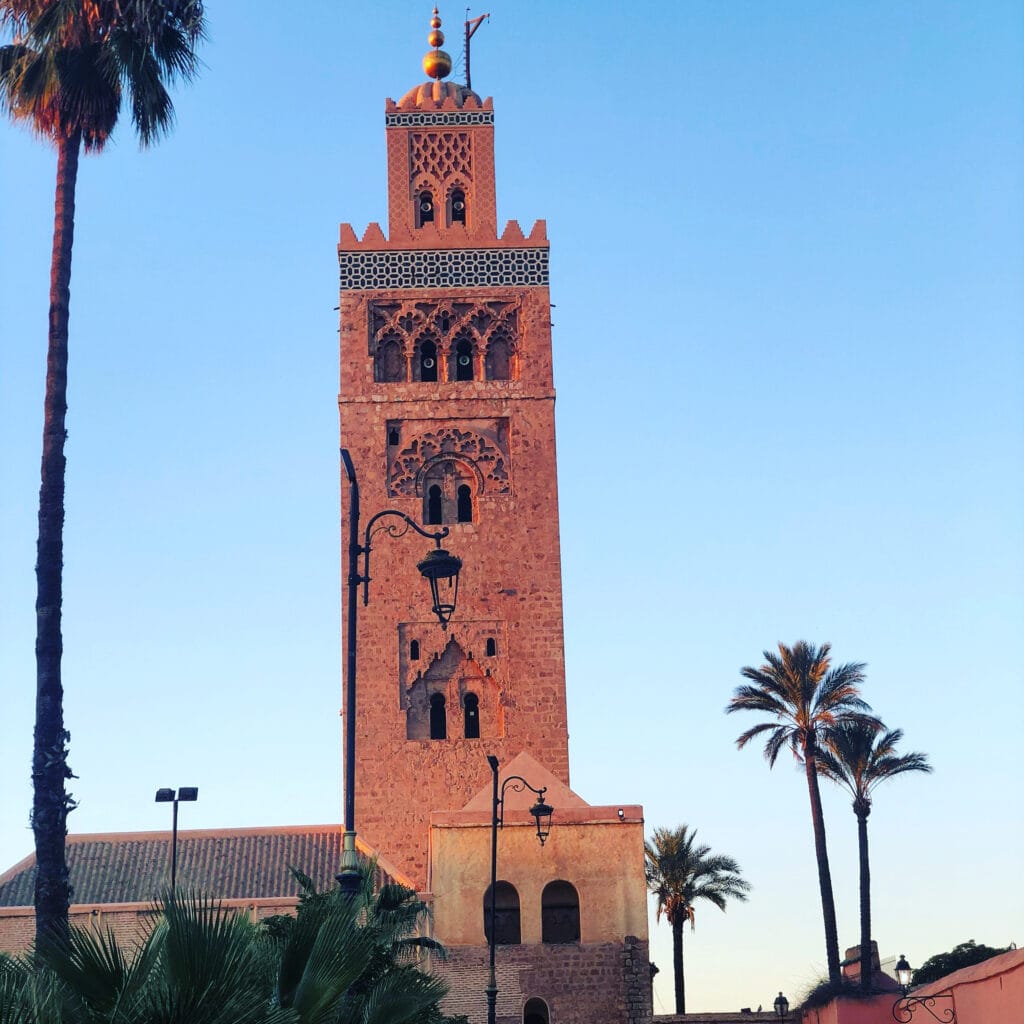
Tourism plays a central role in Marrakech’s economy. Visitors are drawn by the city’s history, architecture, hospitality, cuisine, and cultural experiences. At the same time, Marrakech continues to evolve as a center for conferences, festivals, and international events.
Fez: Morocco’s Spiritual and Intellectual Capital
Fez is often considered the cultural and spiritual heart of Morocco. Founded in the eighth century during the Idrisid era, it became one of the most important centers of learning in the Islamic world. For centuries, scholars, theologians, scientists, and philosophers gathered in the city, contributing to its reputation as a center of knowledge.
The historic medina of Fez is among the largest and best-preserved medieval urban areas in the world. Walking through its streets is like stepping back in time. Traditional markets, workshops, mosques, and homes preserve architectural styles and urban patterns that have remained largely unchanged for centuries.
The city is home to the University of Al Quaraouiyine, founded in the ninth century and often regarded as one of the world’s oldest continuously operating educational institutions. Its legacy reflects Morocco’s longstanding commitment to scholarship and intellectual exchange.
Fez is also famous for traditional craftsmanship. Artisans continue to produce leather goods, ceramics, textiles, metalwork, and wood carvings using techniques passed down through generations. The city’s tanneries are particularly well known and remain an enduring symbol of Moroccan craftsmanship.
As a center of culture, religion, and education, Fez occupies a unique place in Moroccan society. Its historical significance and architectural beauty make it one of the country’s most treasured cities.
Tangier: Gateway Between Africa and Europe
Situated at the northern tip of Morocco, Tangier occupies one of the most strategic locations in the world. Overlooking the Strait of Gibraltar, the city stands at the meeting point of the Atlantic Ocean and the Mediterranean Sea. For centuries, this position has made Tangier a crossroads of civilizations and cultures.
Throughout its history, Tangier has attracted merchants, diplomats, artists, writers, and travelers from around the world. Its cosmopolitan atmosphere distinguishes it from many other Moroccan cities and reflects a long tradition of international exchange.
The city combines historical districts with modern development. Its medina, kasbah, and historic buildings reveal centuries of cultural interaction, while contemporary infrastructure and economic projects demonstrate Morocco’s modernization efforts.
Tangier’s port complex is among the largest in Africa and plays a vital role in international trade. The city’s economic importance has grown significantly in recent decades, contributing to industrial development and regional integration.
Today, Tangier serves as a symbol of Morocco’s connections to both Africa and Europe, embodying the country’s role as a bridge between continents.
Agadir: The Modern Coastal City
Agadir is a major coastal city located in southern Morocco along the Atlantic Ocean. Unlike many of Morocco’s historic cities, Agadir is primarily associated with modern development. Following a devastating earthquake in 1960, much of the city was rebuilt, resulting in a contemporary urban landscape.
The city is known for its long sandy beaches, mild climate, and modern tourist infrastructure. These features have made Agadir one of Morocco’s most popular vacation destinations. Visitors are attracted by opportunities for relaxation, water sports, and coastal recreation.
Agadir also serves as an important economic center. Fishing, agriculture, tourism, and commerce contribute significantly to the local economy. The city’s port is one of the country’s busiest fishing harbors and supports a thriving seafood industry.
The surrounding Souss region is renowned for agricultural production, including citrus fruits, vegetables, and the famous argan tree. As a result, Agadir plays a key role in the economic life of southern Morocco.
Meknes: The Imperial City of Sultan Moulay Ismail
Meknes is one of Morocco’s four imperial cities and is closely associated with Sultan Moulay Ismail, who transformed it into a grand capital during the seventeenth century. Under his rule, the city became a center of political power and monumental construction.
Meknes is famous for its impressive gates, walls, palaces, and public buildings. Bab Mansour, one of the most magnificent gates in Morocco, exemplifies the artistic sophistication of the period. The city’s architecture reflects both imperial ambition and Moroccan craftsmanship.
Surrounded by fertile agricultural land, Meknes has long benefited from its location in one of Morocco’s productive farming regions. Agriculture continues to play an important role in the local economy.
Although often overshadowed by Marrakech and Fez, Meknes possesses a rich historical heritage that makes it an essential part of Morocco’s cultural landscape.
Ouarzazate: Gateway to the Sahara
Ouarzazate is located on the edge of the Sahara and serves as a gateway to Morocco’s desert regions. The city has historically occupied an important position along trade routes connecting the Sahara with northern Morocco.
The surrounding landscapes are characterized by dramatic mountains, valleys, oases, and kasbahs. One of the region’s most famous landmarks is Ait Benhaddou, a fortified settlement that exemplifies traditional southern Moroccan architecture.
Ouarzazate has also become internationally known as a center for film production. Its unique scenery has attracted filmmakers from around the world, leading to the development of major studios and earning the city the nickname “The Hollywood of Morocco.”
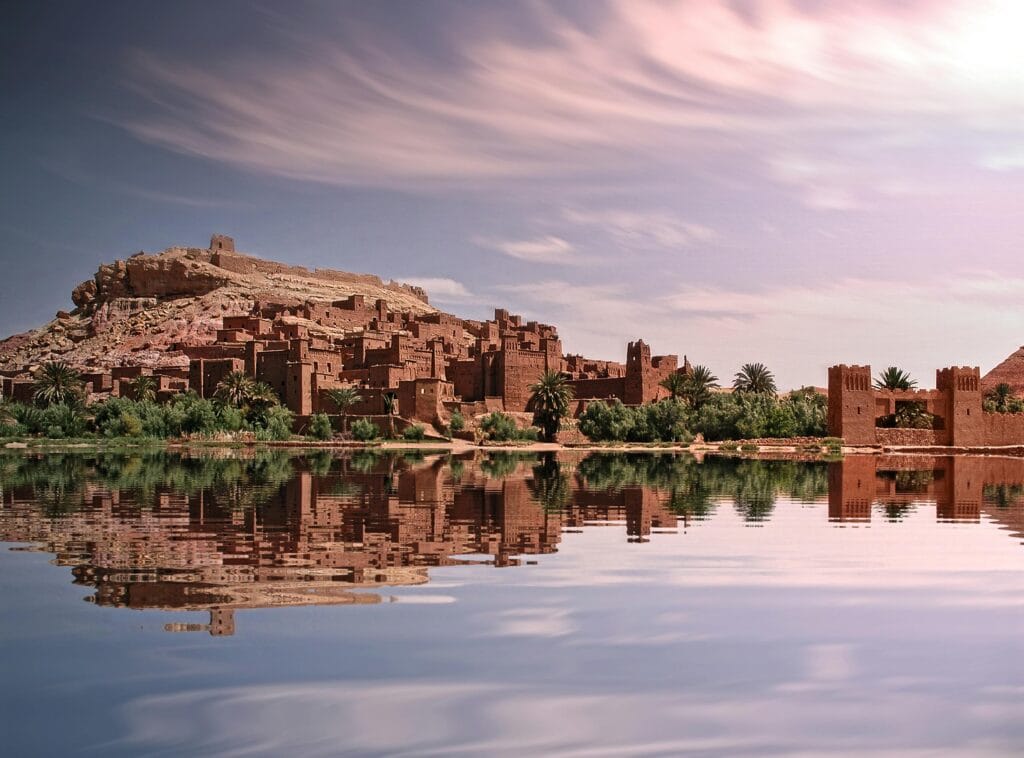
Tourism, cinema, and cultural heritage contribute significantly to the local economy. The city provides visitors with access to some of Morocco’s most spectacular natural and historical attractions.
Taroudant: The Ancient Capital of the Souss
Taroudant is one of Morocco’s most historically significant yet often overlooked cities. Located in the fertile Souss Valley between the High Atlas Mountains and the Anti-Atlas Mountains, Taroudant is frequently referred to as the “Grandmother of Marrakech” because of its ancient walls, traditional architecture, and historical importance.
The city has deep Amazigh roots and has long served as a center of trade, agriculture, and regional administration. During the sixteenth century, Taroudant became the first capital of the Saadian Dynasty before the rulers later moved their political center to Marrakech. This status contributed to the city’s development as an important political and economic hub.
Taroudant is famous for its remarkably well-preserved defensive walls, which extend for several kilometers around the old city. Constructed from reddish earth, these walls create a striking visual resemblance to Marrakech while preserving a more authentic and less crowded atmosphere.
The city remains closely connected to traditional Moroccan life. Its bustling souks offer local handicrafts, jewelry, leather goods, spices, and agricultural products. Unlike many heavily visited tourist destinations, Taroudant provides visitors with an opportunity to experience everyday Moroccan culture in a more relaxed setting.
The surrounding Souss region is among Morocco’s most productive agricultural areas, known for citrus fruits, olives, vegetables, and argan oil production. As a result, Taroudant plays an important role in the regional economy while maintaining strong connections to its Amazigh heritage.
Today, Taroudant stands as a living testament to Morocco’s history, offering a unique blend of cultural authenticity, historical significance, and traditional architecture. For those seeking to understand the heritage of southern Morocco, few cities provide a richer experience.
Morocco’s Cultural Diversity
The diversity of Morocco’s cities reflects the broader diversity of the nation itself. Each urban center contributes unique traditions, historical experiences, architectural styles, and cultural expressions to the country’s identity. Together, they form a network of communities that illustrates Morocco’s remarkable ability to preserve its heritage while embracing modernization.
The story of Morocco’s cities is ultimately the story of Morocco itself—a nation shaped by geography, history, trade, migration, and cultural exchange over thousands of years.
Moroccan Culture: A Living Mosaic of Traditions and Heritage
Moroccan culture is one of the richest and most diverse in the world. Shaped by thousands of years of history, it reflects the contributions of Amazigh, Arab, African, Andalusian, Mediterranean, Jewish, and European influences. Rather than replacing one another, these traditions gradually merged and interacted, creating a unique cultural identity that is distinctly Moroccan.
Culture in Morocco is not confined to museums or historical monuments. It is a living reality expressed through language, family relationships, hospitality, music, architecture, clothing, cuisine, craftsmanship, and everyday social interactions. Whether in a bustling city, a mountain village, or a desert oasis, cultural traditions continue to play an important role in daily life.
What makes Moroccan culture particularly remarkable is its ability to preserve ancient customs while adapting to changing social and economic realities. Modern Morocco is connected to global trends and technological developments, yet many traditional practices remain deeply rooted in society. This balance between continuity and change has helped shape the country’s distinctive character.
The Cultural Foundations of Morocco
Moroccan identity rests upon several historical and cultural foundations. The most ancient and enduring of these is the Amazigh heritage that has shaped North Africa for millennia. Indigenous Amazigh traditions continue to influence language, architecture, music, agriculture, craftsmanship, and social values throughout the country.
The arrival of Islam in the seventh century introduced new religious, intellectual, and cultural frameworks that became deeply integrated into Moroccan society. Islamic traditions influenced education, law, architecture, literature, and social customs while interacting with existing local practices.
The legacy of Al-Andalus also occupies an important place in Moroccan culture. Following the decline of Muslim rule in Spain, many scholars, artisans, musicians, and families settled in Morocco, bringing with them artistic traditions, architectural styles, and intellectual influences that enriched Moroccan civilization.
Morocco’s location at the crossroads of Africa and Europe further contributed to cultural diversity. Trade routes, migration, diplomacy, and commercial exchange created opportunities for interaction with peoples from many regions of the world.
The result is a society characterized by cultural complexity and historical depth, where multiple influences coexist and contribute to a shared national identity.
Hospitality: A Cornerstone of Moroccan Society
Hospitality is one of the most admired aspects of Moroccan culture. Welcoming guests is not simply a social courtesy; it is a deeply rooted cultural value that reflects respect, generosity, and community spirit.
Throughout Morocco, visitors are often greeted with warmth and kindness. Offering tea, food, or refreshments to guests is considered a natural expression of hospitality. Whether in urban homes or rural villages, hosts typically take pride in ensuring that visitors feel comfortable and respected.
This tradition has historical roots in both Amazigh customs and Islamic teachings, which emphasize generosity toward travelers and guests. In regions where communities depended on mutual support and cooperation, hospitality served practical as well as moral purposes.
The importance of hospitality remains visible today. Family gatherings, celebrations, and social visits often involve elaborate meals and extended conversations. Sharing food is viewed as a means of strengthening relationships and expressing appreciation.
For many visitors, the warmth of Moroccan hospitality leaves a lasting impression and becomes one of the most memorable aspects of their experience in the country.
Family and Community Life
Family occupies a central position in Moroccan society. Strong family bonds provide emotional support, social stability, and a sense of belonging. Relationships between generations are particularly important, and respect for parents and elders remains a widely valued principle.
Traditionally, extended families often lived close to one another and maintained strong connections. Although urbanization and modernization have influenced living arrangements, family networks continue to play an essential role in social life.
Community relationships are also significant. In many towns and villages, neighbors support one another during celebrations, religious events, and times of need. Cooperation and solidarity contribute to social cohesion and reinforce shared cultural values.
Marriage, births, religious holidays, and other important life events are typically celebrated with family and community participation. These occasions strengthen social ties while preserving cultural traditions.
The importance of family and community helps explain many aspects of Moroccan culture, including hospitality, mutual assistance, and respect for social relationships.
Traditional Moroccan Clothing
Traditional clothing remains an important expression of cultural identity in Morocco. While modern fashion is widely worn, traditional garments continue to play significant roles during religious celebrations, weddings, festivals, and formal occasions.
The djellaba is one of Morocco’s most recognizable garments. This long, loose-fitting robe with a hood is worn by both men and women and reflects centuries of cultural tradition. Different styles, fabrics, and decorations vary according to region, season, and occasion.
Women often wear the caftan during weddings and special celebrations. Moroccan caftans are renowned for their elegance, intricate embroidery, and luxurious fabrics. Over time, the caftan has evolved into a symbol of Moroccan craftsmanship and artistic creativity.
Traditional Amazigh clothing varies across regions and frequently incorporates vibrant colors, distinctive patterns, and handcrafted jewelry. These garments reflect local identities and cultural heritage while demonstrating remarkable artistic skill.
Clothing in Morocco serves practical purposes but also functions as a means of expressing cultural continuity, social identity, and regional traditions.
Moroccan Music and Performing Arts
Music occupies a central place in Moroccan cultural life. The country’s musical traditions reflect centuries of historical interaction and regional diversity, resulting in a rich variety of styles and genres.
Amazigh Music
Amazigh music is among Morocco’s oldest artistic traditions. Songs often address themes such as love, nature, history, community life, and cultural identity. Traditional instruments include drums, flutes, and stringed instruments that accompany vocal performances and dances.
Music frequently plays an important role during weddings, harvest celebrations, and community festivals. These performances help preserve cultural memory while strengthening social bonds.
Andalusian Music
Andalusian music represents one of Morocco’s most sophisticated classical traditions. Originating from the cultural exchanges between North Africa and Islamic Spain, this genre combines poetry, vocal performance, and instrumental accompaniment.
For centuries, Andalusian music has been associated with intellectual and artistic refinement. Today, it remains an important component of Morocco’s cultural heritage and is performed during festivals and special events.
Gnawa Music
Gnawa music reflects Morocco’s African heritage and spiritual traditions. Characterized by rhythmic percussion, distinctive melodies, and ceremonial elements, Gnawa performances create powerful musical experiences.
Originally associated with spiritual rituals and healing ceremonies, Gnawa music has gained international recognition and influenced musicians around the world.
Chaabi and Popular Music
Chaabi music is among the most popular genres in Morocco. Performed at weddings, celebrations, and public gatherings, it combines traditional influences with contemporary themes. Its accessibility and lively rhythms make it a favorite among diverse audiences.
Together, these musical traditions demonstrate the richness and diversity of Moroccan cultural expression.
Festivals and Celebrations
Festivals play an important role in preserving cultural traditions and bringing communities together. Throughout the year, Morocco hosts numerous religious, cultural, artistic, and regional celebrations.
Religious holidays such as Eid al-Fitr and Eid al-Adha are widely observed and involve family gatherings, communal meals, and acts of charity. These occasions reinforce social ties and reflect shared values.
Cultural festivals celebrate music, literature, heritage, and artistic achievement. Cities and regions across Morocco host events that showcase local traditions while attracting visitors from around the world.
Many Amazigh communities maintain seasonal festivals linked to agriculture, harvests, and regional customs. These celebrations often include music, dance, traditional foods, and communal activities.
Festivals contribute to cultural preservation while also supporting tourism and economic development.
Moroccan Arts and Crafts
Morocco has long been recognized for the excellence of its artisans. Traditional craftsmanship remains an important part of cultural life and contributes significantly to the country’s economy and international reputation.
Carpet Weaving
Moroccan carpets are among the most famous handicrafts in the world. Different regions produce distinctive styles characterized by unique colors, patterns, and weaving techniques.
Many designs incorporate symbols that reflect cultural beliefs, local traditions, and historical experiences. Handwoven carpets continue to represent both artistic expression and practical craftsmanship.

Pottery and Ceramics
Moroccan pottery combines functionality with artistic beauty. Cities such as Fez and Safi are particularly known for ceramic production, including decorative tiles, bowls, plates, and architectural elements.
Traditional techniques have been preserved for generations, resulting in products admired for their craftsmanship and aesthetic appeal.
Jewelry
Amazigh jewelry occupies a special place within Moroccan artistic traditions. Silver ornaments decorated with geometric motifs often carry symbolic meanings related to identity, protection, and social status.
The diversity of jewelry styles reflects the cultural richness of Morocco’s regions and communities.
Leatherwork
Moroccan leather goods are internationally renowned. Artisans produce bags, slippers, belts, and decorative items using traditional methods that have been refined over centuries.
The leather industry remains particularly associated with Fez, where historic tanneries continue to operate.
Woodwork and Metalwork
Craftsmen throughout Morocco create intricate wood carvings, doors, furniture, lamps, and metal objects. Their work demonstrates exceptional skill and contributes to the country’s architectural and artistic heritage.
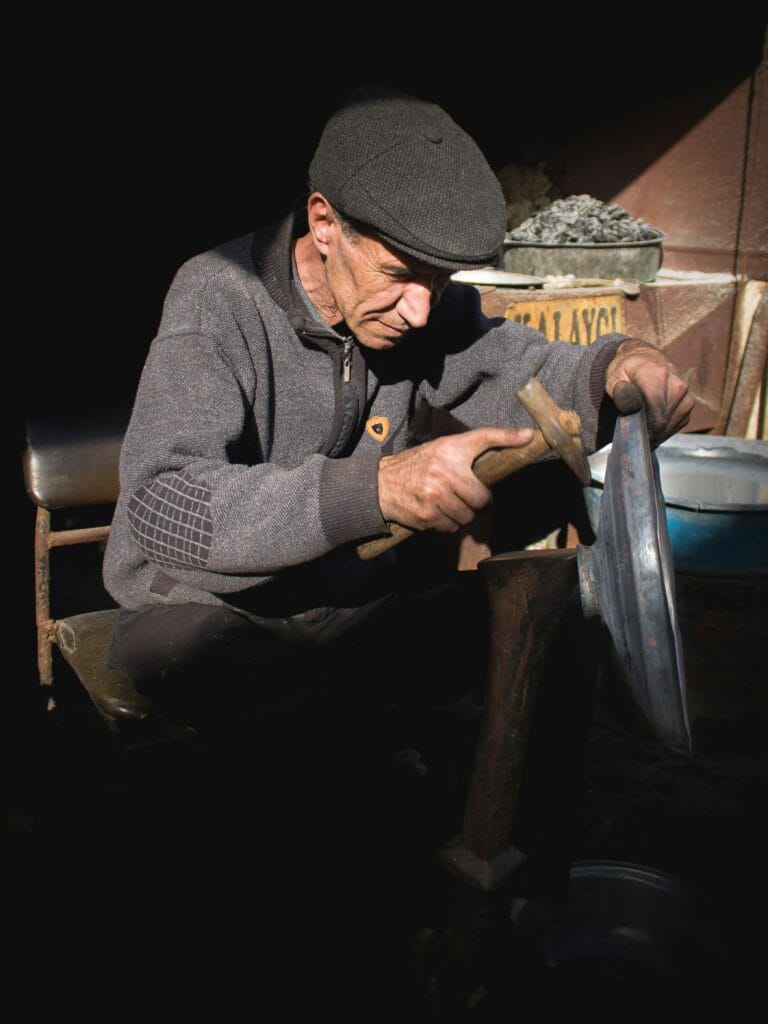
These crafts not only preserve cultural traditions but also provide livelihoods for thousands of artisans.
Daily Life in Morocco
Daily life in Morocco varies according to region, profession, and lifestyle, yet certain cultural values remain widely shared. Family relationships, hospitality, respect, and community participation continue to shape social interactions.
Markets, known as souks, remain important centers of commerce and social life. Here, people purchase goods, exchange news, and maintain community connections. Traditional markets coexist alongside modern shopping centers, illustrating the blend of old and new that characterizes contemporary Morocco.
Tea drinking occupies a special place in everyday life. Sharing mint tea often accompanies conversations, business meetings, family gatherings, and social visits. The preparation and serving of tea represent both hospitality and cultural tradition.
Across Morocco, daily routines reflect a balance between tradition and modernity. While lifestyles continue to evolve, cultural values rooted in history remain central to the country’s identity.
Morocco’s Architectural Heritage
Few countries possess an architectural heritage as rich and diverse as Morocco’s. From Amazigh kasbahs and fortified villages to imperial palaces, mosques, medinas, and riads, Moroccan architecture reflects centuries of artistic innovation and cultural exchange.
Architecture in Morocco is more than a collection of buildings. It is a visual expression of history, identity, religion, craftsmanship, and environmental adaptation.
Moroccan Architecture: A Legacy of Art, Identity, and Innovation
Moroccan architecture is among the most distinctive and admired architectural traditions in the world. Over centuries, builders, artisans, and craftsmen developed styles that reflect the country’s Amazigh roots, Islamic heritage, Andalusian influences, African connections, and local environmental conditions. The result is a rich architectural landscape that combines beauty, functionality, and cultural symbolism.
From the winding streets of ancient medinas to the towering minarets of historic mosques, from mountain kasbahs to elegant urban riads, Moroccan architecture tells the story of a civilization shaped by diverse influences and centuries of creativity. It reflects not only aesthetic preferences but also social values, religious beliefs, climatic adaptation, and technological knowledge.
One of the most remarkable characteristics of Moroccan architecture is its emphasis on craftsmanship. Decorative tilework, carved plaster, painted wood, geometric patterns, and intricate calligraphy transform buildings into works of art. These traditions continue to inspire architects and designers around the world.
The Influence of Geography on Moroccan Architecture
Morocco’s diverse landscapes have significantly influenced architectural development. Builders adapted construction techniques and materials to local environments, creating regional styles that reflect both practical needs and cultural traditions.
In mountain regions, houses were often built using stone and earth to provide protection from harsh weather conditions. Thick walls helped regulate indoor temperatures, while compact settlements offered security and efficient use of space.
In desert regions, adobe and rammed-earth construction became common. These materials provided insulation against extreme heat during the day and cold temperatures at night. Fortified villages and kasbahs emerged as practical solutions for protecting communities and trade routes.
Coastal cities developed architectural features suited to maritime environments, while urban centers incorporated influences from trade, migration, and political power. Despite regional variations, Moroccan architecture maintained a strong sense of visual coherence through shared artistic traditions and construction methods.
The Medina: The Historic Heart of Moroccan Cities
The medina is one of the most recognizable elements of Moroccan urban life. Found in cities such as Fez, Marrakech, Meknes, Tetouan, and Rabat, medinas are historic urban centers characterized by narrow streets, traditional markets, residential neighborhoods, mosques, and public spaces.
The layout of the medina reflects centuries of social and economic development. Streets were designed primarily for pedestrians and animals rather than vehicles, creating intimate urban environments that encourage social interaction.
Within the medina, different areas often specialized in particular crafts or commercial activities. Artisans producing leather goods, textiles, ceramics, metalwork, or jewelry traditionally worked in designated quarters, creating vibrant centers of economic activity.
Medinas also served important social and cultural functions. Mosques, schools, fountains, baths, and public squares provided spaces for worship, education, commerce, and community life.
Today, Morocco’s medinas remain among the country’s most valuable cultural treasures. Several have been recognized as UNESCO World Heritage Sites due to their historical significance and exceptional preservation.
Riads: The Hidden Beauty of Moroccan Homes
The riad represents one of the most elegant forms of traditional Moroccan architecture. These houses are typically organized around a central courtyard that serves as the heart of the home.
From the outside, many riads appear simple and unassuming. Their exterior walls often contain few decorative elements, reflecting cultural values related to privacy and modesty. Inside, however, visitors discover elaborate courtyards adorned with fountains, gardens, mosaic tilework, carved wood, and decorative plaster.
The design of the riad offers practical advantages as well as aesthetic beauty. The central courtyard provides natural ventilation and helps regulate temperatures, creating a comfortable environment even during hot weather.
Historically, riads were homes for wealthy families, merchants, and influential figures. Today, many have been restored and transformed into guesthouses, hotels, and cultural spaces, allowing visitors to experience traditional Moroccan architecture firsthand.
The enduring popularity of riads demonstrates the timeless appeal of Moroccan design principles that combine elegance, functionality, and environmental adaptation.
Kasbahs: Fortresses of the South
Kasbahs are fortified structures that played important roles in Morocco’s history, particularly in the southern and southeastern regions. Built using earth-based materials such as adobe and rammed earth, these structures served as residences, administrative centers, and defensive strongholds.
Many kasbahs were strategically located along trade routes that connected North Africa with sub-Saharan Africa. Their fortified walls provided protection for communities, travelers, and valuable goods moving across the region.
The architecture of kasbahs reflects both practical concerns and artistic traditions. Towers, defensive walls, decorative motifs, and geometric patterns contribute to their distinctive appearance.
One of the most famous examples is the Kasbah of Taourirt in Ouarzazate, which illustrates the complexity and sophistication of traditional southern Moroccan architecture. Numerous other kasbahs throughout the Atlas Mountains and desert regions continue to attract historians, architects, and travelers.
These structures stand as reminders of Morocco’s role in trans-Saharan commerce and its long history of regional interaction.
Ait Benhaddou: A Masterpiece of Earthen Architecture
Among Morocco’s most celebrated architectural landmarks is Ait Benhaddou, a fortified village located along an ancient caravan route between the Sahara and Marrakech.
Constructed primarily from earth and straw, the settlement demonstrates the ingenuity of traditional building techniques. Its towers, walls, and interconnected structures create a dramatic silhouette against the surrounding landscape.
For centuries, Ait Benhaddou served as a center of trade and community life. Merchants traveling between different regions found shelter and security within its fortified walls.
The village has gained international recognition as a UNESCO World Heritage Site and has appeared in numerous films and television productions. Despite these modern associations, its historical significance remains rooted in its role as a living example of traditional Moroccan architecture.
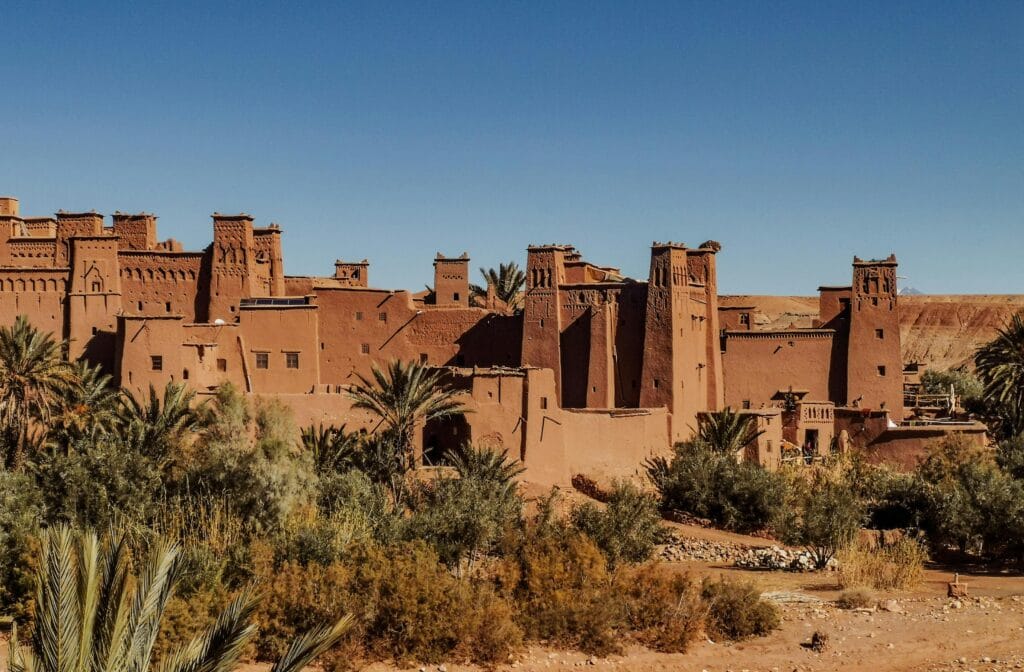
Ait Benhaddou illustrates how local materials, environmental adaptation, and artistic vision combined to create enduring architectural achievements.
Moroccan Mosques and Religious Architecture
Mosques occupy a central place in Moroccan architectural heritage. Beyond their religious functions, they have historically served as centers of education, scholarship, and community life.
Moroccan mosque architecture is characterized by elegant proportions, decorative craftsmanship, and harmonious integration with surrounding urban environments. Features commonly include courtyards, prayer halls, minarets, fountains, and intricate ornamentation.
The Koutoubia Mosque
Located in Marrakech, the Koutoubia Mosque is one of Morocco’s most famous landmarks. Built during the Almohad period, its towering minaret became a model for later structures throughout the region.
The mosque exemplifies the balance between simplicity and grandeur that characterizes much of Moroccan religious architecture.
The Hassan II Mosque
Situated in Casablanca, the Hassan II Mosque represents one of the most ambitious architectural projects in modern Morocco. Its location overlooking the Atlantic Ocean creates a striking visual effect, while its immense scale reflects contemporary engineering capabilities.
The mosque incorporates traditional Moroccan craftsmanship alongside modern construction techniques, symbolizing the country’s connection to both heritage and innovation.
The Hassan Tower
The Hassan Tower in Rabat is an unfinished minaret dating to the Almohad period. Although construction was never completed, the structure remains one of Morocco’s most important historical monuments and a symbol of medieval architectural ambition.
Together, these landmarks illustrate the diversity and sophistication of Moroccan religious architecture.
Decorative Arts in Moroccan Architecture
One of the defining characteristics of Moroccan architecture is the integration of decorative arts into building design. Rather than serving as mere ornamentation, these artistic elements contribute to the overall harmony and identity of architectural spaces.
Zellige Tilework
Zellige is a traditional mosaic art form created by assembling individually cut pieces of colored tile into intricate geometric patterns. This technique requires extraordinary precision and craftsmanship.
Found in mosques, palaces, fountains, homes, and public buildings, zellige represents one of Morocco’s most celebrated artistic traditions.
Carved Plaster
Artisans create elaborate decorative designs by carving plaster into geometric, floral, and calligraphic motifs. These decorations add texture, depth, and visual complexity to architectural surfaces.
Wood Carving
Wooden ceilings, doors, screens, and furniture often feature intricate carvings that demonstrate exceptional artistic skill. Cedar wood from Morocco’s forests has traditionally been favored for this purpose.
Calligraphy
Arabic calligraphy occupies an important place in Moroccan architecture. Religious texts, poetic verses, and decorative inscriptions enhance buildings while conveying cultural and spiritual meanings.
These decorative arts transform architectural spaces into expressions of cultural identity and artistic achievement.
UNESCO World Heritage Sites in Morocco
Morocco is home to numerous UNESCO World Heritage Sites that reflect its extraordinary historical and cultural significance.
The Medina of Fez preserves one of the world’s best examples of a medieval Islamic city. Marrakech, with its historic monuments and vibrant urban culture, also holds UNESCO status.
Other recognized sites include Meknes, Tetouan, Essaouira, Rabat, Volubilis, and Ait Benhaddou. Together, these locations showcase the diversity of Moroccan heritage and highlight the country’s contributions to world civilization.
The preservation of these sites ensures that future generations can continue to learn from and appreciate Morocco’s rich architectural legacy.
Architecture as a Reflection of Moroccan Identity
Moroccan architecture represents far more than a collection of buildings. It embodies the country’s history, cultural diversity, artistic creativity, and environmental knowledge.
Amazigh traditions, Islamic values, Andalusian influences, African connections, and local innovations all contributed to the development of architectural forms that are uniquely Moroccan. The enduring beauty of medinas, riads, kasbahs, mosques, and monuments reflects centuries of cultural continuity and adaptation.
Today, architects and planners continue to draw inspiration from traditional principles while addressing contemporary needs. As Morocco modernizes, its architectural heritage remains a powerful symbol of national identity and cultural pride.
Moroccan Cuisine: A Culinary Tradition Shaped by History
Few aspects of Moroccan culture are as internationally celebrated as its cuisine. Moroccan food reflects centuries of cultural exchange, regional diversity, agricultural abundance, and culinary innovation. Combining Amazigh, Arab, Andalusian, African, Mediterranean, and Jewish influences, Moroccan cuisine has developed into one of the most distinctive culinary traditions in the world.
Food in Morocco is more than nourishment; it is a reflection of hospitality, family life, cultural identity, and social connection. Meals often bring people together, strengthening relationships and preserving traditions passed down through generations.
Moroccan Culture, and Diversity
Moroccan cuisine is widely regarded as one of the finest and most diverse culinary traditions in the world. Rich in flavor, history, and cultural symbolism, it reflects centuries of interaction between Amazigh, Arab, Andalusian, African, Mediterranean, Jewish, and Saharan influences. The result is a culinary heritage that combines aromatic spices, fresh ingredients, sophisticated cooking techniques, and a deep appreciation for hospitality.
Food occupies a central place in Moroccan society. Meals are more than opportunities for nourishment; they are moments of social connection, family unity, and cultural expression. Whether shared during religious celebrations, family gatherings, weddings, or everyday meals, food serves as a powerful symbol of generosity and community.
The diversity of Morocco’s geography also contributes significantly to its cuisine. Coastal regions provide abundant seafood, fertile plains produce fruits and vegetables, mountain areas offer unique agricultural products, and desert communities contribute culinary traditions adapted to challenging environments. This combination of cultural and environmental influences has created a remarkably varied gastronomic landscape.
Today, Moroccan cuisine enjoys international recognition and continues to attract food enthusiasts from around the world. Yet its true significance lies not only in its flavors but also in its ability to preserve centuries of history and cultural identity.
The Historical Origins of Moroccan Cuisine
The foundations of Moroccan cuisine can be traced to the indigenous Amazigh communities that inhabited North Africa long before the arrival of later civilizations. Early Amazigh societies developed agricultural practices adapted to local environments and relied on grains, olives, legumes, fruits, herbs, and livestock as essential components of their diets.
Over time, new influences enriched these culinary traditions. The arrival of Islam introduced additional ingredients, dietary customs, and culinary techniques that became integrated into local food culture. Trade routes connecting Morocco with Africa, Europe, and the Middle East facilitated the exchange of spices, fruits, vegetables, and cooking methods.
The influence of Al-Andalus proved particularly significant. Following the decline of Muslim rule in the Iberian Peninsula, many families settled in Morocco, bringing sophisticated culinary traditions that contributed to the refinement of Moroccan cuisine. Techniques involving sweet and savory combinations, elaborate pastries, and complex spice blends became increasingly popular.
Jewish communities also played important roles in shaping Moroccan food traditions, contributing recipes, preservation techniques, and festive dishes that enriched the country’s culinary diversity.
The cumulative effect of these historical interactions produced a cuisine that is uniquely Moroccan while reflecting centuries of cultural exchange.
The Importance of Bread in Moroccan Life
Bread occupies a fundamental place in Moroccan cuisine and daily life. In many households, bread accompanies nearly every meal and serves both practical and symbolic functions.
Traditional Moroccan bread, often baked in communal ovens or local bakeries, is typically round and dense enough to be used for scooping food. Sharing bread during meals reflects values of community, hospitality, and mutual respect.
Different regions produce distinctive varieties of bread adapted to local preferences and ingredients. Some are made from wheat flour, while others incorporate barley or other grains. Special breads are often prepared during religious holidays and family celebrations.
The central role of bread highlights the importance of agriculture and communal traditions within Moroccan society.
Couscous: Morocco’s Most Iconic Dish
No discussion of Moroccan cuisine would be complete without couscous. Often considered the national dish of Morocco, couscous has been a staple food for centuries and remains deeply embedded in cultural traditions.
Couscous consists of tiny granules made from semolina wheat that are carefully steamed to achieve a light and fluffy texture. Traditionally, it is served with vegetables, legumes, and meat, creating a balanced and nourishing meal.
The preparation of couscous requires skill and patience. In many families, recipes and techniques are passed down through generations, preserving culinary knowledge and family traditions.
Friday holds particular significance for couscous in Morocco. Following communal prayers, many families gather to share couscous as part of a weekly tradition that reinforces social and familial bonds.
Regional variations of couscous demonstrate the diversity of Moroccan cuisine. Ingredients and flavor profiles vary according to local agricultural products and cultural preferences, resulting in a wide range of interpretations of this beloved dish.
Beyond its culinary importance, couscous symbolizes hospitality, community, and cultural continuity throughout Morocco.
Tagine: A Symbol of Moroccan Culinary Art
Tagine is both a cooking vessel and one of Morocco’s most famous culinary creations. The traditional earthenware pot features a conical lid that helps retain moisture and concentrate flavors during cooking.
Tagines can be prepared using a wide variety of ingredients, including lamb, beef, chicken, fish, vegetables, dried fruits, nuts, herbs, and spices. Slow cooking allows flavors to develop gradually, producing rich and aromatic dishes.
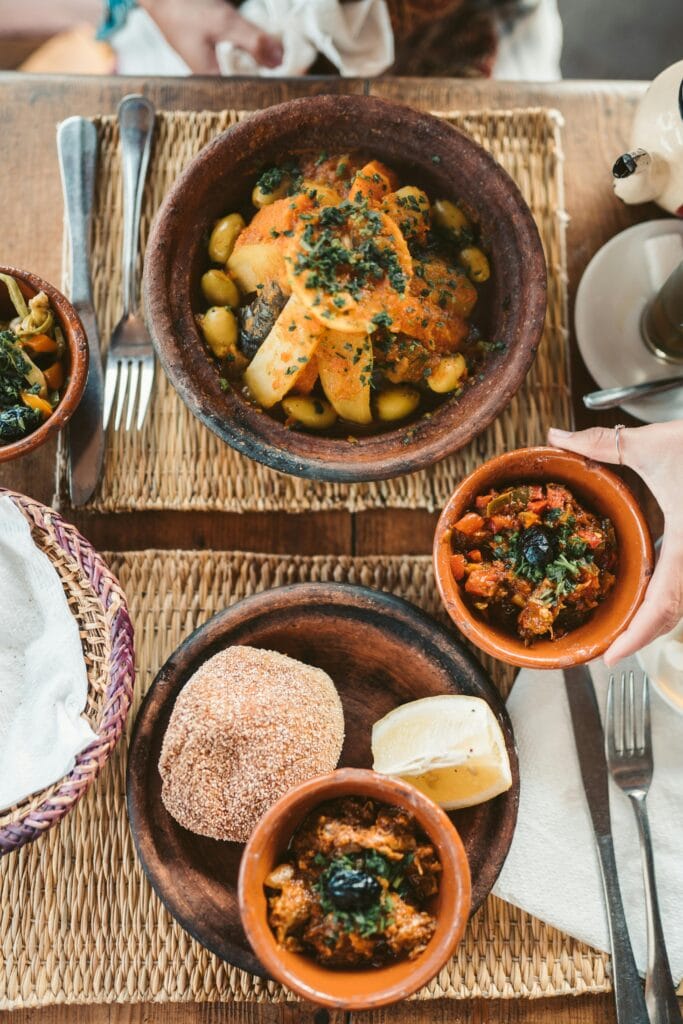
One of the defining characteristics of Moroccan tagines is the balance between sweet and savory elements. Ingredients such as apricots, prunes, dates, almonds, and honey are often combined with meat and spices to create complex flavor profiles.
Regional differences contribute to the diversity of tagine recipes. Coastal areas may emphasize seafood, while mountain and inland regions often feature meat and seasonal vegetables.
The tagine represents the creativity and sophistication of Moroccan cuisine. Its popularity extends far beyond Morocco, making it one of the country’s most recognizable cultural symbols.
Harira: The Soup of Tradition and Celebration
Harira is among Morocco’s most cherished soups and holds a special place in cultural and religious life. Rich, hearty, and nutritious, it typically contains tomatoes, lentils, chickpeas, herbs, spices, and sometimes meat.
The soup is particularly associated with the holy month of Ramadan, when it is traditionally consumed to break the daily fast. Its nutritional value and comforting qualities make it an ideal meal after a day of abstinence.
However, harira is not limited to religious occasions. It is enjoyed throughout the year and is often served during family gatherings, celebrations, and special events.
Regional and family recipes vary considerably, reflecting the diversity of Moroccan culinary traditions. Despite these variations, harira remains a symbol of warmth, hospitality, and shared cultural identity.
Pastilla: A Masterpiece of Moroccan Gastronomy
Pastilla is one of the most sophisticated dishes in Moroccan cuisine and demonstrates the influence of Andalusian culinary traditions. This elaborate pie combines delicate pastry layers with savory and sweet ingredients.
Traditionally prepared with pigeon meat, modern versions often use chicken or seafood. The filling is typically seasoned with spices and layered within thin pastry before being baked to perfection.
One of the most distinctive features of pastilla is the contrast between sweet and savory flavors. Powdered sugar and cinnamon are often sprinkled over the finished dish, creating a unique culinary experience that reflects the complexity of Moroccan gastronomy.
Pastilla is commonly served during weddings, celebrations, and important social occasions. Its preparation requires considerable skill, making it a symbol of culinary artistry and hospitality.
Moroccan Mint Tea: More Than a Beverage
Mint tea occupies a special place in Moroccan culture and is often regarded as a symbol of hospitality and social interaction. Prepared using green tea, fresh mint leaves, and sugar, it is served throughout the day in homes, businesses, and public spaces.
The preparation and serving of tea involve rituals that reflect cultural values related to generosity and respect. Hosts often take pride in presenting tea elegantly, pouring it from a height to create a characteristic foam.

Tea accompanies conversations, family gatherings, business meetings, and celebrations. Offering tea to guests is considered a fundamental expression of hospitality and welcome.
Although tea itself was introduced relatively recently in historical terms, it has become deeply integrated into Moroccan cultural life and is now one of the country’s most recognizable traditions.
The Role of Spices in Moroccan Cuisine
Spices are essential to Moroccan cooking and contribute significantly to its distinctive character. Rather than creating excessive heat, Moroccan spices are typically used to enhance complexity, aroma, and balance.
Common spices include:
- Saffron
- Cinnamon
- Cumin
- Ginger
- Turmeric
- Paprika
- Coriander
- Black pepper
- Anise
- Nutmeg
One of the most famous spice blends is Ras El Hanout, a mixture that may contain dozens of ingredients. The composition varies according to region and individual preference, reflecting the creativity of Moroccan culinary traditions.
Spices contribute not only flavor but also historical significance, as they reflect Morocco’s long participation in international trade networks connecting Africa, Europe, and Asia.
Regional Diversity in Moroccan Cuisine
Morocco’s culinary landscape varies considerably from one region to another. Geography, climate, agricultural production, and historical influences all contribute to regional diversity.
Northern Morocco
Northern regions display strong Mediterranean and Andalusian influences. Seafood, olive oil, and fresh vegetables feature prominently in local cuisine.
Atlantic Coast
Coastal cities benefit from abundant seafood resources. Fish dishes, shellfish, and maritime culinary traditions play important roles in local diets.
Atlas Mountains
Mountain communities often emphasize hearty dishes prepared with grains, legumes, dairy products, and locally raised livestock. Traditional Amazigh culinary practices remain particularly strong in these regions.
Sahara and Southern Morocco
Southern regions feature cuisine adapted to desert environments. Dates, preserved foods, spices, and ingredients associated with caravan trade routes contribute to distinctive culinary traditions.
Souss Region and Taroudant
The Souss Valley, including the region surrounding Taroudant, is known for its agricultural abundance. Argan oil, almonds, olives, citrus fruits, and fresh produce play important roles in local cuisine.
These regional variations enrich Moroccan gastronomy and demonstrate the country’s remarkable cultural diversity.
Traditional Sweets and Pastries
Moroccan cuisine includes a wide variety of sweets and pastries often associated with celebrations, hospitality, and religious holidays.
Many desserts incorporate ingredients such as almonds, honey, sesame seeds, orange blossom water, cinnamon, and dates. Delicate pastries are frequently served alongside mint tea during social gatherings.
The preparation of these sweets reflects generations of culinary expertise and artistic creativity. Their intricate designs and rich flavors contribute to Morocco’s reputation for gastronomic excellence.
Food and Hospitality in Moroccan Society
Food serves as an important expression of hospitality throughout Morocco. Preparing and sharing meals demonstrates respect, generosity, and appreciation for guests.
Large communal meals are common during celebrations and family gatherings. These occasions strengthen social bonds and reinforce cultural traditions that emphasize togetherness and mutual support.
The act of eating together remains an essential aspect of Moroccan social life. Whether during religious holidays, weddings, festivals, or everyday meals, food provides opportunities for connection and community.
Moroccan Cuisine in the Modern World
Today, Moroccan cuisine enjoys global recognition and continues to influence chefs, restaurants, and food enthusiasts around the world. Its emphasis on fresh ingredients, balanced flavors, and cultural authenticity appeals to diverse audiences.
At the same time, Morocco continues to preserve traditional culinary knowledge through families, local communities, markets, and culinary institutions. Ancient recipes coexist with contemporary innovations, ensuring that Moroccan gastronomy remains both dynamic and deeply rooted in heritage.
The enduring popularity of Moroccan cuisine reflects its ability to combine history, culture, artistry, and hospitality into a uniquely memorable culinary experience.
Morocco’s Economy: Agriculture, Industry, Tourism, Renewable Energy, and Global Trade
Beyond its cultural richness and historical significance, Morocco has developed one of the most diversified economies in Africa. Understanding Morocco’s economy is essential to understanding the country’s modern transformation and growing role on the international stage.
The next section will cover:
- Agriculture and Argan Oil
- Fishing Industry
- Phosphate Resources
- Manufacturing and Industry
- Renewable Energy Projects
- Tourism Sector
- International Trade
- Infrastructure Development
- Morocco’s Economic Future
Morocco’s Economy: Growth, Diversification, and Development
Morocco possesses one of the most diversified and dynamic economies in Africa. Over the past several decades, the kingdom has pursued ambitious economic reforms, infrastructure investments, industrial development strategies, and international partnerships that have transformed many sectors of the national economy. While agriculture remains important, Morocco has increasingly expanded into manufacturing, renewable energy, automotive production, aerospace industries, logistics, tourism, and digital services.
The country’s strategic geographic position at the crossroads of Africa, Europe, and the Atlantic world has played a crucial role in its economic development. Morocco serves as a gateway between continents, facilitating trade, investment, and commercial exchange. Combined with political stability, modern infrastructure, and an expanding industrial base, these advantages have strengthened Morocco’s position within regional and global markets.
Although challenges remain, including regional disparities, water scarcity, and employment concerns, Morocco continues to pursue long-term development strategies aimed at promoting sustainable growth and improving living standards.
Agriculture: The Historical Foundation of the Economy
Agriculture has been the backbone of Morocco’s economy for centuries and continues to play a vital role in rural livelihoods, food production, and exports. The country’s diverse climates and fertile regions support a wide variety of agricultural activities.
Major agricultural products include:
- Wheat
- Barley
- Olives
- Citrus fruits
- Tomatoes
- Dates
- Almonds
- Grapes
- Vegetables
- Argan products
Agriculture provides employment for a significant portion of the population, particularly in rural areas. Seasonal rainfall patterns strongly influence agricultural productivity, making water management a critical issue for the sector.
Modernization efforts have introduced irrigation systems, agricultural technologies, and improved farming practices that help increase productivity and resilience. Government programs have encouraged investment in high-value crops and export-oriented agriculture while supporting rural development.
Despite ongoing challenges related to climate variability and drought, agriculture remains a cornerstone of Morocco’s economic and cultural identity.
Argan Oil: Morocco’s Liquid Gold
Few products are more closely associated with Morocco than argan oil. Produced primarily in the Souss region and surrounding areas, argan oil has gained international recognition for its culinary, cosmetic, and medicinal applications.
The argan tree grows naturally in southwestern Morocco and represents a unique ecological resource. For generations, Amazigh communities have harvested argan nuts and developed traditional methods for extracting the valuable oil.
Culinary argan oil is prized for its distinctive flavor and nutritional properties, while cosmetic argan oil has become a major ingredient in global beauty and skincare products. The growing international demand for argan oil has created economic opportunities for local communities and women’s cooperatives.
Beyond its economic significance, the argan tree contributes to environmental sustainability by helping combat desertification and protecting fragile ecosystems. UNESCO has recognized the ecological and cultural importance of Morocco’s argan forests.
Today, argan oil serves as both a symbol of Moroccan heritage and an important export product that connects local traditions to global markets.
The Fishing Industry
Morocco possesses one of the longest coastlines in Africa, extending along both the Atlantic Ocean and the Mediterranean Sea. These extensive maritime resources support a significant fishing industry that contributes to employment, food security, and exports.
The Atlantic coast is particularly rich in marine resources, making Morocco one of Africa’s leading fishing nations. Fisheries provide a wide range of products, including:
- Sardines
- Tuna
- Anchovies
- Shellfish
- Various seafood products
Fishing communities have long played important roles in coastal economies and cultural traditions. Major ports such as Agadir, Casablanca, Dakhla, and Safi support commercial fishing activities and seafood processing industries.
The government has implemented policies aimed at promoting sustainable fishing practices, improving resource management, and increasing the value of processed seafood exports.
As global demand for seafood continues to grow, Morocco’s fishing sector remains an important contributor to economic development.
Phosphate Resources: A Strategic National Asset
Morocco is home to some of the world’s largest phosphate reserves, making phosphate mining one of the country’s most strategically important industries.
Phosphates are essential for fertilizer production, which plays a crucial role in global agriculture. As a result, Morocco occupies a significant position within international agricultural supply chains.
The country’s phosphate industry supports employment, export revenues, industrial development, and technological innovation. Investments in processing facilities have allowed Morocco to move beyond raw material extraction and increase the value of its exports.
The phosphate sector also contributes to scientific research and industrial modernization. Through technological advancement and international partnerships, Morocco has strengthened its role as a major supplier of agricultural inputs to global markets.
Given the importance of food production worldwide, phosphate resources are likely to remain a key strategic asset for Morocco in the future.
Industrial Development and Manufacturing
Over the past two decades, Morocco has made substantial progress in industrial development. Government initiatives have encouraged investment in manufacturing sectors capable of generating employment, exports, and technological advancement.
Industrial zones and special economic areas have attracted both domestic and foreign investors. These developments have helped diversify the economy and reduce dependence on traditional sectors.
Key manufacturing industries include:
- Automotive production
- Aerospace manufacturing
- Electronics
- Textiles
- Food processing
- Chemical industries
Industrial expansion has been supported by infrastructure improvements, workforce development programs, and policies aimed at enhancing competitiveness.
As Morocco continues to strengthen its manufacturing capabilities, industry is expected to play an increasingly important role in economic growth.
Morocco’s Automotive Industry
The automotive sector has become one of Morocco’s most successful industrial achievements. Through strategic investment, international partnerships, and industrial planning, Morocco has emerged as a major automotive manufacturing hub.
Modern production facilities manufacture vehicles and automotive components for export to numerous international markets. The industry benefits from Morocco’s proximity to Europe, modern transportation infrastructure, and skilled workforce.
Automotive production contributes significantly to:
- Export revenues
- Employment creation
- Industrial diversification
- Technology transfer
- Economic modernization
The continued growth of this sector demonstrates Morocco’s ability to compete in advanced manufacturing industries on a global scale.
Aerospace and High-Tech Industries
In addition to automotive manufacturing, Morocco has developed a growing aerospace sector. International companies have established operations within specialized industrial zones, contributing to technological development and workforce training.
Aerospace activities include component manufacturing, engineering services, and technical support operations. These industries require highly skilled labor and promote innovation throughout the economy.
The expansion of high-tech sectors reflects Morocco’s broader strategy of moving toward knowledge-based economic activities that generate long-term value and competitiveness.
Renewable Energy and Sustainable Development
Morocco has emerged as a leader in renewable energy development within Africa and the Middle East. Recognizing the importance of energy security and environmental sustainability, the country has invested heavily in renewable energy infrastructure.
Solar and wind energy projects have become central components of Morocco’s development strategy. The country’s abundant sunshine and favorable wind conditions provide significant opportunities for clean energy production.
Major objectives include:
- Reducing dependence on imported energy
- Increasing renewable energy capacity
- Supporting environmental sustainability
- Meeting growing domestic energy demand
- Contributing to climate change mitigation efforts
Renewable energy investments have positioned Morocco as an important example of sustainable development within the region.
Tourism: A Pillar of the Moroccan Economy
Tourism is one of Morocco’s most important economic sectors. The country’s extraordinary combination of history, culture, landscapes, cuisine, architecture, and hospitality attracts millions of visitors each year.
Tourists come to Morocco for many reasons, including:
- Exploring imperial cities
- Visiting historic medinas
- Experiencing Amazigh culture
- Discovering the Sahara Desert
- Enjoying Atlantic and Mediterranean coastlines
- Hiking in the Atlas Mountains
- Experiencing Moroccan cuisine
- Attending festivals and cultural events
Cities such as Marrakech, Fez, Rabat, Tangier, Agadir, Chefchaouen, Essaouira, and Taroudant have become major destinations for domestic and international travelers.
Tourism generates employment across numerous sectors, including transportation, hospitality, handicrafts, food services, and cultural industries. The continued growth of tourism supports economic diversification and regional development.
Infrastructure and Transportation
Modern infrastructure has played a critical role in Morocco’s economic transformation. Significant investments have improved transportation networks, logistics capabilities, and connectivity throughout the country.
Infrastructure developments include:
- Modern highways
- Expanded railway systems
- High-speed rail services
- International airports
- Maritime ports
- Logistics hubs
These projects facilitate trade, tourism, industrial development, and regional integration. Improved connectivity also enhances access to markets and opportunities for businesses and communities.
Infrastructure modernization remains a central component of Morocco’s long-term development strategy.
International Trade and Global Partnerships
Morocco maintains extensive trade relationships with countries across Europe, Africa, the Middle East, Asia, and the Americas. Its strategic location provides access to major international shipping routes and commercial networks.
Key export categories include:
- Automotive products
- Agricultural goods
- Phosphates and fertilizers
- Textiles
- Seafood
- Industrial products
Trade agreements and economic partnerships have expanded market access and encouraged foreign investment. Morocco’s role as a bridge between Africa and Europe strengthens its position within global commerce.
The country’s growing economic integration reflects its ambition to become a regional hub for trade, manufacturing, logistics, and investment.
Challenges Facing the Moroccan Economy
Despite considerable progress, Morocco continues to face several important economic challenges.
Water scarcity remains a major concern due to recurring droughts and climate variability. Sustainable management of water resources is essential for agriculture, industry, and urban development.
Other challenges include:
- Regional economic disparities
- Youth unemployment
- Rural development needs
- Environmental sustainability
- Climate adaptation
- Educational and workforce development
Addressing these issues will require continued investment, innovation, and policy reform. However, Morocco’s progress over recent decades demonstrates its capacity to adapt and pursue long-term development goals.
The Future of Morocco’s Economy
The future of Morocco’s economy will likely be shaped by diversification, innovation, sustainability, and regional integration. Investments in renewable energy, advanced manufacturing, technology, infrastructure, and education position the country for continued growth.
Morocco’s strategic location, cultural richness, political stability, and economic ambition provide important advantages as it seeks to strengthen its role within Africa and the broader international community.
As global economic conditions evolve, Morocco is increasingly viewed as a bridge between continents, a center of industrial development, and a leader in sustainable economic transformation.
The kingdom’s ability to balance modernization with cultural preservation remains one of its most distinctive strengths.
Morocco’s Natural Landscapes and Biodiversity
Beyond its cities, culture, cuisine, and economy, Morocco is blessed with extraordinary natural beauty. From the snow-capped peaks of the High Atlas Mountains to the golden dunes of the Sahara, from Atlantic coastlines to cedar forests and fertile valleys, Morocco possesses one of the most diverse natural environments in Africa.
The next section will explore:
- The Atlas Mountains
- The Rif Mountains
- The Sahara Desert
- The Argan Forests
- National Parks
- Wildlife and Biodiversity
- Beaches and Coastal Landscapes
- Oases and Valleys
- Environmental Conservation
- Climate and Seasonal Diversity
Morocco’s Natural Landscapes and Biodiversity
Morocco is one of the most geographically diverse countries in Africa. Its landscapes range from snow-covered mountain peaks and fertile plains to vast deserts, dramatic coastlines, lush valleys, and ancient forests. This diversity has shaped Morocco’s history, culture, economy, and settlement patterns for thousands of years.
The country’s position between the Atlantic Ocean, the Mediterranean Sea, Europe, and Africa has created unique ecosystems that support remarkable biodiversity. Many plant and animal species thrive in Morocco’s varied environments, making the kingdom one of North Africa’s most ecologically significant regions.
The Atlas Mountains
The Atlas Mountains form the backbone of Morocco’s geography and are among the country’s most spectacular natural features. Stretching across much of the kingdom, they are divided into the High Atlas, Middle Atlas, and Anti-Atlas ranges.
The High Atlas contains the country’s highest peaks, including Mount Toubkal, the tallest mountain in North Africa. Snowfall during winter provides vital water resources that support agriculture, rivers, and urban populations throughout the year.
The mountains have historically served as home to numerous Amazigh communities whose cultures, languages, and traditions remain deeply connected to these landscapes. Traditional villages built into mountain slopes demonstrate remarkable adaptation to challenging environments.
Beyond their cultural significance, the Atlas Mountains provide opportunities for hiking, mountaineering, ecotourism, and wildlife observation.
The Rif Mountains
Located in northern Morocco, the Rif Mountains overlook the Mediterranean Sea and create some of the country’s most dramatic scenery. Steep slopes, green valleys, and picturesque villages characterize the region.
The Rif’s climate differs from many other parts of Morocco, allowing forests and agricultural lands to flourish. Olive groves, fruit orchards, and traditional farming communities contribute to the region’s distinctive character.
Historically, the Rif Mountains provided natural protection and helped preserve local cultural traditions. Today, they remain an important center of Amazigh heritage and attract visitors interested in nature and cultural tourism.
The Sahara Desert
The Sahara is perhaps Morocco’s most iconic landscape. Stretching across southern regions of the country, it represents one of the world’s most famous natural environments.
The Moroccan Sahara is far more diverse than many people imagine. It includes:
- Towering sand dunes
- Rocky plateaus
- Gravel plains
- Mountain formations
- Oases
- Seasonal riverbeds
The dunes near Merzouga are among the most photographed landscapes in Morocco. Their golden colors change throughout the day as sunlight transforms the desert scenery.
For centuries, trans-Saharan trade routes connected Morocco to West Africa through these desert regions. Caravans transported gold, salt, textiles, and other valuable goods across vast distances, contributing to Morocco’s economic and cultural development.
Today, the Sahara remains one of the country’s most important tourist attractions and a symbol of adventure and natural beauty.
The Argan Forests
One of Morocco’s most unique ecosystems is the argan forest region located primarily in southwestern Morocco.
The argan tree is found almost exclusively in Morocco and plays a vital ecological, cultural, and economic role. These trees help prevent soil erosion, combat desertification, and support biodiversity in arid environments.
For centuries, local Amazigh communities have harvested argan fruits to produce the famous argan oil used in cooking and cosmetics.
The ecological importance of the argan forest led UNESCO to recognize the region as a Biosphere Reserve. This designation reflects international recognition of Morocco’s efforts to preserve this unique natural heritage.
National Parks and Protected Areas
Morocco has established numerous national parks and protected areas to safeguard biodiversity and natural ecosystems.
Notable protected areas include:
Toubkal National Park
Home to Mount Toubkal and some of Morocco’s most spectacular mountain scenery, this park attracts hikers and nature enthusiasts from around the world.
Ifrane National Park
Located in the Middle Atlas, the park contains cedar forests and supports one of the largest populations of Barbary macaques.
Souss-Massa National Park
Situated along the Atlantic coast, this protected area is known for birdlife and coastal ecosystems.
Talassemtane National Park
Located in the Rif Mountains, this park preserves forests and biodiversity unique to northern Morocco.
These conservation efforts play an essential role in protecting natural resources and promoting sustainable tourism.
Wildlife and Biodiversity
Morocco’s varied ecosystems support an impressive range of wildlife.
Among the country’s notable animal species are:
- Barbary macaques
- Wild boars
- Foxes
- Golden jackals
- Eagles
- Falcons
- Flamingos
- Storks
- Numerous migratory bird species
Morocco occupies a strategic position along major bird migration routes between Europe and Africa. As a result, wetlands, coastal areas, and protected reserves serve as important habitats for migratory species.
Although some species face challenges from habitat loss and environmental pressures, conservation programs continue to support biodiversity protection.
Coastal Landscapes
Morocco’s extensive coastline stretches for thousands of kilometers along both the Atlantic Ocean and the Mediterranean Sea.
The Atlantic coast features:
- Sandy beaches
- Cliffs
- Fishing villages
- Surf destinations
- Coastal wetlands
The Mediterranean coast offers:
- Rocky coves
- Crystal-clear waters
- Scenic bays
- Historic port towns
These coastal regions contribute significantly to tourism, fishing, trade, and recreation while supporting diverse ecosystems.
Oases and Valleys
In arid regions, oases have historically served as centers of life and agriculture. Palm groves, irrigation systems, and fertile soils create productive environments that contrast dramatically with surrounding deserts.
Important valleys such as the Draa Valley, Dadès Valley, and Ziz Valley contain historic settlements, agricultural lands, and remarkable natural beauty.
These landscapes illustrate the ingenuity of communities that developed sustainable ways of living in challenging environments.
Climate and Seasonal Diversity
Morocco experiences several climate zones due to its varied geography.
The Mediterranean north generally enjoys mild, wet winters and warm summers.
Atlantic coastal regions benefit from moderating ocean influences that create relatively temperate conditions.
Mountain areas experience colder temperatures and seasonal snowfall.
Southern and desert regions are characterized by hot, dry conditions and significant temperature variations.
This climatic diversity contributes to Morocco’s agricultural productivity and ecological richness.
Education and Intellectual Heritage in Morocco
Education has played an important role in Moroccan society for centuries. The country’s intellectual traditions reflect contributions from Amazigh scholars, Islamic institutions, Andalusian influences, and modern educational reforms.
Morocco has long been recognized as a center of learning within North Africa and the Islamic world.
The Legacy of Al Quaraouiyine
One of Morocco’s greatest intellectual achievements is the establishment of Al Quaraouiyine in Fez during the ninth century.
Often regarded as one of the oldest continuously operating educational institutions in the world, Al Quaraouiyine became a center for scholarship in fields such as:
- Theology
- Law
- Mathematics
- Astronomy
- Medicine
- Philosophy
- Literature
Students and scholars from many regions traveled to Fez to study and exchange ideas.
Its legacy reflects Morocco’s historical commitment to education and intellectual development.
Modern Education
Since independence, Morocco has invested heavily in expanding educational opportunities.
Schools, universities, vocational institutions, and research centers have contributed to increasing literacy rates and workforce development.
Educational reforms continue to focus on:
- Expanding access
- Improving quality
- Supporting scientific research
- Strengthening language education
- Promoting digital skills
Education remains central to Morocco’s long-term development strategy.
Morocco in the Contemporary World
Modern Morocco occupies an increasingly important position within Africa, the Mediterranean region, and the broader international community.
The kingdom maintains diplomatic, economic, and cultural relationships with countries across multiple continents while pursuing ambitious development goals.
Its combination of historical depth, cultural diversity, strategic location, and economic modernization contributes to its growing international influence.
Morocco as a Bridge Between Continents
Few countries possess a geographical position as strategic as Morocco’s.
Located at the meeting point of Africa and Europe, and connecting the Atlantic Ocean with the Mediterranean Sea, Morocco has historically served as a crossroads of civilizations.
This role continues today through:
- International trade
- Diplomatic engagement
- Cultural exchange
- Investment partnerships
- Transportation networks
The country’s strategic location remains one of its greatest assets.
Cultural Diplomacy and Global Influence
Moroccan culture enjoys international visibility through:
- Cuisine
- Music
- Film
- Literature
- Architecture
- Handicrafts
- Tourism
Cultural institutions, festivals, and educational exchanges help promote Morocco’s heritage worldwide.
The growing global interest in Amazigh culture, Moroccan architecture, traditional crafts, and culinary traditions has further enhanced the country’s cultural influence.
Sustainable Development and Future Challenges
Like many nations, Morocco faces challenges related to:
- Water scarcity
- Climate change
- Urbanization
- Employment
- Environmental sustainability
At the same time, the country has demonstrated commitment to innovation and long-term planning through investments in:
- Renewable energy
- Infrastructure
- Education
- Technology
- Environmental conservation
These efforts position Morocco to address future challenges while building upon its historical strengths.
Conclusion: Morocco, a Nation of History, Diversity, and Opportunity
Morocco is far more than a destination on the map of North Africa. It is a nation whose history stretches back thousands of years, shaped by indigenous Amazigh (Berber) civilizations, powerful dynasties, trans-Saharan trade networks, Islamic scholarship, Mediterranean exchanges, and modern transformation.
From the snow-capped peaks of the Atlas Mountains to the golden dunes of the Sahara, from the ancient medinas of Fez and Marrakech to the modern economic centers of Casablanca and Tangier, Morocco presents an extraordinary diversity of landscapes, cultures, and experiences.
Its identity is rooted in a unique blend of Amazigh, Arab, African, Andalusian, Jewish, and Mediterranean influences that have interacted over centuries to create a rich and dynamic civilization. This cultural heritage is expressed through language, architecture, music, craftsmanship, cuisine, festivals, and everyday traditions that continue to shape Moroccan society.
Economically, Morocco has emerged as one of Africa’s most diversified and forward-looking nations, investing in industry, renewable energy, tourism, infrastructure, and international partnerships. At the same time, it remains committed to preserving its historical monuments, cultural traditions, and natural environments.
The story of Morocco is ultimately a story of resilience, adaptation, and continuity. It is a country that honors its past while embracing the future, preserving ancient traditions while pursuing innovation and development.
As Morocco continues to evolve in the twenty-first century, it remains a bridge between continents, cultures, and civilizations—a nation whose heritage, diversity, and aspirations ensure its enduring importance on the global stage.
References and Sources
The information presented in this article is based on historical, academic, cultural, and institutional sources that document Morocco’s history, geography, society, economy, and cultural heritage.
Academic Books
- A History of Modern Morocco – Susan Gilson Miller.
- Morocco Since 1830: A History – C.R. Pennell.
- The Berbers – Michael Brett & Elizabeth Fentress.
- Amazigh Arts in Morocco – Various academic contributors.
- Morocco – DK Publishing.
- The Rough Guide to Morocco – Rough Guides.
Historical and Cultural Research
- Research publications concerning the Idrisid, Almoravid, Almohad, Marinid, Saadian, and Alaouite dynasties.
- Studies on Amazigh (Berber) history, language, and cultural heritage.
- Archaeological research on prehistoric and ancient North Africa.
- Academic analyses of trans-Saharan trade routes and medieval Moroccan kingdoms.
- Historical studies of Al-Andalus and its influence on Moroccan civilization.
International Organizations
- UNESCO World Heritage Centre
- UNESCO Arganeraie Biosphere Reserve Program
- United Nations Development Programme (UNDP) Morocco
- Food and Agriculture Organization (FAO) Morocco Resources
- World Bank Morocco Data and Reports
Official Moroccan Institutions
- Kingdom of Morocco Official Government Portal
- High Commission for Planning (HCP) Morocco
- Ministry of Tourism, Handicrafts and Social Economy Morocco
- Moroccan National Tourist Office (ONMT)
- Royal Institute of Amazigh Culture (IRCAM)
Geography and Environmental Sources
- Atlas Mountain ecosystem studies.
- Moroccan biodiversity and conservation research.
- National park management reports.
- Climate and environmental assessments from international environmental organizations.
- Research concerning the Argan Biosphere Reserve and sustainable development.
Economic and Development Sources
- Moroccan economic development reports.
- International trade and infrastructure studies.
- Renewable energy research and sustainability assessments.
- Agricultural development reports.
- Tourism and cultural economy analyses.
Frequently Asked Questions About Morocco
What is Morocco famous for?
Morocco is famous for its rich history, Amazigh heritage, imperial cities, Sahara Desert, Atlas Mountains, traditional architecture, vibrant souks, world-renowned cuisine, argan oil, and cultural diversity.
What is unique about Moroccan culture?
Moroccan culture is unique because it combines Amazigh, Arab, African, Andalusian, Jewish, and Mediterranean influences into a rich cultural heritage expressed through language, architecture, music, cuisine, clothing, and traditions.
Is Morocco a good destination for travelers?
Yes. Morocco is one of Africa’s most popular travel destinations, offering historical cities, mountain landscapes, desert adventures, coastal resorts, cultural experiences, traditional markets, and exceptional hospitality.
What language is spoken in Morocco?
The official languages of Morocco are Arabic and Tamazight (Amazigh). French is also widely used in business, education, and administration, and of course, English is getting increased by new generation.
Where is Morocco located?
Morocco is located in northwestern Africa. It borders the Atlantic Ocean, the Mediterranean Sea, Algeria, and the Sahara region, while being separated from Spain by the Strait of Gibraltar.
Why is Morocco important historically?
Morocco has played a major role in African, Mediterranean, Islamic, and trans-Saharan history. It was home to influential dynasties, major trade networks, renowned centers of learning, and important cultural exchanges between continents.
What are the most famous cities in Morocco?
Some of Morocco’s most famous cities include Rabat, Casablanca, Marrakech, Fez, Tangier, Agadir, Meknes, Taroudant, Chefchaouen, Essaouira, and Ouarzazate.
What is the national dish of Morocco?
Couscous is widely considered Morocco’s national dish and is traditionally enjoyed during family gatherings and Friday meals.
What is the largest city in Morocco?
Casablanca is the largest city in Morocco and the country’s primary economic and commercial hub.
What is the capital of Morocco?
Rabat is the capital city of Morocco and serves as the country’s political and administrative center.
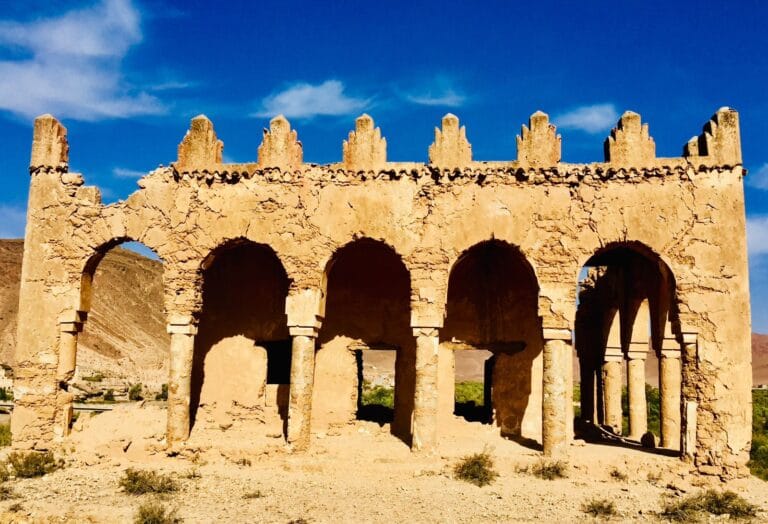

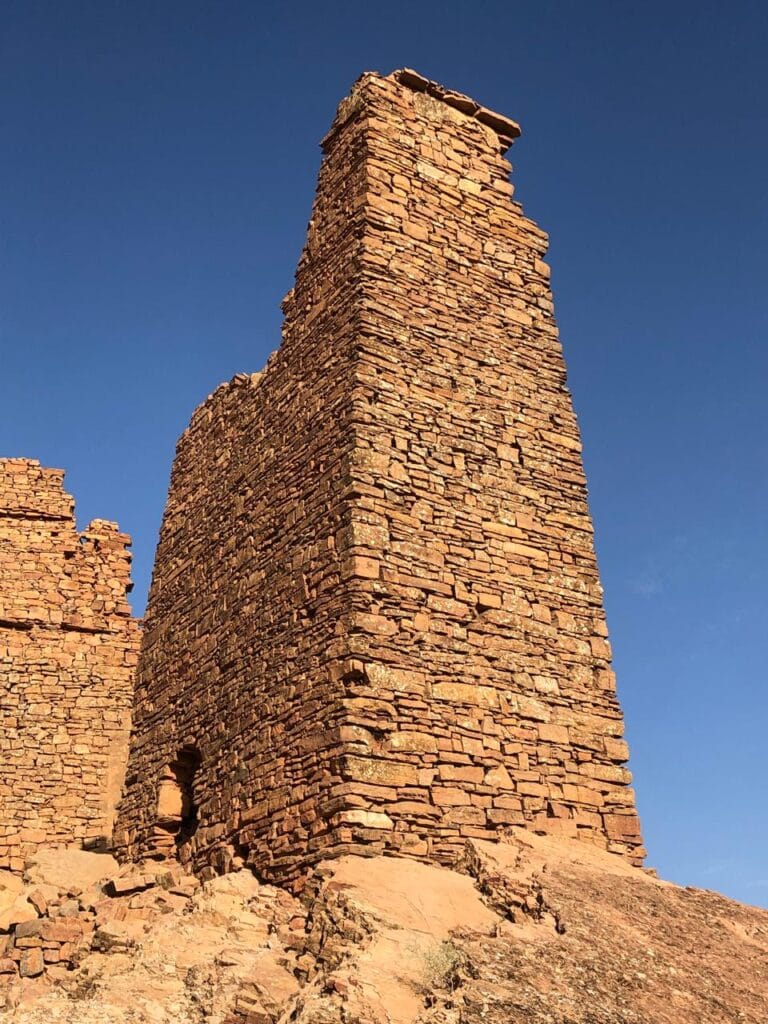
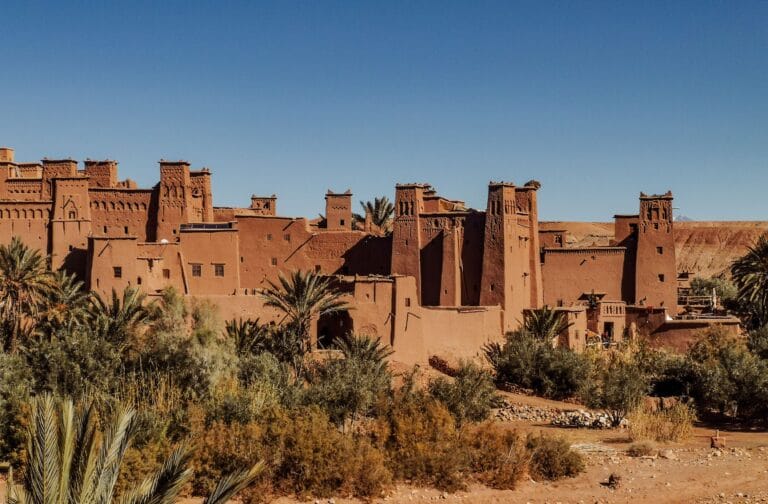
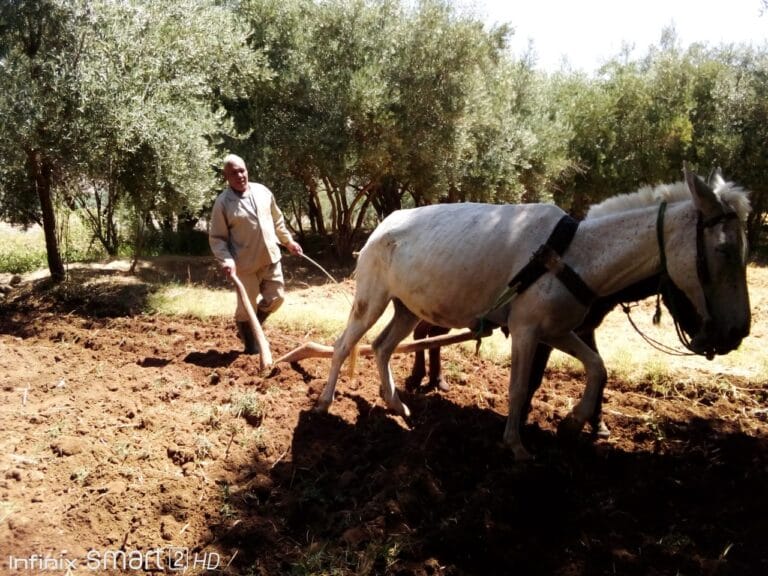

2 Comments