
From Flock to Floor: The Hidden Life Cycle of Wool in Amazigh Weaving
Introduction: You Walk on Stories You Never Saw
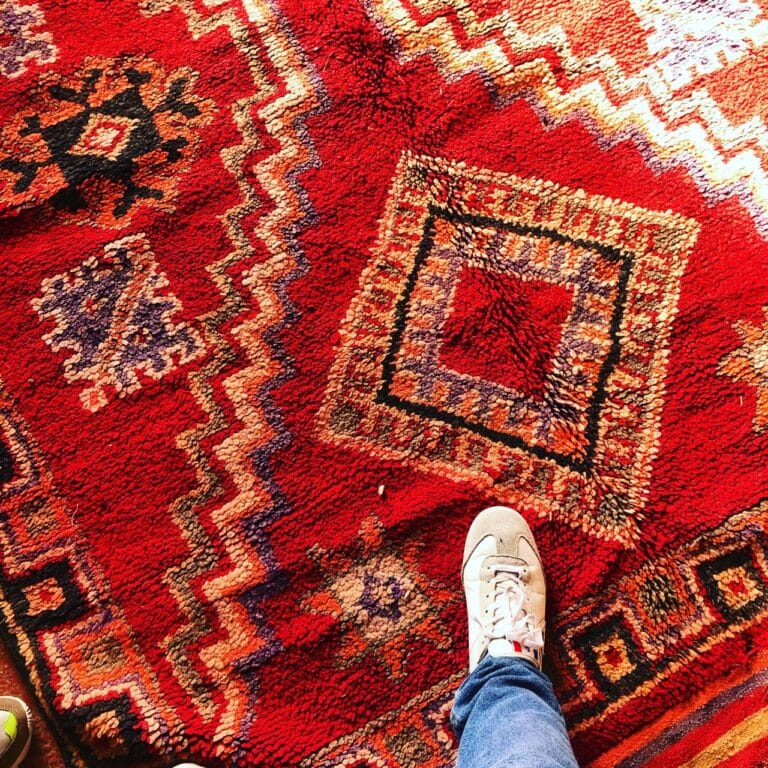
When someone walks across a handmade Moroccan carpet, they may notice its colors, geometric patterns, softness, or the way it transforms a room. What they cannot immediately see is the long process that brought it into existence. Before the carpet reached the living room, its wool may have grown on sheep grazing in mountain pastures, passed through the hands of women who prepared and spun it, and gradually taken shape on a loom through hours of concentrated work.
This is the deeper story behind Moroccan weaving traditions. In many Amazigh communities, weaving has connected the natural environment, household knowledge, artistic expression, and everyday life. A carpet is not simply a finished product. It is the result of decisions about materials, techniques, design, labor, and use. Understanding those decisions allows us to appreciate handmade Moroccan textiles beyond their decorative appearance.
Amazigh weaving traditions are particularly diverse. From the High Atlas and Anti-Atlas to the Middle Atlas and other regions of Morocco, communities have developed different approaches to wool preparation, loom construction, textile design, and the uses of woven objects. These practices reflect local resources, cultural histories, household needs, and changing economic circumstances. There is no single technique or design that represents every Amazigh community.
Women have played important roles in many of these weaving traditions, transmitting practical knowledge through observation, participation, and experience. Their work can involve much more than operating a loom. Depending on the household and local production system, women may participate in preparing fibers, spinning yarn, selecting colors, planning designs, weaving, finishing textiles, and making decisions about their use. In some settings, other family members or specialists contribute to different stages of production.
This article follows the journey of a handmade Amazigh carpet from its earliest material beginnings to its place in a Moroccan home. It explores how wool is obtained and prepared, how a weaver plans and constructs a textile, how patterns emerge, and how the finished carpet is cared for and valued. It also considers the knowledge embedded in the process and the economic realities facing contemporary artisans.
By looking beyond the finished object, we can begin to understand why Moroccan handmade carpets remain important: they bring together material skill, regional identity, women’s knowledge, practical needs, and the continuing transformation of cultural traditions.
Table of Contents
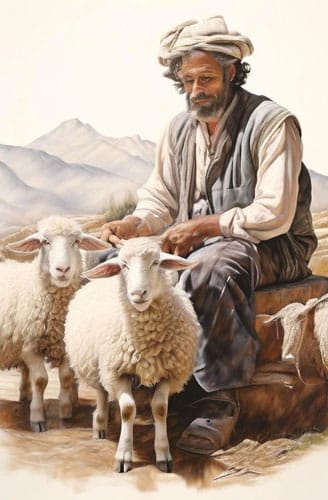
Moroccan Weaving Traditions Begin in the Pasture
The story of many traditional wool carpets begins long before a weaver sits at her loom. It begins in the landscape where sheep are raised and the wool that will eventually become yarn grows on their bodies.
Across Morocco, sheep husbandry has long formed part of rural livelihoods. In mountain communities, agricultural settlements, and pastoral areas, livestock may provide wool, meat, manure, and other resources. The relationship between households and their animals varies according to local ecology, access to grazing land, rainfall, herd size, and the wider agricultural economy.
In parts of the High Atlas and Anti-Atlas, the environment influences how people organize their work throughout the year. Elevation, seasonal temperatures, the availability of water, and the growth of pasture affect animal husbandry and the timing of agricultural activities. Some communities have traditionally combined crop cultivation with livestock raising, while others have relied more heavily on pastoral mobility or exchanges between different ecological zones.
These circumstances matter to weaving because wool does not exist independently of the system that produces it. Its availability and characteristics depend partly on the animals, their health, their feeding conditions, and the way their fleece is collected and stored.
Shearing provides the raw material, but the fleece is not automatically ready for weaving. It may contain dust, vegetable matter, grease, and fibers of different lengths and qualities. Someone must decide how to sort it, what to keep for particular purposes, and how to prepare it for spinning.
In households where wool production and weaving are closely connected, this knowledge forms part of a broader understanding of domestic resources. The family may consider how much wool is available, which textiles are needed, whether the material should be reserved for household use, and whether some of it can be sold or exchanged.
However, not every handmade Moroccan carpet follows the same production chain. Some artisans work with wool obtained from their own households, while others purchase prepared wool or yarn from suppliers. Commercial workshops and cooperatives may organize production differently from households making textiles primarily for personal use.
Recognizing these differences helps us understand the living reality of Moroccan weaving traditions. The connection between sheep, landscape, and carpet is significant, but it is not identical everywhere.
The pasture is the beginning of the journey, not the entire story. Once the fleece has been collected, the next challenge is to transform a natural fiber into material that can be spun, controlled, and woven.
Sheep Breeding in Amazigh Mountain Communities
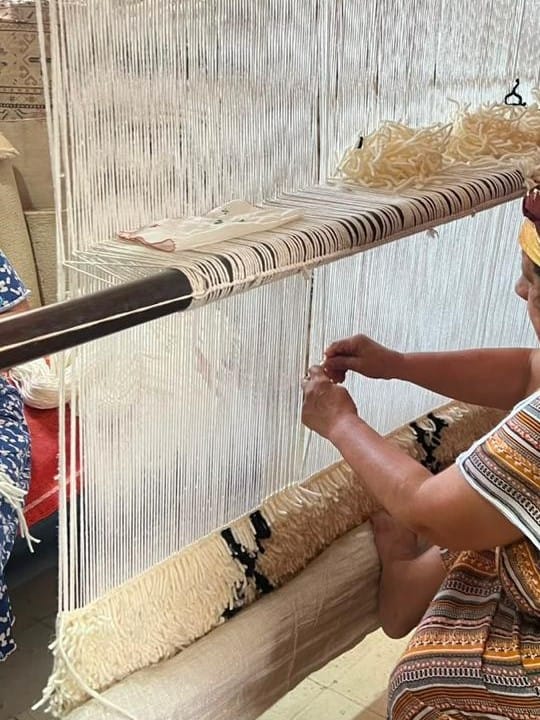
Before wool becomes material, it is life. In Amazigh regions of the High Atlas, Middle Atlas, and Anti-Atlas, sheep are not raised for volume but for balance. You encounter breeds shaped by altitude, temperature, and scarcity rather than industrial selection. These animals survive cold nights, rocky terrain, and limited pasture, producing wool that reflects resilience rather than uniformity.
Sheep breeding here is embedded in household economies. Families know individual animals, tracking their health, coat texture, and behavior. Wool quality is not accidental; it is the result of attentive care. When pasture is poor, fiber thins. When grazing is balanced, wool grows dense and elastic. You can read the land in the fleece.
Moroccan weaving traditions rely on this intimate knowledge. A weaver does not separate textile work from animal care. They are the same system, unfolding across seasons.
Seasonal Shearing: Timing Is Knowledge
Shearing is never random. You witness it occurring only when climate, animal health, and fiber maturity align. In most Amazigh regions, shearing happens in late spring or early summer—after cold nights fade but before heat stresses the flock.
Timing determines everything:
- Too early, and fibers lack strength
- Too late, and wool becomes brittle
- Wrong weather, and animals weaken
Shearing days are communal. Tools may be simple, but hands are skilled. Each cut follows the animal’s body, minimizing stress and preserving fiber length. Respect for the animal is not symbolic—it is practical. Damaged fleece cannot be repaired later.
In Moroccan weaving traditions, quality is decided long before spinning begins.
From Raw Fleece to Usable Fiber
Freshly shorn wool is a natural material with considerable variation. Some fibers may be long and strong, while others are shorter, finer, coarser, or more difficult to handle. The fleece may also contain grease, dust, dry vegetation, and other impurities acquired during the animal’s life.
The first task is therefore to assess and prepare the material. Depending on local practice, the fleece may be spread out, separated into portions, and sorted according to color, cleanliness, texture, or intended use. Removing visible impurities helps make later stages easier and can prevent unwanted material from becoming trapped in the yarn.
Washing is another important step, although its timing and method vary. Some wool is cleaned before spinning, while other production systems handle the material differently according to its condition and the type of textile being made. Water temperature, washing agents, available water, and the need to preserve the fibers all influence the process.
It would be misleading to suggest that every Moroccan weaver uses one traditional washing recipe. Practices can differ from household to household. Some may rely on locally available cleaning materials, while others use modern soap or commercially prepared fiber. Water scarcity can also influence how wool is cleaned and how much processing is practical.
Once the wool has been cleaned and dried as appropriate, the fibers may be opened, teased, or carded. These processes help separate tangled fibers and organize them so that they can be drawn into a more continuous strand. The precise tools and methods vary, but the general objective is to make the wool easier to spin.
Spinning transforms loose fibers into yarn. Traditionally, a hand spindle or other simple spinning tool can be used to draw out the fibers and introduce twist. Twist helps the fibers hold together, creating a strand that can be handled and used in weaving.
The spinner must judge how much twist is appropriate. Yarn that is too weak may break easily during weaving, while yarn that is too heavily twisted can behave differently under tension and may be less suitable for certain structures. The desired thickness also depends on the carpet being made.
After spinning, yarn may be grouped, wound, or prepared for dyeing, depending on the intended design and the production method. Some textiles use wool in its natural colors, while others incorporate dyed yarns. The choice depends on the availability of materials, regional preferences, the intended appearance, and the weaver’s plans.
These stages are not simply preliminary chores. They influence the behavior of the material throughout the rest of the process. The quality and consistency of the yarn affect how evenly a textile develops, how its surface feels, and how it responds to use.
When the prepared yarn is finally brought to the loom, the work of transforming wool into a carpet enters a new phase. Yet the choices made during preparation continue to shape everything that follows.
Wool Washing: Cleansing Without Erasing
Freshly shorn wool carries earth, plant matter, and natural oils. You might assume that thorough cleaning improves quality, but Amazigh practice teaches restraint. Wool is washed gently—often in rivers, springs, or shared basins—using ash, clay, or plant-based cleansers.
Overwashing strips fiber of its protective oils. Underwashing leaves residues that weaken yarn. The balance is learned through touch and smell, not measurement.
This process reflects environmental intelligence. Water is used sparingly. Waste is minimal. Nothing enters the ecosystem that does not belong there already. Moroccan weaving traditions embed sustainability not as ideology, but as habit.
Carding Wool: Aligning Fiber and Intention
Once dry, wool is carded by hand. Wooden paddles fitted with metal teeth align fibers into soft clouds, preparing them for spinning. This step looks simple, but it defines consistency.
You learn to card evenly, removing short fibers and debris while preserving length. Machine carding exists, but traditional weavers avoid it because it produces uniformity without judgment. Hand carding allows decision-making—choosing softness, thickness, and future use.
In Amazigh weaving, preparation is as meaningful as execution.
Spinning: Where Wool Becomes Thread
Spinning transforms loose fiber into structure. Using drop spindles or simple wheels, you twist wool into yarn, controlling tension with fingers trained over years.
Spinning is not rushed. Yarn intended for warp must resist stress. Yarn for weft may remain softer. You adjust twist instinctively, listening to the sound fibers make as they stretch.
This is where Moroccan weaving traditions reveal their depth: spinning is engineering guided by experience, not formula.
Patterns, Memory and the Weaver’s Decisions
The patterns of Moroccan carpets often attract attention before their construction is understood. Geometric forms, repeated lines, contrasting shapes, and carefully arranged colors can make a textile visually distinctive. Yet the meaning of a design cannot always be determined from its appearance alone.
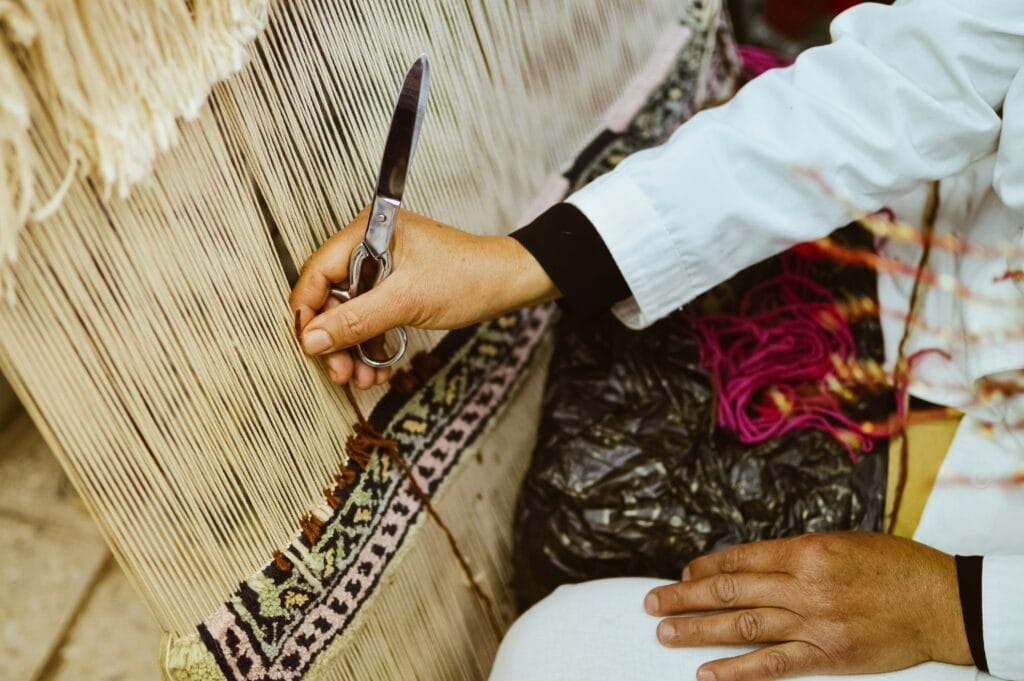
In some Amazigh weaving traditions, motifs and arrangements are learned through family experience, observation, and participation in local craft practices. A weaver may recognize a familiar pattern because she has seen similar textiles throughout her life or learned to reproduce it from an experienced maker. This knowledge can be transmitted without a written pattern book.
Memory is only part of the process. A weaver may adapt a familiar arrangement, change the proportions of a motif, combine different colors, or respond to the dimensions of the textile. The finished design may therefore reflect inherited practice and individual creativity at the same time.
Geometric motifs are sometimes associated with ideas such as protection, fertility, identity, or connections with the natural world. Such interpretations may be documented or meaningful in particular contexts, but they should not be applied automatically to every textile. A diamond, triangle, or zigzag does not necessarily have one universal meaning across all Amazigh communities.
A careful interpretation considers the region, the textile’s history, the circumstances of its production, and the knowledge of the people who made or used it. Where possible, the words of artisans themselves provide essential context. A pattern should not be assigned a fixed symbolic meaning merely because a similar shape has been interpreted that way elsewhere.
Color also has a history. Some Moroccan textiles use natural wool shades, while others include yarn dyed with natural or synthetic colorants. The choice of color may be shaped by regional preferences, material availability, cost, customer expectations, or experimentation. It is not always possible to infer a dye source or cultural meaning from color alone.
The weaver’s decisions continue throughout the construction process. She may adjust a design to suit the available yarn, alter a repeated element, or decide how best to resolve a change in the material. These choices show that traditional weaving is not simply the preservation of an unchanging pattern. It is a living practice in which established knowledge can be reinterpreted.
For readers interested in Amazigh symbolism, it is useful to distinguish between the visual form of a motif and the meanings associated with it in a particular community. This distinction does not diminish the importance of the design. It allows the textile to be understood with greater accuracy and respect.
A handmade carpet carries a visual language, but that language is not always translated through a universal dictionary. It emerges from regional histories, practical choices, individual experience, and the social worlds in which textiles are made and used.
Judging Quality Before Weaving Begins
Before a carpet begins to take shape, someone must decide whether the available wool is appropriate for the intended textile. This judgment involves more than asking whether the material looks clean. It requires an understanding of how fibers behave when spun, placed under tension, and woven into a finished structure.
Fiber length is one consideration. Longer fibers can be easier to draw into certain types of yarn, while shorter fibers may require more careful preparation. The strength, softness, coarseness, and consistency of the wool also influence its suitability for different uses.
The ideal material depends on the intended result. A carpet designed for frequent household use may prioritize durability and a suitable surface texture. A textile intended to have a particularly soft pile may require different material choices. A flat-woven piece has its own structural requirements, which are not necessarily the same as those of a thick pile carpet.
Yarn thickness matters as well. If yarn varies considerably in diameter, the finished textile may develop an uneven appearance or texture. This does not mean that every handmade carpet must be perfectly uniform. Rather, it means that the weaver must understand how variations in the material will affect the result and decide whether those variations are acceptable for the design.
Color selection can also influence the preparation process. Wool may retain its natural shades, including different tones of white, cream, brown, or darker colors, depending on the animals and the material available. Other yarn may be dyed to achieve a planned palette. If several batches of wool are being used, the maker may need to consider whether their shades and textures work together.
The way the wool is spun is equally important. Yarn intended for the warp may need to withstand sustained tension, while yarn used in other parts of the structure may have different requirements. In pile weaving, the yarn that creates the raised surface must also suit the desired texture and the technique being used.
These judgments are learned through experience. A skilled artisan can develop an understanding of how particular fibers respond to handling, how much tension a yarn can withstand, and which materials are suitable for a specific purpose. Such knowledge may be passed between generations, acquired through apprenticeship, or developed through repeated experimentation.
The quality of the finished carpet therefore cannot be judged entirely by its appearance. A visually striking design may conceal weaknesses in the yarn or construction, while a relatively simple textile may demonstrate excellent material selection and technical control.
For buyers, this is an important distinction. When evaluating a handmade Moroccan carpet, it is useful to consider the material, construction, finishing, and intended use together rather than relying only on color or pattern.
How Amazigh Weavers Read Wool
Before a loom is set, wool is evaluated using senses often ignored in industrial systems:
- Touch: elasticity and rebound
- Sight: uniformity and cleanliness
- Sound: subtle resistance when stretched
- Smell: indicators of improper washing
A skilled weaver can predict how a yarn will behave months later. Poor wool is redirected to utilitarian textiles. Nothing is wasted, but nothing is misused.
Sorting Wool for Purpose
Not all wool becomes carpet. Moroccan weaving traditions assign fiber according to function:
- Fine wool for garments and ceremonial rugs
- Medium fibers for household carpets
- Coarse wool for sacks, ropes, and covers
This sorting preserves durability. A rug that survives decades does so because its material was chosen with foresight.
Environmental Knowledge Embedded in Textile Production
Climate Shapes Fiber
Altitude, rainfall, and temperature influence wool thickness and curl. Weavers understand these variables intuitively. Wool from higher elevations insulates better. Wool from drier zones resists abrasion.
You begin to see textiles as climate archives—records of place encoded in fiber.
Sustainability Without Vocabulary
Long before sustainability became a concept, Amazigh weaving practiced it. Wool is biodegradable, repairable, and durable. Textiles are maintained, reworked, and repurposed across generations.
Moroccan weaving traditions operate on continuity, not consumption.
From Thread to Loom
Before weaving begins, yarn rests. Sometimes it is lightly oiled with plant extracts to prevent breakage. Threads are organized carefully, matched to loom type—vertical looms in settled villages, horizontal looms in semi-nomadic contexts.
Every choice anticipates the future object.
From the Weaving Space to the Moroccan Living Room
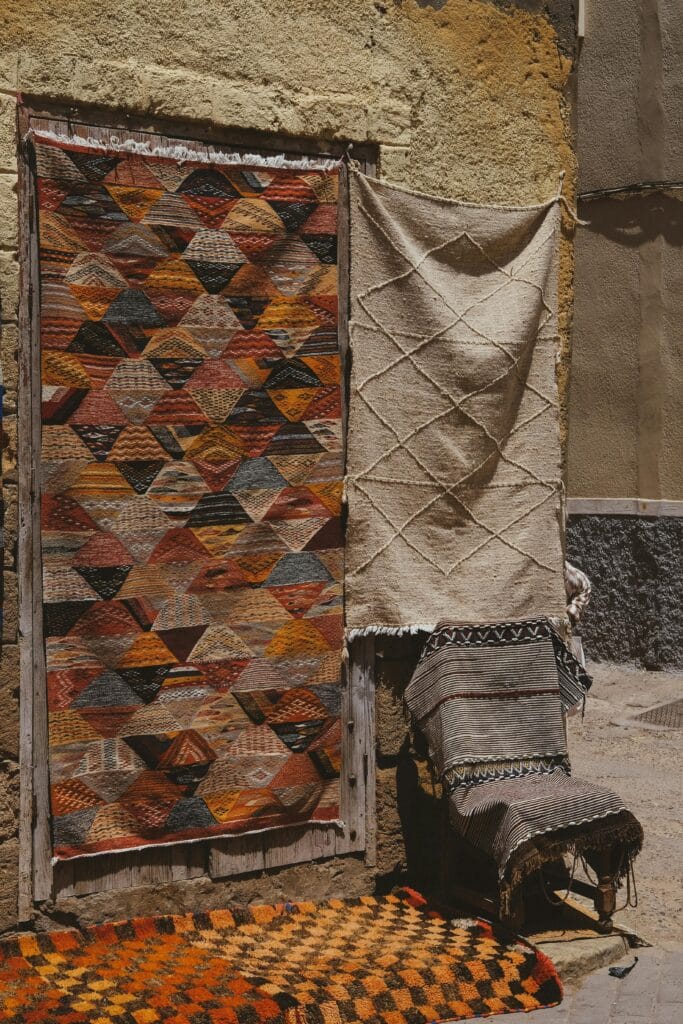
The moment a handmade carpet enters a living room, its purpose becomes visible in a new way. The textile is no longer simply an object being produced. It becomes part of the domestic environment, where people walk, sit, gather, rest, and welcome visitors.
In many Moroccan homes, carpets and other floor textiles can help organize a living space. A carpet may provide warmth, create a comfortable surface for sitting, or define an area within a room. It may be arranged with floor cushions, low seating, blankets, or furniture, depending on the household’s style and needs.
There is no single arrangement that represents every Moroccan living room. Rural and urban homes differ, as do households across regions and generations. Some families maintain arrangements connected with local domestic traditions, while others combine handmade carpets with contemporary furniture and interior design. The carpet’s use depends on the people who own it and the space in which it is placed.
The construction of the textile also influences its function. A thick pile carpet provides a different surface from a flat-woven rug. Some textiles are suitable for frequent floor use, while others may be used as coverings, decorative pieces, or for particular household purposes. It is important to understand the specific textile rather than assume that all handmade Moroccan rugs are interchangeable.
A carpet may also acquire meaning through the life of a household. It can become associated with family gatherings, visits from relatives, celebrations, or the everyday routines of a home. These associations are personal and should not be assumed to exist in every household, but they show how a textile can become more than a furnishing.
For a carpet made specifically for domestic use, its practical value may be as important as its appearance. It must fit the available space, suit the way the room is used, and provide the desired level of comfort. Color and design may be selected to complement other textiles or reflect the preferences of the people living there.
A carpet purchased by a collector or interior designer may follow a different path. It may be valued for its design, construction, regional origin, or relationship to a particular textile tradition. Other pieces are produced for commercial markets, sometimes according to dimensions and colors requested by buyers.
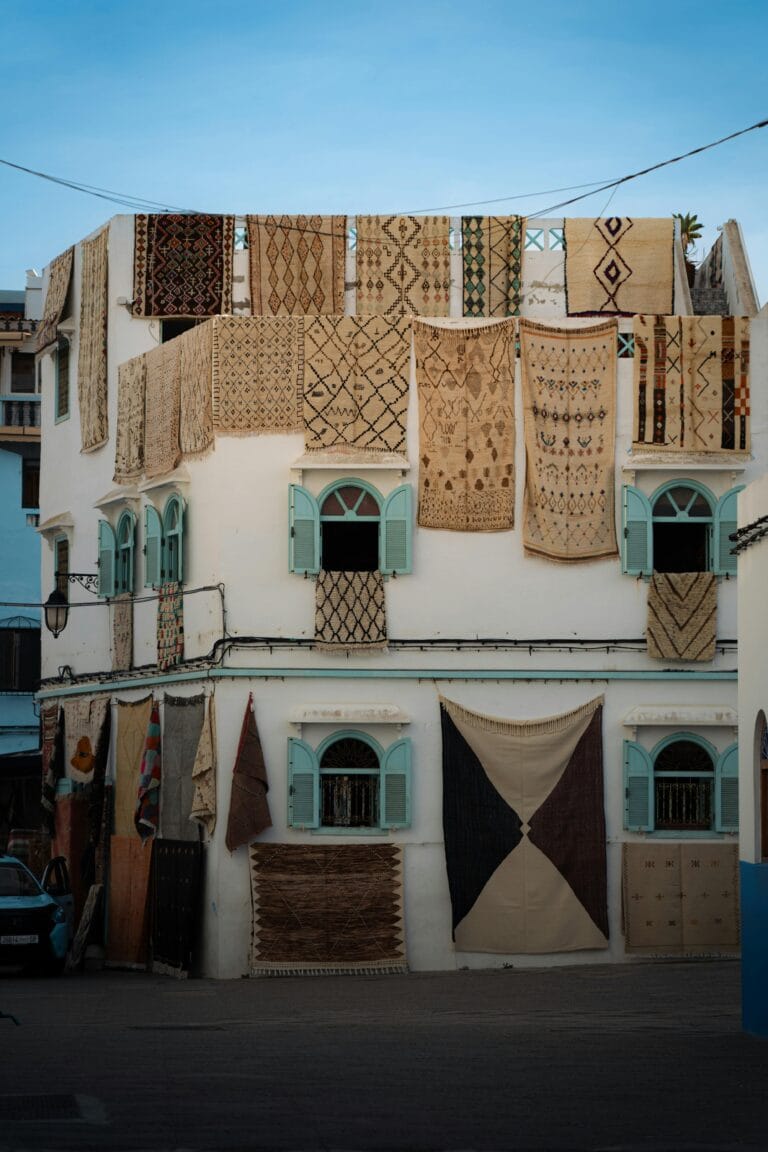
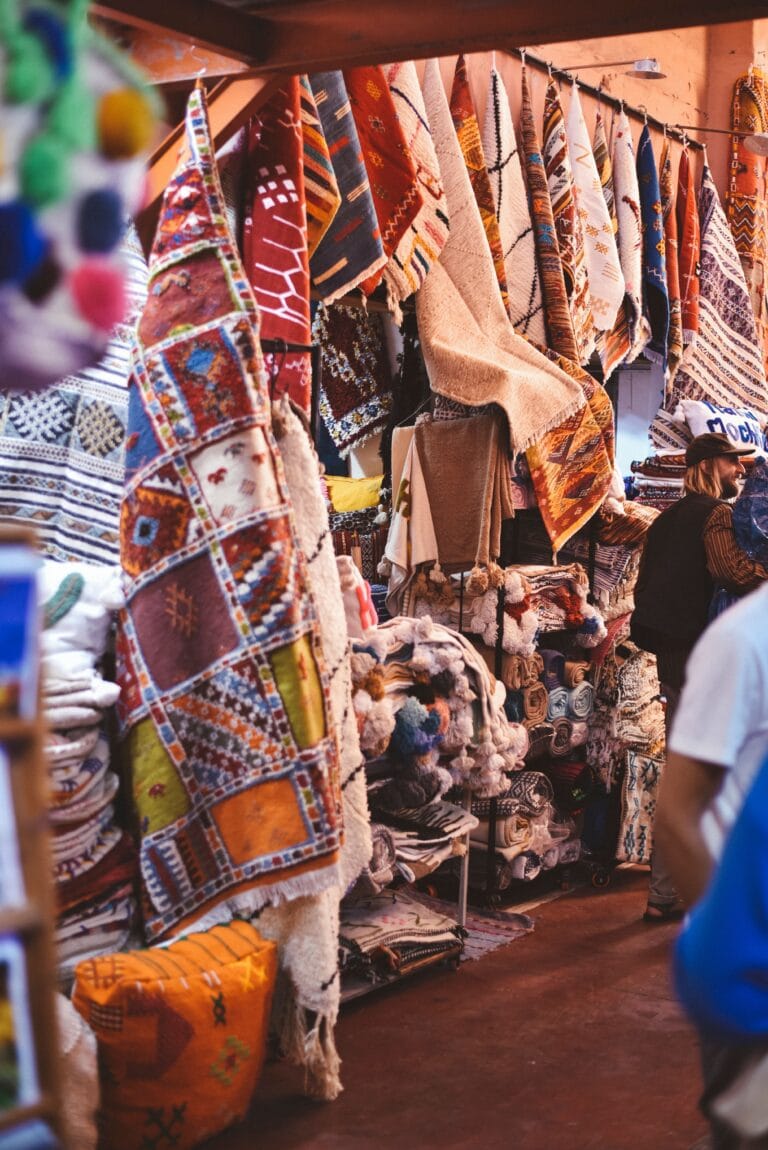
The transition from loom to living room therefore does not have one universal form. Some carpets remain in the homes where they were woven; others are sold locally or travel through dealers, cooperatives, shops, and international markets. Each route connects the maker to a different set of users and economic relationships.
Once the carpet is in use, it continues to change. Foot traffic can flatten the pile, sunlight can alter some colors, and dust can collect within the fibers. With appropriate care, a well-made carpet may remain useful for a long time. It may be moved to another room, repaired when necessary, or repurposed when its original function changes.
Thinking about the carpet in this way helps reconnect the living room with the earlier stages of production. The comfort and beauty experienced by the person using the textile depend on the wool, the yarn, the structure, and the labor invested in its making.
The carpet’s journey does not erase the work that came before it. It brings that work into everyday life.
Caring for a Handmade Wool Carpet
A handmade wool carpet can remain useful for many years when it is cared for according to its materials and construction. Wool is a durable fiber, but no textile is indestructible. Dust, moisture, insects, sunlight, unsuitable cleaning products, and heavy wear can all affect its condition.
Regular maintenance is one of the simplest ways to protect a carpet. Gentle vacuuming can help remove dust and grit before they become embedded in the fibers. The appropriate method depends on the textile: fragile, loosely woven, antique, or long-pile carpets may be damaged by strong suction or a rotating brush. When in doubt, use a conservative approach and seek advice from a specialist.
Spills should be addressed promptly. Blotting gently with a clean, absorbent cloth is generally safer than rubbing, which can spread the stain or damage the surface. Avoid applying strong detergents or chemical cleaners without checking whether they are suitable for the wool and dyes. An inconspicuous test may help identify a problem, but it cannot guarantee that a cleaning product is safe for every textile.
Water requires particular care. Some dyes may bleed or change when wet, and excessive moisture can affect the shape of a carpet or damage its foundation. A wool textile that remains damp in a poorly ventilated space can develop unpleasant odors or mold. If the carpet becomes wet, it should be dried thoroughly and carefully.
Sunlight can also affect the appearance of a carpet. Prolonged exposure may cause some dyes to fade unevenly, especially where part of the textile receives more light than another. Where practical, avoid leaving a valuable carpet in strong direct sunlight for extended periods. Moving or rotating a carpet occasionally can help distribute normal wear and light exposure more evenly.
Households should also pay attention to insects and storage conditions. Wool can attract textile pests, particularly when it contains accumulated dust or is stored in unsuitable conditions. A carpet that will not be used for a period should be clean and completely dry before storage, and it should be kept in a clean, dry environment with appropriate protection.
Repairs may extend the life of a carpet. Loose edges, damaged fringes, and worn sections can sometimes be repaired by an experienced craftsperson. The repair should be appropriate to the textile’s original structure. For antique, rare, or culturally significant carpets, a textile conservator may be more suitable than an ordinary repair service.
Care also involves recognizing when a carpet needs professional cleaning or restoration. A valuable piece should not be subjected to aggressive washing simply because it appears dirty. Its dyes, construction, age, and condition all influence the safest approach.
Maintaining a handmade carpet is part of respecting the labor that created it. Proper care does not preserve the textile in a completely unchanged state; ordinary use may gradually alter its appearance. Rather, it helps the carpet remain functional and allows the work invested in it to continue serving the people who own it.
The Value of a Handmade Carpet: Time, Skill and Fair Payment
A handmade Moroccan carpet is the result of labor, materials, and knowledge. Its price may reflect the quantity and quality of the wool, the construction technique, the dimensions, the density of the weave or pile, the complexity of the design, the finishing, and the time required to complete it.
Two carpets of similar size can therefore have very different values. A simple flat-woven piece and a densely constructed pile carpet may require different processes. Even textiles made using similar techniques can vary in the time needed to produce them, depending on their design, the available materials, and the experience and working conditions of the artisan.
The production process may also involve more than one person. One household may carry out most stages from wool preparation to weaving, while another may purchase prepared yarn. In some production systems, different people specialize in spinning, dyeing, weaving, finishing, or selling. The organization of labor varies by region and market.
This division of work matters when considering women’s economic contribution. Research by anthropologist Myriem Naji on weaving in Morocco’s Sirwa region examines women’s labor in carpet production and the relationship between textile making and marketing. Her work provides a useful perspective on the ways that the person who creates a textile may not always be the person who negotiates its sale or receives the largest share of its final market value.
These findings should be understood in their regional context rather than treated as a description of every Moroccan artisan. Some women sell their work directly, while others participate in cooperatives, work with intermediaries, or produce carpets for commercial workshops and retailers. The terms of payment and the degree of control over production and sales differ between settings.
Fair payment is therefore an important part of the conversation about handmade carpets. If the textile is sold through several intermediaries, the final retail price may be substantially higher than the amount received by the person who wove it. A higher retail price does not automatically mean that the artisan has been paid fairly, just as a low price does not necessarily reveal the full circumstances of production.
For buyers, asking questions can help establish a clearer understanding of a carpet’s origin and value. Who made it? Where was it woven? What materials were used? Was it produced by an individual artisan, a household, or a cooperative? Can the seller explain the construction and the work involved?
These questions are more useful than relying on vague claims of authenticity. A carpet should not be described as antique, entirely natural-dyed, or handmade by a particular community without evidence. Provenance, material information, and a credible account of production provide a stronger basis for evaluating the object.
Supporting handmade weaving responsibly also means recognizing the skill behind the product. The artisan is not merely the last link in a decorative tradition. She may be a specialist in materials, a designer, a technician, a business participant, and a person making decisions about her own work and livelihood.
When the value of a carpet is discussed in these terms, its cultural importance and economic reality become connected. Appreciation should include the people whose knowledge and labor make the textile possible.
Why This Knowledge Matters Today
Moroccan weaving traditions remain important because they connect material knowledge, cultural expression, domestic life, and livelihoods. Yet their continued existence should not be understood as the unchanged survival of an ancient practice. Weaving has always existed within social and economic circumstances, and those circumstances continue to evolve.
One important aspect of the craft is the transmission of knowledge. Learning to prepare yarn, manage a loom, construct a textile, and make design decisions requires more than memorizing a set of instructions. Much of the expertise develops through observation, practice, and the ability to respond to the material. When experienced artisans teach younger makers, they pass on both practical techniques and ways of judging the work.
The conditions for this transmission vary. Some people learn within their families, while others enter the craft through workshops, cooperatives, vocational programs, or independent experimentation. Not every younger person chooses weaving as a livelihood, and the availability of alternative education and employment can influence whether a craft remains economically attractive.
Markets also shape the direction of production. Demand for handmade Moroccan carpets can create opportunities for artisans, but it may also encourage changes in dimensions, colors, materials, and designs. Some buyers seek textiles that reflect a particular regional style, while others prefer contemporary palettes or pieces designed for modern interiors.
These changes do not automatically diminish cultural authenticity. Artisans have always made decisions in response to the resources and circumstances available to them. The important questions concern how the work is produced, whether its origins are represented honestly, how makers participate in design and commercial decisions, and whether the income supports their livelihoods.
The growing interest in handmade textiles also creates a responsibility for sellers, writers, and cultural institutions. Broad labels such as “Berber rug” or “Amazigh carpet” can introduce international audiences to Moroccan weaving, but they should not conceal the diversity of regional traditions. Where information is available, naming the specific region, community, textile type, and technique provides a more informative account.
Documentation is equally important. Photographs, interviews, collection records, and carefully researched articles can preserve knowledge about particular weaving practices and the people who maintain them. Such documentation should recognize artisans as knowledgeable participants rather than treating their work merely as an anonymous cultural artifact.
Environmental pressures may also affect the future of weaving. Changes in rainfall, water availability, livestock systems, and the rural economy can influence the materials and time available for textile production. The extent of these effects varies by location, so it is important to use regional evidence rather than assume that every community faces the same challenges.
For Iwziwn, exploring Moroccan weaving traditions means looking at both continuity and change. A carpet can reflect inherited techniques while incorporating contemporary materials or design choices. It can serve a household, support an artisan’s income, enter an international market, or become part of a museum collection. These different paths are all part of the wider story of handmade textiles.
The future of weaving depends not only on admiration for beautiful carpets but also on the circumstances of the people who make them. Access to materials, opportunities to learn, fair compensation, accurate documentation, and the ability to adapt the craft to changing conditions all influence its future.
To understand Moroccan weaving is therefore to recognize a living body of knowledge. Its value lies not only in the finished carpet but also in the people, skills, decisions, and relationships that bring it into existence.
Conclusion: From Living Flock to Woven Legacy
Every Amazigh carpet begins as a breathing animal, shaped by land and care. Moroccan weaving traditions remind you that materials are not neutral. They carry decisions, ethics, and histories.
The journey of a handmade Amazigh carpet begins long before its pattern appears. It may start with sheep grazing in a particular landscape, continue through the preparation and spinning of wool, and take shape through the careful arrangement of threads on a loom. Row by row, the weaver builds a textile whose construction, texture, and design reflect the materials and decisions involved in its making.
The process does not end when the carpet leaves the loom. Finishing, inspection, transport, placement, and care all contribute to its continuing life. When the carpet enters a Moroccan living room, it becomes part of a domestic environment where it may provide warmth, comfort, and a setting for everyday activities. Its use gives practical meaning to the work invested in it.
Understanding Moroccan weaving traditions also means recognizing the knowledge of the women and other artisans who contribute to the craft. Their work involves technical judgment, creativity, physical effort, and economic choices. The skills required to produce a durable textile deserve to be recognized alongside its beauty.
At the same time, Amazigh weaving is not one uniform tradition frozen in the past. Techniques, designs, materials, and markets differ across Morocco and continue to change. Respecting this diversity means avoiding universal claims about symbols, dyeing practices, or production methods and paying attention to the particular communities and textiles being discussed.
A handmade carpet may appear simple once it is spread across a floor, but its surface carries the results of many decisions. The wool, the yarn, the loom, the pattern, and the finishing all contribute to the object that a household eventually uses and cares for.
When we walk across a handmade Moroccan carpet, we are walking on the outcome of skilled labor and accumulated knowledge. Understanding that journey allows us to see the textile not merely as a decorative possession, but as a living connection between material, craftsmanship, cultural identity, and everyday life.
Frequently Asked Questions About Moroccan Weaving Traditions
How are traditional Moroccan carpets made by hand?
Traditional Moroccan carpets are made through a series of stages that may include obtaining and preparing wool, spinning it into yarn, dyeing it when required, preparing the loom, weaving the textile, and securing its edges. The exact process depends on the region, the type of carpet, and the techniques used by the artisan.
What are the main stages of Moroccan carpet weaving?
The main stages generally include material preparation, yarn production, planning the textile, setting up the loom, weaving, finishing, and inspection. Some production systems divide these tasks among different people, while others involve the same artisan or household in several stages.
What role do Amazigh women play in carpet weaving?
Women have played important roles in many Amazigh weaving traditions, including preparing fibers, spinning yarn, designing, weaving, and finishing textiles. Their responsibilities differ between communities and households. Women may also contribute to the commercial side of the craft, although control over sales and income varies by production system.
What is the difference between a flat-woven Moroccan rug and a pile carpet?
A flat-woven rug is generally constructed through the interlacing of warp and weft, producing a relatively flat surface. A pile carpet has additional yarn forming a raised surface through a pile-forming technique. The two types differ in texture, construction, appearance, and potential uses.
How long does it take to weave a handmade Moroccan carpet?
There is no single production time for all handmade Moroccan carpets. The time required depends on the dimensions, the density of the construction, the complexity of the design, the yarn, the technique, and the artisan’s working conditions. A small, relatively simple textile may require much less work than a large, densely woven carpet.
Are all Moroccan Amazigh carpets made from wool?
No. Wool is important in many Moroccan carpet traditions, but Moroccan textiles can be made from different fibers or combinations of materials. The material depends on the textile’s purpose, regional practices, available resources, and production methods. Buyers should check the material composition of a particular carpet rather than assume that every piece is pure wool.
Are traditional Moroccan carpets always dyed with natural colors?
No. Natural dyes have a place in Moroccan textile history, but synthetic dyes are also used in contemporary production. Some carpets use the natural colors of wool, while others combine undyed and dyed yarns. A carpet’s color alone cannot reliably establish which dyes were used.
Do Amazigh carpet symbols always have specific meanings?
No. Some motifs have documented interpretations in particular cultural or regional contexts, but there is no universal meaning for every geometric shape across all Amazigh communities. Interpretations should be based on reliable research and, where possible, the knowledge of the artisans and communities associated with the textile.
How can I recognize a handmade Moroccan carpet?
Examine the structure, the reverse side, the edges, the yarn, and the finishing. Handmade textiles may show small variations, but no single visual feature proves authenticity. Ask the seller about the region of production, the materials, the weaving technique, and the maker. Reliable provenance is more informative than broad marketing claims.
How should I care for a handmade wool carpet?
Regular gentle cleaning, prompt attention to spills, protection from persistent dampness, and sensible management of sunlight can help preserve a wool carpet. Avoid aggressive cleaning products and excessive moisture. Fragile, antique, or valuable textiles may require advice from a specialist or textile conservator.
Why do handmade Moroccan carpets vary so much in price?
Prices depend on material quality, dimensions, construction, density, design, labor, finishing, provenance, and the way the carpet reaches the market. Two carpets of similar size may require very different amounts of work. A high price alone does not prove that a carpet is antique or made with natural dyes.
Why are Moroccan weaving traditions important today?
They preserve and develop practical skills, support livelihoods, and express regional and cultural identities. They also demonstrate how traditional knowledge adapts to new materials, changing markets, and contemporary ways of living. Supporting the craft responsibly includes recognizing the people who make the textiles and the conditions under which they work.
What makes Moroccan weaving traditions unique?
They integrate animal care, ecology, and craftsmanship into one continuous process.
Why is hand-processed wool superior?
Because quality decisions happen at every stage.
Call to Action
If you want to understand Moroccan culture beyond appearances, start with its fibers. Explore authentic Amazigh textiles, support artisan cooperatives, and continue reading our in-depth articles on weaving, architecture, and mountain life to uncover the systems that still shape Morocco today.
References and Further Reading
The following sources provide academic and institutional context for understanding Moroccan weaving, women’s textile labor, regional variation, and the material characteristics of handmade textiles.
Academic research
Naji, M. (2008). Weaving and the Value of Carpets: Female Invisible Labour and Male Marketing in Southern Morocco [Doctoral thesis, University of London]. UCL Discovery.
Available at: https://discovery.ucl.ac.uk/id/eprint/1444467/
This research examines weaving and the economic value of carpets in southern Morocco, particularly the relationship between women’s labor and the marketing of finished textiles. It is especially relevant to the article’s discussion of production, skill, and fair payment.
Naji, M. (2009). Gender and materiality in-the-making: The manufacture of Sirwan femininities through weaving in southern Morocco. Journal of Material Culture, 14(1).
https://journals.sagepub.com/doi/10.1177/1359183508100008
This article examines the relationship between weaving, gender, material practice, and the development of embodied knowledge in the Sirwa region. It provides a useful framework for discussing weaving as skilled work rather than simply as a decorative tradition.
Museum and textile collections
Fondation Nationale des Musées (FNM). National Museum of Weaving and Carpets, Dar Si Saïd, Marrakech.
The museum provides an institutional context for exploring Moroccan carpets and textiles. Its collections can help readers understand the diversity of regional textile traditions and the importance of documenting individual objects.
Textile Museum of Canada. Collection record for an Ait Ouaouzguite shadoui textile.
https://collections.textilemuseum.ca/collection/2715/fd1186a963bd384404b4f8101e564cad
This object record is a useful example of documenting a particular textile through its regional attribution, material, dimensions, and construction. It supports the importance of distinguishing specific textile types rather than treating every Moroccan carpet as identical.
Further reading and research directions
For readers who wish to investigate Moroccan weaving in greater depth, the following topics are especially valuable:
- Regional studies of carpet production in the High Atlas, Anti-Atlas, Middle Atlas, and Sirwa regions.
- Ethnographic research on women’s labor, apprenticeship, household production, and textile knowledge.
- Museum catalogues documenting the materials, dimensions, construction, and provenance of Moroccan carpets.
- Research on traditional and contemporary dyeing techniques in North African textiles.
- Studies of rural livelihoods, livestock, water availability, and the changing economic conditions of mountain communities.
- Research on craft cooperatives, market access, artisan compensation, and the international trade in handmade textiles.
These sources should be used with attention to their geographical scope. A study of weaving in one Moroccan region may provide valuable insights, but its findings should not automatically be generalized to every Amazigh community.
The most reliable understanding of Moroccan weaving traditions comes from combining academic research, carefully documented textile collections, and the knowledge of the women and artisans who continue to make these textiles today.
One Comment