Living Between Seasons: Daily Rhythms of Berber Amazigh Life in Mountain Morocco
Introduction: Where Time Is Felt, Not Measured
When you arrive in a mountain village of Morocco before sunrise, you do not hear alarms or traffic. Instead, you feel time moving through temperature, light, and silence. The stones beneath your feet still hold the cold of night. Smoke rises slowly from earthen roofs. Somewhere nearby, a door creaks open as the first household begins its day.
This is where the Berber Amazigh lifestyle reveals its deepest truth: life is not organized by clocks, but by seasons, land, and collective memory.
In the High Atlas, Middle Atlas, and Anti-Atlas Mountains, daily life follows a rhythm shaped over centuries. You wake when the light allows work. You rest when the land demands patience. You celebrate when harvests succeed and endure together when winters close mountain passes.
This article invites you to step into that rhythm. You will explore how the Berber Amazigh lifestyle is structured around seasonal cycles, daily labor, social balance, and environmental knowledge. More than a description of customs, this is an exploration of a way of life that continues to adapt without losing its foundations.
Table of Contents
Understanding the Berber Amazigh Lifestyle in Mountain Morocco
Who Are the Berber Amazigh of the Mountains?
You encounter the Amazigh people not as a single group, but as interconnected mountain societies shaped by geography. In Morocco, Amazigh communities inhabit:
- The High Atlas, marked by altitude, snow, and seasonal isolation
- The Middle Atlas, with forests, plateaus, and pastoral economies
- The Anti-Atlas, where stone villages adapt to arid landscapes
Despite regional variation, the Berber Amazigh lifestyle shares core characteristics:
- Deep attachment to land and ancestry
- Knowledge transmitted orally across generations
- Collective responsibility over individual accumulation
You do not understand Amazigh life by looking only at festivals or clothing. You understand it by observing how people move through the day, how work is shared, and how silence itself becomes a form of communication.
Mountains as Natural Timekeepers
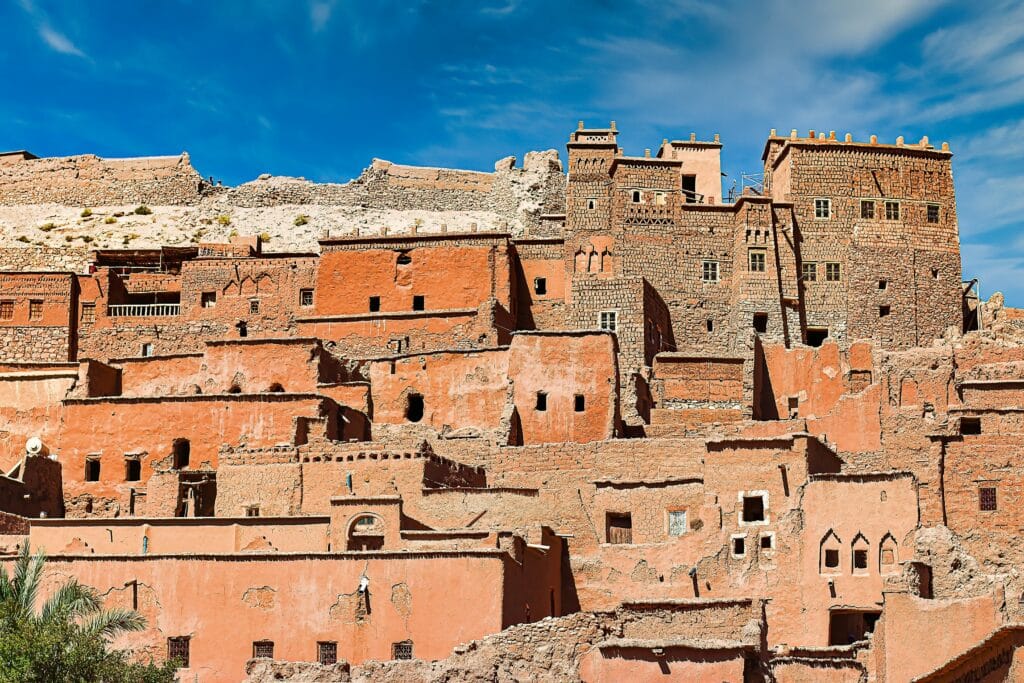
In Amazigh mountain life, the land itself functions as a calendar. You do not ask what time it is—you observe:
- The angle of the sun on rock walls
- The behavior of animals at dawn and dusk
- The melting of snow or drying of soil
These signals guide daily decisions:
- When to plow
- When to migrate livestock
- When to conserve food
This ecological awareness is not symbolic; it is practical survival knowledge. The Berber Amazigh lifestyle depends on reading environmental signs with precision learned through experience, not instruction manuals.
Seasons as the Framework of Amazigh Daily Life
Spring: Renewal, Labor, and Communal Energy
When winter retreats, you feel the village awaken. Spring is not leisure—it is urgency. Fields must be prepared, irrigation channels cleared, and animals guided to fresh pasture.
Your daily rhythm in spring includes:
- Early rising to maximize daylight
- Collective fieldwork through tiwizi (community labor)
- Repairing terraces damaged by snow or rain
Spring also restores social movement. You see visits between villages resume. Engagements are announced. Decisions postponed during winter are addressed collectively.
The Berber Amazigh lifestyle in spring reflects optimism balanced with responsibility. The land offers opportunity, but only if effort is synchronized.
Summer: Heat, Movement, and Vertical Life
As temperatures rise, daily life shifts upward—literally. In many mountain regions, families practice seasonal transhumance, guiding livestock to higher altitudes where pasture remains green.
During summer, your routine adapts:
- Work begins before sunrise
- Midday rest becomes essential, not optional
- Water usage is carefully managed
Summer also increases gendered specialization:
- Men often travel farther with herds or trade goods
- Women manage households, food preservation, and textile work
Despite long hours, summer brings vitality. Music, night gatherings, and shared meals follow the cooler evenings.
Autumn: Harvest, Memory, and Social Closure
Autumn slows the pace without reducing importance. Harvest defines the season, and each household’s security depends on its success.
You participate in:
- Collecting barley, wheat, almonds, or walnuts
- Storing food for winter
- Preparing homes for colder months
Autumn is also a time for weddings and collective feasts. These gatherings reinforce alliances and redistribute resources through hospitality.
Within the Berber Amazigh lifestyle, autumn represents balance—gratitude for what the land has given and preparation for what it will withhold.
Winter: Isolation, Intimacy, and Endurance
Winter closes the mountains. Snow blocks paths, and movement becomes local. Yet life does not stop—it turns inward.
Your winter days include:
- Reduced outdoor labor
- Indoor crafts such as weaving or tool repair
- Storytelling, oral history, and teaching children
Winter strengthens intergenerational bonds. Elders transmit knowledge not through lectures, but through narratives told beside the hearth.
In this season, the Berber Amazigh lifestyle reveals its emotional depth: survival supported by community, patience, and shared silence.
A Day in the Life of a Berber Amazigh Household
Dawn: The Quiet Beginning
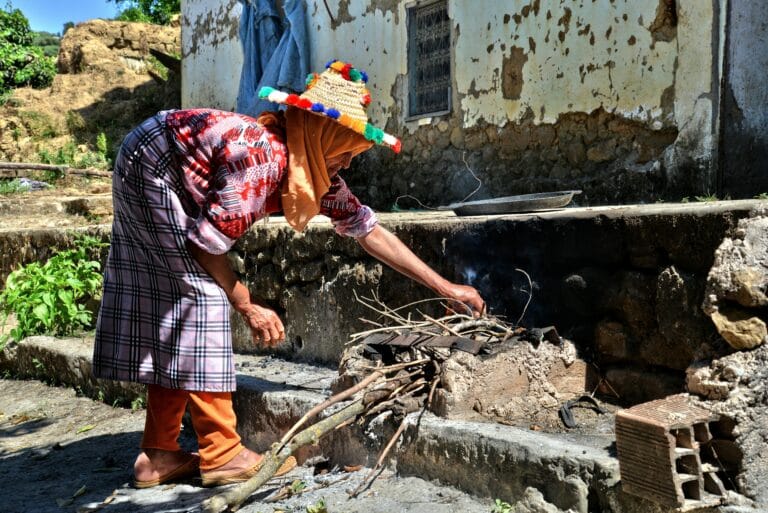
You rise before the sun not because of obligation, but because the day requires it. Animals must be fed. Bread must be prepared. The household awakens gradually, without command.
This quiet beginning reflects a value central to Amazigh life: harmony precedes productivity.
Morning: Work Organized by Knowledge
Labor is divided by skill, not hierarchy. Each person knows their responsibility, shaped by age, experience, and season.
You notice:
- Children learning through observation
- Adults working without supervision
- Tasks changing fluidly across the year
This flexibility allows households to adapt without conflict, a key reason the Berber Amazigh lifestyle has endured environmental uncertainty.
Midday and Evening: The Social Core of Amazigh Daily Rhythm
Midday: Rest as Cultural Intelligence
By midday, the mountain sun asserts its authority. You do not fight it. Instead, you adapt. In Amazigh mountain life, rest is not idleness; it is strategic intelligence shaped by generations of observation.
During the hottest hours:
- Physical labor pauses or slows significantly
- Animals are sheltered or guided to shaded areas
- Meals are lighter, emphasizing digestion and hydration
This pause reflects a core principle of the Berber Amazigh lifestyle: sustainability over exhaustion. Energy is conserved not out of laziness, but out of respect for the body and the land.
In this sense, Amazigh daily rhythm contrasts sharply with industrial notions of productivity. Here, efficiency is measured across seasons, not hours.
Evening: Return, Reunion, and Reflection
As the sun lowers behind ridgelines, villages come alive again. Evening marks the most socially dense period of the day.
You observe:
- Livestock returning from pasture
- Families gathering around shared meals
- News exchanged casually but attentively
Evening is when social cohesion is reinforced. Decisions affecting the household or village are often discussed after work, when minds are calmer and collective presence is strongest.
In mountain Amazigh culture, the day does not end with isolation but with reconnection.
Gender Balance in the Berber Amazigh Lifestyle
Complementarity, Not Separation
A common misunderstanding portrays Amazigh society as rigidly divided by gender. In reality, the Berber Amazigh lifestyle operates through complementarity rather than hierarchy.
Roles differ, but authority is distributed.
Women traditionally oversee:
- Food production and storage
- Textile creation (weaving, embroidery)
- Transmission of language and oral knowledge
Men often manage:
- External relations (trade, mediation)
- Long-distance herding or travel
- Construction and land negotiation
Yet these roles overlap. In times of necessity, boundaries dissolve. This flexibility is one of the reasons Amazigh mountain societies have remained resilient.
Women as Temporal Anchors
If men often move between regions, women remain the temporal anchors of Amazigh life. Through repetitive daily acts—grinding grain, weaving wool, preparing meals—they maintain continuity.
These acts are not merely domestic; they encode:
- Seasonal knowledge
- Symbolic meaning
- Social memory
Thus, the Berber Amazigh lifestyle is preserved less through monuments than through daily repetition guided by women’s knowledge.
Children and Learning Through Participation
Education Without Classrooms
In mountain Amazigh communities, learning happens continuously. You do not separate childhood from responsibility.
Children learn by:
- Observing adults
- Assisting in tasks appropriate to their age
- Listening to stories that encode ethics and history
There is no sharp transition between learning and doing. Knowledge becomes embodied early, creating adults who do not need instruction manuals to function within their environment.
This mode of learning ensures that the Berber Amazigh lifestyle is transmitted organically, without dependency on formal institutions.
Oral Tradition as Educational Infrastructure
Stories told in the evening carry more than entertainment. They contain:
- Environmental warnings
- Moral frameworks
- Historical memory
In societies where written records were limited, oral tradition functioned as a living archive. Even today, these narratives shape how young Amazigh understand identity, responsibility, and belonging.
Village Organization: The Tajmaat as Social Architecture
Collective Governance in Daily Life
The tajmaat—the village council—is one of the most distinctive features of Amazigh social organization. It governs not abstract law, but daily balance.
Through the tajmaat:
- Water use is regulated
- Conflicts are resolved
- Communal labor is coordinated
Decisions emerge through consensus rather than coercion. Authority is moral rather than forceful.
This system reflects the values embedded in the Berber Amazigh lifestyle: equilibrium, dialogue, and accountability.
Space as Social Order
Village architecture reinforces governance. You notice:
- Central gathering spaces
- Shared granaries or storage areas
- Houses oriented toward collective interaction
Physical proximity mirrors social obligation. In Amazigh mountain life, isolation is not a virtue; participation is.
Spirituality Embedded in Daily Acts
Faith Without Separation
Religion in Amazigh mountain life is not confined to ritual moments. It is embedded in everyday behavior.
You see this in:
- Blessings spoken before work
- Respect shown to natural features
- Hospitality extended to strangers
Spirituality supports ethics rather than spectacle. This integration ensures that belief strengthens daily life rather than interrupts it.
Sacred Time and Ordinary Time
Certain days carry special meaning—harvest celebrations, seasonal transitions—but sacredness is not isolated. Even ordinary labor carries symbolic weight when performed with intention.
Thus, the Berber Amazigh lifestyle dissolves the boundary between sacred and mundane.
Continuity and Change in Modern Contexts
Adaptation Without Erasure
Modern education, migration, and technology have reshaped Amazigh mountain life. Yet core rhythms persist.
You still find:
- Seasonal planning
- Communal labor
- Respect for elders’ knowledge
Change is integrated selectively. What strengthens life is adopted; what disrupts balance is resisted.
Why This Lifestyle Still Matters
In an era of ecological crisis and social fragmentation, the Berber Amazigh lifestyle offers an alternative model—one grounded in moderation, cooperation, and long-term thinking.
It reminds you that progress does not require abandoning rhythm, memory, or land.
Food as Rhythm: Seasonal Nutrition in Amazigh Mountain Life
Eating with the Land, Not Against It
In the Berber Amazigh lifestyle, food is never abstracted from environment. What you eat, when you eat it, and how it is prepared are all dictated by altitude, climate, and season.
Rather than fixed menus, Amazigh households rely on adaptive food cycles:
- Winter emphasizes preservation and warmth
- Spring introduces freshness and renewal
- Summer favors hydration and simplicity
- Autumn focuses on abundance and storage
This seasonal intelligence ensures nutritional balance without dependency on external supply chains.
Core Foods and Their Cultural Meaning
Certain foods appear consistently, but their form changes with context:
- Barley and wheat: Ground, baked, or steamed depending on season
- Olive oil and argan oil: Energy sources and symbols of blessing
- Legumes: Protein stability in high-altitude conditions
- Milk and butter: Indicators of livestock health and household wealth
These foods are not consumed casually. Preparation techniques carry inherited knowledge about digestion, endurance, and climate adaptation.
Thus, eating in Amazigh mountain life is both nourishment and education.
Hospitality: The Ethics of Welcome
Hosting as Social Duty
Hospitality is not optional in Amazigh culture. You do not ask whether to host; you ask how to host well.
Guests—known or unknown—are:
- Offered food without negotiation
- Seated in places of honor
- Included in daily rhythm
This practice reinforces community safety in harsh environments. When survival depends on cooperation, generosity becomes infrastructure.
Emotional Intelligence Through Hosting
Hospitality also regulates emotion. Conflict is softened by shared meals. Strangers become allies through welcome.
In this way, the Berber Amazigh lifestyle transforms private households into nodes of collective stability.
Emotional Life in Mountain Communities
Restraint and Expression
Emotion in Amazigh culture is neither suppressed nor exaggerated. It is expressed through:
- Work songs
- Poetry
- Storytelling
- Ritual gatherings
Joy, grief, and longing are processed communally rather than individually. This reduces psychological isolation and reinforces belonging.
Music as Emotional Archive
Ahwach and other mountain musical forms serve as emotional records. Through rhythm and movement, they encode:
- Love
- Resistance
- Historical trauma
- Seasonal change
You do not merely hear music; you participate in emotional continuity.
Migration and Return: A Circular Pattern
Leaving Without Breaking
Migration is not a modern disruption; it has long been part of Amazigh mountain life. Men and women leave for work, education, or trade.
Yet departure rarely means rupture.
Migrants:
- Send resources home
- Return for harvests or ceremonies
- Maintain land ownership
This circular movement preserves village rhythm even amid mobility.
Identity Maintained Across Distance
Language, food, and ritual allow identity to survive displacement. Even in cities, Amazigh migrants often organize life around mountain values.
Thus, the Berber Amazigh lifestyle adapts without dissolving.
Environmental Ethics Rooted in Survival
Land as Partner, Not Resource
Mountain Amazigh communities do not treat land as property alone. It is a living system requiring respect.
You observe:
- Controlled grazing
- Shared water access
- Seasonal land rest
These practices prevent overuse and ensure long-term viability.
Climate Awareness Before Climate Science
Long before scientific terminology, Amazigh communities understood:
- Weather patterns
- Soil exhaustion
- Ecological limits
Their survival depended on observation and restraint—principles increasingly relevant today.
Why This Lifestyle Endures
Resilience Through Rhythm
The Berber Amazigh lifestyle endures because it aligns human activity with natural cycles rather than imposing artificial schedules.
It resists acceleration without rejecting progress.
A Model for the Future
In a world seeking sustainability, community, and meaning, Amazigh mountain life offers not nostalgia but instruction.
It shows you how to:
- Live within limits
- Value cooperation over competition
- Preserve identity without stagnation
Modern Pressures on the Berber Amazigh Lifestyle
Education, Technology, and Shifting Time
Modern schooling and digital connectivity have altered daily rhythms in mountain communities. Children now divide their time between ancestral practices and institutional schedules.
Yet rather than erasing tradition, this tension has produced selective adaptation:
- Formal education coexists with seasonal labor
- Technology supports migration without severing village ties
- Written Amazigh language complements oral heritage
The Berber Amazigh lifestyle survives by integrating change while maintaining its core rhythm.
Economic Challenges and Cultural Response
Market economies pressure subsistence systems. Younger generations often seek wage labor, placing strain on agricultural continuity.
In response, communities emphasize:
- Cooperative farming
- Revival of traditional crafts
- Cultural tourism rooted in authenticity
These strategies allow cultural survival without fossilization.
Youth and the Future of Amazigh Mountain Life
Inheritance Beyond Property
What young Amazigh inherit is not merely land but worldview.
They learn:
- How to read landscapes
- When to act and when to wait
- How community protects individual dignity
Even when youth leave, this internalized rhythm often guides their choices elsewhere.
Cultural Consciousness as Resistance
Language revival, music festivals, and renewed interest in Amazigh history signal a growing consciousness. Young people increasingly see tradition not as burden but as strength.
This cultural pride anchors future continuity.
Why the Berber Amazigh Lifestyle Matters Today
Lessons for a Fragmented World
The Berber Amazigh lifestyle offers an alternative to global exhaustion:
- Time measured by meaning, not speed
- Work integrated with life, not opposed to it
- Identity rooted in place, not consumption
These principles are not archaic; they are urgently modern.
Living Between Seasons as Philosophy
To live between seasons is to accept impermanence while cultivating stability. It is to move forward without forgetting.
This philosophy is perhaps the greatest legacy of Amazigh mountain life.
Conclusion: A Living Rhythm, Not a Relic
The Berber Amazigh lifestyle is not frozen in the past. It breathes, adapts, and persists because it aligns human life with environmental and social truth.
When you observe mountain villages of Morocco, you do not witness nostalgia—you witness resilience.
To understand Amazigh life is to understand a way of living that values balance over dominance, memory over speed, and community over isolation.
Frequently Asked Questions (FAQ)
What defines the Berber Amazigh lifestyle?
It is a seasonal, community-based way of life rooted in environmental awareness, collective responsibility, and cultural continuity.
How does Amazigh mountain life adapt to modernity?
Through selective integration—adopting education and technology while preserving social rhythms and land ethics.
Why is seasonality important in Amazigh culture?
Seasonality ensures sustainability, health, and balance between human activity and natural cycles.
Is the Berber Amazigh lifestyle still practiced today?
Yes. While evolving, its core principles remain active in mountain communities across Morocco.
What can the world learn from Amazigh life?
How to live sustainably, cooperatively, and meaningfully within ecological limits.
Call to Action
If you seek depth beyond surface tourism, explore Amazigh mountain life through respectful travel, cultural learning, and local engagement.
Share this article, support indigenous knowledge, and help preserve one of humanity’s most balanced ways of living.