The Olive Tree in Morocco: A Sacred Symbol of Life, Heritage, and Resilience
Introduction: The Tree That Binds Earth and Spirit
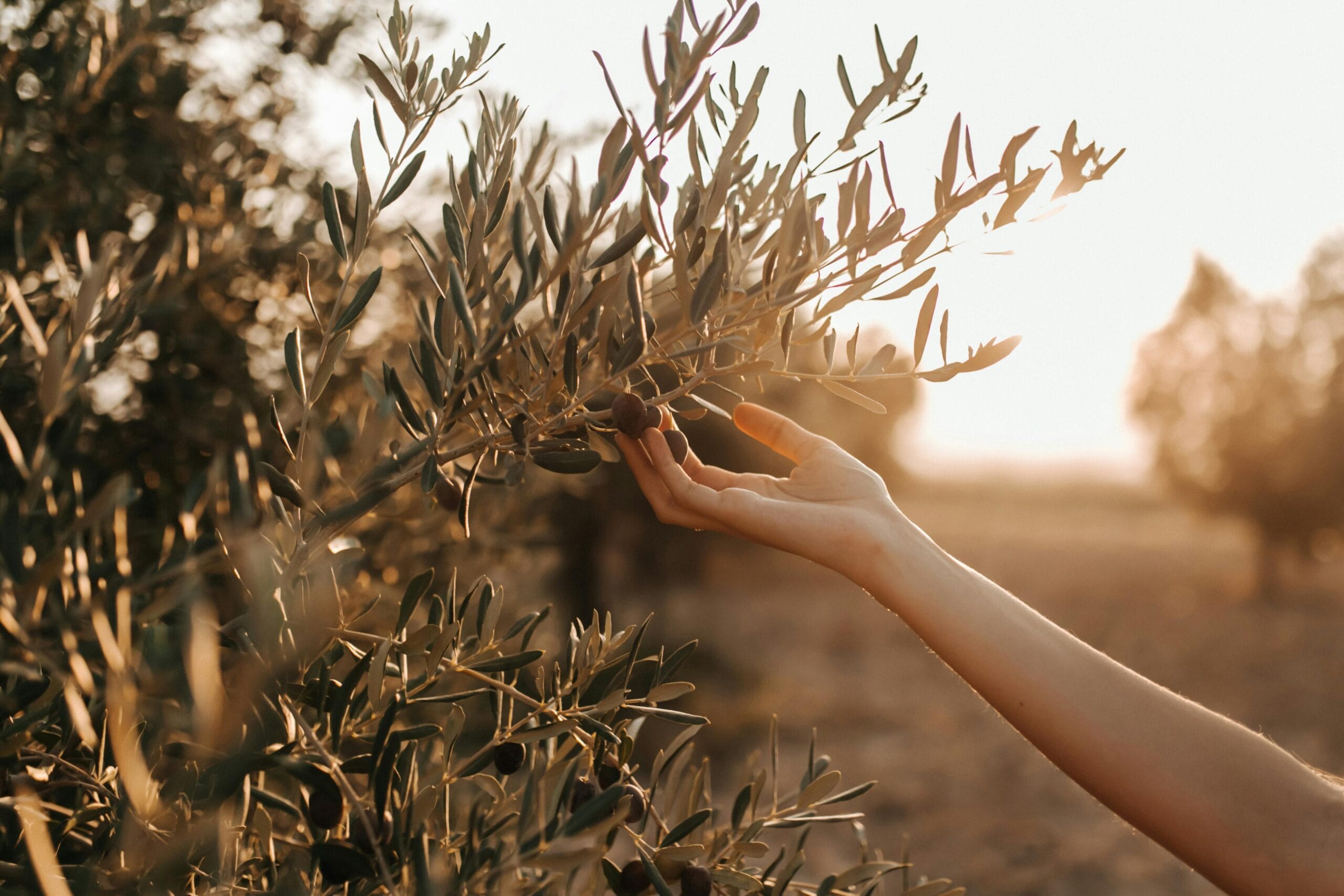
Beneath the golden sun of Morocco, where wind whispers through terraced hills and ancient villages, stands a tree older than kingdoms and more enduring than stone — the olive tree. Its twisted branches cradle centuries of memory; its silver-green leaves shimmer like verses of resilience.
For Moroccans, the olive tree is not just an agricultural plant — it is a symbol of life, peace, fertility, and sacred endurance. From the High Atlas to the plains of Meknes, from Amazigh villages to Andalusian gardens, it defines both the cultural identity and spiritual philosophy of Morocco.
For thousands of years, the olive tree has connected people to their land, their ancestors, and the divine. It embodies the values that form the foundation of Moroccan civilization: balance, patience, continuity, and blessing (Barakat, 1993).
In this exploration, we uncover the olive tree’s journey — its origins, myths, symbols, and the ways it continues to nourish Morocco’s heart and soul.
Table of Contents
The Ancient Roots of the Olive Tree in Morocco
A Tree Older Than History
Archaeological studies reveal that olive cultivation in North Africa dates back over 4,000 years. Fossilized olive pollen and oil press remains found near Volubilis and the Rif Mountains confirm that the Phoenicians and Romans once cultivated olives across Morocco’s fertile plains (Mattingly, 1996).
Under Roman rule, Morocco — then known as Mauretania Tingitana — became a vital exporter of olive oil to Rome. Amphorae filled with golden oil were shipped across the Mediterranean, symbolizing not only trade but cultural exchange.
Amazigh Traditions of the Olive Tree
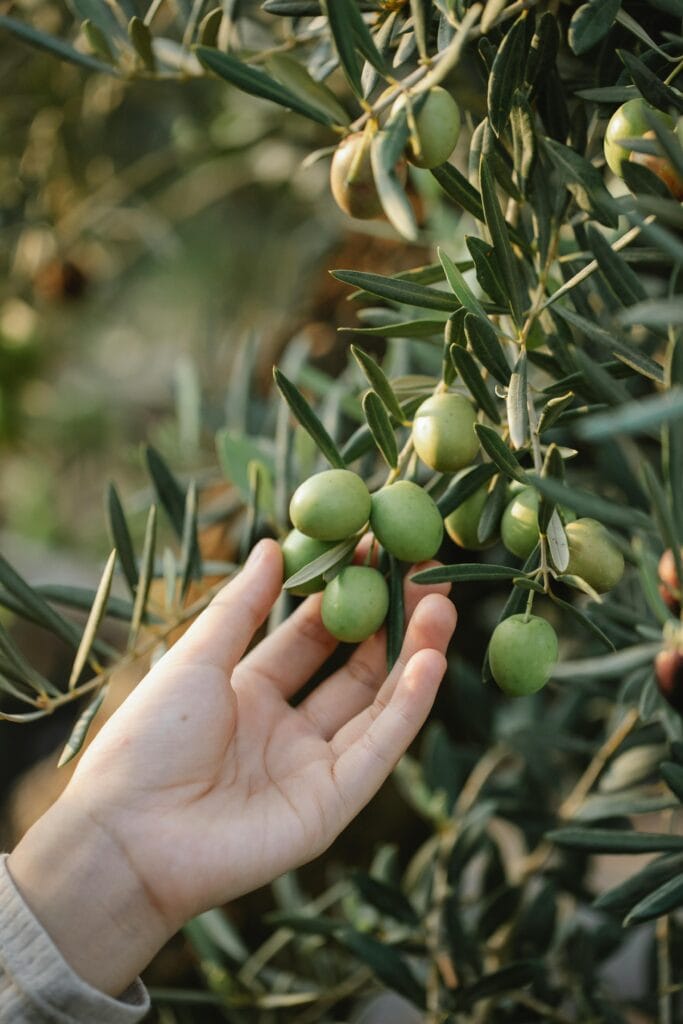
Long before Rome, the Amazigh people revered the olive tree as a sacred being, not merely a crop. It represented the spirit of the earth — the female principle of fertility and continuity. Olive trees were planted near family homes, serving as guardians of lineage and protection against misfortune (Naji, 2012).
The Amazigh term for olive, azemmur, appears in numerous toponyms across Morocco, indicating both its spiritual and geographical centrality. Even today, traditional proverbs echo this reverence:
“A man without an olive tree is like a home without a soul.”
Symbolism of the Olive Tree in Moroccan Culture
Symbol of Peace and Blessing
Throughout Mediterranean civilizations, the olive branch has symbolized peace — and Morocco is no exception. In Islamic and Amazigh cosmology alike, the olive tree is a sign of divine mercy. The Qur’an itself venerates it:
“Allah is the Light of the heavens and the earth… lit from a blessed tree, an olive, neither of the East nor of the West.”
(Qur’an 24:35)
This verse elevates the olive to a sacred dimension — a symbol of universality, bridging the physical and spiritual worlds.
Symbol of Fertility and Continuity
The olive tree’s capacity to regenerate from old roots, even after drought or fire, mirrors human resilience. In Moroccan villages, it symbolizes family continuity — often planted when a child is born, becoming an intergenerational companion.
- Roots symbolize ancestry and endurance.
- Trunk represents strength and wisdom.
- Branches evoke growth, hope, and legacy.
- Fruits signify reward, fertility, and abundance.
Its cyclical life mirrors the agricultural calendar and human destiny: sowing, patience, harvest, and renewal.
The Olive Tree in Moroccan Daily Life
Culinary Symbolism – Nourishment of the Soul
Olives and olive oil form the foundation of Moroccan cuisine. Whether served in tagines, salads, or breads, they symbolize hospitality and life itself. To share olive oil is to share light — the very essence of the sun captured in a bottle.
Culinary uses:
- Green olives – used in stews and chicken tagines with preserved lemons.
- Black olives – associated with depth, maturity, and winter.
- Olive oil – poured over couscous, bread, or used for ceremonial offerings.
Beyond taste, olive oil represents baraka — the divine blessing believed to reside in all that sustains life (Benkirane, 2005).
Medicinal and Spiritual Uses
In folk medicine, olive oil is seen as both curative and purifying. It is used to heal wounds, anoint newborns, and protect against the ‘ayn (evil eye). Amazigh healers often mix olive oil with herbs during rituals, invoking both ancestral and divine healing powers.
Symbolically, to anoint with olive oil is to seal one’s bond with life itself.
Olive Cultivation and Heritage in Morocco
Geography of Growth
Morocco’s diverse geography makes it one of the world’s leading olive producers. Over 1.2 million hectares are dedicated to olive groves, producing nearly 200,000 tons of olive oil annually (FAO, 2023).
Major producing regions:
- Meknes and Fez – ancient centers of cultivation and trade.
- Taza and Rif Mountains – traditional terraced olive farms.
- Essaouira and Taroudant – smallholder organic producers.
These groves are more than agricultural lands — they are landscapes of memory, shaped by centuries of care and knowledge passed from parent to child.
Traditional Olive Harvest
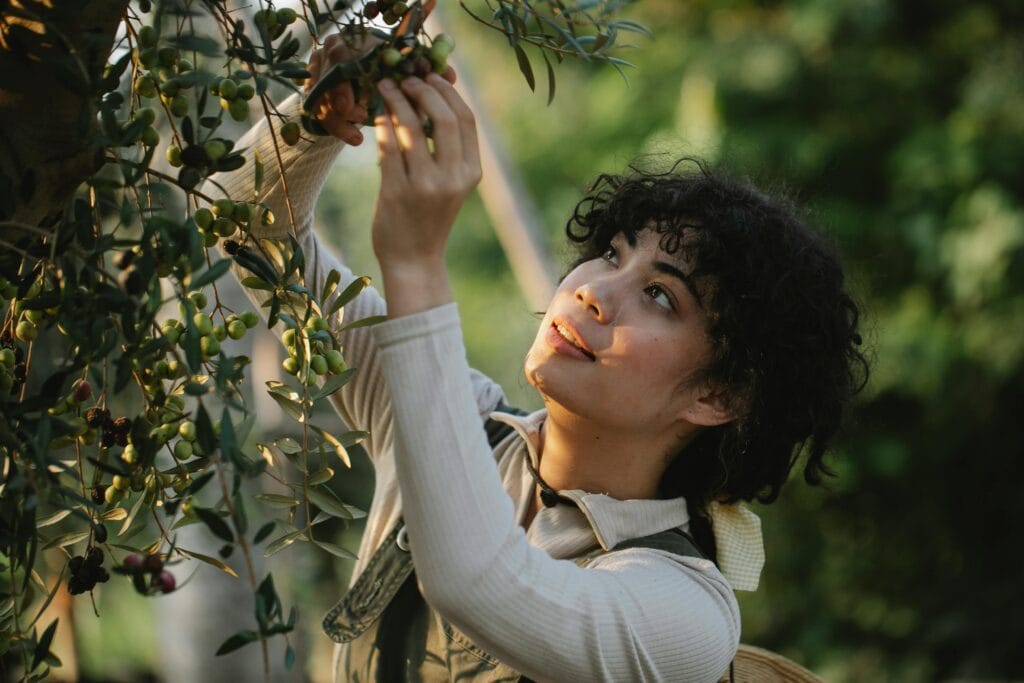
The olive harvest, or tafraout n zzit, is both economic and communal. It occurs between November and February and involves entire families — women, men, and children — gathering beneath ancient trees.
The ritual is accompanied by songs, prayers, and shared meals. It is a celebration of unity, where labor becomes art and devotion.
Economic and Environmental Importance
A Pillar of Rural Economy
The olive tree sustains nearly one million Moroccan families, providing income, oil, and food security (Ministry of Agriculture, 2022). Cooperatives, especially those led by women, have become central to rural empowerment and sustainability.
- Export markets: EU, US, and Middle East.
- Products: virgin oil, table olives, cosmetics.
- Sustainability: organic cultivation, fair-trade cooperatives.
Olive farming is also part of Morocco’s Plan Maroc Vert, emphasizing ecological balance and economic inclusion.
The Tree as a Climate Ally
Olive trees are climate-resilient, thriving in semi-arid conditions where few others survive. Their roots prevent soil erosion, and their leaves capture carbon — making them key actors in environmental sustainability.
In the context of global warming, Morocco’s olive trees embody ecological wisdom rooted in ancestral practice.
Sacred and Symbolic Uses of Olive Oil
Olive Oil in Religious and Ritual Life
In Moroccan Islamic tradition, olive oil holds sacred connotations. It is burned in lamps in mosques and zawiyas (Sufi lodges), symbolizing divine illumination. The act of lighting with olive oil becomes a ritual of remembrance, a bridge between matter and spirit.
Sufi orders often use olive oil to bless initiates, invoking purification and enlightenment. In some Amazigh rites, it is offered to ancestors during the Yennayer (New Year) celebration, signifying continuity.
The Olive Tree in Moroccan Art and Symbolism
Artistic Representation
In Moroccan crafts — pottery, textiles, and jewelry — the olive motif recurs as a symbol of peace, longevity, and fertility. Painters and poets alike have invoked it as a metaphor for the Moroccan spirit: rooted, luminous, and enduring.
“The olive tree bends but never breaks.”
Symbolism in Architecture and Landscape Design
Andalusian and Moroccan gardens, such as those in Marrakech’s Agdal and Menara, were designed around olive groves — embodying paradise, shade, and spiritual reflection. The tree stands as the axis mundi of Moroccan garden philosophy, linking heaven, water, and earth.
Women, Memory, and the Olive Tree
In many rural communities, women are the guardians of the olive tradition. From harvesting to oil pressing, they embody continuity — turning physical labor into cultural transmission.
Cooperatives such as Tafraout n Zitoune in the Souss region show how female leadership preserves ancestral techniques while empowering modern livelihoods.
Their work transforms the olive from a tree of survival into a symbol of female resilience and creativity.
Modern Transformations – Between Tradition and Innovation
The Rise of Moroccan Olive Oil on the Global Stage
Moroccan olive oil now ranks among the finest in the world, recognized for its quality and distinct terroir. Producers combine ancestral cultivation with modern cold-press techniques, ensuring purity and sustainability.
Sustainable Future
Architects, environmentalists, and policymakers view the olive tree as central to Morocco’s green future — from agroforestry projects to eco-tourism centered on olive heritage routes.
Thus, the olive remains a tree of tomorrow, not just a relic of the past.
Symbolic Table – The Olive Tree in Moroccan Thought
| Aspect | Symbolism | Expression in Culture |
|---|---|---|
| Roots | Ancestry, stability | Family lineage, land attachment |
| Trunk | Strength, endurance | Moral and physical resilience |
| Branches | Hope, peace | Olive branch gestures |
| Leaves | Protection, wisdom | Used in amulets and rituals |
| Oil | Light, purity | Religious lamps, healing |
| Fruit | Fertility, prosperity | Birth and marriage celebrations |
Conclusion: The Living Soul of Morocco
The olive tree in Morocco is more than an agricultural product—it is a cultural monument, a symbol of life, and a bridge between past and present. For villages like Iwziwn, olive groves stand as guardians of identity and continuity, carrying the wisdom of ancestors into the future.
The olive tree stands as Morocco’s silent philosopher — a living chronicle of patience, faith, and balance. It bridges eras, faiths, and families, weaving together the sacred and the everyday.
To plant an olive tree in Morocco is to believe in the future.
To harvest it is to honor the past.
To taste its oil is to touch the divine light that binds all creation.
The olive tree is not merely an agricultural symbol — it is the heartbeat of Moroccan civilization as an Argan Oil
FAQs – The Olive Tree in Morocco
1. Why is the olive tree sacred in Morocco?
It represents peace, fertility, and divine blessing, deeply rooted in both Islamic and Amazigh traditions.
2. Where are olives grown in Morocco?
Primarily in Meknes, Fez, Rif, and Souss regions, known for their ideal Mediterranean climates.
3. What is Moroccan olive oil famous for?
Its rich, fruity taste and organic production methods, reflecting centuries of artisanal expertise.
4. How does the olive tree impact Moroccan culture?
It shapes food, rituals, economy, and identity, symbolizing endurance and harmony with nature.
5. How old can Moroccan olive trees live?
Some trees are estimated to be over a thousand years old, continuing to bear fruit across generations.
References (APA Style)
- Barakat, H. (1993). The Arab World: Society, Culture, and State. University of California Press.
- Benkirane, R. (2005). Traditions and Plants in Moroccan Society. Casablanca: Eddif.
- FAO. (2023). Olive Oil Production in Morocco. Food and Agriculture Organization of the United Nations.
- Mattingly, D. (1996). The Olive in North Africa: Archaeological Perspectives. Oxford University Press.
- Ministry of Agriculture (Morocco). (2022). National Olive Sector Report. Rabat.
- Naji, S. (2012). La Maison en Terre au Maroc. Casablanca: Éditions La Croisée des Chemins.