Who Are the Amazigh? Origins, Identity, and Historical Memory of North Africa

Introduction
Answering the central question, ‘Who are the Amazigh?’, requires purely academic research because of its many important and profound dimensions, which we will address. As a brief answer, we can say:The Amazigh people, often known in historical literature as Berbers, represent one of the oldest and most deeply rooted civilizations of North Africa. Their presence extends across vast territories stretching from the Atlantic Ocean to the Siwa Oasis in Egypt, and from the Mediterranean shores to the Sahara Desert. Despite this immense historical depth, the Amazigh identity has long been marginalized, misunderstood, and frequently distorted by colonial narratives, political ideologies, and cultural stereotypes. Today, rediscovering who the Amazigh truly are is not merely a historical exercise, but an act of cultural restoration and intellectual justice.
Table of Contents
Rediscovering the True Identity of the Amazigh
The Amazigh people, often known in historical literature as Berbers, represent one of the oldest and most deeply rooted civilizations of North Africa. Their presence extends across vast territories stretching from the Atlantic Ocean to the Siwa Oasis in Egypt, and from the Mediterranean shores to the Sahara Desert. Despite this immense historical depth, the Amazigh identity has long been marginalized, misunderstood, and frequently distorted by colonial narratives, political ideologies, and cultural stereotypes. Today, rediscovering who the Amazigh truly are is not merely a historical exercise, but an act of cultural restoration and intellectual justice.
Meaning of Amazigh word
The word “Amazigh” means free human being or noble man, reflecting a deep philosophical vision of freedom, dignity, and autonomy that has shaped Amazigh society for millennia. Far from being a homogenous group, the Amazigh consist of diverse tribes, dialects, customs, and regional identities, yet they share common linguistic roots, cultural values, and collective memory. This unity within diversity has enabled Amazigh civilization to endure conquest, assimilation, and cultural pressure while maintaining its distinct character.
Understanding who the Amazigh are requires a journey through archaeology, linguistics, anthropology, history, and oral tradition. It is through this multidisciplinary approach that we can reconstruct the long story of Amazigh origins, identity formation, and cultural continuity — a story deeply connected to the landscapes, mountains, valleys, and villages of Morocco and the wider Maghreb, including towns such as Iwziwn, whose history forms an integral part of this collective heritage.
Ancient Origins:
The Indigenous People of North Africa
Archaeological evidence confirms that human presence in North Africa dates back tens of thousands of years, long before recorded history. Rock art, prehistoric tools, burial sites, and ancient settlements all point to the existence of early communities that gradually evolved into what we now recognize as Amazigh societies. These ancient inhabitants adapted remarkably well to the diverse environments of North Africa — from coastal plains and fertile valleys to high mountain ranges and arid deserts — developing complex systems of agriculture, pastoralism, trade, and craftsmanship.
Unlike external populations that arrived later through conquest or migration, the Amazigh emerged organically from the land itself. Their intimate knowledge of geography, climate, water systems, and seasonal cycles allowed them to establish sustainable lifestyles perfectly suited to their surroundings. This ecological intelligence remains deeply embedded in Amazigh agricultural traditions, architecture, irrigation techniques, and pastoral practices.
Old designations for Amazigh
Historical sources from classical antiquity referred to these indigenous populations under various names, including Libyans, Numidians, and Mauri. These designations did not reflect a single tribe or political entity, but rather a mosaic of Amazigh communities organized into tribal confederations, city-states, and rural villages. Over time, these communities developed complex political systems, legal traditions, and social structures that predated both Roman and Arab expansion.
The Amazigh world was therefore not a passive recipient of external civilizations, but a dynamic center of cultural production, political organization, and intellectual development. From early metallurgy and stone construction to sophisticated burial architecture and religious symbolism, Amazigh material culture demonstrates a remarkable continuity that connects prehistoric North Africa to the living traditions still practiced today.
Amazigh Identity:
Amazigh Language
At the heart of Amazigh identity lies Tamazight, the indigenous language family of North Africa. With its multiple regional varieties, including Tachelhit, Tamazight of the Middle Atlas, and Tarifit, the language serves as a powerful marker of collective belonging. Despite centuries of linguistic pressure, Tamazight has survived through oral transmission, poetry, music, rituals, and daily communication.
Amazigh Culture
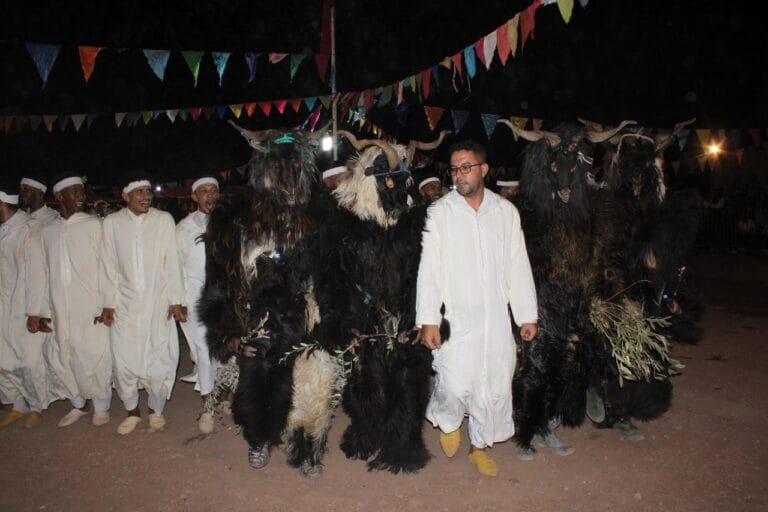
Language, however, is only one dimension of Amazigh identity. Cultural values such as hospitality, solidarity, communal responsibility, honor, and respect for elders form the ethical foundation of Amazigh society. These values are reinforced through customary law, social rituals, and collective memory, transmitted from generation to generation through storytelling, proverbs, and ceremonial practices.
Amazigh ocial Values
Amazigh social organization traditionally revolves around the village community, governed by councils that regulate land use, water distribution, conflict resolution, and collective labor. This system reflects a deeply rooted democratic ethos, where decisions are made collectively and leadership is based on merit, wisdom, and moral authority rather than inherited power. Such institutions reveal that Amazigh political culture has long been characterized by decentralization, autonomy, and social balance.
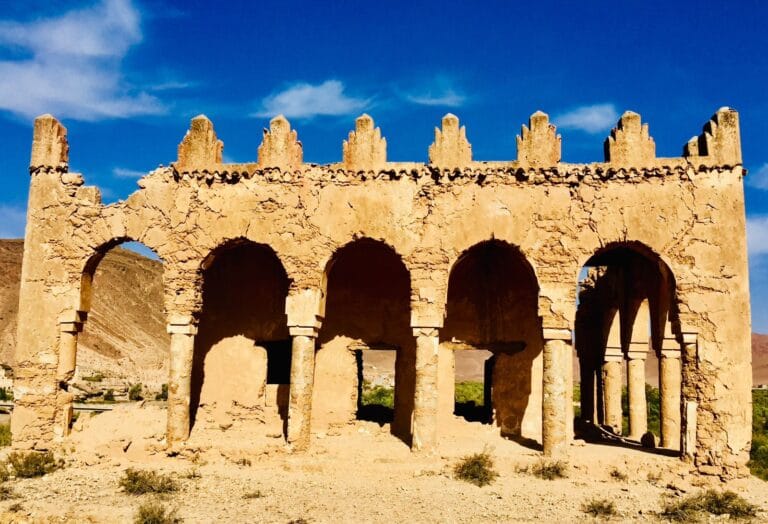
Cultural expressions such as weaving, pottery, architecture, music, and jewelry carry symbolic meanings that encode historical memory, cosmological beliefs, and social identity. Each motif, color, and pattern tells a story, linking contemporary artisans to ancestral knowledge systems that stretch back thousands of years. In villages like Iwziwn, these artistic traditions remain living archives of Amazigh history.
Historical Memory:
Oral Tradition
One of the most distinctive features of Amazigh civilization is its reliance on oral tradition as a vehicle of historical transmission. In the absence of extensive written archives, Amazigh societies developed powerful systems of collective memory preserved through epic poetry, genealogies, legends, and ritual performances. This oral heritage functioned not only as entertainment but as a repository of knowledge, social norms, moral values, and political lessons.
Through oral narratives, historical events such as migrations, wars, alliances, and resistance movements were preserved and transmitted. These stories allowed communities to maintain continuity across generations, reinforcing collective identity even in periods of political fragmentation or cultural repression. Memory thus became a form of resistance — a way to safeguard identity against erasure.
Transmission of Identity
In many Amazigh regions, elders still serve as guardians of this intangible heritage, recounting ancestral histories, explaining tribal lineages, and interpreting symbolic traditions. Such practices demonstrate that history, for the Amazigh, is not confined to books or monuments but lives within the spoken word and communal experience.
This reliance on memory has allowed Amazigh culture to remain flexible, adaptive, and resilient. While external forces attempted to reshape Amazigh identity, oral tradition ensured the survival of indigenous narratives, offering alternative interpretations of history grounded in local experience rather than imperial ideology.
Amazigh Civilization and Its Interaction with Other Cultures
Throughout history, the Amazigh interacted with numerous civilizations, including Phoenicians, Romans, Byzantines, Arabs, and Europeans. These encounters resulted in cultural exchange, conflict, adaptation, and synthesis. Yet, contrary to simplistic historical narratives, Amazigh society did not dissolve into these civilizations. Instead, it selectively absorbed external influences while preserving its core identity.
In many cases, Amazigh communities actively shaped the political and cultural landscape of North Africa. They founded kingdoms, led resistance movements, built cities, and contributed to intellectual and economic life. Even after the spread of Islam, Amazigh scholars, jurists, warriors, and traders played central roles in the expansion of Islamic civilization across Africa and into Europe.
This dynamic interaction illustrates that Amazigh identity is not static or isolated, but historically open, adaptive, and innovative. The Amazigh did not merely survive history — they actively shaped it.
Modern Amazigh Identity and
In contemporary times, Amazigh identity has undergone a profound revival. After decades of marginalization, linguistic suppression, and cultural invisibility, Amazigh movements across Morocco and North Africa have reclaimed their heritage through education, scholarship, activism, and artistic production. The official recognition of Tamazight as a national language in Morocco represents a historic milestone in this long struggle for cultural dignity.
Cultural Revival
Today, Amazigh culture is experiencing a renaissance, visible in literature, music, cinema, academic research, and digital platforms. Websites such as iwziwn.com contribute to this revival by documenting local histories, preserving endangered traditions, and offering global audiences authentic access to Amazigh knowledge systems.
This revival is not merely about cultural pride, but about reconstructing historical truth, restoring social memory, and reaffirming indigenous presence within national and global narratives. It represents a profound intellectual and moral project — one that reconnects modern generations with ancestral wisdom and strengthens cultural continuity.
The Formation of Amazigh Identity:
Ethnogenesis
Understanding who the Amazigh are requires more than identifying them as ancient inhabitants of North Africa; it necessitates a careful examination of the long and complex process of ethnogenesis — the gradual formation of a people through biological, cultural, linguistic, and social interactions over millennia. Archaeological research shows that the human settlement of North Africa predates recorded history by tens of thousands of years, with evidence from Paleolithic and Neolithic cultures demonstrating early human adaptation to diverse ecological zones.
Deep Historical Roots of Amazigh
The Amazigh did not emerge suddenly as a clearly defined ethnic group. Instead, they formed through a slow and continuous process of interaction between prehistoric populations, shaped by environmental constraints, technological development, and cultural innovation. This gradual evolution produced societies capable of mastering agriculture, animal domestication, stone construction, metalwork, and long-distance trade. These early foundations laid the groundwork for later Amazigh civilizations, whose complexity and resilience astonished ancient historians.
Rather than being a product of large-scale external migration, Amazigh identity emerged indigenously, anchored in the land itself. Genetic, archaeological, and linguistic studies confirm a deep continuity between prehistoric populations of North Africa and modern Amazigh communities. This continuity explains the extraordinary persistence of Amazigh cultural structures, social norms, and linguistic patterns despite centuries of conquest and political transformation.
Archaeological Evidence:
Tracing Amazigh Presence Through Material Culture
Archaeology provides some of the most compelling evidence for the ancient origins of the Amazigh. Across Morocco, Algeria, Tunisia, and Libya, researchers have uncovered rock engravings, burial monuments, pottery, tools, and architectural remains that reveal a long-standing human presence deeply integrated into the natural environment. These findings show that early Amazigh societies developed complex symbolic systems, religious beliefs, and artistic traditions.
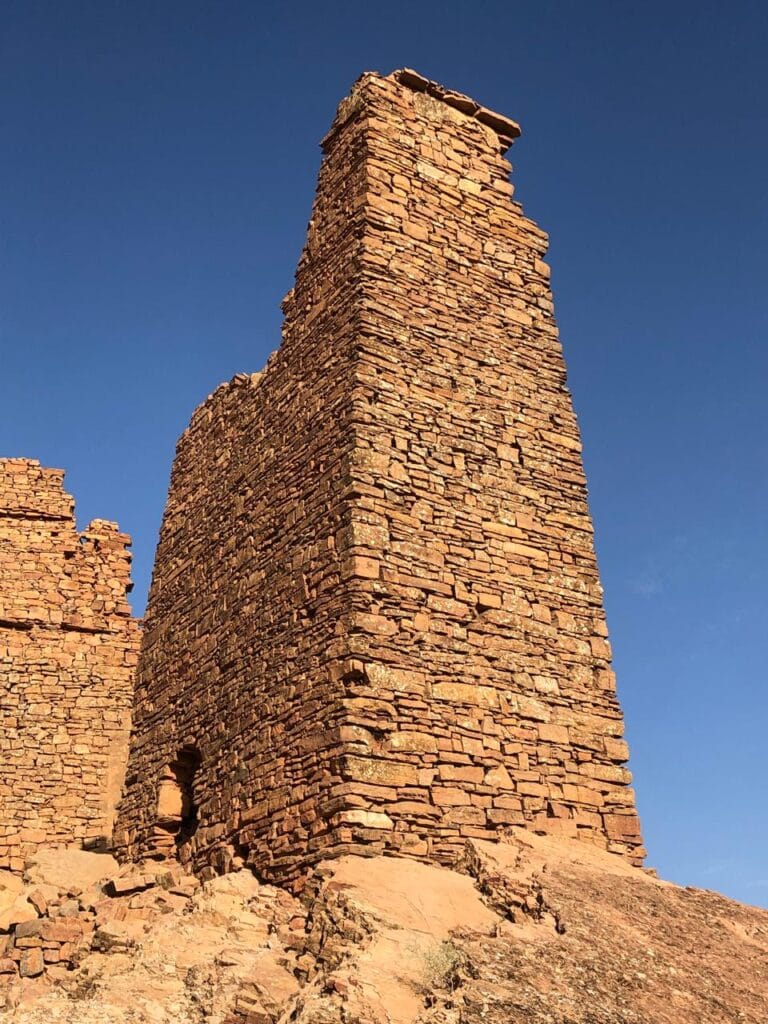
The monumental stone structures known as bazinas, tumuli, and megalithic tombs, scattered across the Maghreb, illustrate highly organized funerary practices reflecting spiritual conceptions of life, death, and ancestry. These burial traditions emphasize the centrality of lineage and memory in Amazigh culture, reinforcing collective identity through ancestral veneration.
Material culture
Rock art found in the Atlas Mountains and the Sahara further testifies to the symbolic imagination of ancient Amazigh communities. These engravings depict hunting scenes, pastoral life, rituals, and cosmological symbols, offering invaluable insight into early social organization and belief systems. Far from being primitive expressions, these artworks demonstrate advanced aesthetic sensibility and complex worldviews deeply connected to nature, survival, and communal life.
Such material remains confirm that Amazigh civilization developed independently, creating sophisticated cultural systems long before the arrival of Mediterranean colonial powers. This archaeological continuity directly challenges narratives that portray Amazigh society as historically passive or culturally derivative.
Linguistic Evidence:
Tamazight as a Key to Amazigh Antiquity
Language represents one of the most reliable indicators of deep historical continuity. The Tamazight language family belongs to the Afro-Asiatic linguistic group, sharing distant roots with ancient Egyptian, Semitic, and Cushitic languages. This linguistic affiliation places Amazigh civilization among the oldest cultural systems of Africa and the Mediterranean.
The internal diversity of Tamazight dialects reflects thousands of years of geographical dispersion, local adaptation, and social differentiation. Yet despite this diversity, all Tamazight varieties preserve core grammatical structures, phonetic systems, and lexical roots, confirming their origin from a common ancestral language. This remarkable unity within diversity reveals a deep collective memory preserved through oral transmission and social interaction.
The ancient Tifinagh script of Amazigh Language
The ancient Tifinagh script, still used today by Tuareg communities and officially adopted in modern Morocco, further demonstrates the historical depth of Amazigh literacy. Inscriptions found in North Africa and the Canary Islands reveal early writing traditions used for religious, commemorative, and possibly legal purposes. This challenges outdated assumptions that Amazigh societies relied exclusively on oral culture, showing instead that they developed their own systems of symbolic communication.
Through language, Amazigh identity has transcended political borders, colonial divisions, and historical ruptures, maintaining a powerful sense of belonging rooted in shared linguistic heritage.
Anthropology and Social Continuity:
The Persistence of Amazigh Institutions
Anthropological research reveals extraordinary continuity in Amazigh social institutions, many of which trace their origins to prehistoric communal structures. The traditional village council, collective land ownership, communal irrigation systems, and customary law codes all demonstrate social mechanisms designed to ensure survival, equity, and cohesion in challenging environments.
These institutions reflect a deeply embedded ethical philosophy based on collective responsibility, mutual aid, and social equilibrium. Decision-making processes emphasize consensus rather than coercion, reinforcing a political culture rooted in dialogue, wisdom, and moral authority. Leadership is traditionally earned through knowledge, experience, and integrity rather than inherited privilege.
Social Continuity
This social model allowed Amazigh communities to preserve autonomy even under imperial domination. By maintaining decentralized governance structures, Amazigh villages effectively resisted political assimilation, ensuring the survival of indigenous norms, values, and identity across centuries.
In regions such as Sous and the High Atlas — including villages like Iwziwn — these systems remain partially intact, offering living examples of ancient social philosophy adapted to modern realities. They represent invaluable cultural heritage deserving preservation and scholarly attention.
Amazigh and Mediterranean Civilizations:
Interaction Without Dissolution
The Amazigh did not develop in isolation. Throughout antiquity, they maintained extensive contact with Mediterranean civilizations, including Phoenicians, Greeks, Romans, and Byzantines. These interactions produced economic exchange, technological diffusion, and cultural adaptation. However, Amazigh society never lost its structural autonomy.
Amazigh communities
Instead of cultural submission, Amazigh communities engaged in selective integration, adopting useful innovations while preserving their own identity frameworks. This dynamic process explains the emergence of powerful Amazigh kingdoms such as Numidia and Mauretania, which successfully negotiated their position between indigenous autonomy and imperial geopolitics.
This historical pattern continued into the Islamic era, when Amazigh tribes played central roles in the spread of Islam while simultaneously reshaping Islamic civilization according to their social traditions, legal interpretations, and political values. The result was not cultural erasure, but cultural synthesis — a hallmark of Amazigh adaptability.
Memory as Historical Resistance:
Preserving Identity Through Oral Transmission
Perhaps the most profound dimension of Amazigh identity lies in their extraordinary reliance on memory as a form of historical preservation. In the absence of centralized archives, Amazigh societies transformed oral tradition into a sophisticated system of knowledge transmission, encoding history, law, cosmology, and ethics into poetry, legends, rituals, and genealogies.
This oral memory functioned as a cultural fortress, protecting identity against external domination. Even when political authority collapsed or cultural repression intensified, memory ensured continuity. Through songs, epic tales, and ceremonial practices, Amazigh communities maintained awareness of their origins, heroes, migrations, and struggles.
In villages like Iwziwn, elders continue to embody this living memory, serving as guardians of ancestral knowledge. Their narratives connect contemporary generations with prehistoric roots, creating an unbroken chain of identity that defies historical fragmentation.
Who are the Amazigh people?
The Amazigh, also known as Berbers, are the indigenous people of North Africa, with a continuous presence in the region for tens of thousands of years. They inhabit vast territories extending from Morocco and Algeria to Tunisia, Libya, and parts of Egypt, Mali, and Niger. The word “Amazigh” means free human being or noble man, reflecting deep-rooted values of freedom, dignity, and independence. Amazigh identity is defined by a shared language (Tamazight), cultural traditions, social systems, and historical memory that have endured despite centuries of conquest and cultural pressure.
Are Amazigh and Berbers the same?
Yes, Amazigh and Berbers refer to the same people, but the term Amazigh is the authentic self-designation, while Berber is an external label introduced by ancient Greek and Roman writers. Today, the word Amazigh is preferred because it carries positive cultural meaning and reflects self-identity, whereas the term Berber historically carried negative and colonial connotations.
What is the origin of the Amazigh?
The Amazigh originated indigenously in North Africa, evolving from prehistoric populations who settled the region thousands of years ago. Archaeological, genetic, and linguistic evidence confirms deep continuity between ancient North African inhabitants and modern Amazigh communities. Unlike later populations who arrived through conquest or migration, the Amazigh developed organically within the Maghreb, shaping one of Africa’s oldest civilizations.
Where do the Amazigh live today?
Today, Amazigh populations live primarily in Morocco, Algeria, Tunisia, Libya, and Egypt, as well as in parts of Mali, Niger, and Burkina Faso. In Morocco, major Amazigh regions include the High Atlas, Middle Atlas, Anti-Atlas, Rif Mountains, and Sous Valley, where villages such as Iwziwn preserve rich Amazigh heritage. Large Amazigh communities also exist in Europe and North America due to migration.
What language do the Amazigh speak?
The Amazigh speak Tamazight, an ancient Afro-Asiatic language family with several major dialects, including Tachelhit, Tamazight of the Middle Atlas, and Tarifit. Tamazight is one of the oldest living languages in Africa and has survived through strong oral tradition. In Morocco, Tamazight is now officially recognized as a national language and written using the Tifinagh script.
How old is Amazigh civilization?
Amazigh civilization dates back more than 10,000 years, based on archaeological discoveries, rock art, prehistoric settlements, and linguistic continuity. This makes the Amazigh one of the oldest living indigenous civilizations in the Mediterranean and African worlds, with uninterrupted cultural presence from prehistoric times to the present.
Why is memory so important in Amazigh culture?
Memory is central to Amazigh identity because oral tradition preserved history, law, and social values in the absence of written archives. Through storytelling, poetry, rituals, and songs, Amazigh communities transmitted knowledge across generations, protecting identity from cultural erasure. This collective memory serves as both historical archive and cultural resistance.
What is the meaning of the word Amazigh?
The word Amazigh means free man, noble person, or honorable human being, reflecting the core Amazigh values of freedom, dignity, independence, and moral integrity. This concept has shaped Amazigh social and political philosophy throughout history.
What makes Amazigh culture unique?
Amazigh culture is unique due to its deep historical continuity, oral tradition, symbolic art, democratic village systems, and ecological knowledge. These elements reflect thousands of years of adaptation, creativity, and resilience, making Amazigh civilization one of the world’s richest indigenous cultural traditions.
Conclusion: The Amazigh — A Civilization of Memory, Freedom, and Continuity
To ask “Who are the Amazigh?” is to open a gateway into one of the world’s oldest living civilizations. Rooted in the land of North Africa, shaped by centuries of resilience, and sustained by collective memory, the Amazigh embody a profound philosophy of freedom, dignity, and belonging. Their history is not a marginal footnote, but a foundational chapter in the story of the Mediterranean and African worlds.
Understanding Amazigh origins, identity, and memory enables us to move beyond stereotypes and rediscover a civilization whose contributions to human history are vast and enduring. It also reminds us that cultural survival is not guaranteed, but achieved through conscious preservation, transmission, and renewal.
By exploring Amazigh heritage, especially at the local level through towns such as Iwziwn, we reconnect history with lived experience, ensuring that identity remains a dynamic force shaping both present and future generations.