The Architecture of Morocco: A Timeless Blend of History, Spirit, and Symbolism
Introduction: When Walls Speak – The Spirit Behind Moroccan Architecture
You may not realize it when walking through the narrow alleys of a Moroccan medina, but the architecture around you tells stories far older than words. Every geometric pattern, every earthen wall, and every intricately carved arch whispers the philosophy of a people who built their homes, mosques, and fortresses not merely as shelters, but as spiritual extensions of life itself.
The symbolism of architecture in Morocco is a living language—an art form that bridges the sacred and the mundane, the ancient and the modern, the visible and the unseen.
Rooted in Amazigh (Berber) traditions, shaped by Andalusian sophistication, and infused with Islamic spirituality, Moroccan architecture represents one of the world’s richest cultural syntheses. It stands as a testament to how identity, geography, and faith can merge to form a design philosophy that has endured for over a millennium (Terrasse, 1932; Naji, 2007).
In this exploration, you will journey through the symbolic, historical, and cultural layers of Moroccan architecture—from the earthen ksour of the Atlas Mountains to the ornate mosques of Fez and Marrakech. You will discover not just how buildings were made, but what they mean—and how they continue to shape the Moroccan soul.
Table of Contents
Origins — The Amazigh Foundation of Moroccan Architecture
Architecture as a Reflection of Earth and Spirit
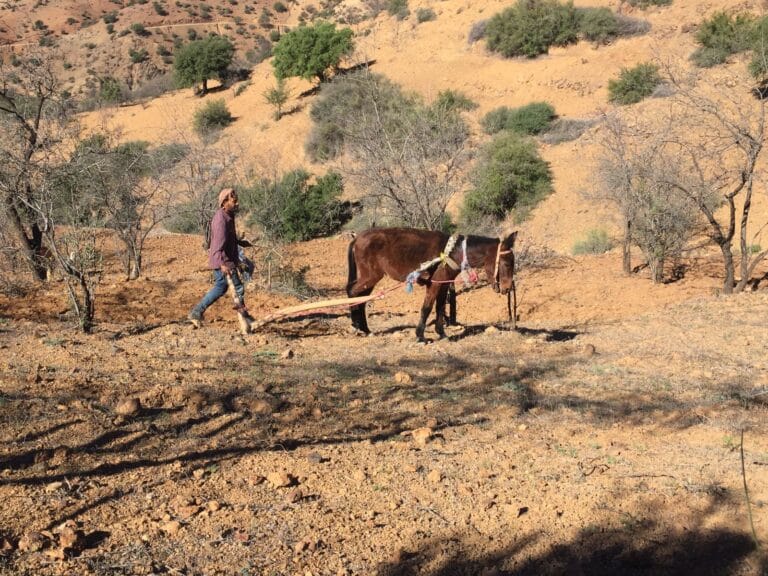
Before Islamic, Andalusian, or European influences, there were the Amazigh. For thousands of years, these indigenous people of North Africa developed a vernacular architecture in harmony with their harsh yet poetic landscapes. Their structures—mud-brick kasbahs, fortified ksour, and domed granaries—were not designed for aesthetic pleasure alone but as responses to environment and community.
- Material Symbolism: Clay, stone, and wood symbolized balance between human fragility and the permanence of nature (Naji, 2012).
- Spatial Symbolism: The courtyard represented the heart of the family and the cosmos—a space of purity and protection.
- Color Symbolism: Red earth from the Atlas Mountains was more than pigment; it was life itself, the akhfuj (Amazigh for clay) connecting people to their land.
The Amazigh concept of architecture was deeply anthropological—each building was both a physical and social organism. In a world without written alphabets, architecture became a form of visual language, expressing belonging, hierarchy, and sacredness.
The Islamic Influence – Geometry as Divine Language
From Faith to Form
When Islam spread to Morocco in the 7th century, it brought not only a new spiritual framework but a mathematical vision of beauty. Islamic architecture viewed geometry as a reflection of divine order—an aesthetic discipline that mirrored the perfection of creation (Burckhardt, 1976).
You notice this clearly in Moroccan mosques and madrasas:
- Repetition symbolizes eternity and divine infinity.
- Symmetry mirrors spiritual harmony.
- Light and shadow are metaphors for divine revelation.
Zellij (mosaic tilework), muqarnas (stalactite ornamentation), and carved stucco all serve a theological purpose: to transform material form into spiritual contemplation.
The Sacred Geometry of Zellij
Every pattern in Moroccan zellij is a coded message. The eight-pointed star (khatim) symbolizes balance and cosmic unity, while interlacing polygons suggest infinity—the endless connection between the human and divine.
Mathematicians from Fez developed these designs centuries before modern fractal geometry, using compasses and intuition rather than algorithms (El-Said & Parman, 1976).
Andalusian Harmony – The Fusion of Art and Memory
The Refuge of Al-Andalus
In the 15th century, when Muslims and Jews fled Andalusia after the Reconquista, they brought with them a refined architectural culture that forever transformed Morocco. Cities like Fez, Tétouan, and Chefchaouen became sanctuaries of Andalusian aesthetics.
Andalusian influence introduced:
- Courtyard houses (riads) centered around gardens and fountains.
- Calligraphic decoration as intellectual and spiritual expression.
- Lush ornamentation symbolizing paradise on earth.
These exiled artisans fused their Andalusian memory with Amazigh pragmatism, creating the Moroccan architectural identity we recognize today: elegant, symbolic, and spiritual yet deeply human.
The Atlas Perspective – Vernacular Architecture and Identity
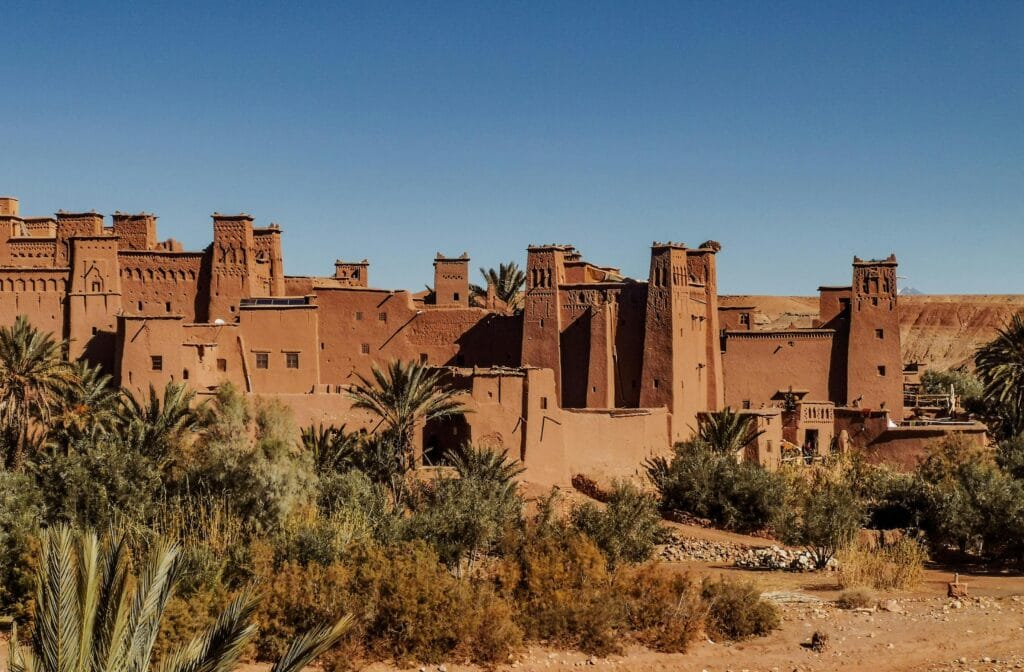
The Ksour of the Atlas and the Desert
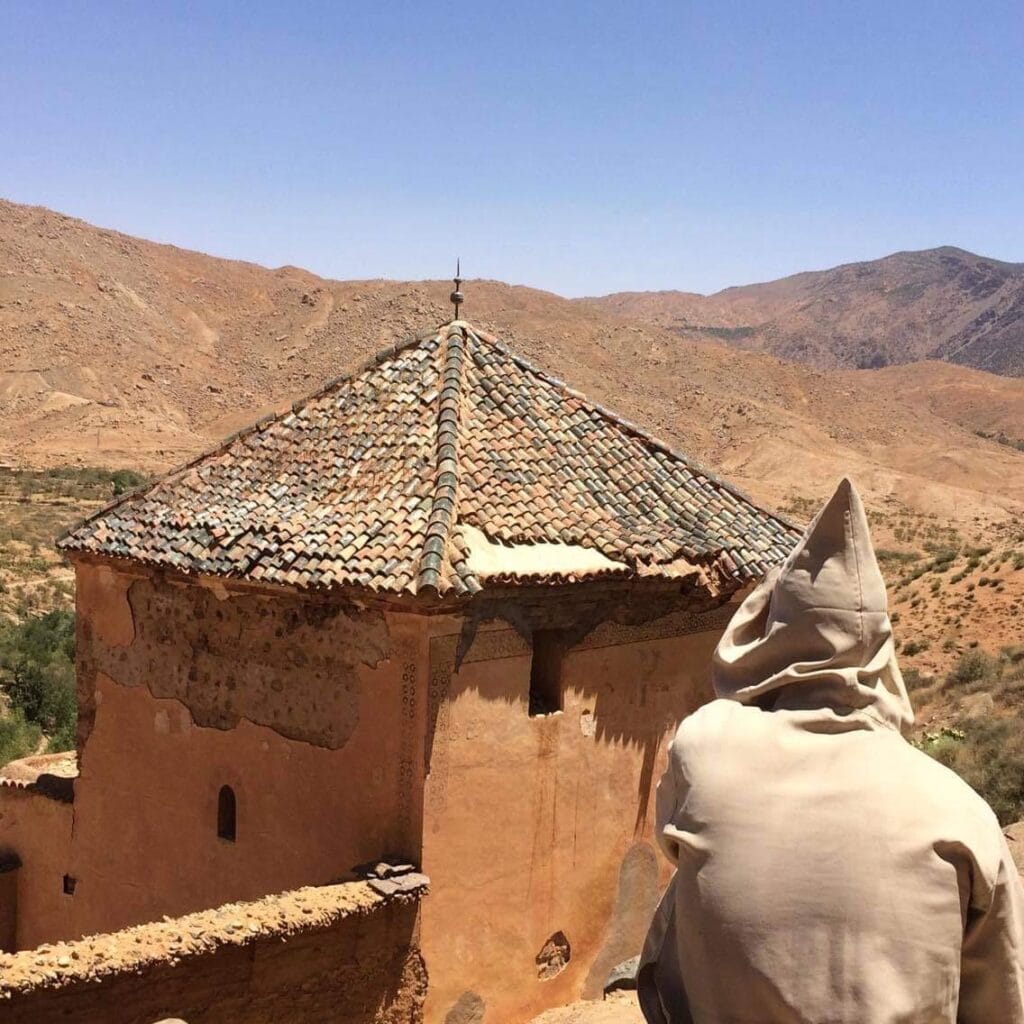
The earthen ksar (plural ksour) remains one of Morocco’s most emblematic architectural forms. Built from rammed earth, stone, and palm wood, these fortified villages symbolize communal resilience and adaptation.
Key Symbolisms:
- Walls symbolize unity and protection.
- Towers reflect vigilance and strength.
- Labyrinthine passages evoke spiritual journeys—physical representations of life’s complexity.
Each ksar is a metaphor for community and continuity. As Salima Naji (2012) observes, “The material fragility of these walls conceals the immaterial permanence of a civilization.”
Spiritual Symbolism in Moroccan Architecture
The House as Microcosm of the Universe
In Moroccan thought, the home is a microcosm of the cosmos. Its inward focus reflects Islamic notions of modesty and the Amazigh concept of the sacred center (amenzu). The courtyard is the axis mundi—the heart that connects heaven, earth, and the underworld.
Elements and meanings:
- The door: threshold between sacred and profane.
- The fountain: symbol of purification and paradise.
- The roof: represents divine protection.
Each home thus becomes an act of cosmology—a lived temple balancing matter and spirit.
Light as a Divine Element
Light plays a theological role. The Qur’an (24:35) describes God as the “Light of the heavens and the earth,” and Moroccan builders took this verse literally.
Filtered through lattice screens (mashrabiyyas) or small courtyards, light moves through space like revelation through the heart.
Symbolism in Public and Religious Architecture
Mosques – The Geometry of Worship
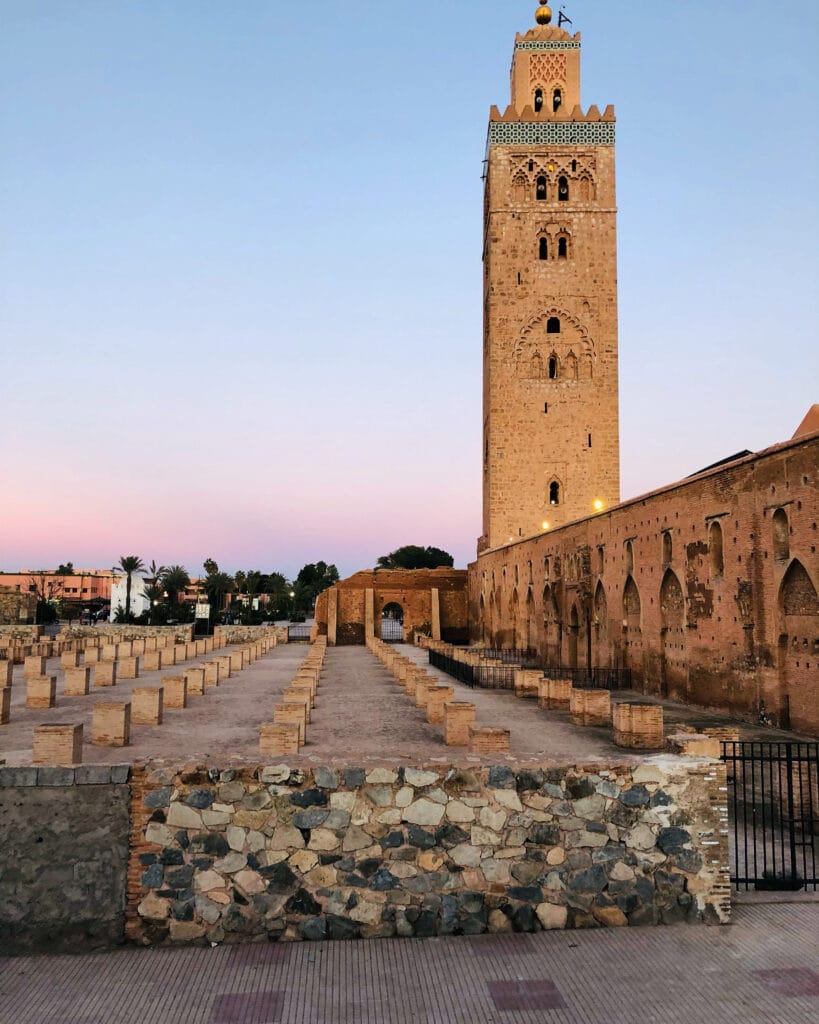
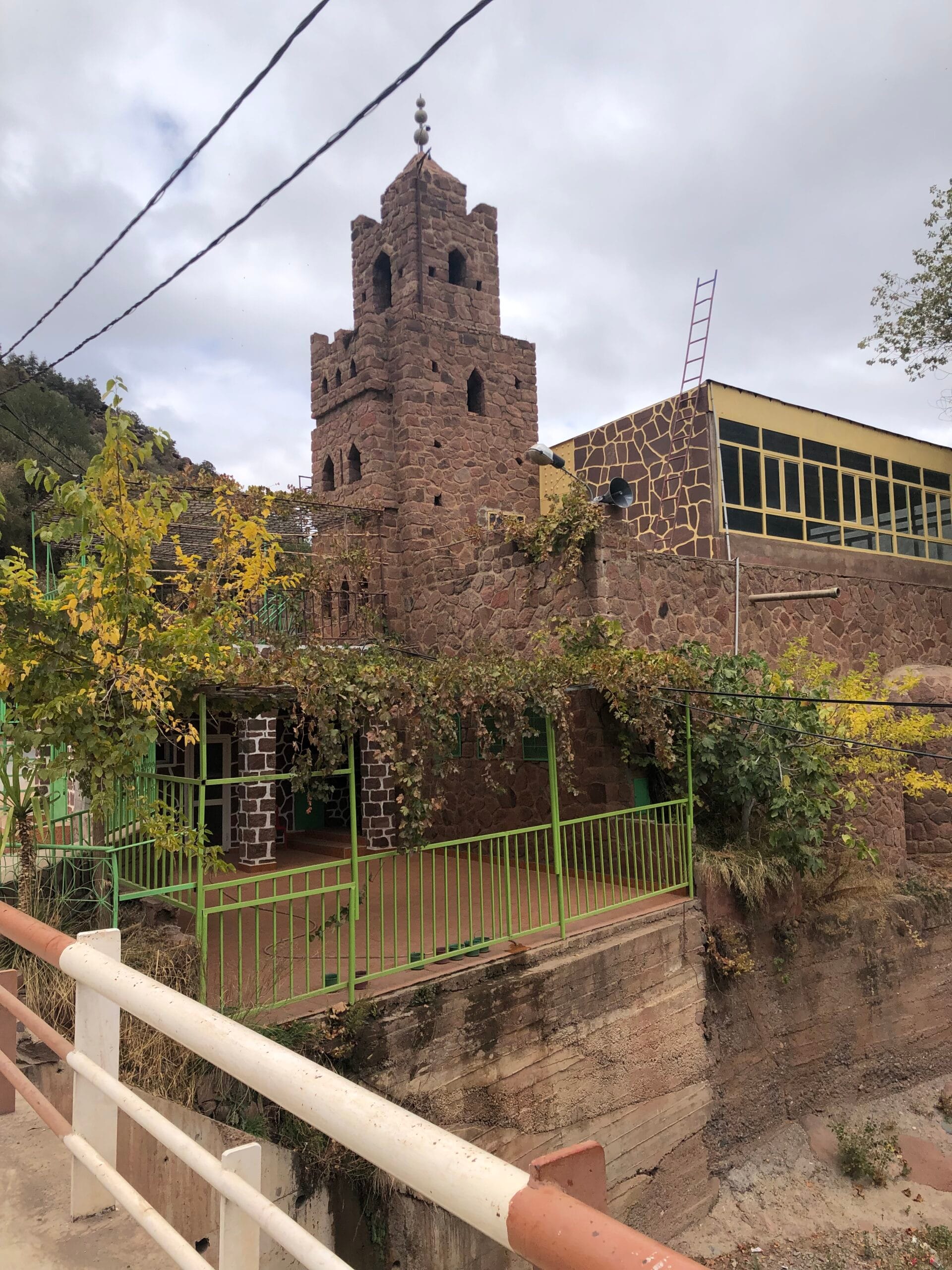
The mosque in Morocco embodies harmony, submission, and unity. Its mihrab faces Mecca, orienting the body and spirit toward divine order.
The minaret stands as the axis between earth and heaven—its call to prayer not merely an auditory signal but an architectural gesture that links the human community to cosmic time.
Examples:
- Koutoubia Mosque, Marrakech – The “mosque of the booksellers” symbolizes learning and faith.
- Al-Qarawiyyin Mosque, Fez – A living embodiment of Morocco’s intellectual heritage.
Women, Ornament, and the Unspoken Language of Design
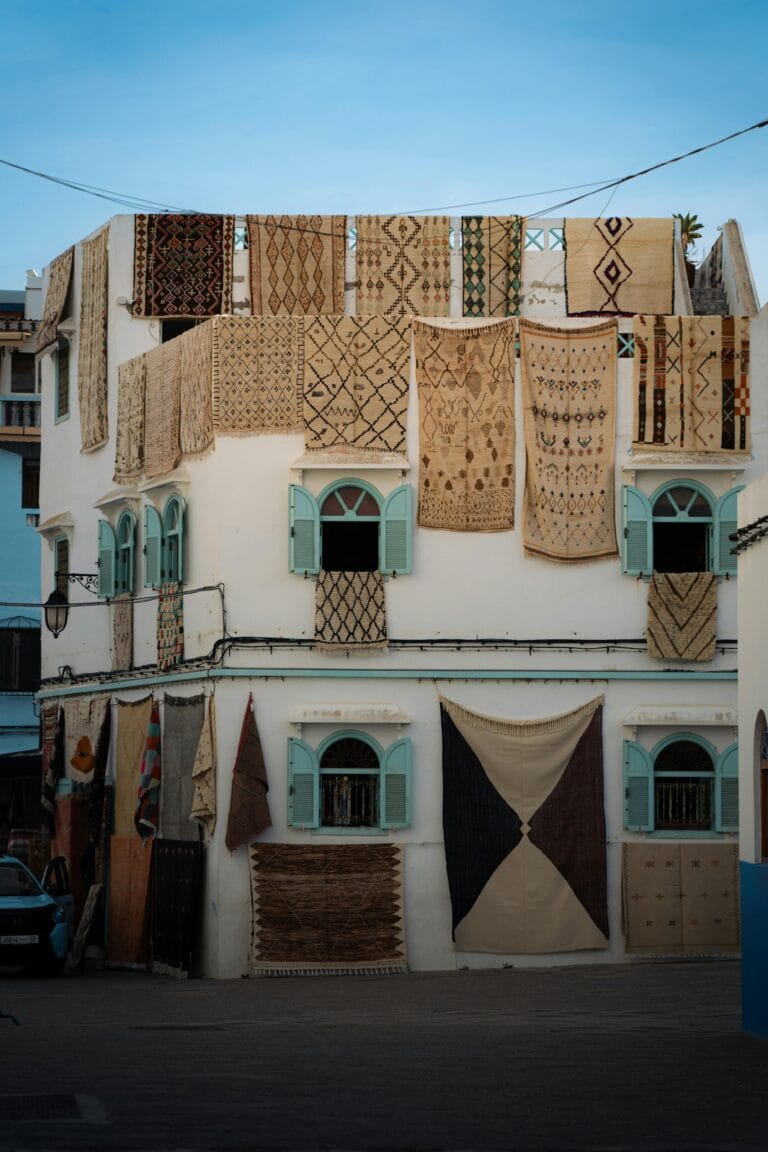
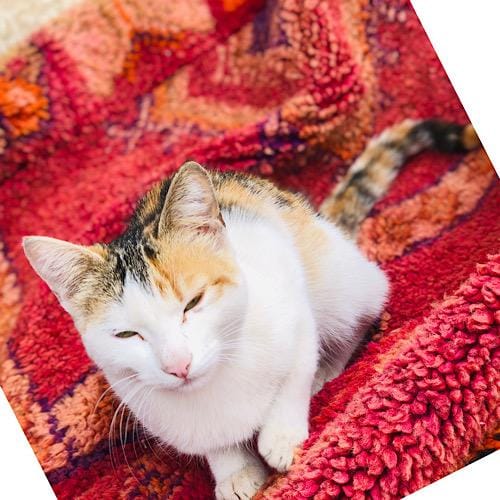
Though architectural history often highlights male builders, Moroccan women shaped the visual language of ornamentation. The geometric motifs in carpets, tattoos, and ceramics often parallel those found in architectural designs.
Symbolic parallels:
- Rhombus – fertility and protection.
- Triangles – trinity of life: birth, death, and rebirth.
- Dots and lines – ancestral lineage and continuity.
These patterns migrated from textile to wall, creating a dialogue between domestic and monumental art—a conversation between the hand of the weaver and the chisel of the mason.
Modern Morocco – Between Heritage and Innovation
Contemporary Symbolism
Modern Moroccan architects like Aziza Chaouni and Salima Naji reinterpret traditional forms to address sustainability and identity in the 21st century.
Their works show that the symbolism of architecture is not frozen in the past but continues to evolve.
Today’s eco-architecture in the Atlas and southern oases revives:
- Rammed earth construction for thermal regulation.
- Local materials as acts of resistance against globalization.
- Community design inspired by ancestral collective systems.
Thus, Moroccan architecture becomes a living conversation between ancestors and innovators.
Symbolism of Colors and Materials
| Element | Symbolism | Traditional Use |
|---|---|---|
| Red earth | Vitality, fertility, blood of the land | Walls of Atlas kasbahs |
| Blue | Protection, infinity, divine peace | Chefchaouen facades |
| Green | Life, paradise, Islam | Tiles, domes |
| White | Purity, sacredness | Mosques, mausoleums |
These choices are never arbitrary; they are visual theologies. To build in Morocco is to paint faith into matter.
Conclusion: Architecture as the Memory of the Soul
When you stand before a Moroccan kasbah or beneath a zellij dome, you are not just seeing art—you are witnessing philosophy built in clay and stone.
Every wall, pattern, and color speaks of harmony between human life and divine order. Moroccan architecture remains, above all, a spiritual geography—a reflection of a people who understood that to build is to pray.
FAQs – Symbolism of Architecture in Morocco
1. What makes Moroccan architecture unique?
It unites Amazigh, Islamic, and Andalusian traditions, blending environmental adaptation with profound symbolism.
2. What is the symbolism of geometry in Moroccan design?
Geometry reflects divine order and infinity—each shape is a metaphor for unity, balance, and eternity.
3. Why are Moroccan houses inward-looking?
They preserve modesty, privacy, and the sacred harmony between family and cosmos.
4. What materials define traditional Moroccan architecture?
Rammed earth, stone, wood, and lime plaster—chosen for both their symbolism and ecological value.
5. How does modern Morocco preserve its architectural heritage?
Through restoration, eco-architecture, and integrating traditional designs into sustainable modern projects.
Call to Action
If this journey through the symbolism of Moroccan architecture inspired you, explore more stories about Amazigh heritage, culture, and art on iwziwn.com.
Your curiosity sustains the memory of a civilization that built not just homes—but worlds.
References (APA Style)
- Burckhardt, T. (1976). Art of Islam: Language and Meaning. World of Islam Festival Publishing.
- El-Said, I., & Parman, A. (1976). Geometric Concepts in Islamic Art. World of Islam Festival Publishing.
- Naji, S. (2007). Artisanat et Architecture au Maroc. Paris: Éditions du Patrimoine.
- Naji, S. (2012). La Maison en Terre au Maroc. Casablanca: Éditions La Croisée des Chemins.
- Terrasse, H. (1932). L’Art Hispano-Mauresque au Maroc. Paris: Librairie Orientaliste Paul Geuthner.
- UNESCO. (2023). Medina of Fez, Marrakech, and Tétouan – World Heritage Centre. https://whc.unesco.org