Weaving as Economy and Modern Identity in Morocco: Threads of Transformation
Introduction: The Loom as a Mirror of the Soul
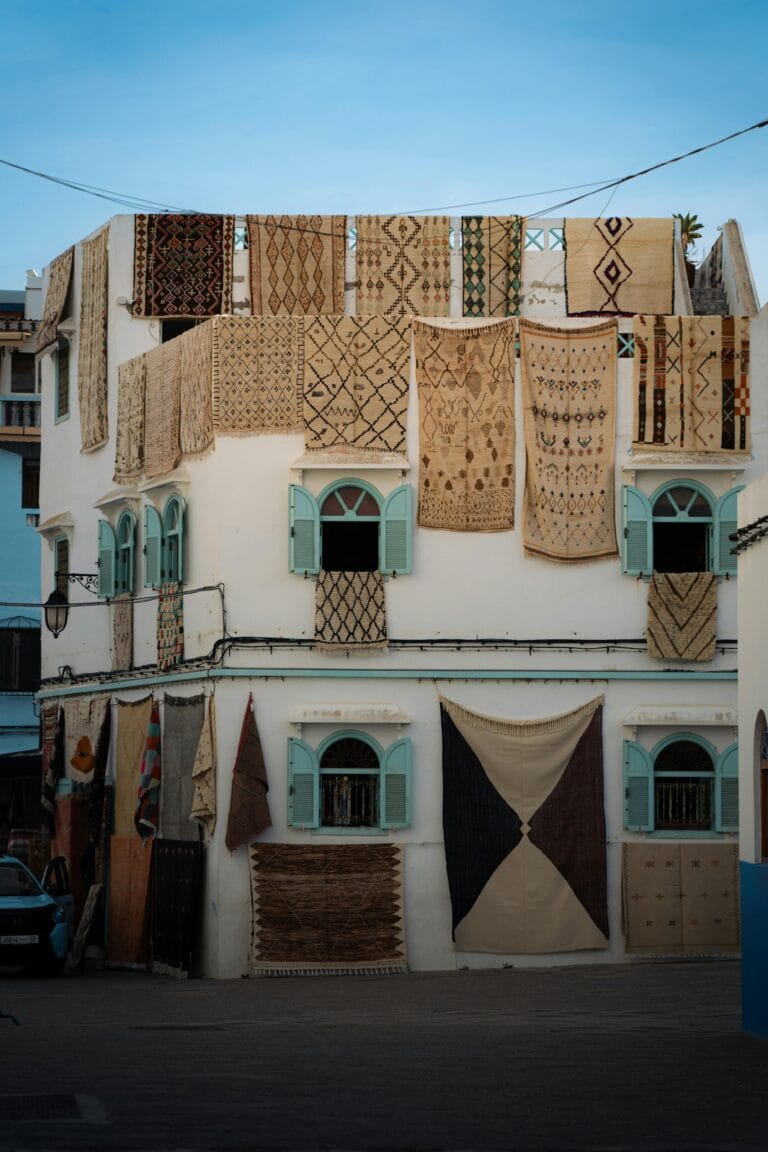
Morocco weaving economy, the rhythmic click of the loom echoes like a heartbeat — steady, ancient, and full of meaning. Weaving, once a domestic art of necessity, has become a symbol of economic resilience and national identity. Each strand tells a story: of women’s strength, of villages that reinvent themselves, and of a heritage that refuses to fade in the face of globalization.
As you trace your hand across the soft textures of a Moroccan rug or the vibrant colors of a woven blanket, you’re not simply feeling fabric — you’re touching centuries of cultural evolution, the interwoven journey from survival to self-expression.
Today, weaving stands at a crossroads between tradition and modernity, transforming from a subsistence craft into an engine of creativity, empowerment, and sustainable growth.
Table of Contents
From Heritage to Economic Engine – The Evolution of Moroccan Weaving
The Ancestral Roots of Morocco weaving economy
Long before trade routes connected North Africa to the Mediterranean, weaving was the language through which Morocco’s Amazigh (Berber) tribes expressed identity and memory. Every motif carried meaning: protection, fertility, harmony, or strength.
The Atlas Mountains, the Souss Valley, and the High Atlas villages became renowned centers for wool, cotton, and natural dye production. What began as domestic work soon evolved into a vibrant economic and symbolic system, reflecting Morocco’s social fabric.
- High Atlas: known for bold geometric patterns and deep reds.
- Middle Atlas: famous for thick, durable carpets (Aït Ouaouzguite, Zayane).
- Rif Mountains: delicate textiles, fine weaving with symbolic motifs.
Weaving and the Tribal Economy
In pre-modern Morocco, woven textiles were a form of currency. Carpets and blankets were traded for livestock, tools, and even land. Women’s weaving represented both domestic labor and economic agency, serving as a family’s wealth in cloth form.
Rural Amazigh societies sustained themselves through reciprocity networks — weaving was central to this social economy, ensuring that art, economy, and ethics remained tightly intertwined.
Weaving as a Symbol of Identity and Resistance
Threads of Identity
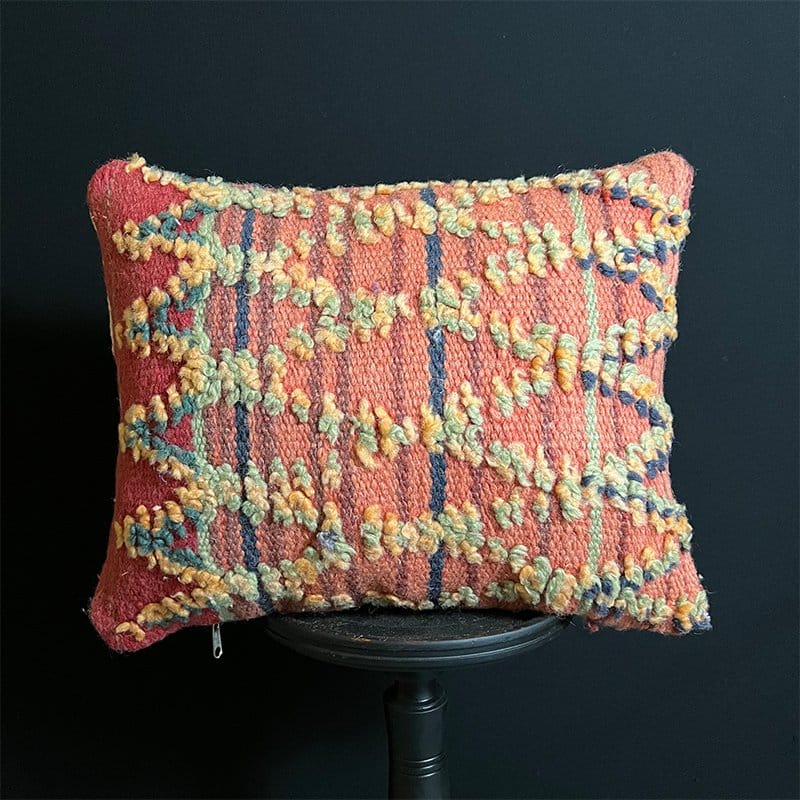
Each Moroccan rug is a visual autobiography — a map of the weaver’s world. Motifs drawn from nature, fertility, and spirituality reflect how Amazigh culture perceives existence: cyclical, balanced, and interconnected.
Distinct styles mark tribal identities:
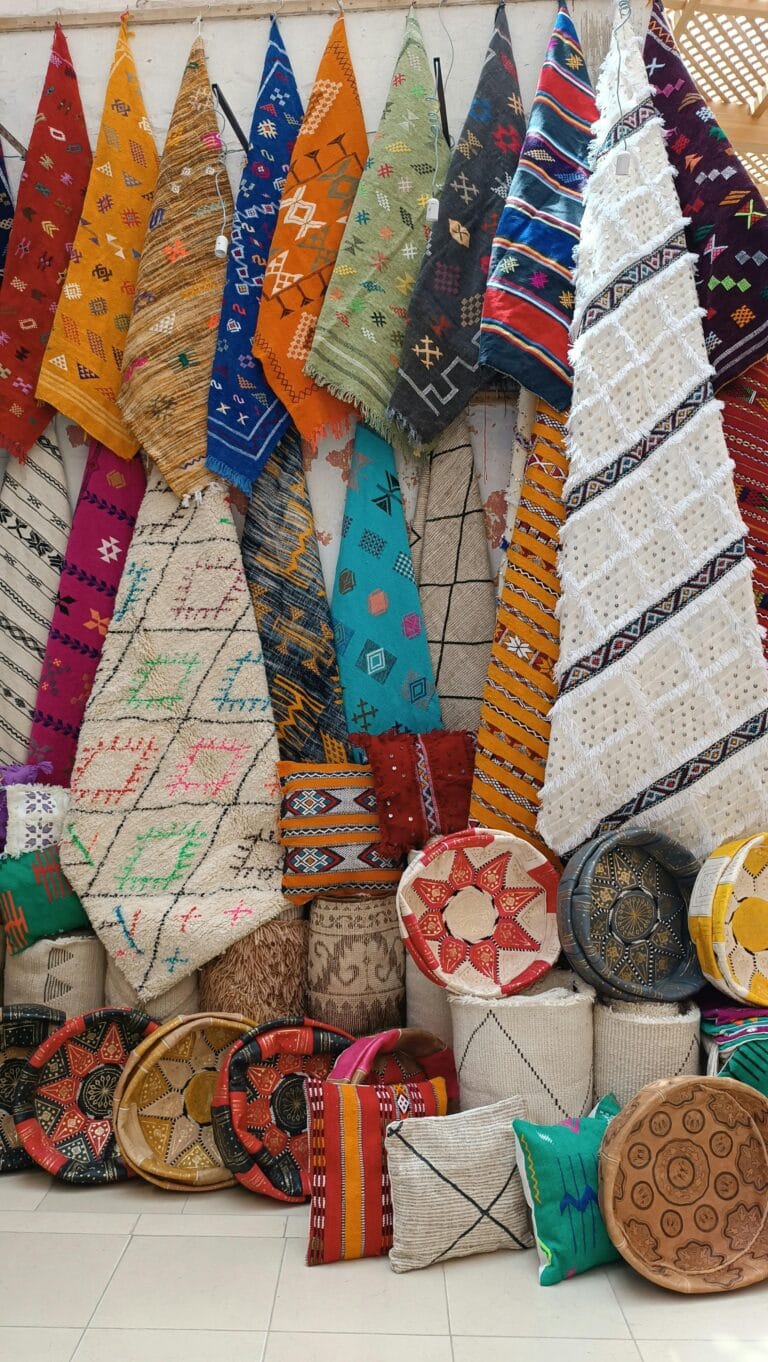
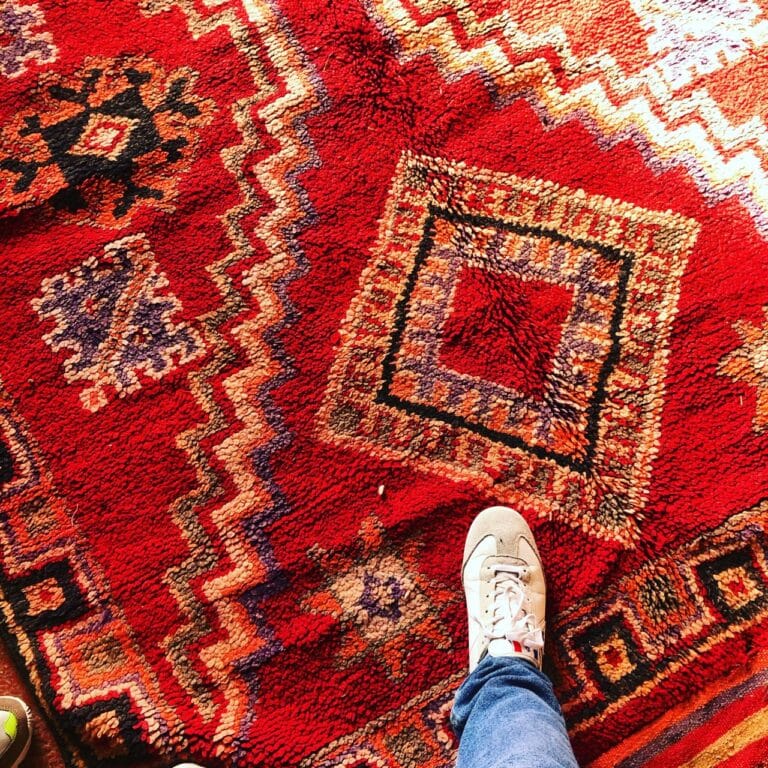
- Zemmour rugs – bold reds, diamond motifs symbolizing protection.
- Beni Ourain rugs – minimalist white and black, representing purity and introspection.
- Taznakht and Aït Atta textiles – vivid, rhythmic patterns embodying vitality and abundance.
These designs are not random — they form a coded language, where each knot preserves cultural memory.
Cultural Resistance through Craft
During colonial times, weaving became a quiet act of resistance. While urban markets were dominated by imported European goods, rural women continued to produce traditional textiles — preserving indigenous identity through the loom.
Even today, weaving remains a form of cultural resilience, affirming Moroccan uniqueness in a globalized world of mass production.
Women, Weaving, and Economic Empowerment
The Feminine Economy
Across Morocco, weaving remains primarily a female-led craft, sustaining entire households. What was once unpaid domestic work has become a source of independence and education for many women.
In regions such as Taznakht, Ouarzazate, and Tafraoute, women’s cooperatives have emerged as pillars of rural development. These organizations train artisans in design, marketing, and sustainable production — allowing women to become entrepreneurs in their own right.
“When a woman weaves, she does not only create a rug — she rebuilds her life thread by thread.”
Cooperatives and Social Innovation
Some notable examples include:
- Cooperative Tissekmoud (Aït Bouguemez) – promoting eco-dyes and fair trade.
- Anou.org – a digital marketplace connecting rural artisans directly with global buyers.
- Coopérative Taznakht – led by Amazigh women, reviving ancient weaving patterns with modern color schemes.
Through these initiatives, weaving has become a platform for social mobility, literacy, and empowerment, redefining gender roles in traditional societies.
Weaving and the Morocco Economy Today
The Scale of the Industry
Morocco’s crafts sector employs over two million people, representing about 7% of GDP (Ministry of Handicrafts, 2023). Within it, weaving remains one of the most exported crafts, sought after for its authenticity and durability.
- Key Export Destinations: France, USA, Japan, UAE.
- Products: carpets, blankets, bags, and contemporary fashion items.
- Annual Output: estimated 80 million USD in handmade textiles (World Bank, 2022).
Urban Revival and Global Design Influence
Cities such as Marrakech, Fez, and Casablanca have seen a resurgence of interest in traditional weaving among designers and architects. Moroccan rugs now adorn luxury hotels, galleries, and eco-lodges worldwide — symbols of authenticity in modern interiors.
International collaborations with Moroccan cooperatives have created new design vocabularies: minimalist aesthetics fused with ancestral symbolism.
Sustainability and the Future of Moroccan Weaving
Eco-friendly Practices and Revival of Natural Dyes
Modern artisans are rediscovering eco-conscious dyeing methods using pomegranate rinds, henna leaves, indigo, and saffron. This sustainable return to roots aligns Morocco’s weaving heritage with global environmental ethics.
Traditional wool production also promotes biodiversity, supporting transhumant pastoralism in the Atlas — a practice now recognized by UNESCO as part of the Intangible Cultural Heritage of Humanity (UNESCO, 2020).
Weaving as Circular Economy
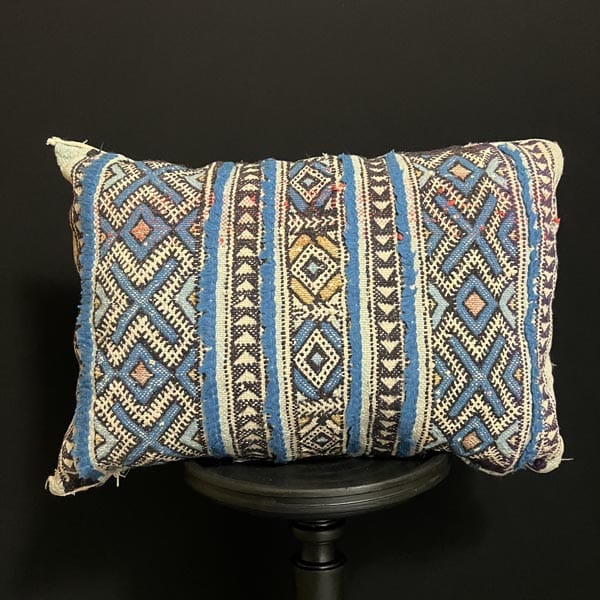
Weaving embodies the principles of slow production and circular economy. Nothing is wasted: old wool is recycled, looms are handmade, and dye water is reused. It is a model of local sustainability — centuries ahead of modern ecological movements.
Symbolism and Aesthetics of Moroccan Weaving
The Language of Patterns
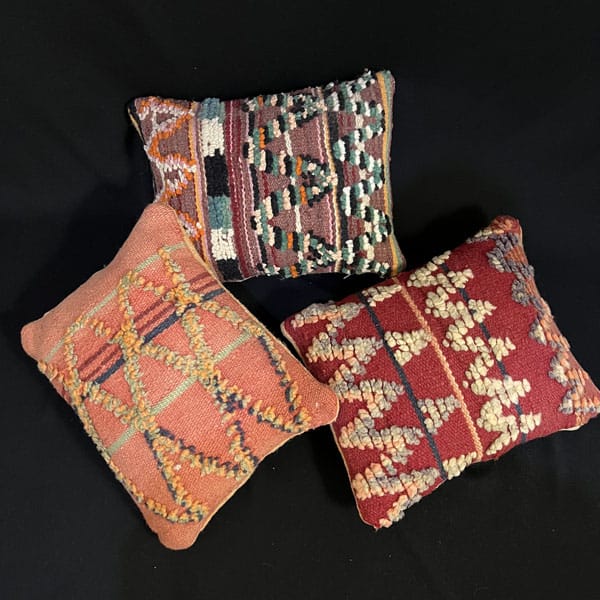
Every line, diamond, or zigzag carries meaning — a visual code of spirituality and cosmology. While designs differ from tribe to tribe, recurring symbols unify Moroccan aesthetics:
| Symbol | Meaning | Found In |
|---|---|---|
| Diamond (⧫) | Protection from evil, female fertility | Zemmour, Aït Atta rugs |
| Cross (✚) | Harmony, balance | High Atlas |
| Zigzag (〰) | Water, movement, life force | Taznakht textiles |
| Eye motif | Spiritual vision, safeguarding | Rif and Souss |
These motifs reflect the interplay between art and life — weaving as both prayer and philosophy.
Weaving as a Language of Time
Each rug is a temporal record, capturing moments of migration, harvest, and personal memory. The slowness of weaving — often months of work — contrasts sharply with modern speed, teaching the weaver and viewer alike the art of patience and attention.
The Role of Weaving in Modern Moroccan Identity
Craft as Cultural Diplomacy
Weaving has become a cultural ambassador for Morocco. Exhibitions in Paris, New York, and Tokyo present woven art not as folklore but as living design, adaptable to contemporary aesthetics while preserving authenticity.
Through initiatives like Maison de l’Artisan and Morocco Handmade, the country promotes its craft heritage as a cornerstone of national branding — merging soft power with cultural pride.
Youth and the Revival of Handicrafts
A new generation of Moroccan designers, educated in art and design schools, is reinterpreting traditional weaving. They collaborate with rural artisans to create fashion-forward, ethically sourced products — bridging heritage and global modernity.
Projects such as Trame Maroc, Marrakech Design Hub, and Casa Mode Lab integrate weaving into architecture, furniture, and wearable art, giving ancient crafts a futuristic vision.
Challenges Facing the Weaving Sector
Market Competition and Cultural Dilution
Mass-produced imitations threaten authentic craftsmanship. Machine-made rugs labeled “Moroccan style” undercut local artisans. Preserving weaving’s authentic narrative requires education, labeling systems, and consumer awareness.
Transmission and Education
As older weavers retire, fewer young people inherit the craft. NGOs and cultural institutions now focus on apprenticeship programs, ensuring knowledge continuity while adapting to new market realities.
Digital Transformation
Online marketplaces are reshaping trade — artisans now reach buyers directly, bypassing middlemen. However, digital literacy remains a barrier for many rural communities, creating a digital divide in access to opportunity.
Weaving as Living Philosophy
Weaving, at its core, embodies Moroccan wisdom — the art of connection. Threads cross and bind, like human relationships. The loom becomes a metaphor for life’s interdependence, where strength arises from unity.
The Amazigh saying “Adrar d afous n waman” (The mountain and the hand of water) reflects the same principle — nature, work, and culture woven into balance. In a fast-changing world, weaving reminds you to slow down and reconnect with meaning.
Conclusion : The Future Woven by Hand
The story of Moroccan weaving is a story of rebirth. What began as an act of survival has become a movement of creativity and resistance, merging the past with the promise of the future.
Every rug woven today carries both ancestral memory and modern vision — threads of commerce and identity intertwined.
In the hands of Moroccan women and youth, weaving continues to shape not only fabric but the nation’s social and economic destiny.
To touch a Moroccan textile is to touch the living pulse of Morocco itself — warm, enduring, and infinitely human.
FAQs – Weaving as Economy and Modern Identity in Morocco
1. How important is weaving to Morocco’s economy?
Weaving contributes significantly to Morocco’s craft industry, supporting rural livelihoods and representing around 7% of national GDP.
2. What makes Moroccan weaving unique?
It combines Amazigh symbolism, natural materials, and centuries-old techniques passed from generation to generation.
3. How does weaving empower Moroccan women?
Through cooperatives, weaving provides income, independence, and leadership opportunities for women in rural areas.
4. Are Moroccan rugs sustainable?
Yes. Many are handmade with locally sourced wool, natural dyes, and eco-friendly production methods.
5. How is modern design influencing traditional weaving?
Contemporary designers collaborate with artisans to innovate while preserving authenticity — blending heritage with modern aesthetics.
References
- Benchekroun, A. (2021). Crafting Modernity: Moroccan Women’s Cooperatives and Economic Identity. Casablanca: Éditions Ennahda.
- El Fassi, L. (2019). Textile Heritage and Development in the Atlas Mountains. Fez University Press.
- Ministry of Handicrafts, Morocco. (2023). National Craft Sector Report. Rabat.
- UNESCO. (2020). Transhumant Pastoralism and Associated Crafts in Morocco. UNESCO Intangible Heritage Lists.
- World Bank. (2022). Cultural Industries and Sustainable Development in Morocco. Washington, DC.
- Zrari, M. (2020). Symbolic Language in Moroccan Weaving: An Ethnographic Approach. Marrakesh Institute of Anthropology.
Call to Action:
Support Morocco’s artisans by choosing handmade, ethical crafts. Each woven thread carries a legacy — when you bring it into your home, you help sustain the heartbeat of Morocco’s living heritage.