The History of Amazigh People in Morocco: The Living Roots of Identity, Culture, and Continuity
Introduction – The Eternal Soul of the Atlas
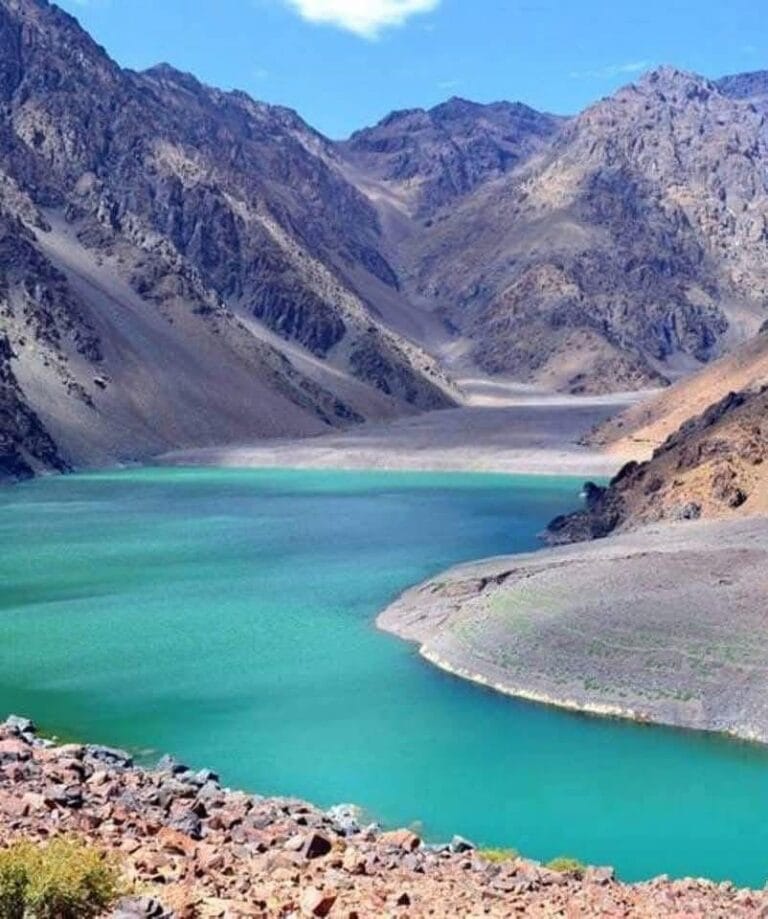
When you stand before the Atlas Mountains — their rocky silhouettes rising like ancient guardians of time — you are not merely witnessing geography. You are standing in the heartland of History of Amazigh people, Morocco’s indigenous population, whose story stretches back more than 12,000 years. To understand Morocco is to understand its Amazigh soul — a civilization that survived empires, deserts, invasions, and modernity without losing its rhythm, voice, or essence.
The Amazighs, meaning “free people”, are the first inhabitants of North Africa, predating Arab arrival by millennia. Their history is woven into everything Moroccan — from the curves of a ksar’s wall to the melodies of ahwach dance, from the silver glint of jewelry to the warm texture of handwoven carpets.
This article traces the Amazigh journey — a living story of resilience, creativity, and belonging — through their history, traditions, arts, and enduring cultural symbols.
Table of Contents
1. Ancient Origins: From Prehistory to Early Kingdoms
1.1 The Prehistoric Amazigh Roots
Archaeological evidence places Amazigh ancestors in North Africa as early as 10,000 BCE. Prehistoric cave paintings in Taforalt, Aïn Halla, and Oukaïmeden depict hunting scenes, rituals, and domestic life — the earliest cultural imprints of a people who would later form the backbone of the Maghreb.
These early Amazigh communities practiced pastoralism and early agriculture, cultivating barley, wheat, and olives while domesticating goats and sheep — the foundations of Morocco’s later rural economy.
1.2 Libyan Tribes and Carthaginian Contact
By 1000 BCE, Amazigh tribes — known in ancient texts as “Libu” or “Numidians” — established trade and political ties with Phoenician and Carthaginian settlements along the North African coast. These interactions brought writing (notably the Libyco-Berber script) and early urban culture to Amazigh lands.
2. The Classical Era: The Amazigh in the Mediterranean World
2.1 Numidia and Mauretania: Kingdoms of the Free
Between the 3rd century BCE and the 1st century CE, powerful Amazigh kingdoms emerged, including Numidia (under King Massinissa) and Mauretania (under King Juba II). These states became cultural bridges between Africa, Rome, and the Mediterranean world.
The Amazigh elites adopted Roman architecture and literature but preserved their indigenous identity, language, and tribal autonomy. Traces of this synthesis are visible in sites such as Volubilis near Meknes.
2.2 Romanization and Resistance
Rome annexed much of North Africa, but Amazigh resistance was constant. Figures like Tacfarinas (1st century CE) became symbols of defiance against imperial domination. The mountains — especially the Atlas — remained sanctuaries of independence.
3. The Coming of Islam and the Amazigh Kingdoms
3.1 Islamization and Arabization
Islam reached Morocco in the 7th–8th centuries CE, but Amazigh conversion was gradual and self-directed. Unlike other regions conquered militarily, the Amazigh embraced Islam through spiritual adaptation, blending it with indigenous customs.
They shaped Sufi brotherhoods, zawiyas (spiritual lodges), and a distinct religious architecture that merged desert spirituality with mountain endurance.
3.2 The Rise of Amazigh Dynasties
From the 8th to the 16th centuries, Amazigh dynasties ruled Morocco and beyond:
- The Idrisids (788–974) — first Islamic state in Morocco, founded with Amazigh support.
- The Almoravids (1040–1147) — desert warriors who spread Islam from the Sahara to Spain, founding Marrakesh.
- The Almohads (1121–1269) — mountain reformers from the High Atlas who built monumental architecture such as the Koutoubia Mosque.
- The Marinids (13th–15th centuries) — patrons of education, responsible for Fez’s madrasas.
These dynasties fused Amazigh values of justice, solidarity, and piety with Islamic law, forming the Moroccan identity we know today.
4. Amazigh Language and Identity
4.1 Tamazight: The Voice of the Mountains
The Tamazight language (ⵜⴰⵎⴰⵣⵉⵖⵜ) — written in Tifinagh script — is one of the oldest linguistic systems still alive today. It unites multiple dialects:
- Tachelhit (spoken in Souss & High Atlas),
- Tamazight of the Middle Atlas,
- Tarifit (in the Rif region).
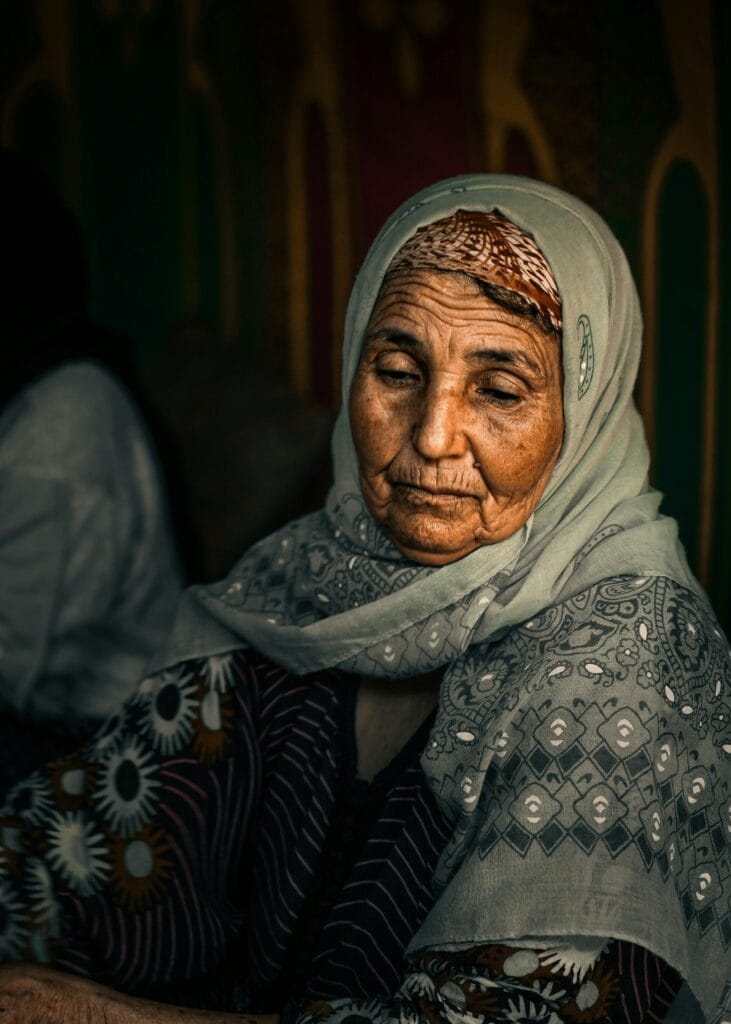
Each dialect preserves oral poetry, proverbs, and history, transmitted from mothers to children — a living archive of the nation’s memory.
4.2 Cultural Revival
In 2011, Morocco officially recognized Tamazight as a national language, and the Royal Institute of Amazigh Culture (IRCAM) was established to promote it in education and media.
5. Amazigh Traditions: Dance, Music, and Celebration
5.1 Ahwach and Ahidus: The Rhythm of the Mountains
Dance and music are the pulse of Amazigh communal life.
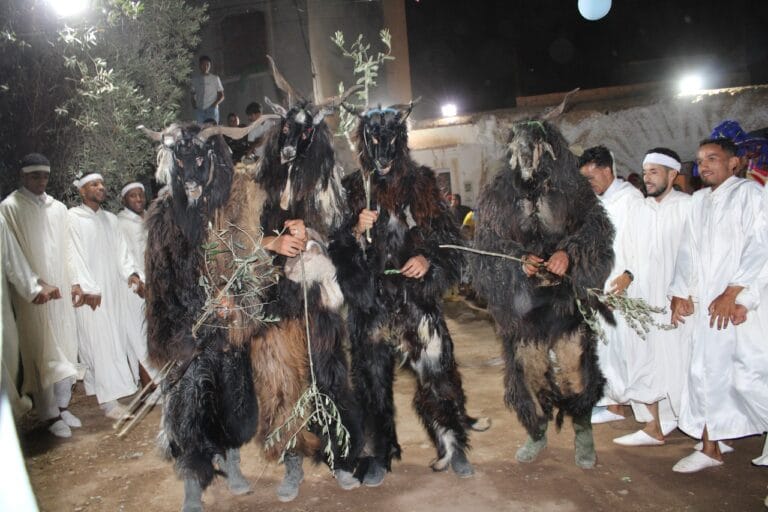
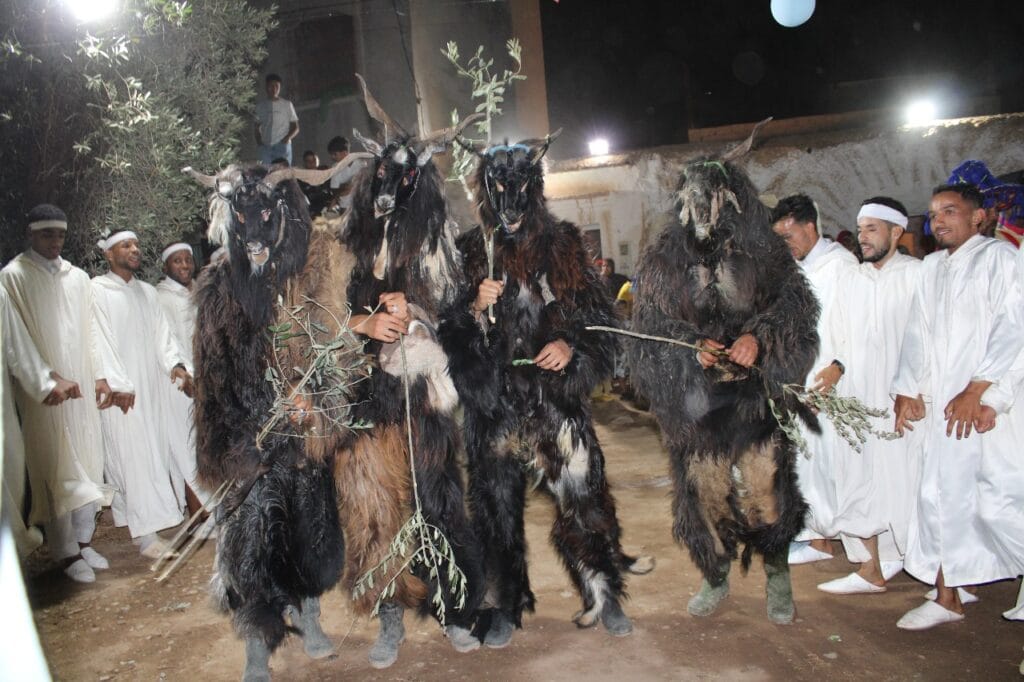
Ahwach, in the High Atlas and Souss, and Ahidus, in the Middle Atlas, are collective performances that blend poetry, rhythm, and choreography.
Each movement, each drumbeat, symbolizes unity and identity — a living metaphor for Amazigh resilience. These performances often accompany weddings, harvest festivals, and moussems (spiritual gatherings).
5.2 Amazigh Weddings: A Rite of Love and Continuity in history of Amazigh people
Amazigh weddings last several days, filled with symbolic rituals — henna ceremonies, traditional songs, and the bride’s adornment with silver jewelry and colored veils. The celebration represents the union of families and the reaffirmation of cultural belonging.
6. The Artistic Soul of the Amazigh People
6.1 Weaving and Textiles: Patterns of Memory
Amazigh women are the keepers of heritage through weaving.
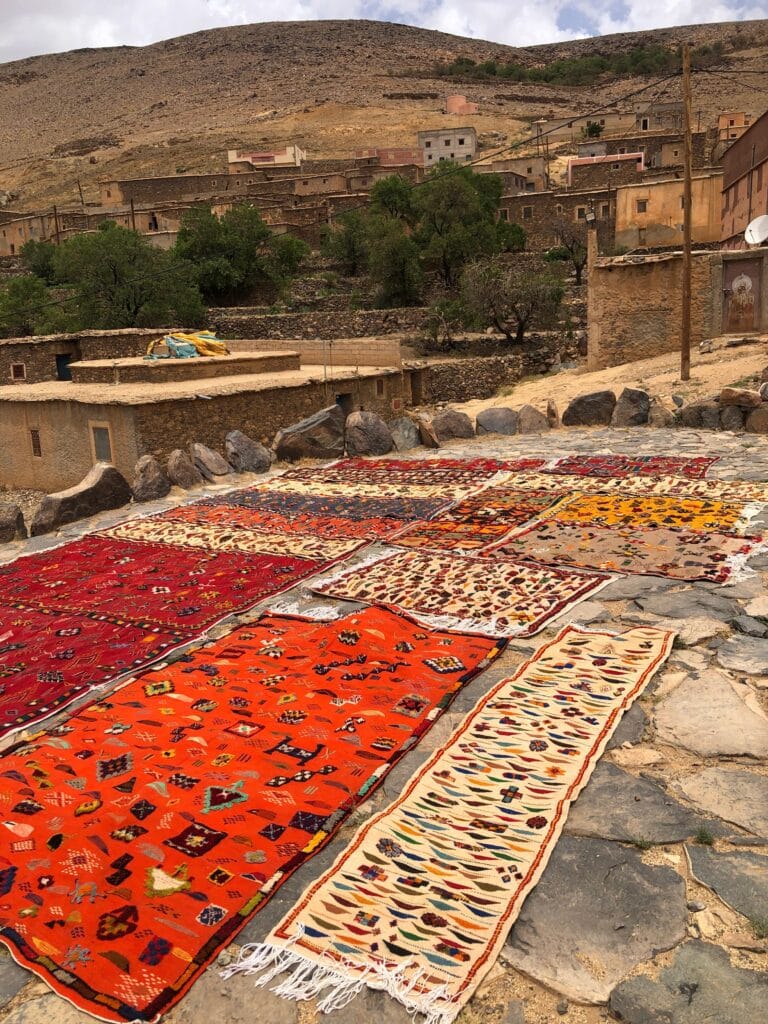
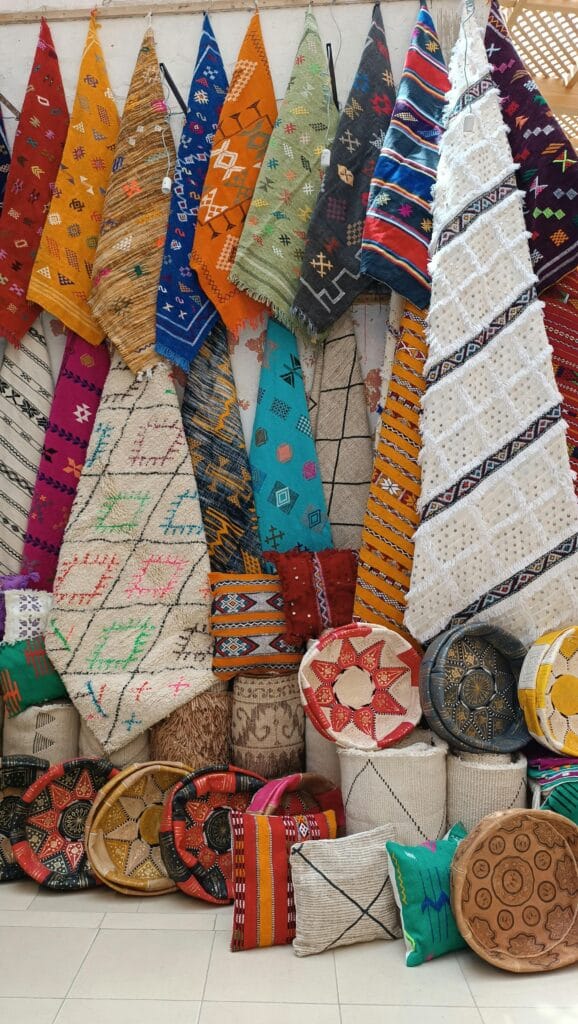
Each carpet — whether from Aït Ouaouzguite, Beni Ourain, or Zemmour — tells a story of fertility, protection, and community.
Symbols like diamonds, lozenges, and zigzags represent life, femininity, and the cosmos. Natural dyes from saffron, pomegranate, and indigo connect art to the land.
6.2 Jewelry: Silver and Symbolism
Amazigh jewelry, particularly from the Sous and Anti-Atlas, is more than adornment. Each piece — a fibula (tizerzai) or necklace (tighremt) — carries tribal identity and spiritual protection.
The heavy silver reflects purity, while motifs like hands, triangles, and suns express cosmic balance.
6.3 Architecture: Homes of Clay and Spirit
Amazigh architecture reflects harmony with the environment:
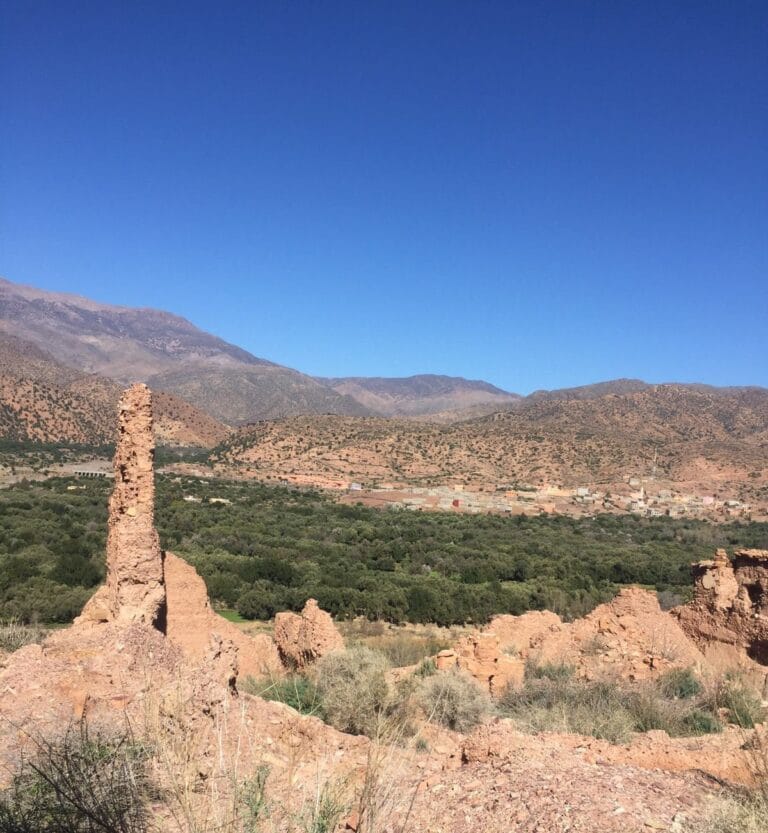
- Kasbahs and Ksour: fortified homes of the valleys.
- Agadirs: collective granaries symbolizing community trust.
- Earthen materials like clay, stone, and timber embody sustainability.
Structures like Aït Ben Haddou or Tizourgane stand as living museums of Amazigh ingenuity.
7. Amazigh Economy and Agriculture
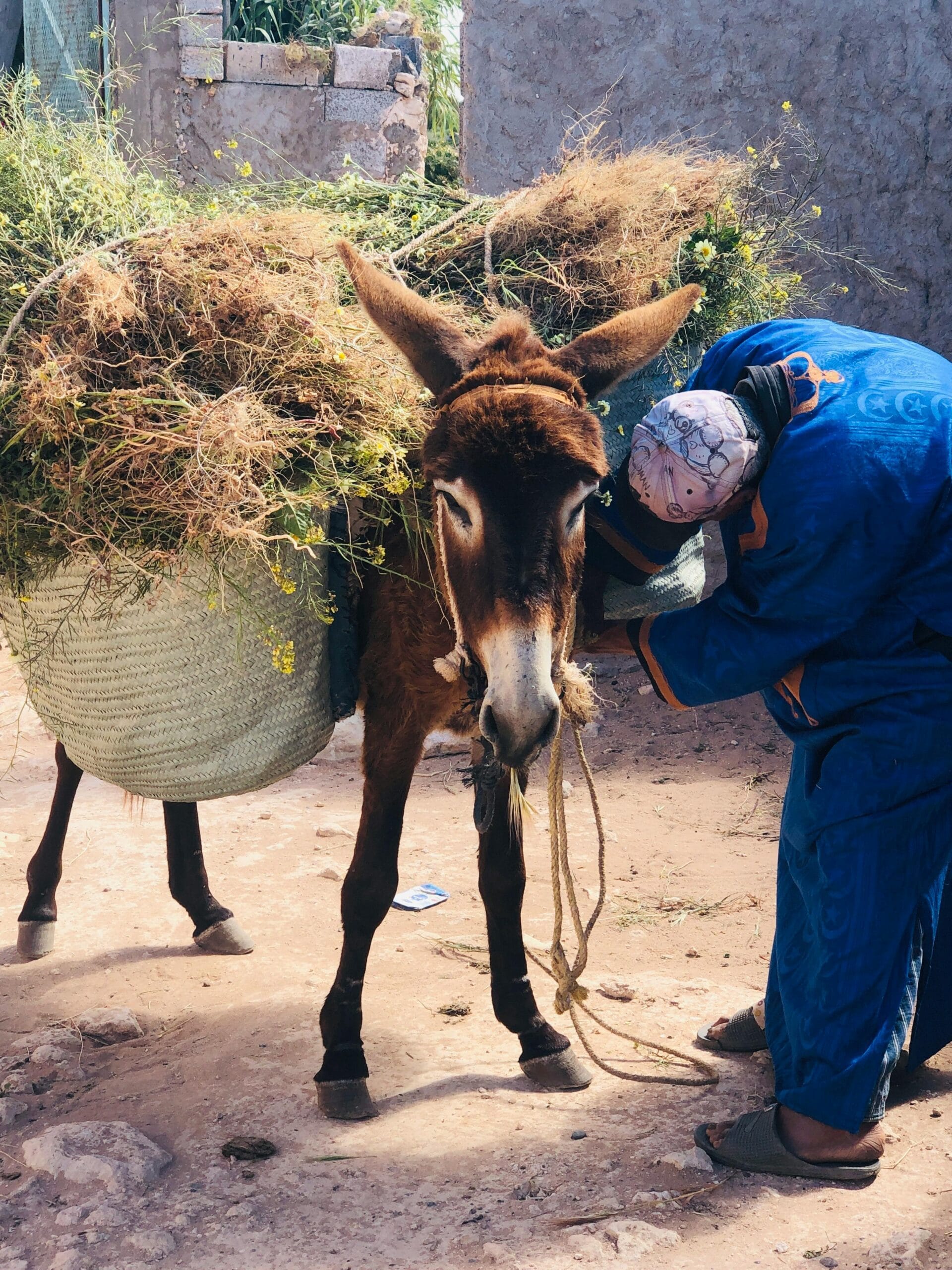
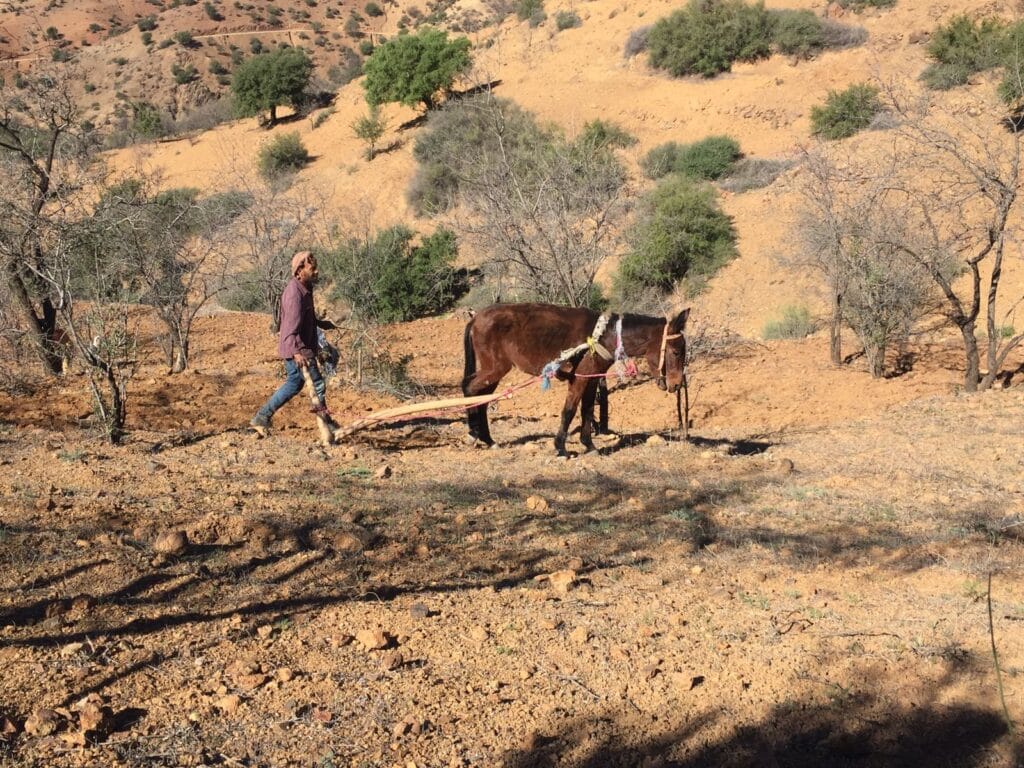
Amazigh communities have sustained mountain life for centuries through terraced agriculture, olive and argan cultivation, and pastoralism.
Their sustainable practices reflect deep ecological wisdom: water conservation, seasonal rotation, and collective work (known as tawiza).
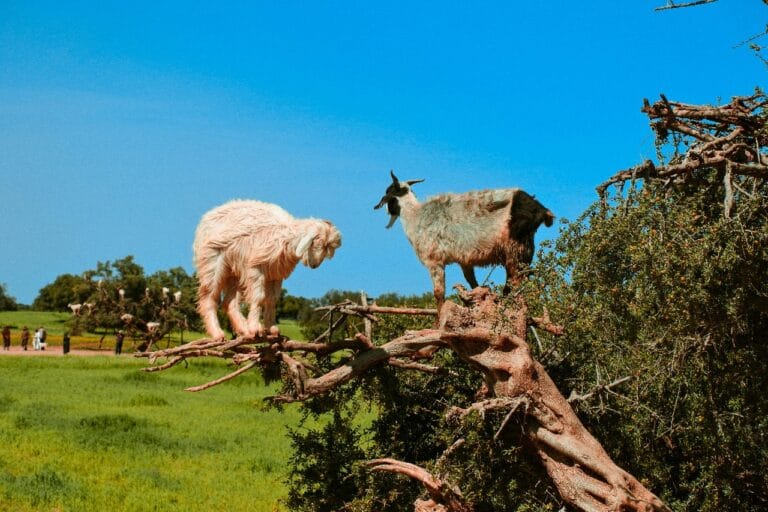
The Argan tree, unique to southwestern Morocco, symbolizes this bond — a sacred tree that sustains both life and economy, primarily through women’s cooperatives.
8. Modern Amazigh Identity: Continuity Through Change
Today, the history of Amazigh people identity thrives across Morocco and North Africa, balancing modernity and tradition.
Movements advocating cultural preservation, language teaching, and economic empowerment have revitalized ancient pride.
Amazigh art now influences Moroccan design, tourism, and education, while youth reinterpret traditions through film, fashion, and digital media.
Conclusion – The Future Rooted in the Past
The history of the Amazigh people in Morocco is not confined to museums or textbooks — it’s alive in every song, symbol, and stone wall of the Atlas. It is the history of Morocco itself: diverse, spiritual, creative, and unbroken.
When you hear the echo of a drum in the mountains or trace your fingers along a woven line on a carpet, you touch a civilization that has never stopped breathing.
To understand Morocco’s future, you must listen to its oldest voice — the voice of the Amazigh, the “free people.”
References
- Brett, M. & Fentress, E. (1996). The Berbers. Blackwell.
- Ennaji, M. (2005). Multilingualism, Cultural Identity, and Education in Morocco. Springer.
- Laroui, A. (1977). The History of the Maghrib: An Interpretive Essay. Princeton University Press.
- Hart, D. (2000). Tribes and Modern States in the Middle East. University of California Press.
- Maherzi, A. (2018). Amazigh Architecture and Symbolism. Rabat: IRCAM Publications.
- IRCAM (Royal Institute of Amazigh Culture), Rabat.
- UNESCO Intangible Heritage Lists, “Ahwach”, “Amazigh Weaving”, and “ArganTree Ecosystem”.
- El Azzouzi, H. (2022). Amazigh Women and the Preservation of Cultural Heritage.