
From Flock to Floor: The Hidden Life Cycle of Wool in Amazigh Weaving
Introduction: You Walk on Stories You Never Saw
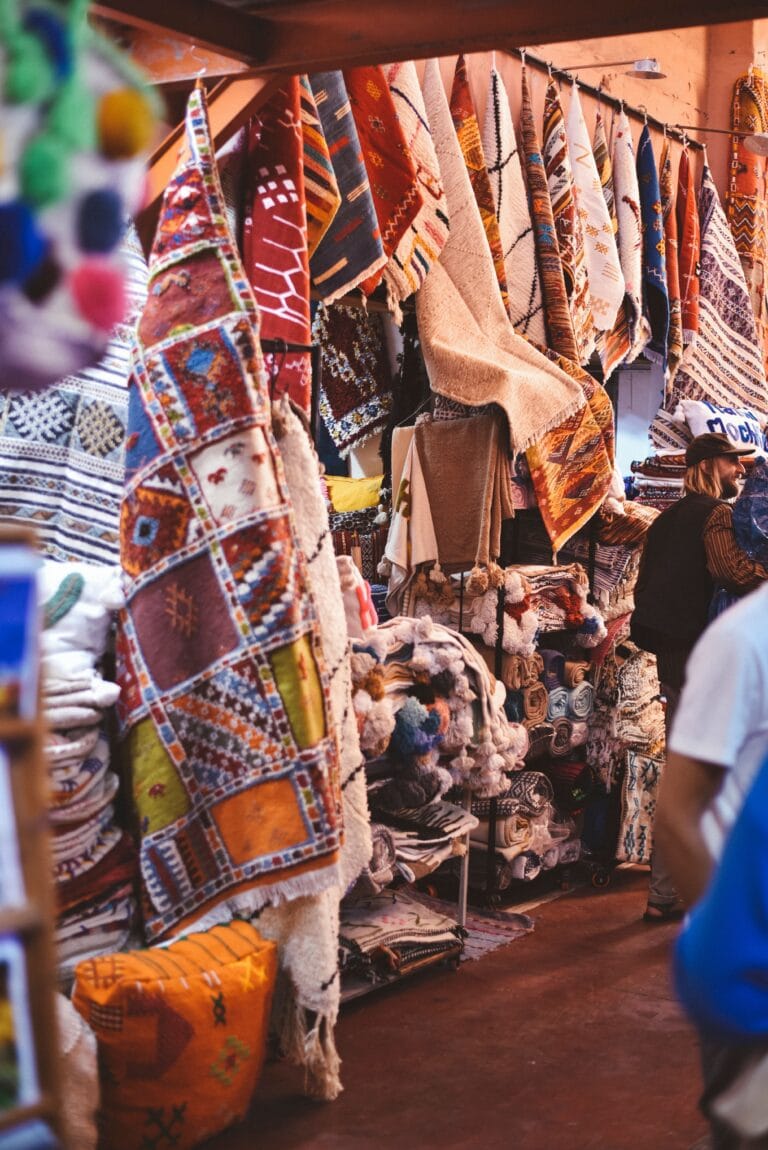
When you step onto a handwoven Amazigh carpet, you are not simply touching wool. You are standing on a landscape, a season, an animal’s life, and a chain of decisions made long before a loom was ever raised. Moroccan weaving traditions do not begin with patterns or colors. They begin outdoors—on mountain slopes, in valleys shaped by wind, rainfall, and memory.
You may admire a finished rug for its geometry or warmth, but what remains invisible is the quiet intelligence behind its fibers. Every strand carries evidence of climate knowledge, animal care, ecological balance, and human judgment refined across generations. To understand Amazigh weaving, you must first follow wool back to its origin—back to the flock.
This article guides you through that journey, revealing how wool moves from living animal to woven surface, and why this process remains one of the most sophisticated material systems in traditional Morocco.
Table of Contents
Moroccan Weaving Traditions Begin in the Pasture
Sheep Breeding in Amazigh Mountain Communities
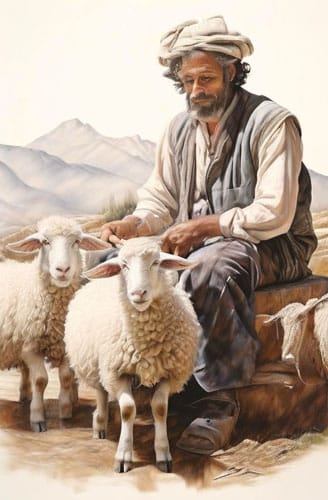
Before wool becomes material, it is life. In Amazigh regions of the High Atlas, Middle Atlas, and Anti-Atlas, sheep are not raised for volume but for balance. You encounter breeds shaped by altitude, temperature, and scarcity rather than industrial selection. These animals survive cold nights, rocky terrain, and limited pasture, producing wool that reflects resilience rather than uniformity.
Sheep breeding here is embedded in household economies. Families know individual animals, tracking their health, coat texture, and behavior. Wool quality is not accidental; it is the result of attentive care. When pasture is poor, fiber thins. When grazing is balanced, wool grows dense and elastic. You can read the land in the fleece.
Moroccan weaving traditions rely on this intimate knowledge. A weaver does not separate textile work from animal care. They are the same system, unfolding across seasons.
Seasonal Shearing: Timing Is Knowledge
Shearing is never random. You witness it occurring only when climate, animal health, and fiber maturity align. In most Amazigh regions, shearing happens in late spring or early summer—after cold nights fade but before heat stresses the flock.
Timing determines everything:
- Too early, and fibers lack strength
- Too late, and wool becomes brittle
- Wrong weather, and animals weaken
Shearing days are communal. Tools may be simple, but hands are skilled. Each cut follows the animal’s body, minimizing stress and preserving fiber length. Respect for the animal is not symbolic—it is practical. Damaged fleece cannot be repaired later.
In Moroccan weaving traditions, quality is decided long before spinning begins.
From Raw Fleece to Usable Fiber
Wool Washing: Cleansing Without Erasing
Freshly shorn wool carries earth, plant matter, and natural oils. You might assume that thorough cleaning improves quality, but Amazigh practice teaches restraint. Wool is washed gently—often in rivers, springs, or shared basins—using ash, clay, or plant-based cleansers.
Overwashing strips fiber of its protective oils. Underwashing leaves residues that weaken yarn. The balance is learned through touch and smell, not measurement.
This process reflects environmental intelligence. Water is used sparingly. Waste is minimal. Nothing enters the ecosystem that does not belong there already. Moroccan weaving traditions embed sustainability not as ideology, but as habit.
Carding Wool: Aligning Fiber and Intention
Once dry, wool is carded by hand. Wooden paddles fitted with metal teeth align fibers into soft clouds, preparing them for spinning. This step looks simple, but it defines consistency.
You learn to card evenly, removing short fibers and debris while preserving length. Machine carding exists, but traditional weavers avoid it because it produces uniformity without judgment. Hand carding allows decision-making—choosing softness, thickness, and future use.
In Amazigh weaving, preparation is as meaningful as execution.
Spinning: Where Wool Becomes Thread
Spinning transforms loose fiber into structure. Using drop spindles or simple wheels, you twist wool into yarn, controlling tension with fingers trained over years.
Spinning is not rushed. Yarn intended for warp must resist stress. Yarn for weft may remain softer. You adjust twist instinctively, listening to the sound fibers make as they stretch.
This is where Moroccan weaving traditions reveal their depth: spinning is engineering guided by experience, not formula.
Judging Quality Before Weaving Begins
How Amazigh Weavers Read Wool
Before a loom is set, wool is evaluated using senses often ignored in industrial systems:
- Touch: elasticity and rebound
- Sight: uniformity and cleanliness
- Sound: subtle resistance when stretched
- Smell: indicators of improper washing
A skilled weaver can predict how a yarn will behave months later. Poor wool is redirected to utilitarian textiles. Nothing is wasted, but nothing is misused.
Sorting Wool for Purpose
Not all wool becomes carpet. Moroccan weaving traditions assign fiber according to function:
- Fine wool for garments and ceremonial rugs
- Medium fibers for household carpets
- Coarse wool for sacks, ropes, and covers
This sorting preserves durability. A rug that survives decades does so because its material was chosen with foresight.
Environmental Knowledge Embedded in Textile Production
Climate Shapes Fiber
Altitude, rainfall, and temperature influence wool thickness and curl. Weavers understand these variables intuitively. Wool from higher elevations insulates better. Wool from drier zones resists abrasion.
You begin to see textiles as climate archives—records of place encoded in fiber.
Sustainability Without Vocabulary
Long before sustainability became a concept, Amazigh weaving practiced it. Wool is biodegradable, repairable, and durable. Textiles are maintained, reworked, and repurposed across generations.
Moroccan weaving traditions operate on continuity, not consumption.
From Thread to Loom
Before weaving begins, yarn rests. Sometimes it is lightly oiled with plant extracts to prevent breakage. Threads are organized carefully, matched to loom type—vertical looms in settled villages, horizontal looms in semi-nomadic contexts.
Every choice anticipates the future object.
Why This Knowledge Matters Today
As synthetic fibers dominate markets, traditional wool knowledge risks disappearing. Yet interest is returning—not because of nostalgia, but because these systems work. They produce textiles that endure physically and culturally.
When you support authentic Amazigh weaving, you sustain a complete ecological and social system.
Conclusion: From Living Flock to Woven Legacy
Every Amazigh carpet begins as a breathing animal, shaped by land and care. Moroccan weaving traditions remind you that materials are not neutral. They carry decisions, ethics, and histories.
When you choose handwoven wool, you choose continuity over extraction, knowledge over speed, and story over surface.
FAQ: Moroccan Weaving Traditions
What makes Moroccan weaving traditions unique?
They integrate animal care, ecology, and craftsmanship into one continuous process.
Why is hand-processed wool superior?
Because quality decisions happen at every stage, not only at the loom.
Are Amazigh textiles sustainable?
Yes—by design, not trend.
Call to Action
If you want to understand Moroccan culture beyond appearances, start with its fibers. Explore authentic Amazigh textiles, support artisan cooperatives, and continue reading our in-depth articles on weaving, architecture, and mountain life to uncover the systems that still shape Morocco today.
One Comment