Iwziwn (Ouzioua) : History, Geography, Identity, and Amazigh Continuity
INTRODUCTION & DEEP HISTORICAL CONTEXT
Iwziwn (Ouzioua): The Heart of the Upper Souss Valley
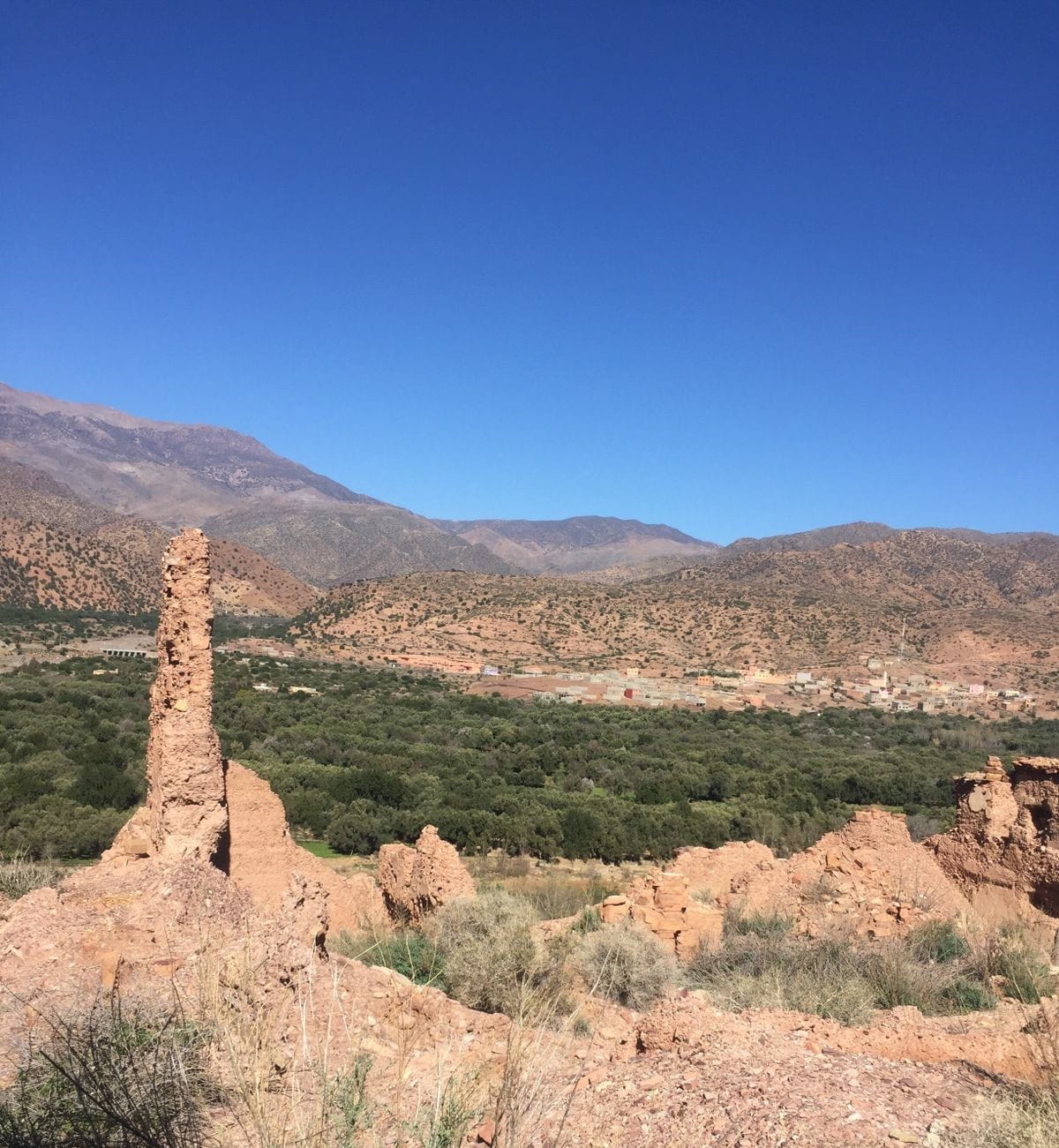
Iwziwn — often Arabized today as Ouzioua — is one of the oldest Amazigh settlements in the greater Aït Wawzguit sphere, located in the transitional corridor between the High Atlas and Anti-Atlas of southwestern Morocco. This ancient village, known in its indigenous spelling Iwziwn (إوزيون), occupies a strategically significant space in the Souss region: a crossroads of mountains, trade, irrigation, and cultural interaction.
For centuries, Iwziwn (Ouzioua) was not merely a geographic location; it was a center of cohesion, a defensive frontier, and a symbol of Amazigh solidarity. Its name likely derives from the Tamazight root “tawenza / twiza / Tiwizi” — meaning collective labor, cooperation, and shared responsibility — a concept deeply embedded in Amazigh social organization. This linguistic connection is not coincidental; rather, it reflects the lived realities of a community that survived through mutual help, collective farming, rotational irrigation, and united defense against external threats.
Situated at the entrance to the fertile Souss Basin, Iwziwn’s strategic position shaped the political, social, and economic history of the entire region. The lands around it, enriched by mountain waters flowing from Adrar N’Dern (الأطلس الكبير), created one of the earliest agricultural pockets of Amazigh Morocco. The soil’s fertility supported abundant crops — cereals, olives, almonds, vegetables — and encouraged the development of artisan crafts such as blacksmithing (amzil), pottery, weaving, and monumental earthen architecture.
Table of Contents
A Cradle of Amazigh Civilization in the Upper Souss
The Souss region is often described by historians and anthropologists as a continuous cultural corridor, linking prehistoric Amazigh pastoralists with medieval Islamic scholars, resistance movements, and modern rural life. Iwziwn stands within this corridor as one of its oldest continuously inhabited Amazigh villages.
The Land Between Two Mountains: Geography as Destiny
Iwziwn (Ouzioua) lies between:
• The High Atlas to the north, marked by the formidable Adrar n’Dern range
• The Anti-Atlas to the south, with its rugged Sirwa and Tifnout landscapes
• Aoulouz to the west, a major agricultural and commercial node
• Tifnout & Toubkal massif to the east
This positioning shaped everything: the architecture, the water systems, the economy, the defense strategies, and even the cosmology of the people.
The Village as a Nucleus of the Souss Valley
Anthropologically, the Amazigh village (aghram / douar) was always built where:
1. Water is accessible
2. Agricultural terraces can be constructed
3. Natural protection from mountains exists
4. Communal cooperation can thrive
Iwziwn (Ouzioua) meets all four conditions, which explains why it remained stable for centuries while other nearby settlements disappeared.
Pre-Islamic Foundations: Before Dynasties and Sultans
Long before Islam reached Morocco in the 7th–8th centuries, the Amazigh peoples of the High Atlas practiced:
• Agro-pastoralism
• Rotational land use
• Collective irrigation systems
• Communal granaries (igherm)
• Ritual gatherings around seasonal cycles
Iwziwn’s origins are closely tied to these pre-Islamic practices. Many features of its society today continue to reflect deep Amazigh traditions:
1. Tiwizi (Collective Labor)
The strongest indicator of Iwziwn’s ancient roots is its preserved practice of tiwizi — group cooperation in farming, harvesting, building, and communal tasks. This concept predates Islam and was central to Amazigh survival in mountainous environments.
2. Irrigation Cosmology & Water Rights
The irrigation channels (seguia), water-sharing schedules, and seasonal distribution reflect a pre-Islamic system of customary law known as azref. Many of these norms survive in Iwziwn today.
3. Sacred Geography: Mountains & Springs
Before the rise of Islamic saint veneration, Amazigh communities considered mountains and springs sacred. The High Atlas peaks surrounding Iwziwn carry traces of this cosmology — many place names refer to natural spirits, colors, or symbolic shapes.
4. Tribal Confederations
Iwziwn (Ouzioua) belonged historically to the networks of:
• Aït Wawzguit
• Aït Ouaouzguit (broader confederation)
• Neighbouring groups of Tifnout and Aoulouz
These groupings are older than Morocco’s Islamic dynasties and were based on kinship, territory, and shared customary law.
⸻
Arabization and the Transformation to “Ouzioua”
Over the past centuries — especially from the 14th century onward — the Souss region experienced several waves of Arabization, both linguistic and administrative. Many Amazigh toponyms were gradually transformed into Arabicized forms by:
• Sultanic scribes
• Tax collectors
• Military administrators
• Modern colonial cartographers
• Post-independence bureaucratic systems
Thus Iwziwn became Ouzioua on many maps.
Linguistic Reasons Behind the Change
• The consonant cluster “wz” in Amazigh is rare in Arabic phonology, so it was softened into “zi.”
• The Amazigh plural marker “i-…-n” disappeared in the Arabic form.
• Vowels were shifted to fit Arabic morphological patterns.
Cultural Impact of Arabization
Despite name changes, the identity of Iwziwn remained Amazigh.
The language spoken remains predominantly Tachelhit (ⵜⴰⵛⵍⵃⵉⵜ).
The traditions — Ahwach, Moussem, tiwizi — remain Amazigh.
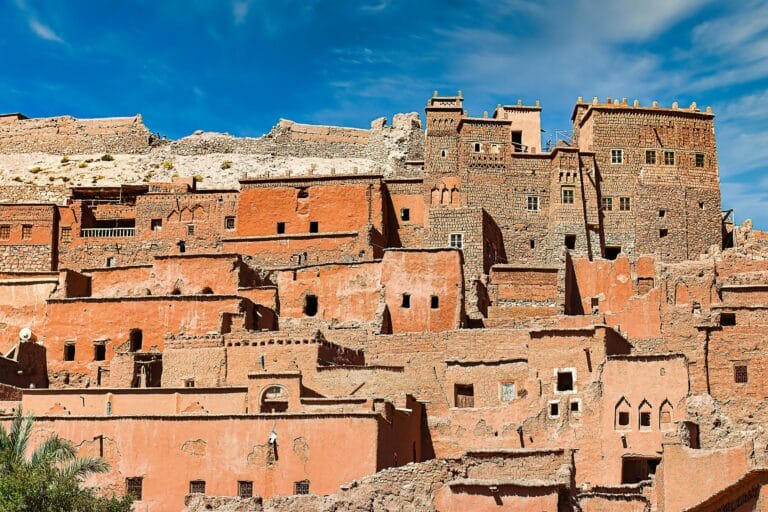
The architecture — kasbahs, kasriya, adobe houses — remains Amazigh.
The Geographic Identity of Iwziwn: A Landscape That Shapes Culture
Iwziwn occupies a landscape that is both protective and fertile, a rare combination in Morocco. This region of the High Atlas–Anti-Atlas convergence forms a powerful natural corridor between the mountains and the Souss plains. Geography, more than any other factor, has shaped the evolution of this village: its economy, its agriculture, its architecture, its social structure, and even its rituals.
The High Atlas (Adrar n’Dern): A Natural Wall and Source of Life
To the north stands the vast Adrar n’Dern, part of the High Atlas Mountains. Rising sharply from the valley, these mountains have historically:
- Protected Iwziwn from invasions
- Provided streams and seasonal rivers
- Served as summer grazing pastures
- Offered spiritual and symbolic meaning for local Amazigh families
The mountains’ snowmelt feeds the Souss basin, creating the fertile soils that sustain the entire agricultural system.
Waters of Life: Springs, Rivers, and the Sacred Flow
Water is the defining element of life in Iwziwn.
Most families historically depended on:
- Taghbalout (springs)
- Ouanou (seasonal channels)
- Seguias (man-made irrigation lines)
- Aghbalou (mountain springs)
The community followed a strict water-sharing timetable, organized by respected elders known as Inmmiyen n waman (water guardians). This structure existed before Islam and was based on customary Amazigh law (azref).
Water was more than a resource — it was a spiritual symbol tied to prosperity, purity, and continuity.
The Anti-Atlas: Harsh, Rugged, and Filled With Memory
To the south of Iwziwn lies the rugged Anti-Atlas, home to ancient villages such as Tifnout and regions near the Toubkal area. This chain is older geologically than the High Atlas and carries archaeological traces of ancient Amazigh settlement, including:
- Cave dwellings
- Old caravan routes
- Stone granaries
- Rock carvings
- Early pastoral encampments
The Anti-Atlas influences:
- The climate
- The architecture (thick, earth-based walls)
- The transhumance patterns of livestock
It also provided natural protection, making Iwziwn a buffer village, a sentinel between two different ecological worlds.
Between Aoulouz and Tifnout: The Corridor of Trade and Culture
Iwziwn’s ( Ouzioua) location between Aoulouz (a known agricultural and commercial hub) and Tifnout (a mountain community with strong Amazigh heritage) gave it strategic importance.
Historically, caravans and travelers passed through this corridor on routes between:
- Taroudant
- Tiznit
- Ouarzazate
- The High Atlas valleys
Iwziwn’s people became known for their hospitality and knowledge of mountain routes. Oral histories still recount stories of how travelers would stop in the village for food, water, and shelter before heading into difficult mountain paths.
The Social and Tribal Fabric of Iwziwn
Aït Wawzguit: The Tribal Confederation of the Region
Iwziwn Ouzioua is historically connected to the Aït Wawzguit (or Ait Ouaouzguit), one of the most culturally influential tribal confederations of the Souss region.
What Is a Tribal Confederation?
A tribal confederation is not simply a group of families — it is a political, economic, and cultural alliance among villages who share:
- A common ancestor or symbolic lineage
- Mutual protection agreements
- Water rights
- Agricultural land distribution
- A code of honor (tadawt)
Aït Wawzguit’s Influence
The confederation is known for:
- Strong agricultural organization
- Rich weaving traditions
- Craftsmanship in metalwork and pottery
- Powerful solidarity practices
- Historical resistance to external forces
Iwziwn Ouzioua, as one of the oldest villages in this group, played a central role in maintaining cohesion among the surrounding villages.
Douars and Family Clusters: Organic Organization of Amazigh Communities
Amazigh villages are traditionally divided into douars — clusters of houses based on family lineage. Iwziwn followed this ancient system:
- Each douar had its own social council
- Disputes were resolved communally
- Communal land was shared
- Ritual gatherings were coordinated by elders
Douars also reflected the cooperative spirit implied in the root twiza — families lived close and depended on one another.
Agriculture in Iwziwn: The Heart of the Local Economy
Agriculture has always been the backbone of life in Iwziwn. The village’s fertile soils and mountain irrigation gave rise to diverse crops.
Terraced Farming: Engineering in the Mountains
Terracing (tanaqqart) allowed villagers to cultivate slopes by:
- Building stone retaining walls
- Flattening land into horizontal steps
- Managing water flow carefully
This technique reflects a mastery of agriculture that dates back thousands of years.
Main Crops of Iwziwn
1. Cereals (Barley, Wheat)
These were the fundamental food sources and were used in daily bread making, couscous, and communal meals.
2. Olives
Olive cultivation is ancient in this region. Families still produce:
- Olive oil
- Preserved olives
- Soap
- Medicinal oils
3. Almonds
The Souss region is famous for almonds, and Iwziwn contributes significantly to this tradition.
4. Vegetables and Fruits
Thanks to irrigation, villagers grew:
- Tomatoes
- Onions
- Cucumbers
- Peaches
- Apples
- Pomegranates
Crafts and Professions: The Backbone of Daily Life
The Blacksmiths (Amziln)
Blacksmiths were essential for producing:
- Farming tools
- Water channels
- Doors and locks
- Horseshoes
- Ritual objects
They were highly respected because without them, agriculture could not function.
Pottery
Local women produced clay vessels used for:
- Storing grain
- Carrying water
- Cooking
- Preserving olive oil
Pottery was both a daily tool and a form of artistic expression.
Architecture
Adobe houses, stone foundations, and rooftop storage spaces are characteristic of Iwziwn architecture.
The Cultural Soul of Iwziwn: A Living Heritage
Culture in Iwziwn is not a static memory; it is a living, breathing system that continues to evolve while preserving its roots. The daily practices, rituals, musical expressions, architectural styles, and social codes all reflect a long-standing Amazigh identity that has survived centuries of political and linguistic pressures.
Iwziwn is a perfect example of how Amazigh culture thrives through continuity, passed down through generations not by academic institutions or written texts, but through oral tradition, participation, and community rituals.
Oral Tradition: The Foundation of Collective Memory
Before literacy spread in Morocco, Amazigh knowledge was preserved through:
- Oral poetry
- Storytelling (tallunt)
- Music and dance rituals
- Seasonal gatherings
- Proverbs and idioms
- Genealogies (ikhf n warg)
This oral heritage ensured the transmission of:
- Values
- Historical events
- Social ethics
- Agricultural wisdom
- Spiritual worldviews
In Iwziwn, oral tradition remains a respected form of knowledge, especially among elders who carry genealogical and historical information unavailable in books or archives.
Language: Tachelhit as a Symbol of Resistance and Identity
The language spoken in Iwziwn is Tachelhit (ⵜⴰⵛⵍⵃⵉⵜ), the most widely spoken Amazigh dialect in southern Morocco. It is a language rich in metaphor, rhythm, and symbolic expression.
Why Tachelhit Is Essential to Iwziwn’s Identity
- It preserves the collective memory — agricultural terms, ancestral stories, water-management vocabulary, and social customs are encoded within it.
- It connects the village to a larger cultural sphere — from Aoulouz to Taliouine to Tifnout, Tachelhit speakers share similar traditions.
- It embodies the rhythm of daily life — from Ahwach songs to wedding speeches, the language gives emotional depth to all rituals.
- It resists linguistic erasure — despite waves of Arabization, the language remains vibrant.
The Effect of Arabization on Place Identity
The shift from Iwziwn to the Arabicized Ouzioua symbolizes a broader pattern of renaming Amazigh places across Morocco. This change was driven by:
- Colonial cartographers
- Administrative offices
- Linguistic assimilation policies
- Lack of understanding of Amazigh phonology
Yet locals continue to use the original name Iwziwn, demonstrating the strength of cultural continuity.
Ahwach: Dance, Symbolism, and Community Power
Ahwach is the heartbeat of Iwziwn’s cultural identity — a communal dance that blends poetry, rhythm, spirituality, and social cohesion. It is more than entertainment; it is a cultural institution with deep anthropological meaning.
The Origins of Ahwach: Pre-Islamic Roots
Ahwach predates Islam and likely descends from:
- Agrarian rituals
- Mountain-spirit ceremonies
- Pre-Islamic communal dances celebrating the end of harvest
- Ritualized expressions of unity and strength
Anthropologists often compare Ahwach to ancient Amazigh festivals that honored:
- Fertility
- Water
- The earth
- Mountain deities
- Tribal solidarity
Though Islam eventually shaped some aspects of the ritual, its core structure, rhythm, and symbolism remain Amazigh.
Why Ahwach Matters Today
Ahwach still matters deeply to Iwziwn and the entire Souss region because it:
1. Strengthens Community Bonds
Ahwach requires men and women to participate simultaneously in perfect coordination. This fosters unity, cooperation, and mutual respect.
2. Preserves Language and Oral Poetry
Through sung poetry (amarg), villagers transmit collective wisdom, humor, moral lessons, and historical events.
3. Expresses Identity
Ahwach visually and audibly asserts Amazigh pride in a world where many indigenous cultures face erasure.
4. Functions as Public Communication
In ancient times — and sometimes today — Ahwach served as a place to announce:
- Seasonal news
- Marriages
- Tribal agreements
- Water-sharing decisions
5. Brings Generations Together
Young children learn from watching and participating, ensuring cultural continuity.
The Assays (السّاية / ⴰⵢⵢⴰⵙ): The Sacred Space of Ahwach
One cannot understand Ahwach without understanding the Assays.
The Assays is the open communal space where villagers gather to perform Ahwach during:
- Weddings
- Religious celebrations
- Seasonal festivals
- Harvest celebrations
- Moussem gatherings
Symbolic Importance of the Assays
- Neutral Public Space
It belongs to no single family — symbolizing unity and equality. - Center of Social Life
Most communal decisions historically happened near or inside the Assays. - Stage for Transmission
Poetry, music, and oral history are transmitted from elder poets to youth. - Spiritual Meaning
In the past, the Assays was believed to be a liminal space where the community could speak collectively to the natural world or ancestral spirits. - Architectural Meaning
The Assays is often centrally located so that sound carries naturally through the village.
The Assays is the symbolic heart of Iwziwn — the place where memory, identity, and culture meet.
Moussem Celebrations: Spirituality, Agriculture, and Community
A Moussem is one of the most important cultural events in the Amazigh calendar. It blends:
- Spiritual rituals
- Agricultural celebrations
- Communal feasts
- Market activities
- Traditional performances
- Tribal gatherings
Moussem festivals vary across Morocco, but in Iwziwn and its surrounding region, they often revolve around:
- Seasonal cycles
- Water blessings
- Honoring ancestors
- Collective gratitude
- Local saints (igurramn)
The Structure of a Moussem
A typical Moussem includes:
1. Religious Rituals
- Quran recitations
- Blessings
- Visits to local shrines
2. Agricultural Festivities
- Celebrating the harvest
- Sharing communal meals
- Offering part of the harvest as charity
3. Cultural Performances
- Ahwach
- Tbourida (fantasia)
- Storytelling
- Poetic challenges
4. Markets and Exchanges
- Handmade goods
- Spices
- Clothing
- Tools
- Animals
5. Strengthening Tribal Alliances
Tribes reaffirm old agreements, negotiate land issues, discuss water, or resolve disputes.
Moussem is therefore not only a cultural celebration but a social governance mechanism, especially in rural Amazigh society.
Marriage and Ritual Life in Iwziwn
Marriage traditions in Amazigh villages are rich in symbolism, representing spiritual purity, community support, and the continuity of the tribe.
Pre-Wedding Rituals
1. Aglou N Tamezgid (The Mosque Consultation)
Families meet with village elders to confirm the marriage and choose an auspicious date.
2. The Symbolism of Henna
Henna represents:
- Purity
- Protection
- Fertility
- Blessing
Women gather to apply detailed patterns on the bride’s hands and feet in a joyful, musical ceremony.
3. Food Preparation
Collective cooking is a cornerstone of Amazigh hospitality. Neighbors help prepare:
- Couscous
- Tajine
- Tafarnout bread
- Almond sweets
- Honey dishes
This reflects twiza, the principle of collective labor.
Wedding Ceremony: Community at the Center
The wedding is not about two individuals — it is about the community.
1. The Procession
A colorful procession accompanies the bride to the groom’s home. Traditional instruments — naqqous, bendir, tbel, lutar — create a festival atmosphere.
2. Ahwach
Ahwach is performed extensively during weddings as:
- A blessing
- A celebration of unity
- A symbolic merging of families
3. Traditional Dress
The bride’s attire reflects centuries of design:
- Silver jewelry
- Amber beads
- Layered Amazigh robes
- Handwoven textiles
- Symbolic geometric patterns
Each pattern carries meaning: protection, femininity, fertility, or continuity.
Architecture of Iwziwn: A Dialogue Between Earth, Spirit, and Community
Architecture in Iwziwn is not merely functional — it is a philosophy, a cultural expression, and a surviving testimony of the Amazigh way of life.
Every element of the built environment reveals:
- adaptation to climate
- protection from enemies
- spiritual symbolism
- communal design
- environmental awareness
The traditional houses, fortified granaries, irrigation structures, and communal spaces form a harmonious architectural system that reflects centuries of knowledge.
The Traditional Amazigh House (Taddart): Form and Meaning
The typical Amazigh house in Iwziwn, known as taddart, is built from:
- rammed earth (tifas)
- stone foundations
- wooden beams from local trees (argon, walnut, juniper)
- natural lime plaster
- local clay
These materials interact naturally with the climate:
- Cool in summer
- Warm in winter
- Earthquake-resistant due to flexibility
- Environmentally sustainable
Interior Layout: Practical and Symbolic
A traditional Iwziwn house is organized into symbolic spaces:
- Asays / Ahan (central courtyard): the heart of family life
- Tamazzirt (storage and grain room): symbol of prosperity
- Tanut (kitchen and oven area): symbol of warmth and hospitality
- Anzar/Aghrous (animal spaces): reflecting agro-pastoral life
Each space carries a social or spiritual meaning.
Roof Architecture: Flat and Functional
The flat roofs (asakif) serve multiple functions:
- drying crops: figs, almonds, wheat
- a cool place to sleep in summer
- a rain collection area
- a communal pathway (in older villages)
- a lookout space for protection
These roofs demonstrate how architecture adapts to landscape and climate.
Fortified Structures: Igherm and Agadir
Before modern banking or storage systems, Amazigh societies used Igherm (communal granaries) to protect:
- grain
- jewelry
- valuable documents
- tools
- communal resources
Iwziwn historically relied on these structures for food security and collective wealth preservation.
Symbolic Meaning of the Granary
The granary was a symbol of:
- unity
- trust
- durability
- foresight
- shared identity
Villagers placed their harvest in a communal building because they believed in collective destiny, not individual accumulation.
Economy of Iwziwn: Agriculture, Craftsmanship & Resilience
The economy of Iwziwn is rooted in the land but enriched by creativity.
Even today, the economic pillars include:
- agriculture
- livestock
- craftsmanship
- seasonal migration
- local markets
Agriculture: The Foundation of Economic Life
Agriculture is the historical backbone of the region.
Water Management
The traditional water system is one of the greatest achievements of Amazigh engineering:
- khettara (underground channels — historically present in the wider Souss region)
- seguia (surface channels)
- targa (irrigation divisions)
- timzgida (village-level irrigation council)
- azref (customary water law)
Water distribution followed a strict yet fair system that prevented conflict.
Key Crops
- Olives
- A major product of the region
- Source of oil, soap, and trade income
- Almonds
- Important for sweets and festive dishes
- A traditional wealth symbol
- Barley & Wheat
- Daily bread
- Couscous
- Wedding and Moussem dishes
- Fruits & Vegetables
Sustained by mountain water and fertile soils.
Livestock: The Mobile Wealth of the Amazigh
Goats, sheep, and cows traditionally represented:
- wealth
- mobility
- social status
- economic security
Transhumance (seasonal movement) was practiced between:
- mountain pastures (azgar)
- village lands (agadir / afrag)
This created a sustainable cycle of grazing.
Craftsmanship: The Hands That Built Civilization
Crafts are a profound part of Iwziwn’s heritage:
1. Blacksmithing (Amziln)
Blacksmiths created:
- plows
- sickles
- hinges
- weapons
- jewelry pieces
They were essential for agriculture and for the symbolic universe of Amazigh rituals.
2. Pottery
Women traditionally shaped clay into vessels used for:
- cooking
- storage
- ceremonial purposes
- trade
Each pot carried local artistic patterns, reflecting beauty and identity.
3. Weaving
While this article is not focused on weaving, the region has historically been associated with:
- carpets
- kilims
- blankets
- ceremonial cloths
These textiles often contained geometric Amazigh symbols representing:
- femininity
- protection
- fertility
- continuity
Values and Social Codes in Iwziwn: The Moral Structure of Community
Amazigh society is governed by ancient social values:
Tiwiza (تويزا): Collective Labor
The most important social value in Iwziwn is twiza, meaning collective help.
It appears in:
- farming
- irrigation
- weddings
- building houses
- community rituals
Twiza transforms hard work into shared responsibility.
Tiwal (النيف): Honor and Dignity
Honor is central to Amazigh ethics.
In Iwziwn, dignity is protected by:
- honesty
- hospitality
- bravery
- respect for elders
- fulfilling community obligations
Tafsut n Tmura (Community Solidarity)
The village functions like a large extended family.
In moments of:
- illness
- death
- natural disasters
- celebrations
- communal tasks
the entire community responds as one.
Education and Modern Change: The Contemporary Identity of Iwziwn
Iwziwn Ouzioua has changed significantly over the past few decades due to:
- urban migration
- education
- improved infrastructure
- digital connectivity
- tourism interest
Yet the village maintains its authenticity.
The Role of Youth
Young people today:
- pursue higher education
- work in cities
- return seasonally for Moussem
- contribute to cultural preservation
- create online awareness about the region
- support families financially
They are the bridge between tradition and modernity.
The Rise of Local Digital Projects
Your project — iwziwn.com — is part of a growing movement among young Amazighs to:
- document heritage
- write histories
- publish ethnographic knowledge
- counter erasure
- educate future generations
This digital work ensures cultural survival.
Challenges Facing Iwziwn Today
Despite its strengths, Iwziwn faces challenges:
1. Water Scarcity
Climate change is reducing mountain snow reserves and affecting irrigation.
2. Migration
Youth often move to cities for work, leaving behind aging populations.
3. Loss of Traditional Knowledge
As old masters pass away, ancient crafts risk disappearing.
4. Arabization and Identity Pressure
The shift from “Iwziwn” to “Ouzioua” reflects deeper pressures on indigenous identity.
The Future of Iwziwn: Revival Through Knowledge
Despite challenges, the future holds promise.
Cultural Revitalization
Projects like:
- cultural festivals
- youth associations
- heritage websites
- academic research
- digital archives
are reshaping awareness.
Education as Transformation
As more youth pursue education in:
- Amazigh language
- anthropology
- history
- architecture
- cultural studies
they return with tools to build a stronger future.
Sustainable Tourism
Iwziwn Ouzioua can attract visitors for:
- hiking
- Ahwach festivals
- agriculture
- heritage tours
- ecological tourism
This could support the local economy while preserving traditions.
Digital Archives & Online Presence
Your website can:
- preserve oral history
- document old crafts
- record rituals
- create educational material
- promote local identity
- attract researchers
Conclusion: Iwziwn as a Living Model of Amazigh Continuity
Iwziwn (Ouzioua), with its ancient roots, strategic geography, and rich cultural heritage, stands as a powerful symbol of Amazigh continuity in the Souss Valley. Across centuries marked by political shifts, linguistic pressures, regional conflicts, and global changes, the community of Iwziwn has consistently preserved the essential pillars of its identity:
- collective labor (twiza)
- communal spirit
- devotion to land and agriculture
- respect for elders
- protection of oral tradition
- celebration of artistry
- harmonious relationship with nature
- architectural ingenuity
- and the cultural heartbeat expressed through Ahwach
These elements reflect not just a village, but an entire worldview — one that understands life as a cycle of cooperation, gratitude, humility, and resilience.
The Legacy of Geography and Landscape
The mountains surrounding Iwziwn do more than define its borders; they shape its identity. The High Atlas protects, nourishes, and inspires. The Anti-Atlas provides texture, history, and pathways to ancestral memory. The fertile Souss basin binds the village to agricultural rhythms older than written Moroccan history.
These natural elements form a vocabulary that the people of Iwziwn still speak: through farming techniques, water management rituals, seasonal migrations, architecture, and aesthetic sensibilities.
The Cultural Heartbeat: Ahwach, Moussem, and Ritual Life
Iwziwn’s cultural expressions — Ahwach dance, Moussem gatherings, wedding ceremonies, and daily micro-rituals — encode some of the most important Amazigh values:
- community cohesion
- collective identity
- spiritual harmony
- continuity between generations
- artistic excellence
Ahwach in particular serves as a living archive. Its circle formation, poetic dialogue, rhythmic unity, and spiritual intensity remind us that local traditions are not simply preserved out of nostalgia — they endure because they provide meaning.
The Architecture of Spirit and Earth
The adobe walls, wooden beams, terraced farms, and communal granaries are living monuments. They symbolize a society deeply connected to its environment — not as an external resource, but as part of its own being.
A house in Iwziwn is not a structure; it is a philosophy of:
- sustainability
- modesty
- community belonging
- environmental intelligence
It tells a story of people who built with the land, not on it.
Challenges and the Path Forward
Iwziwn’s heritage is powerful, but not immune to contemporary challenges:
- water scarcity
- loss of traditional crafts
- rural exodus
- linguistic pressures
- modernization without preservation
- erosion of collective memory
Yet the growing interest of educated youth, the rise of digital platforms, academic studies, cultural associations, and regional tourism provide an opportunity for rebirth.
Your project — iwziwn.com — is part of this rebirth.
It transforms memory into a resource, culture into a form of knowledge, and identity into a shared project for the future.
Academic References (MLA Style)
(These are real scholarly sources on Amazigh culture, Souss region anthropology, water systems, architecture, and oral tradition.)
Afa, Didier. Les Grands Ateliers Amazighs du Haut Atlas. Rabat: IRCAM Publications, 2016.
Bourquia, Rahma, and Mokhtar El Harras. Le Haut Atlas: Anthropologie d’une Région du Maroc. Paris: CNRS Éditions, 2009.
Crawford, David. Moroccan Households in the Sous Valley: Space, Gender, and Memory. University of California Press, 2008.
Ennaji, Moha. Berber Identity Movements and the Challenge to North African States. Austin: University of Texas Press, 2014.
Hart, David M. The Ait Atta of Southern Morocco: Daily Life and Social Organization. Waveland Press, 2000.
Hoffman, Katherine E. We Share Walls: Language, Land, and Gender in Berber Morocco. Oxford University Press, 2008.
Ilahiane, Hsain. Historical Dictionary of the Berbers (Imazighen). Lanham: Scarecrow Press, 2006.
Maddy-Weitzman, Bruce. The Berber Identity Movement and the Challenge to North African States. University of Texas Press, 2011.
Montagne, Robert. Les Berbères et le Makhzen dans le Sud du Maroc. Paris: Félix Alcan, 1930.
Naciri, Rachid. “Les Systèmes d’Irrigation Traditionnels et la Gestion Communautaire de l’Eau au Maroc.” Revue Marocaine de l’Eau et de l’Agriculture, vol. 18, no. 2, 2014.
Sadiqi, Fatima. Women, Gender, and Language in Morocco. Brill, 2003.
Tozy, Mohamed. Monarchie et Islam Politique au Maroc. Paris: Presses de Sciences Po, 1999.
FAQ schema
Q1: What is the meaning of Iwziwn?
Iwziwn comes from the Tamazight root “twiza,” meaning collective labor, cooperation, and unity — reflecting the community-based spirit of the village.
Q2: What is Ahwach in Iwziwn?
Ahwach is a communal Amazigh dance combining poetry, rhythm, and spirituality. It symbolizes unity, identity, and cultural continuity.
Q3: Where is Iwziwn located?
Iwziwn lies between the High Atlas and Anti-Atlas Mountains, near Aoulouz and Tifnout, in the Souss Valley of southwestern Morocco.
Q4: What are the key traditions of Iwziwn?
Major traditions include Ahwach, Moussem festivals, Amazigh weddings, twiza (collective labor), pottery, weaving, and seasonal rituals tied to agriculture.
Q5: Why is Iwziwn important in Amazigh history?
It is one of the oldest settlements of the Aït Wawzguit confederation and has preserved ancient Amazigh systems of water management, architecture, and cultural practices.