The Sous Valley: Geography, Life, and Amazigh Identity
Introduction: The Sous as a Microcosm of Amazigh Morocco
The Sous Valley is one of Morocco’s most distinctive cultural and geographical regions. Stretching between the High Atlas and Anti-Atlas and opening toward the Atlantic Ocean, it brings together mountains, fertile plains, dry plateaus, agricultural landscapes, and coastal communities.
But the Sous is more than a geographical basin. For centuries, people have adapted their lives to limited water, seasonal rainfall, changing landscapes, and long-distance trade. Agriculture, irrigation, pastoralism, fishing, markets, music, poetry, and community traditions all developed in response to this environment.
The region is also an important center of Amazigh culture, particularly Tachelhit-speaking communities. Understanding the Sous therefore means looking beyond individual traditions and seeing how landscape and culture have shaped one another over generations.
This guide explores the geography, environment, economy, traditions, and Amazigh identity of the Sous Valley while also examining the challenges facing the region today.
Table of Contents
Geography of the Sous Valley: A Land Between Mountains and Ocean
Where Is the Sous Valley?
The Sous Valley, also written as the Souss Valley, lies in southwestern Morocco. It is broadly framed by the High Atlas Mountains to the north and the Anti-Atlas Mountains to the south, while the Atlantic Ocean lies to the west. The valley’s position between mountains, plains, and the Atlantic has strongly influenced its climate, agriculture, settlement patterns, and historical connections.
Agadir is the best-known urban center associated with the region, while places such as Taroudant, Inezgane, Aït Baha, Tiznit, and numerous rural communities form part of the wider cultural and economic landscape.
The wider Sous-Massa region is particularly important for agriculture, fishing, tourism, and agro-food production. Official regional documentation describes agriculture as a major economic pillar despite the area’s generally arid conditions.
Natural Borders and Inner Divisions
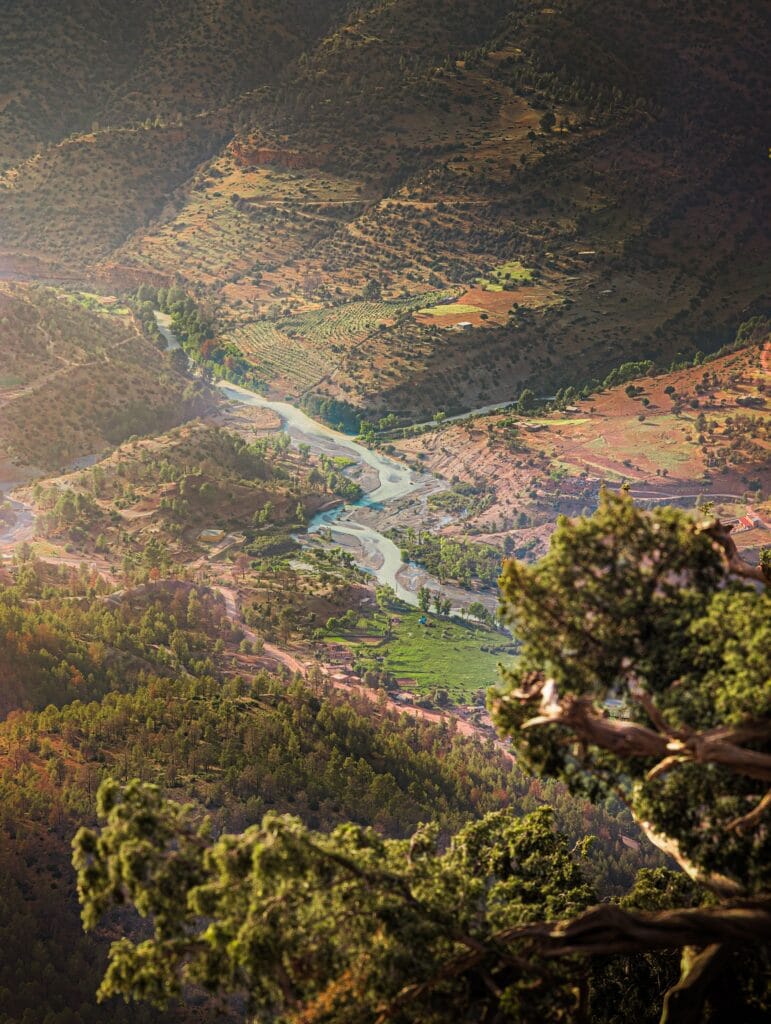
The Sous Valley occupies a major basin in southwestern Morocco between the High Atlas Mountains to the north and the Anti-Atlas Mountains to the south. Its western side opens toward the Atlantic Ocean, creating an unusual meeting point between mountain, inland, and coastal environments.
This geographical position has shaped the region for centuries. Mountain catchments supply water to the basin, while the relatively fertile plain supports intensive agriculture. Farther south and east, increasingly dry landscapes connect the Sous with the Anti-Atlas and the wider interior of southern Morocco.
The result is a landscape of striking contrasts: high mountains, alluvial plains, dry hills, argan landscapes, cultivated fields, and Atlantic coastlines exist within a relatively compact geographical system.
- The High Atlas (north): A formidable wall with peaks over 4,000 meters, snow-capped in winter, providing water sources for the valleys below.
- The Anti-Atlas (south): Lower but dry and rocky, a land of fortresses, resistant tribes, and old caravan routes.
- The Sirwa Massif: A volcanic mountain (3,600 meters) acting as a bridge between the High and Anti-Atlas.
- The Atlantic Ocean: Providing not just food but also contact with maritime trade and foreign cultures.
Within these borders lies a land of inner diversity: fertile valleys, semi-arid plains, harsh plateaus, and mountain pastures.
Sous Valley at a Glance
| Feature | Information |
|---|---|
| Country | Morocco |
| Region | Southwestern Morocco |
| Main urban center | Agadir |
| Major geographical setting | Plain between the High Atlas and Anti-Atlas |
| Western connection | Atlantic Ocean |
| Major language tradition | Tachelhit |
| Important ecosystem | Arganeraie |
| Major livelihoods | Agriculture, fishing, pastoralism, tourism and trade |
| Cultural identity | Strong Amazigh heritage |
| Major environmental issue | Water scarcity and drought |
Valleys: Lines of Fertility
The Sous Valley River and the Dadès valley form fertile corridors. Along their banks, villages cluster, surrounded by orchards and irrigated fields. Dates, almonds, figs, and cereals thrive thanks to complex irrigation systems. These valleys have historically been coveted by outsiders — Arab conquerors, dynasties, and later the French — because they formed the agricultural heart of the south.
Plateaus: The Harsh Reality
Between valleys lie plateaus where water is scarce. Amazigh families fought the land with ingenuity: digging cisterns, burning forest patches to reclaim soil, and cultivating small plots of barley. Drought often forced families to send members on temporary migration for survival. These plateaus created a culture of tenacity and adaptation.
Coastal World: The Gift of the Ocean
On the Atlantic, Amazigh fishing villages like Imsouane, Taghazout, and Tifnit connected mountains to sea. Here, men returned at dawn with sardines and tuna, while women salted and dried fish for markets inland. The coast of the Sous became not just a source of livelihood but also a bridge between Amazigh Morocco and the outside world.
The Argan Tree: A Symbol of the Sous Landscape
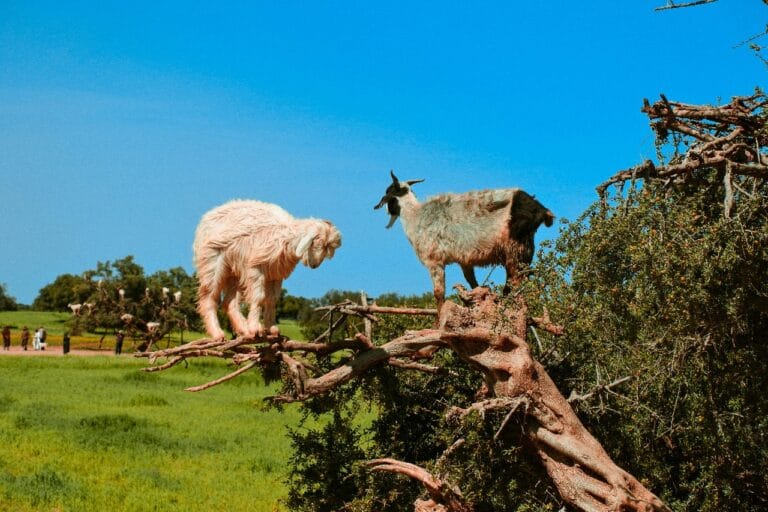
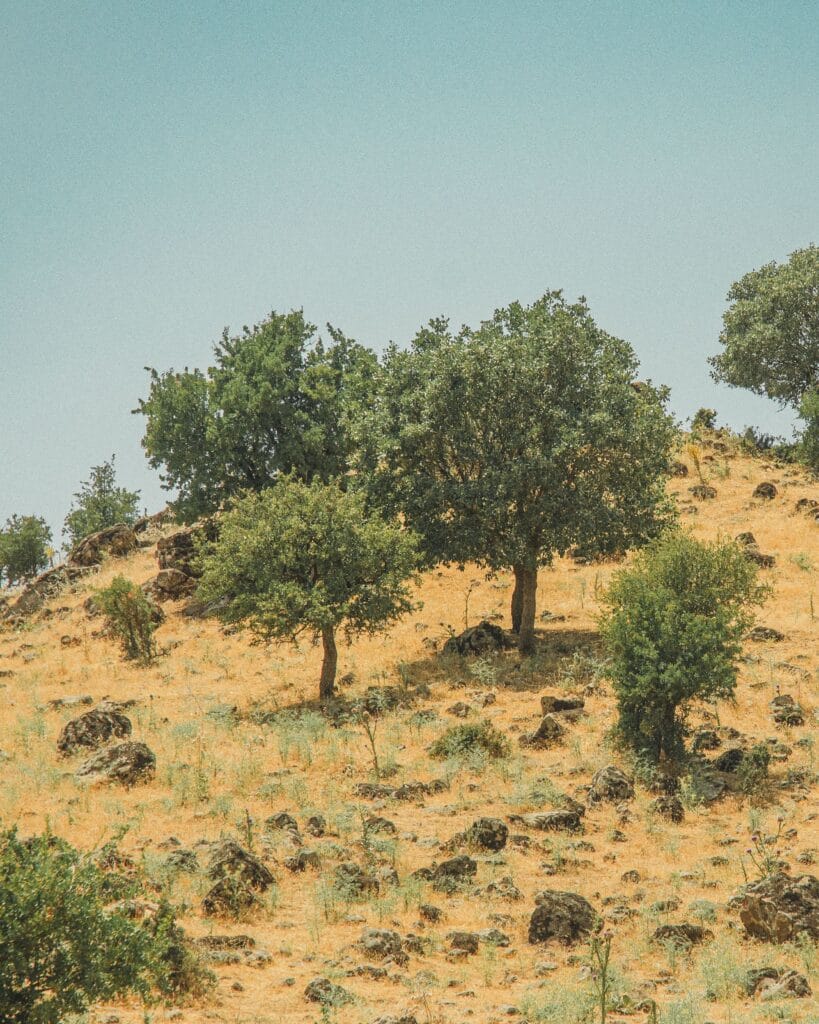
Few trees are as closely associated with southwestern Morocco as the argan tree (Argania spinosa). The arganeraie forms a distinctive cultural landscape across parts of the Sous and neighboring regions, where the tree has supported agriculture, livestock, household economies, and traditional knowledge.
The argan ecosystem is particularly remarkable because it combines ecological resilience with human use. UNESCO describes the Arganeraie Biosphere Reserve as an extensive landscape bordered by the High Atlas and Anti-Atlas and open toward the Atlantic. The reserve was designated in 1998 and supports millions of people as well as distinctive biodiversity.
Argan oil production is also an important element of intangible cultural heritage. Traditional knowledge surrounding the harvesting and processing of argan has been practiced particularly by rural women and was inscribed by UNESCO on the Representative List of the Intangible Cultural Heritage of Humanity in 2014.
Agriculture and Irrigation: How the Sous Valley Sustains Life
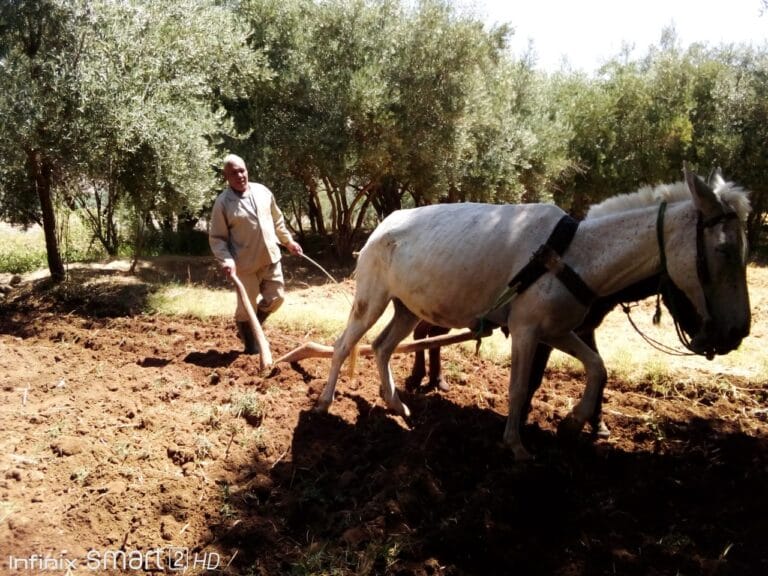
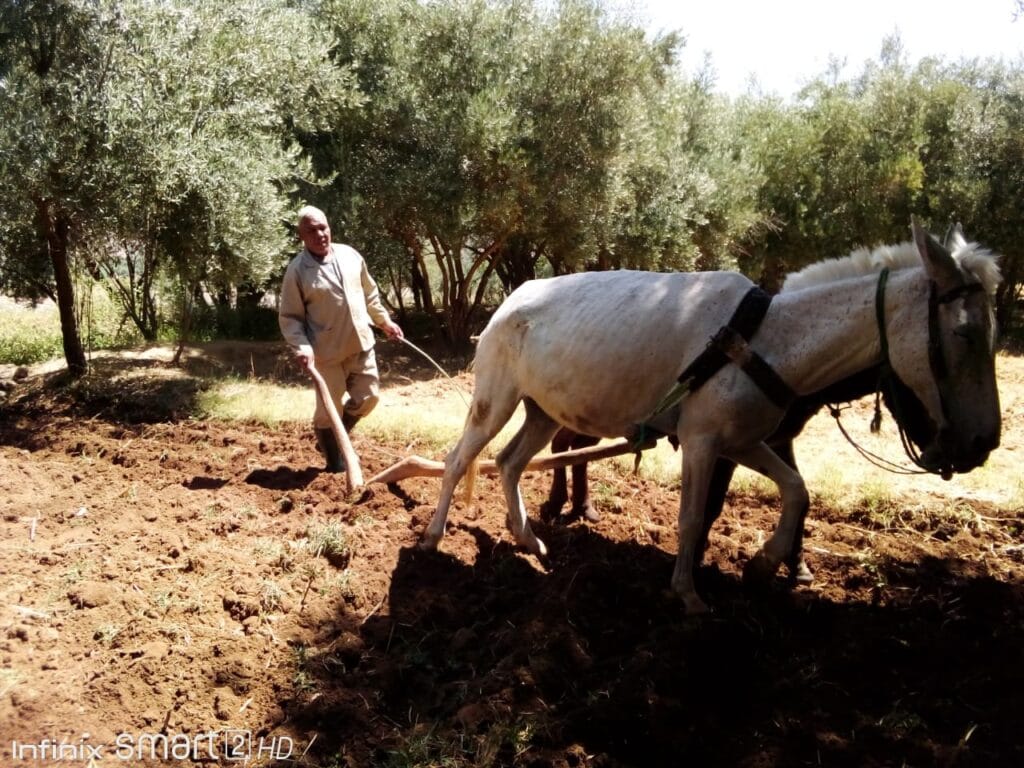
Agriculture has long been central to life in the Sous Valley. The combination of fertile soils, irrigation, groundwater, mountain water resources, and accumulated agricultural knowledge allowed communities to cultivate crops in an environment where rainfall is often insufficient for reliable farming.
Traditional irrigation systems were not simply technical structures. They were also social institutions requiring rules governing access, maintenance, distribution, and conflict resolution. Research on irrigated agriculture in the Sous has documented the importance of water use and the conflicts that can arise around competing demands for this scarce resource.
Collective Irrigation Systems
Water management historically depended on cooperation. Communities developed local rules for distributing water and maintaining canals and other infrastructure. Such systems demonstrate that agriculture in the Sous was based not only on land and water but also on collective organization.
UNESCO’s recent documentation of Amazigh resource-management practices highlights Agdal as a form of customary collective management and identifies Tanast as a traditional practice associated with water sharing in the Arganeraie landscape.
Villages organized schedules so every family had equal access, and disputes were settled by respected elders. This shows how Amazigh democracy was rooted in everyday life.
Crops and Agricultural Production
The agricultural landscape varies considerably across the valley. Citrus fruits are particularly important in irrigated areas, while other parts of the region support olives, cereals, vegetables, fruit trees, and argan-based agroforestry.
Modern commercial agriculture has transformed parts of the Sous into an important national agricultural production zone. This has brought employment and export income but has also increased pressure on water resources.
- Barley: Staple grain, vital for bread and couscous.
- Olives and Olive Oil: Food, trade, and symbol of blessing (baraka).
- Figs and Almonds: Drought-resistant, essential for survival.
- Dates: A luxury in some valleys, a staple in others.
Amazigh proverbs celebrated these crops. For example: “If you have figs and barley, hunger will not enter your home.” Such sayings reveal how agriculture was more than survival — it was identity.
Water Scarcity: The Sous Valley’s Major Environmental Challenge
Water is one of the defining issues of the modern Sous Valley. The same climate that helped create the region’s distinctive agricultural systems also makes water management increasingly difficult.
Long periods of drought, groundwater pressure, expanding agriculture, population growth, and changing rainfall patterns have created difficult choices about how water should be allocated. UNESCO also identifies prolonged drought followed by intense rainfall and flooding among the climate-related pressures affecting the wider Arganeraie landscape.
The future of the Sous therefore depends not only on increasing agricultural productivity but also on improving water efficiency, protecting ecosystems, and maintaining forms of local environmental knowledge that have helped communities adapt to scarcity.
Pastoralism and Seasonal Migration
Agriculture was only one part of traditional life in the Sous. Livestock raising and pastoralism also played an important role, particularly in areas where farming was constrained by terrain or water availability.
Seasonal movement allowed herders to make use of different ecological zones throughout the year. Such mobility connected mountain communities, foothills, plains, and grazing territories and formed part of a broader system of adapting livelihoods to environmental variability.
Transhumance
Transhumance is more than the movement of animals from one pasture to another. It can involve knowledge of weather, vegetation, water sources, routes, and customary rights. In this sense, pastoral mobility represents a form of environmental knowledge accumulated across generations.
In summer, families moved their herds to high mountain pastures where snowmelt fed green meadows. In winter, they returned to valleys. This rhythm preserved ancient traditions and created strong bonds between humans and nature.
Migration Beyond the Mountains
The Sous is famous for its tradition of emigration. From the 19th century onward, men traveled to cities like Marrakech and Casablanca, later to Algeria and France, and even across the Atlantic. These migrations sent money back home, funded weddings, built houses, and spread Amazigh influence worldwide.
Migration also created a unique cultural identity: Soussi Amazighs became known as adventurous traders and craftsmen, carrying their traditions far while maintaining strong ties to their villages.
Fishing and Maritime Life
The western Sous connects the inland valley to the Atlantic Ocean, creating another important dimension of regional life. Coastal communities have historically depended on fishing and maritime resources, while modern ports and commercial activities have expanded the economic importance of the coast.
The regional economy today combines agriculture, fishing, tourism, food processing, and trade. Official regional documentation identifies these sectors as important components of the Sous-Massa economy.
This connection between mountain, plain, and ocean is one of the most distinctive geographical characteristics of the wider Sous region.
- Techniques: Wooden pirogues, reed bundles, and nets adapted to coastal waters.
- Fish Trade: Sardines, tuna, and bonito were salted and transported by caravans inland.
- Cultural Practices: Songs of fishermen, rituals for safe return, and seasonal celebrations around the harvest of the sea.
Fishing connected inland Amazigh republics with global trade, showing that the Sous, though mountainous, was never fully cut off from the wider world.
Festivals, Music, Poetry, and Collective Memory Joy
Cultural life in the Sous Valley is expressed through music, poetry, festivals, weddings, seasonal celebrations, souks, and communal gatherings. These practices provide entertainment, but they also transmit history, social values, identity, and local knowledge. Despite hardships, Amazigh people of the Sous Valley are known for their love of gatherings, music, and poetry.
Ahwach and Amazigh Musical Traditions
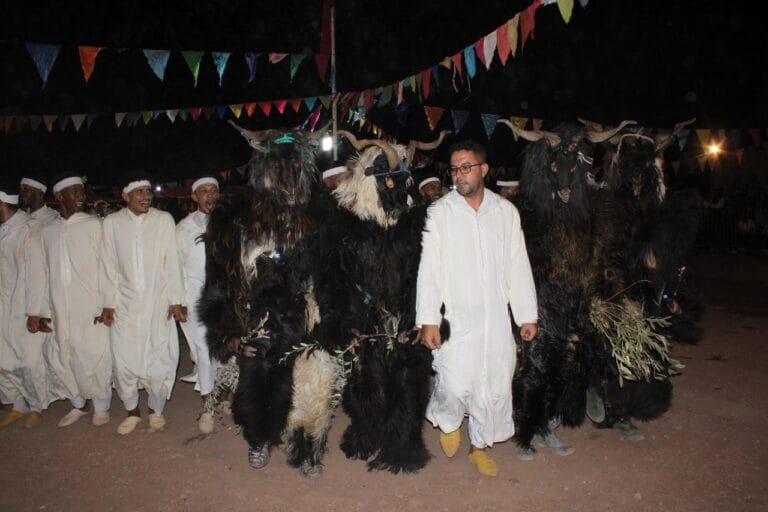
Communal dances like ahwach brought men and women together in circles, accompanied by rhythmic drums and poetry (amarg). These events celebrated harvests, weddings, and victories, reinforcing social unity.
Ahwach is one of the best-known collective performance traditions of southern Morocco. Music, rhythm, poetry, movement, and communal participation combine to create a form of cultural expression closely connected with village life.
However, it is important not to treat Ahwach as a single standardized performance. Its forms and practices vary between communities, and local traditions can differ in rhythm, organization, poetry, instruments, and participation.
Women’s Celebrations
Unique to the Sous were festivals where women gathered around saints’ shrines, temporarily escaping social restrictions. These moments affirmed the important but often hidden role of women in Amazigh culture.
Souks and Fairs
Weekly markets (souks) were both economic and social. People exchanged goods, news, and stories. Great annual fairs, like that of Moulay Bouzerktoun, attracted thousands, blending commerce with celebration.
Poetry as Memory
Oral poetry has historically provided communities with a way to remember people, events, places, relationships, and social values. In predominantly oral contexts, poetic performance could preserve knowledge that might otherwise disappear.
This makes poetry more than an artistic tradition: it can function as a form of collective memory.
Tachelhit: The Language of the Sous
The Sous Valley belongs to the heartland of Tachelhit, one of the major varieties of Amazigh spoken in Morocco. The language has a rich oral tradition expressed through poetry, songs, proverbs, storytelling, and everyday communication.
Tachelhit is therefore not simply a means of communication. It carries local knowledge, expressions, place names, cultural concepts, and memories that connect communities to their landscapes.
The continued use and documentation of Tachelhit are important to understanding the cultural history of the Sous and the wider Amazigh world.
The Sous Valley as a Cradle of Amazigh Identity
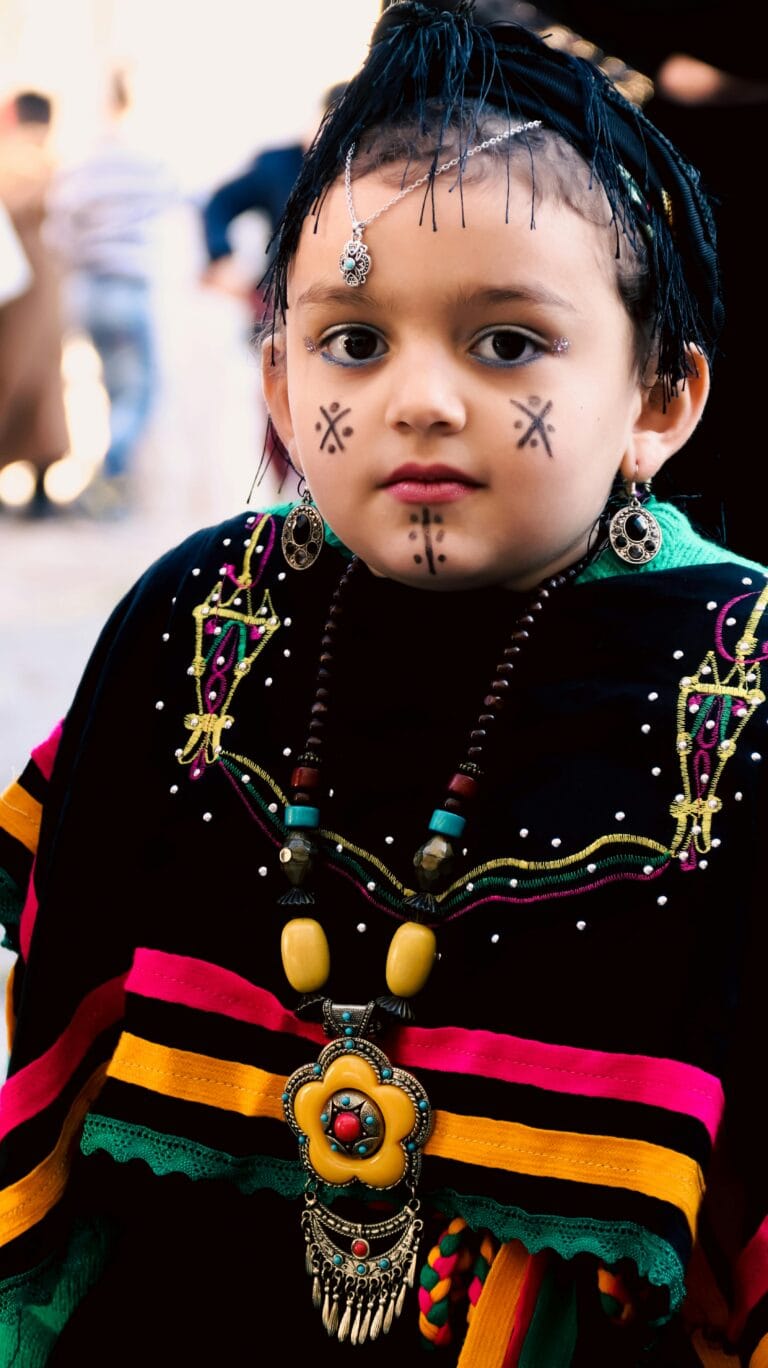
Amazigh identity in the Sous Valley is expressed through many interconnected elements: language, family and village organization, agriculture, customary practices, music, poetry, architecture, food, clothing, and relationships with land.
One of the most important features of this cultural identity is that it has never existed separately from environmental adaptation. Knowledge about agriculture, water, forests, livestock, and seasonal cycles became part of social and cultural life.
The Agdal system provides a particularly clear example. UNESCO describes Agdal as a customary system through which communities can temporarily restrict the use of a natural resource to allow regeneration. Village assemblies such as the jmaâ, lejmaât, or taqbilt can establish the community rules governing such practices.
Villages and Architecture of the Sous
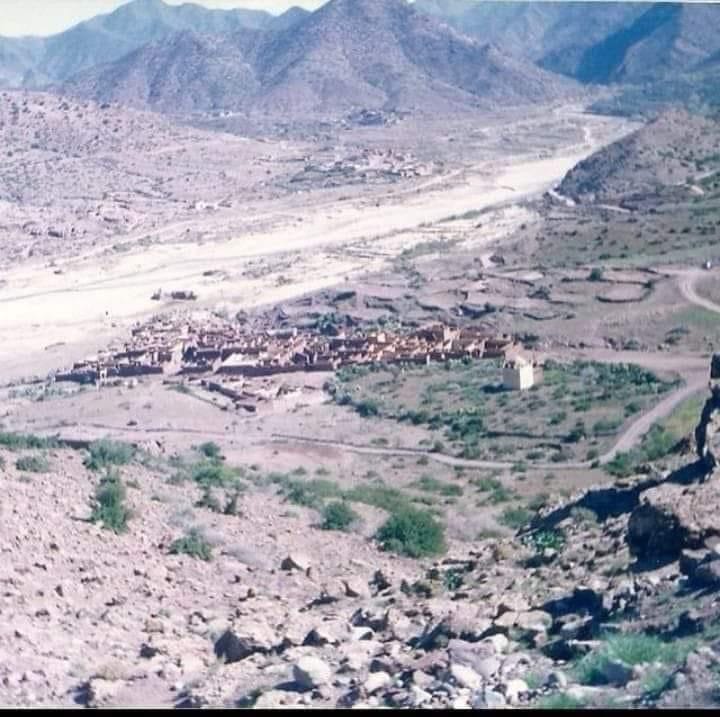
Traditional villages across the Sous reflect adaptation to climate, available materials, agriculture, and social organization. Earthen construction, stone, shaded spaces, courtyards, storage areas, and compact settlement patterns were practical responses to local environmental conditions.
Architecture should therefore be understood as part of the valley’s cultural ecology. Buildings were not isolated objects; they were connected to agricultural land, water systems, livestock, family life, and community organization.
This section would also give you an excellent opportunity to internally link to your existing articles about Amazigh architecture, traditional mountain villages, and Moroccan architecture.
The Sous Valley Today: Between Heritage and Modernization
The modern Sous Valley is changing rapidly. Cities such as Agadir have expanded, intensive agriculture has transformed parts of the plain, tourism has grown, and migration has connected rural communities with national and international economies.
At the same time, traditional knowledge remains important. The challenge is not to freeze the Sous in an imagined traditional past, but to understand how cultural practices can adapt while remaining meaningful to the communities that maintain them.
The region’s future will depend on balancing economic development with water conservation, biodiversity protection, agricultural sustainability, and the preservation of cultural and linguistic heritage.
What Makes the Sous Valley Special?
The Sous Valley is distinctive because several worlds meet within the same region. Mountains, agricultural plains, argan forests, rural villages, and the Atlantic coast form a connected landscape.
Its importance also comes from the relationship between environment and culture. Amazigh communities have developed knowledge concerning agriculture, water management, pastoralism, language, and natural-resource use that remains visible today.
The region is therefore not simply a destination to pass through. It is a cultural landscape where geography, economy, history, and identity continue to influence one another.
The Sous Valley as a Cradle of Amazigh Identity
The Sous is not just a region; it is a cradle of history. It gave birth to the Almohad movement in the 12th century, which expanded into one of the most powerful empires in the Mediterranean. This demonstrates how even small valleys like Tinmel could change the world.
The people of the Sous Valley developed a political culture based on independence, solidarity, and resistance. They resisted central power, created small republics, and defended their customs fiercely. Even today, Amazigh identity in the Sous remains strong, visible in language, traditions, and attachment to land.
Visiting the Sous Valley: What Should Travelers Look For?
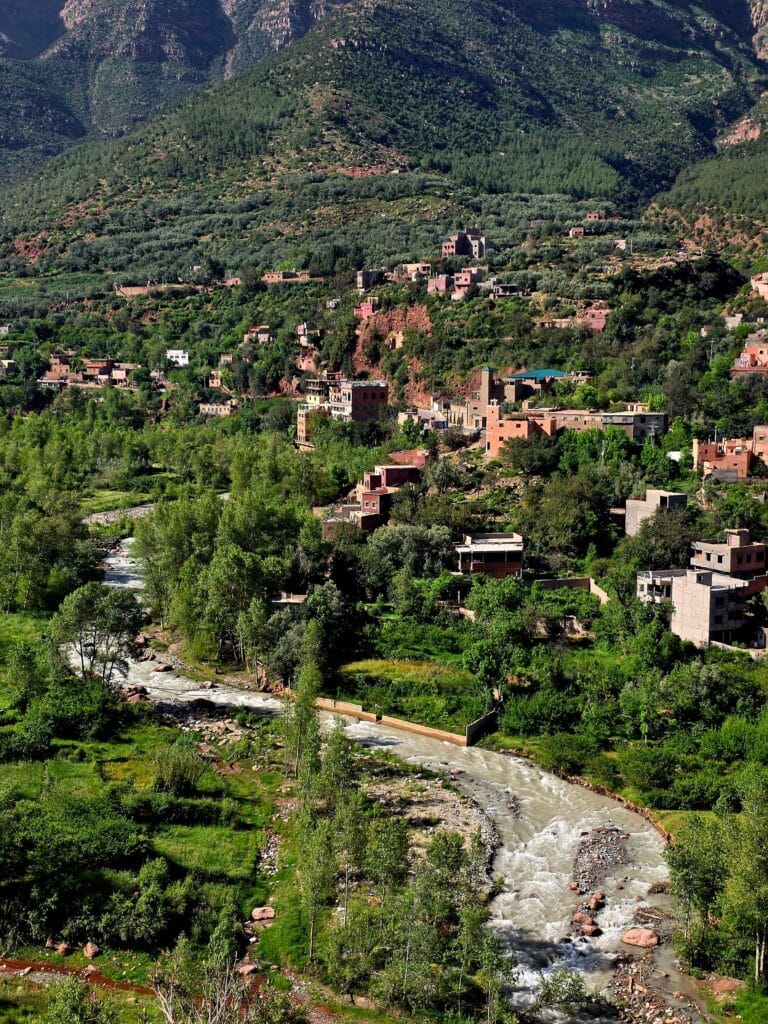
Travelers who want to understand the Sous Valley beyond the major tourist attractions should spend time in its rural landscapes and historic towns. Taroudant, the foothills of the High and Anti-Atlas, argan landscapes, traditional villages, agricultural areas, and Atlantic communities offer different perspectives on the region.
A respectful visit should go beyond photography. Local markets, cooperatives, cultural events, traditional food, and conversations with local people can provide a deeper understanding of how the region’s heritage is lived today.
When visiting rural communities or agricultural landscapes, travelers should respect private property, ask before photographing people, and remember that cultural traditions are living practices rather than tourist performances.
Frequently Asked Questions About the Sous Valley
1. Where is the Sous Valley in Morocco?
The Sous Valley is in southwestern Morocco, between the High Atlas and Anti-Atlas Mountains and extending toward the Atlantic Ocean. Agadir is its best-known urban center, while Taroudant and many rural communities are also closely associated with the region.
2. Why is the Sous Valley important?
The Sous Valley is important for its agriculture, argan forests, fishing, trade, and rich Amazigh cultural heritage. It is also one of Morocco’s major agricultural regions and an important center of Tachelhit-speaking Amazigh culture.
3. Is the Sous Valley Amazigh?
The Sous Valley has a strong Amazigh cultural identity, particularly associated with Tachelhit-speaking communities. Amazigh heritage can be seen in the region’s language, music, poetry, customary practices, agriculture, architecture, and social traditions.
4. What language is spoken in the Sous Valley?
Tachelhit is one of the principal Amazigh languages traditionally spoken across the Sous and surrounding areas. Moroccan Arabic and French are also widely used, particularly in urban and commercial contexts.
5. What is the Sous Valley famous for?
The Sous Valley is known for argan trees and argan oil, agriculture, citrus production, Amazigh culture, traditional music and poetry, Taroudant, Agadir, and its position between the Atlas Mountains and Atlantic coast.
6. Why is the argan tree important in the Sous Valley?
The argan tree is an important ecological, economic, and cultural resource. Communities have traditionally used its products for food, oil, livestock, fuel, and other purposes, while UNESCO recognizes associated knowledge and practices as intangible cultural heritage.
7. What are the main agricultural products of the Sous Valley?
The region produces a variety of agricultural products, including citrus fruits, vegetables, olives, and other crops. Argan production is also important in areas where the argan ecosystem forms part of the agricultural landscape.
8. What are the main environmental challenges facing the Sous Valley?
Water scarcity, drought, groundwater pressure, climate variability, and the demands of intensive agriculture are among the major environmental challenges. Sustainable water management is therefore central to the region’s future.
9. What is Ahwach in the Sous Valley?
Ahwach is a collective Amazigh performance tradition involving music, rhythm, poetry, and coordinated movement. It is particularly associated with southern Morocco and forms an important part of cultural and communal life.
10. What is the best way to experience the Sous Valley?
A meaningful experience combines the region’s cities with its rural landscapes, historic towns, markets, cultural events, agricultural areas, and Amazigh communities. Travelers should approach local traditions respectfully and recognize that the Sous is a living cultural landscape rather than simply a tourist attraction.
Conclusion: Lessons from the Land of the Sous
The Sous Valley is a landscape where geography and culture have developed together. Mountains, fertile plains, argan forests, villages, and the Atlantic have shaped the ways communities farm, trade, move, celebrate, and preserve memory.
Its Amazigh heritage remains visible in Tachelhit, music, poetry, agriculture, customary practices, and traditional knowledge. At the same time, the modern Sous faces serious challenges, particularly water scarcity and environmental change.
Understanding the Sous Valley therefore means looking beyond its scenery. It means recognizing a living cultural landscape whose identity continues to evolve between heritage, adaptation, and modern Morocco.
The story of the Sous Valley is one of resilience, creativity, and identity. It teaches us:
- That human society is inseparable from geography.
- That scarcity can produce solidarity and innovation.
- That culture is built not only on monuments but on everyday practices: terraces, granaries, songs, and dances.
- That Amazigh identity is deeply tied to the land, to endurance, and to community.
Today, as Morocco modernizes, the Sous Valley remains a living symbol of how tradition and adaptation can coexist. Its terraces, markets, and festivals are not relics — they are reminders that heritage is a guide for the future.