Moussems in Morocco: Festivals of Faith, Culture, and Community
Introduction: The Heartbeat of Morocco’s Living Heritage
Across Morocco, certain gatherings bring together religion, memory, music, commerce, family life, and local traditions in ways that cannot be reduced to a modern festival. These gatherings are known as moussems.
The word moussem comes from the Arabic mawsim, meaning “season” or a recurring seasonal occasion. In the Moroccan context, the term commonly refers to an annual gathering associated with a saint, shrine, community, agricultural season, or important local tradition. Depending on the region, a moussem may include pilgrimage, prayer, communal meals, markets, music, poetry, horse performances, craft trading, and social gatherings.
Moussems in Morocco aren’t just festivals — they’re living stories. They’re where Morocco’s Amazigh spirituality, Islamic faith, and cultural identity intertwine in a dance of devotion and joy. Each Moussem tells a story of gratitude, renewal, and community. It’s where the sacred meets the earthly — and where you can still hear the echo of Morocco’s oldest traditions.
For visitors, Moussems offer an opportunity to see a side of Morocco that is deeply connected to local communities rather than designed exclusively for tourism. They can reveal how faith, rural economies, oral traditions, music, hospitality, and collective memory continue to interact in contemporary Moroccan society.
Whether you’re a traveler seeking authenticity or a Moroccan reconnecting with your roots, understanding moussems gives you a window into the soul of Amazigh and Moroccan identity.
| Moussem | Location | Main Character | What Makes It Important |
|---|---|---|---|
| Moussem of Tan-Tan | Tan-Tan, southern Morocco | Nomadic, cultural and commercial | UNESCO-recognized heritage; gathering of Saharan communities |
| Moussem of Moulay Idriss | Moulay Idriss Zerhoun, near Meknes | Religious pilgrimage | Connected to the shrine and memory of Moulay Idriss I |
| Moussem of Sidi Ali Ben Hamdouch | Mghassiyine/Zerhoun area | Sufi and religious | Associated with the Hamdouchiya tradition |
| Moussem of Sidi Ahmed Ou Moussa | Tazeroualt, near Tiznit | Religious, commercial and cultural | Important spiritual gathering in the Anti-Atlas/Souss |
| Moussem of Imilchil | Imilchil, High Atlas | Social, cultural and marriage traditions | Associated with Aït Hdidou heritage and the famous lakeside love legend |
| Moussem of Moulay Abdellah Amghar | Moulay Abdellah, El Jadida Province | Religious, equestrian and commercial | Large gathering known for Tbourida and heritage activities |
| Moussem of Sidi Bouabid Cherki | Bejaâd | Religious and social | Linked to the Cherkaouiya zawiya and pilgrimage tradition |
| Moussem Aknari | Sidi Ifni/Sbouya area | Agricultural and cultural | Celebrates the prickly pear and local terroir |
Table of Contents
What Is a Moussem? Meaning, Origins, and Symbolism
A Moussem (from Arabic موسم, meaning “season” or “occasion”) is a religious and cultural gathering often held to honor a local saint (wali), celebrate the harvest, or mark a significant social tradition. In Amazigh culture, it’s a moment of unity — a communal heartbeat that ties families, villages, and tribes together.
A moussem in Morocco is a recurring communal gathering whose character varies from one region to another. Many traditional moussems are connected to the shrine or tomb of a locally respected religious figure, while others have developed around pastoral life, agriculture, tribal memory, local crafts, or historical figures.
The religious dimension is particularly important in many traditional moussems. Pilgrims may visit a shrine, pray, make offerings, meet members of religious brotherhoods, or participate in communal rituals. Around this spiritual core, a temporary social and economic space develops.
This is why a moussem can simultaneously function as a pilgrimage, market, social reunion, and cultural celebration.
The Symbolism Behind the Moussem
At its core, a Moussem represents:
- Spiritual renewal – a time to seek blessings (baraka) and give thanks.
- Social solidarity – where people strengthen community bonds.
- Cultural continuity – preserving the songs, dances, and rituals passed down through generations.
Each Moussem holds layers of meaning — religious, agricultural, and symbolic — reflecting the rhythm of Moroccan rural life.
For centuries, Amazigh communities have marked the changing of seasons, harvests, and spiritual milestones through moussems. Over time, Islamic traditions merged with ancient Amazigh rites, creating a uniquely Moroccan cultural form that blends Sufism, spirituality, and folklore.
Moussem vs. Festival: What Is the Difference?
The two terms are sometimes used interchangeably, but they are not identical.
A modern cultural festival is generally organized around performances, entertainment, arts, or a particular cultural theme. A traditional moussem, by contrast, has historically been embedded in the social and religious life of a particular community.
Some contemporary moussems now contain concerts, exhibitions, tourism activities, and official cultural programming. This evolution has created an important question for researchers: how can communities promote their heritage without turning a living tradition into a staged spectacle? Academic research on Moroccan festive culture has specifically examined this tension between traditional moussems and their modern “festivalization.”
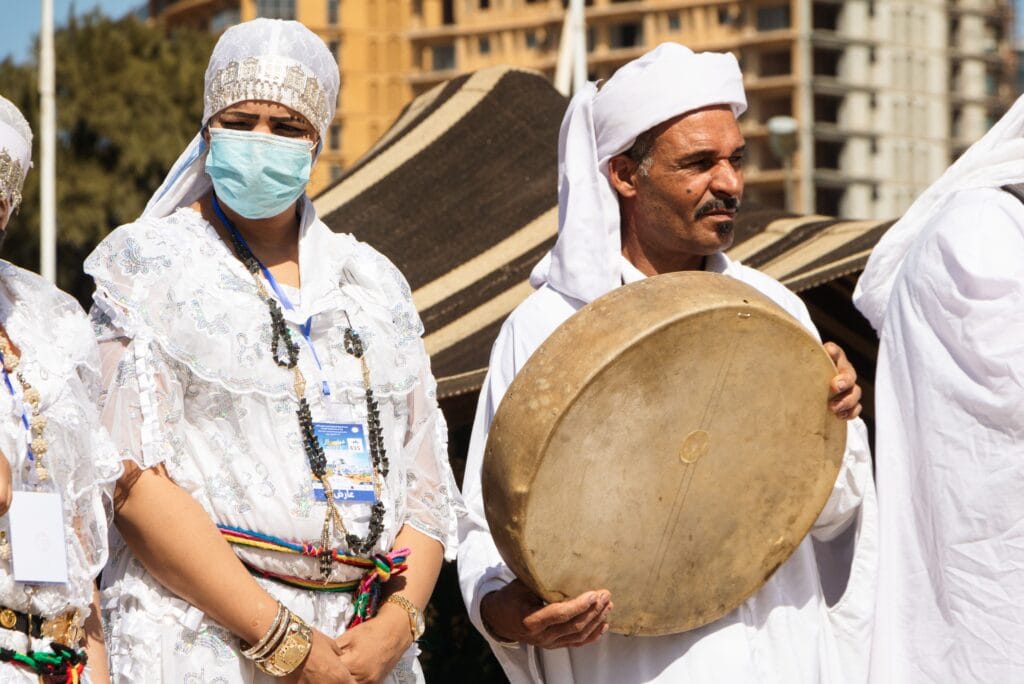
The Historical and Anthropological Origins of Moussems
The history of Moroccan moussems cannot be explained through one single origin. They developed through the interaction of Islamic religious traditions, local social structures, seasonal agricultural cycles, pastoral mobility, and older forms of communal gathering.
In many regions, the shrine of a siyyed—a locally venerated holy person—became the focal point of an annual gathering. People traveled to the site at a particular time of year, creating a temporary community around the religious celebration.
Over generations, these gatherings acquired additional functions. Traders arrived with goods, craftsmen sold their products, families arranged meetings, musicians performed, and communities renewed social relationships.
The result was not merely a religious ceremony but a complex institution connecting the spiritual, social, and economic dimensions of rural life.
To understand the Moussem, you have to travel back thousands of years to Morocco’s earliest civilizations.
From Ancient Amazigh Rituals to Islamic Pilgrimage
Before Islam reached North Africa, Amazigh tribes celebrated natural cycles through seasonal festivals tied to fertility, rain, and the land. The Moussems in Morocco is earliest forms were rituals of gratitude — thanking nature and ancestral spirits for their blessings.
When Islam spread through Morocco, these traditions adapted rather than disappeared. The Amazigh converted to Islam but retained their deep relationship with nature and the spiritual world. Saints — known as awliya — became the new intermediaries between people and the divine. Their shrines (zaouias) became sacred gathering places.
Over centuries, these gatherings evolved into annual Moussems, blending Islamic spirituality with ancient Amazigh ritual life.
From Seasonal Gatherings to Religious Pilgrimage
The seasonal character of the moussem remains important. The timing of a particular gathering could be connected to agricultural or pastoral calendars, religious occasions, or the annual commemoration of a revered figure.
This seasonal rhythm helped communities organize their movements and activities around predictable moments in the year.
The Moussem of Tan-Tan, for example, historically formed part of the agricultural and herding calendar of Saharan nomadic communities. The gathering provided an opportunity for different groups to meet, exchange goods, organize animal-breeding competitions, celebrate marriages, and participate in music, poetry, and other cultural expressions.
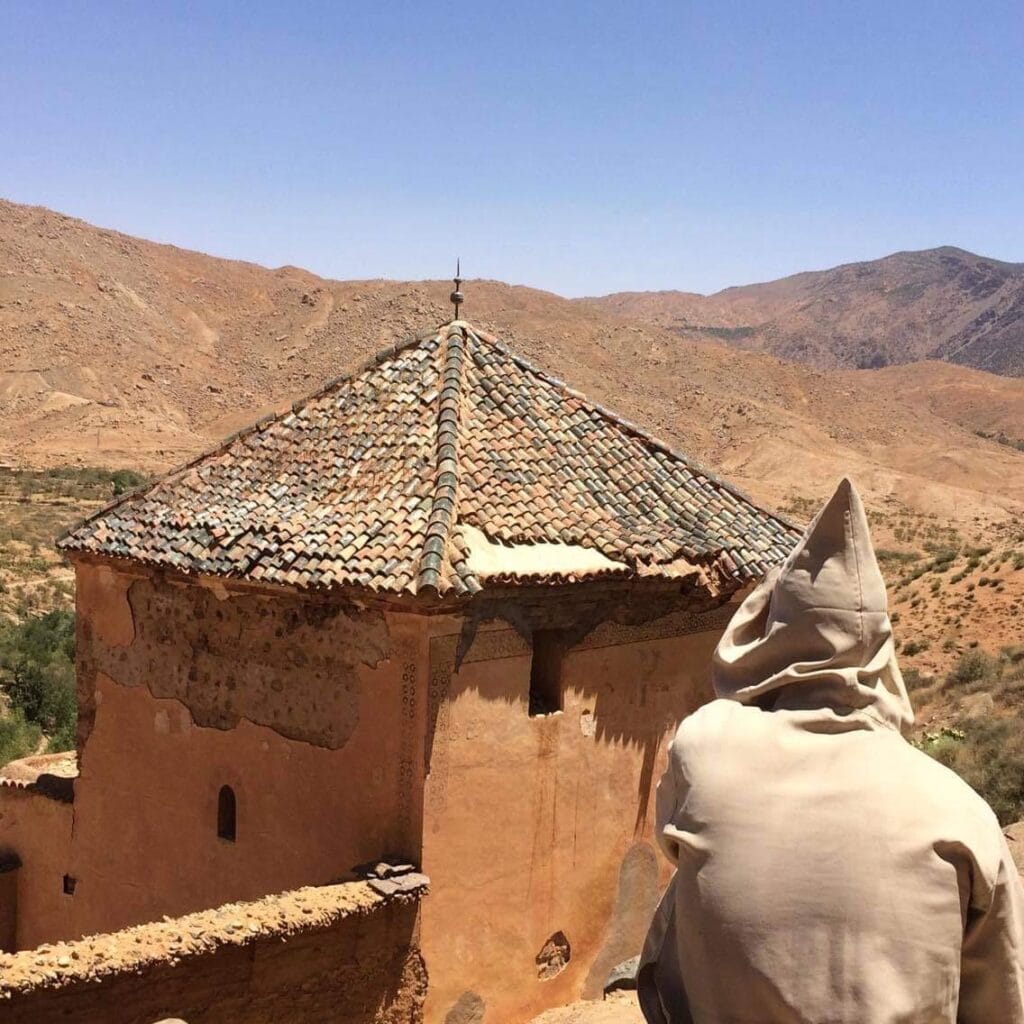
The Role of Saints and Sacred Geography
One of the most distinctive characteristics of many Moroccan moussems is their relationship with sacred places.
A shrine or tomb can become much more than a physical monument. It may serve as a place of memory, pilgrimage, prayer, community gathering, and local identity.
The surrounding landscape can therefore acquire cultural meaning. Roads, villages, cemeteries, springs, mountains, and agricultural lands may all become part of the cultural geography surrounding the moussem.
This helps explain why some Moussems in Morocco have survived for generations even when their economic or political circumstances have changed.
During a Moussem, people embark on pilgrimages to these locations, sometimes walking for days, carrying offerings, and seeking spiritual healing or blessings for harvest and health.
This practice sustains a deep anthropological continuity — a living bridge between Morocco’s pre-Islamic past and its Islamic present.
the Social and Cultural Dimensions of the Moussem
A moussem brings people together in a way that extends beyond the formal religious ceremony.
Families who live far apart may use the occasion to reunite. Farmers and pastoralists can exchange information. Craftspeople find customers. Musicians and poets perform before local audiences. Young people encounter traditions that may otherwise be transmitted mainly through family and community networks.
The moussem therefore acts as a temporary social institution.
For anthropologists, this is one of the most interesting characteristics of the event: it creates a particular social space where different aspects of community life become visible at the same time.
Religious Rituals and Spiritual Meaning
Religious practices vary considerably from one moussem to another.
Depending on the local tradition, participants may visit a shrine, recite prayers, seek blessings, make offerings, attend religious gatherings, or participate in ceremonies associated with a religious brotherhood.
It is important not to assume that every moussem follows the same ritual pattern. Moroccan religious culture is regionally diverse, and local practices reflect different histories, communities, and traditions.
You’ll often find pilgrims visiting the shrine of a saint (marabout), offering candles or incense, and joining in communal prayers. Many families prepare special meals and share them with others, believing that generosity during a Moussem brings baraka.
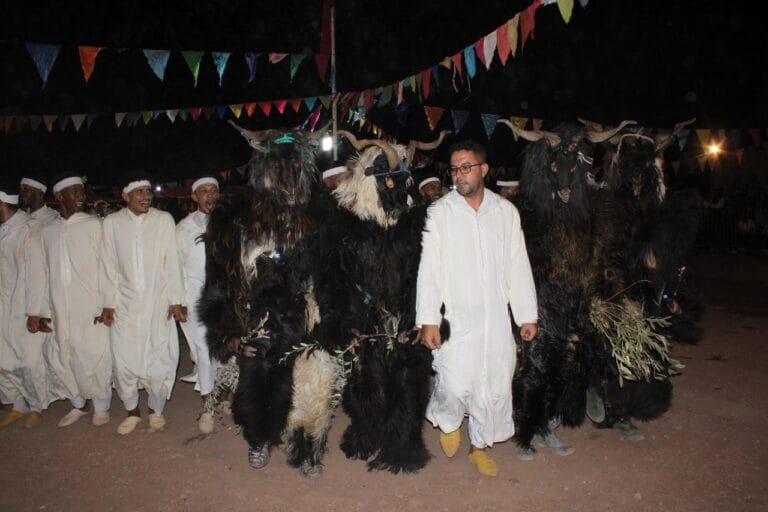
In Amazigh villages, elders lead processions, chanting spiritual hymns, while young people gather in circles of Ahwach or Ahidous — traditional Amazigh dances that express unity, love, and continuity.
Music, Dance, and Oral Heritage
Music is one of the most recognizable elements of many Moroccan moussems.
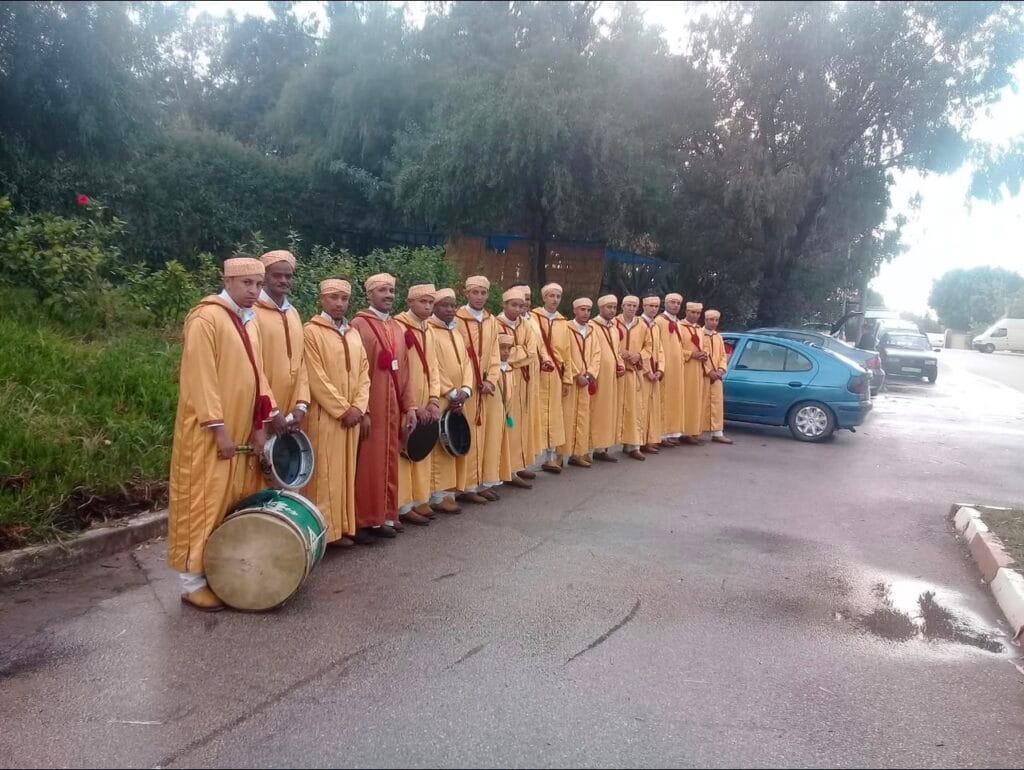
Performances may include regional musical traditions, devotional songs, poetry, drumming, dance, and oral storytelling. In some communities, these performances are not simply entertainment; they transmit historical memories, social values, religious ideas, humor, and local identity.
The moussem can therefore function as a living archive in which cultural knowledge is performed rather than written.
No Moussem is complete without music — it’s how the heart of Morocco beats.
- Ahwach: Collective Amazigh dance from the High Atlas, blending poetry, rhythm, and movement.
- Ahidous: The rhythmic dance of the Middle Atlas, where men and women chant ancestral songs.
- Gnaoua: Spiritual trance music with African roots, often played in southern moussems.
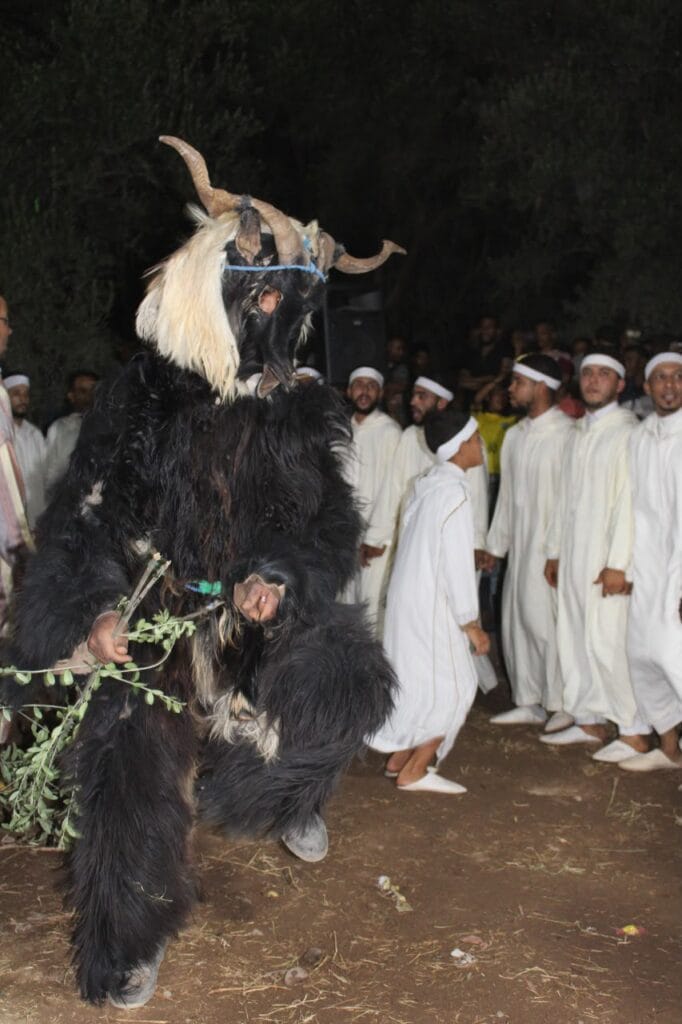
These performances aren’t mere entertainment — they’re acts of remembrance, connecting generations through melody and rhythm.
The Economic Pulse – Souks and Rural Trade
Markets are another essential component of many moussems.
Temporary souks may sell food, clothing, livestock, agricultural products, tools, handicrafts, jewelry, and household goods. Historically, such markets were particularly important for rural communities because they concentrated buyers and sellers in one location at a predictable time.
The economic role of the moussem is clearly illustrated by Tan-Tan, where the annual gathering historically provided opportunities to buy, sell, and exchange products alongside pastoral and cultural activities.
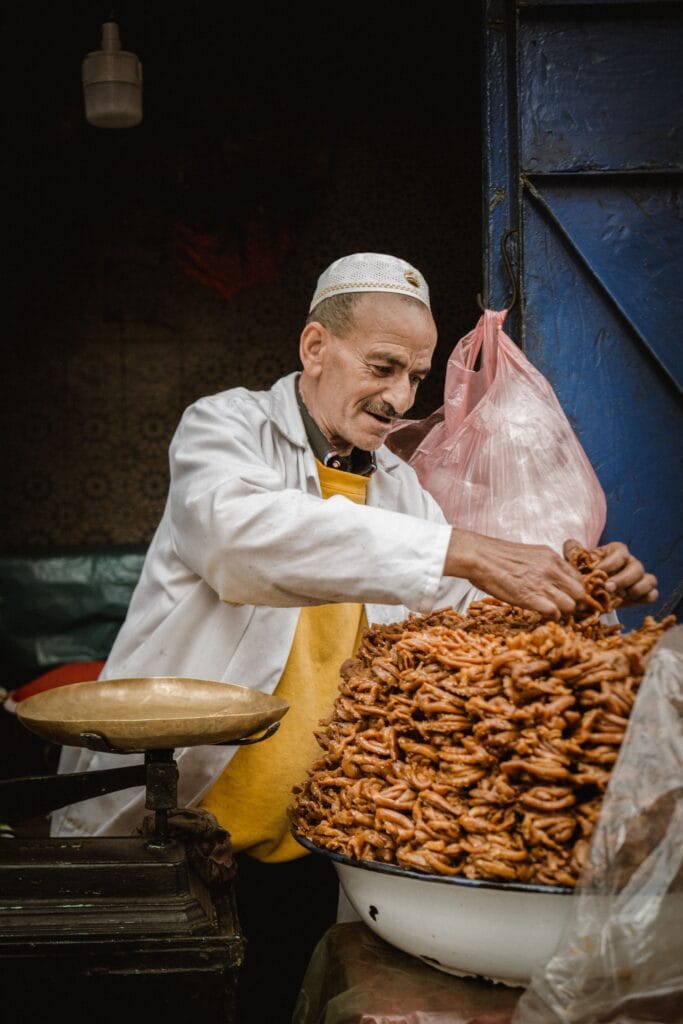
Moussems double as rural trade fairs, giving farmers, artisans, and merchants a vital chance to sell goods. You’ll find carpets woven in vivid colors, pottery painted with Amazigh symbols, and the golden glow of local argan oil.
Beyond commerce, these souks are spaces of exchange — economic and cultural alike. They keep rural economies alive and nurture the transmission of Amazigh craftsmanship.
Famous Moussems Across Morocco
There is no single official list representing every moussem in Morocco. Hundreds of local gatherings have existed or continue to take place, and their names, dates, scale, and traditions can change over time.
For a useful travel guide, however, several major examples deserve particular attention.
Moussem of Tan-Tan — Tan-Tan, Southern Morocco
The Moussem of Tan-Tan is one of Morocco’s best-known examples and the only moussem specifically inscribed by UNESCO on the Representative List of the Intangible Cultural Heritage of Humanity.
UNESCO describes it as an annual gathering bringing together nomadic communities from southern Morocco and other parts of northwest Africa. Its traditions include music, poetry, games, trade, camel and horse competitions, and other cultural expressions. It was inscribed in 2008, following its earlier proclamation as a Masterpiece of the Oral and Intangible Heritage of Humanity in 2005.
The gathering is particularly significant because it has become a space for preserving aspects of nomadic Saharan heritage threatened by sedentarization, urbanization, economic change, and rural exodus.
Moussem of Moulay Idriss Zerhoun — Moulay Idriss Zerhoun
The town of Moulay Idriss Zerhoun is one of Morocco’s important pilgrimage destinations, associated with Moulay Idriss I.
Its religious significance makes the annual pilgrimage tradition particularly important for understanding the relationship between sacred geography, religious memory, and Moroccan identity.
For visitors, the experience should be approached primarily as a religious and community occasion rather than simply as a tourist spectacle.
Moussem of Moulay Idriss II — Fez
Associated with the memory of Moulay Idriss II, the founder traditionally associated with the development of Fez, this religious tradition forms part of the city’s broader sacred and historical landscape.
Its significance is closely connected with the religious history of Fez and the city’s role as a center of scholarship and spiritual life.
Moussem of Sidi Ali Ben Hamdouch — Meknes Region
The Moussem of Sidi Ali Ben Hamdouch is particularly associated with the Hamadcha Sufi tradition.
It demonstrates how Moroccan moussems can become meeting points for religious brotherhoods, music, pilgrimage, and communal gatherings.
Moussem of Imilchil — High Atlas
The Imilchil moussem is particularly interesting for travelers interested in High Atlas culture. It is associated with the rural communities of the Imilchil area and has become widely known for its connection with local Amazigh traditions and social gatherings.
However, visitors should avoid reducing it to the popular label of a “marriage festival.” Its cultural significance is broader and connected to the social and economic life of communities in the High Atlas.
Moussem of Moulay Abdellah — El Jadida Province
The Moussem of Moulay Abdellah is one of the major traditional gatherings in Morocco and is particularly famous for its Fantasia performances, horse culture, tents, music, and large-scale communal gathering.
It demonstrates how religious commemoration can coexist with equestrian traditions, commerce, and regional cultural identity.
Moussem of Sidi Ahmed Ou Moussa — Souss Region
For readers interested in Amazigh heritage, the Souss region contains numerous local religious and communal traditions associated with saints and sacred places.
The moussem of Sidi Ahmed Ou Moussa is particularly significant in the cultural history of southern Morocco and demonstrates the importance of local saints, oral traditions, pilgrimage, and community memory in the Souss landscape.
Important: Moussem dates can change from year to year according to the Islamic calendar, local organization, weather, and other circumstances. Travelers should verify the current year’s date locally or through an official regional source before planning a trip.
Below is a table of Morocco’s most iconic Moussems, each reflecting a unique blend of faith, art, and Amazigh tradition:
| Moussem | Location | Highlights | Cultural Significance |
|---|---|---|---|
| Moussem of Moulay Idriss | Meknes | Religious pilgrimage | Honors Morocco’s first Islamic ruler |
| Moussem of Tan-Tan | Tan-Tan (South) | UNESCO heritage; camel shows, poetry | Celebrates nomadic Amazigh culture |
| Moussem of Moulay Abdellah Amghar | El Jadida | Fantasia, rituals, and trade | One of Morocco’s largest moussems |
| Moussem of Sidi Ahmed ou Moussa | Taroudant region | Spiritual ceremonies, Ahwach dance | Symbol of Amazigh unity |
| Moussem of Imilchil | High Atlas | Collective marriage festival | Represents love and social harmony |
Each of these festivals embodies the diversity of Morocco’s regions while sharing the same heartbeat — faith and community.
Moussems and Amazigh Cultural Heritage
The relationship between Moussems in Morocco and Amazigh culture deserves particular attention.
Many rural moussems take place in areas where Amazigh languages, customs, music, agriculture, pastoralism, and oral traditions remain important components of community life.
A moussem can therefore become a meeting point between religious traditions and older local forms of social organization.
This does not mean that Amazigh traditions should automatically be described as “pre-Islamic survivals.” Such interpretations can oversimplify complex histories. Moroccan communities have continuously adapted their cultural practices, and religious, linguistic, agricultural, and social traditions have interacted over centuries.
The better approach is to view the moussem as a layered cultural institution whose contemporary form reflects many historical influences.
Women and the Moussem: Keepers of Culture and Memory
In many moussems, you’ll find women at the very center of cultural continuity.
Women play important roles in many moussem environments, although their participation differs considerably from one community to another.
Women may prepare food, sell agricultural or artisanal products, participate in musical traditions, maintain household networks, and contribute to the transmission of oral knowledge.
In some communities, the moussem also creates opportunities for women to participate in local commerce and social exchange.
The role of women should therefore not be reduced to that of spectators. Their contribution is often embedded in the everyday cultural work that makes the gathering possible.
Amazigh women play multiple roles — as singers, storytellers, and spiritual caretakers. They prepare ritual foods, lead songs during dances, and pass down oral histories to their children.
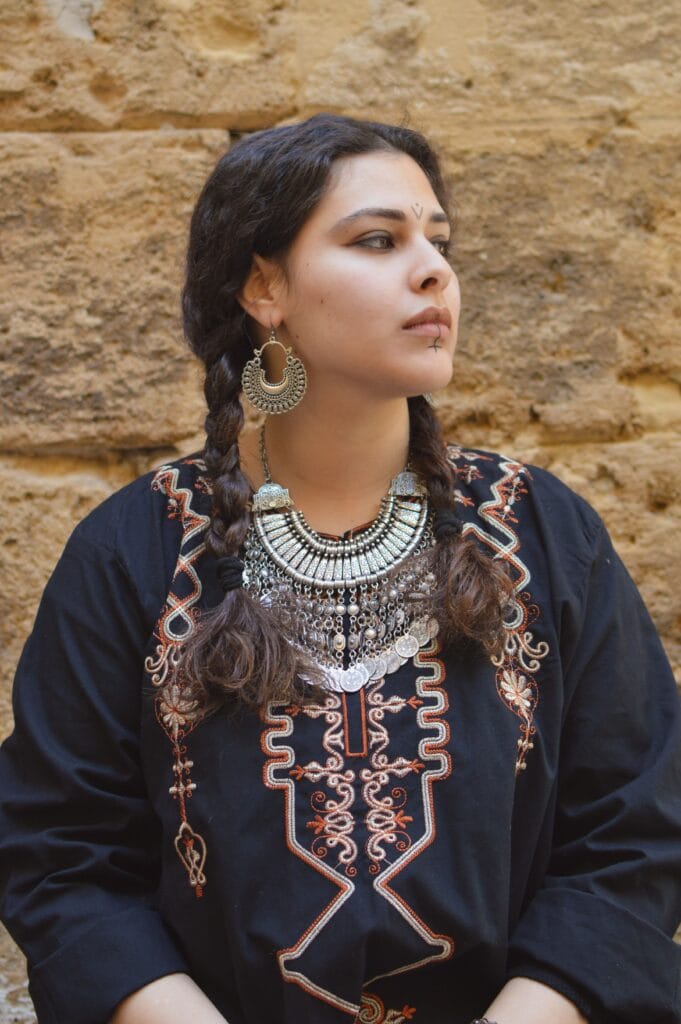
Through weaving, song, and prayer, women preserve symbols, language, and spirituality that define Amazigh identity. In festivals like Imilchil, women also symbolize love, choice, and freedom — celebrating marriage traditions rooted in ancient tribal customs.
The Moussem as a Living Marketplace
One of the reasons moussems survived historically is their practical usefulness.
Before modern transportation and communication networks transformed rural Morocco, periodic gatherings provided important opportunities for people from dispersed settlements to meet.
A moussem could bring together:
- Farmers and pastoralists
- Craftspeople and traders
- Religious scholars and pilgrims
- Musicians and poets
- Families and neighboring communities
- Buyers and sellers of livestock and agricultural goods
The marketplace was therefore not separate from the cultural event. Economic exchange was part of the social fabric of the gathering.
Horses, Fantasia, and Equestrian Traditions
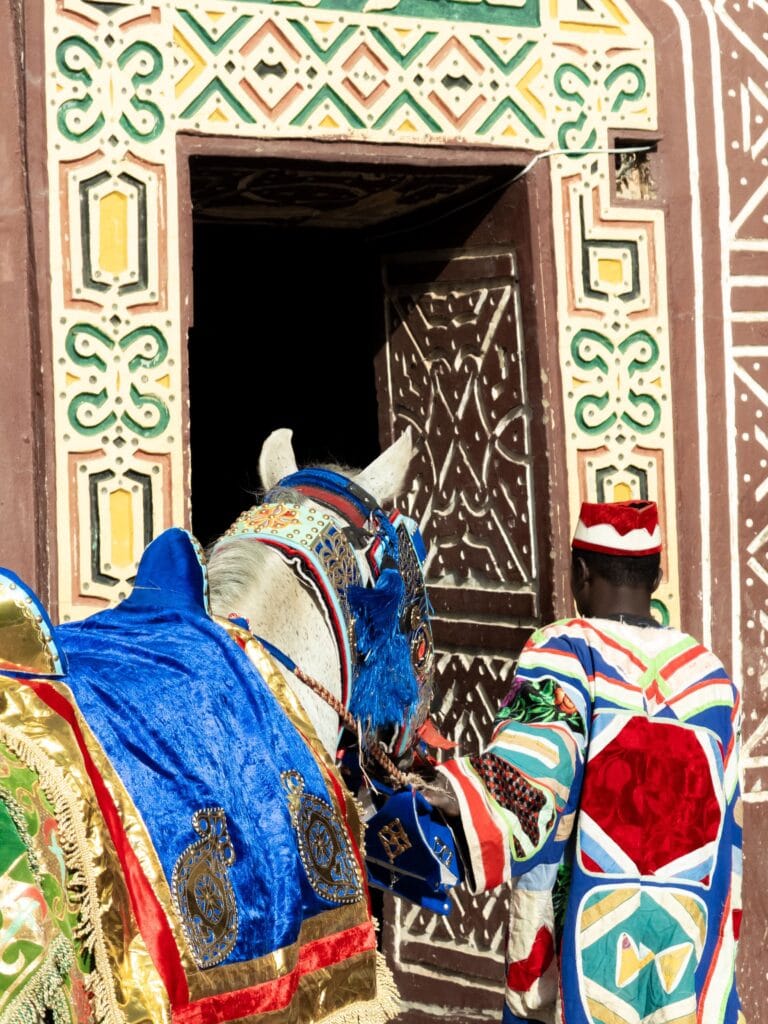
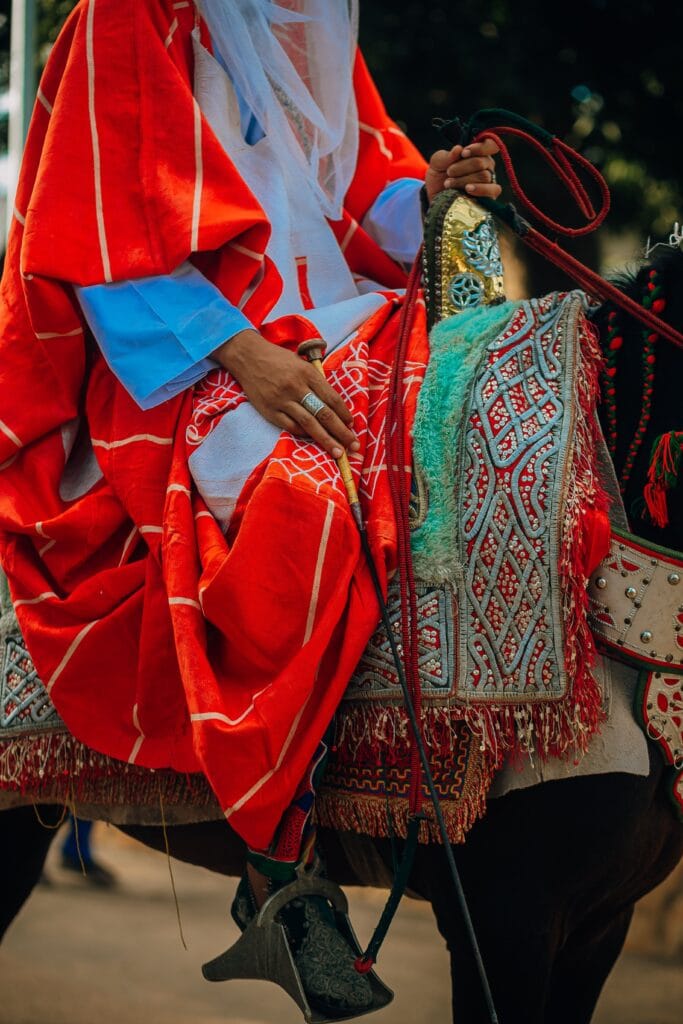
For many visitors, the most visually spectacular part of a Moroccan moussem is the Fantasia, or Tbourida.
Mounted riders traditionally perform synchronized displays on horseback, often dressed in regional clothing and carrying traditional equipment. The final coordinated movement creates the dramatic sound and visual effect for which the performance is famous.
Tbourida should nevertheless be understood as more than entertainment. It is connected to equestrian heritage, regional identity, ceremonial display, and traditions of horsemanship.
Not every moussem includes Tbourida, and its form can vary considerably between regions.
When Are Moussems Held in Morocco?
There is no single “moussem season” covering the entire country.
Different moussems take place at different times according to their individual religious, agricultural, pastoral, or historical calendars.
Some dates follow the Islamic lunar calendar, meaning their Gregorian dates shift each year. Others are linked more closely to local agricultural cycles or fixed regional schedules.
For travelers, this means that an article published several years earlier may contain dates that are no longer accurate.
Always verify the date before traveling.
Modern Revival and Cultural Tourism
Today, Amazigh moussem are not only sacred rituals but also windows for cultural tourism. Events like Tan-Tan’s Moussem have gained UNESCO Intangible Heritage status, drawing visitors from around the world.
These celebrations are vital to Morocco’s image as a land of diversity and tolerance, where ancient Amazigh and Islamic values coexist.
Challenges
However, modernization and tourism can sometimes threaten authenticity.
- Commercialization may overshadow spirituality.
- Climate change affects rural participation.
- Urban migration leads to fewer young people maintaining traditions.
Still, local associations and Amazigh organizations are fighting to protect moussems as cultural treasures, ensuring they remain living, not museum pieces.
Experiencing a Moussem: What You Should Know
A moussem can be a remarkable cultural experience, but visitors should remember that it is usually a community event first and a tourist attraction second.
Dress modestly, especially around religious sites. Ask permission before photographing people, particularly during prayers, rituals, or intimate family moments.
If a ceremony appears private or restricted to community members, respect the boundary rather than assuming that visitors are entitled to participate.
When buying crafts or food, purchasing directly from local sellers can provide meaningful economic support. Visitors should also avoid treating religious practices as exotic entertainment.
The most rewarding approach is simple: observe respectfully, ask questions politely, and allow local people to determine what should be shared.
Here are some respectful and practical tips:
- Dress modestly and follow local customs.
- Ask before taking photos of people or rituals.
- Support local artisans and buy handmade crafts.
- Learn basic Tamazight greetings — locals appreciate it.
- Attend with respect for the baraka and cultural depth of the event.
Moussems, Tourism, and Cultural Change
Tourism has created new opportunities for Moroccan communities to promote local heritage.
A successful moussem can support accommodation providers, restaurants, transport operators, artisans, farmers, musicians, horse breeders, and other local businesses.
But tourism also creates risks.
When a living cultural practice is redesigned entirely for visitors, some of its original meanings may weaken. Academic research on Moroccan festivals has highlighted the tension between community-based festive traditions and their transformation into increasingly commercialized or “festivalized” events.
The challenge is therefore not to prevent tourism but to ensure that tourism supports the communities who own and maintain the tradition.
UNESCO and the Moussem of Tan-Tan
The international recognition of the Moussem of Tan-Tan provides an important example of how intangible cultural heritage can be safeguarded.
UNESCO inscribed the Moussem of Tan-Tan in 2008. The organization emphasizes its importance as a gathering of Saharan nomadic communities and highlights its economic, social, and cultural dimensions.
UNESCO also notes that the revitalized moussem helps communities maintain cultural knowledge and traditions affected by sedentarization, urbanization, rural migration, and economic change.
Morocco’s UNESCO intangible heritage profile currently lists the Moussem of Tan-Tan alongside other recognized elements such as the cultural space of Jemaa el-Fna, the Mediterranean diet, argan-related knowledge, Gnawa, and couscous traditions.
Challenges Facing Moussems Today
Traditional moussems face several challenges.
Urbanization can weaken the connection between younger generations and rural traditions. Rural migration may reduce the number of people maintaining local practices. Economic changes can also transform traditional markets and crafts.
Climate change and water scarcity create additional pressures in rural and pastoral regions.
There is also the challenge of commercialization. A moussem can attract visitors and generate income, but excessive commercialization may encourage the presentation of culture as a performance designed primarily for outsiders.
Safeguarding therefore requires more than preserving the event on a calendar. It means supporting the communities, languages, crafts, rituals, music, agricultural practices, and knowledge systems that give the moussem its meaning.
How to Visit a Moussem Responsibly
If you are planning to experience a moussem, keep these principles in mind:
Respect the religious dimension: Do not assume that a religious ceremony is a performance for visitors.
Ask before photographing: Always seek permission before photographing individuals, especially women, children, religious figures, or private ceremonies.
Support local people: Buy local products directly from artisans and vendors where possible.
Learn before you arrive: Understanding the history of the particular moussem will make the experience much more meaningful.
Avoid stereotypes: A moussem is not simply an “exotic Moroccan festival.” It is part of the social and cultural life of particular communities.
Be flexible: Dates, activities, and schedules may change. Local information is often more reliable than an old travel article.
Why Moussems in Morocco Still Matter
The importance of Moussems in Morocco lies in their ability to connect different dimensions of Moroccan life.
A single gathering can bring together faith and commerce, memory and entertainment, agriculture and spirituality, music and oral history, family relationships and regional identity.
This is what makes the moussem especially valuable to researchers and travelers. It offers a way to understand Morocco not only through monuments and museums but through living communities and recurring cultural practices.
The future of these gatherings will depend partly on whether modernization and tourism can coexist with community ownership.
A moussem remains most meaningful when the people who inherited the tradition continue to shape its future.
The Deeper Meaning of the Moussem
A Moussems in Morocco iare more than a festival — it’s a living metaphor for Morocco’s layered identity.
It’s a celebration of faith without fanaticism, culture without borders, and memory without nostalgia.
For the Amazigh, it’s the continuity of their ancestors’ voice — a declaration that their heritage is alive, vibrant, and adaptable.
When you attend a Moussem, you don’t just witness Morocco’s past — you become part of its living future.
Did You Know?
1. The word “moussem” means “season”: The term comes from the Arabic mawsim, linking the concept to a recurring time or season.
2. A moussem can be both pilgrimage and market: Traditional moussems often combine religious activities with commerce, making them important social and economic gatherings.
3. The Moussem of Tan-Tan is UNESCO-recognized: It was inscribed on UNESCO’s Representative List of the Intangible Cultural Heritage of Humanity in 2008.
4. Tan-Tan’s moussem has nomadic roots: UNESCO describes it as a gathering involving nomadic communities from southern Morocco and other parts of northwest Africa.
5. Some moussems can last several days: Traditional gatherings can extend over multiple days, although the duration differs according to the specific moussem and its local organization.
6. Poetry can be an important part of a moussem: Oral poetry and musical performance provide ways for communities to express identity, memory, humor, and social values.
7. Horses are central to some moussems: Equestrian traditions and Tbourida performances are particularly important at certain large gatherings.
8. Not every moussem is the same: Morocco’s geographical and cultural diversity means that each moussem can have its own rituals, history, music, food, and social organization.
9. Tourism can help and challenge heritage: Visitors can provide economic opportunities, but excessive commercialization can also change how traditional celebrations are practiced and represented.
10. A moussem is a living tradition: Its importance is not only historical. The tradition continues to evolve as Moroccan communities respond to migration, urbanization, economic change, and tourism.
Conclusion: The Living Soul of Morocco
Moussems in Morocco are much more than annual festivals. They are living gatherings where faith, community, trade, music, memory, and regional identity meet.
From the Saharan traditions of Tan-Tan to religious pilgrimages and rural gatherings across the country, each moussem reflects the history and character of its community. For travelers, experiencing one respectfully offers a deeper understanding of Morocco—one found not only in its monuments, but in the people and traditions that keep its cultural heritage alive.
As the drums fade and the last traders pack their stalls, what remains is not just memory but meaning.
Each Moussem renews the bond between land, people, and spirit.
By preserving these traditions, you help protect one of the world’s richest cultural tapestries — one woven through faith, rhythm, and the Amazigh heart.
Call to Action:
If this article inspired you, explore more on iwziwn.com — dive into Morocco’s living traditions, discover Amazigh language and art, and become part of the effort to preserve a heritage that still beats in every valley, mountain, and song of this land.
FAQs about Moussems in Morocco
What is a moussem in Morocco?
A moussem is a recurring Moroccan gathering that may combine pilgrimage, religious commemoration, social reunion, commerce, music, and local cultural traditions. Many traditional moussems are associated with a saint or sacred site, although their forms vary considerably by region.
What does the word moussem mean?
Moussem derives from the Arabic mawsim, meaning “season.” In Morocco, it came to describe recurring seasonal gatherings with religious, social, economic, and cultural functions.
Are moussems religious festivals?
Many traditional moussems have a strong religious dimension, particularly those associated with the shrine of a saint or religious figure. However, a moussem can also include markets, music, horse performances, crafts, food, and social activities.
What is the most famous moussem in Morocco?
The Moussem of Tan-Tan is among the most internationally recognized. UNESCO inscribed it on the Representative List of the Intangible Cultural Heritage of Humanity in 2008.
Where is the Moussem of Tan-Tan held?
It is held in Tan-Tan in southwestern Morocco and is associated with the cultural heritage of Saharan nomadic communities.
When do Moroccan moussems take place?
There is no single date for all moussems. Dates depend on the particular tradition and may follow the Islamic calendar, agricultural cycles, or local schedules.
Can tourists attend a Moroccan moussem?
Many moussems are open to visitors, but access to particular religious rituals or community activities can vary. Travelers should observe local customs and ask permission when necessary.
What happens at a Moroccan moussem?
Activities vary, but a moussem may include religious ceremonies, pilgrimage, markets, music, poetry, dancing, food, crafts, social gatherings, horse performances, and livestock-related activities.
Are moussems only found in rural Morocco?
No. Although many traditional moussems have strong rural connections, important religious and cultural gatherings also occur around towns and cities.
Is a moussem the same as a Moroccan festival?
Not necessarily. A traditional moussem generally has deeper connections with a particular community, sacred site, seasonal cycle, or religious tradition. Modern cultural festivals may be organized primarily around arts, entertainment, or tourism.
What should I wear to a moussem?
Modest, comfortable clothing is the safest choice, particularly when the moussem includes religious sites or ceremonies. Visitors should adapt their clothing to local expectations.
Can I take photographs at a moussem?
Photography is often possible, but you should ask permission before photographing people. Be particularly careful around religious rituals and private ceremonies.
What is Fantasia at a moussem?
Fantasia, also known as Tbourida, is a traditional equestrian performance involving coordinated horse riders. It is one of the most spectacular cultural displays found at some Moroccan moussems.
Do moussems help local communities?
They can. Moussems may create opportunities for local traders, artisans, farmers, musicians, accommodation providers, and other businesses. They can also help maintain cultural practices and community networks.
Why are some moussems important for heritage preservation?
They provide spaces where cultural knowledge can continue to be practiced and transmitted. UNESCO’s documentation of Tan-Tan specifically emphasizes the role of the moussem in maintaining nomadic cultural knowledge and traditions under conditions of major social and economic change.
References and Further Reading
Academic and institutional references
- Nabti, M. (2005). Le mussem de Meknès : le déclin d’une tradition spirituelle. L’Homme, 193, 117–136. The study examines the religious, social, and organizational dimensions of the Meknes moussem and draws on field research.
- Ziou, A. (2016). Moussem et festivals au Maroc : entre dépossession et récupération culturelle d’un espace du commun. Filigrane, 21. This study examines the transformation of moussems and their relationship with modern festival culture.
- UNESCO. (2008). Moussem of Tan-Tan. Intangible Cultural Heritage of Humanity. UNESCO’s nomination documentation provides important information on the history, social functions, cultural expressions, and safeguarding challenges of the Tan-Tan moussem.
- UNESCO. Morocco — Intangible Cultural Heritage. UNESCO’s country profile provides the broader context of Morocco’s recognized intangible cultural heritage and includes the Moussem of Tan-Tan.
Further reading for deeper research
For readers who want to explore Moroccan cultural heritage beyond moussems, useful areas of further study include:
- Moroccan saint veneration and sacred geography
- Sufism and Moroccan religious brotherhoods
- Amazigh oral traditions and community festivals
- Tbourida and Moroccan equestrian heritage
- Rural markets and traditional Moroccan economies
- Saharan nomadic culture
- Intangible cultural heritage and tourism
- The relationship between traditional moussems and modern festivals