Cuisine in Morocco: History, Culture, and the Living Heritage of Food
Introduction: Why Cuisine in Morocco Matters in Understanding Morocco
To understand cuisine in Morocco, it is not enough to look at a plate of couscous, a steaming tagine or a basket of freshly baked bread. Moroccan food culture begins much earlier than the moment a meal reaches the table. It begins in fields where cereals are cultivated, in orchards where olives and figs ripen, in mountain pastures where livestock graze, in markets where ingredients are selected, and in kitchens where generations of knowledge transform simple products into nourishing meals.
Food in Morocco is closely connected to geography, climate, agriculture, family life, trade, religion and regional identity. The country’s varied landscapes have encouraged different ways of producing, preserving and preparing food. The agricultural plains, Atlantic and Mediterranean coasts, High Atlas valleys, Middle Atlas forests, Souss region, oases and desert margins have each contributed to a diverse culinary landscape.
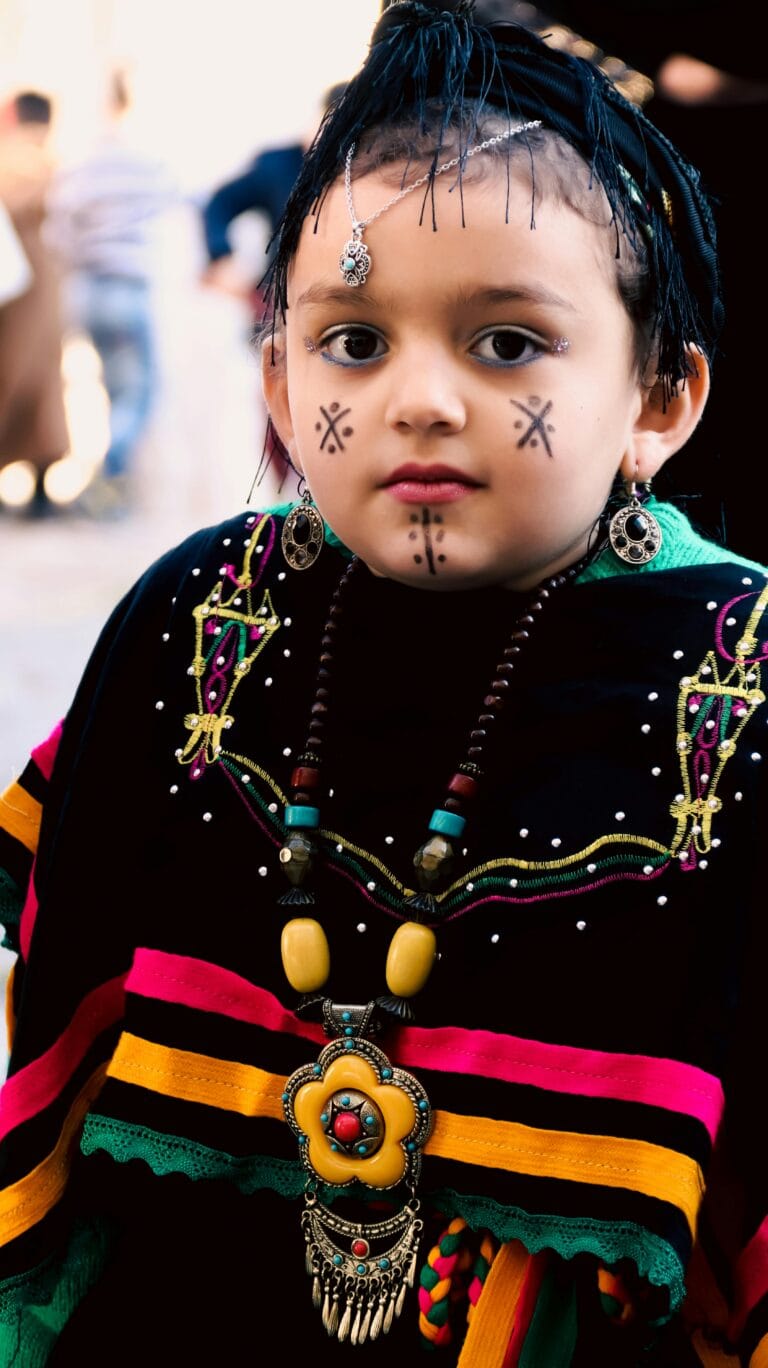
Amazigh communities have played a particularly important role in the development and continuity of many regional food systems. Their culinary traditions are closely connected to local environments, cereal cultivation, livestock, seasonal plants, food preservation and household knowledge. Yet Moroccan cuisine cannot be reduced to one cultural source. It has developed through centuries of interaction among Amazigh, Arab-Islamic, Andalusian, Saharan, Mediterranean, Jewish and other influences. These histories overlap, and individual dishes have often travelled, changed and acquired new meanings in different communities.
Behind many traditional meals stands a body of knowledge that is rarely written down. Women have historically held important responsibilities in selecting ingredients, preparing cereals, making bread, processing dairy products, preserving food and teaching younger generations. Their expertise is not simply a matter of following recipes. It involves judging texture, smell, temperature, timing and quality through repeated experience.
This article follows that knowledge from the land to the kitchen and from the kitchen to the shared table. It explores the historical foundations of Moroccan food, the regional diversity of Amazigh and wider Moroccan cuisine, the work involved in preparing traditional ingredients, and the women whose culinary knowledge continues to shape this living heritage.
To study Cuisine in Morocco academically is to study Morocco itself: its mountains and plains, its seasons and migrations, its rituals of hospitality and survival. Every ingredient carries geographical memory; every cooking method encodes social knowledge. This article approaches cuisine in Morocco as an anthropological and historical system, not as gastronomy alone.
Table of Contents
Historical Foundations of Cuisine in Morocco
1.1 Food and the environment before modern markets
The history of food in Morocco or Amazigh food is closely connected to the relationship between people and their environment. Long before modern supermarkets and refrigerated supply chains, households depended heavily on what could be cultivated, raised, gathered, exchanged or stored within their local territories.
Cereals were central to many agricultural systems. Barley and wheat were cultivated in different regions, while maize and other crops became important in particular areas following their introduction and adoption. The relative importance of each crop depended on rainfall, altitude, soil, irrigation and local agricultural practice. In some mountain communities, barley was valued for its ability to grow under conditions in which other cereals were less reliable.
Livestock also contributed to household food systems. Sheep and goats provided meat, milk, butter and other dairy products, while cattle were important in certain agricultural areas. The relationship between cultivation and pastoralism was not always separate: many households combined farming, animal husbandry, seasonal movement and trade.
This varied economy influenced everyday meals. Cereals could be ground into flour or semolina, cooked as porridge, transformed into bread or prepared as couscous. Milk could be consumed fresh or processed. Fruits could be eaten in season or dried for later use. Vegetables and legumes added variety, while oils, herbs and spices contributed flavour and helped distinguish regional preparations.
The historical record should nevertheless be approached carefully. Present-day dishes cannot automatically be projected unchanged into distant periods. Ingredients, tools, trade routes and cooking methods have evolved. What can be traced more confidently is the long-standing importance of cereals, pastoral products, seasonal agriculture and food preservation in many Moroccan communities.
1.2 Amazigh food systems and regional knowledge
Amazigh food traditions developed within different ecological settings rather than according to one uniform culinary model. In the High Atlas, mountain agriculture and pastoralism shaped food availability. In the Souss and Anti-Atlas, local agriculture, argan-growing areas, orchards and market networks influenced household diets. Middle Atlas communities developed food practices connected to their own forests, agricultural land and livestock systems. In the Rif, the Mediterranean environment and local farming traditions contributed further variations.
Research on Amazigh food systems has emphasized the relationship between local biodiversity, household production and women’s knowledge. Belahsen, Naciri and El Ibrahimi’s study of Moroccan Amazigh communities describes women’s contributions to seed preservation, food processing, conservation, knowledge of edible plants and the transmission of culinary practices. It also discusses the changes brought by market integration and the gradual decline in the use of some traditional food resources.
These findings are important, but they should not be treated as a complete description of every Amazigh community. Morocco’s Amazigh populations are geographically and culturally diverse. Their food traditions differ according to local ecology, household resources, religious practice, historical contact and contemporary economic conditions.
1.3 Trade, Islam and cultural exchange
Cuisine in Morocco also reflects centuries of movement and exchange. The spread of Islam influenced food practices through religious observances, dietary norms, hospitality and the rhythms of the calendar. Trade connected inland communities with coastal ports, Saharan routes and wider Mediterranean networks. Ingredients, techniques and culinary preferences moved with merchants, migrants, scholars, soldiers and families.
Andalusian migration contributed to the cultural life of Moroccan cities and to the development of urban food traditions. Mediterranean and trans-Saharan connections brought further exchanges. Jewish Moroccan communities also developed distinctive food traditions that form part of the country’s wider culinary history.
It is therefore more accurate to understand Moroccan cuisine as a historical meeting place. Some dishes are strongly associated with particular regions or communities; others have become widely shared and are prepared in many different ways. Their histories are often layered rather than exclusive.
Pre-Islamic Amazigh Food Systems
Long before external empires reached North Africa, Amazigh communities developed sustainable food systems adapted to harsh and varied environments. In the Atlas Mountains, semi-nomadic pastoralism shaped diets based on barley, dairy, wild herbs, and preserved meats. In river valleys and coastal plains, agriculture introduced legumes, olives, and seasonal vegetables.
Key characteristics of early Amazigh cuisine included:
- Reliance on local grains such as barley and sorghum
- Fermentation and drying for food preservation
- Communal cooking and shared consumption
- Seasonal rotation of foods based on agricultural cycles
Food was inseparable from land stewardship and spiritual belief. Eating was not an individual act but a collective ritual.
Islamic, Andalusian, and Trans-Saharan Influences
With the arrival of Islam and later Andalusian refugees, Cuisine in Morocco absorbed new ingredients and techniques without erasing its Amazigh core. Spices such as cumin and coriander, cooking vessels like the tajine, and new culinary aesthetics entered local traditions.
Trans-Saharan trade routes introduced:
- Dates and dried fruits
- Spices and sugar
- Techniques of preservation and flavor layering
Rather than replacing indigenous foodways, these influences were integrated selectively, producing regional hybrids rooted in Amazigh culinary logic.
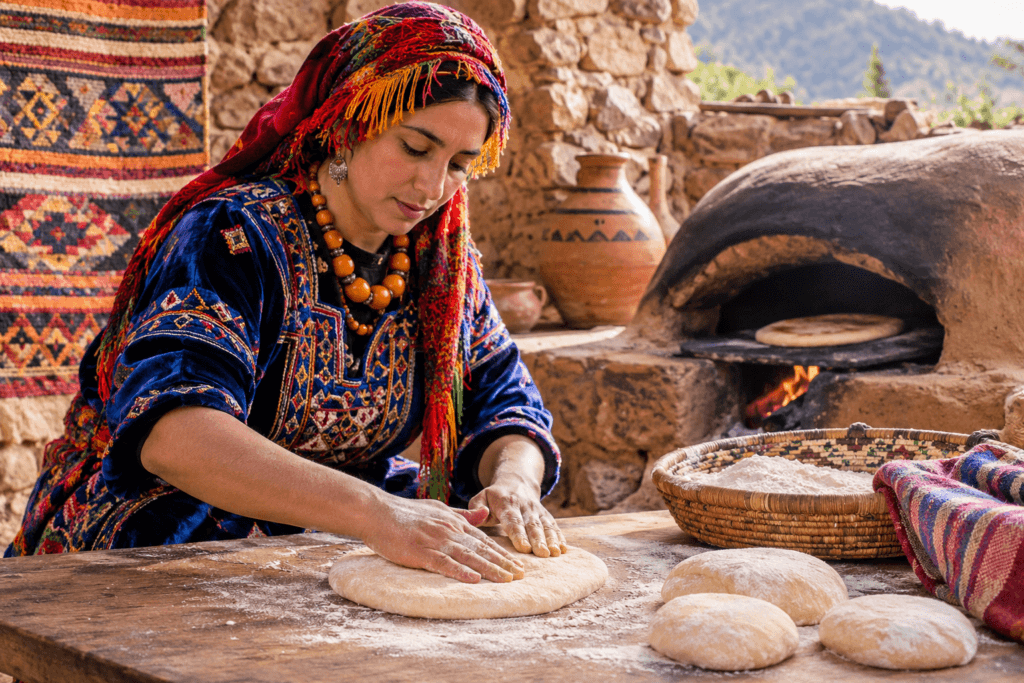
The Land Before the Kitchen: Where Moroccan Food Begins
A traditional meal begins with decisions made long before cooking. What will be eaten depends partly on what the land produces, what is available in the market, what a household can afford and what the season makes possible.
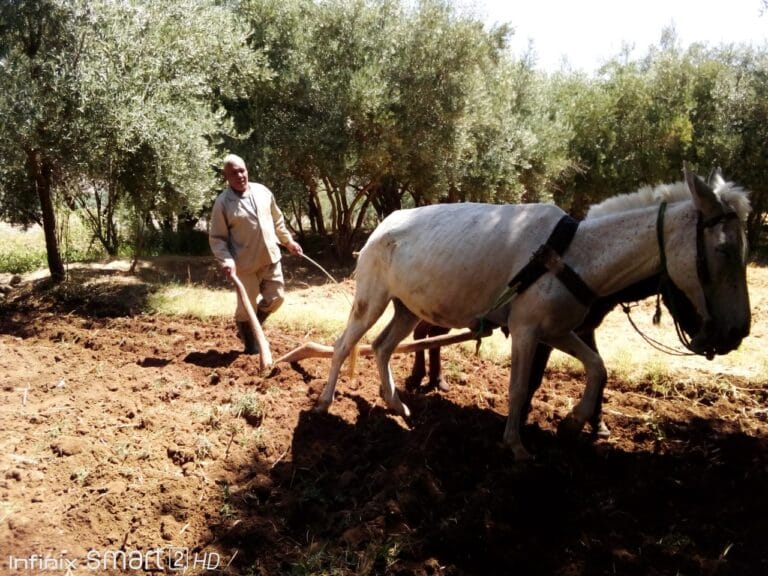
In agricultural villages, the food cycle may begin with preparing fields, selecting seeds, sowing cereals, tending gardens and caring for livestock. In some places, families grow much of their own produce; in others, they rely on weekly markets and exchanges with neighbouring communities. These systems can coexist within the same region.
Cereal cultivation has been particularly significant. Barley and wheat are transformed into flour and semolina, which become the foundations of breads, couscous and other preparations. The grain’s quality matters. Its suitability for grinding, its texture and its behaviour when mixed with water all influence the final result.
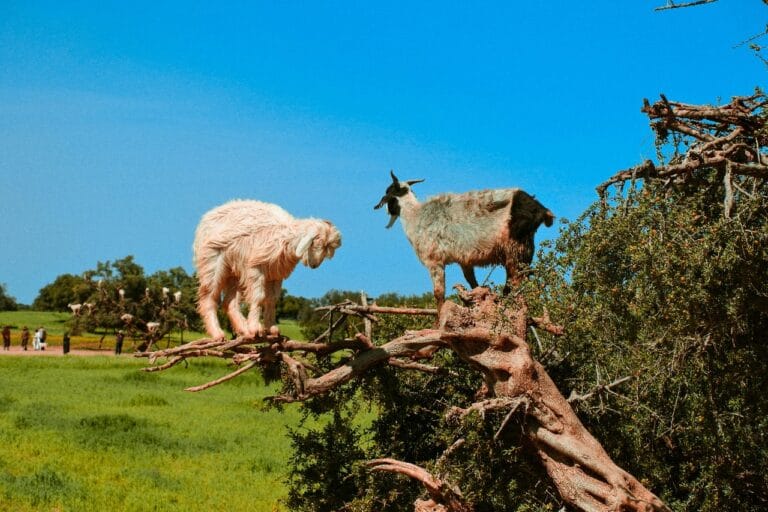
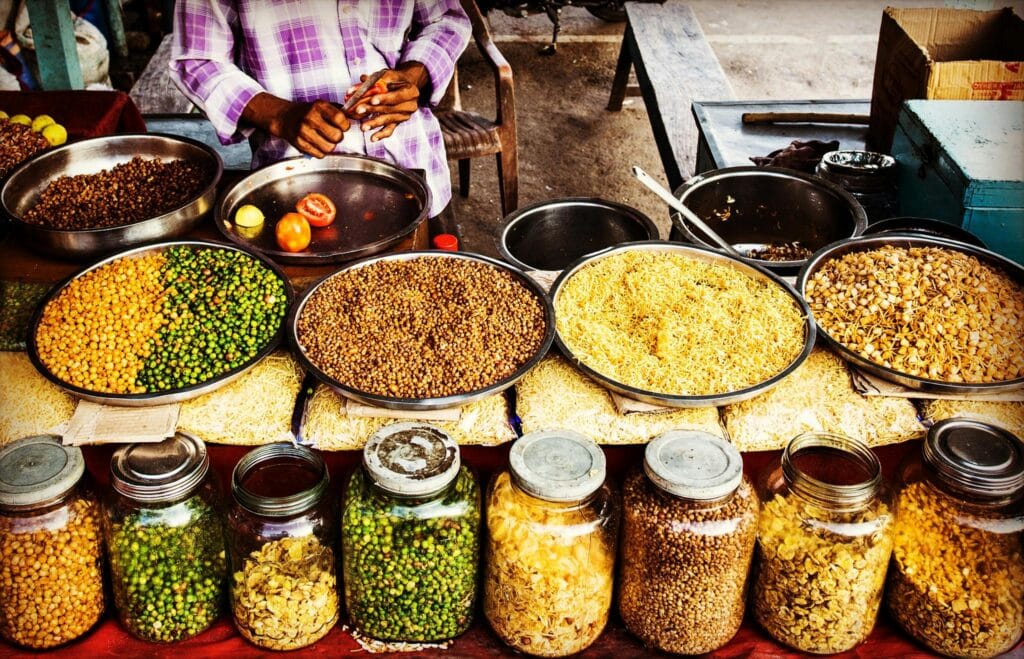
Olives, olive oil, figs, dates, almonds, walnuts, seasonal vegetables and legumes also contribute to local food economies, although their importance varies by region. In the Souss and parts of the Anti-Atlas, argan products have a special place in local food culture. In oasis areas, dates and other cultivated products are closely connected to water management and the organisation of agricultural life.
Livestock contributes milk, butter, meat and other products. Pastoral knowledge includes understanding animal health, seasonal grazing and the availability of fodder. These activities are not exclusively women’s work or men’s work: responsibilities vary between households and communities, and agricultural and domestic tasks often depend on cooperation.
The land is therefore not merely a backdrop to Cuisine in Morocco. It is one of the forces that determines what can be cooked, when it can be cooked and how food must be preserved for periods of scarcity.
3. From Harvest to Pantry: Preparing and Preserving Food
Before refrigeration became common, preservation was essential to household food security. Families needed ways to extend the life of seasonal products and make provisions for winter, drought, travel or periods when fresh food was less available.
3.1 Cleaning, drying and storing cereals
After harvesting, cereals must be separated from unwanted material, dried appropriately and stored in conditions that protect them from moisture and pests. Grain may be kept for household consumption, sold at market or taken for milling.
The quality of stored grain influences the flour or semolina produced from it. Traditional processing therefore involves more than simply keeping a crop. It requires attention to cleanliness, dryness, storage containers and the condition of the grain over time.
In some households, cereals were historically ground using hand-operated stone mills. Elsewhere, families relied on communal mills or local millers. Today, electric and industrial milling have transformed much of this work, but hand grinding and traditional processing remain culturally significant in some places.
3.2 Drying fruit and preserving seasonal produce
Drying is one of the most practical ways to preserve fruit. Figs, dates, grapes and other locally available produce may be dried when conditions allow. Once properly prepared and stored, dried fruit can be eaten outside its harvest season or used as an ingredient in other foods.
Olives may be processed in different ways, and olive oil is an important product in several Moroccan agricultural regions. Legumes and cereals can be stored dry, while some vegetables and herbs may be dried or otherwise preserved according to local practice.
Preservation methods differ considerably. They should not be described as one national system, because local climate, ingredients and inherited techniques determine what is possible. A dry mountain household, an irrigated oasis settlement and a coastal town do not necessarily preserve food in the same way.
3.3 Dairy, butter and smen
Milk has long been important in communities where livestock production supports household food supplies. Depending on local practice, milk may be consumed fresh, fermented or transformed into other dairy products.
Smen, a preserved and aged form of butter used in some Moroccan kitchens, illustrates how preservation can also create distinctive flavour. Its preparation and use vary, and it is not an everyday ingredient in every household. In dishes where it is used, a small quantity can contribute a deep, concentrated taste.
These preparations demonstrate a central principle of traditional Moroccan dishes systems: preservation is not simply a response to shortage. It can become a culinary technique in its own right, shaping the taste and identity of a dish.
4. Amazigh Women and the Knowledge of Cooking
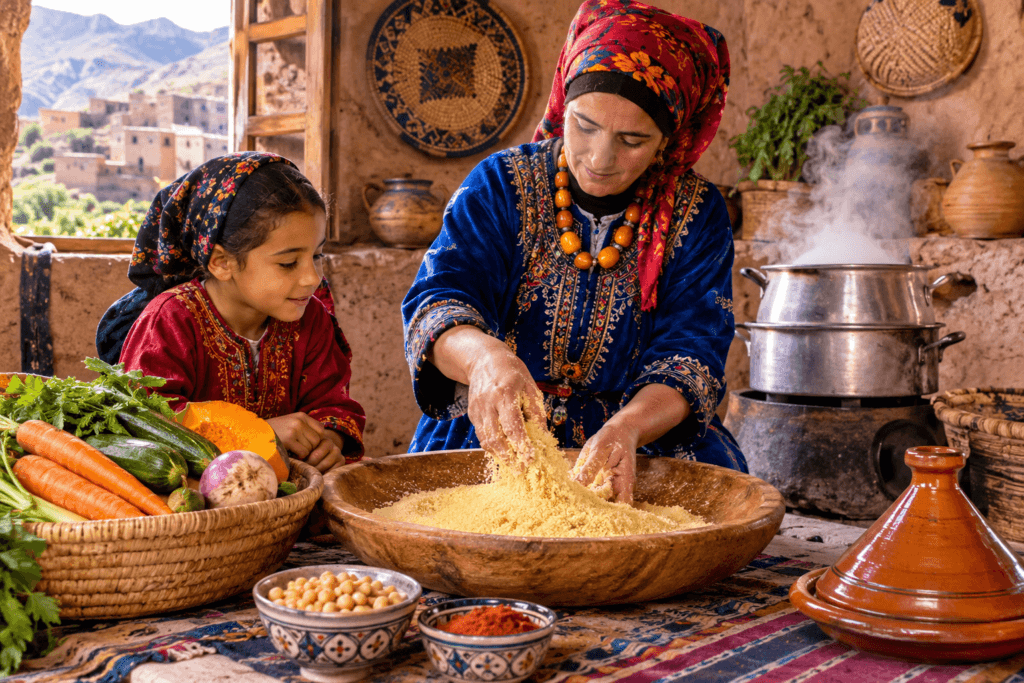
The role of Amazigh women in food culture extends far beyond the final act of preparing a meal. In many communities, women have been involved in selecting and processing ingredients, managing household food supplies, preserving seeds, preparing cereals, making bread, processing milk, gathering recognised edible plants and transmitting culinary knowledge.
This work requires practical intelligence. A woman preparing a meal may judge whether flour is suitable for a particular dough, whether vegetables are fresh, how much water a grain will absorb, when a pot needs more heat or whether bread is ready to be turned. Such decisions are often made without written measurements.
The knowledge is learned through observation, participation and repetition. A girl may begin by helping to clean vegetables, carry ingredients, prepare a kneading surface or watch an older relative work. Over time, she learns how different ingredients behave and how to correct mistakes. The process is not necessarily formal, but it can be highly structured through family expectations and everyday practice.
4.1 The cook’s senses
Cooking knowledge is multisensory. A skilled cook does not depend on taste alone. She looks at the colour and texture of ingredients, feels dough between her fingers, listens to the sound of frying or simmering, smells spices and judges how much time a preparation needs.
Anthropologist Katharina Graf’s research on domestic couscous preparation in Marrakech describes this as a form of embodied or multisensory knowledge. Her work shows how cooks use touch, smell, sight, taste and a sense of timing to assess ingredients and guide the transformation of food. The cook’s experience is therefore not reducible to a list of written instructions.
A recipe may state that dough should be soft, but an experienced cook recognises the precise consistency needed for the flour being used that day. A recipe may say to steam couscous, but the cook must still judge the grain’s moisture and texture between steaming stages. The knowledge lies in knowing what to do when real ingredients behave differently from one occasion to another.
4.2 Women, food security and the transmission of knowledge
The research of Belahsen and colleagues highlights the contribution of Amazigh women to food security and the preservation of local food knowledge. Their study discusses seed diversity, local crops, food processing, conservation practices and knowledge of wild edible plants in the communities examined.
This research also makes clear that culinary knowledge exists within changing economic and social conditions. Market dependence, migration, education, changing household structures and the availability of modern appliances can alter how food is produced and prepared.
It is important not to romanticise this work. Traditional food preparation can demand many hours of physical labour, and domestic responsibilities have not always been shared equally. Women’s knowledge deserves recognition not because unpaid work should remain their responsibility, but because it represents expertise, cultural creativity and an important contribution to household and community life.
5. Making Couscous by Hand: From Grain to the Family Dish
Couscous is one of the most recognisable foods associated with Morocco, but its significance goes far beyond its appearance on a plate. Its preparation connects agriculture, grain processing, specialised utensils, practical knowledge and shared meals.
UNESCO inscribed the knowledge, know-how and practices relating to couscous production and consumption on its Representative List of the Intangible Cultural Heritage of Humanity in 2020. The inscription is shared by Morocco, Algeria, Tunisia and Mauritania. It recognises a broad tradition that includes cereal cultivation, grinding, rolling, steaming, cooking, associated tools and the social circumstances in which couscous is eaten.
5.1 Selecting and preparing the semolina
The process begins with the grain and the semolina made from it. The type and quality of semolina influence the texture of the finished couscous. In a household that prepares couscous by hand, the cook first checks the grain and places an appropriate quantity in a wide, shallow dish.
A little water is added gradually, often with salt, while the cook moves the grains with her fingers and palms. The objective is to moisten the semolina without turning it into a paste. The grains are rubbed and separated so that small particles begin to form.
This stage requires patience. Too much water can make the grains clump; too little may prevent them from binding correctly. The cook adjusts the process according to the semolina’s texture and the conditions in the kitchen.
5.2 Rolling and separating the grains
The moistened semolina is worked by hand until the grains develop a more consistent size. Some preparations involve adding a little flour to help the grains form. The cook repeatedly rubs, lifts and separates the mixture.
The result is not simply a pile of dry granules. It is a product shaped by hand movement and judgement. Traditional tools, including a wide preparation dish and a couscoussier or other steaming vessel, support the process.
5.3 Steaming in stages
Handmade couscous is commonly steamed rather than boiled directly in water. The grains are placed in the upper part of a steaming vessel, while a stew or liquid cooks below. Steam rises through the grains, gradually changing their texture.
Depending on the method, the couscous may be removed between steaming rounds, loosened, moistened and returned to the steamer. These stages allow the grains to cook more evenly and become tender without losing their separate structure.
The exact method varies among households and regions. Some families prepare couscous from purchased semolina; others may use locally processed grain or industrially produced couscous. Modern kitchens may use different equipment, and not every household has the time or resources to prepare it entirely by hand.
5.4 Preparing the accompanying stew
The vegetables and other ingredients depend on the season, region, household preference and occasion. A Moroccan couscous may include onions, carrots, turnips, pumpkin, cabbage, chickpeas or other vegetables. Meat may be included, but vegetarian versions are also prepared.
The stew is seasoned according to the cook’s tradition. The combination of vegetables, pulses, meat, spices and cooking liquid creates the flavour that accompanies the steamed grains.
5.5 Serving and sharing
When ready, couscous is arranged on a large serving dish and accompanied by the stew and its ingredients. The presentation differs from one household to another. Some families place the vegetables carefully around the centre; others distribute the ingredients more simply.
Couscous is associated with Friday meals in many Moroccan households, although it is also prepared for family gatherings, celebrations and other occasions. It is not exclusively a Friday dish, nor is its preparation identical throughout the country.
Its cultural importance lies partly in the work it brings together. The dish connects agricultural production, women’s knowledge, household cooperation and the act of eating together.
6. Bread and Dough: The Daily Work of Cuisine in Morocco Kitchens
Bread is one of the most familiar foundations of Moroccan food. It accompanies tagines, soups, salads and many other dishes. In some households, preparing bread is a regular part of domestic life; in others, families buy it from neighbourhood bakeries.
6.1 From flour to dough
Bread-making begins with choosing flour and mixing it with water, salt and, depending on the type of bread, yeast or a leavening agent. The dough is kneaded until it reaches the desired consistency.
Kneading develops the dough’s structure and distributes moisture. The amount of water required depends on the flour and the intended bread. Some doughs are firm and easy to shape; others are softer and require more careful handling.
After kneading, certain breads are left to rest or rise. The cook judges when the dough is ready by observing its volume, surface and elasticity. This is another example of practical knowledge that cannot be fully captured by a fixed timetable.
6.2 Shaping and baking
Round khobz is a familiar Moroccan bread, but bread traditions are much more varied than one standard loaf. Depending on the region and household, people prepare different flatbreads, griddle breads and breads made with barley, wheat, semolina or mixtures of flours.
Some breads are baked in domestic ovens, some in neighbourhood communal ovens and others on heated metal or clay surfaces. The choice of cooking method influences the crust, thickness and texture.
In mountain and rural settings, traditional cooking surfaces and ovens may remain part of household life. Elsewhere, modern ovens and commercial bakeries have changed the daily routine. These changes do not necessarily erase older knowledge; families may combine traditional methods with contemporary equipment.
6.3 Bread as a social practice
Bread is more than a carbohydrate source. It is a familiar presence in everyday meals and a practical utensil for gathering sauce or accompanying vegetables. Offering bread to guests is part of the wider culture of hospitality.
The preparation of bread can also create opportunities for cooperation. Family members may help with kneading, shaping, carrying dough or arranging baking. In some neighbourhoods, communal ovens have historically connected households through shared facilities and regular interaction.
7. Cooking Over Fire: Tagines, Soups and Slow-Cooked Meals
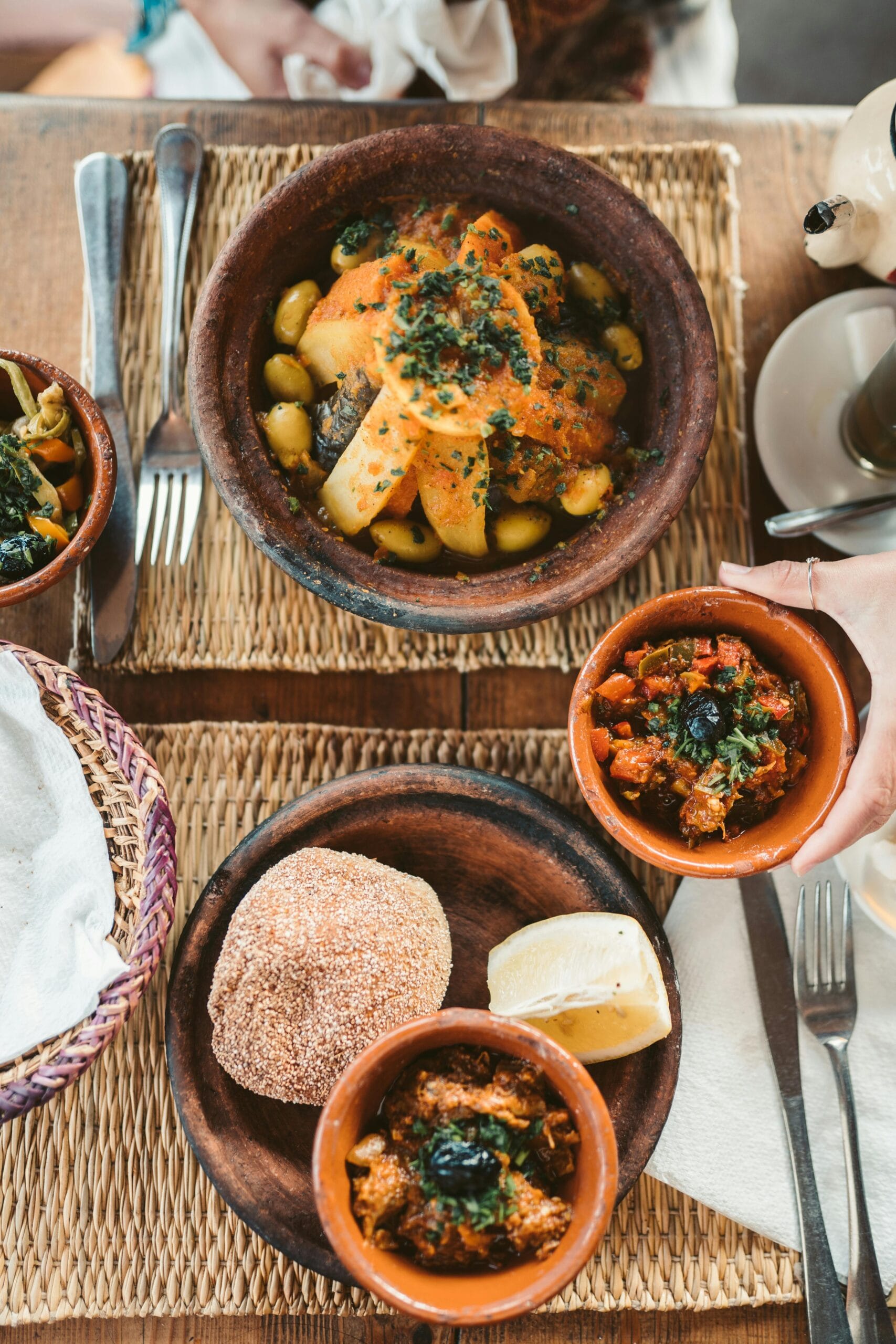
Moroccan cooking includes many methods: boiling, steaming, grilling, baking, frying and slow cooking. The tagine is one of the best-known symbols of the country’s cuisine, but it represents only one part of a much broader culinary repertoire.
7.1 The tagine
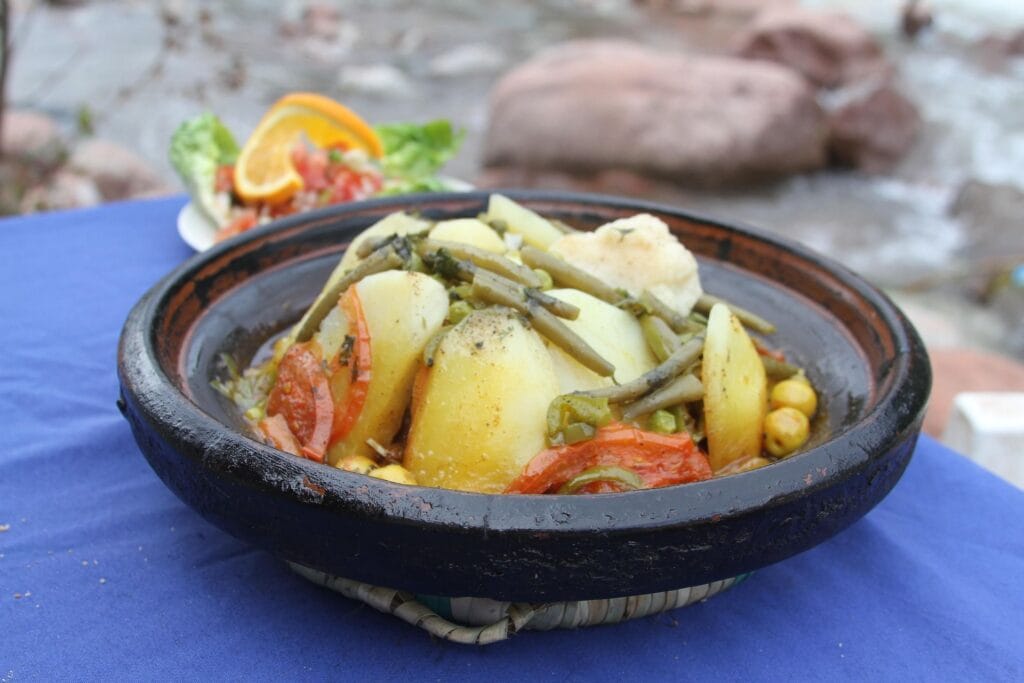
A tagine is both a cooking vessel and the name commonly given to dishes prepared in it. The traditional earthenware vessel has a broad base and a conical lid that helps manage steam during cooking.
Ingredients vary widely. A tagine may combine meat, vegetables, legumes, fruit, olives, preserved lemon or different seasonings. Some versions are rich and celebratory; others are simple household meals built around seasonal vegetables.
The method is often based on gentle cooking. Ingredients release moisture and flavours as they soften. The cook must understand how much liquid is needed, how the heat should be controlled and when different ingredients should be added.
Tagines are not identical across Morocco. Their ingredients and flavour profiles reflect regional products and household preferences. A coastal fish tagine, a vegetable tagine in a mountain village and a meat preparation in an urban home may share a cooking vessel while expressing different culinary traditions.
7.2 Harira and other soups
Harira is a well-known Moroccan soup often associated with Ramadan, although it may be prepared at other times. Recipes vary, but common ingredients include tomatoes, legumes, herbs, spices and sometimes meat. Flour or another thickening ingredient may be used to give the soup its characteristic body.
Other soups and legume preparations are important in everyday food culture. Bissara, commonly made from dried broad beans or split peas depending on the preparation, is a substantial dish associated with several regions and particularly familiar as a simple, warming meal.
Soups demonstrate how inexpensive ingredients can be transformed into nourishing food. Pulses, cereals, vegetables and herbs can create dishes that are filling, adaptable and suited to household budgets.
7.3 Rfissa and festive preparations
Rfissa is a celebrated Moroccan dish often prepared for family occasions. It is commonly served with shredded or layered msemen or another type of thin bread, accompanied by chicken and a richly seasoned sauce that may include lentils and fenugreek.
Its preparation involves several components, each requiring attention. The bread must be prepared or selected, the sauce cooked to the desired consistency and the ingredients assembled at the right moment.
Like many festive dishes, rfissa is associated with particular family and social contexts. Its ingredients and presentation may vary, and it should not be treated as a universal dish of every Moroccan or Amazigh household.
8. Seasonal Foods and Wild Edible Plants
Seasonality has shaped Moroccan food culture for generations. What is available in spring may differ greatly from what can be harvested in summer or stored for winter. Traditional food knowledge includes recognising the products of a season and understanding how to use them before they disappear.
In agricultural regions, seasonal vegetables, fruits, legumes and herbs contribute to the daily menu. In some communities, recognised wild edible plants have also supplemented cultivated foods. These plants may be gathered, prepared at home or sold in local markets.
Research on Amazigh food traditions has documented the importance of local knowledge concerning edible plants and biodiversity. Belahsen and colleagues discuss the role of women in preserving knowledge of food resources and traditional uses in the communities included in their study.
However, wild plant knowledge is highly local. A plant that is eaten in one area may be unfamiliar or unsuitable elsewhere. Identification must be reliable, because some wild plants are toxic or can be confused with edible species. It is not safe to collect or consume a plant based only on a photograph or a general description.
Seasonal food knowledge also includes knowing when to dry fruit, store cereals, prepare preserved products or buy ingredients at their best. It is an environmental skill as much as a culinary one.
9. Traditional Foods and Regional Specialities
Moroccan cuisine is best understood through its variety. The following examples illustrate foods that are widely known or associated with particular regions, but their presence and preparation are not universal.
9.1 Amlou: A speciality associated with the Souss
Amlou is a rich preparation commonly associated with the Souss and argan-producing areas of southwestern Morocco. It is generally made from roasted almonds, argan oil and honey, although proportions and methods vary.
The ingredients are combined and worked into a smooth or slightly textured paste. The result is often served with bread, particularly at breakfast or when welcoming guests.
Amlou is closely connected to the agricultural and commercial importance of argan products in the region. It should not be presented as a food eaten in the same way across every Amazigh region. Its strongest cultural associations are with areas where argan oil is produced and used.
9.2 Smen: Preserving butter and developing flavour
Smen is a preserved butter product used in some Moroccan cooking. Its preparation involves treating butter for storage and allowing it to develop a stronger flavour. The method, length of preservation and culinary use vary.
Because smen has a concentrated taste, it is often used in relatively small quantities. It may be added to selected dishes to create depth and a distinctive aroma.
9.3 Bissara: A simple and nourishing dish
Bissara is a thick preparation commonly made from dried broad beans or split peas, depending on local practice. It is often seasoned with olive oil, cumin, paprika or other ingredients and eaten with bread.
Its simplicity is part of its appeal. It demonstrates how pulses can form the basis of a substantial meal without requiring expensive ingredients.
9.4 Msemen and other griddle breads
Msemen is a layered Moroccan flatbread made from dough that is stretched, folded and cooked on a heated surface. Its texture and preparation distinguish it from ordinary round bread.
Other griddle breads and pancakes are prepared in different parts of Morocco. Their ingredients may include flour, semolina, yeast or leavening agents. The names and methods vary, and similar-looking breads may have distinct regional histories.
9.5 Tagines, couscous and the diversity of the Moroccan table
Couscous and tagines are among the foods most often associated with Morocco internationally, but they do not represent the entire cuisine. Soups, breads, salads, grilled foods, preserved products, sweets, dairy preparations and regional dishes are equally important to the everyday food landscape.
A country’s culinary identity is not defined by a short list of famous dishes. It is created through the everyday choices of households and communities, including foods that rarely appear in restaurant menus or tourist photography.
10. From the Cooking Pot to the Shared Table
Cuisine in Morocco is closely connected to hospitality and social relationships. A meal can welcome a visitor, strengthen family ties, mark a religious occasion or bring neighbours together.
Sharing food is not simply a practical way to distribute a meal. It can express generosity, respect, solidarity and belonging. The act of preparing extra food for guests or sending a portion to a neighbour is part of social life in many communities, although the customs and expectations differ.
In some households, several people eat from a shared dish. In others, meals are served individually. The way people sit, serve and share food depends on family habits, region, generation and occasion.
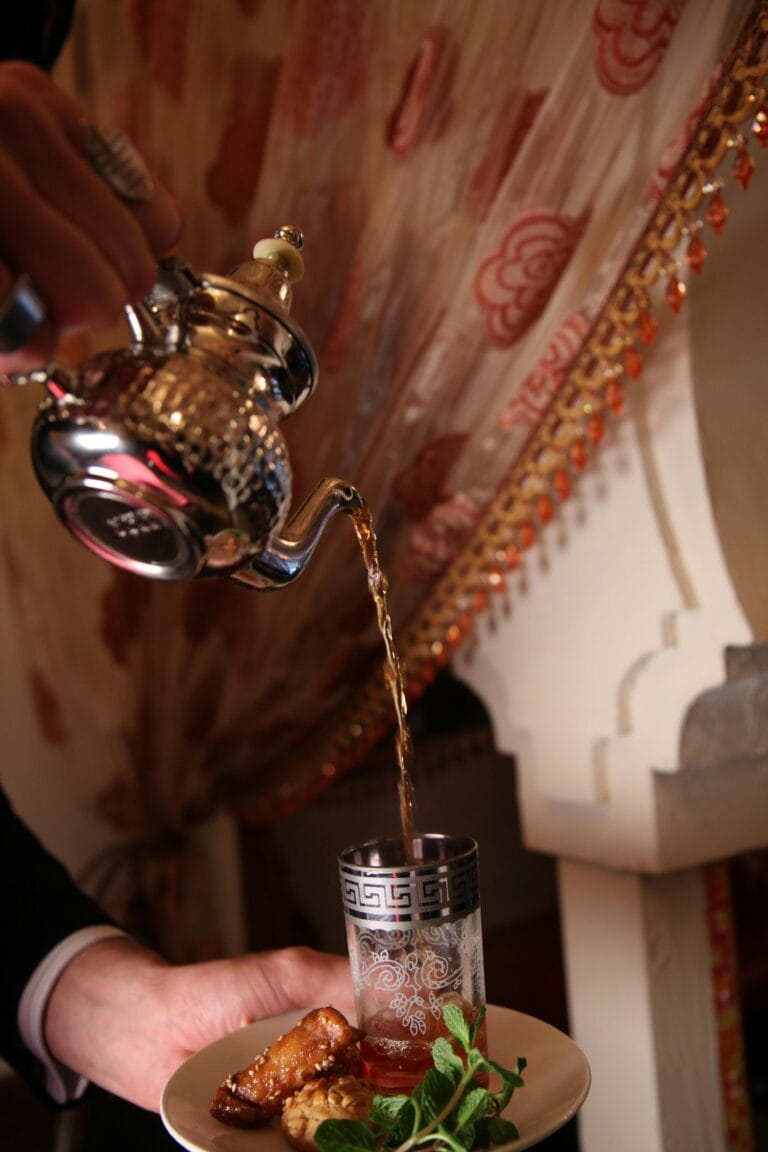
Bread often has a central place at the table. It accompanies stews, vegetables and other dishes, while tea and sweets may complete a visit or a meal. The sequence of serving is not identical everywhere, but the social value of welcoming guests is widely recognised in Moroccan culture.
Food sharing also appears in religious and community settings. Ramadan meals, family celebrations, weddings and communal occasions may involve preparing food for larger groups. In such contexts, cooking becomes collective work, and the meal can strengthen relationships beyond the immediate household.
11. Food, Rituals and the Calendar
Cuisine in Morocco is part of the rhythm of religious, family and seasonal life. Particular dishes may be associated with Ramadan, weddings, births, visits, holidays or other important occasions.
During Ramadan, the evening meal after sunset often brings together dates, soups, breads, sweets and other household favourites. Harira is particularly familiar in many Moroccan homes, though families prepare different versions and may serve a wide range of foods.
Weddings and family celebrations may involve elaborate meals prepared for guests. The menu depends on region, household means and the nature of the event. Couscous, tagines, pastries, meat dishes and other preparations may appear in different combinations.
Amazigh Food also marks everyday religious and social obligations. Sharing a meal with relatives, providing food to guests or preparing a dish for a community occasion can express care and social responsibility.
It is important to recognise that ritual foods are not fixed across the country. The same occasion may be marked by different dishes in different regions, and a preparation associated with one community should not automatically be described as a national custom.
12. The Changing Moroccan Kitchen: Tradition and Modern Life
Moroccan kitchens have changed significantly over recent generations. Gas cookers, refrigerators, pressure cookers, electric mixers, commercial flour and ready-made ingredients have altered the time and effort required for many preparations.
Urbanisation and migration have also changed household routines. Families may live farther from agricultural land, buy ingredients from supermarkets or markets, and have less time for lengthy food preparation. Women increasingly combine paid work, education, family responsibilities and domestic tasks.
Anthropologist Katharina Graf’s research in Marrakech examines how cooking knowledge is reproduced within families amid changing kitchen technologies and social expectations. Her work highlights the tensions between inherited ideas about good cooking, the time required to prepare traditional meals and the realities of contemporary household life.
These changes should not be described simply as the disappearance of tradition. Some families continue to prepare couscous by hand for special occasions while buying it ready-made for ordinary meals. Others use modern appliances to reduce labour but retain familiar flavours and serving customs. Recipes are adapted, ingredients are substituted and knowledge is shared through digital media as well as family teaching.
The important question is not whether a kitchen is traditional or modern. It is how people decide which practices to preserve, which to adapt and which to leave behind.
12.1 Recognising women’s labour
The cultural importance of women’s culinary knowledge should not hide the unequal distribution of domestic work. Preparing food from raw ingredients can require hours of planning, shopping, cleaning, processing, cooking and washing. When this labour is unpaid and treated as an automatic responsibility, its economic and social value can become invisible.
Recognising women as holders of culinary knowledge means acknowledging both their expertise and the conditions under which that expertise is practised. Preserving food heritage should not require women to carry an unfair burden. It should create opportunities for recognition, fair compensation, shared responsibility and the transmission of knowledge on women’s own terms.
13. Cuisine in Morocco as Intangible Cultural Heritage
Food heritage includes more than recipes. It includes agricultural knowledge, local varieties, tools, preparation methods, serving customs, language, memories and the social relationships surrounding food.
The UNESCO inscription of couscous-related knowledge in 2020 is an important example. The recognition concerns not only the finished dish but also the wider practices involved in growing cereals, processing grain, rolling semolina, steaming couscous, using specialised utensils and sharing the meal. The inscription is shared by Morocco, Algeria, Tunisia and Mauritania, reflecting a cultural tradition that crosses modern national borders.
This broader understanding of heritage is useful for Moroccan cuisine as a whole. A clay cooking vessel, a hand mill, a bread oven, a storage container or a family method of preserving food can all carry cultural significance. So can the vocabulary used to describe ingredients and cooking actions in Tamazight, Darija and other languages spoken in Morocco.
Culinary heritage is also living heritage. It changes as people move, marry, work, trade, study and adapt to new circumstances. Its continuity does not depend on reproducing every historical practice exactly. It depends on keeping knowledge meaningful and allowing communities to shape its future.
14. Why the Everyday Kitchen Deserves Documentation
Many important aspects of Moroccan food culture are not fully represented by restaurant menus or tourism campaigns. The everyday kitchen contains knowledge that may be overlooked precisely because it is familiar to the people who practise it.
Documenting this knowledge requires attention to detail. It means recording local names for ingredients, the tools used to process them, the differences between regional methods, the memories of older cooks and the ways younger generations adapt inherited practices.
It also means asking who holds the knowledge and how it is transmitted. A dish may be widely recognised, while the labour involved in producing its ingredients remains invisible. A traditional food may be celebrated at a festival, while the local crop varieties or preparation methods that support it are gradually disappearing.
For a cultural platform such as Iwziwn, documenting foodways offers an opportunity to connect culinary traditions with broader subjects: Amazigh agriculture, women’s knowledge, rural architecture, local markets, language, biodiversity and the history of the High Atlas and Souss.
The strongest documentation is specific. Rather than claiming that all Amazigh women prepare a dish in one way, it should identify the community, region, household practice and context in which the method was observed or recorded. Such precision makes cultural writing more credible and gives local knowledge the respect it deserves.
Anthropological Dimensions of Cuisine in Morocco
Food as Social Structure
In Moroccan society, meals reflect social organization. Seating arrangements, portion distribution, and eating order signal age, gender, and status. In Amazigh villages, the communal dish placed at the center reinforces equality and interdependence.
Food mediates:
- Kinship relations
- Gender roles (especially women’s culinary authority)
- Community solidarity
Cooking knowledge is transmitted orally and practically, from elders to youth, often without formal instruction.
Hospitality as Moral Obligation
Hospitality in Morocco is a moral economy expressed through food. Offering bread, tea, and meals to guests is not optional; it is a social duty rooted in Amazigh ethics of collective survival.
Refusing food can signify disrespect, while sharing scarce resources affirms honor and dignity.
Regional Diversity of Cuisine in Morocco
Cuisine in Morocco; High Atlas Mountains
High Atlas cuisine reflects altitude, cold winters, and pastoral life. Typical features include:
- Barley bread baked on stone
- Dairy products such as fermented butter
- Hearty stews using dried legumes
Meals emphasize caloric density and long preservation.
Cuisine in Morocco; Sous Region
The Sous region is renowned for:
- Amlou (almond, argan oil, honey paste)
- Use of argan oil as a culinary fat
- Flatbreads cooked on clay or metal surfaces
Food here reflects Amazigh agricultural innovation and ecological adaptation.
Cuisine in Morocco; Middle Atlas
In cedar forest regions, cuisine includes:
- Game meats
- Wild herbs
- Dairy-based dishes
Seasonality is especially pronounced, with diets shifting dramatically across the year.
Cuisine in Morocco; Coastal and Urban Regions
Urban centers like Fez and Marrakech developed refined culinary traditions influenced by court culture, while coastal regions integrated seafood and Mediterranean techniques.
Symbolic and Ritual Dimensions of Cuisine in Morocco
Food in Life-Cycle Rituals
In Moroccan culture, food marks transitions:
- Birth celebrations involve sweetened dishes symbolizing abundance
- Weddings feature elaborate meals affirming social alliances
- Funerary meals express collective mourning and remembrance
Each dish carries encoded meaning understood within the community.
Sacred Foods and Seasonal Ceremonies
Agricultural rituals involve specific foods prepared at key moments:
- Harvest meals thanking ancestral spirits
- New Year dishes symbolizing renewal
- Sacrificial meals reinforcing communal bonds
Food becomes a medium between human and spiritual realms.
Gender, Knowledge, and Culinary Authority
Women are the primary custodians of culinary knowledge in Morocco. Their expertise extends beyond cooking into nutrition, medicine, and ritual timing. Recipes are not written but embodied through practice.
Culinary skill grants:
- Social respect
- Authority within the household
- Intergenerational influence
This knowledge system represents an undervalued intellectual heritage.
Modern Transformations of Cuisine in Morocco
Urbanization and Globalization
Urban life has altered food habits through:
- Industrial ingredients
- Restaurant culture
- Reduced time for traditional preparation
However, traditional dishes remain markers of identity, especially during festivals.
Tourism and Culinary Representation
Tourism has commodified Moroccan cuisine, often simplifying complex traditions. While this increases visibility, it risks flattening regional diversity.
Authentic knowledge survives primarily in rural and family contexts.
Cuisine in Morocco as Intangible Cultural Heritage
Cuisine in Morocco qualifies as intangible heritage due to:
- Oral transmission
- Community-based practice
- Ecological embeddedness
Preserving food traditions means preserving language, land, and social memory.
Conclusion: Preserving the Living Heritage of Moroccan Cuisine
Cuisine in Morocco is not a relic of the past but a living system that continues to adapt while preserving deep historical roots. Especially within Amazigh communities, food remains a form of cultural resistance, continuity, and identity.
Cuisine in Morocco is a living record of the country’s landscapes, histories and social relationships. Its foundations lie in the interaction between agriculture, pastoralism, trade, cultural exchange and household knowledge. Its diversity is visible in the different foods and preparation methods found across the High Atlas, Middle Atlas, Souss, Anti-Atlas, Rif, plains, cities and oasis regions.
Amazigh women have played important roles in preserving and transmitting many of these food traditions. Their work has involved far more than cooking: it includes selecting ingredients, processing cereals, making bread, preserving food, recognising seasonal resources and teaching practical knowledge through everyday participation. Their expertise is embodied in the ability to judge what ingredients need and how a dish should develop.
Yet Moroccan cuisine belongs to a wider, interconnected history. It reflects Amazigh foundations and regional traditions alongside Arab-Islamic, Andalusian, Saharan, Mediterranean, Jewish and other influences. Its richness comes from this interaction and from the many communities that continue to shape it.
The future of this heritage depends on more than celebrating famous dishes. It requires documenting local practices, respecting regional differences, supporting food producers, recognising women’s labour and ensuring that younger generations can learn from experienced cooks without being forced to reproduce unequal working conditions.
A bowl of couscous, a loaf of bread or a slowly cooked tagine may appear simple when placed on the table. Behind it, however, lies a long chain of decisions, skills and relationships. To understand Moroccan food is to understand that chain—and to recognise the people whose knowledge has made it possible.
Frequently Asked Questions About Cuisine in Morocco
1. What is traditional Cuisine in Morocco?
Traditional Moroccan cuisine is a diverse collection of regional food practices shaped by local agriculture, geography, trade and cultural exchange. It includes couscous, tagines, breads, soups, legumes, preserved foods, sweets and many local specialities. Its ingredients and preparation methods vary between regions and households.
2. What is the influence of Amazigh culture on Cuisine in Morocco?
Amazigh communities have contributed important agricultural and culinary traditions, including cereal-based foods, bread-making, pastoral food systems, food preservation and knowledge of local plants. These traditions are particularly significant in the High Atlas, Middle Atlas, Souss, Anti-Atlas and other regions with Amazigh-speaking populations. Moroccan cuisine also reflects many other historical and cultural influences.
3. What foods are traditionally associated with Amazigh communities in Morocco?
Foods vary by region and environment. Cereal preparations, barley and wheat breads, couscous, dairy products, legumes, seasonal vegetables, dried fruits and locally produced oils are important in different communities. Amlou is particularly associated with the Souss and argan-growing areas. No single list describes every Amazigh community.
4. What role have Amazigh women played in traditional food preparation?
Women have held important responsibilities in many communities, including selecting and processing ingredients, preparing bread and couscous, preserving food, managing household supplies and transmitting culinary knowledge. Their roles differ according to region, household and economic circumstances.
5. How is traditional Moroccan couscous prepared?
Handmade couscous begins with semolina that is gradually moistened, rubbed and rolled into small grains. The grains are steamed, loosened and sometimes moistened between steaming rounds until tender. They are then served with a stew of vegetables, pulses and, in some versions, meat. Methods vary between households and regions.
6. Is couscous exclusively Moroccan?
No. Couscous is a shared North African food tradition. UNESCO inscribed knowledge and practices relating to its production and consumption in 2020 through a joint nomination by Morocco, Algeria, Tunisia and Mauritania.
7. What foods are common in the High Atlas?
Food varies across the High Atlas according to altitude, water availability, agriculture and household resources. Cereal-based dishes, breads, legumes, dairy products, seasonal vegetables and locally available meat are important in different areas. There is no single High Atlas menu.
8. What foods are associated with the Souss region?
The Souss has a rich food culture shaped by agriculture, local markets and argan-growing areas. Amlou, argan oil, cereals, breads, seasonal produce and a variety of household dishes are associated with parts of the region. Practices vary between coastal, plain and mountain communities.
9. What is amlou?
Amlou is a preparation strongly associated with southwestern Morocco, particularly areas connected to argan production. It is commonly made with roasted almonds, argan oil and honey, then served as a spread or accompaniment to bread. Recipes and proportions vary.
10. What types of bread are eaten in Morocco?
Moroccan bread traditions include round khobz, barley and wheat breads, msemen, and various regional flatbreads and griddle preparations. Ingredients, thickness and cooking methods differ between regions and households.
11. How did Moroccan households preserve food before refrigeration?
Methods included drying fruits, storing cereals and legumes, processing olives, preserving butter and using other locally appropriate techniques. The methods depended on climate, available ingredients and household knowledge.
12. Are wild plants part of Cuisine in Morocco?
Some communities have traditions of gathering and preparing recognised wild edible plants. Their use is highly regional and depends on detailed local knowledge. Wild plants should never be collected or eaten without reliable identification by someone qualified to recognise the species.
13. Why is sharing food important in Moroccan culture?
Sharing food can express hospitality, generosity, solidarity and family belonging. It is important in everyday visits as well as religious and family occasions. Customs differ, but food often plays a central role in bringing people together.
14. Is couscous recognised by UNESCO?
Yes. In 2020, UNESCO inscribed the knowledge, know-how and practices relating to couscous production and consumption on its Representative List of the Intangible Cultural Heritage of Humanity. The inscription is shared by Morocco, Algeria, Tunisia and Mauritania.
15. How is modern life changing Moroccan food traditions?
Urbanisation, migration, paid employment, changing household structures, modern appliances and market access have influenced how people buy, prepare and share food. Some traditional methods are used less frequently, while others are adapted or retained for special occasions. Culinary traditions continue to evolve.
References and Further Reading
The following academic and institutional sources provide a foundation for understanding Moroccan food systems, women’s culinary knowledge, couscous and changing domestic practices.
- Belahsen, R., Naciri, K., & El Ibrahimi, A. (2017). Food security and women’s roles in Moroccan Berber (Amazigh) society today. Maternal & Child Nutrition, 13(Suppl. 3), e12562. https://doi.org/10.1111/mcn.12562
- Graf, K. (2022). Taste knowledge: Couscous and the cook’s six senses. Journal of the Royal Anthropological Institute, 28(2), 577–594. https://doi.org/10.1111/1467-9655.13708
- Graf, K. (2022). Cooking with(out) others? Changing kitchen technologies and family values in Marrakech. The Journal of North African Studies. https://doi.org/10.1080/13629387.2022.2056448
- Graf, K. (2024). Food and Families in the Making: Knowledge Reproduction and Political Economy of Cooking in Morocco. Berghahn Books. https://doi.org/10.2307/jj.6879763
- UNESCO. (2020). Knowledge, know-how and practices pertaining to the production and consumption of couscous. Representative List of the Intangible Cultural Heritage of Humanity. https://ich.unesco.org/en/RL/knowledge-know-how-and-practices-pertaining-to-the-production-and-consumption-of-couscous-01602
- UNESCO. (2020). UNESCO’s inscription of couscous traditions, an example of international cultural cooperation. https://www.unesco.org/en/articles/unescos-inscription-couscous-traditions-example-international-cultural-cooperation
- Barakat, I., Elayachi, M., & Belahsen, R. (2023). Factors influencing cooking method, frequency, and duration of meal preparation in Moroccan households. Roczniki Państwowego Zakładu Higieny, 74(2), 177–185. https://pubmed.ncbi.nlm.nih.gov/37309903/
Further Reading
- UNESCO Intangible Cultural Heritage: Couscous production and consumption.
- Belahsen, Naciri and El Ibrahimi: Women’s roles and food security in Moroccan Amazigh society.
- Katharina Graf: Ethnographic research on cooking knowledge, family life and domestic food preparation in Morocco.
- Regional studies of Amazigh agriculture, biodiversity, pastoralism and food preservation.
- Montagne, R. Berbers and the Makhzen
- Hart, D. Tribe and Society in Rural Morocco
- Oral histories from Amazigh communities (High Atlas, Sous, Middle Atlas)
- Anthropological field studies on North African food systems
Call to Action
Explore more in-depth studies of Amazigh culture, food traditions, and living heritage on iwziwn.com, where history is preserved through knowledge, respect, and community memory.