Moroccan Architecture: Between Tradition and Modernity Through the Atlas Perspective
Introduction: Stones That Speak, Walls That Remember
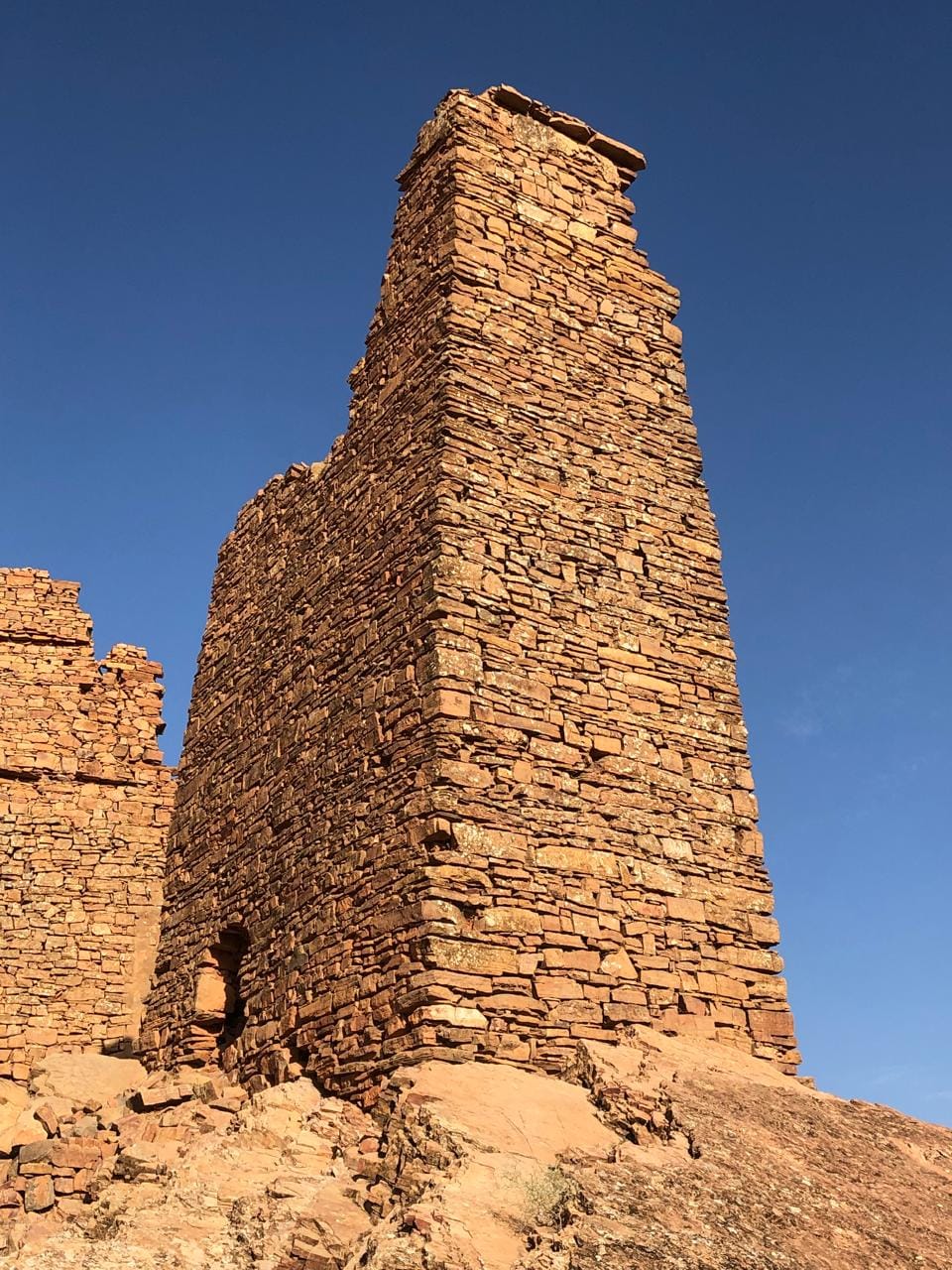
You stand before a sun-warmed wall of pisé — compacted earth glowing amber under the Atlas sun. It feels alive. Every grain of soil holds a story: of the Amazigh mason who shaped it with his hands, of the generations who sheltered within its thick embrace, of a culture that has always built not just for function, but for memory.
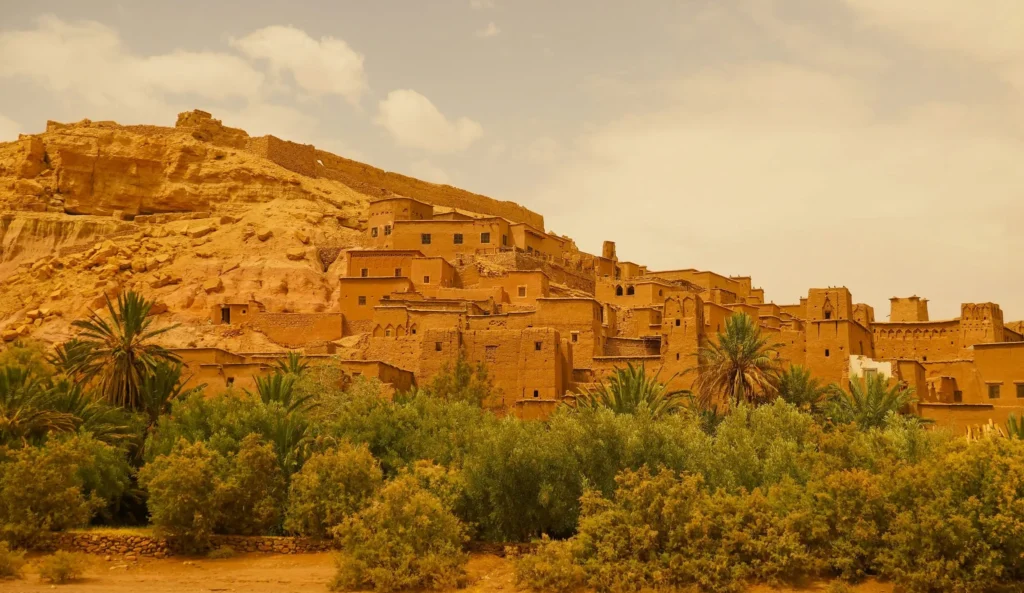
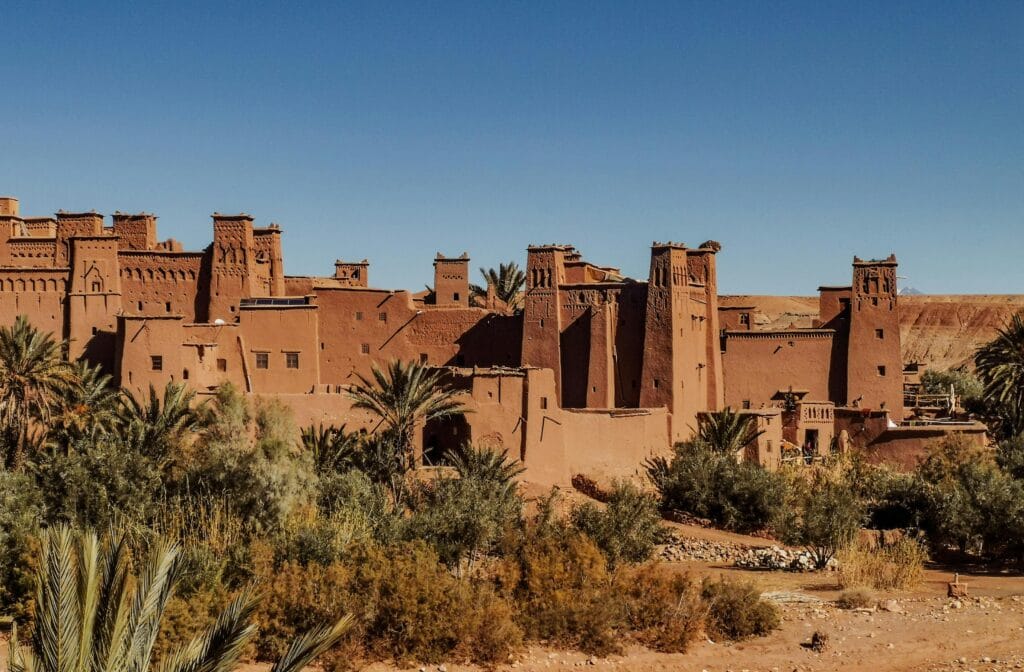
When you wander through Morocco’s landscapes — from the red kasbahs of Aït Benhaddou to the blue medina of Chefchaouen — you’re not just seeing architecture. You’re walking through centuries of dialogue between earth, spirit, and survival. Moroccan architecture is not frozen in time; it breathes, evolves, and listens — balancing heritage and innovation in a seamless cultural rhythm.
Table of Contents
The Roots of Amazigh Architecture – Building from the Earth Up
The Philosophy of Building with Nature
In the Amazigh worldview, architecture was never a mere craft — it was an extension of the land. The mountains provided stone, the valleys offered clay, and palm groves gifted wood. Every material was used respectfully, guided by the principle of “tamurt d amur” — the harmony between land and life.
- Key Materials:
- Pisé (rammed earth): Thermal insulation, sustainability, local abundance.
- Adobe bricks: Hand-molded and sun-dried, often reinforced with straw.
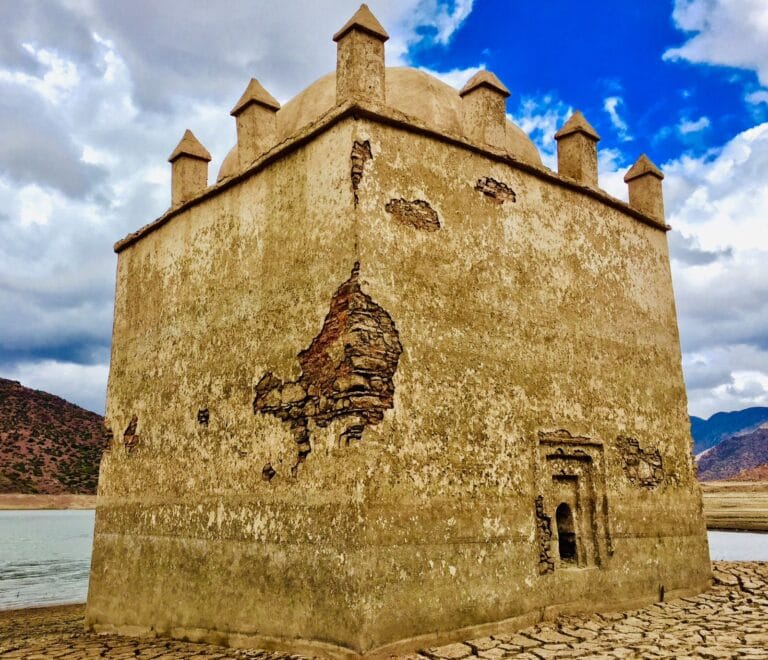
- Tadalakt plaster: A polished lime plaster that resists moisture and creates an elegant sheen.
These materials not only connect buildings to their surroundings but also ensure environmental balance — centuries before “eco-design” became a modern trend.
Why Moroccan Architecture Is Unique
Moroccan architecture is distinguished by its remarkable ability to unite diverse cultural traditions into a coherent architectural identity. Over thousands of years, Indigenous Amazigh building practices interacted with Phoenician, Roman, Arab-Islamic, Andalusian, Saharan, African, Ottoman, and European influences, creating one of the richest architectural landscapes in the Mediterranean world. Rather than replacing earlier traditions, each historical period added new techniques, decorative forms, and spatial concepts while preserving many local building practices.
This process of cultural exchange explains why a single Moroccan city may contain Amazigh kasbahs, Andalusian courtyards, Islamic madrasas, colonial boulevards, and contemporary sustainable buildings within the same urban landscape. The country’s architecture therefore represents continuity rather than contradiction. Tradition and innovation coexist because Moroccan builders have consistently adapted inherited knowledge to new environmental, social, and technological realities.
The Historical Evolution of Moroccan Architecture
Moroccan architecture has never remained static. From prehistoric settlements to twenty-first-century sustainable buildings, it reflects thousands of years of adaptation to changing environments, cultures, and political systems. Each historical period contributed new construction techniques while preserving elements of earlier Amazigh traditions that remain visible today.
The earliest communities built simple stone shelters adapted to mountain and desert environments. As Amazigh societies developed, earthen villages, fortified granaries, and communal settlements emerged, demonstrating sophisticated knowledge of climate-responsive design. During the Roman period, urban planning and monumental construction influenced several northern cities, while mountain communities continued preserving vernacular building traditions.
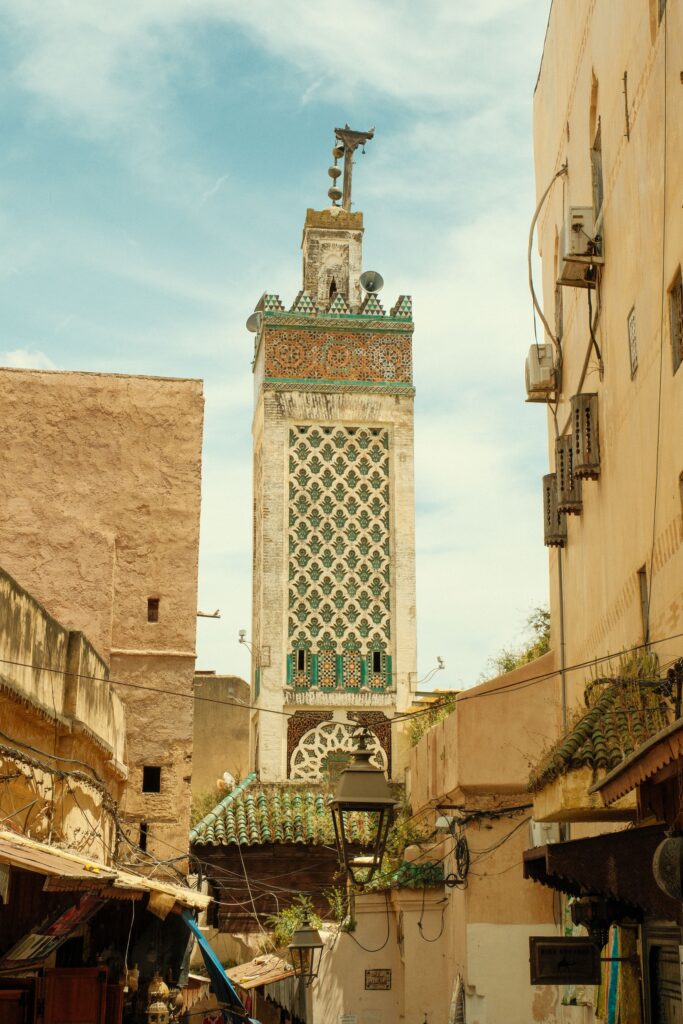
Following the arrival of Islam, Moroccan architecture entered a new phase characterized by mosques, madrasas, riads, gardens, and refined decorative arts. Later, the Almoravid, Almohad, Marinid, Saadian, and Alaouite dynasties enriched the architectural landscape through monumental religious buildings, royal palaces, bridges, and defensive fortifications. Andalusian craftsmen introduced new artistic techniques, including elaborate zellij mosaics, carved cedar wood, stucco decoration, and sophisticated courtyard planning.
During the twentieth century, reinforced concrete, steel, and modern planning transformed Moroccan cities. Yet many contemporary architects deliberately draw inspiration from traditional materials, passive cooling strategies, and local craftsmanship to create buildings that respond both to environmental challenges and to Morocco’s cultural identity. This ongoing dialogue between inherited knowledge and innovation continues to define Moroccan architecture today.
The Kasbah and the Ksour – Fortresses of Identity
Symbolism of the Kasbah
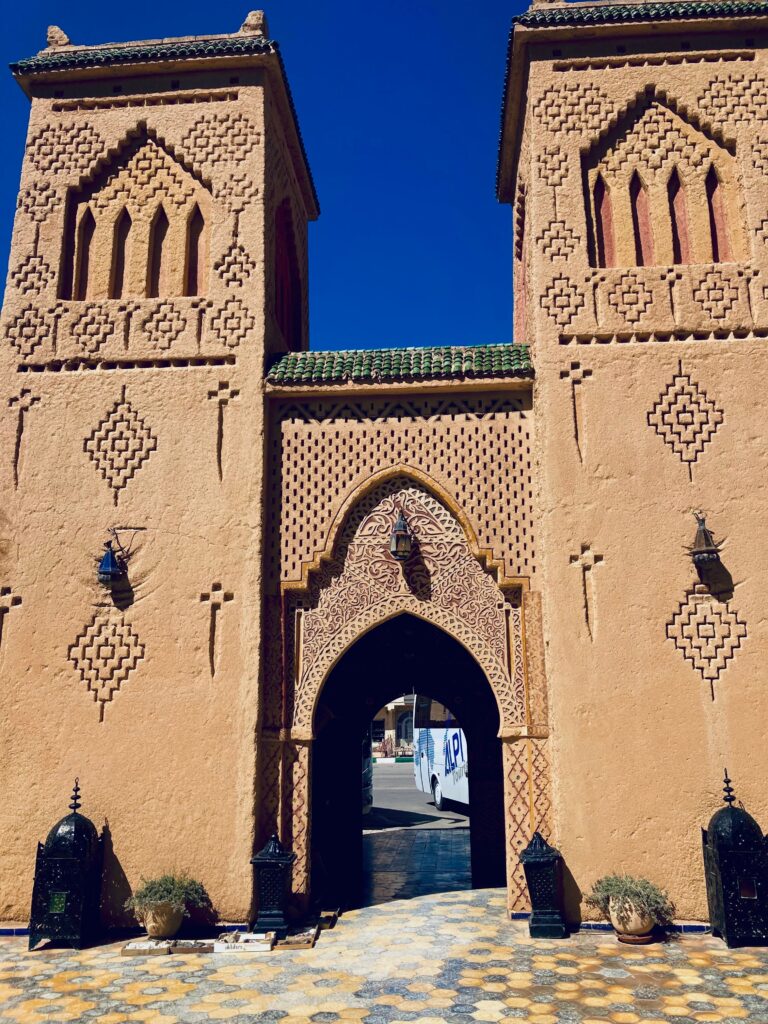
The Kasbah stands as the emblem of Amazigh resistance, power, and artistry. Built from local clay and stone, its tower-like design was both practical and symbolic. The tall walls protected families and communities, while the geometric ornamentation — triangles, diamonds, and zigzags — carried coded meanings of fertility, protection, and continuity.
🧱 Did You Know?
Many Kasbahs, such as Aït Benhaddou and Telouet, were constructed by Amazigh tribes as both fortresses and caravansary stops along ancient trade routes connecting sub-Saharan Africa to Marrakech.
Ksour – Collective Living in Harmony
The Ksar (plural Ksour) represents collective Amazigh architecture — a walled village built from earthen walls. Inside, families shared a strong communal bond, reflecting the social philosophy of cooperation (tawenza).
- Typical Features:
- Compact housing for climate efficiency
- Central grain storage (agadir)
- Defensive walls with minimal openings
- Spiritual symbolism carved in wooden doors
These fortified villages still dot the Draa and Dadès valleys, standing as living museums of Amazigh communal life.
Ornamentation and Symbolism – The Soul of Moroccan Aesthetics
The Language of Geometric Art
To the untrained eye, Moroccan geometric designs seem purely decorative. Yet each line and curve carries profound symbolism.
- Triangles evoke the feminine principle and fertility.
- Diamonds symbolize protection and continuity.
- Stars and interlacing patterns represent infinity and divine unity.
These motifs, embedded in walls, carpets, and ceramics, reflect the Amazigh view of the world as interconnected — where spirituality and artistry merge seamlessly.
The Role of Color and Light
Moroccan architecture plays poetically with color and light. The deep blues of Chefchaouen, the earthy ochres of the High Atlas, and the intricate zellige mosaics of Fez all echo a dialogue between material and spirit.
Sunlight dances on patterned walls, creating living art that shifts with every hour of the day — a metaphor for Morocco’s ever-evolving identity.
Between Tradition and Modernity – The Atlas Perspective
The Evolution of Moroccan Architecture
Modern Moroccan architecture draws inspiration from the wisdom of the past. While contemporary architects experiment with steel, glass, and concrete, they often reintroduce Amazigh design principles — simplicity, sustainability, and symbolism — to create balance.
Architects like Aziza Chaouni and Abderrahim Kassou have redefined the architectural landscape by integrating eco-design with traditional materials, creating spaces that honor both heritage and the environment.
🌍 Example:
The restoration of the Fez Medina and the eco-lodge projects in the High Atlas showcase how modern design can preserve authenticity while promoting innovation.
Sustainable Design – Lessons from the Amazigh Builders
Before “green architecture” became a global movement, Amazigh builders were already practicing it. Their methods remain a model for sustainability:
| Traditional Technique | Modern Eco-Equivalent | Benefit |
|---|---|---|
| Pisé construction | Earth architecture | Thermal regulation |
| Courtyard design (riad) | Passive cooling | Natural ventilation |
| Palm wood roofing | Recycled materials | Environmental harmony |
| Thick adobe walls | Energy-efficient insulation | Temperature stability |
You can see how these ancestral designs anticipated today’s environmental challenges — teaching that true progress often lies in remembering.
Regional Diversity of Moroccan Architecture
One of the defining characteristics of Moroccan architecture is its remarkable regional diversity. Climate, geography, available materials, and cultural traditions have produced distinct architectural styles that differ significantly from one region to another while sharing common principles of adaptation, craftsmanship, and environmental harmony.
High Atlas
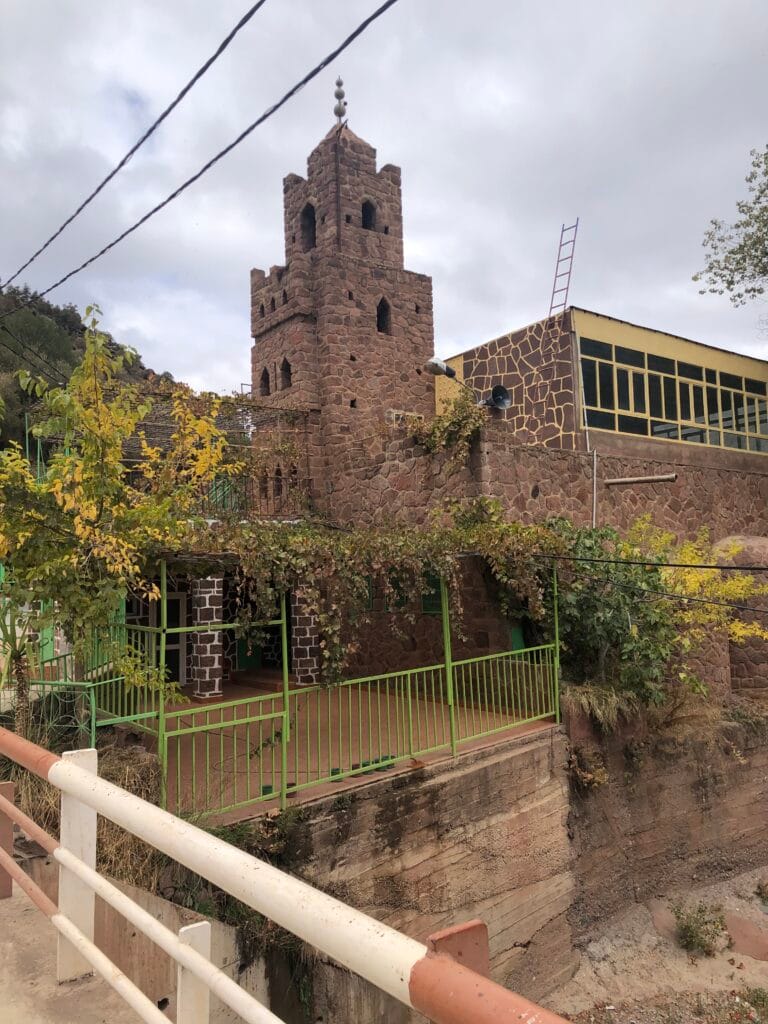
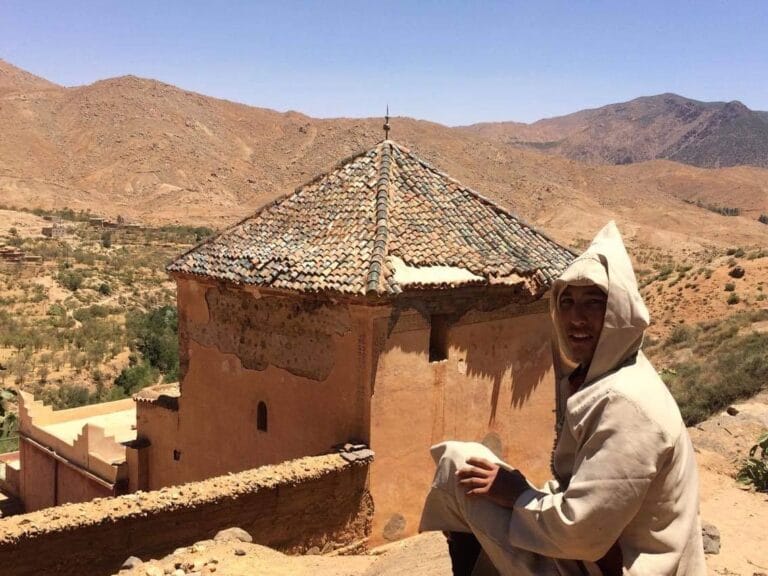
Massive stone houses
Kasbahs
Terraced villages
Steep roofs in snowy areas
Anti-Atlas
Agadirs
Dry-stone construction
Compact fortified settlements
Sous Valley
Earthen kasbahs
Adobe villages
Palm groves
Agricultural settlements
Rif Mountains
Whitewashed homes
Mediterranean influence
Sloped roofs
Stone masonry
Imperial Cities
Riads
Madrasas
Palaces
Mosques
Zellij
Carved cedar
Sahara
Ksour
Adobe villages
Palm oasis architecture
Climate adaptation
The Social and Cultural Role of Architecture
Architecture as a Reflection of Amazigh Identity
Architecture is a form of collective memory. In Amazigh societies, every home tells the story of its inhabitants — their tribe, craft, and values.
- Homes open inward, emphasizing family and community over display.
- Decorative motifs carry identity across generations.
- Architecture reinforces belonging in a fast-changing world.
Women and the Art of Decoration
Amazigh women, often the keepers of decorative traditions, play an essential role in architectural identity. They design and paint wall motifs, weave carpets with symbolic maps, and infuse domestic spaces with meaning — turning homes into cultural sanctuaries.
The Future of Moroccan Architecture
As Morocco advances technologically, a new generation of architects seeks to redefine modernity through tradition. Projects in the Atlas Mountains and coastal cities now integrate local materials, solar energy, and water recycling systems — echoing the Amazigh respect for nature.
The challenge ahead is not about choosing between tradition and modernity — but finding harmony between them. That harmony is Morocco’s architectural signature.
FAQs – About Moroccan Architecture
1. What is Moroccan architecture?
Moroccan architecture is a diverse architectural tradition shaped by Amazigh (Berber), Arab-Islamic, Andalusian, Saharan, African, Mediterranean, and European influences. It is known for its harmonious blend of functionality, artistry, and environmental adaptation, using local materials such as earth, stone, wood, and lime to create buildings that respond to Morocco’s varied landscapes and climates.
2. What makes Moroccan architecture unique?
Moroccan architecture is unique because it combines centuries of cultural influences while preserving strong regional identities. Distinctive features include riads with interior courtyards, kasbahs, ksour, intricate zellij tilework, carved cedar wood, stucco decoration, horseshoe arches, and climate-responsive building techniques that have evolved over thousands of years.
3. What are the main influences on Moroccan architecture?
Moroccan architecture reflects a combination of Indigenous Amazigh traditions, Arab-Islamic design, Andalusian craftsmanship, Roman urban planning, Saharan building techniques, Mediterranean aesthetics, and modern architectural innovation. Together, these influences have created one of the most diverse architectural traditions in North Africa.
4. What is Amazigh architecture?
Amazigh architecture refers to the traditional building practices developed by the Indigenous Amazigh people of Morocco and North Africa. It emphasizes harmony with the natural environment through the use of local materials such as stone, rammed earth, adobe, and timber, producing sustainable villages, kasbahs, and collective granaries adapted to mountain and desert landscapes.
5. What is a kasbah?
A kasbah is a fortified residence or defensive structure traditionally built from rammed earth or adobe. Kasbahs served as family homes, administrative centers, and military strongholds while symbolizing authority, protection, and tribal identity. They remain among Morocco’s most recognizable architectural landmarks.
What defines Moroccan architecture?
A blend of Amazigh, Arab, Andalusian, and African influences expressed through earth-based materials, geometric motifs, and harmonious design.
Why is Amazigh architecture considered sustainable?
Because it uses local, renewable materials and adapts naturally to the climate — reducing ecological impact.
What are the most iconic examples of traditional Moroccan architecture?
Aït Benhaddou, Fez Medina, Marrakech riads, and Atlas kasbahs.
How is modern architecture in Morocco evolving?
By integrating traditional craftsmanship with eco-friendly technologies and minimalist aesthetics.
What is the difference between a kasbah and a ksar?
A kasbah is generally a single fortified building or residence, whereas a ksar (plural: ksour) is a fortified village composed of many homes, communal spaces, granaries, mosques, and defensive walls. Ksour were designed to protect entire communities and support collective life.
What is a riad?
A riad is a traditional Moroccan house organized around an interior courtyard or garden. Designed to provide privacy, natural ventilation, and shade, riads are especially common in Morocco’s historic medinas and reflect the importance of family life and environmental adaptation.
Why are Moroccan buildings made from earth and stone?
Traditional Moroccan builders used locally available materials because they were durable, sustainable, and well-suited to regional climates. Thick earthen walls regulate indoor temperatures by keeping interiors cool during summer and warm during winter while reducing the need for artificial heating or cooling.
How does climate influence Moroccan architecture?
Climate has played a fundamental role in shaping Moroccan architecture. Builders developed thick walls, shaded courtyards, small windows, natural ventilation systems, and carefully oriented buildings to improve comfort while minimizing energy consumption in hot, dry, mountainous, and desert environments.
What are the main characteristics of Moroccan architecture?
Key characteristics include geometric decoration, horseshoe arches, interior courtyards, zellij mosaics, carved plaster, carved cedar wood, earthen construction, decorative doors, towers, gardens, and an emphasis on harmony between architecture and the surrounding landscape.
What is zellij?
Zellij is a traditional Moroccan mosaic art created by assembling small hand-cut glazed ceramic tiles into intricate geometric patterns. It is commonly used to decorate walls, fountains, floors, columns, and courtyards in palaces, mosques, madrasas, and riads.
Why is Moroccan architecture considered sustainable?
Traditional Moroccan architecture relies on natural materials, passive cooling, local craftsmanship, and climate-responsive design. These principles reduce environmental impact while improving thermal comfort, making many historic buildings models of sustainable architecture.
How old is Moroccan architecture?
The roots of Moroccan architecture extend back several thousand years to prehistoric settlements and early Amazigh communities. Over time, Roman, Islamic, Andalusian, and later dynastic influences enriched these foundations, creating the diverse architectural heritage visible today.
Which Moroccan architectural style is the most famous?
Several styles are internationally recognized, including Amazigh kasbahs, fortified ksour, traditional riads, imperial palaces, historic medinas, and Andalusian-inspired mosques. Together, these architectural forms represent Morocco’s rich cultural diversity.
What role do women play in Moroccan architectural traditions?
Women have traditionally contributed to the decoration and maintenance of homes through painted walls, plasterwork, weaving, textiles, household organization, and the transmission of artistic knowledge across generations. Their work has played an essential role in preserving regional architectural identities.
How has modern architecture influenced Morocco?
Modern Moroccan architecture incorporates contemporary materials such as steel, reinforced concrete, and glass while increasingly drawing inspiration from traditional design principles, sustainable construction, and local craftsmanship to create buildings that respect cultural heritage.
Why are courtyards important in Moroccan houses?
Courtyards improve ventilation, provide shade, increase privacy, create peaceful living spaces, and serve as the social heart of traditional Moroccan homes. They also enhance natural lighting while protecting interiors from extreme weather conditions.
Why is Moroccan architecture important today?
Moroccan architecture remains important because it preserves centuries of cultural knowledge while offering practical solutions for sustainable design. Its combination of traditional craftsmanship, environmental intelligence, and artistic excellence continues to inspire architects, researchers, and visitors around the world.
Conclusion: Stones of Memory, Structures of Tomorrow
When you explore Morocco’s landscapes — from the snowy peaks of the Atlas to the vast Sahara plains — each building whispers stories of endurance and imagination.
You come to realize that Moroccan architecture is not a museum relic; it’s a living philosophy — one that builds bridges between past and future, nature and humanity, memory and modernity.
So next time you touch the rough wall of an earthen kasbah or admire the polished tiles of a riad, remember: you’re not just seeing a building. You’re meeting a civilization that has mastered the art of living beautifully — in balance with the world around it.
Call to Action
If you’ve ever dreamed of walking through Morocco’s ancient cities, or studying the beauty of Amazigh design, explore more on iwziwn.com — where architecture, heritage, and identity meet.
References
Akesbi, N. (2016). Rural heritage and traditional architecture in Morocco. Rabat: Institut Royal de la Culture Amazighe.
Brett, M., & Fentress, E. (1996). The Berbers. Blackwell Publishers.
Ching, F. D. K. (2014). Architecture: Form, Space, and Order (4th ed.). John Wiley & Sons.
Cressier, P. (2014). Architecture and urbanism in the medieval Maghreb. Casa de Velázquez.
Denyer, S. (1978). African Traditional Architecture. Heinemann.
Fathy, H. (1986). Natural Energy and Vernacular Architecture: Principles and Examples with Reference to Hot Arid Climates. University of Chicago Press.
Fathy, H. (1989). Architecture for the Poor: An Experiment in Rural Egypt. University of Chicago Press.
Hakim, B. S. (1986). Arabic-Islamic Cities: Building and Planning Principles. Kegan Paul International.
Hoffman, K. E. (2008). We Share Walls: Language, Land, and Gender in Berber Morocco. Wiley-Blackwell.
Oliver, P. (1997). Encyclopedia of Vernacular Architecture of the World. Cambridge University Press.
Oliver, P. (2006). Built to Meet Needs: Cultural Issues in Vernacular Architecture. Architectural Press.
Prussin, L. (1986). African Nomadic Architecture: Space, Place and Gender. Smithsonian Institution Press.
Rapoport, A. (1969). House Form and Culture. Prentice-Hall.
Ruggles, D. F. (2008). Islamic Gardens and Landscapes. University of Pennsylvania Press.
UNESCO. (2003). Convention for the Safeguarding of the Intangible Cultural Heritage. UNESCO.
UNESCO World Heritage Centre. (n.d.). Ksar of Ait-Ben-Haddou. https://whc.unesco.org/
UNESCO World Heritage Centre. (n.d.). Medina of Marrakesh. https://whc.unesco.org/
Wilbaux, Q. (2001). La Médina de Marrakech: Formation des espaces urbains d’une ancienne capitale du Maroc. L’Harmattan.
Further Reading
For readers interested in exploring Moroccan architecture in greater depth, the following resources provide valuable insights into vernacular architecture, Amazigh building traditions, Islamic art, sustainability, and architectural conservation:
- Oliver, P. (Ed.). Encyclopedia of Vernacular Architecture of the World.
- Rapoport, A. House Form and Culture.
- Hakim, B. S. Arabic-Islamic Cities: Building and Planning Principles.
- Hassan Fathy’s works on earthen architecture and sustainable design.
- UNESCO World Heritage Centre publications on Morocco’s historic cities and cultural landscapes.
- Publications by the Royal Institute of Amazigh Culture (IRCAM) on Amazigh heritage and traditional architecture.
- Peer-reviewed journals such as Journal of Architectural Conservation, Vernacular Architecture, Journal of North African Studies, and Traditional Dwellings and Settlements Review.