The Argan Tree: Morocco’s Timeless Treasure – A Story of Life, Heritage, and Hope
Introduction: The Soul of the Moroccan Landscape
Across the golden plains of southwestern Morocco, beneath skies brushed with desert light, stands a tree unlike any other on Earth — the Argan tree. Its gnarled branches twist like time itself, its roots clutch the parched earth, and its silver-green leaves shimmer under the fierce African sun. To see it is to glimpse a miracle of endurance — a living symbol of balance between nature, culture, and spirit.
You may know the Argan tree for its precious oil — a global luxury in cosmetics and cuisine. But beyond its economic value lies a deeper story. This ancient tree is the beating heart of rural Morocco, a protector of biodiversity, and a sacred companion to Amazigh (Berber) communities who have nurtured it for centuries.
The Argan tree is not just a plant; it is an inheritance, a sacred link between humanity and the Earth — Morocco’s timeless treasure.
Table of Contents
The Origins and Uniqueness of the Argan Tree
A Living Fossil of the Earth’s History
The Argan tree (Argania spinosa L.) is endemic to Morocco, meaning it grows nowhere else in the world. Fossil evidence shows that its ancestors date back more than 65 million years, surviving dramatic climatic shifts that destroyed other species.
It thrives primarily in the Souss-Massa region, stretching from Essaouira to Agadir and into the foothills of the Anti-Atlas Mountains — an area designated by UNESCO as the Argan Biosphere Reserve in 1998.
This hardy tree can withstand extreme drought, poor soils, and scorching temperatures — enduring where few others can. Its resilience mirrors the spirit of Morocco itself: rooted in history, adapting to change, and flourishing through hardship.
The Miracle of Adaptation
The Argan tree’s beauty lies in its biological genius:
- Deep roots (up to 30 meters) draw moisture from underground aquifers.
- Small, waxy leaves minimize water loss.
- Thick bark protects against heat and wind.
- Slow growth ensures longevity — many trees live up to 200 years.
Its ability to thrive in semi-arid conditions prevents desertification, stabilizes soil, and shelters wildlife — a perfect example of nature’s balance and intelligence.
The Argan Tree and Its Ecosystem
A Web of Life
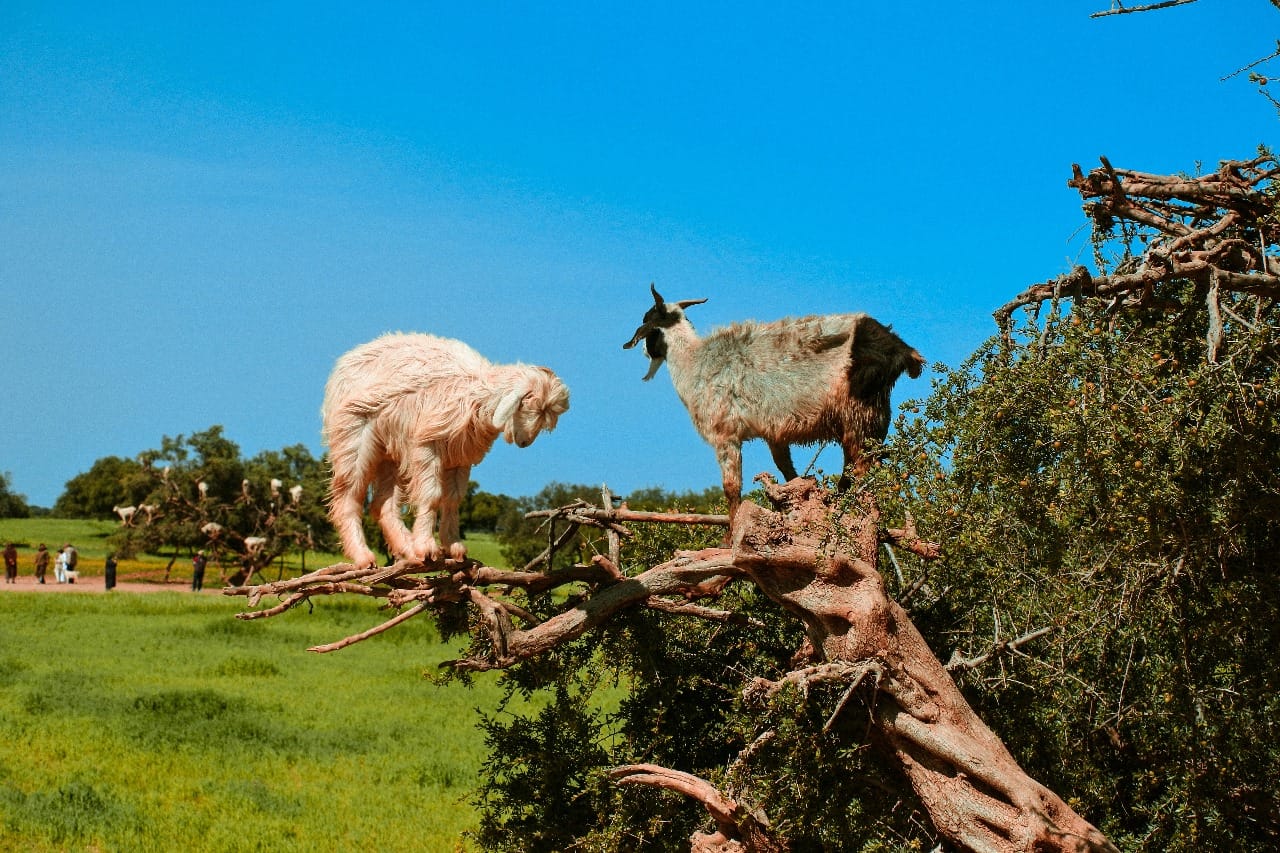
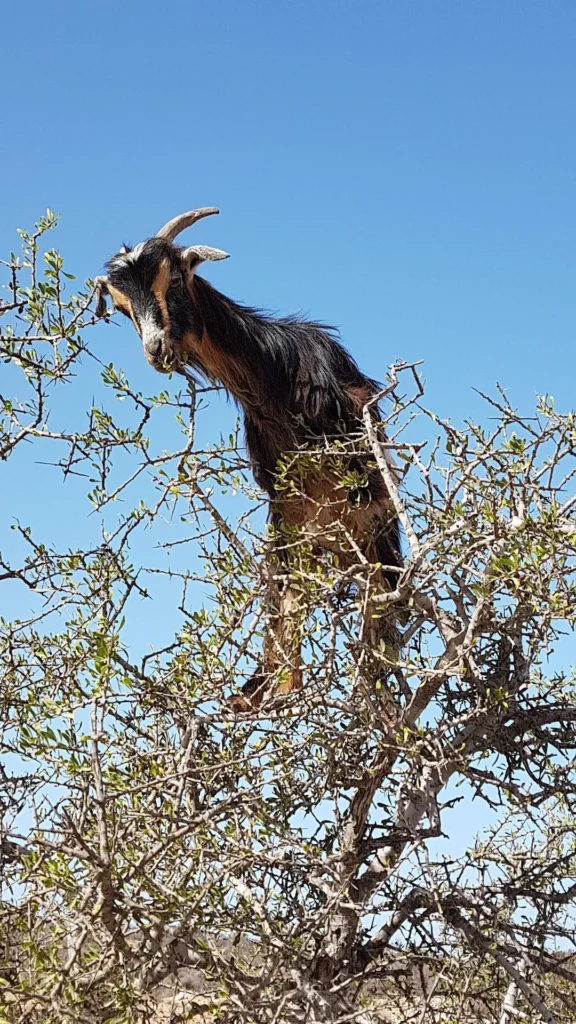
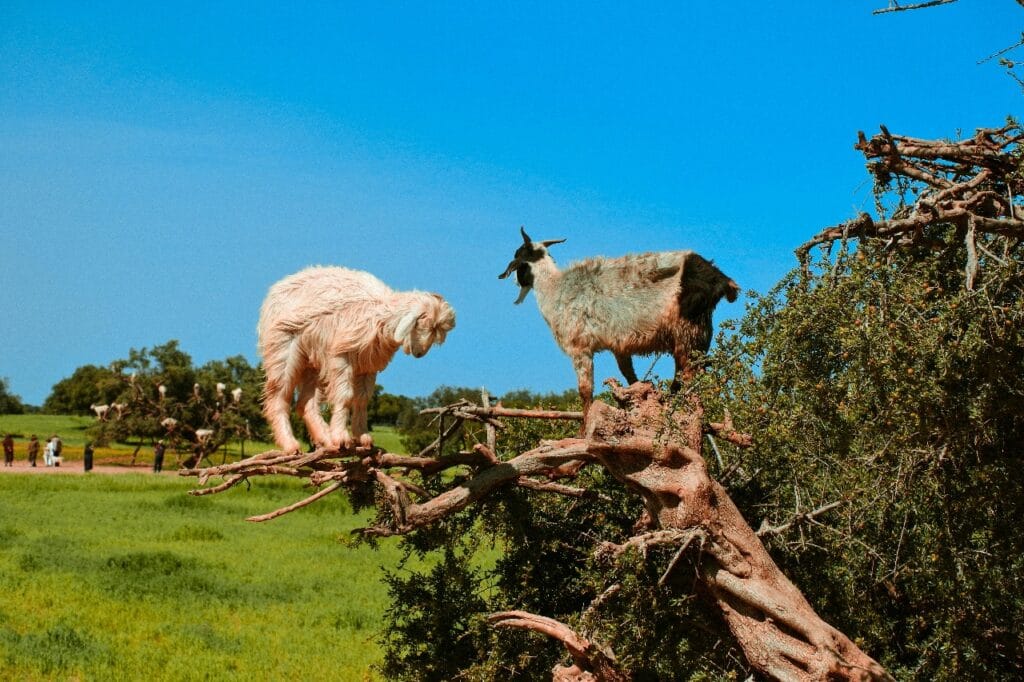
The Argan tree is the cornerstone of its ecosystem — supporting countless species of plants, insects, and animals. Birds nest in its branches, goats climb its limbs to eat its fruit, and bees pollinate its blossoms, producing the famous Argan honey.
The shade it provides allows herbs, cereals, and medicinal plants to grow underneath, creating a unique agroforestry system that sustains biodiversity.
The Argan-Goat Relationship
One of nature’s most fascinating partnerships is between the Argan tree and goats. The goats climb the trees, sometimes up to 10 meters high, to eat the fruit. They cannot digest the hard nuts, which pass through their digestive system intact. Local people then collect these nuts from the ground to extract oil — a natural recycling system perfected over centuries.
A Natural Shield Against Climate Change
The roots of the Argan tree prevent soil erosion and help retain moisture, protecting Morocco’s fragile lands from desert expansion. It acts as a carbon sink, storing CO₂ and combating global warming. Scientists now study the Argan tree as a model for sustainable land restoration in arid regions worldwide.
The Cultural and Spiritual Significance of the Argan Tree
The Tree of Life in Amazigh Culture
For Amazigh communities, the Argan tree is sacred. It is called “L’Arganeraie” in Moroccan Arabic and “Tazart” in Tamazight. Its symbolism runs deep:
- It represents fertility, endurance, and blessing (baraka).
- It marks boundaries of tribes and families, acting as both protector and witness.
- Its oil is used in wedding rituals, childbirth, and healing ceremonies.
In Amazigh mythology, the Argan tree is a divine gift — a motherly figure that feeds, shelters, and protects. The act of extracting oil is itself ritualistic: a blend of patience, rhythm, and reverence passed down through generations of women.
The Female Guardians of the Tree
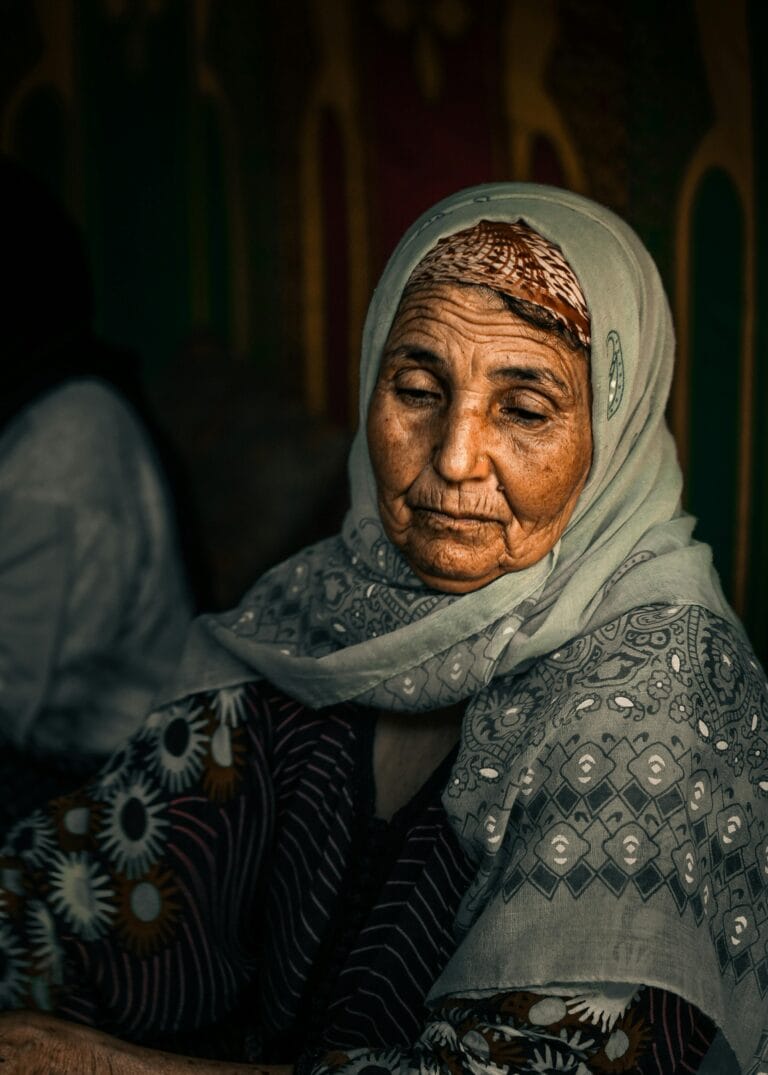
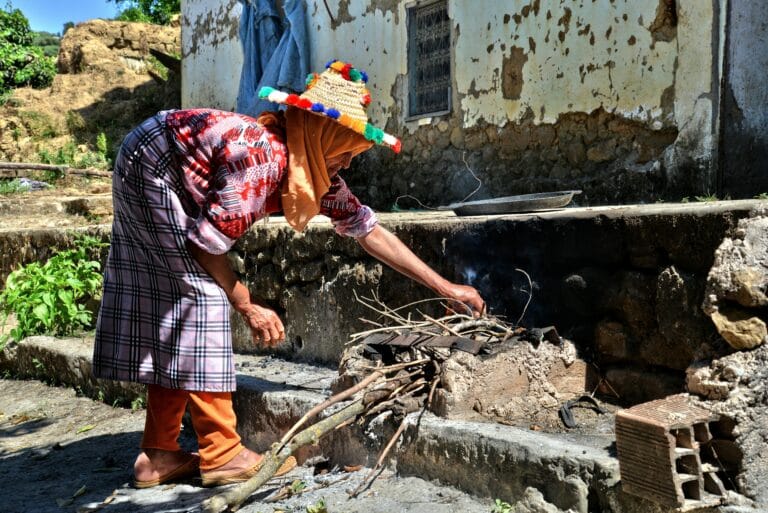
Women have always been the soul of the Argan culture. From collecting the fruit to crushing the kernels, they have transformed labor into art. Their cooperatives, now widespread in rural Morocco, symbolize female empowerment and social transformation.
When you buy authentic Argan oil, you are not just purchasing a beauty product — you are supporting the hands and hearts of Moroccan women preserving a heritage of sustainability and dignity.
The Craft of Argan Oil – From Fruit to Liquid Gold
The Traditional Extraction Process
The journey from fruit to oil is long and meticulous — a process that defines the beauty and authenticity of the Argan tradition.
- Harvesting: Fruits are collected once they fall naturally from the trees during summer.
- Drying: They are sun-dried to remove pulp.
- Cracking: Women hand-crack the nuts using two stones to extract the kernels — a skill requiring precision and strength.
- Roasting (for culinary oil): The kernels are lightly roasted to bring out a nutty aroma.
- Grinding: Using traditional stone mills, the kernels are ground into a paste.
- Kneading and Pressing: The paste is hand-kneaded with warm water until the oil separates.
It takes around 30 kilograms of fruit to produce one liter of Argan oil, illustrating its rarity and value.
Traditional vs. Modern Production
Modern methods now use mechanical presses to increase efficiency and hygiene, but many cooperatives still maintain traditional techniques for authenticity and heritage preservation. The balance between innovation and tradition ensures that the Argan tree remains both a cultural and economic pillar.
The Economic Power of the Argan Tree
A Lifeline for Rural Morocco
The Argan tree supports over 2 million people, primarily women, in rural Morocco. Cooperatives provide income, education, and independence — transforming entire communities.
The global demand for Argan oil has turned this humble tree into an international ambassador for Morocco’s sustainable development.
UNESCO Recognition and Global Market
In 2014, the “Argan, Practices and Know-How Concerning the Argan Tree” were inscribed on UNESCO’s Intangible Cultural Heritage of Humanity list. This acknowledgment highlights not only the ecological value of the tree but also the cultural wisdom surrounding it.
Today, Morocco exports thousands of tons of oil each year, fueling industries in cosmetics, pharmaceuticals, and gastronomy. Yet, the challenge remains to ensure fair trade, ecological protection, and authenticity amid global commercialization.
The Argan Tree in Cuisine and Medicine
The Culinary Treasure of Morocco
Culinary Argan oil, golden and aromatic, is a staple in Moroccan gastronomy. Its flavor — nutty, rich, and earthy — enhances traditional dishes such as:
- Amlou: A spread made of Argan oil, almonds, and honey.
- Couscous and tagines: A drizzle of oil adds depth and aroma.
- Salads and bread dips: Used as a finishing oil for its delicate taste.
Beyond taste, Argan oil is rich in vitamin E, antioxidants, and essential fatty acids, promoting heart health and lowering cholesterol.
The Healing Tree
In traditional medicine, the Argan tree is considered therapeutic. Its oil is used to:
- Soothe burns and wounds.
- Treat joint pain and rheumatism.
- Moisturize and protect skin from sun damage.
- Strengthen hair and nails.
Modern science supports many of these claims, confirming Argan oil’s anti-aging, anti-inflammatory, and moisturizing properties.
The Argan Tree in the Modern World
Sustainability and Climate Action
The Argan tree stands at the forefront of Morocco’s environmental strategy. The government, NGOs, and local communities collaborate to reforest degraded lands and expand the Argan biosphere. Over 800,000 hectares are now protected under UNESCO.
Women’s Cooperatives and Social Innovation
More than 300 cooperatives are active today, empowering women and promoting sustainable business models. These cooperatives ensure fair wages, literacy training, and reinvestment into local communities.
The success of this model has inspired similar projects across Africa and the Middle East — proving that sustainability can also mean empowerment.
The Tree and Global Recognition
Each year, on May 10, the world celebrates the International Day of the Argan Tree, established by the United Nations in 2021. This recognition solidifies Morocco’s role as a global leader in sustainable agriculture and cultural heritage.
The Future of the Argan Tree
Balancing Tradition and Global Demand
As global demand grows, maintaining ecological balance becomes critical. Overharvesting and climate stress threaten the tree’s survival. Sustainable management, scientific research, and community-led replanting projects are vital for protecting this treasure.
Innovation is also reshaping the future — from eco-tourism to Argan-based skincare laboratories — offering new ways to celebrate and sustain this legacy.
The Legacy of Beauty and Wisdom
The Argan tree embodies the Moroccan philosophy of harmony: between people and nature, past and future, tradition and progress. It reminds you that beauty and resilience are born not in abundance, but in scarcity — where care and patience transform hardship into life.
Conclusion: The Tree That Teaches Us to Endure
The Argan tree is more than Morocco’s treasure; it is humanity’s reminder that true wealth lies in what endures — in roots that cling, hands that craft, and communities that care.
From its twisted trunk to its radiant oil, it speaks a language older than time — one of gratitude, strength, and hope. When you see an Argan tree standing proud against the desert wind, you are looking at the story of Morocco itself: resilient, generous, and eternally alive.
References
- UNESCO. (2014). Argan, Practices and Know-How Concerning the Argan Tree.
- Charrouf, Z., & Guillaume, D. (2018). Argan Oil: A Valuable Moroccan Natural Product. Journal of Ethnopharmacology.
- United Nations (2021). International Day of the Argan Tree.
- Belahsen, R. (2020). Argan Tree Ecosystems and Sustainability in Morocco. Environmental Science Review.
- FAO (2022). Argan-Based Agroforestry Systems in Morocco.
- Ministry of Agriculture, Morocco (2023). Argan Biosphere Reserve Management Plan.
Call to Action:
Support sustainable Argan cooperatives. When you choose authentic Moroccan Argan oil, you protect ecosystems, empower women, and help the Argan tree — Morocco’s timeless treasure — continue to thrive for generations to come.