The Timeless Beauty of Amazigh Jewelry in Morocco – Where Art, Spirit, and Identity Shine as One
Introduction: The Eternal Radiance of a People’s Soul
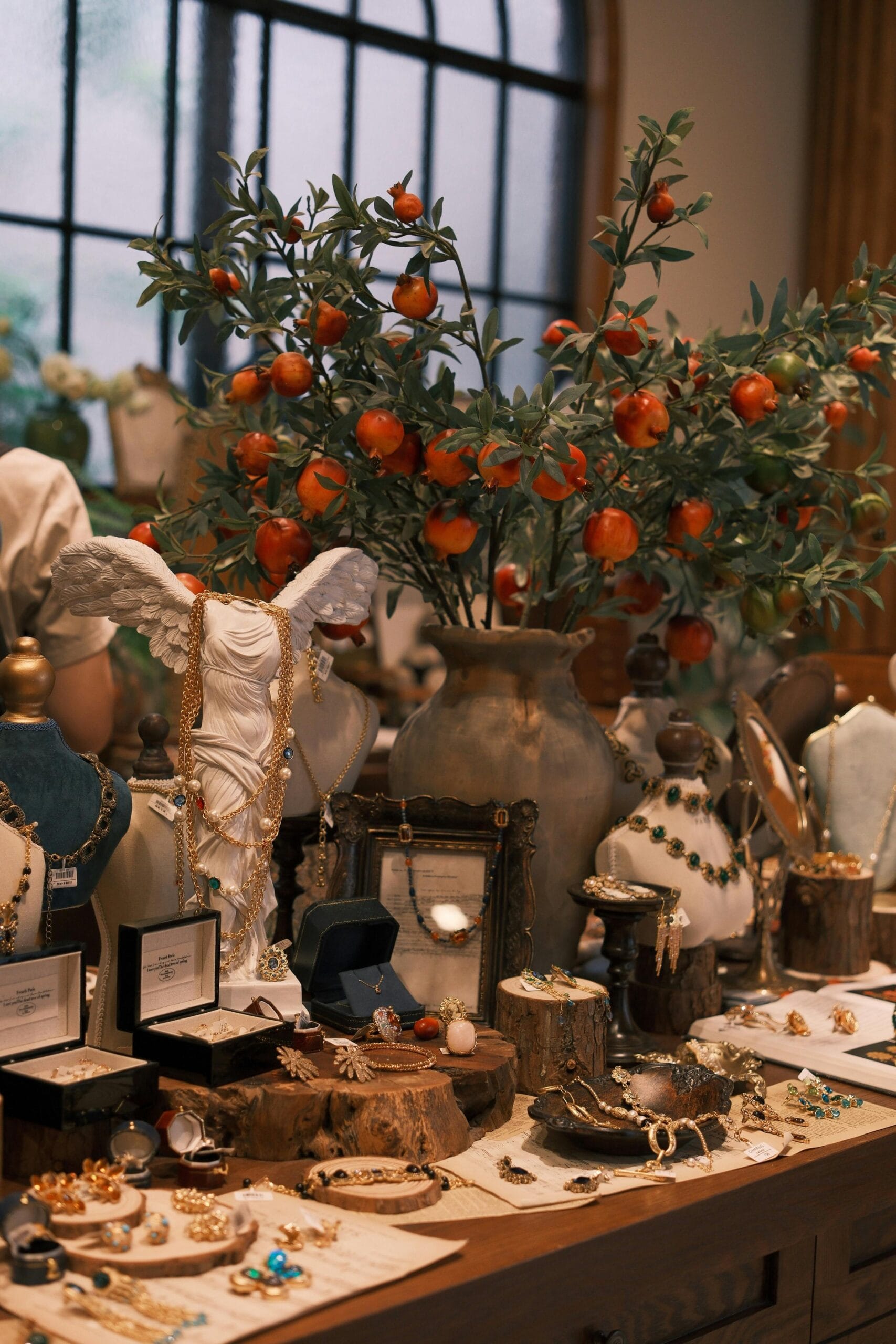
There are few things in the world that shimmer with as much quiet dignity and ancestral power as Amazigh jewelry. To behold it is to witness the radiance of a civilization that has expressed its spirit not through words, but through the patient hands of its artisans. The beauty of Amazigh jewelry lies not only in its craftsmanship but in its soul — in the silent stories it carries, in the gleam of silver that remembers centuries of endurance, love, and pride.
When you hold a pendant forged in a mountain village of the High Atlas, you are touching more than metal — you are touching the living pulse of Morocco’s cultural heart. Every filigree, coral bead, and engraved line speaks a timeless truth: beauty here is sacred, not superficial.
This is the story of how Amazigh jewelry became one of Morocco’s most enduring artistic legacies — a mirror of beauty, identity, and resilience that continues to captivate the world.
Table of Contents
The Birth of Amazigh Jewelry – Beauty Rooted in the Earth
From Earth to Ornament
The origins of Amazigh jewelry are intertwined with Morocco’s landscapes — mountains of silver, sands of gold, and skies filled with stories. The beauty of Amazigh jewelry begins in the soil itself, where silver was mined from the Anti-Atlas and Souss regions. These natural treasures were transformed by Amazigh blacksmiths and silversmiths — artisans whose skill was passed down through generations like sacred scripture.
Early pieces were not designed for commerce but for connection. Jewelry was part of the fabric of life — an offering, a blessing, and a declaration of belonging.
Women as the Keepers of Beauty
In Amazigh tradition, women were both the wearers and the guardians of jewelry. They carried the cultural codes of their people on their bodies. Each necklace or bracelet was personal — designed to reflect the wearer’s spirit, tribe, and story.
The beauty of Amazigh jewelry thus came from intimacy — from the way a piece was made for one woman, yet spoke for all.
The Aesthetic Principles Behind Amazigh Beauty
Beauty Beyond Ornamentation
Unlike Western notions of beauty that often emphasize luxury or symmetry, the beauty of Amazigh jewelry is symbolic, spiritual, and functional. Every piece is a dialogue between form and meaning — where the artist seeks harmony between nature, faith, and humanity.
- Proportion and Balance: Designs follow a natural equilibrium, echoing the shapes of mountains, stars, and rivers.
- Texture and Contrast: Rough and polished surfaces coexist, symbolizing the duality of life — light and shadow, creation and endurance.
- Handmade Imperfection: Each imperfection reveals the hand of the maker and the soul of the craft, making every piece unique.
The Artistic Language of Silver
Silver is the principal medium of Amazigh jewelry. It embodies humility and protection — a contrast to the ostentation of gold. Its reflective quality makes it more than metal; it becomes a mirror of the divine.
In Amazigh cosmology, silver’s beauty lies in its ability to absorb and reflect light — a metaphor for the human spirit illuminated by wisdom and purity.
Regional Styles – The Geography of Beauty
Tiznit – The Capital of Silver
In the southern Moroccan town of Tiznit, silversmiths have transformed their craft into art. Known as the City of Silver, Tiznit produces some of the most intricate and elegant jewelry in North Africa. The pieces from this region are characterized by:
- Complex filigree patterns
- Delicate granulation (tiny silver beads soldered into floral motifs)
- Crescent and star shapes symbolizing divinity and guidance
The High Atlas – Bold Beauty
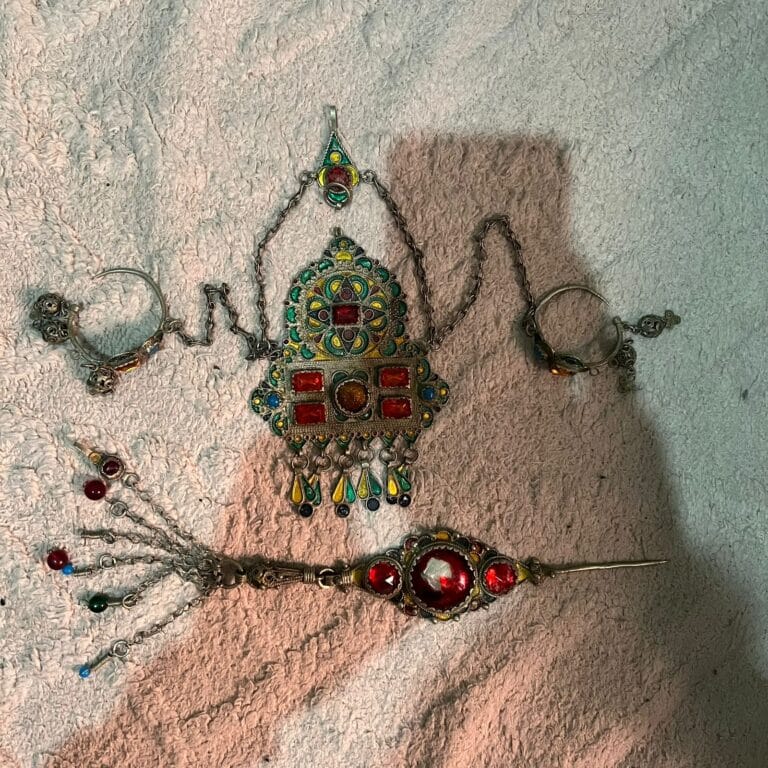
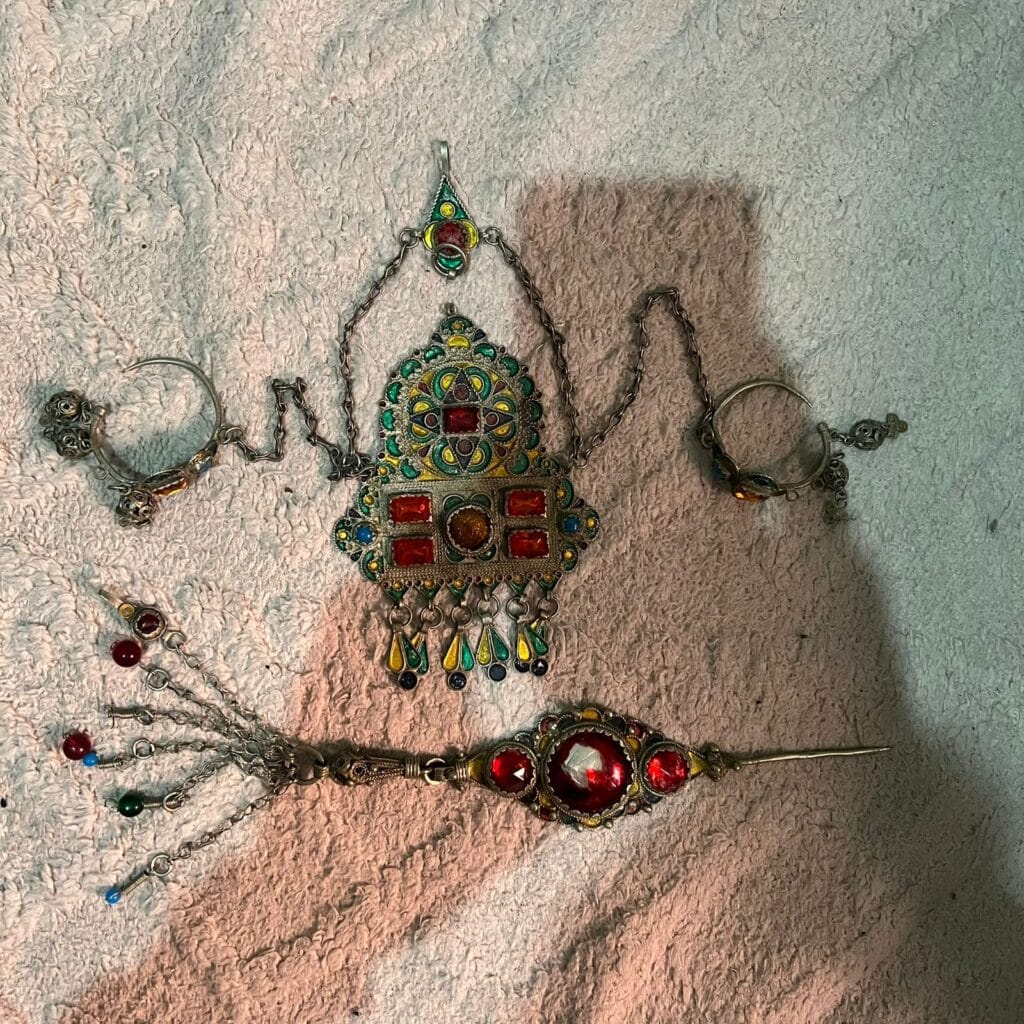
In contrast, jewelry from the High Atlas Mountains is monumental and expressive. Fibulas (tizerzaine) are large and geometric, with triangular forms representing strength and fertility. These were often worn in pairs, connected by chains across the chest, serving both practical and symbolic purposes.
The Anti-Atlas and the Sahara – Minimalism and Earth Colors
Southern tribes such as the Ait Atta favored a more organic style — incorporating coral, amber, and shell beads. Their beauty lies in natural harmony — the blend of earth tones and textures that evoke Morocco’s desert landscapes.
Beauty as Regional Identity
Each region developed its own vocabulary of beauty, allowing an observer to recognize a woman’s origin by her jewelry alone. Thus, Amazigh jewelry became a map of Morocco’s cultural geography, reflecting both diversity and unity.
Materials and Techniques – The Anatomy of Beauty
The Alchemy of Craft
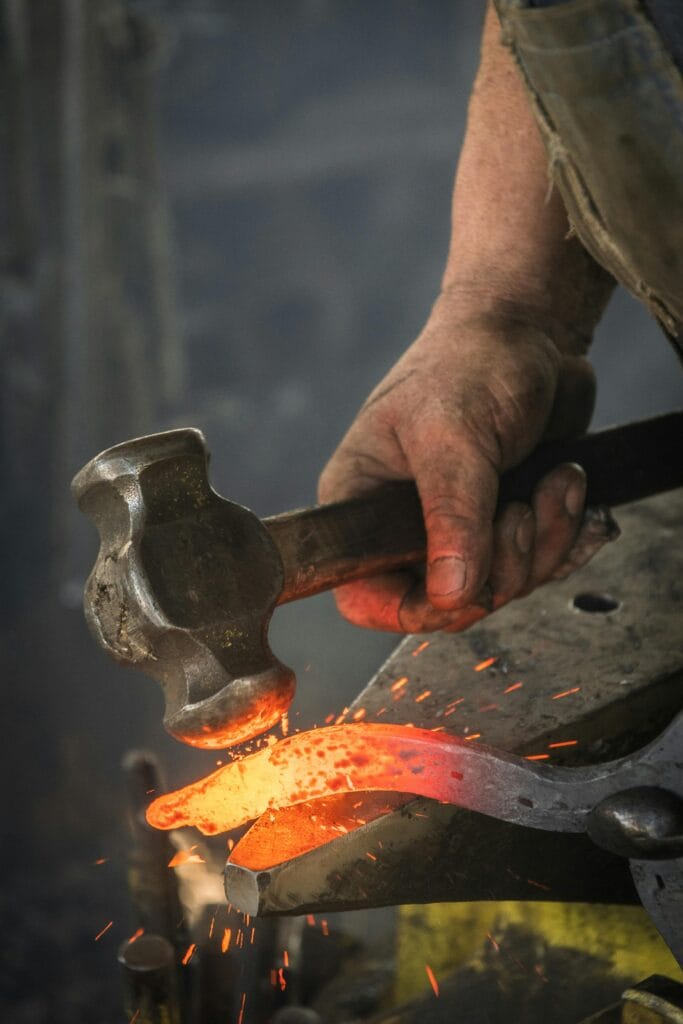
The beauty of Amazigh jewelry is inseparable from the processes that create it. Every stage — from melting silver to polishing the final piece — is ritualistic.
Traditional techniques include:
- Filigree: Twisting fine silver threads into lace-like patterns.
- Repoussé: Hammering from the back to raise designs in relief.
- Engraving: Etching symbolic lines and motifs with hand tools.
- Niello: Filling engraved designs with a black enamel-like compound to create contrast.
- Inlay: Setting coral, amber, turquoise, and glass into silver frames.
Each artisan learns these skills over years, often within family workshops where knowledge flows like inheritance.
The Sensual Power of Materials
Amazigh jewelry appeals to the senses. It glows in sunlight, clinks softly when worn, carries the faint scent of oils and herbs used for blessing. Its beauty is not only visual but tactile and auditory — an experience that engages the whole body.
Beauty as Identity and Resistance
The Ornament as Voice
Under colonial influence and modernization, Amazigh jewelry became a tool of resistance. Women wore their traditional adornments as declarations of cultural pride. The beauty of Amazigh jewelry thus became political — a form of silent protest against cultural erasure.
Each fibula pinned to a garment became a statement: We are still here. Our beauty is our strength.
The Feminine as Symbol of Continuity
In Amazigh society, women’s jewelry embodied the continuity of life. Through birth, marriage, and motherhood, jewelry served as both companion and witness. Its beauty symbolized endurance — the ability to remain radiant despite hardship.
The Emotional Beauty of Symbolism
Symbols as Poetry in Silver
The beauty of Amazigh jewelry lies deeply in its symbolic richness. While earlier articles may have explored the spiritual meanings, here we see beauty as an emotional resonance — the capacity of symbols to evoke universal human feelings.
- Triangles evoke harmony and fertility, balancing creation and protection.
- Stars and Suns express hope and renewal.
- Spirals suggest time’s rhythm and the eternal return.
- Crosses (pre-Islamic Amazigh motifs) symbolize balance between the four directions — earth, air, fire, and water.
Each symbol functions like a verse in an unspoken poem — one written in light and shadow rather than ink.
The Dance Between Body and Ornament
Jewelry is not static art. It lives on the body — moves, shines, and breathes with the wearer. Its beauty is revealed in motion: the sway of a pendant, the flash of a bracelet in sunlight, the gentle clinking of anklets in rhythm with footsteps.
This intimacy between body and adornment transforms Amazigh jewelry into a living sculpture — where beauty becomes performance.
The Evolution of Beauty – From Tradition to Contemporary Expression
Modern Amazigh Artisans and the Global Stage
Today, Moroccan designers and silversmiths are reimagining traditional aesthetics for a global audience. The beauty of Amazigh jewelry continues to evolve while preserving its soul.
Contemporary creators blend traditional forms with new materials — using recycled silver, minimal lines, and ethical sourcing — but still echoing the ancestral shapes of triangles, moons, and suns.
The Revival of Craftsmanship
Organizations like the Maison de l’Artisan and UNESCO’s Intangible Heritage Program have revived interest in Amazigh craftsmanship. Workshops in Tiznit, Taroudant, and Khenifra now teach young women silversmithing, ensuring that the beauty of this art will not fade.
The Beauty of Sustainability
Modern Amazigh silverwork also speaks to sustainability. It embodies slow art — made by hand, locally sourced, and spiritually grounded. This approach contrasts with fast fashion and reaffirms Morocco’s role as a global model for cultural preservation through beauty.
The Psychology of Amazigh Beauty
The Inner Reflection of Outer Grace
To the Amazigh, beauty is not vanity; it is baraka — divine grace manifested in material form. The beauty of Amazigh jewelry reveals how deeply aesthetics and spirituality are intertwined.
Wearing jewelry is believed to restore inner balance, attract positive energy, and connect the wearer to her ancestral roots. Beauty, therefore, becomes healing — a visible manifestation of harmony between self and universe.
Jewelry as Emotional Heritage
Heirloom pieces are treasured not only for their material value but for the emotions they contain. Each piece carries a mother’s blessing, a grandmother’s protection, a daughter’s dreams. This emotional layering transforms beauty into memory — a legacy that transcends time.
The Global Appreciation of Amazigh Beauty
From Villages to Vogue
The beauty of Amazigh jewelry has found admirers far beyond Morocco’s borders. International designers like Yves Saint Laurent, Jean-Paul Gaultier, and contemporary Moroccan artists have drawn inspiration from Amazigh motifs.
Exhibitions in Paris, New York, and London showcase Amazigh adornments as timeless examples of global heritage. Yet what makes these pieces extraordinary is not just their design, but the philosophy of beauty they embody — authenticity, craftsmanship, and soul.
The Future of Beauty
As Morocco modernizes, the challenge lies in maintaining authenticity while embracing innovation. Fortunately, new generations of artisans are achieving this balance, ensuring that the beauty of Moroccan jewelry remains eternal — not as nostalgia, but as living art.
Frequently Asked Questions About the Beauty of Amazigh Jewelry
What makes the beauty of Amazigh jewelry unique?
The beauty of Amazigh jewelry lies in its combination of artistic craftsmanship, symbolic motifs, and cultural heritage. Unlike decorative jewelry made solely for fashion, Amazigh jewelry tells stories of identity, family, spirituality, and protection that have been passed down through generations.
Why is Amazigh jewelry traditionally made from silver instead of gold?
Silver has long been preferred in many Amazigh communities because it symbolizes purity, protection, and spiritual value. Historically, silver was also more accessible than gold in the Atlas Mountains and became the defining material of traditional Amazigh jewelry.
What do Amazigh jewelry symbols represent?
Traditional Amazigh jewelry features symbols associated with fertility, protection, prosperity, nature, family, and spiritual balance. Common motifs include triangles, lozenges, stars, crosses, and geometric patterns inspired by Amazigh beliefs and everyday life.
Where is authentic Amazigh jewelry made in Morocco?
Authentic Amazigh jewelry is still crafted in several regions of Morocco, particularly in the High Atlas, Anti-Atlas, Souss, the Draa Valley, the Rif, and parts of southeastern Morocco. Each region has distinctive designs, engraving techniques, and decorative traditions.
Is Amazigh jewelry still handmade today?
Yes. Many Amazigh silversmiths continue to create jewelry by hand using traditional techniques such as engraving, filigree, repoussé, casting, enameling, and stone setting. These methods preserve centuries of artisanal knowledge.
Why is Amazigh jewelry important to Moroccan culture?
Amazigh jewelry is an essential part of Morocco’s cultural heritage because it reflects the history, beliefs, artistic traditions, and social identity of Amazigh communities. Many pieces have ceremonial, familial, and symbolic significance beyond their decorative beauty.
How can you identify authentic Amazigh jewelry?
Authentic Amazigh jewelry is typically handcrafted from silver and features detailed geometric engravings, natural materials such as coral or amber, and regional design characteristics. Handmade pieces often show subtle variations that distinguish them from mass-produced replicas.
Which Moroccan regions are most famous for Amazigh jewelry?
Some of the best-known centers of Amazigh jewelry include the High Atlas, Anti-Atlas, Souss, Tiznit, Tafraoute, the Draa Valley, and parts of southeastern Morocco, where local artisans continue centuries-old silversmithing traditions.
Is Amazigh jewelry recognized as cultural heritage?
Although individual pieces are not formally listed by UNESCO, Amazigh jewelry forms part of Morocco’s rich intangible cultural heritage. It is closely connected to traditional craftsmanship, oral traditions, ceremonial customs, and the preservation of Amazigh identity.
Why does Amazigh jewelry remain popular today?
The beauty of Amazigh jewelry continues to attract collectors, historians, designers, and travelers because it combines exceptional craftsmanship with deep cultural meaning. Its timeless designs bridge Morocco’s ancient heritage and contemporary appreciation for authentic handmade art.
Conclusion: When Beauty Becomes Legacy
The beauty of Amazigh jewelry is timeless because it speaks to what is universal in humanity — the desire to express, protect, and remember. It is art that transcends aesthetics, merging grace with meaning, form with faith, and metal with memory.
From the silver markets of Tiznit to the mountain villages of the Atlas, Moroccan artisans continue to craft more than ornaments — they craft identity, resilience, and living poetry. Their beauty is not trapped in the past; it continues to shine in the present, illuminating Morocco’s path toward the future.
To behold an Amazigh pendant or bracelet is to see not only what is beautiful — but what is true.
References
- Jereb, J. (1992). Arts and Crafts of Morocco. Chronicle Books.
- Meyer, L. (2014). Berber Jewelry: Tradition and Innovation in Morocco. Musée Berbère.
- Pâques, V. (1989). Symbols and Aesthetics of Amazigh Art. CNRS Éditions.
- UNESCO (2020). Intangible Cultural Heritage: Traditional Amazigh Jewelry of Morocco.
- World Crafts Council (2021). Moroccan Silversmithing and the Evolution of Amazigh Design.
- Mezzine, L. (2005). Artisanat du Maroc: Héritage et Modernité. Casablanca: Éditions Afrique Orient.
Call to Action:
Support the beauty that sustains culture. When you wear authentic Amazigh jewelry, you are not just embracing Moroccan artistry — you are carrying forward a story of strength, grace, and the eternal light of Berber aesthetics.