Amazigh Architecture: Traditional Homes Shaped by Land, Climate, and Culture
Introduction – When the Land Becomes a Home
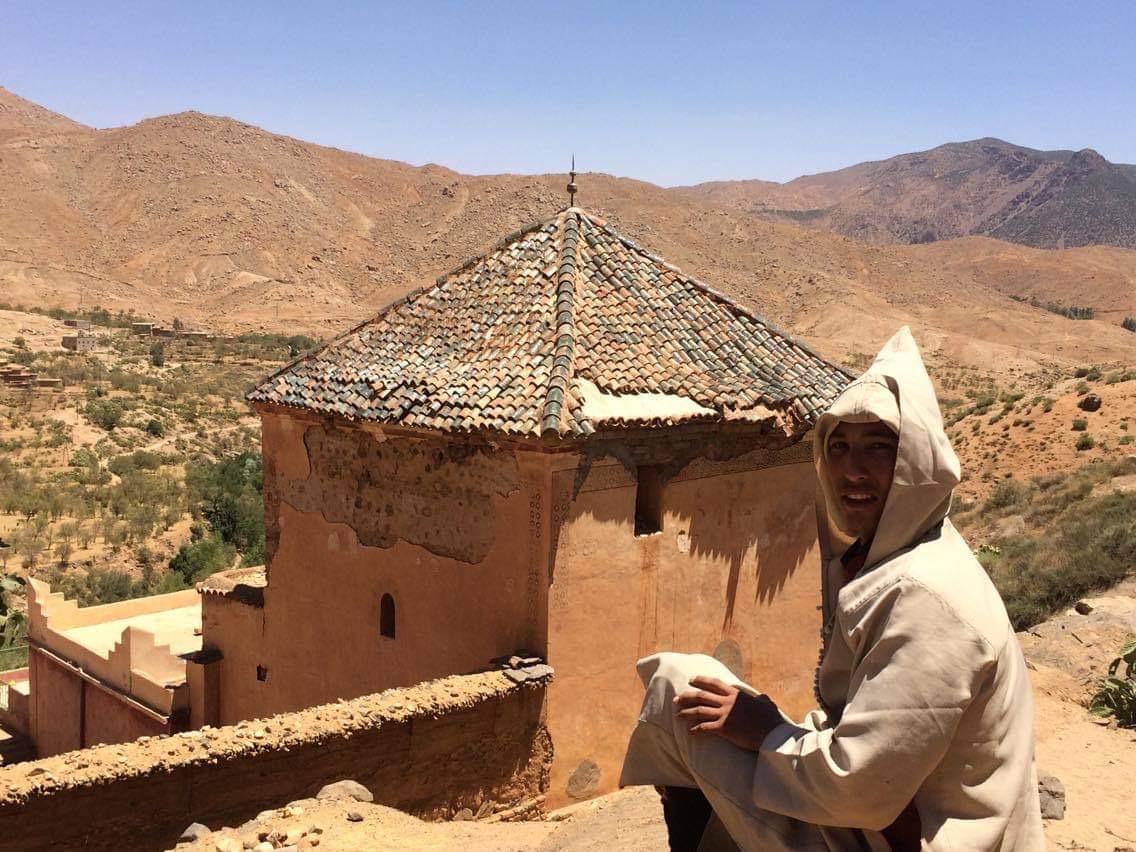
Amazigh architecture is one of the oldest surviving architectural traditions in North Africa. Developed over thousands of years, it reflects an intimate relationship between people, landscape, climate, and community. Across Morocco, Algeria, Libya, Tunisia, and parts of the Sahara, Amazigh builders created homes, fortified villages, collective granaries ( Igoudar), and mountain settlements that remain remarkable examples of sustainable architecture. Their techniques required little waste, relied entirely on local materials, and demonstrated an exceptional understanding of environmental adaptation long before modern ecological design emerged. Across the rugged landscapes of Morocco, from the snow-dusted peaks of the High Atlas to the sun-baked plateaus of the Anti-Atlas, a unique architectural language rises from the soil itself — one born not of luxury or design schools, but of necessity, spirit, and belonging. This is the world of Amazigh vernacular architecture, where earth becomes shelter, stone becomes story, and space becomes soul.
Amazigh homes are not merely structures. They are living reflections of a people’s dialogue with nature, of a culture that listens to wind, sun, and soil before shaping its walls. The houses, kasbahs, and agadir granaries scattered across Morocco’s interior are crafted with ancestral wisdom — each built to endure time, climate, and history.
This article explores how Amazigh architecture is shaped by geography, sustained by tradition, and charged with symbolism. It examines the materials, village structures, and spiritual meanings woven into the built environment — offering a window into the deeper philosophy of Amazigh life.
Table of Contents
Architecture Born from the Earth – A Dialogue Between Land and Life
Amazigh architecture begins and ends with the land itself. For thousands of years, Amazigh tribes have built homes that respond harmoniously to the environment — balancing climate, terrain, and social needs.
In the Atlas and pre-Saharan zones, where modern infrastructure was once unknown, architecture evolved organically from available natural resources. Clay, stone, and timber were not simply construction materials — they were extensions of the landscape.
The Evolution of Amazigh Architecture Through the Ages
The story of Amazigh architecture stretches back thousands of years, reflecting one of North Africa’s oldest continuous building traditions. From prehistoric settlements and early farming communities to fortified villages, kasbahs, and collective granaries, Amazigh builders continuously refined their techniques to respond to changing climates, landscapes, and social needs. Over centuries, indigenous knowledge blended with regional influences while preserving the essential principles of local materials, environmental harmony, and community cooperation. Today, many traditional Amazigh structures remain living examples of resilient architecture that has successfully adapted to mountain valleys, deserts, and fertile plains for generations.
The Principles of Vernacular Design
Amazigh architecture is guided by an eco-ethical philosophy long before “sustainability” became a modern term.
- Adaptation to Climate – Houses are designed to regulate temperature: thick earthen walls insulate against heat by day and retain warmth at night.
- Integration with Topography – Villages cling to slopes, facing the sun for warmth and light.
- Community and Defense – Compact designs ensure mutual protection and social cohesion.
- Material Continuity – Buildings rise from local soil and stone, returning to the earth when abandoned — a complete ecological cycle.
The Spirit of Earth-Building
In Amazigh philosophy, the earth is sacred — both a provider and a witness. To build with earth is to honor the continuity of life, embedding one’s existence within nature’s rhythm. The act of construction is communal, involving families and neighbors, reinforcing the Amazigh values of solidarity (tadawt).
Building Materials – Clay, Stone, and Timber
Each material used in Amazigh architecture reflects the geography and culture of its region. Far from being primitive, these techniques display a sophisticated understanding of local microclimates and environmental physics.
Clay (Tifut or Tafsut) – The Flesh of the Land
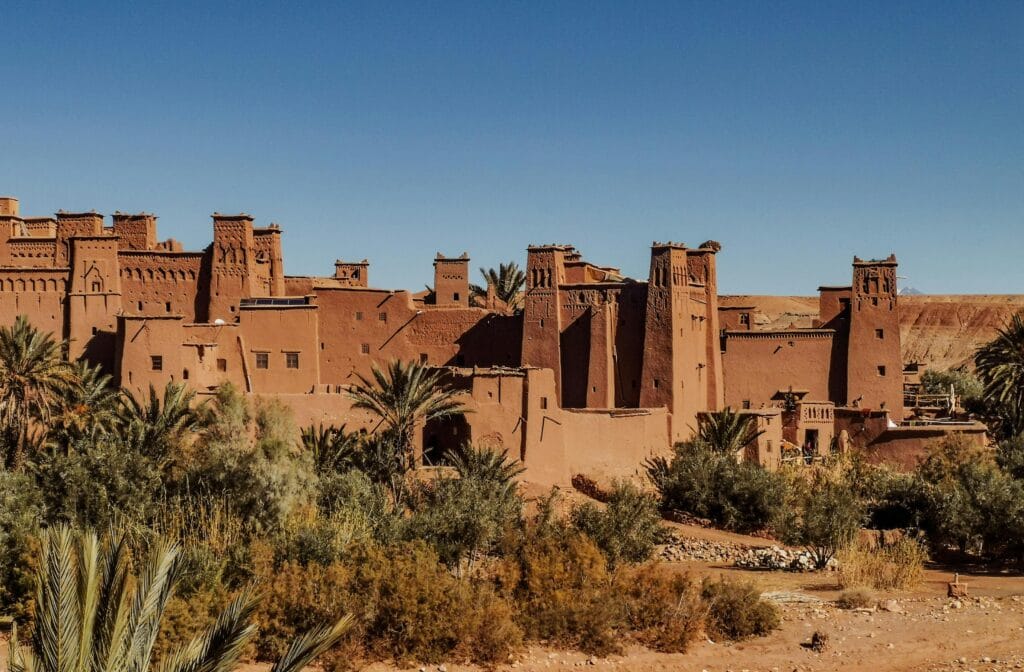
Earthen architecture dominates in the southern and central Atlas regions, where clay is abundant. Walls are built with pisé (rammed earth) or adobe bricks, formed from a mix of earth, straw, and water.
- Rammed Earth (Tabout): Earth is compacted in wooden molds, forming thick walls with exceptional thermal inertia.
- Adobe Bricks: Sun-dried bricks used for lighter walls and interiors.
Cultural Significance:
Clay walls symbolize continuity and humility — homes breathe, age, and return to the land, mirroring the Amazigh view of life’s cyclical nature.
Stone (Azzar) – The Backbone of the Mountains
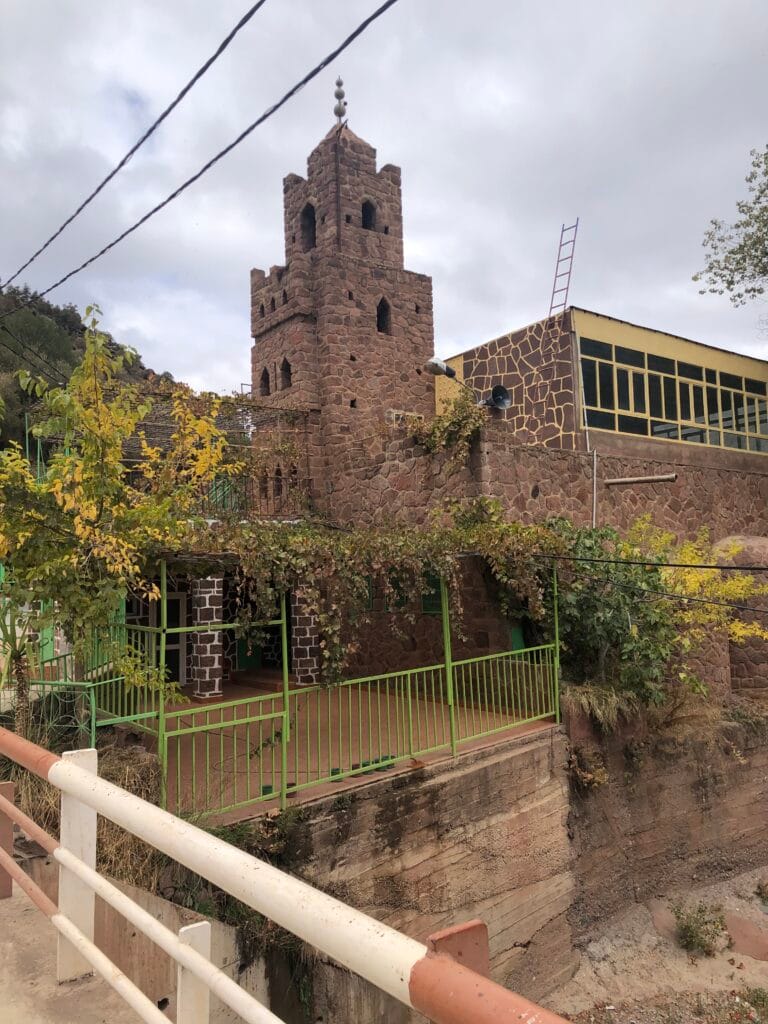
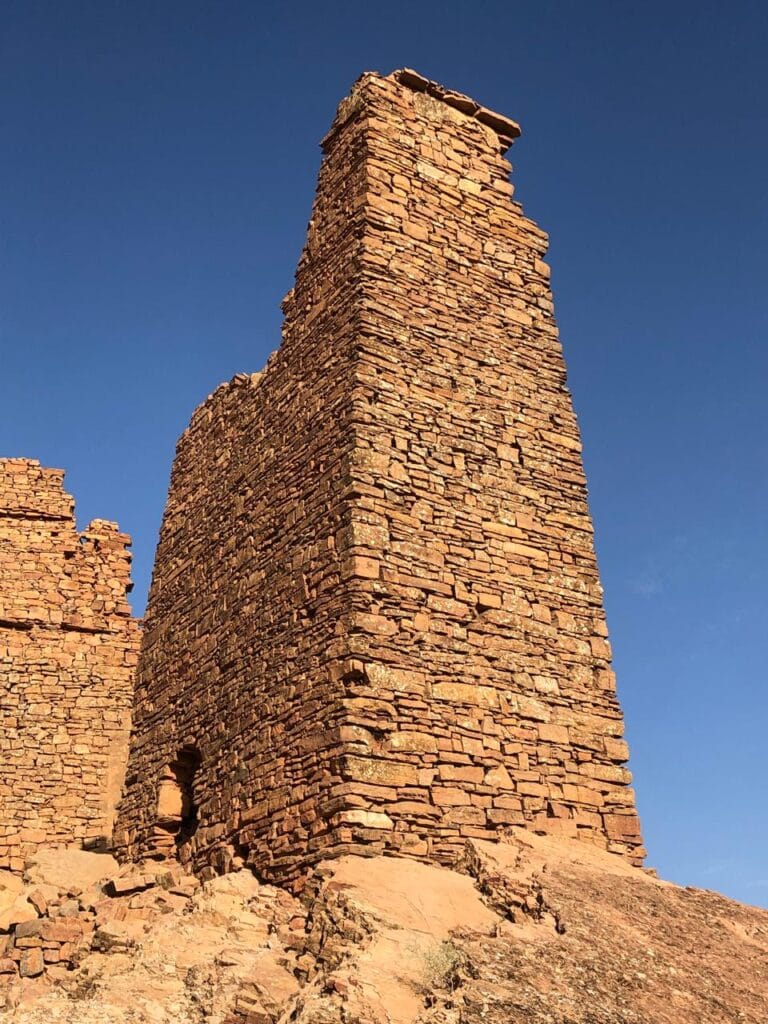
In high-altitude areas like Aït Bouguemez or Toubkal valleys, stone replaces clay due to the harsh mountain weather. Dry stone masonry provides resilience against erosion and heavy rain.
- Uncut local stones are stacked with mud mortar.
- Roofs are supported by juniper or oak beams covered with packed earth.
Cultural Value:
Stone represents strength, endurance, and ancestry. Many Amazigh believe that a stone house carries the spirit of the mountain — protecting the family through generations.
Timber (Ighram) – The Breath of the House
Timber is used sparingly, often from local juniper, palm, or walnut trees. Roofs typically include:
- Wooden beams (azraf) laid parallel.
- Small branches or palm fronds.
- A layer of earth for insulation.
In symbolic terms, wood connects the earth to the sky, completing the cosmic triad of Amazigh cosmology — earth (clay), life (wood), and eternity (stone).
The Structure of Amazigh Villages – Architecture as Social Fabric
Village Organization (Taddart)
Amazigh villages are tight-knit and collective, reflecting a deep social cohesion. The village (taddart) often emerges on defensible hilltops or slopes, organized around shared resources — a mosque, water source, and communal paths.
Key structural features include:
- Clustered Houses: Built close to minimize heat loss and strengthen community ties.
- Terraced Layouts: Adapted to mountain gradients, preventing soil erosion.
- Central Courtyards: Spaces for drying crops, gatherings, and rituals.
The Agadir – The Collective Granary
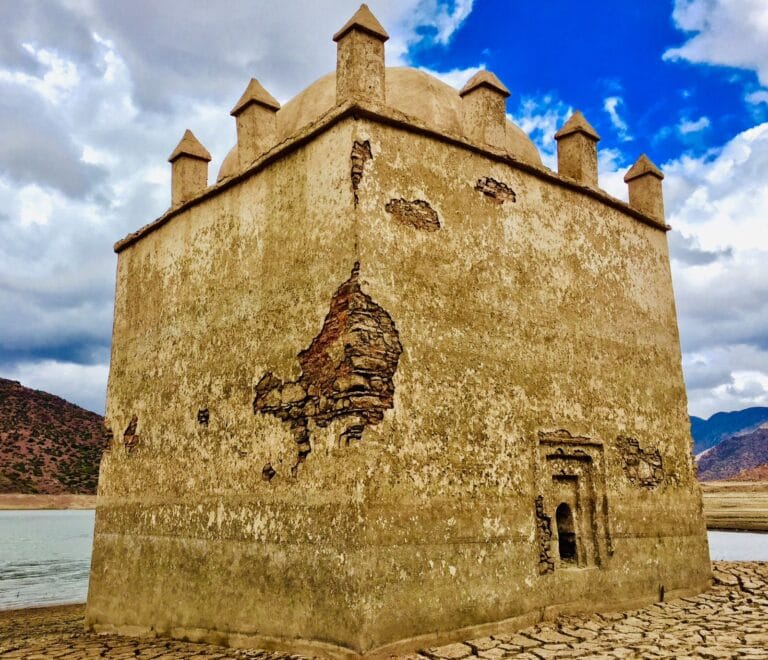
Unique to Amazigh architecture, the Agadir (fortified granary) serves as both a storage fortress and a symbol of unity.
- Constructed from stone and earth, it stores grain, oil, documents, and jewelry.
- Managed communally — each family has its own cell.
- Strategically located on elevated terrain for defense.
The agadir embodies the Amazigh philosophy of collective survival, showing how architecture expresses social justice, equality, and trust.
The Kasbah – Fortress of Clan Identity
The kasbah is a fortified family home, primarily in southern Morocco (Tinghir, Skoura, Aït Benhaddou). Built with rammed earth and decorative motifs, it functioned as both dwelling and fortress.
- High walls and corner towers protected against raids.
- Intricate geometric patterns conveyed status and identity.
- The interior included stables, family rooms, and reception areas.
Every kasbah tells a story of lineage and resilience — a vertical expression of Amazigh pride.
Famous Examples of Amazigh Architecture in Morocco
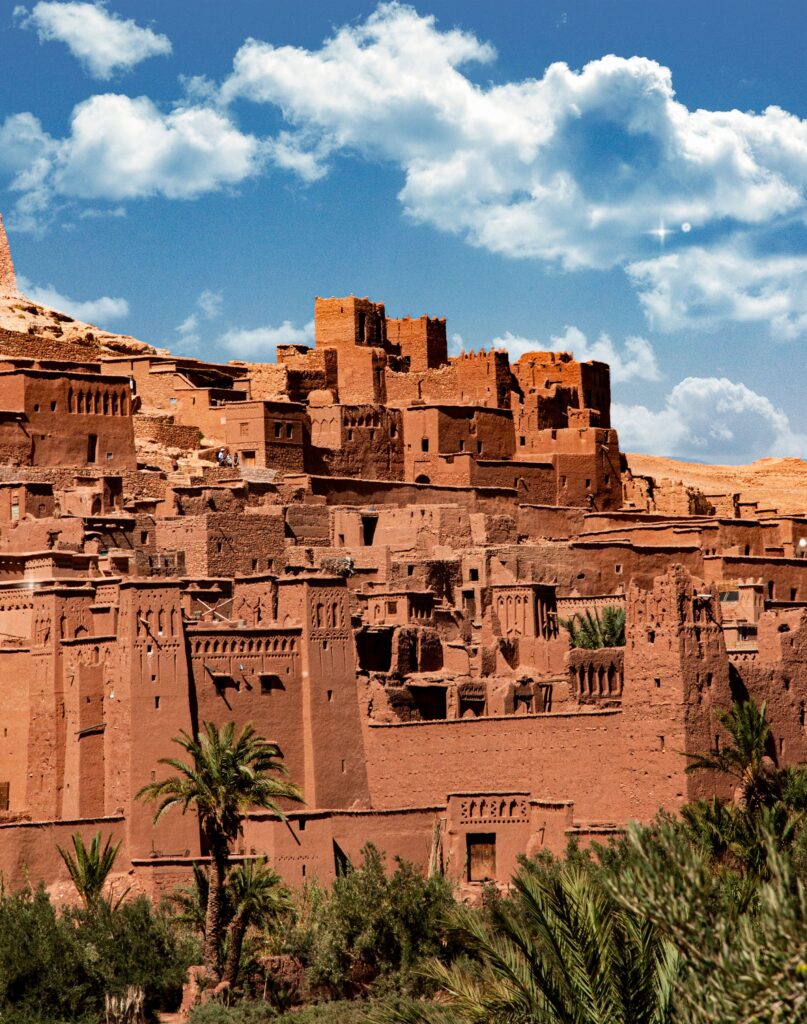
Morocco preserves some of the finest surviving examples of Amazigh architecture.
- Aït Benhaddou
- Telouet Kasbah
- Tizourgane
- Agadir Tasguent
- Agadir Inoumar
- Amtoudi
- Tamnougalt
- Tifoultoute Kasbah
- Skoura Oasis Kasbahs
- Tiout Kasbah
Each reflects centuries of indigenous engineering, environmental adaptation, and community organization.
Symbolism in Vernacular Spaces – Where Architecture Speaks the Soul
Amazigh architecture is more than functional — it is symbolic storytelling in built form. Each element carries meaning derived from spiritual belief, myth, and the rhythm of daily life.
The Door – Threshold of Worlds
Doors are often carved with Amazigh motifs such as diamonds, triangles, or zigzags, symbolizing protection and fertility. Wooden lintels are sometimes marked with talismanic symbols to ward off evil spirits (ikhf n umalu).
The Courtyard – Heart of the House
The open courtyard (wast adar) represents the axis of life, where light, air, and family intersect. It reflects the balance between privacy and openness — central to Amazigh social ethics.
H2: Orientation and Light
Most houses face south or southeast, maximizing sunlight during cold seasons. Windows are small and high, controlling ventilation and maintaining privacy — essential in communal village life.
Symbolic Geometry
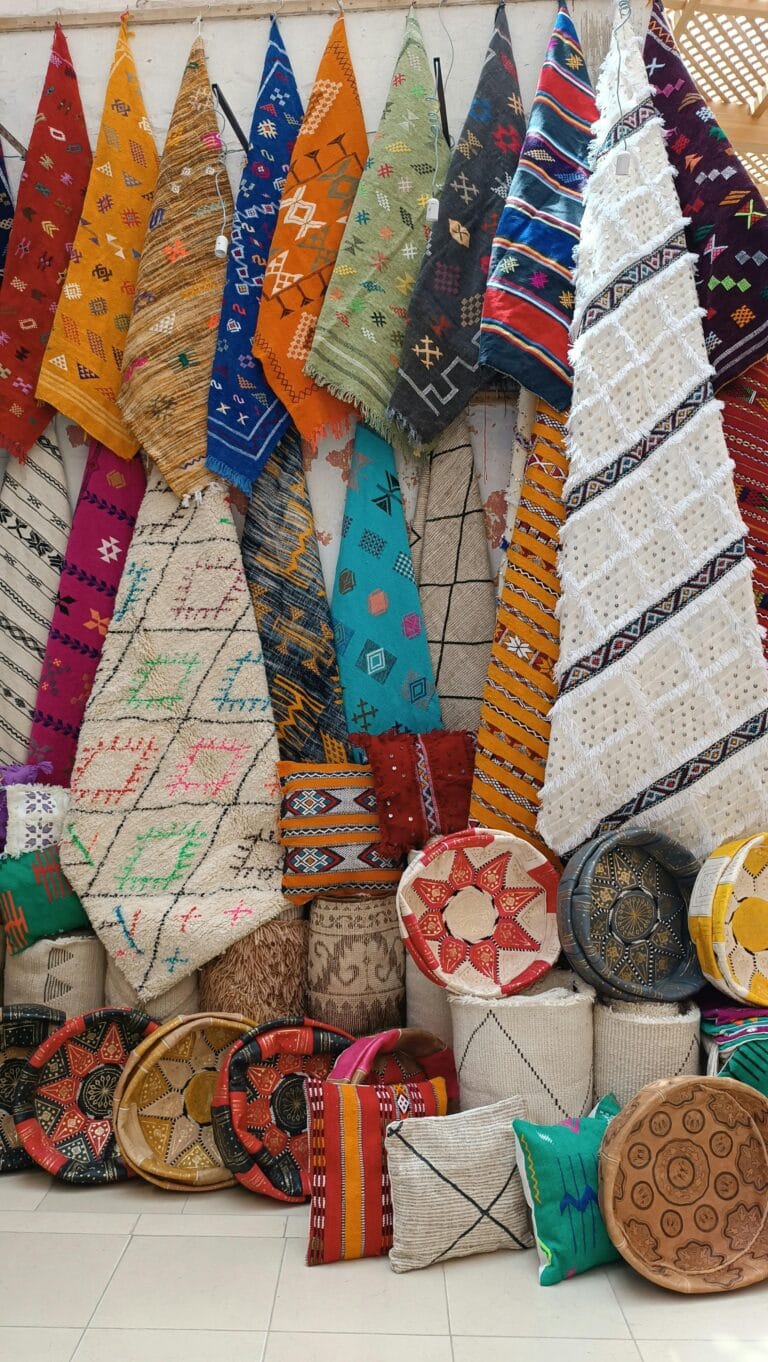
The walls and facades of Amazigh homes often incorporate symbolic geometry — echoing carpet motifs.
- Triangles: femininity and fertility.
- Crosses: balance of forces.
- Lozenges: life and protection.
These patterns transform the building itself into a protective amulet.
The Lifestyle Within – Domestic Spaces and Daily Harmony
Amazigh homes are structured to support multi-generational living and a self-sufficient lifestyle.
- Ground floor: for animals, tools, and storage.
- Middle floor: living space, kitchen, and hearth.
- Roof terrace: drying crops, weaving, and social gatherings.
This hierarchy reflects both function and cosmology — the ground representing sustenance, the middle life, and the roof the spiritual realm.
Women traditionally occupy the inner, sacred space of the home — managing the hearth and weaving area, while men handle external tasks. This balance echoes Amazigh values of duality and complementarity, where both genders are essential threads of life’s fabric.
Key Characteristics of Amazigh Architecture
Traditional Amazigh architecture can be recognized through several defining characteristics:
- Thick earthen or stone walls for natural insulation.
- Flat roofs designed for drying crops and household activities.
- Courtyards serving as the social heart of the family.
- Small windows that reduce heat gain while maintaining privacy.
- Locally sourced building materials requiring minimal transportation.
- Decorative geometric motifs expressing Amazigh identity.
- Community-based construction techniques passed down through generations.
- Buildings carefully oriented to maximize sunlight during winter and shade during summer.
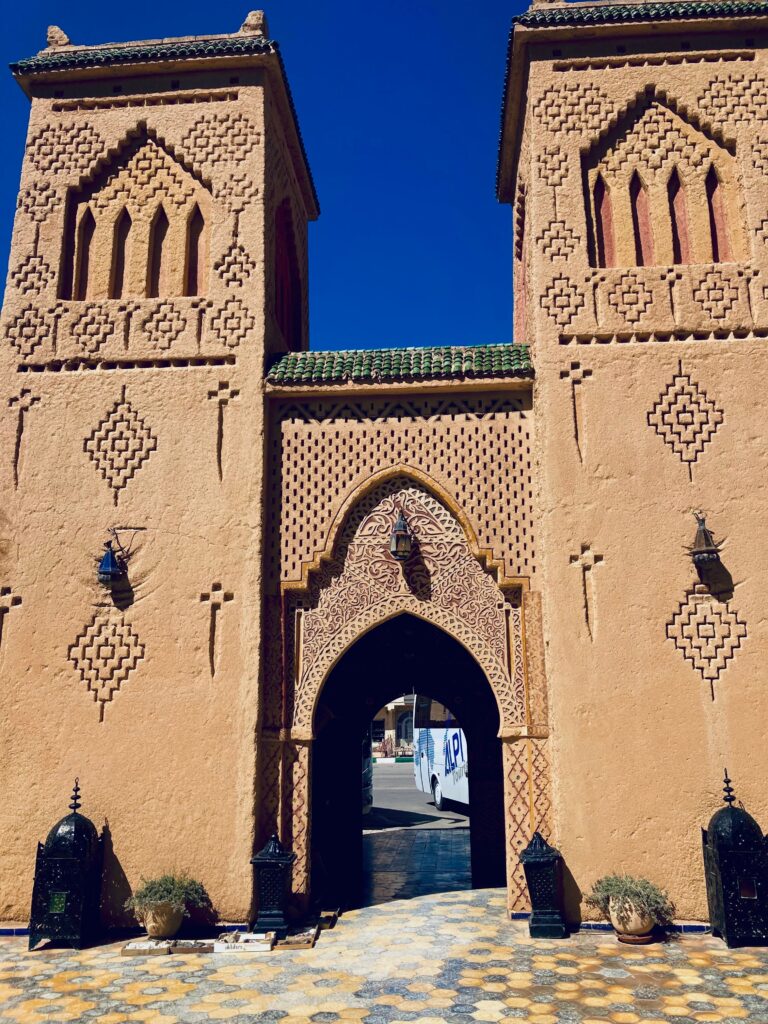
Regional Styles of Amazigh Architecture
Although Amazigh communities share common cultural roots, their architecture varies significantly according to geography.
High Atlas Mountains
Homes are mainly constructed from stone and compacted earth, featuring thick walls that provide insulation against harsh winters and hot summers. Villages often cling to mountain slopes, following the natural contours of the terrain.
Anti-Atlas Mountains
Buildings rely heavily on rammed earth and stone, while fortified granaries known as Agadirs dominate hilltops, protecting valuable food supplies and community wealth.
Sous Valley
Traditional homes combine earthen walls with spacious courtyards designed for family life, agriculture, and natural ventilation.
Sahara Region
Ksour and adobe settlements are carefully planned to reduce exposure to intense desert heat through narrow streets, shaded passageways, and high thermal-mass walls.
Rif Mountains
Northern Amazigh villages frequently incorporate timber, stone, and whitewashed walls influenced by Mediterranean climatic conditions.
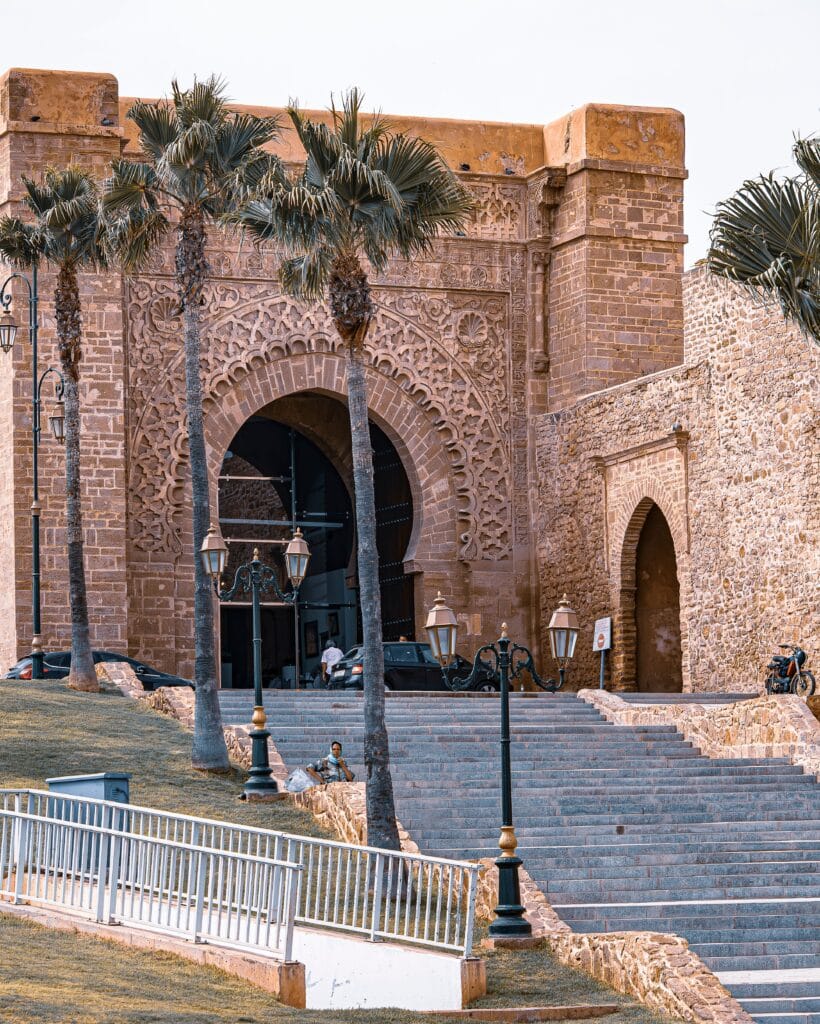
The Story Behind Amazigh Architecture – Spirit of Continuity
Amazigh architecture cannot be understood apart from Amazigh history and worldview. Each home is a microcosm of life, embodying endurance, humility, and belonging.
Centuries of adaptation to Morocco’s diverse landscapes created an architecture that is timeless yet evolving. Despite modernization, many Amazigh communities continue to build using ancestral techniques — not from nostalgia, but because these methods remain the most efficient for their environment.
In a broader sense, these structures are acts of cultural resistance — physical affirmations of Amazigh identity, independence, and connection to the land.
Why Amazigh Architecture Is Still Relevant Today
Modern architects increasingly study Amazigh architecture because it demonstrates sustainable building principles developed long before environmental design became popular. Thick earthen walls regulate indoor temperatures naturally, reducing the need for artificial heating and cooling. Locally sourced materials minimize environmental impact while supporting regional craftsmanship. Courtyard layouts improve natural ventilation, and village planning strengthens community interaction. These time-tested solutions offer valuable lessons for contemporary eco-friendly architecture around the world.
Sustainability and Revival – Lessons for the Future
Modern architects increasingly look to Amazigh building practices as models of sustainable and context-aware design.
- Local materials reduce carbon footprint.
- Thick earthen walls outperform modern insulation.
- Passive solar design principles ensure comfort without energy consumption.
Long before sustainable architecture became a global movement, Amazigh communities practiced environmentally responsible construction. Earth, stone, timber, and natural fibers created buildings with exceptionally low carbon footprints. Passive cooling, rainwater management, local resource utilization, and climate-responsive design allowed villages to thrive while preserving surrounding ecosystems. Today, architects worldwide increasingly recognize Amazigh architecture as a valuable model for sustainable building in the twenty-first century.
Organizations and cooperatives in regions like Aït Bouguemez, Tiznit, and Tinghir now train young builders to revive traditional methods using modern stabilization techniques, ensuring cultural preservation and ecological resilience.
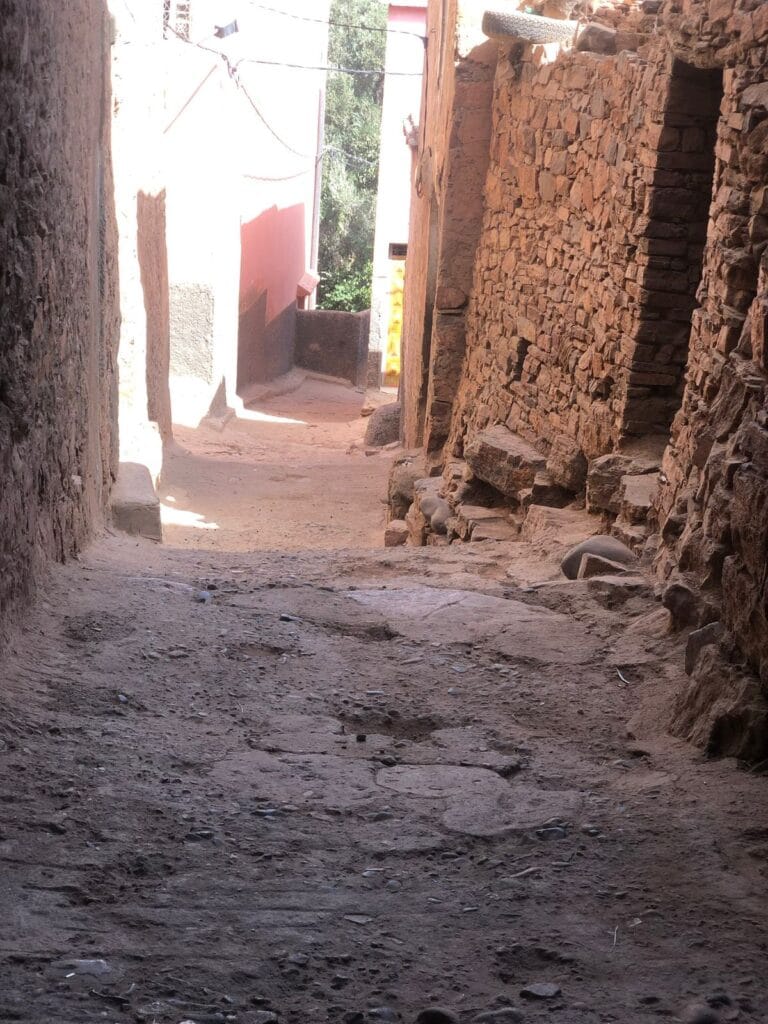
What Can Modern Architects Learn from Amazigh Architecture?
Contemporary architects increasingly recognize Amazigh architecture as a model for sustainable, climate-responsive design. Traditional Amazigh builders demonstrated how local knowledge, renewable materials, and environmental adaptation could create durable, energy-efficient homes without relying on modern technology. Features such as passive cooling, thick thermal-mass walls, natural ventilation, rainwater management, and community-centered planning continue to influence ecological architecture and green building practices worldwide. As cities search for solutions to climate change and rising energy consumption, Amazigh architecture offers timeless lessons that remain remarkably relevant today.
| Traditional Amazigh Architecture | Modern Concrete Buildings |
|---|---|
| Built with local materials | Built with industrial materials |
| Naturally regulates temperature | Depends heavily on air conditioning |
| Low environmental impact | Higher carbon footprint |
| Thick insulating walls | Thin concrete walls |
| Built collectively by communities | Built by commercial contractors |
| Easily repairable using local resources | Often requires specialized materials |
| Designed for long-term durability | May require frequent maintenance |
Conclusion – The Architecture That Breathes with the Land
Amazigh vernacular architecture is not a relic of the past — it is a living philosophy of balance between human and nature. Every wall, courtyard, and rooftop reflects the same spirit that shaped Morocco’s mountains and deserts.
It teaches that true architecture does not dominate the landscape — it grows from it. The Amazigh home is a testament to patience, craftsmanship, and ecological wisdom — a heritage that continues to inspire those seeking harmony between tradition and sustainability.
When you walk through an Amazigh village, you don’t merely see architecture — you see a civilization written in earth, stone, and time.
FAQs About Amazigh Architecture
Q1: What defines Amazigh vernacular architecture?
It is a form of architecture that uses local materials like clay, stone, and wood, shaped to adapt to Morocco’s diverse climates while reflecting Amazigh cultural values.
Q2: Why do Amazigh houses use earthen materials?
Because earth provides natural insulation, breathability, and sustainability — perfectly suited for both mountain cold and desert heat.
Q3: What is the symbolic role of the agadir?
The agadir is both a fortified storage space and a symbol of collective life, embodying communal values of trust and cooperation.
Q4: How does Amazigh architecture differ by region?
Mountain regions favor stone and compact villages; southern areas use rammed earth and kasbahs; coastal and plain zones integrate wood and wider courtyards.
Q5: What lessons can modern architects learn from Amazigh design?
The importance of building with, not against, the environment — using materials and techniques that respect ecology, culture, and human comfort.
What is Amazigh architecture?
Amazigh architecture refers to the traditional building styles developed by the Indigenous Amazigh people of North Africa. It emphasizes sustainability, local materials, climate adaptation, and strong community values.
What materials are commonly used in Amazigh architecture?
Traditional Amazigh homes are primarily built from rammed earth, adobe, natural stone, timber, palm trunks, reeds, and lime-based plaster, depending on the region.
How does Amazigh architecture adapt to different climates?
Builders adjust wall thickness, roof designs, window sizes, building orientation, and material selection according to local temperatures, rainfall, and terrain.
What is the difference between a Kasbah and a Ksar?
A Kasbah is usually a fortified residence or fortress belonging to an important family or local leader, whereas a Ksar is a fortified village containing multiple homes and communal spaces.
Why are Amazigh villages often built on hillsides?
Hilltop locations improve defense, reduce flood risks, preserve agricultural land, and provide better visibility over surrounding landscapes.
How old is Amazigh architecture?
Its origins date back several thousand years, making it one of the oldest continuous architectural traditions in North Africa.
Is Amazigh architecture recognized as an important cultural heritage?
Yes. Many traditional Amazigh villages, kasbahs, and earthen settlements are protected as important elements of Morocco’s cultural heritage, while sites such as Aït Benhaddou have gained international recognition for their historical and architectural significance.
Why are thick walls important in Amazigh homes?
Thick earthen and stone walls provide excellent thermal insulation, keeping interiors cool during hot summers and warm throughout cold mountain winters.
New “Did You Know?” Boxes
Did You Know?
Traditional Amazigh earthen walls can naturally maintain indoor temperatures between seasons, reducing energy consumption without electricity.
Did You Know?
Many Amazigh villages were strategically built on hillsides to improve defense, conserve farmland, and protect against seasonal flooding.
Did You Know?
Some collective granaries have remained in continuous use for several centuries, demonstrating the durability of Amazigh engineering techniques.
Did You Know?
Modern sustainable architects frequently study traditional Amazigh construction methods as models for climate-responsive design.
Call to Action
If you ever find yourself in Morocco’s mountains, pause before an old earthen house. Touch its wall. You’ll feel the warmth of sunbaked clay, the strength of mountain stone, and the pulse of history. Amazigh architecture is not just seen — it’s felt. It invites you to rediscover what it means to build in harmony with the earth, the spirit, and time itse
References
The following books, academic publications, and institutional resources provide valuable insights into Amazigh architecture, vernacular building traditions, indigenous knowledge, and Morocco’s architectural heritage.
- Fathy, H. (1973). Architecture for the Poor: An Experiment in Rural Egypt. University of Chicago Press.
- Oliver, P. (Ed.). (1997). Encyclopedia of Vernacular Architecture of the World. Cambridge University Press.
- Rapoport, A. (1969). House Form and Culture. Prentice-Hall.
- Denyer, S. (1978). African Traditional Architecture. Holmes & Meier Publishers.
- Naji, S. (2001). Greniers Collectifs de l’Atlas. Actes Sud.
- Naji, S. (2009). Art et Architectures Berbères du Maroc. Éditions Le Fennec.
- Mezzine, M. (Ed.). (2008). Kasbahs and Ksour of Morocco: Architecture, History, and Preservation. Ministry of Culture of Morocco.
- UNESCO. (2016). World Heritage Earthen Architecture Programme (WHEAP).
- ICOMOS. (1999). Charter on the Built Vernacular Heritage.
- Centre for the Study of Earthen Architecture (CRATerre). Research on Earthen Construction and Sustainable Architecture.
- Parker Pearson, M., & Richards, C. (Eds.). (1994). Architecture and Order: Approaches to Social Space. Routledge.
- Heath, K. (2009). Vernacular Architecture and Regional Design: Cultural Processes and Environmental Response. Architectural Press.
- Bianca, S. (2000). Urban Form in the Arab World: Past and Present. Thames & Hudson.
- Lightfoot, D. R., & Miller, J. A. (1996). Sijilmassa: The Rise and Fall of a Walled Oasis in Medieval Morocco. University of Arizona Press.
- Ministry of Youth, Culture and Communication of Morocco. Publications on Moroccan architectural heritage and conservation.