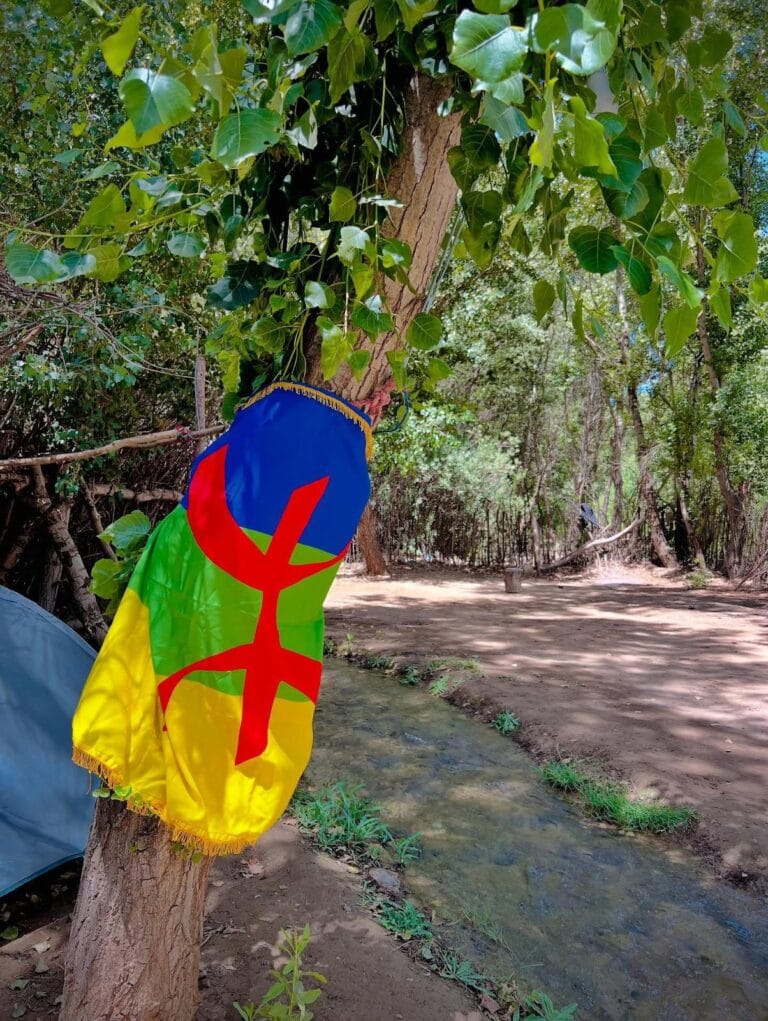
Tarifiyt (Rifian Amazigh): Language of Northern Morocco
Abstract
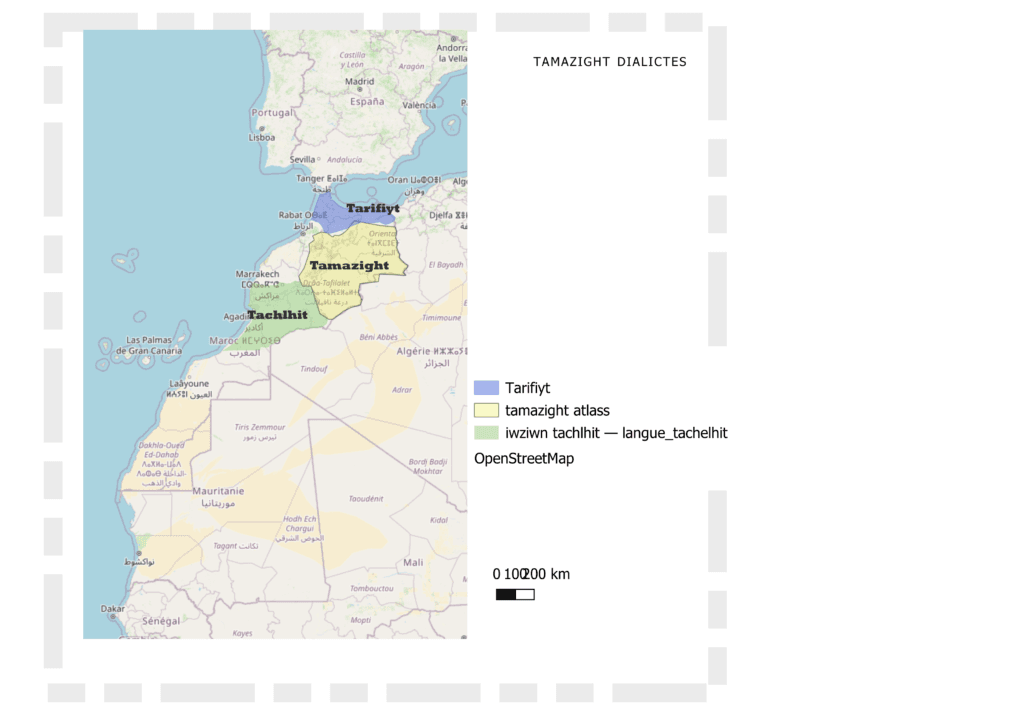
Tarifiyt (Riffian Amazigh), also known as Riffian, is one of the three principal Amazigh languages spoken in Morocco. It is primarily used in the Rif region of northern Morocco, stretching from Al Hoceima to Nador and surrounding mountainous areas. As a branch of the Afro-Asiatic language family, Tarifiyt reflects centuries of cultural continuity, oral poetry, and regional identity.
Although often grouped under the broader term “Tamazight,” Tarifiyt possesses distinctive phonetic and lexical characteristics that differentiate it from Tachelhit and Central Atlas Tamazight. It remains a vital marker of Rif Amazigh heritage in both rural communities and urban centers.
Table of Contents
1. Ethnolinguistic Profile & Distribution
- Core region: Rif Mountains (from the Mediterranean coast inland to the valleys of Ketama, Ayt Waryaghar, Ayt Tuzin, Ayt Oulichek, etc.).
- Urban centers: Al Hoceima, Nador, Melilla (Spanish enclave), and diaspora hubs in Barcelona, Brussels, Rotterdam.
- Speakers: Estimated 2.5–3 million in Morocco, plus 1.5–2 million abroad.
2. Historical & Cultural Context
The Rif region has been a center of Amazigh identity and anti-colonial struggle, most notably with Abdelkrim El Khattabi’s Rif Republic (1921–1926). Tarifiyt served as the lingua franca of resistance, reinforcing its status as a marker of Rifian pride.
The language reflects centuries of contact with Spanish and Arabic, resulting in extensive loanwords, especially in urban dialects.
3. Phonology
3.1 Vowels
- Standard Amazigh 3-vowel system (a, i, u), with occasional reduction in unstressed syllables.
- Unlike Tachelhit, Tarifiyt does not permit vowel-less words as extensively.
3.2 Consonants
- Retains emphatic consonants (ṭ, ḍ, ṣ, ẓ).
- Influenced by contact with Spanish, especially in loanwords (telefon, plata).
- Labialization of velars is a notable feature.
4. Morphology
4.1 Nouns
- Feminine marked by t-…-t.
- Plurals through suffixes (-en, -an) and internal vowel change.
Example:
- argaz (“man”) → irgazen (“men”).
- tamɣart (“woman”) → timɣarin (“women”).
4.2 Verbs
- Conjugated for person, number, gender.
- Distinction between aorist, perfective, and imperfective.
- Negation uses ur … ara, like other Amazigh varieties.
4.3 Pronouns
- Clitics attach to verbs and prepositions.
- Distinction between free pronouns (nekki, “I”) and enclitic forms (-yi, “me”).
5. Syntax
- Flexible word order, though VSO is common.
- Frequent use of topicalization, reflecting discourse-oriented syntax.
- Relative clauses introduced with i or ani.
6. Writing Systems
6.1 Tifinagh
Adopted as the official script since IRCAM’s 2003 reform, now taught in Rif schools.
6.2 Latin & Arabic
- Latin alphabet widely used in diaspora publications and online forums.
- Arabic script used historically in manuscripts and informal writing.
Tarifit vs Tachelhit: What Is the Difference?
While both are Amazigh languages, Tarifiyt and Tachelhit differ significantly in sound patterns, vocabulary, and geographic identity.
| Feature | Tarifit (Riffian) | Tachelhit (Shilha) |
|---|---|---|
| Region | Rif Mountains (North) | Souss & High Atlas (South) |
| Phonetics | Strong “ch” and “r” sounds | Consonant clusters |
| Cultural Association | Rif Amazigh identity | Soussi Amazigh identity |
| Mutual Intelligibility | Partial | Partial |
These linguistic distinctions reinforce Morocco’s rich internal diversity within the Amazigh language family.
7. Oral Literature & Musical Heritage
7.1 Poetry (Izran)
- Short, rhymed couplets expressing love, social commentary, exile.
- Often performed by women, with call-and-response.
7.2 Music
- The Rif gave rise to modern Amazigh protest songs and chaabi fusion.
- Artists like Matoub Lounès (Kabyle, but influential) and Moroccan Rifian singers connect music with identity.
- Traditional ahidous dances also exist but are less dominant than in the Atlas.
7.3 Storytelling
- Oral narratives recount resistance against Spanish colonization, epic tales, and moral fables.
Sociolinguistics & Modern Status
- Urban vs rural: Code-switching with Moroccan Arabic and Spanish.
- Diaspora role: Preservation through community centers, associations, and digital platforms.
- Media presence: Local radio and some programming in Tarifiyt, though less developed compared to Tachelhit.
- Political symbolism: Tarifiyt is strongly tied to Rifian identity and autonomy movements.
9. Anthropological Importance
Tarifit encodes Rifian mountain ecology, fishing practices, and maritime vocabulary, reflecting a culture shaped by both land and sea. It also preserves kinship terms and tribal affiliations, essential in Rifian social organization.
Sample Text
Proverb:
- Latin: Argaz ur iqqar ar tasga s win ara isuffeɣ.
- Gloss: “A man does not abandon the field to the one who neglects it.”
- Meaning: Responsibility and perseverance are core values.
The Role of Tarifit in Contemporary Morocco
Tarifit continues to evolve within Morocco’s changing linguistic landscape. Since the 2011 constitutional recognition of Amazigh as an official language, efforts have increased to standardize and teach Amazigh varieties in schools. While standardized Amazigh education often relies on a unified form, Tarifiyt remains a strong regional spoken language.
In recent years, digital media, local music, and cultural activism have helped preserve and promote Tarifiyt among younger generations, ensuring its transmission beyond traditional oral contexts.
What is Tarifiyt?
Tarifiyt is an Amazigh language spoken mainly in northern Morocco’s Rif region.
Is Tarifit the same as Tamazight?
Tarifiyt is one variety within the broader Amazigh language family, but it differs from Central Atlas Tamazight and Tachelhit.
How many people speak Tarifit?
Millions of speakers in northern Morocco use Tarifiyt as their primary language.
What script is used for Tarifit?
Tarifiyt may be written in standardized Tifinagh, as well as Latin and Arabic scripts depending on context.
Conclusion
Tarifiyt is not just a dialect of Amazigh but a pillar of Rifian identity, deeply linked to resistance, diaspora, and cultural pride. Its survival depends on continued intergenerational transmission, institutional support, and integration into modern media.
References & External Links
- Kossmann, M. (1997). Grammaire du parler rifain (Berbère du Rif).
- El Aissati, A. (1993). Multilingualism in the Moroccan Rif.
- IRCAM – Official Website
- UNESCO – Intangible Heritage of Amazigh Languages
- Nador Rif Diaspora Platforms