Architecture of the Atlas – Sacred and Defensive Marvels of Morocco’s Mountain Heritage
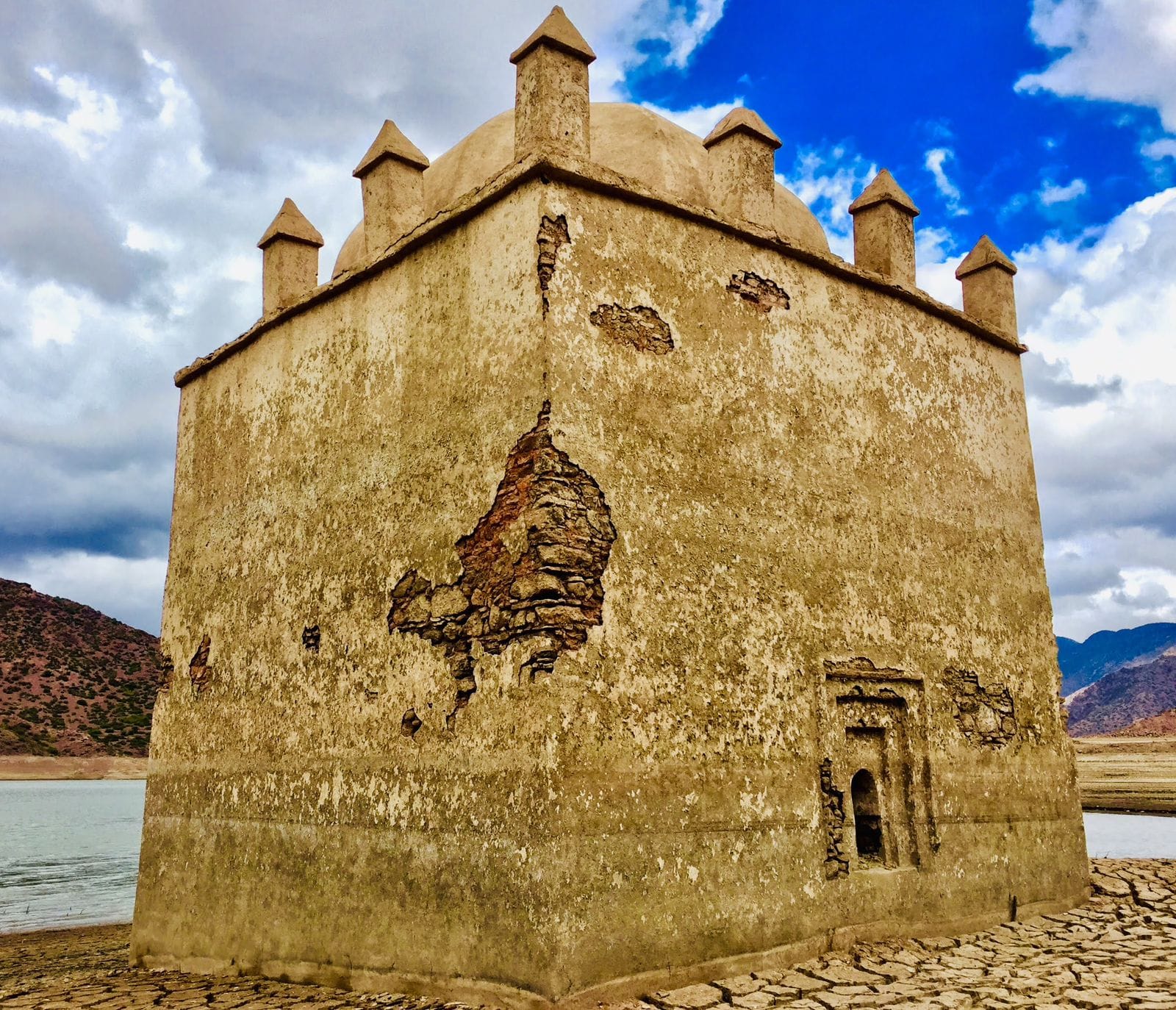
Introduction: Stones That Speak — The Soul of the Atlas Mountains
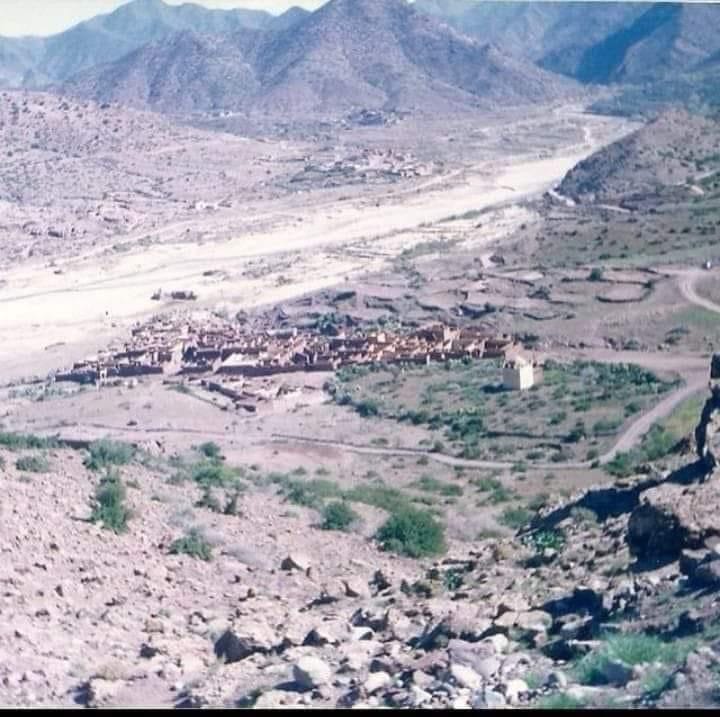
High in the rugged heart of Morocco, where the peaks of the Atlas Mountains rise like the backbone of North Africa, stands an architecture born of earth, faith, and survival. It is here, between sky and stone, that the Architecture of the Atlas reveals itself — a living testimony to the ingenuity and endurance of the Amazigh (Berber) people.
In this dramatic landscape, villages cling to steep slopes, and ancient kasbahs, agadir granaries, and mountain mosques rise like sentinels of history. Each wall, each tower, each carved doorway tells a story — of defense and devotion, of community and continuity. These structures are not ruins of a forgotten time but living monuments, still inhabited, still prayed in, still revered.
The Architecture of the Atlas is more than an aesthetic wonder; it is a way of life — a sacred harmony between people and their land. Built from the very soil it stands on, this architecture breathes with the rhythm of Morocco’s mountains, embodying strength, spirituality, and timeless artistry.
Table of Contents
The Atlas Mountains — A Landscape That Shapes Architecture
Nature as the Master Builder
The Atlas Mountains stretch over 2,500 kilometers, crossing Morocco, Algeria, and Tunisia, with the High Atlas and Anti-Atlas forming the core of Morocco’s highland civilization. This geography has shaped not only the lives of its people but also the architectural identity of the region.
In a land where materials must come from the mountain itself, builders turned to adobe (rammed earth), clay, stone, and wood. These materials gave rise to structures that blend seamlessly with the environment — warm in winter, cool in summer, and camouflaged against the ochre and red tones of the mountains.
This architectural style evolved from necessity and spirituality, reflecting both the harsh realities of mountain life and the deep respect Amazigh culture holds for nature.
Elements of Mountain Architecture
- Local materials: Earth, straw, stone, and timber.
- Flat roofs: For drying crops and storing goods.
- Thick walls: For insulation and defense.
- Minimal openings: To preserve warmth and protection.
- Courtyards: Centers of family life and privacy.
Each element is a dialogue with the environment — sustainable long before modern green design became a trend.
The Kasbahs of the Atlas — Fortresses of Earth and Power
The Meaning and Function of Kasbahs
The word kasbah (Arabic: القصبة) refers to a fortified dwelling or citadel, built for protection, governance, and prestige. In the Atlas Mountains, kasbahs served as both homes and strongholds for local leaders — the caïds and pashas who governed mountain tribes and valleys.
Built from pisé (rammed earth) and mudbrick, these structures rise like mini-fortresses, often adorned with geometric motifs and crenellated towers. Despite their defensive appearance, kasbahs were also symbols of social order, wealth, and artistry.
Architectural Features of a Typical Kasbah
- Square towers at each corner, offering panoramic defense.
- Massive walls reinforced with straw and stone.
- Decorative motifs carved in wet earth — triangles, diamonds, and symbolic Amazigh patterns.
- Central courtyard surrounded by living quarters.
- Strategic placement overlooking valleys or trade routes.
Iconic Kasbahs of the Atlas
- Kasbah Telouet (High Atlas)
Once the residence of the powerful Glaoui family, this kasbah is a masterpiece of contrast — austere on the outside, dazzling within. Intricate zellij tiles, cedar wood carvings, and painted ceilings testify to a time when Telouet was both fortress and palace. - Kasbah Aït Ben Haddou (Ouarzazate region)
A UNESCO World Heritage Site, Aït Ben Haddou is the most famous kasbah ensemble in Morocco. Rising from the desert foothills, its clustered towers of red clay form a vision of timeless grandeur — a living relic of caravan trade routes between Marrakesh and Timbuktu. - Kasbah Tifoultoute and Kasbah Tamnougalt
Near the Draa Valley, these kasbahs reflect the blending of defensive architecture and oasis life. Their labyrinthine corridors and inner sanctuaries speak of both refuge and refinement.
Symbolism in Kasbah Design
Kasbahs symbolize strength, lineage, and endurance. Their geometry is more than aesthetic — it reflects Amazigh cosmology, where the square represents stability, the triangle embodies fertility and protection, and the vertical towers connect earth to sky.
These structures are monuments of memory, preserving not just walls but entire histories of clans, alliances, and survival in an unforgiving land.
The Agadirs — Collective Fortresses of the Amazigh Spirit
Agadirs as the “Castles of the People”
If kasbahs were private strongholds of power, agadir granaries were the people’s fortresses — communal repositories that safeguarded food, valuables, and records.
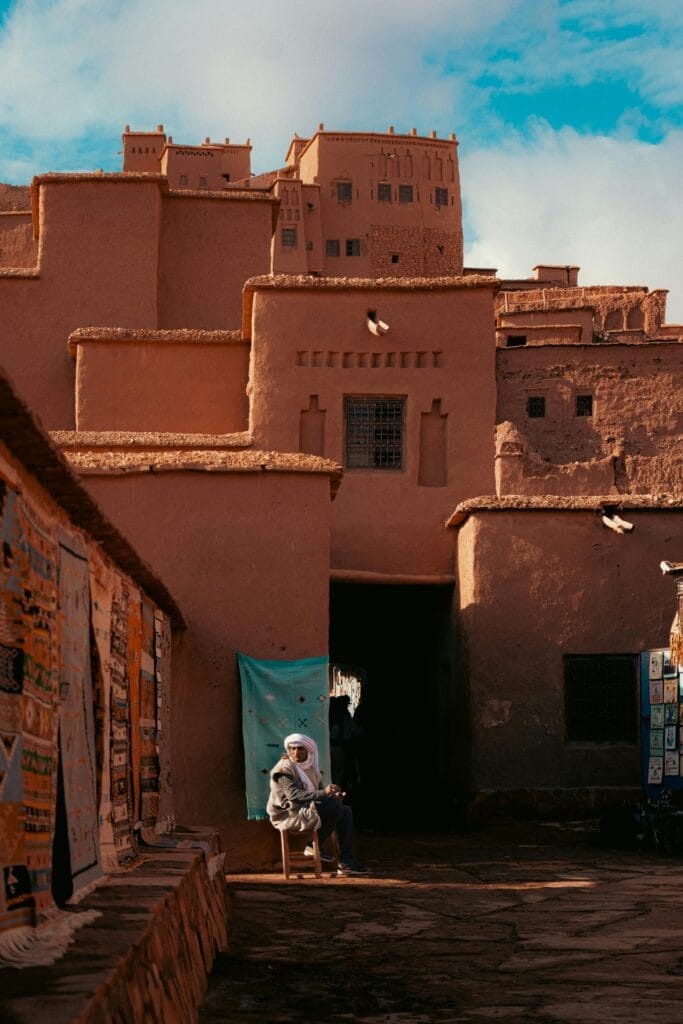
The word agadir means “fortified granary” in the Amazigh language, and these structures are among the oldest examples of cooperative architecture in human history. Perched on hilltops or cliffs, agadirs were designed to resist raids, fires, and famine.
Structure and Function of Agadirs
- Multiple storage cells built around a central courtyard.
- Heavy wooden doors with symbolic carvings.
- Watchtowers and narrow passageways for defense.
- Communal rules governed access and maintenance.
- Religious inscriptions or talismans to bless the harvest.
Notable Agadirs in the Atlas and Anti-Atlas
- Agadir of Aït Kin (Anti-Atlas) – One of the best-preserved examples, with hundreds of granary cells arranged in tiers, resembling a honeycomb of clay and wood.
- Agadir Id Aïssa (Tafraoute region) – Its commanding view over the valley made it both spiritual and strategic.
- Agadir Imchguiguiln (near Tiznit) – Recently restored, this agadir now serves as both a heritage site and a cultural center for visitors.
These structures reflect not wealth or power but collective resilience — the belief that survival is shared, and community is the strongest fortress.
The Symbolism of Agadir Architecture
The architecture of agadirs embodies trust, unity, and spiritual protection.
- The circular layout symbolizes wholeness and cooperation.
- The carved doors often feature protective motifs — eyes, suns, and Amazigh talismans warding off evil.
- The placement on high ground represents closeness to the divine and vigilance against danger.
In a sense, agadirs are temples of survival — sacred to both body and soul.
The Mosques of the Atlas — Where Faith Meets the Mountain
Architecture of Devotion
In the Atlas, mosques are not grand in size but profound in meaning. Built from earth and stone, they blend seamlessly with the mountain, embodying humility and unity.
Unlike the ornate mosques of Fes or Marrakesh, the Atlas mosques express a different aesthetic — minimalist, introspective, and organic. Their beauty lies in proportion, purpose, and spiritual resonance.
Distinctive Features of Atlas Mosques
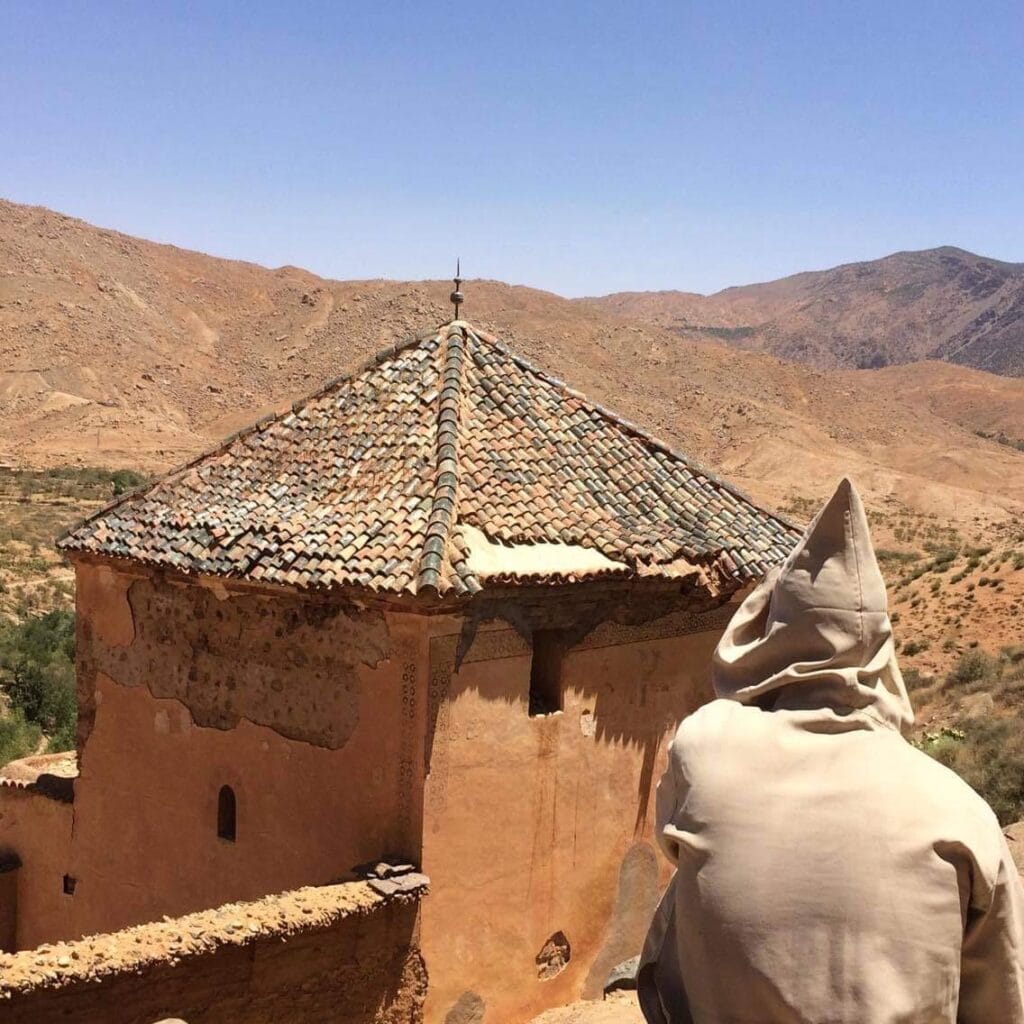
- Earthen minarets that rise like extensions of the mountain.
- Flat or gently sloped roofs made of timber beams.
- Courtyards used for prayer and community gatherings.
- Natural ornamentation through texture and geometry rather than luxury materials.
- Integration with landscape — sometimes partly carved into the hillside.
Notable Mountain Mosques
- Tinmel Mosque (High Atlas) – Built in the 12th century, this is the spiritual birthplace of the Almohad dynasty. Its architecture bridges simplicity and majesty, featuring elegant arches, rhythmic colonnades, and earthen symmetry.
- Mosques of Tizi n’Test and Ouirgane – Smaller, village mosques that maintain traditional earthen styles, often serving as both religious and educational centers.
- Tamegroute and Zaouia shrines – Though located toward the desert fringes, these sacred complexes show how mountain spirituality flows into Sufi traditions.
Symbolic Role of the Mosque in the Atlas
The mosque represents faith anchored in the land. It is both sacred space and social hub — a place for prayer, learning, and mediation. The call to prayer here echoes across valleys, merging with wind and water — a soundscape of devotion woven into the mountain’s soul.
Cultural and Symbolic Dimensions of Atlas Architecture
Architecture as a Language of Identity
Each kasbah, agadir, and mosque is an expression of Amazigh worldview — where architecture is not merely functional but symbolic communication.
- Triangles and diamonds signify protection and fertility.
- Symmetrical layouts reflect balance and harmony.
- Verticality (towers, minarets) connects human life to divine presence.
- Use of earth signifies humility and belonging to the land.
These forms reveal a deep spiritual ecology — an understanding that building with nature, not against it, ensures both survival and sanctity.
The Continuity of Tradition in Modern Times
Today, architects and conservationists in Morocco are reviving earthen architecture techniques for sustainable building. Modern eco-lodges, museums, and community centers draw inspiration from Atlas design principles, proving that ancient wisdom can meet contemporary needs.
Projects like the restoration of Kasbah Telouet and the Agadir Imchguiguiln initiative highlight how heritage can be both preserved and reimagined, keeping the Architecture of the Atlas alive for generations to come.
Conclusion — The Eternal Dialogue Between Stone and Spirit
The Architecture of the Atlas is not a relic of the past but a living testament to harmony — between humans, nature, and faith. It stands as proof that beauty need not shout; it can whisper through mud walls, echo through mountain valleys, and endure in silence.
From the defensive grandeur of kasbahs to the communal unity of agadirs and the spiritual humility of mountain mosques, every structure reflects an ancient truth: that architecture is not just about building, but about belonging.
To walk among these fortresses and sanctuaries is to touch the pulse of Morocco itself — enduring, poetic, and profoundly human.
FAQs About the Architecture of the Atlas
Q1: What materials are used in the Architecture of the Atlas?
Primarily rammed earth, clay, straw, stone, and timber, all sourced locally for sustainability and climate adaptation.
Q2: What is the difference between a kasbah and an agadir?
A kasbah is a private fortified residence of power, while an agadir is a communal granary and fortress for village protection.
Q3: Are Atlas kasbahs and mosques still in use?
Yes. Many kasbahs are inhabited or restored as guesthouses, and mosques remain active centers of community life.
Q4: What makes Atlas architecture unique in Morocco?
Its use of natural materials, integration with landscape, and blend of sacred and defensive functions make it distinct from coastal or imperial Moroccan architecture.
Q5: Can visitors explore these sites?
Absolutely. Visitors can tour kasbahs like Aït Ben Haddou and Telouet, hike to remote agadirs, or attend Friday prayers in small mountain mosques.
Call to Action:
If you wish to feel Morocco’s soul — not just see it — journey into the Atlas Mountains. Walk through its kasbahs, climb to its agadirs, pray in its earthen mosques, and you’ll understand that the Architecture of the Atlas is not built merely of clay and stone — it is built of faith, memory, and timeless beauty.