Amazigh Culinary Heritage: Meals, Rituals & Symbolic Foods of Morocco
Introduction: Food as Memory, Identity, and Cultural Continuity
Food, within Amazigh societies of Morocco, is never a neutral act of sustenance. It is a language—spoken without words—through which history, social order, cosmology, and collective memory are transmitted across generations. Meals encode relationships between humans and land, between the living and the ancestors, and between the visible and invisible worlds. To eat, in Amazigh cultural logic, is to participate in a lineage of knowledge shaped by mountains, seasons, labor, and belief.
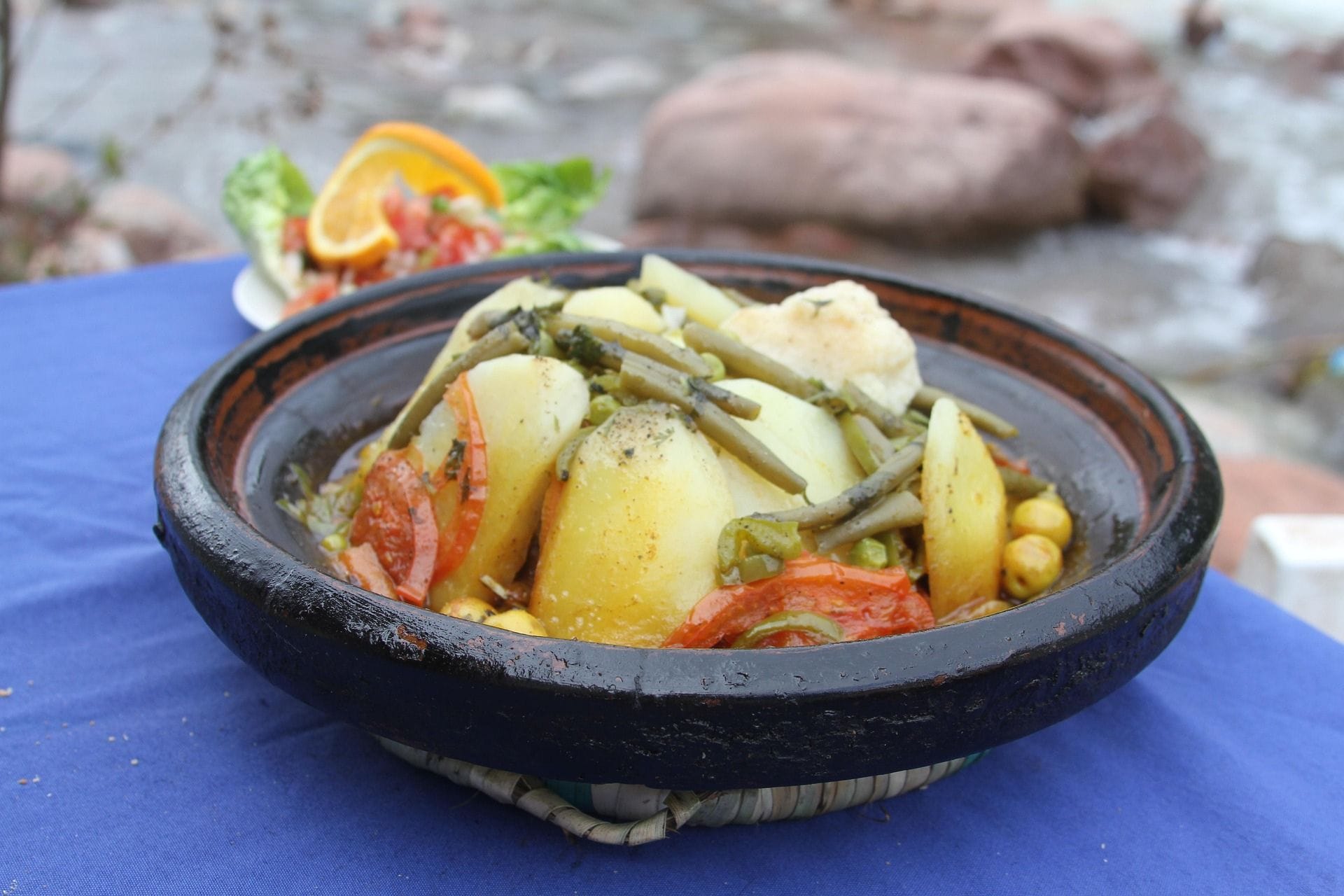
This article examines Amazigh culinary heritage as a living cultural system rather than a static collection of recipes. Through anthropological and historical analysis, it explores how food operates as ritual practice, symbolic expression, and social structure within Amazigh communities across Morocco, particularly in the High Atlas, Middle Atlas, and Sous regions. By examining ceremonial meals, symbolic ingredients, and regional specialties such as amlou, diverse couscous forms, and locally grounded tagines, the article reveals cuisine as a vital pillar of Amazigh identity and resilience.
Table of Contents
I. Historical Foundations of Amazigh Foodways
1. Food Before States and Markets
Long before centralized states or modern markets, Amazigh communities developed subsistence systems rooted in agro-pastoral life. Food production was inseparable from land stewardship, seasonal migration, and communal labor. Crops such as barley, wheat, lentils, and olives, alongside sheep, goats, and wild herbs, formed the nutritional base of Amazigh societies.
Amazigh Culinary Heritage practices emerged from ecological adaptation rather than abundance. Preservation techniques—drying, fermenting, grinding, slow cooking—were cultural responses to climatic uncertainty. These methods shaped both flavor profiles and social habits, embedding patience, endurance, and cooperation into daily meals.
2. Women as Custodians of Culinary Knowledge
In Amazigh society, culinary knowledge has historically been transmitted through women, not merely as domestic labor but as cultural authority. Recipes, proportions, ritual timings, and food taboos are preserved through embodied practice rather than written instruction. This transmission creates continuity even in the absence of formal documentation, ensuring cultural survival despite political and economic disruption.
II. Food as Ritual: Ceremonial Meals and Collective Meaning
1. Wedding Meals: Fertility, Abundance, and Social Bonds
Weddings are among the most significant ritual contexts for Amazigh food. Meals prepared during marriage celebrations are designed not only to feed guests but to symbolically ensure fertility, harmony, and prosperity for the new household.
Common features of Amazigh Culinary Heritage include:
- Large communal dishes emphasizing sharing
- Slow-cooked meats symbolizing patience and endurance
- Grain-based foods representing continuity and life cycles
The act of communal eating reinforces alliances between families and villages, transforming food into a medium of social cohesion.
2. Harvest Meals and Agricultural Gratitude
Post-harvest meals serve as expressions of gratitude toward the land and divine forces. These meals are often simpler in form but heavy in symbolism, emphasizing cereals, olive oil, and seasonal vegetables.
Such meals reaffirm:
- Human dependence on nature
- The moral obligation to share abundance
- The cyclical understanding of time in Amazigh cosmology
III. Symbolic Foods in Amazigh Ceremonies
1. Barley and Wheat: Staples of Survival and Meaning
Barley occupies a privileged place in Amazigh food symbolism. Associated with endurance and humility, it reflects the realities of mountain life. Wheat, in contrast, symbolizes celebration and ritual elevation, often reserved for festive contexts.
2. Honey, Butter, and Oil: Sacred Substances
Honey represents purity and blessing, frequently used in birth and wedding rituals. Butter (smen) and olive oil function as markers of hospitality and sacred nourishment, connecting bodily sustenance to spiritual well-being.
IV. Regional Diversity in Amazigh Cuisine
1. High Atlas: Resilience and Mountain Flavors
High Atlas cuisine reflects altitude, isolation, and climatic rigor. Dishes emphasize:
- Barley bread
- Root vegetables
- Dried meats
- Herbal infusions
Cooking methods prioritize slow heat and minimal waste, reinforcing values of endurance and respect for resources.
2. Sous Region: Abundance, Trade, and Innovation
The Sous region, historically linked to trade routes, developed a more diverse culinary repertoire. Amlou, a paste of almonds, argan oil, and honey, exemplifies regional ingenuity—combining local resources into a nutritionally dense, symbolically rich food.
Amlou represents:
- Collective labor
- Environmental adaptation
- Cultural refinement without excess
3. Middle Atlas: Pastoral Balance and Dairy Culture
Middle Atlas or Moroccan Amazigh cuisine integrates pastoral life through dairy products, wild herbs, and seasonal meats. Meals reflect mobility and ecological balance, emphasizing flexibility rather than permanence.
V. Social and Spiritual Dimensions of Amazigh Food
1. Hospitality as Moral Obligation
Hospitality occupies a central ethical position. Offering food to guests is not generosity but duty. Refusing to share food carries moral consequences, reinforcing food as a social contract.
2. Food and the Invisible World
Certain Amazigh food traditions are avoided or emphasized during specific times to maintain harmony with spiritual forces. These beliefs reflect an integrated worldview where nourishment affects both physical and metaphysical realms.
VI. Modern Transformations and Contemporary Challenges
1. Urbanization and Culinary Fragmentation
Migration and market economies have altered Amazigh foodways. Industrial ingredients and time constraints threaten traditional practices, reducing complex rituals to simplified forms.
2. Cultural Revival and Documentation
Conversely, cultural platforms, academic research, and local initiatives are reviving interest in Moroccan Amazigh cuisine as heritage. Documentation efforts—when ethically grounded—serve as acts of preservation rather than commodification.
Conclusion: Preserving Taste as Cultural Memory
Amazigh culinary heritage is not merely about flavor or tradition; it is a system of knowledge encoding survival, ethics, and worldview. In preserving these foodways, Amazigh communities safeguard more than recipes—they protect memory, identity, and sovereignty over cultural expression.
For platforms such as iwziwn.com, documenting Amazigh ritual meals are an act of intellectual responsibility, ensuring that future generations encounter their heritage not as folklore, but as living knowledge.
Cultural Disclaimer
This article is written with deep respect for Amazigh communities and acknowledges that many culinary practices remain culturally sensitive. The analysis is academic and educational, not extractive or commercial.
References & Further Reading
- Montagne, R. Berbers and the Makhzen
- Camps, G. Berber Anthropology and Culture
- Gellner, E. Saints of the Atlas
- Oral testimonies from Amazigh communities (High Atlas, Sous, Middle Atlas)
- Contemporary ethnographic studies on Moroccan food systems