Morocco Handicrafts Art: A Journey Through Leather, Carpets, Pottery, and Agriculture

The Soul of Morocco’s Handmade Heritage
When you walk through a Moroccan souk, your senses awaken all at once. The sound of hammering metal, the fragrance of tanned leather, the sparkle of ceramics in the sunlight, and the rhythm of looms whispering stories from mountain villages — everything around you speaks of time, patience, and heritage. You realize that Morocco handicrafts art is not just a product of skill but a living reflection of the soul of this land.
You feel it in every handmade carpet that carries the memory of an Amazigh grandmother weaving symbols of fertility and hope. You sense it in the smooth touch of leather, softened by ancient tanning rituals passed from father to son. You see it in the earthy colors of pottery, born from the soil and sculpted by hands that respect nature’s balance.
This art, deeply rooted in tradition, connects you directly to Morocco’s heart — where craftsmanship is not merely work, but identity. Every woven thread, carved line, and shaped form carries the story of a people who refuse to let time erase their art. And as you learn more about Morocco’s crafts — leather, carpets, pottery, and agriculture — you begin to see how each of them intertwines to form a masterpiece of culture and creativity.
Table of Contents
A Legacy Rooted in History and Culture
The Origins of Moroccan Handicrafts Art
To understand Morocco handicrafts art, you must first travel through time — to the days when the Amazigh people shaped their world using the materials around them. Long before the arrival of Arab dynasties or European traders, the Amazigh (Berbers) of the Atlas Mountains, the Rif, and the Sahara were already skilled artisans. They learned to weave, mold, and carve from nature itself — wool from sheep, clay from rivers, leather from herds, and dyes from plants.
Over centuries, Morocco’s geographic diversity — mountains, valleys, desert, and coast — gave rise to different artistic identities. The Rif region’s pottery looks nothing like that of Safi. A Beni Ourain carpet from the Middle Atlas feels completely different from an Azilal one. Yet all are bound by one truth: craftsmanship as a language of belonging.
A Fusion of Civilizations
Morocco’s position at the crossroads of Africa and Europe made it a melting pot of influences. Amazigh art met Arab calligraphy, Andalusian geometry, and Saharan colors — creating something uniquely Moroccan. Every dynasty, from the Almoravids to the Alaouites, contributed to refining the art while keeping the essence of handcraft alive.
In cities like Fez, Marrakech, and Meknes, royal patronage encouraged artisans to form guilds (f’soukh) — ensuring that quality, technique, and tradition were preserved. Meanwhile, in remote villages, women continued weaving carpets, and men shaped clay in open-air kilns, maintaining their ancestral crafts as part of daily life.
The Role of Souks and Cooperatives
Souks — Morocco’s traditional markets — became living museums of creativity. Here, artisans displayed their skills side by side, attracting travelers, traders, and collectors. Today, the soul of these markets lives on in cooperatives scattered across the country. These cooperatives, often run by Amazigh women, ensure fair wages, cultural preservation, and community development.
By supporting these artisans, you help preserve centuries of heritage and allow families in remote villages to continue living through their art — an act that keeps Morocco’s spirit alive, thread by thread and clay by clay.
Leather Craft — The Ancient Art of Transformation
The City of Leather: Fez
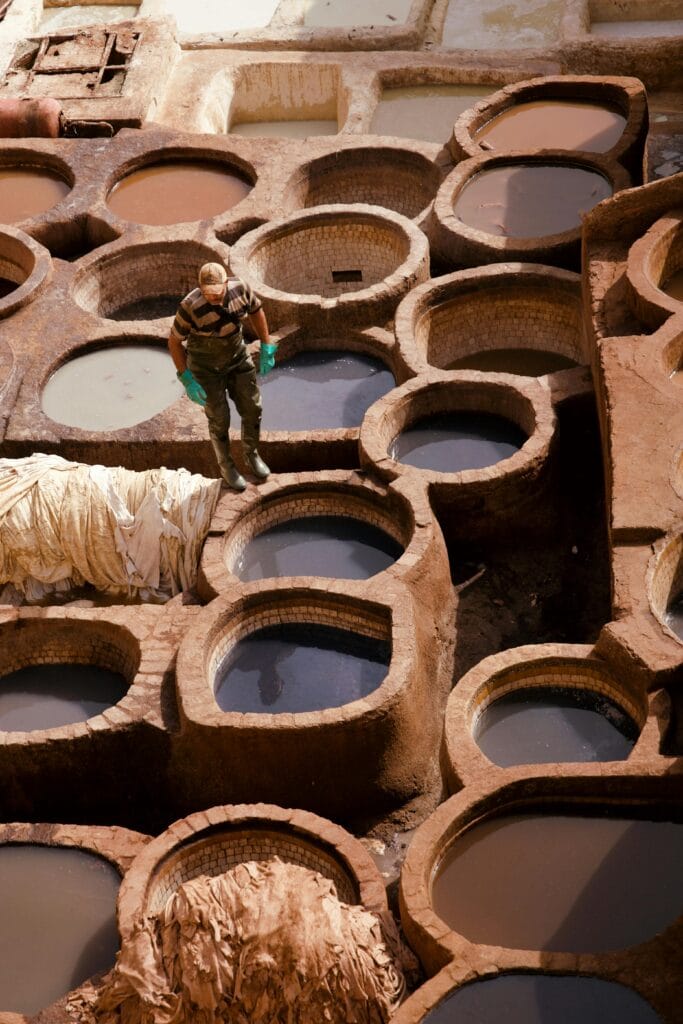
When you hear “leather,” your mind may immediately go to Fez — Morocco’s spiritual capital and home to one of the world’s oldest tanneries: Chouara Tannery. This place, unchanged for nearly a thousand years, is where raw hides are transformed into supple, fragrant leather by hand, using methods that predate modern technology.
Standing above the tannery’s honeycomb of dye pits, you witness colors that look almost unreal — red from poppy, yellow from saffron, brown from cedarwood, and orange from henna. The smell is strong, but so is the sense of history. Every hide here has been cleaned, softened, dyed, and dried using vegetable-based ingredients and natural sunlight — a process that respects both nature and tradition.
You begin to see why Moroccan leather is so prized. It is not just about durability; it’s about authenticity. Each item carries the imprint of the artisan’s patience — a combination of sweat, time, and inherited skill.
The Crafting Process: From Raw Hide to Art
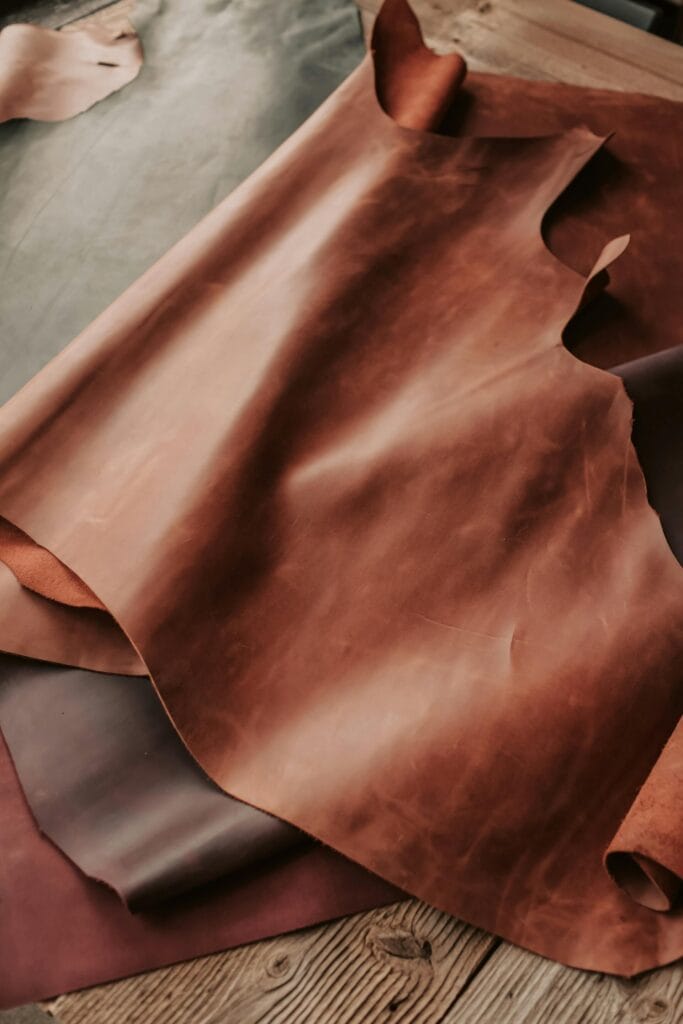
The journey begins when raw hides from sheep, goats, or camels are soaked in vats filled with a mixture of limestone and pigeon droppings — a natural formula that softens the skins. After washing, they are dipped into pits of natural dye and left to absorb color under the blazing Moroccan sun.
Once dried, artisans cut and sew the leather into bags, slippers (known as babouches), belts, jackets, or poufs — each made by hand, often without a single machine stitch. Every piece reflects the harmony between raw nature and human creativity.
Symbolism and Style
Leather, in Moroccan culture, has long represented strength, protection, and prestige. In ancient Amazigh communities, leather bags were used to store grains and water, and leather amulets were believed to ward off evil. Over time, leather goods evolved into luxury items — elegant, durable, and rooted in ancestral wisdom.
The traditional babouche — the pointed slipper you often see in Marrakech — carries centuries of design evolution. Its simplicity hides a deep cultural meaning: flexibility, modesty, and balance between beauty and comfort. When you wear a pair, you carry a small piece of Moroccan identity with you.
Why Moroccan Leather Matters Today
In a world dominated by mass production, Moroccan leatherwork stands out as a reminder of human artistry. It’s sustainable, biodegradable, and made without synthetic chemicals. By choosing authentic Moroccan leather, you support an eco-friendly craft and ensure that this ancient tradition survives another generation.
Each leather piece you bring home — whether a bag from Fez or a pouf from Marrakech — is not just a souvenir. It’s a legacy stitched by human hands and tanned under the same sun that watched over Morocco’s first artisans.
Carpets — Weaving the Stories of the Amazigh Soul
Women, Weaving, and the Spirit of Creation
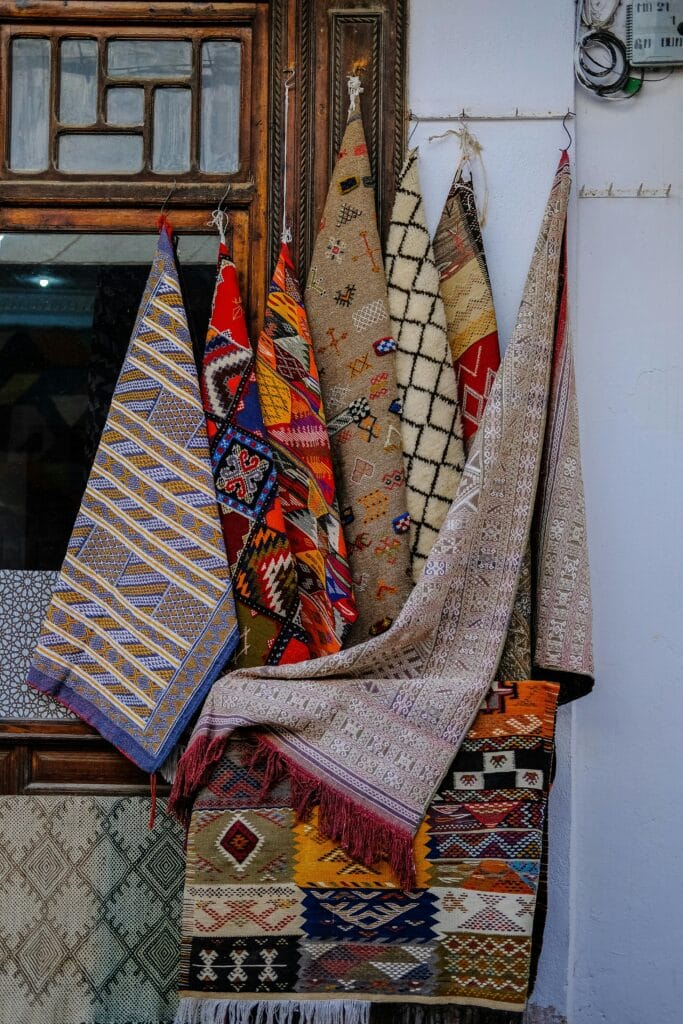
If leather is Morocco’s skin, carpets are its soul. Nowhere else in the world do textiles carry as much personal and spiritual meaning as in the Amazigh weaving tradition. For centuries, Amazigh women have been the custodians of Morocco’s textile art, creating carpets that serve as both decoration and storytelling.
When you stand before a Moroccan carpet, you’re not just looking at wool — you’re reading a message woven in color and symbol. Every pattern, knot, and line carries a hidden code: a diary of the weaver’s life — her dreams, her family, her region, and even her emotions.
Regional Styles: Diversity in Design
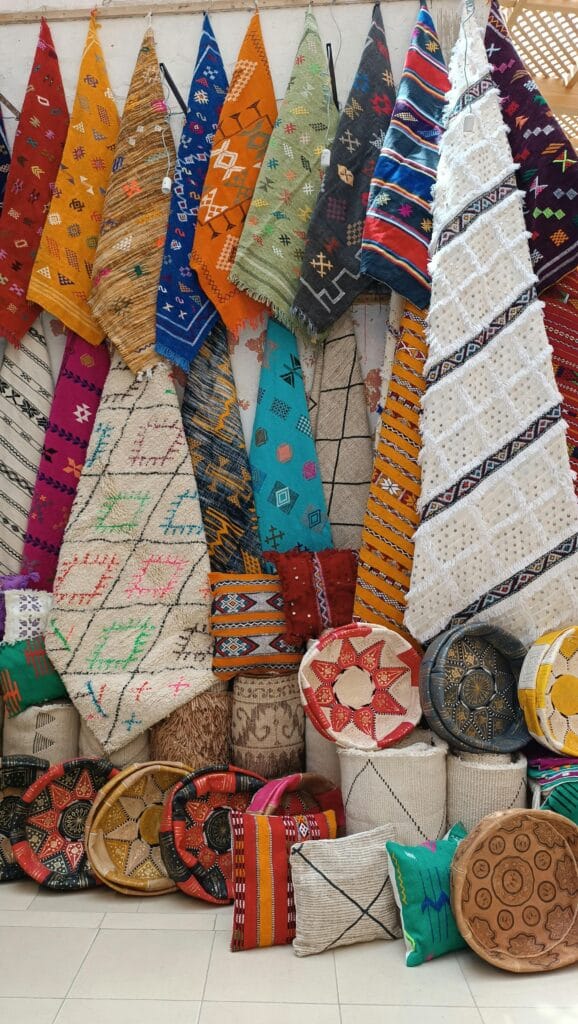
Morocco’s geography has given birth to countless carpet styles, each with its own language of form and color:
- Beni Ourain Carpets (Middle Atlas): Known for their creamy background and geometric black lines. Minimalist yet deeply symbolic, they often represent protection and harmony.
- Azilal Carpets (High Atlas): Vibrant and abstract, made by Amazigh women who use leftover wool and colored yarns to express emotion and imagination.
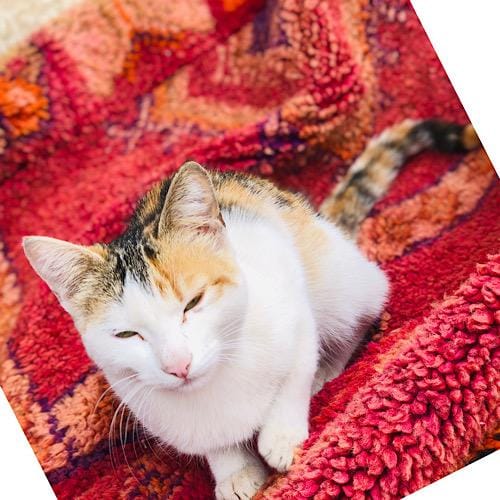
- Boujaad Carpets (Haouz region): Warm reds, oranges, and pinks dominate — echoing the colors of the earth and sunset. Often asymmetrical and personal.
- Beni Mguild Carpets (Middle Atlas): Dense pile, made for cold mountain winters, rich in deep blue and purple hues.
- Zemmour Carpets (Central Morocco): Distinguished by diamond patterns and strong tribal identity.
Each type tells you something about its origin — the climate, the lifestyle, and the people. In this way, Moroccan carpets become maps of the land and the heart.
The Symbolism of Patterns and Colors
Amazigh symbolism is one of the richest visual languages in North Africa. The diamond shape, found in almost every rug, represents fertility and womanhood. Zigzags evoke mountain ranges or water, while straight lines reflect stability and protection.
Colors are equally meaningful:
- Red stands for life and strength,
- Blue for wisdom and protection,
- White for purity and light,
- Black for ancestral memory.
Through these designs, you are invited into the private world of the weaver — her joys, her struggles, her prayers. Each rug is a message that connects you with her story, even across oceans.
Weaving Techniques and Materials
Traditional Moroccan carpets are woven on wooden looms, often built inside family homes. The process can take weeks or even months, depending on the size and detail. Wool is washed, combed, and naturally dyed before being woven. Natural dyes are sourced from the environment: pomegranate rind for yellow, indigo for blue, and henna for orange.
Unlike factory-made rugs, no two handmade Moroccan carpets are ever identical. Each is a one-of-a-kind masterpiece, reflecting both artistic freedom and cultural discipline.
Cultural Significance
For Amazigh women, weaving is more than labor — it’s language. In many villages, carpets are woven to mark major life events: birth, marriage, or mourning. The loom becomes a space for memory and communication, where women express what words cannot.
By owning a Moroccan carpet, you don’t just acquire a decorative object — you inherit a living symbol of Amazigh resilience and creativity. It’s a piece of history you can touch, one that continues to evolve with every generation of weavers.
Pottery — Shaping the Earth with Hands and Heart
The Ancient Bond Between Clay and Culture
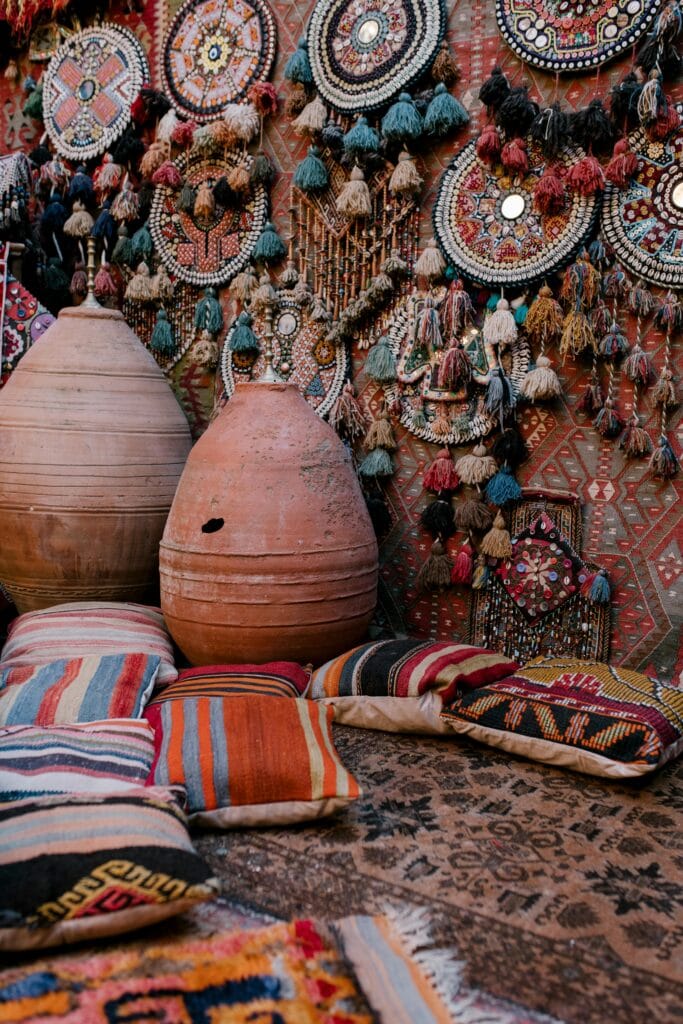
As you explore Morocco’s villages, you’ll notice pottery drying in the sun, the scent of clay mixing with air and smoke. This is not just a craft — it’s an ancient dialogue between human and earth. Pottery has been practiced in Morocco for thousands of years, long before written history, serving as both art and utility.
In Amazigh culture, the potter’s work is sacred. Clay is seen as a gift from the earth — a symbol of fertility, endurance, and continuity. Each pot or tagine carries traces of both its maker and its land.
Pottery Centers Across Morocco
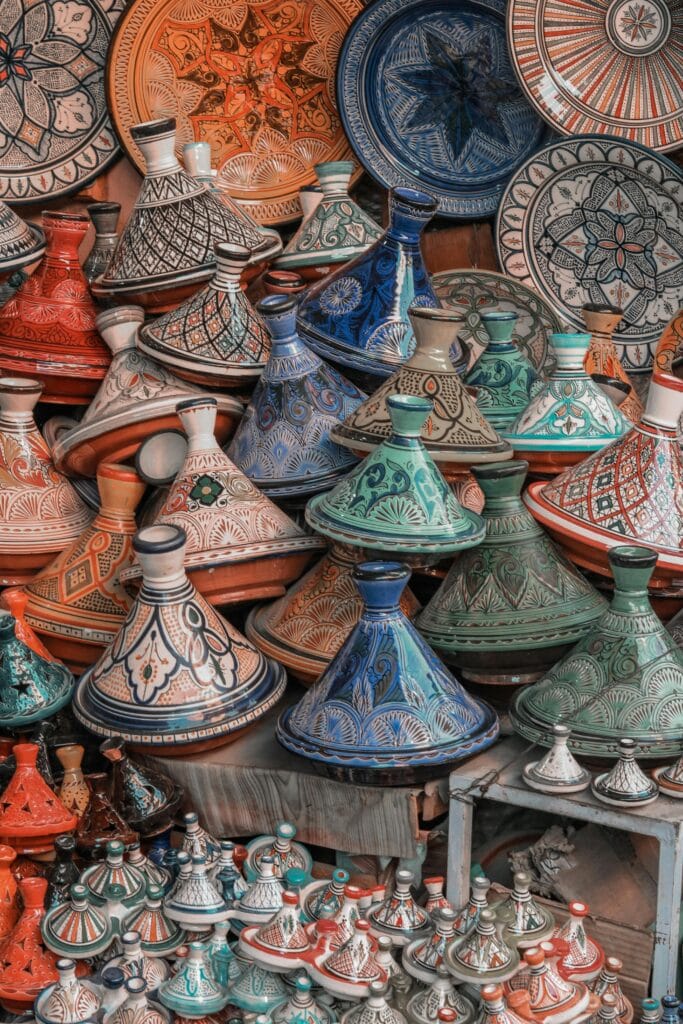
The diversity of Moroccan pottery mirrors the country’s landscapes and traditions:
- Safi: Known as Morocco’s pottery capital, this coastal city produces beautifully glazed ceramics decorated with geometric and floral patterns. Safi potters use a special red clay unique to the region.
- Fez: Famous for its intricate blue and white pottery, inspired by Andalusian and Islamic art. The cobalt blue designs are hand-painted, often with symmetrical precision.
- Tamegroute: This small village near Zagora produces the mystical green-glazed pottery, fired in underground ovens. Each piece emerges with a deep green finish, the result of mineral-rich glaze and traditional firing techniques.
- Marrakech and Taroudant: Known for terracotta pottery and decorative tagines used for cooking and serving.
Each region’s clay has a different character — some coarse, others smooth — but all share one common quality: they are born from Morocco’s soil and shaped by its people.
From Earth to Art — The Process
The potter begins with wet clay, turning it on a manual wheel. Slowly, with steady hands, the form rises — bowl, vase, jug, or tagine. Once the shape is achieved, it’s left to dry under the sun. Then comes the firing — either in a wood-burning kiln or underground oven, depending on the tradition.
Finally, artisans paint or glaze the pottery. Patterns are inspired by geometry, nature, and spirituality: circles representing unity, stars symbolizing divine light, and repeated motifs expressing harmony.
Symbolism and Use
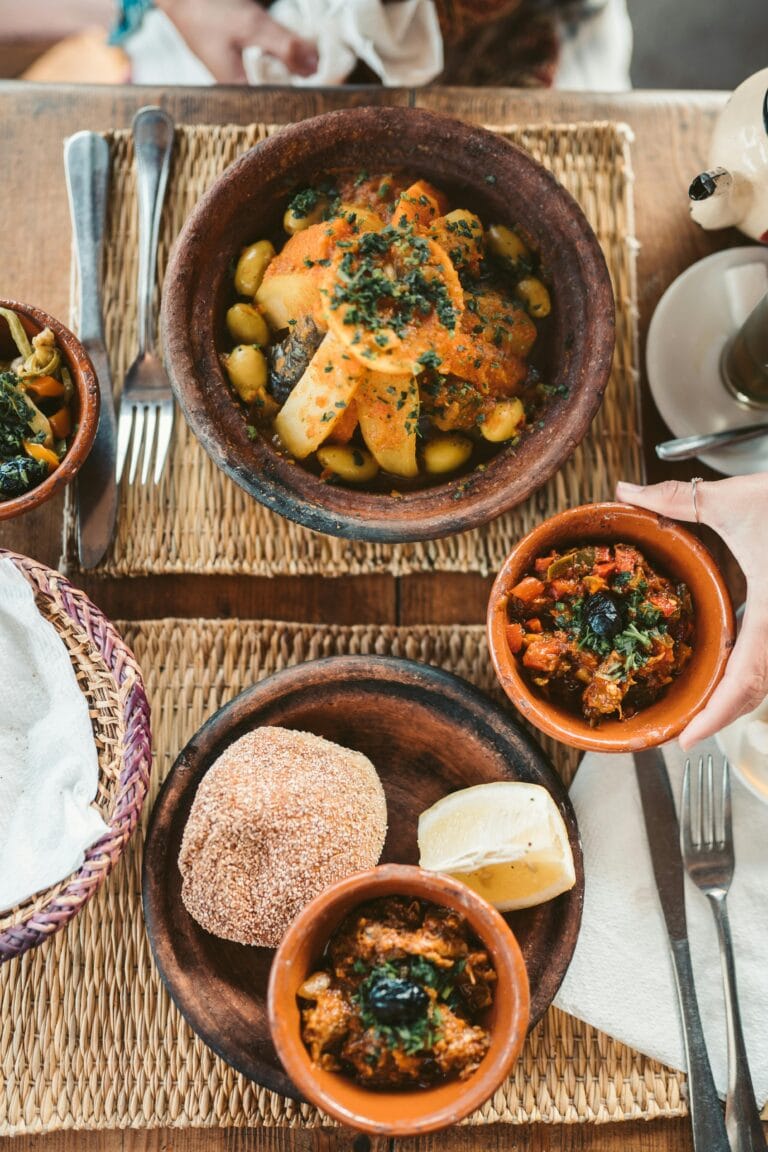
Pottery in Morocco is both practical and symbolic. Tagines are essential to Moroccan cuisine — slow-cooked meals that reflect the patience of the people. Decorative ceramics, meanwhile, adorn homes and mosques, adding a sacred beauty to everyday life.
Many designs also carry protective symbols. In Amazigh belief, the eye motif wards off envy, while repeated triangles bring good fortune. These artistic codes blend spirituality and functionality — every piece serving both the home and the soul.
Agriculture — The Heart That Feeds Moroccan Handicrafts Art
When you think about Morocco handicrafts art, it’s easy to picture markets, looms, or pottery wheels. But at the foundation of every craft lies something more basic and powerful: the land. Agriculture in Morocco is not just about food — it’s the source of materials, colors, and inspiration that make Moroccan art what it is today.
The Handicraft Connection Between Nature and Art
Every traditional craft in Morocco has its roots in agriculture. You may not always notice it, but when you look closer, the bond is clear:
- Wool comes from sheep raised in the High Atlas and Middle Atlas Mountains, giving life to carpets and blankets.
- Leather comes from goats and cows that graze Morocco’s valleys and plains.
- Clay for pottery is dug from riverbeds and fertile soil.
- Natural dyes — saffron, henna, indigo, pomegranate rind — come directly from Moroccan farms.
This circular relationship between farming and craftsmanship is ancient. It reflects a worldview where nothing is wasted and everything is connected. The land gives raw material, the artisan gives it form, and you — the admirer or buyer — give it purpose by cherishing it.
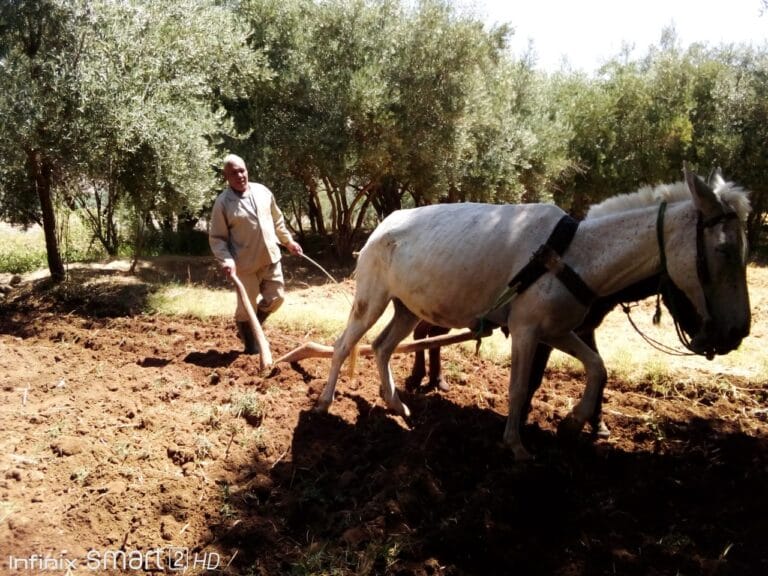
In Amazigh communities, especially in mountain regions, craft and cultivation go hand in hand. Women weave in winter when farming slows, and men help with raw material preparation when fields rest. The rhythm of nature shapes the rhythm of work, and both are guided by respect for balance and time.
Sustainability in Traditional Practices
Long before sustainability became a global concern, Moroccan artisans practiced it naturally. They reused materials, avoided synthetic chemicals, and relied on renewable resources. In leather tanneries, natural dyes and organic tanning agents keep the process eco-friendly. In weaving, leftover wool is reused to create colorful patterns. In pottery, firing is done with locally gathered wood or olive pits.
By choosing authentic Moroccan crafts, you become part of this sustainable cycle. You support artisans who work with nature — not against it — and help maintain rural livelihoods that depend on ethical, eco-friendly production.
Agriculture as Inspiration
The artistic imagination of Moroccan artisans often reflects agricultural life. The spiral lines on pottery resemble plowed fields. The colors in carpets echo the changing seasons — gold like harvested wheat, green like spring pastures, and red like the setting sun over clay soil.
Through their art, craftsmen and women celebrate the fertility of the land that feeds them. Each creation is both a tribute to earth and a prayer for abundance.
Preserving Morocco’s Handicraft Heritage
Challenges in the Modern Era
As the world becomes more industrialized, Morocco’s artisans face growing challenges. Cheap, mass-produced goods from abroad threaten the survival of handmade crafts. Younger generations, attracted by modern jobs, sometimes turn away from ancestral professions. Global markets demand speed and uniformity — the very opposite of what true craftsmanship stands for.
But even amid these pressures, something remarkable is happening: a revival. Across Morocco, cooperatives, NGOs, and local initiatives are working to preserve and promote traditional crafts while helping artisans adapt to the modern world.
The Rise of Artisan Cooperatives
In many Amazigh villages, cooperatives have become symbols of hope and progress. They give artisans access to fair trade opportunities, modern marketing tools, and international exposure. Women who once worked in isolation now collaborate, share profits, and teach others.
When you buy from a cooperative, you’re not just purchasing an item — you’re supporting education, equality, and cultural continuity. You’re helping a new generation of Moroccan women and men see value in their heritage.
Government and Cultural Initiatives
The Moroccan government, through programs like Maison de l’Artisan and the Ministry of Handicrafts, promotes traditional art both nationally and internationally. Exhibitions, trade fairs, and tourism projects highlight the country’s creative diversity.
UNESCO has also recognized several Moroccan crafts and cultural expressions — such as the art of zellige tiles, the craftsmanship of Fez, and Amazigh carpet weaving — as part of humanity’s intangible heritage.
This recognition strengthens artisans’ pride and reminds the world that Moroccan handicrafts are not just decorative objects, but living archives of culture and memory.
The Digital Future of Handicrafts
Technology, once seen as a threat to traditional crafts, is now becoming an ally. Many artisans and cooperatives are using the internet to tell their stories, showcase their creations, and reach global audiences. Websites, social media, and online marketplaces have made it possible for someone in America, Japan, or Europe to buy a handmade Moroccan carpet directly from a small village in the Atlas.
This digital bridge doesn’t erase tradition — it amplifies it. And by reading this, you too are part of that transformation. You can use your connection to the digital world to support artisans who keep the real world beautiful.
Why Supporting Moroccan Handicrafts art Matters
When you purchase or even learn about Moroccan handicrafts art, you are doing more than admiring beauty — you are sustaining identity. Every dirham you spend, every story you share, and every handmade piece you keep contributes to preserving a language of creativity that has spoken for centuries.
Cultural Preservation
Each handcrafted object you encounter carries history. The patterns, colors, and techniques are not random — they’re inherited symbols passed from one generation to another. By supporting Moroccan crafts, you ensure that this artistic vocabulary continues to evolve rather than vanish.
Empowering Rural Communities
In the Atlas Mountains, the Sahara, and coastal villages, many families depend entirely on traditional crafts for income. Your choice to buy handmade directly affects their well-being. It allows young artisans to stay in their communities instead of migrating to cities, and it keeps rural Morocco alive and vibrant.
Promoting Eco-Friendly Living
Moroccan handicrafts art embody what the modern world is striving to recover — sustainability. They rely on renewable materials, local sourcing, and low-impact production. Choosing them over mass-produced goods is a small but meaningful act of environmental responsibility.
Frequently Asked Questions (FAQ) About Morocco Handicrafts Art
What makes Morocco handicrafts art unique?
Morocco handicrafts art stands out because it blends Amazigh, Arab, and Andalusian influences while remaining deeply connected to nature. Each piece is entirely handmade, using organic materials and traditional methods. No two items are identical — every craft carries the maker’s story, skill, and soul.
Where can you find authentic Moroccan crafts?
You can discover genuine Moroccan crafts in the souks of Fez, Marrakech, Chefchaouen, and Essaouira, or in smaller villages where artisans work from their homes. Visiting cooperatives in rural areas allows you to buy directly from the makers. Online, many trusted platforms now connect global buyers with Moroccan artisans.
Are Moroccan crafts handmade or machine-made?
Authentic Moroccan handicrafts are entirely handmade. Machines may be used for limited tasks like cutting or polishing, but the essence — weaving, molding, dyeing, and stitching — is always done by hand. This is what gives Moroccan crafts their charm and character.
How can you tell if a Moroccan item is authentic?
Look for imperfections — slight variations in color or pattern are signs of genuine craftsmanship. Machine-made products look too perfect and uniform. Also, check for natural materials: real wool, pure leather, or hand-painted ceramics have a distinct texture and feel.
How can you support Moroccan artisans from abroad?
You can support them by buying directly from fair-trade cooperatives, authentic online shops, or cultural projects like Iwziwn that promote Moroccan heritage. You can also help by sharing stories about these artisans, following their social media pages, or visiting their workshops during your travels.
Are Moroccan handicrafts eco-friendly?
Yes. Traditional crafts rely on natural materials and ancient eco-conscious techniques. Vegetable-tanned leather, organic wool, plant-based dyes, and clay pottery make them environmentally sustainable. Many cooperatives also recycle and repurpose materials to reduce waste.
Conclusion — The Living Art of Morocco
When you step into Morocco’s world of handicrafts, you’re not just admiring objects — you’re entering a living museum. You become part of a story that began thousands of years ago and continues through every artisan’s hands today.
You see how leather, carpets, pottery, and agriculture are woven together — not as separate arts, but as parts of one spiritual ecosystem. You understand that the creativity of Moroccan artisans is not about luxury or fashion; it’s about meaning — the meaning of belonging, creation, and continuity.
As you hold a handwoven carpet, a clay pot, or a leather bag, you hold time itself — an unbroken thread between earth, art, and humanity. And in doing so, you become a guardian of Morocco’s cultural heartbeat.
So next time you visit a souk, browse an artisan’s page, or decorate your home, remember:
you’re not just adding beauty — you’re keeping a story alive.
Call-to-Action
If you love discovering authentic traditions, explore more articles on Iwziwn.com — your window into Morocco’s rich cultural heritage.
Learn the stories behind the art, the meanings of Amazigh symbols, and the people who craft them.
And if you wish to make a difference, support Moroccan artisans by choosing handmade over machine-made. Each purchase you make helps a family, a village, and a legacy endure.
Because when you cherish Moroccan handicrafts, you help Morocco itself stay alive through art.