Tachelhit (Shilha): Language of the Souss and High Atlas
Abstract
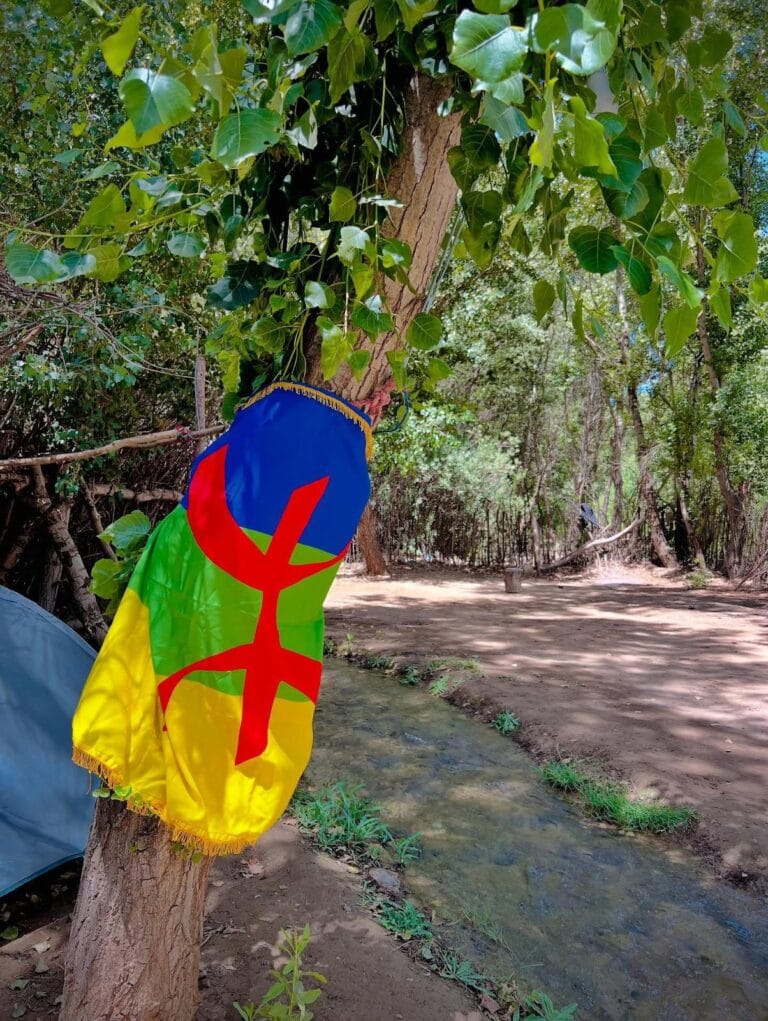
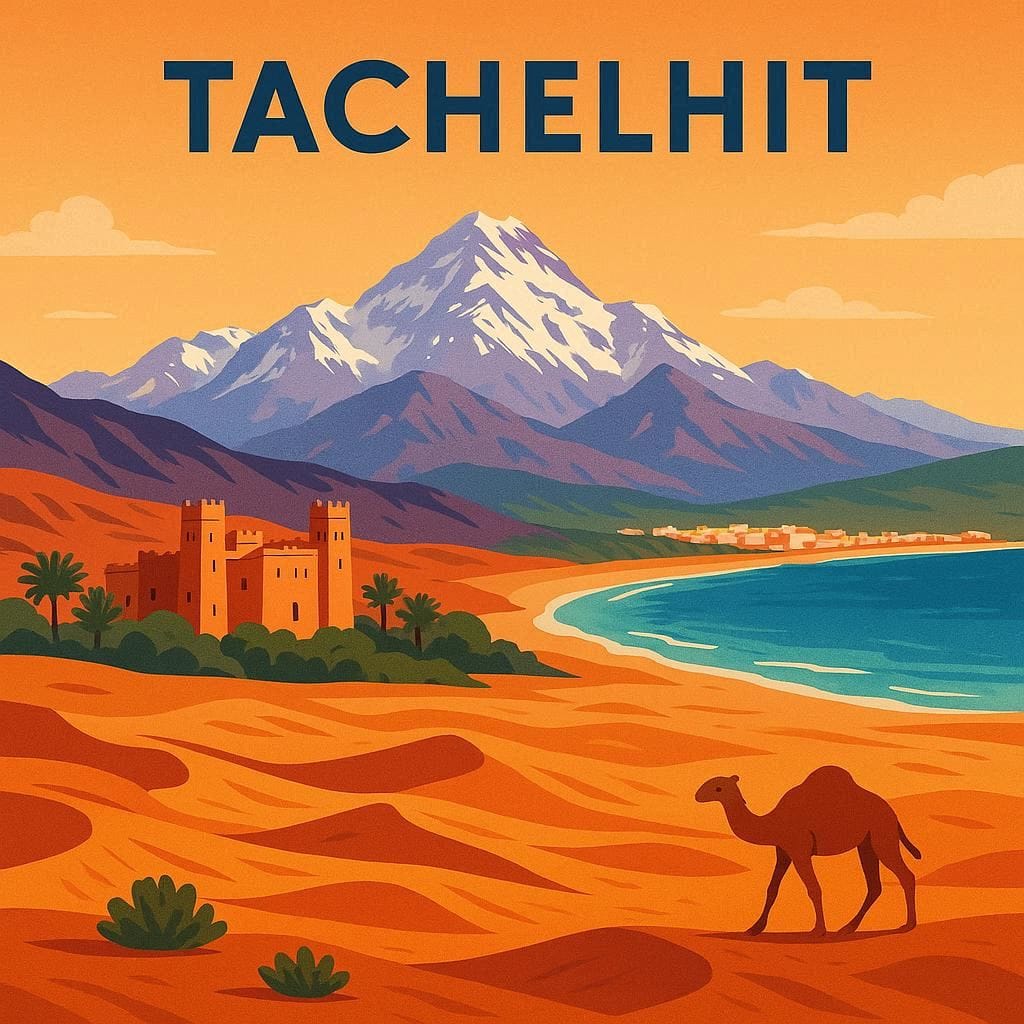
Tachelhit (also known as Shilha or Tashelhit) is one of the three main Amazigh languages spoken in Morocco. It is widely used across the Souss Valley, the Anti-Atlas, and parts of the High Atlas Mountains, making it the most widely spoken Amazigh variety in the country. With millions of native speakers, Tachelhit represents not only a linguistic system but also a living expression of Amazigh identity, oral heritage, poetry, and collective memory.
As an integral branch of the Afro-Asiatic language family, Tachelhiyt has survived centuries of political and cultural change. Today, it continues to evolve through education reforms, media presence, and constitutional recognition of Amazigh as an official language of Morocco.
Table of Contents
Ethnolinguistic Profile & Distribution
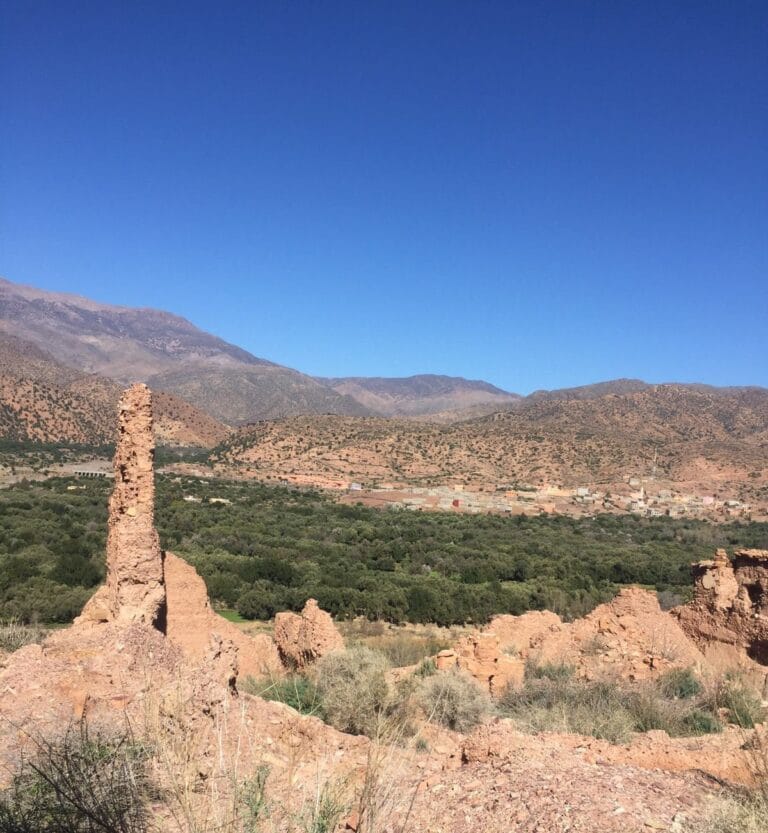
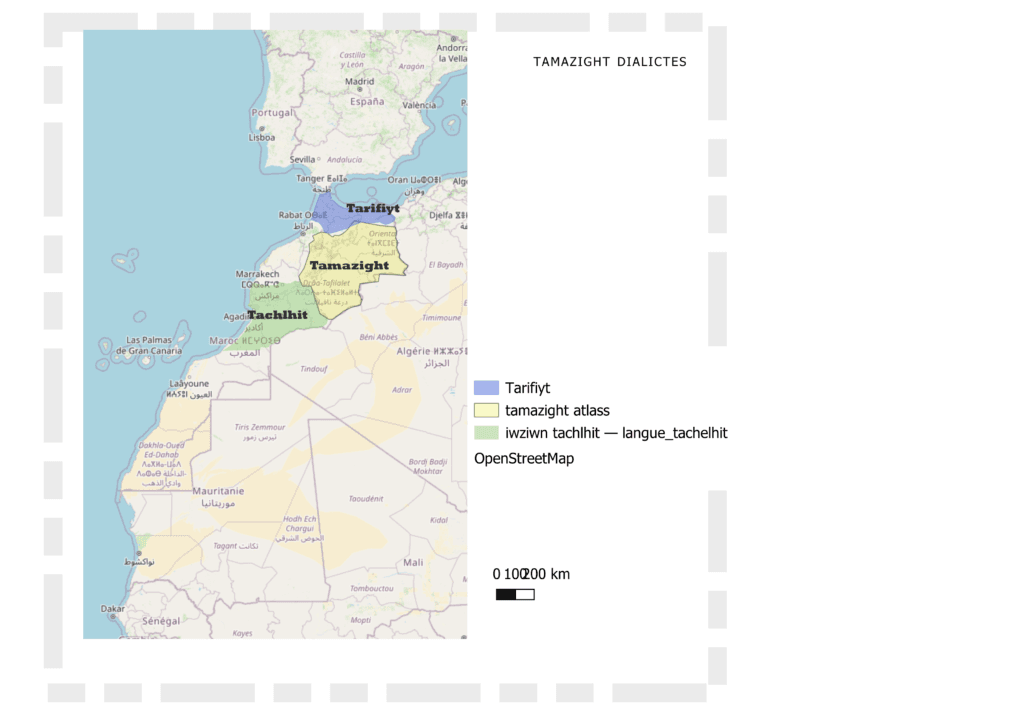
- Geographic zones: Souss Valley (Taroudant, Agadir, Tiznit, Inezgane, Chtouka), western & central High Atlas (Ouarzazate, Taliouine, Aoulouz, Imlil), and the Anti-Atlas (Tafraout, Tiznit hinterland).
- Urban centers: Agadir is the cultural heart of Tachelhit media, publishing, and music.
- Diaspora: Strong communities in Casablanca, Rabat, and abroad (France, Belgium, the Netherlands).
Historical & Areal Context
Tachelhiyt is part of the Southern Amazigh continuum, distinct from Middle Atlas Tamazight and Tarifiyt but historically connected. The Souss Valley and Anti-Atlas have long been centers of Amazigh scholarship, producing medieval texts in Arabic script and serving as a stronghold of resistance against colonial rule.
Notably, Ibn Tumart, the founder of the Almohad movement (12th century), came from the High Atlas and spoke Tachelhiyt. The region’s language was central to religious, cultural, and political history.
Phonology
Vowel system
Like other Berber varieties, Tachelhiyt has a basic 3-vowel system (a, i, u), but what sets it apart is its ability to form words without surface vowels, resulting in “consonant-only” syllables.
Examples:
- tkkststtnt (“you took it off, feminine”)
- tftktstt (“you opened it, feminine”)
These words are famous in linguistic literature as evidence of a rare phonological system.
Consonants
- Rich set of pharyngealized consonants.
- Gemination (consonant doubling) is phonemic and central to morphology.
Morphology
Nouns
- Gender: masculine/feminine; feminine marked with t-…-t.
- Number: plurals via prefixes/suffixes and vowel changes.
- States: free vs. annexed (construct), like other Berber languages.
Example:
- argaz (“man”) → wargaz in annexed state.
- tafukt (“sun”) → tifukin (“suns”).
Verbs
- Template system: roots combine with aspectual vowels.
- Aspectual stems: perfective, imperfective, aorist.
- Prefix ad marks future/intention.
- Negation: ur … ara construction.
Pronouns
- Rich system of clitic pronouns for objects.
- Person, number, gender distinctions in verbal inflection.
Syntax
- Word order: Flexible (VSO, SVO, OVS), though VSO is canonical.
- Relative clauses: Introduced with specialized particles.
- Focus & topic: Achieved with cleft structures.
Writing Systems
Tifinagh
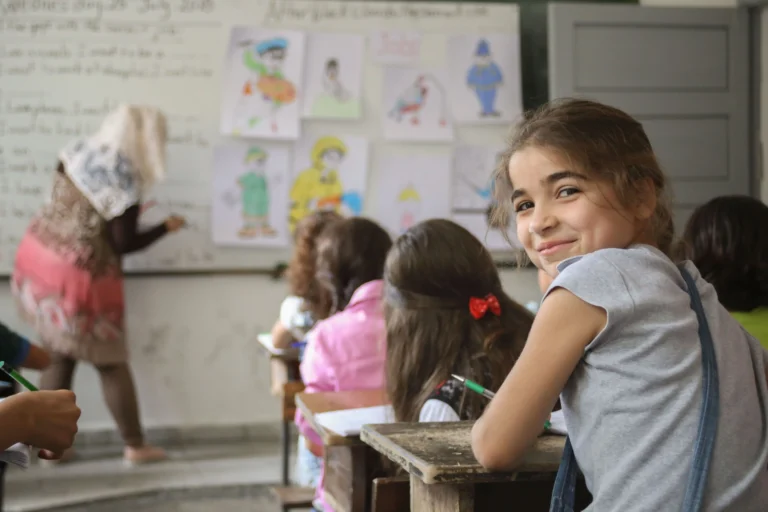
Since 2003, the IRCAM standardized Tifinagh for all Amazigh varieties, including Tachelhiyt. It is now taught in schools and used in signage and official documents.
Arabic & Latin scripts
Historically, many manuscripts in Souss were written in Arabic script, especially religious poetry. Today, the Latin script is often used in linguistics and diaspora publications.
Tachelhiyt vs Central Atlas Tamazight: What Is the Difference?
Although both belong to the Amazigh language family, Tachelhiyt and Central Atlas Tamazight differ in pronunciation, vocabulary, and geographic distribution.
| Feature | Tachelhiyt (Shilha) | Central Atlas Tamazight |
|---|---|---|
| Main Region | Souss, Anti-Atlas, High Atlas | Middle Atlas |
| Alternative Names | Shilha, Tashelhit | Tamazight |
| Phonetic Traits | Strong consonant clusters | Softer vowel patterns |
| Cultural Identity | Associated with Soussi heritage | Associated with Atlas Amazigh tribes |
While mutual intelligibility exists to some extent, speakers clearly identify their varieties as distinct linguistic identities shaped by regional history.
7. Oral Literature & Poetry
Tachelhit has one of the richest Amazigh oral traditions:
7.1 Izlan (Poetry)
- Short strophic poems, often improvised, expressing themes of love, exile, nature, and social satire.
- Poets like Ali Sidqi Azaykou and Mohamed Demnati are central to modern Amazigh literature.
7.2 Ahwach & Ahouach (Dance)
- Ahwach, Collective dance performed during weddings, festivals, and moussems.
- Combines rhythm, chanting, and poetry.
- Symbol of unity, resistance, and joy in Tachelhiyt culture.
7.3 Storytelling
Traditional storytellers (imdyazen) narrate myths, heroic epics, and moral tales, transmitting values across generations.
8. Sociolinguistics & Modern Status
- Speakers: Estimated 7–8 million, making Tachelhit the most widely spoken Amazigh language.
- Domains of use: Home, local markets, folk culture, but also increasingly in education and media.
- Media: Tachelhit dominates Amazigh music (Idir, Fatima Tabaamrant, Oumou Hssan) and radio broadcasting.
- Education: Taught in primary schools since 2003.
- Challenges: Language shift in urban areas; competition with Moroccan Arabic and French.
9. Cultural & Anthropological Significance
- Encodes ecological knowledge (farming, irrigation, pastoral life).
- Symbol of Soussi identity, entrepreneurial culture, and artistic creativity.
- Widely used in music industry, linking tradition and modernity.
10. Sample Text
Proverb
- Tifinagh: ⵜⴰⵛⵍⵃⵉⵜ ⵜⴰⵣⵉⵖⵜ ⵏ ⵏⵓⵔ
- Latin: Tačlhit tazigt n nur.
- Gloss: “Tachelhit is the language of light.”
The Role of Tachelhit in Modern Morocco
In 2011, the Moroccan Constitution officially recognized Amazigh as a state language alongside Arabic. This recognition marked a turning point for Tachelhit and other Amazigh varieties. Today, Tachelhit is taught in schools, broadcast on national television, and used in cultural institutions dedicated to preserving Amazigh heritage.
Digital media has also strengthened the language’s visibility. Social platforms, YouTube channels, and local journalism increasingly publish content in Tachelhit, reinforcing its relevance among younger generations.
Far from being a rural dialect, Tachelhit remains a dynamic and evolving language deeply embedded in Morocco’s contemporary identity.
What is Tachelhit?
Tachelhit is an Amazigh language spoken primarily in southern Morocco, particularly in the Souss region, Anti-Atlas, and parts of the High Atlas Mountains.
Is Tachelhit the same as Tamazight?
No. Tachelhit is one variety of Amazigh, while Central Atlas Tamazight is another. They share linguistic roots but differ in pronunciation and vocabulary.
How many people speak Tachelhit?
Tachelhit is considered the most widely spoken Amazigh language in Morocco, with millions of speakers concentrated in the Souss-Massa region.
What alphabet does Tachelhit use?
Tachelhit can be written in the standardized Tifinagh script, as well as Latin and Arabic scripts depending on context and publication.
11. Conclusion
Tachelhit stands as one of Morocco’s most enduring linguistic treasures. Rooted in the landscapes of the Souss and the High Atlas, it carries centuries of oral poetry, music, and collective Amazigh memory. Understanding Tachelhit is not only about language; it is about recognizing a living cultural identity that continues to shape modern Morocco.
To explore Morocco’s linguistic diversity further, read our guides on Tarifiyt and Central Atlas Tamazight.
12. References & External Links
- Dell, F., & Elmedlaoui, M. (2002). Syllables in Tashlhiyt Berber and in Moroccan Arabic.
- Ridouane, R. (2008). “Syllables without vowels: Phonetic and phonological evidence from Tashlhiyt Berber.” Phonology, 25(2).
- El Mountassir, A. (2003). Grammaire du berbère: le parler chleuh de Tazerwalt (Maroc).
- IRCAM – Official Website
- UNESCO – Amazigh Oral Heritage