How the Sous Region Shaped Amazigh Mountain Life: Hidden History from the High Atlas to Iwziwn
Introduction – A Region Where Mountains Create Cultures
History of the Sous region is not just a geographic space between the Atlantic, the High Atlas, and the Anti-Atlas.
It is a historical laboratory of self-governance, collective resistance, and cultural innovation that shaped Amazigh life for centuries.
From villages like Iwziwn, hidden between mountain passes, to the fertile stretches of the Sous Valley, the region formed a unique model of society where political autonomy, communal justice, and agricultural intelligence merged to create one of the most resilient cultures of North Africa.
This article explores — in depth — how The History of the Sous region shaped Amazigh identity through geography, through ancient political structures such as the Tajmaat, through regional alliances known as Leff, and through the shifting relationship with the Makhzen (the central Moroccan authority).
It also explains how these forces shaped the modern cultural life of villages such as Iwziwn, where traditions still mirror ancient systems described by Montagne, yet continuously evolve through contemporary Amazigh identity.
Table of Contents
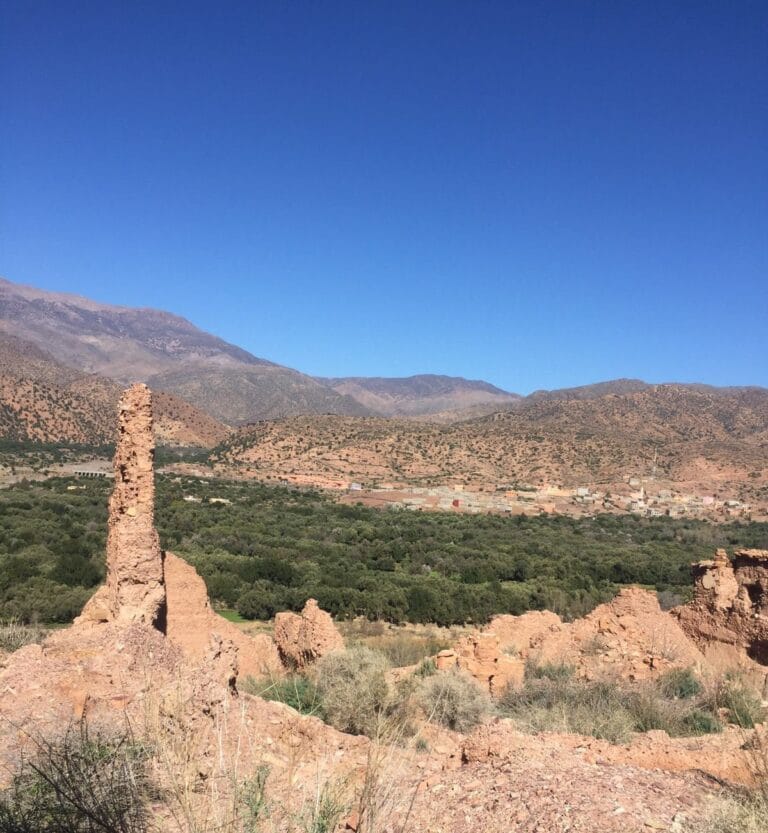
The Geography That Shapes Civilization: Atlas, Anti-Atlas, and the Sous Valley
1. A Land of Natural Fortresses
History of the Sous region is framed by three major physical forces:
High Atlas (Adrar n Wawzgit)
- Towering peaks such as Toubkal, MGoun, and Adrar N’Timzguida
- Harsh climates and isolated valleys
- Strong villages with heavy stone architecture and terraced agriculture
Anti-Atlas (Adrar n Wlili)
- Oldest geological mass in Morocco
- Rugged terrain, granitic plateaus, and narrow passes
- Home to the Shilha (Chleuh) tribes, protectors of Amazigh culture
Sous Valley (Asays n Sus)
- Fertile agricultural corridor
- Cradle of trade, oasis-systems, and trans-Saharan exchanges
- Bridge between mountains, desert, and coast
This triad created a cultural ecosystem where:
- Mountain villages developed tough, independent communities
- The valley fostered economic alliances
- The Anti-Atlas acted as a cultural and linguistic shield preserving Amazigh identity
The rough terrain protected Amazigh structures such as the Tajmaat, allowing Amazigh tribes to govern themselves long before any central authority expanded southward.
The Amazigh “Mini-Republics”: How Tajmaat Shaped Mountain Governance
1. What Is Tajmaat?
The Tajmaat was the governing council of each Amazigh village.
It functioned as:
- Parliament
- Court
- Security authority
- Mediation body
- Cultural guardian
This system was horizontal — unlike feudal societies, power was shared, not inherited.
2. Tajmaat’s Responsibilities
In The History of the Sous region Each village elected respected men (Imgharen n Taddart) based on:
- Age
- Wisdom
- Oratory skill
- Ability to negotiate
- Knowledge of customary law (Azerf)
They oversaw:
- Protection of fields, water canals, and harvest
- Management of pastures
- Mediation of conflicts
- Building of granaries (Agadir)
- Organization of collective rituals and festivals
3. Why Tajmaat Reflects a “Mini-Republic”
In The History of the Sous region as Amazigh villages operated like micro-states:
- Structured legal systems
- Public assemblies
- Democratic decision-making
- Rotating leadership
- Community-enforced justice
This model made villages extremely resilient.
Without needing external rulers, they developed economies, agriculture, and protection systems independently — especially in regions like Iwziwn, where the council was central to village life.
Leff: The Tribal Alliances That Protected the Sous
1. What Is Leff?
Leff was a system of alliances and mutual defense pacts between villages and tribes.
It functioned like a coalition:
- If one village was attacked, all defended it
- Conflicts between two villages required neutral Leff mediation
- Shared resources were protected collectively
This alliance system allowed mountain communities to maintain:
- Stability
- Military readiness
- Connected identity
- Shared customary law
2. Leff and Iwziwn
Villages near the Anti-Atlas/High-Atlas transition — such as Iwziwn — depended heavily on Leff for protection because:
- They were located near trade routes
- They faced threats from rival tribes, nomadic groups, and later, caïds
- Their terraced fields and water sources required shared defense
Leff thus created a network of solidarity that shaped Amazigh mentality:
“Your safety is my safety.”
When the Makhzen Arrived: Negotiation, Resistance, and Transformation
1. Who Were the Caïds?
Caïds were powerful local rulers appointed by the central authority (Makhzen).
In the Sous region, some caïds became extremely influential, merging:
- Military control
- Taxation
- Trade supervision
- Judicial authority
Their presence created tension with local Amazigh autonomy.
2. The Ancient Equilibrium Breaks
Before the caïds, Tajmaat and Leff were the only forces that governed the mountains.
With the arrival of the Makhzen:
- Taxes were imposed (tithes, land taxes, caravan fees)
- Agricultural surplus was controlled
- Military pressures increased
But the The History of the Sous region did not accept this passively. They adapted through:
- Strategic alliances
- Negotiated autonomy
- Hidden resistance
- Internal strengthening of customary law
3. Iwziwn and the Shift of Power
Villages like Iwziwn experienced:
- New taxation models
- Integration into regional trade networks
- Greater interest from central authorities due to fertile lands
- Intensification of local governance to protect identity
This period left deep marks on the cultural fabric of the region, shaping the dual identity seen today:
Amazigh at heart, Moroccan in nationhood — yet proudly independent in local customs.
Cultural Identity Forged by History: How Sous Villages Developed Their Worldview
1. Agriculture as Identity
Because the region mixes mountains and fertile valleys, agriculture developed unique features:
- Terracing on mountain slopes
- Sophisticated irrigation channels (Targa, Khettara systems)
- Communal harvest rituals
- Integrated livestock–agriculture rhythm
This shaped a culture where work, social organization, and spirituality were inseparable.
2. Architecture as a Political Statement
Stone towers, fortified granaries (Agadir), and hidden mountain villages reflect:
- Fear of external authority
- Need for collective protection
- Political autonomy as a cultural ideal
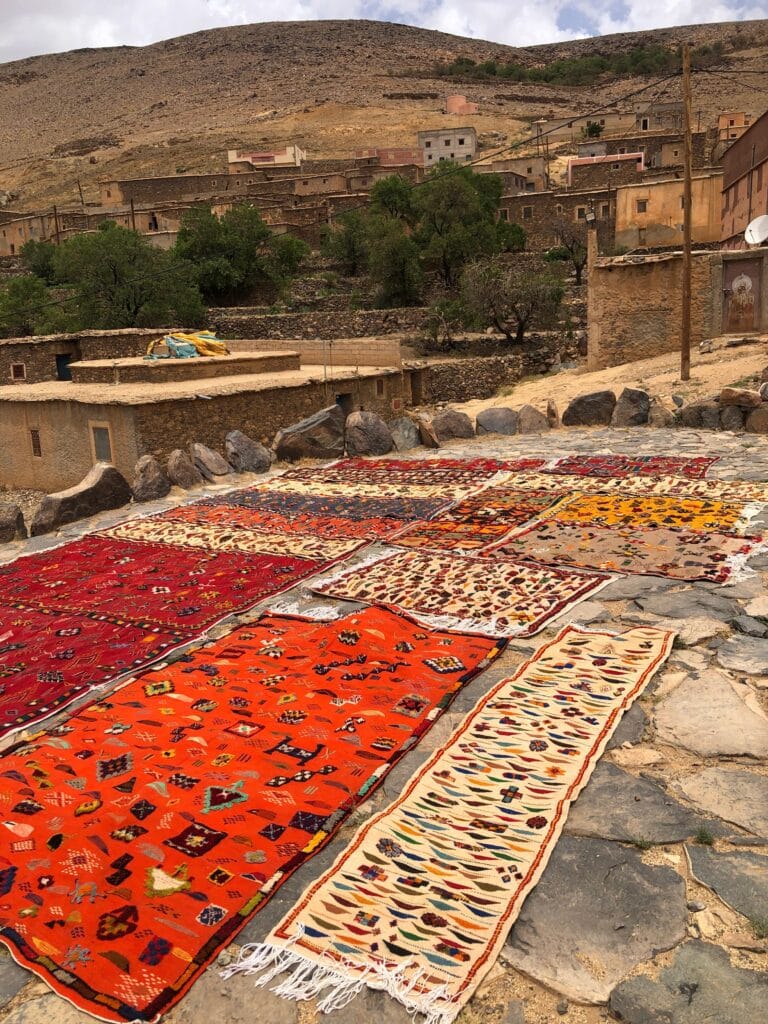
A village like Iwziwn, with its strategic location and strong communal identity, is a living example of this ancient political engineering.
3. Oral Traditions that Preserve Resistance
Songs, rituals, poetry, and proverbs carry memories of The History of the Sous region:
- Of battles
- Of alliances
- Of resource management
- Of community ethics
In Sous culture, oral heritage is both history and law.
Why Iwziwn Still Reflects Ancient Structures Today
1. Survival of Customary Law (Azerf)
Even today, villages such as Iwziwn maintain The History of the Sous region:
- Collective decision-making
- Shared land practices
- Mediated conflict resolution
- Respect for ancestral agreements
This mirrors the ancient Tajmaat system.
2. Seasonal Life Rhythm from Antiquity
Agriculture continues to follow the same seasonal cycles as a The History of the Sous region:
- Spring cultivation
- Summer irrigation
- Autumn harvest
- Winter pastoral mobility
This ancient calendar still governs social life, festivals, and rituals.
3. Social Solidarity Endures
Families, clans, and neighborhood units still operate through:
- Mutual aid
- Shared work in fields
- Community gatherings
- Ceremonial obligations
The structure is ancient, but the spirit remains living.
4. Architecture and Space
The History of the Sous region in Iwziwn’s architecture still reflects:
- Stone-and-earth construction
- Communal corridors
- Terraced fields
- Shared water systems
The village itself is a museum of Amazigh political history.
Conclusion – A Region That Refuses to Forget
The History of the Sous region is not merely a place — it is a civilization shaped by mountains, alliances, and endurance.
From the political autonomy of Tajmaat
to the collective strength of Leff,
from resistance to the Makhzen
to the living culture of Iwziwn…
History of the Sous region tells a universal story of how geography shapes identity, how people shape power, and how tradition survives in the face of change.
The mountains are old.
The customs are older.
And the spirit of the Sous — unbroken — continues to shape Amazigh life today.
Primary Reference of This Article
Montagne, Robert (1930). Les Berbères et le Makhzen dans le sud du Maroc: essai sur la transformation politique des Berbères sédentaires (groupe chleuh). Paris: Librairie Félix Alcan.
Chapters useful for this article:
• Book I — Chapter I: “Le Sous dans le Maghreb et dans l’histoire”
• Book I — Chapter II: High Atlas & Anti-Atlas social structure
• Book I — Chapter III: Early settlement of the Sous
• Book II & III: On tribes such as Idaw Tanan, Seksawa, Aït Semmeg, Ida ou Gnidif
Additional References
Books & Academic Sources
• Henry Munson — Religion and Power in Morocco
• David Hart — The Aith Waryaghar of the Moroccan Rif (comparative Amazigh structures)
• Émile Masqueray — Formation des cités chez les sédentaires de l’Algérie
• H. Terrasse — Histoire du Maroc
🌐 Useful Websites
• Encyclopédie berbère
• Hespéris-Tamuda (University Mohammed V journal)
• BnF Gallica archives (for original manuscripts)